What’s actually slowing this PC down?
Pick the symptom - the matching free tool is one click away.
Some links on this page are affiliate links: if you buy through them we may earn a commission, at no extra cost to you.
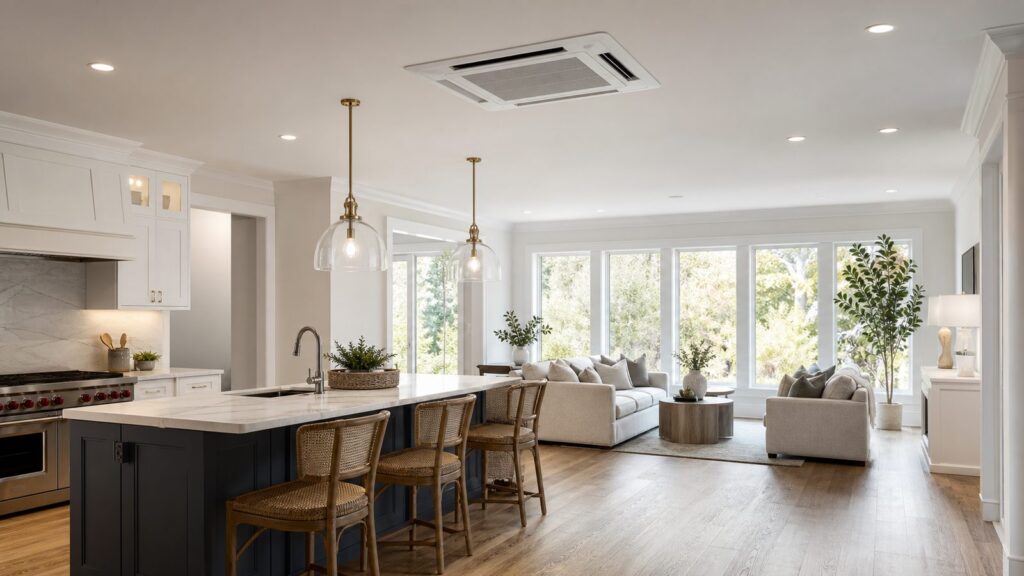
Ceiling cassette air conditioners are one of the cleanest-looking ways to add ductless heating and cooling to a finished room. Instead of hanging a mini split head high on a wall, the indoor unit recesses into the ceiling and delivers air through a flush grille. For kitchens, finished basements, additions, offices, and open living areas, that can be a big design win.
The best ceiling cassette is not simply the model with the highest SEER2 rating or the lowest online price. On our job sites, the right cassette is the one that fits the ceiling structure, has a sensible condensate drain path, can be serviced without tearing into finished work, and is properly sized by load calculation. A good 12,000 BTU cassette in the right room will outperform an oversized premium unit installed in the wrong ceiling.

As an Amazon Associate I earn from qualifying purchases.
Recommended Free Tools
For 2026, most homeowners should budget roughly $3,500 to $8,500 installed for a single-zone ceiling cassette mini split, including the indoor cassette, outdoor condenser, refrigerant lines, electrical work, condensate handling, startup, and basic finish work. Multi-zone cassette systems commonly land around $8,000 to $18,000+, depending on the number of rooms, line-set lengths, ceiling work, pumps, and electrical upgrades.
Best Ceiling Cassette AC Choices by Room Type
A ceiling cassette works best when the room layout and ceiling conditions support it. Below is how we usually think through the options during planning.
Best for kitchens: 4-way cassette with washable filters
Kitchens benefit from even air distribution, especially in open-plan homes where the cooking area blends into dining and living space. A 4-way cassette can spread air across the room instead of blasting one wall or one seating area. For a kitchen, we look for an accessible washable filter, quiet fan operation, and a grille location that does not fight the range hood.
The supply air should not push smoke, steam, or cooking odors away from the hood. If the project includes a high-CFM range hood, make-up air has to be coordinated separately so the HVAC system is not asked to solve a ventilation problem. In many kitchen remodels, the cassette works best just outside the main cooking plume, centered over circulation space or the eating area.
Free tools Windows power users keep installed
One-click scans. No signup required.
Best for finished basements: 4-way cassette or slim cassette
Basements often have soffits, drop ceilings, or accessible framing bays, which makes them good candidates for ceiling cassettes. A 9,000 to 18,000 BTU unit may be enough for many basement zones, but moisture and humidity matter as much as temperature. Oversizing can cool the room quickly without running long enough to remove moisture.
For basement installations, we pay close attention to condensate routing. If gravity drainage is not practical, the system may need a condensate pump. That pump must be accessible for cleaning and testing because a clogged pump can stain a ceiling fast.
Best for additions: matched heat pump cassette system
Room additions are one of the strongest use cases for ceiling cassette mini splits. Extending existing ductwork can be expensive, poorly balanced, or impossible without major ceiling demolition. A dedicated ductless heat pump cassette gives the new room its own zone and avoids overloading the existing furnace or AC system.
For additions, we prefer to decide on the cassette before framing is closed. That gives the builder, HVAC contractor, and electrician time to coordinate joist layout, mounting support, refrigerant lines, drain route, outdoor condenser location, and service access.
Best for open living rooms: quiet 4-way cassette
Open living rooms need throw and distribution. A 4-way cassette generally makes more sense than a 1-way unit because it can distribute air in several directions from a central location. Premium residential cassette lines from major manufacturers can operate very quietly; for example, some Mitsubishi Electric ceiling cassette models are listed as low as 25 dB(A) and up to 21 SEER2, depending on the matched system.
Noise ratings matter, but placement matters too. A quiet cassette above a sofa can still feel noticeable if the grille is too close to where people sit. We prefer to locate the unit where air can mix before it reaches the main seating zone.
Best for low ceilings: one-way or compact cassette, if clearance allows
Low ceilings are tricky. A cassette still needs body depth above the finished ceiling, plus clearance for connections, drain piping, and service. In a room with an 8-foot ceiling and no attic or soffit, a ceiling cassette may be the wrong product. A slim 1-way cassette near a wall or a short slim-ducted system may look better and perform better than forcing a 4-way cassette into a tight cavity.
What a Ceiling Cassette Mini Split Actually Is
A ceiling cassette is an indoor air handler for a ductless or duct-light mini split heat pump system. The outdoor unit sits outside, refrigerant lines connect the two pieces, and the cassette handles room air through a grille in the ceiling. Most residential systems can both cool and heat when paired with the right outdoor unit.
Quick wins for a faster PC:
Scan for outdated or missing drivers - takes under a minuteDriver Scan →Clear out junk files and repair common Windows errorsFree Scan →Fix the driver behind crashes, sound loss and screen glitchesFind Drivers →The common airflow styles are 1-way, 2-way, and 4-way. A 4-way cassette is the classic square grille often used in open rooms or suspended ceilings. A 1-way cassette is slimmer and can work near the edge of a room, in a soffit, or where ceiling depth is limited. Some compact cassettes are designed around 2×2 suspended ceiling grids, which can be useful in basements, offices, studios, and accessory spaces.
Major brands offering ceiling cassette mini split options include Mitsubishi Electric, Daikin, Fujitsu, Gree, LG, Carrier, Bryant, and MRCOOL. Brand matters, but the installed system matters more. The outdoor unit, indoor unit, controls, refrigerant, AHRI match, line-set length, and installation details all affect performance.
Ceiling Cassette vs Wall-Mounted Mini Split vs Slim Ducted System
Homeowners often start with ceiling cassettes because they dislike the look of a wall-mounted head. That is a valid design concern, especially in kitchens, living rooms, and high-end remodels. Still, a cassette is not always the best technical answer.
| System type | Best use | Typical installed cost | Main drawback |
|---|---|---|---|
| Wall-mounted mini split | Bedrooms, offices, bonus rooms, simple retrofits | Often lower than cassette systems; many mini split projects fall within $2,500-$15,000+ overall | Visible wall head and directional airflow |
| Ceiling cassette mini split | Kitchens, open rooms, basements, additions, design-sensitive spaces | About $3,500-$8,500 for one zone; $8,000-$18,000+ for multi-zone projects | Needs ceiling depth, drain planning, access, and finish coordination |
| Slim ducted mini split | Multiple small rooms, closed bedrooms, short duct runs | Varies widely; often comparable to or above cassette work when ducts and framing are included | Requires duct design, returns, access panels, and more construction planning |
If the goal is to condition one open room cleanly, a ceiling cassette can be excellent. If the goal is to serve three small bedrooms from one system, a slim ducted mini split may be better because short duct runs can deliver air to each room with fewer visible grilles and more predictable comfort.
Do these 3 things before closing this tab:
1Scan for outdated or missing drivers - takes under a minute2Repair Windows errors before they cause bigger problems3Fix the driver behind crashes, sound loss and screen glitchesInstalled Cost in 2026: What to Budget
Online equipment prices can be misleading. A ceiling cassette head may show up online for roughly $675 to $1,700, and some multi-zone equipment packages may be advertised around the low thousands. That does not include the work that makes the system code-compliant, serviceable, and finished.
Nationally, Carrier cites ductless mini split installation costs around $2,500 to $15,000+, depending on the home and system. Bryant cites about $2,000 to $7,000 per zone. Ceiling cassettes usually cost more than basic wall-mounted heads because the ceiling has to be opened, supported, drained, patched, and accessible.
| Project scope | Realistic 2026 budget | What drives the price |
|---|---|---|
| Single-zone ceiling cassette | $3,500-$8,500 | BTU size, ceiling access, line-set length, electrical circuit, condensate route, drywall repair |
| Two-zone cassette system | $6,500-$13,000+ | Outdoor unit capacity, two indoor cassettes, drain pumps, controls, longer refrigerant lines |
| Three or more zones | $8,000-$18,000+ | Multiple rooms, panel capacity, exterior routing, finish work, startup complexity |
| Suspended ceiling finish upgrades | Under $1/sq ft to $6+/sq ft for tile material | Tile type, acoustic rating, cleanability, grid work, trim, labor |
The biggest cost surprises are usually electrical and finish work. A new 240V circuit, disconnect placement, panel limitations, surge protection, permit fees, and inspection requirements can materially change the number. Construction variables include joist direction, ceiling height, attic access, soffit framing, drain slope, pump requirements, drywall repair, paint blending, exterior wall penetrations, and condenser pad or wall bracket location.
Rank #2

- Vintage Wall Decoration Solution: The 4pcs Blank Cassette Tape Recording Blank Audio Tape Classical Black Empty Cassette from the Audiocalyptus wall decoration series offers a nostalgic touch, transforming electronic displays into stylish home or office accents with timeless
- Versatile Design for Multiple Styles: These blank cassette tapes feature a classic black color and come in both matte and smooth finishes, blending seamlessly with modern, minimalist, or vintage-inspired interiors to enhance overall room aesthetics
- Durable Plastic Material: Crafted from sturdy plastic, each cassette tape measures 10.00X6.50X1.10cm, providing a lightweight yet reliable accessory perfect for DIY cassette tape projects or decorative wall mounts that reflect personal creativity
- Ideal for DIY Enthusiasts and Decorators: Whether used as handcraft cassette tape accessories or stylish cassette tape wall decor, this set suits hobbyists looking to add retro charm to their spaces while offering practical value for creative expressions
- Stylish Addition for Vintage-Themed Events: The sleek design of these empty cassette tapes supports themed parties and vintage décor lovers aiming to evoke memories of classic audio media, enriching spaces with a sophisticated and fashionable appeal
The Pre-Install Ceiling Survey We Recommend
Before ordering equipment, we like to verify the ceiling. That sounds basic, but it prevents expensive rework. A cassette bought before the ceiling is checked can become a framing problem, a drain problem, or a service-access problem.
A proper ceiling survey should confirm joist direction, available depth, framing conflicts, access route, drain route, electrical path, refrigerant line path, and finish plan. In a drywall ceiling, that may mean opening a small inspection area or using existing attic access. In a suspended ceiling, it means checking grid layout, tile size, clearances above the grid, and whether the structure can support the cassette per the manufacturer’s instructions.
A cassette cannot simply hang from ceiling tile. It needs proper support. The installer must follow the manufacturer’s mounting requirements, keep the unit level, maintain service clearances, and provide a way to reach filters, drain components, electrical connections, and service panels later.
Sizing: Do Not Buy by Square Footage Alone
A rough square-foot rule can be useful for early budgeting, but it is not good enough for final equipment selection. The contractor should perform a Manual J load calculation or equivalent room-by-room load analysis. That calculation accounts for insulation, windows, air leakage, orientation, ceiling height, local design temperatures, appliances, and occupancy.
Oversizing is common with mini splits because homeowners worry about being underpowered. The result can be short cycling, uneven temperature, poor humidity removal, and more noticeable fan operation. Undersizing creates a different problem: the system runs constantly and still cannot hold the room on hot or cold design days.
For many residential rooms, cassette capacities commonly fall in the 9,000 to 24,000 BTU/h range, but the right number depends on the actual load. A sunny kitchen addition with tall glass may need a different system than a shaded basement of the same square footage.
Condensate: The Detail That Protects Your Ceiling
Every cooling system removes moisture from the air. That water has to go somewhere. With a ceiling cassette, condensate management is one of the most important installation details because a leak is usually directly above finished drywall, cabinets, flooring, or furniture.
Some installations can drain by gravity. Others need an internal or external condensate pump. Pumps are useful, but they introduce noise, maintenance, and failure risk. We want to know where the pump is, how it will be cleaned, how it will be tested, and what happens if it clogs.
Ask for the overflow strategy in writing. Depending on the installation and local code requirements, that may include a secondary drain, auxiliary drain pan, float switch, or other shutoff protection. The International Residential Code includes requirements for condensate disposal and overflow protection in situations where damage could occur. Your local inspector may have specific expectations for mini split installations.
Crashes, No Sound, or Screen Glitches?
Random freezes, missing sound and display glitches usually trace back to one bad driver. Find and replace yours safely.Free scan · under a minutePC Slower Than It Used to Be?
A free scan shows the junk files, broken settings and background clutter dragging Windows down - then fixes them in one click.Free scan · Windows 10 & 11Permits, Electrical, and Safety Notes
A ceiling cassette mini split is not just an appliance purchase. It involves refrigerant piping, electrical work, condensate disposal, structural support, and sometimes drywall or ceiling grid modification. In many jurisdictions, HVAC and electrical permits are required.
The outdoor unit typically needs a proper disconnecting means within sight, and the electrical installation has to follow the manufacturer’s requirements and local code. That may include a dedicated circuit, correct breaker size, wire size, surge protection, equipment grounding, and weather-rated exterior components. A licensed electrician may be required, especially if the panel needs work.
Refrigerant work should be handled by qualified HVAC technicians with the right tools for evacuation, pressure testing, charging, and startup. A poor flare, bad vacuum, incorrect line-set handling, or wrong charge can shorten equipment life and reduce efficiency from day one.
2026 Refrigerant Reality: R-410A, R-32, and R-454B
In 2026, homeowners will see a mix of refrigerants in the market. The US HVAC industry is transitioning away from high-GWP R-410A equipment. EPA rules generally restrict new systems using refrigerants above a 700 GWP threshold, with deadlines tied to manufacture, import, and installation dates. Homeowners may still encounter R-410A closeout equipment, but it deserves a careful conversation before purchase.
Newer systems may use lower-GWP refrigerants such as R-32 or R-454B. These refrigerants can affect equipment selection, service tools, safety labeling, and local code interpretation. The practical homeowner question is simple: will the system be serviceable, code-compliant, and supported for the long term in your area?
Before signing, ask the contractor to list the refrigerant type, indoor and outdoor model numbers, AHRI match, warranty terms, and any code requirements tied to the refrigerant. A discounted older unit is not a bargain if it creates service or compliance problems later.
Independent reader supportYour contribution helps us test, update, and keep practical guides available for everyone.Energy Credits and Rebates in 2026
The federal 25C Energy Efficient Home Improvement Credit applied to qualifying heat pumps installed through December 31, 2025. IRS language states that eligible improvements had to be made through that date. For a 2026 installation, do not assume the same federal credit is available unless your tax professional or current IRS guidance confirms it.
That does not mean incentives are gone. State, utility, municipal, and income-qualified programs may still offset part of the cost. The right place to check is by ZIP code, utility provider, and equipment eligibility. Ask your contractor to document the AHRI-rated match and efficiency ratings needed for any rebate paperwork.
Design Details That Make a Cassette Look Built In
A ceiling cassette can look polished or awkward depending on coordination. The grille should align with the room, not just the mechanical path. In a kitchen, that means checking conflicts with recessed lights, pendants, speakers, sprinklers, hood placement, cabinet crown, and island layout. In a basement, it means coordinating with the ceiling grid and access panels so the cassette does not look like an afterthought.
Flush grille color matters. White grilles work in many ceilings, but in custom rooms the surrounding tile, paint sheen, trim, and lighting temperature can make a standard grille stand out. If the ceiling is being rebuilt, we prefer to decide early whether the cassette will sit in a soffit, a 2×2 grid, a central drywall field, or a dedicated mechanical zone with nearby access.
Do not bury service access for the sake of a cleaner photo. Filters need to be reached. Drain pumps need maintenance. Electrical and refrigerant connections may need inspection or service. A beautiful ceiling that has to be cut open for a routine repair was not planned correctly.
When to DIY vs When to Hire a Pro
A homeowner can do useful planning work: measure the room, photograph the ceiling and attic, list comfort problems, identify preferred grille locations, gather utility rebate information, and decide where an outdoor condenser would be acceptable. In a remodel, homeowners can also help by choosing ceiling finishes and confirming whether they are comfortable with a soffit, access panel, or suspended ceiling section.
The Tool Desk
Outbyte PC Repair FREEClear out junk files and repair common Windows errorsFree Scan →Outbyte Driver Updater FREEFix the driver behind crashes, sound loss and screen glitchesFind Drivers →The installation itself is usually pro work. Hire a qualified HVAC contractor when refrigerant lines, evacuation, charging, condensate pumps, electrical disconnects, permits, or warranty registration are involved. Hire a licensed electrician when a new circuit, panel work, exterior disconnect, or inspection is required. Hire a carpenter or drywall finisher when framing support, soffit construction, patching, texture, or paint blending needs to look finished.
DIY installation becomes especially risky with ceiling cassettes because mistakes are hidden above finished surfaces. A wall head mounted poorly is visible. A cassette that is out of level, poorly drained, unsupported, or inaccessible can create expensive damage before anyone notices.
Questions to Ask Before You Sign a Contract
Ask for the details in writing. The proposal should include indoor and outdoor model numbers, capacity, SEER2 and HSPF2 ratings, refrigerant type, AHRI match, line-set route, condensate plan, pump and overflow protection if used, electrical scope, permit responsibility, warranty terms, and ceiling repair scope.
Also ask what is excluded. Paint blending, ceiling tile replacement, panel upgrades, line-hide covers, concrete pads, wall brackets, Wi-Fi controls, and rebate paperwork may or may not be included. Clear scope prevents a $5,500 project from turning into a $7,500 project through predictable add-ons.
Our Bottom Line
The best ceiling cassette air conditioner is the one that fits the room and the construction conditions. For a kitchen, that usually means a quiet 4-way cassette with accessible filtration and careful coordination with the range hood. For a basement, it means humidity control and a reliable condensate plan. For an addition, it means early framing, electrical, and exterior condenser coordination. For low ceilings or multiple small rooms, it may mean choosing a slim ducted mini split instead.
Budget with installed numbers, not equipment-only prices. In 2026, a single-zone ceiling cassette commonly costs $3,500 to $8,500 installed, while multi-zone projects often run $8,000 to $18,000+. Confirm Manual J sizing, permit requirements, electrical scope, drain protection, service access, refrigerant type, and finish work before the unit is ordered. That is how a ceiling cassette becomes a clean, quiet part of the room instead of an expensive ceiling problem.
Frequently Asked Questions
What is a ceiling cassette air conditioner?
A ceiling cassette air conditioner is an indoor mini split air handler that recesses into the ceiling and delivers air through a flush grille. Most residential models are heat pumps, so they can provide cooling and heating when matched with the proper outdoor unit.
How much does a ceiling cassette mini split cost installed in 2026?
A single-zone ceiling cassette mini split commonly costs about $3,500 to $8,500 installed in 2026. Multi-zone projects often run $8,000 to $18,000 or more, depending on ceiling work, electrical scope, line-set routing, condensate pumps, and finish repairs.
Outdated Drivers Are Slowing You Down
One free scan finds every outdated or missing driver and matches the right update for your exact hardware.Free scan · exact hardware matchWindows Errors? Fix Them Before They Spread
Repair common Windows errors and clear accumulated junk for a smoother, more stable PC - no reinstall needed.Free scan · no reinstallCan a ceiling cassette be installed in a regular drywall ceiling?
Yes, but only if there is enough ceiling depth, proper structural support, service access, refrigerant line routing, and condensate drainage. Many drywall installations require framing work, an access panel, patching, and paint blending.
Do ceiling cassette mini splits need a condensate pump?
Some do and some do not. If the condensate can drain by gravity with proper slope, a pump may not be needed. If the drain has to rise or travel across a difficult ceiling cavity, a pump is often required and should be accessible for cleaning and testing.
Is a ceiling cassette a good choice for a kitchen remodel?
Often, yes. A 4-way ceiling cassette can cool an open kitchen evenly without using wall space. It must be coordinated with the range hood, lighting, cabinet layout, filter access, and make-up air strategy.
Should I buy an R-410A ceiling cassette system in 2026?
Be cautious. The US market is transitioning away from high-GWP R-410A systems, and homeowners should discuss long-term serviceability, local code acceptance, manufacture dates, warranty support, and alternatives such as R-32 or R-454B before buying closeout equipment.
Quick Recap
Product prices and availability are accurate as of the date/time indicated and are subject to change. Any price and availability information displayed on Amazon at the time of purchase will apply.

