Some links on this page are affiliate links: if you buy through them we may earn a commission, at no extra cost to you.
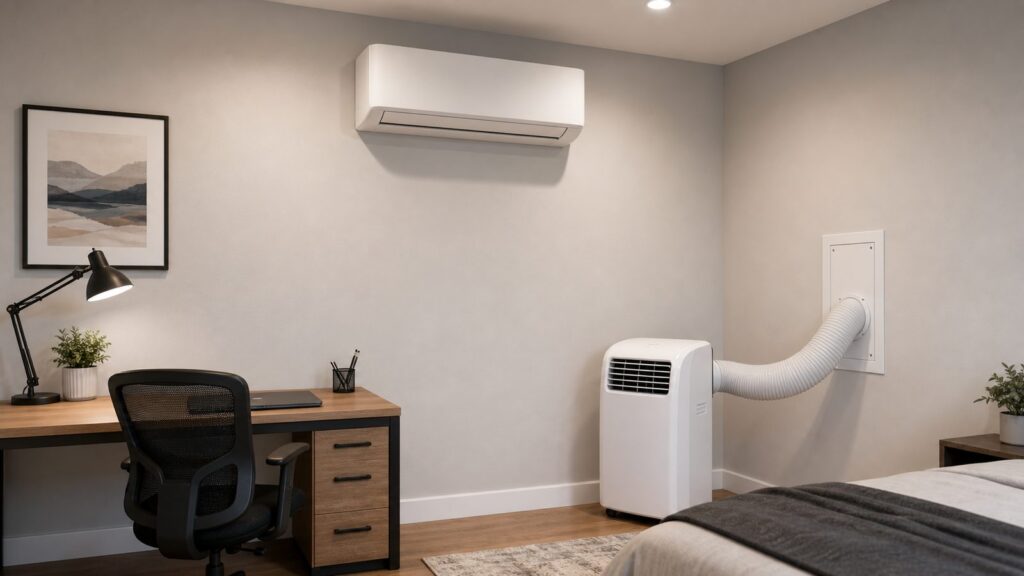
If you need the best air conditioner for a small room with no window, the first answer is simple: there is no true compressor-based “ventless air conditioner” that can cool a sealed room. A real AC moves heat out of the room. That heat has to go somewhere: through a window, sliding door, exterior wall, dedicated vent, or a ductless mini-split outdoor unit.
For most small no-window rooms in the U.S., the best short-term answer is a properly sized dual-hose portable AC vented through a sliding door panel or a code-compliant exterior wall vent. The best permanent answer is usually a single-zone ductless mini-split, especially for bedrooms, home offices, additions, finished garages, and converted spaces where comfort matters year-round.
As an Amazon Associate I earn from qualifying purchases.
Do these 3 things before closing this tab:
1Scan for outdated or missing drivers - takes under a minute2Clear out junk files and repair common Windows errors3Fix the driver behind crashes, sound loss and screen glitchesOn our job sites, we treat “no window” as a construction constraint, not a gadget problem. A portable unit can help when the room has a practical vent path. A wall sleeve can work when the exterior wall allows it. A mini-split is the cleaner long-term system when the owner can approve permanent work. What does not work is dumping hot, wet exhaust into an attic, closet, drop ceiling, or crawlspace and hoping the problem disappears.
Start With the Rule: AC Must Reject Heat Somewhere
A compressor air conditioner cools indoor air by absorbing heat at the evaporator coil and rejecting that heat at the condenser side. In a window unit, the hot side sits outdoors. In a portable AC, the hot side is inside the machine, so a hose must exhaust heat outside. In a mini-split, the indoor head sends refrigerant to an outdoor condenser.
Popular on Amazon
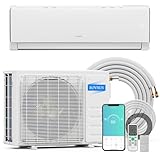
- 【All-Season Integrated Mini Split】: Our mini split air conditioner and heating system is an all-season solution, featuring air conditioning, robust heat pump, dehumidifie and fan function. It includes automatic defrosting, self-diagnosis, 24-hour timer, wind swing, sleep mode, ECO mode, and more
- 【Energy-Saving Cooling & Heating】: This split air conditioner is equipped with high-power compressor, heat pump & innovative inverter technology. Its 17 SEER2 grade ensures optimal performance in every season with 25% energy-savings rather than others' 14 SEER2 ac unit. It is also ETL and AHRI certified, guaranteeing the reliability of electricity bill savings (functioning in temperatures 5°F-122°F)
- 【WIFI-Enabled & Voice Control】: Apart from the remote control, it can seamlessly integrate with a mobile APP or voice control (compatible with Alexa/Google Assistant). Set routines for optimal temperature changes, allowing you to adjust your mini split air conditioner from anywhere so you can enjoy endless comfort as soon as you arrive home
- 【Ultra-Quiet Operation】: This air conditioner operates ultra-silently at only 29 dBa at low speed. The smart 24-hour timer and low-noise operation ensure a sweet night of sleep. More importantly, the display screen on the indoor unit can be turned off when not needed, so it won't disturb your sleep
- 【100% Satisfaction】: We are confident to stand behind our product and would like to guarantee you a best shopping experience upright position for 24 hours. Extra professional installation is required. Perfect for Home, Storage, Office, Business or Light Commercial Use. We are confident to stand behind our product and would like to guarantee you a best shopping experience
That is why small “ventless AC” claims are misleading. If a device has no exhaust hose, no outdoor unit, and no refrigerant loop rejecting heat outdoors, it is not doing the same job as an air conditioner. It may be a fan, a personal evaporative cooler, or a small humidifying cooler. Those can feel pleasant at close range in dry climates, but they do not remove heat from a sealed room.
For a small room, the practical question is: what is the safest and most durable path for heat rejection?
Outdated Drivers Are Slowing You Down
One free scan finds every outdated or missing driver and matches the right update for your exact hardware.Free scan · exact hardware matchPC Slower Than It Used to Be?
A free scan shows the junk files, broken settings and background clutter dragging Windows down - then fixes them in one click.Free scan · Windows 10 & 11- Temporary heat rejection: portable AC hose through a sliding door kit, custom panel, or approved wall vent.
- Semi-permanent heat rejection: through-wall room AC installed in a framed and flashed wall sleeve.
- Permanent heat rejection: ductless mini-split with an outdoor condenser, refrigerant lines, condensate drainage, and dedicated electrical work as required.
If none of those paths are available, you can improve comfort with fans, dehumidification, insulation, air transfer, and shading, but you should not expect real air conditioning from a sealed room appliance.
Best Options for a Small Room With No Window
The right system depends on whether you rent or own, whether an exterior wall is available, whether the room is used for sleeping, and how much permanent work is allowed. Here is the construction-minded comparison we use when advising homeowners.
| Situation | Best Cooling Path | Typical 2026 Cost | Best For | Watchouts |
|---|---|---|---|---|
| Renter with sliding door nearby | Dual-hose portable AC with sliding-door panel | $275-$700 for unit; $20-$80 for sealing parts | Temporary bedroom, office, studio | Panel must seal tightly; hose length should stay short |
| Owner with exterior wall access | Portable AC with dedicated wall vent or through-wall AC | $425-$1,100 for portable plus vent work; $950-$2,700+ for through-wall installed | Small rooms used seasonally | Flashing, damper, pest screen, and electrical load matter |
| Bedroom, nursery, office, or addition | Single-zone ductless mini-split | $2,000-$14,500 installed; average often around $3,000 for simpler jobs | Quiet, efficient, all-season comfort | Needs proper sizing, permits, condensate routing, and commissioning |
| Finished basement room | Mini-split or designed air transfer plus dehumidification | $2,000-$15,000+ for mini-split depending on complexity | Humid spaces, sleeping rooms, offices | Check egress, ventilation, humidity, and drain location |
| Garage conversion | Mini-split after insulation and air sealing | $3,000-$15,000+ depending on electrical and envelope work | Converted living space | Uninsulated garages overwhelm small portable units |
| Interior room with no exterior wall | HVAC redesign, transfer path, or ductless route to exterior | Highly variable; often contractor-designed | Remodels, offices, interior bedrooms | Do not vent into ceiling plenums unless specifically designed and allowed |
Portable AC: Best Short-Term Choice When You Have a Vent Path
A portable air conditioner is often the fastest way to cool a small room without a traditional window. It sits on the floor, plugs into a receptacle, collects or evaporates condensate depending on the model, and exhausts heat through a hose. For a small room around 150 to 350 square feet, many real-world units fall in the 5,000 to 8,000 DOE/SACC BTU range.
Pay attention to the label. Portable ACs are often advertised with two BTU numbers: ASHRAE and DOE/SACC. The ASHRAE number is usually higher. The DOE/SACC number is the better real-world comparison because it accounts for portable-unit losses. A unit marketed as 8,000 BTU ASHRAE may be around 5,000 BTU DOE. When comparing models, use DOE/SACC first.
Free tools Windows power users keep installed
One-click scans. No signup required.
Choose Dual-Hose Over Single-Hose When Possible
For a no-window room, a dual-hose portable AC is usually the better portable option. A single-hose unit uses indoor air to cool its condenser and blows that air outside. That creates negative pressure, which can pull hot outdoor air or attic air back into the house through cracks, door gaps, recessed lights, and wall cavities. In a leaky or sunny room, that can make the unit work harder and cool less effectively.
A dual-hose unit uses one hose for intake air and one for exhaust air. It still needs careful setup, but it reduces the pressure penalty. For bedrooms, small offices, and converted rooms, that difference is noticeable.
What to Look For in a Portable AC
Skip the long feature lists and compare the things that affect comfort and installation:
- DOE/SACC cooling capacity: commonly 5,000-8,000 BTU for 150-350 square feet.
- Hose configuration: dual-hose preferred where available.
- CEER efficiency rating: higher is better for energy use.
- Noise rating: many portable units run roughly in the 50-60 dBA range; bedrooms should be chosen carefully.
- Condensate handling: self-evaporating models still may need draining in humid weather.
- Hose diameter and length: long, kinked hoses reduce performance.
- Warranty and parts availability: especially for hose adapters, drain plugs, and panels.
Expect to spend about $275-$600 for common small-room portable AC units in 2026. Premium dual-hose or smart models commonly run $450-$700. Add $20-$80 for weatherstripping, foam seals, hose extensions, or sliding-door panels. If a contractor fabricates a clean exterior-wall vent or custom insert, budget $150-$500 or more depending on wall type and finish.
Venting a Portable AC Without a Window
A portable AC can work in a room with no standard window if it has another safe route outdoors. The vent route should be short, sealed, weather-resistant, and dedicated to the AC. A sloppy vent wastes cooling capacity and can let water, insects, hot air, or combustion byproducts into the home.
Sliding Door Vent Kit
If the room has access to a sliding patio door, this is often the least invasive solution. Most kits use a vertical adjustable panel, usually around 6 to 10 inches wide, with a hose opening. For a better installation, we seal the edges with foam weatherstripping, check that the door still locks or has a security bar, and keep the hose as straight as possible.
This works well for renters because it can be removed at the end of the season. The downside is appearance, air leakage, and security. It is also easy to create a poor seal at the top or bottom of the panel, especially on tall doors.
Exterior Wall Vent
A dedicated wall vent can be a clean solution for owners, but it needs to be built like an exterior penetration, not like a random hole. A good wall vent should include a properly sized sleeve, exterior hood, backdraft damper, pest screen that does not overly restrict airflow, air sealing at the interior, and flashing integrated with the water-resistive barrier where the wall assembly requires it.
Recommended Free Tools
The sleeve should slope slightly to the exterior so incidental water drains out, not into the wall. For many wall assemblies, a fall of about 1/8 inch to 1/4 inch across the sleeve is enough. The exterior hood should be placed where hot discharge air will not blow directly into a condenser, soffit vent, crawlspace opening, or neighbor’s window.
Custom Panel in a Door or Transom
In some older homes and additions, we have used a removable insulated panel in a door opening, transom, or non-egress opening. The panel should be rigid, sealed, and weather-resistant. Foam board alone is usually too flimsy unless it is laminated or framed. A better assembly might use painted plywood, PVC sheet, or composite panel with gasketed edges and a properly mounted hose adapter.
Dryer-Style Hood: Only If Dedicated and Allowed
A dryer-style exterior hood may look convenient, but do not share an active dryer vent with an AC. Dryer exhaust carries lint and moisture, and backflow or restriction can create real problems. If a similar hood is used, it should be dedicated to the AC, correctly sized for the hose, and allowed by local code and the manufacturer’s instructions.
Through-Wall AC: Useful, But Only for the Right Wall
A through-wall air conditioner can be a good fit when the room has an exterior wall and the owner wants something more stable than a portable unit. It is not the same as pushing a window unit through a wall. Through-wall units are designed for sleeve installation, rear ventilation, condensate management, and wall support.
Quick wins for a faster PC:
Fix the driver behind crashes, sound loss and screen glitchesFind Drivers →Clear out junk files and repair common Windows errorsFree Scan →Scan for outdated or missing drivers - takes under a minuteDriver Scan →Typical 2026 pricing runs about $450-$1,200 for the unit and $500-$1,500 or more for labor. The final cost depends on siding type, masonry, wall thickness, interior repair, electrical work, structural framing, and whether the wall has plumbing, wiring, shear panels, brick veneer, stucco, or fire-rated construction.
Installed correctly, the sleeve is framed, supported, flashed, insulated around the perimeter, and sealed. Installed poorly, it becomes a water leak, air leak, pest path, or rot problem. This is why we do not recommend treating a through-wall AC as a casual weekend cutout unless the homeowner is already comfortable opening and rebuilding exterior walls.
Also popular on Amazon

- All-in-One Comfort Control: This mini split AC/heating system provides cooling, heating, dehumidifying, and fan modes with 61°F–90°F settings, plus a 24-hour timer and sleep mode for everyday comfort
- Energy-Efficient Performance: Featuring an advanced invert heat pump with a SEER2 18 rating, this system delivers strong airflow while cutting energy usage and electricity costs without reducing comfort
- Stable & Reliable Year-Round Use: This 12,000 BTU ductless mini split AC/heating operates in extreme conditions (5°F to 122°F) and efficiently covers spaces up to 750 sq. ft. for all-season comfort
- Quiet Operation & Easy Control: This split AC unit runs quietly below 29dB to create a peaceful environment at home or work, with simple, intuitive controls for effortless daily operation
- Self-Cleaning & Warranty Protection: This Air Conditioner offers self-cleaning function, easily removable filters and air blades for convenient cleaning, plus a 5-year compressor and 7-year parts warranty
Through-wall AC also has a visual impact outside the house. Condos, HOAs, historic districts, and multifamily buildings may restrict exterior penetrations. Before buying the unit, confirm that the wall can be altered and that the equipment location is acceptable.
Ductless Mini-Split: Best Permanent No-Window Solution
For owners who want reliable comfort in a small no-window room, a single-zone ductless mini-split is usually the best answer. It does not need a window. It uses an indoor wall-mounted head connected to an outdoor condenser by refrigerant lines, control wiring, and a condensate drain. Many systems provide both cooling and heat-pump heating, which makes them useful year-round.
The Tool Desk
Outbyte PC Repair FREERepair Windows errors before they cause bigger problemsFix Now →Outbyte Driver Updater FREEScan for outdated or missing drivers - takes under a minuteDriver Scan →For a bedroom, office, finished basement, addition, or garage conversion, a mini-split typically beats a portable AC on noise, efficiency, dehumidification, and comfort. The indoor head is quiet because the compressor is outside. There is no large floor unit, no hot hose, and no temporary door panel.
Installed costs vary widely. HomeAdvisor’s 2026 range is about $2,000-$14,500, with an average around $3,000 for many single-zone jobs. Manufacturer guidance often places ductless installation in a broader $2,500-$15,000+ range depending on capacity, efficiency, number of indoor heads, line-set length, electrical work, and installation complexity.
What Good Mini-Split Installation Looks Like
A quality mini-split job starts with sizing. Bigger is not automatically better. ENERGY STAR guidance for room ACs makes the same point: oversized equipment can cycle too quickly, waste energy, and do a worse job removing humidity. For a mini-split, we want a Manual J calculation or an equivalent load assessment that accounts for room size, ceiling height, insulation, sun exposure, windows or glass doors nearby, electronics, occupants, and air leakage.
Indoor-head placement matters. In bedrooms, we avoid blowing directly across the bed when possible. In offices, we avoid aiming air straight at a desk chair. The line set should be short and protected where practical, with clean exterior routing. A gravity condensate drain is preferred when the layout allows it because condensate pumps add noise, maintenance, and failure points.
What’s actually slowing this PC down?
Pick the symptom - the matching free tool is one click away.
Commissioning should be documented. That means the installer pressure-tests or leak-checks the refrigerant circuit, pulls a proper vacuum, verifies electrical connections, checks condensate drainage, and records operating conditions. A neat installation is good; a commissioned installation is better.
Evaporative Coolers and “Mini AC” Devices: Where They Fit
Evaporative coolers are not air conditioners. They cool by evaporating water into moving air. In dry climates, with fresh airflow, they can make a small area feel cooler. In humid climates or closed rooms, they add moisture and performance drops quickly.
That distinction matters in a no-window room. If the room is sealed, an evaporative cooler keeps adding humidity. The air may feel clammy, the cooling effect fades, and the moisture can aggravate condensation or musty conditions. For much of the U.S., especially the Southeast, Midwest summer humidity, basements, bathrooms, and interior rooms, evaporative cooling is not a replacement for AC.
Small personal coolers in the $55-$200 range may help one person at a desk if the air is dry. They will not cool a 150- to 350-square-foot room the way a 5,000-8,000 DOE/SACC BTU air conditioner can. If the product has a tiny water tank, a USB plug, and no exhaust path, think of it as a comfort accessory, not room cooling equipment.
How to Size Cooling for a Small No-Window Room
For many small rooms, the right portable AC size is roughly 5,000-8,000 DOE/SACC BTU for about 150-350 square feet. That is a starting point, not a final design. A shaded 10-by-12-foot office with good insulation is very different from a 16-by-20-foot finished garage with afternoon sun, a computer workstation, and a poorly insulated ceiling.
Before buying, measure the room and write down the conditions:
- Square footage: length multiplied by width.
- Ceiling height: rooms over 8 feet have more air volume.
- Sun exposure: west and south exposure can add substantial afternoon load.
- Insulation: finished garages and additions are often under-insulated.
- Air connection: a large door undercut or transfer grille changes how the room shares air.
- Occupants: each person adds heat.
- Electronics: gaming PCs, printers, servers, and AV gear add load.
- Humidity: humid rooms need longer run time for dehumidification.
Oversizing creates problems. A unit that is too large can cool the air temperature quickly but shut off before it removes enough moisture. The result is a room that feels cold and damp. Undersizing also fails, because the unit runs constantly and never catches up during peak heat. For small rooms, sizing discipline matters more than buying the biggest model on the shelf.
What Not to Do in a No-Window Room
Most cooling failures we see are not caused by the AC itself. They are caused by bad heat rejection, poor sealing, or unsafe electrical shortcuts.
Do Not Vent Into an Attic, Closet, Crawlspace, or Drop Ceiling
A portable AC exhaust hose carries hot air and moisture. Venting it into an attic, closet, crawlspace, garage, or ceiling plenum can create heat buildup, condensation, mold risk, fire concerns, and code problems. It can also push the heat right back into the building. Unless a mechanical designer and local authority approve a specific heat-rejection path, exhaust belongs outdoors.
Do Not Use Extension Cords
Portable AC units draw real current. Many manufacturers warn against extension cords and power strips. Use a properly grounded receptacle on a circuit that can handle the load. A common 120V portable AC may run from a standard receptacle, but that does not mean the circuit is lightly loaded. If the breaker trips, lights dim, plugs feel warm, or the receptacle is loose, stop and call an electrician.
Do Not Leave an Unsealed Wall Hole
A wall vent needs air sealing, weather protection, pest control, and water management. A raw hole through siding or sheathing can let bulk water into the wall and create long-term damage. The exterior hood, flashing, sealant, sleeve, and interior trim all matter.
Do Not Ignore Combustion Safety
Single-hose portable AC units can depressurize a room. In homes with atmospherically vented water heaters, furnaces, boilers, or fireplaces, pressure changes can contribute to backdrafting. This is another reason dual-hose units are preferred and why mechanical rooms, basements, and tight houses deserve extra caution.
Electrical, Permits, and Code Notes
Permits are local. The authority having jurisdiction, often called the AHJ, decides what requires a permit and inspection in your city or county. National electrical and energy standards influence the work, but local rules control the actual approval process.
As a practical rule, plugging a portable AC into an existing suitable receptacle usually does not require a building permit. Cutting a new exterior wall vent may require approval depending on the wall, building type, fire rating, HOA rules, and local code. Installing a through-wall AC may involve building, electrical, and sometimes mechanical review. Installing a mini-split commonly requires mechanical and electrical permits, an outdoor disconnect, proper overcurrent protection, and equipment installed according to the listing and manufacturer’s instructions.
Also popular on Amazon

- 【Unmatched Energy Efficiency with 22 SE2ER2】 Slash your utility bills with our advanced Inverter technology and industry-leading 22 SEER2 rating. Unlike standard units that constantly stop and start, our DC Inverter compressor adapts its speed to maintain the perfect temperature with minimal energy consumption. Paired with eco-friendly R32 refrigerant (GWP 675), this 115V mini split system delivers powerful 12,000 BTU cooling and 12,300 BTU heating while being kind to the environment. It's the smart, green choice for your home.
- 【Powerful & Fast Year-Round Comfort】 Designed for spaces up to 750 sq. ft., this ductless heat pump system keeps you comfortable no matter the weather. Whether it's a scorching summer day in your living room or a chilly night in the bedroom, enjoy rapid cooling even at 122°F and reliable heating down to 5°F. Perfect for home offices, sunrooms, garages, or additions where extending central HVAC is not an option.
- 【Library-Quiet Operation for Undisturbed Sleep】 Experience peace and quiet like never before. With noise levels as low as 23 dB (quieter than a whisper!), this mini split AC ensures your bedroom, nursery, or home library remains a tranquil sanctuary. Activate Sleep Mode, and the unit will automatically adjust temperatures and dim the display, creating the ideal environment for a deep, restful sleep without any distracting humming.
- 【Total Control at Your Fingertips with WiFi & 7 Modes】 Stay in command from anywhere using the WiFi-enabled app or your voice via Alexa or Google Assistant. Forgot to turn off the AC? Use your phone. Want it cool before you arrive home? Schedule it. Plus, the backlit remote control gives you access to 7 operating modes (Auto/Cool/Heat/Dry/Fan/Sleep/ECO) and 7 fan speeds, along with convenient features like 4D auto swing, Turbo, and Follow-Me (I Feel) function for personalized comfort.
- 【Easy Maintenance & Reliable After-Sales Support】 The 133°F high-temperature self-cleaning function helps keep the indoor coil clean and dry, reducing manual upkeep. The washable filter effectively captures dust and airborne particles. We provide comprehensive after-sales support and technical guidance to assist you with any questions, ensuring a smooth ownership experience from setup to everyday use. Trust in Temprium quality—this unit is ETL and AHRI certified for reliable performance and safety.
Electrical upgrades can change the budget. A portable 120V unit may work on an existing dedicated or lightly loaded circuit. A through-wall unit or mini-split may need a new dedicated circuit, breaker changes, GFCI or AFCI protection where required, an outdoor disconnect, or a panel capacity review. In older homes, the electrical work can cost more than the cooling unit itself.
Condo and multifamily projects need another layer of review. Exterior walls may be common elements. Penetrations through rated assemblies can require specific firestopping. Outdoor condenser locations may be restricted for noise, drainage, or appearance. Get those answers before buying equipment.
When to DIY vs. When to Hire a Pro
A careful homeowner can handle some temporary cooling setups. Other work belongs with a qualified HVAC contractor, electrician, or remodeler because the risks are hidden inside the wall, panel, or building envelope.
Reasonable DIY Work
DIY is reasonable for setting up a portable AC with a manufacturer’s sliding-door kit, adding removable foam weatherstripping, routing the hose without kinks, cleaning filters, and draining condensate according to the manual. Expect setup to take 30 to 90 minutes if the kit fits the opening. Add more time if you need to cut a removable panel or improve the seal.
DIY is also reasonable for comfort improvements that reduce load: blackout shades, door sweeps, weatherstripping, LED bulbs, moving heat-producing electronics, and using a fan to mix air. These do not replace AC, but they can reduce run time and improve comfort.
Hire a Pro
Hire a pro when the work involves cutting an exterior wall, flashing a penetration, altering electrical circuits, installing a through-wall sleeve, routing refrigerant lines, setting an outdoor condenser, or draining condensate into a plumbing or exterior system. Also hire help for finished basements, garage conversions, nurseries, bedrooms used with the door closed, and any room where moisture, egress, or ventilation is already questionable.
For a mini-split, professional installation is not just about neat appearance. Refrigerant handling, vacuum testing, electrical protection, condensate drainage, and commissioning all affect lifespan and performance. A poor installation can turn good equipment into a maintenance problem.
Cost Planning for 2026
For a small no-window room, costs break into three buckets: the cooling equipment, the vent or installation path, and the electrical or building work needed to make it safe.
| Option | Typical 2026 Budget | What Is Usually Included | Best Use |
|---|---|---|---|
| Personal evaporative cooler | $55-$200 | Small fan, water tank, sometimes USB power | Personal spot cooling in dry air only |
| Small portable AC | $275-$600 | 5,000-10,000 DOE/SACC BTU class, hose, basic kit | Temporary room cooling with exterior vent path |
| Premium dual-hose portable AC | $450-$700 | Dual-hose setup, better controls, often smart features | Bedrooms and offices where portable is the only practical option |
| Portable AC accessories | $20-$80 DIY; $150-$500+ custom | Foam seals, hose parts, panels, exterior hood or fabricated insert | Improving seal and exhaust route |
| Through-wall AC | $450-$1,200 unit plus $500-$1,500+ labor | Unit, sleeve, wall opening, flashing, finish repair as needed | Owner-approved exterior wall installation |
| Single-zone ductless mini-split | $2,000-$14,500 installed; many simple jobs near $3,000 | Indoor head, outdoor condenser, line set, drain, electrical, startup | Permanent quiet cooling and heating |
The biggest cost drivers are room size, ceiling height, sun exposure, insulation, humidity, vent distance, exterior-wall access, siding or masonry type, condensate disposal, local labor rates, permit fees, brand, warranty, and whether the building is a rental, condo, historic property, or HOA-controlled exterior.
Our Practical Recommendation
If you rent and have a sliding door or approved temporary vent path, buy a properly sized dual-hose portable AC and spend extra effort sealing the panel. Use the DOE/SACC BTU rating, not just the larger advertised ASHRAE number. For a typical 150- to 350-square-foot small room, start your search around 5,000-8,000 DOE/SACC BTU.
Quick wins for a faster PC:
Clear out junk files and repair common Windows errorsFree Scan →Fix the driver behind crashes, sound loss and screen glitchesFind Drivers →If you own the home and want seasonal cooling at a lower upfront cost, consider a through-wall AC or a portable AC with a professionally built wall vent. This can make sense for a workshop, hobby room, or occasional office, provided the exterior wall can be penetrated correctly.
If the room is used every day, used for sleeping, or expected to stay comfortable all year, choose a single-zone ductless mini-split. It costs more upfront, but it solves the no-window problem cleanly: no floor unit, no hot hose, no door panel, less noise, better efficiency, and heat-pump heating in many climates.
The worst choice is pretending the room does not need a real exhaust path. A no-window room can be cooled well, but only when the system has a legitimate way to move heat outside and the installation respects the wall, wiring, moisture, and code conditions around it.
Frequently Asked Questions
Can you use a portable air conditioner in a room with no window?
Yes, but only if the portable AC can exhaust hot air outdoors through another path, such as a sliding door panel, dedicated wall vent, or approved custom opening. A portable AC cannot cool a sealed room effectively without exhaust.
Is there a real ventless air conditioner for a small room?
Not in the compressor-based AC sense. Real air conditioners must reject heat somewhere. Ventless products are usually fans or evaporative coolers, which may help one person in dry air but will not replace AC in a closed, humid, or sealed room.
What size AC do I need for a small no-window room?
Many small rooms around 150 to 350 square feet use about 5,000 to 8,000 DOE/SACC BTU of portable AC capacity. Room height, sun exposure, insulation, electronics, occupants, and humidity can raise or lower the actual load.
Can I vent a portable AC into an attic, closet, garage, or ceiling?
No. Portable AC exhaust contains heat and moisture. Venting it into an attic, closet, crawlspace, garage, or drop ceiling can create moisture damage, heat buildup, fire concerns, and code problems. Exhaust should go outdoors through an approved path.
What is the best permanent AC for a bedroom with no window?
A single-zone ductless mini-split is usually the best permanent option. It is quieter and more efficient than a portable AC, does not need a window, can dehumidify well, and often provides heat-pump heating.
The Tool Desk
Outbyte Driver Updater FREEScan for outdated or missing drivers - takes under a minuteDriver Scan →Outbyte PC Repair FREERepair Windows errors before they cause bigger problemsFix Now →Do I need a permit to add AC to a no-window room?
It depends on local rules. Plugging in a portable AC usually does not require a permit, but cutting an exterior wall, adding electrical circuits, installing a through-wall unit, or installing a mini-split commonly may require permits and inspections.
Quick Recap
Product prices and availability are accurate as of the date/time indicated and are subject to change. Any price and availability information displayed on Amazon at the time of purchase will apply.

