Do these 3 things before closing this tab:
1Clear out junk files and repair common Windows errors2Scan for outdated or missing drivers - takes under a minute3Repair Windows errors before they cause bigger problemsSome links on this page are affiliate links: if you buy through them we may earn a commission, at no extra cost to you.
Extra large clothes hangers are worth buying when your closet has broad-shouldered garments, heavy coats, suits, robes, plus-size clothing, or structured jackets that are getting stretched, creased, or slumped on standard hangers. They are not the best first purchase if your main problem is simply too many shirts on one rod. In that case, slim non-slip hangers, double-hang rods, better shelving, or a new closet layout usually do more.
On our job sites, we see the same closet problem over and over: the homeowner buys premium hangers, but the builder-grade rod, shallow closet depth, weak shelf clips, poor lighting, or single long hanging zone is the real bottleneck. A good closet upgrade starts with the clothing, then the hanger, then the structure supporting it.
As an Amazon Associate I earn from qualifying purchases.
Free tools Windows power users keep installed
One-click scans. No signup required.
For most homes, standard adult hangers are roughly 16 to 17 inches wide. Extra large clothes hangers are commonly around 18 to 20 inches wide, with heavier frames and wider shoulder profiles. That extra width matters for coats and larger garments because it supports the shoulder seam instead of letting the fabric collapse. But it also consumes more rod width and may need more closet depth so doors close without crushing sleeves.
What Extra Large Clothes Hangers Actually Solve
Extra large hangers solve garment support problems first. Space savings are secondary, and sometimes they do the opposite. A wide wood suit hanger can preserve the shape of a coat better than a thin hanger, but it also takes more room on the rod. That tradeoff is fine for a wool coat, blazer, robe, or suit jacket. It is wasteful for everyday T-shirts.
Popular on Amazon

- 24 PACK: Replace all your regular hangers at once and enjoy the benefits of these versatile hangers. Perfect for suits, dresses, pants, shirts, sweaters, blouses, scarves, and more.
- NON SLIP VELVET: Say goodbye to slipping clothes with our non-slip velvet hangers. The luxurious velvet texture ensures a secure grip while adding a touch of elegance to your closet.
- SPACE SAVING: These hangers have a slim design that is perfect for maximizing closet space. Free up space in your closet for more clothes and accessories.
- HOLDS 10LBS: Crafted from high-quality ABS plastic with a zinc hook, these hangers are durable and can hold up to 10 pounds each.
- DIMENSIONS: Designed with precision, these plastic hangers have perfect dimensions 21.20" x 0.19" x 10.90” making them ideal for maximizing your closet space.
The right use cases are straightforward: overcoats, sport coats, suit jackets, heavy sweaters that must hang, robes, big-and-tall shirts, motorcycle jackets, winter gear, and garments with broad shoulder seams. If the hanger ends several inches inside the shoulder seam, the garment will droop. If the hanger extends past the seam, it can create points or bumps in the sleeve head. Measure your best-fitting jacket from shoulder seam to shoulder seam, then choose a hanger width that lands close to that number.
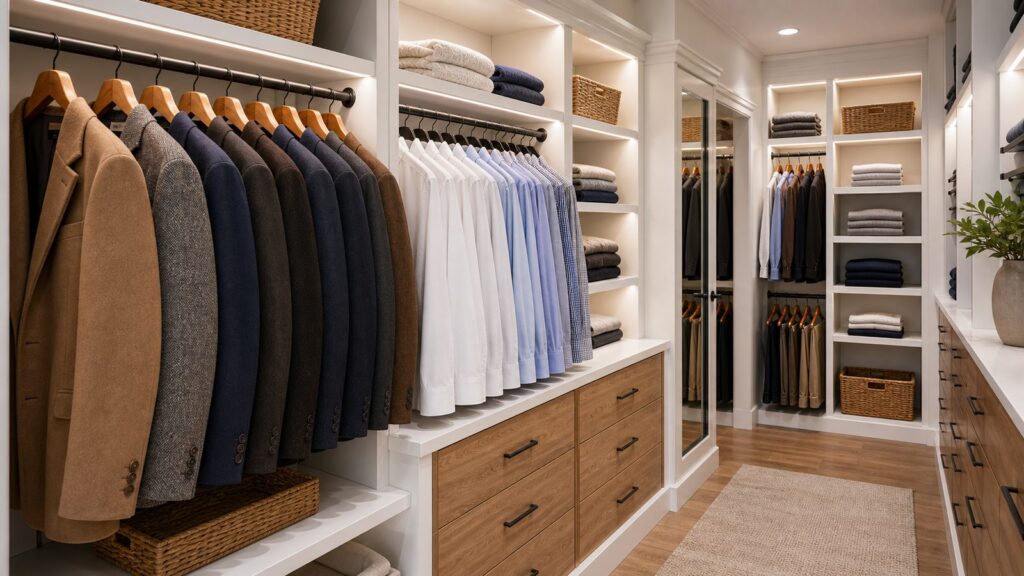
Most households should not convert an entire closet to oversized hangers. A better setup is zoned: wide-shoulder wood or heavy-duty hangers for outerwear and structured pieces, slim velvet or thin non-slip hangers for shirts and dresses, clip hangers for skirts, and padded hangers for delicate items. Consistency matters within each zone because mixed hanger heights and widths waste space and make the closet harder to scan.
PC Slower Than It Used to Be?
A free scan shows the junk files, broken settings and background clutter dragging Windows down - then fixes them in one click.Free scan · Windows 10 & 11Outdated Drivers Are Slowing You Down
One free scan finds every outdated or missing driver and matches the right update for your exact hardware.Free scan · exact hardware matchExtra Large vs Space-Saving Hangers
One of the biggest mistakes is treating extra large hangers and space-saving hangers as the same product category. They solve different problems. Extra large hangers protect shape. Slim and cascading hangers increase capacity. In a well-designed closet, you may use both, but not in the same way.
| Hanger Type | Best Use | Typical 2026 Cost | Construction Concern |
|---|---|---|---|
| Budget plastic or velvet hangers | Shirts, light dresses, everyday wear | About $0.35-$1.50 per hanger in multi-packs | Can save rod width, but poor for heavy coats or structured jackets |
| Extra large wood or wide-shoulder hangers | Coats, suits, robes, big-and-tall garments | Often $1.50-$5+ per hanger; many 20- to 30-packs run about $18-$46 | Need adequate rod depth and stronger supports because garments are heavier |
| Cedar or premium specialty hangers | Wool, suits, seasonal storage, higher-end wardrobes | Often $2-$5+ per hanger, with premium options higher | Good for garment care, but does not fix a weak rod or poor layout |
| Cascading space-saving hangers | Light garments where vertical space is available | Commonly about $10-$25 for small packs; some 4- to 10-packs around $17-$20 | Can multiply point loads on rods and brackets |
Slim hangers are useful when the closet has adequate rod strength but limited horizontal space. Cascading hangers can help in a tall section, but we treat them carefully. Some common cascading organizers hold about five garments and list limits around 6 pounds horizontally or 8 pounds vertically per organizer. If you hang five jackets from one hook, the rod feels that load at one point instead of spread across several inches. That is why cascading hardware is not a free structural upgrade.
Measure the Closet Before You Buy
Before buying hangers, take 20 minutes and measure the closet. You need rod length, closet depth, door clearance, shelf height, rod height, and the distance between supports. Many reach-in closets are about 24 inches deep. That usually works for standard hangers and many wide-shoulder hangers, but bulky coats can still rub bifold, sliding, or hinged doors if the rod is set too far forward.
A typical adult garment on a hanger needs enough depth for the hanger and sleeve volume. If your closet is shallow, extra large hangers may make clothing look worse because the shoulders and sleeves get compressed every time the door closes. In that case, slim hangers, a relocated rod, or a different door configuration may be the better fix.
What’s actually slowing this PC down?
Pick the symptom - the matching free tool is one click away.
Next, count the wardrobe by category. We use a simple job-site inventory: long-hang garments, short-hang garments, bulky coats, pants, bags, shoes, folded items, seasonal bins, and accessories. A closet with 80 short-hang items should not be designed like a closet with 20 dresses and 12 coats. Double-hang sections are often the easiest capacity win: an upper rod for shirts or jackets and a lower rod for shirts or folded pants can nearly double useful hanging area for short garments.
Rod Strength and Shelf Loads Matter
Extra large hangers often carry heavier clothing, so the rod and shelf system become part of the decision. A long builder-grade wood rod with end sockets and no center support may perform fine with shirts but sag under coats. Wire shelf-and-rod systems vary widely. Current big-box examples show some wire shelving rated around 15 to 44 pounds per linear foot depending on the system and stud conditions, while other larger shelf-and-rod products list maximum recommended capacities around 180 to 300 pounds depending on mounting style.
Also popular on Amazon

- Simplistic Design: Extra large hangers that work well for plus size clothes and everyday wardrobe organization
- Extra Large Size: Designed for XL and XXL clothing including shirts, coats, and dresses with 21-inch width
- Velvet Material Construction: Made with velvet coating to prevent clothes from slipping and provide gentle grip on fabrics
- Reversible Design: Oversized hangers work effectively for both men's shirts and coats as well as women's dresses and skirts
- 360-Degree Swivel Hook: Chrome hook rotates a full 360 degrees for easy hanging and convenient closet organization
Heavy-duty systems can carry more when installed correctly. ClosetMaid’s MaxLoad system states support up to 100 pounds per linear foot when ShelfTrack standards are stud-mounted no more than 16 inches apart. Rubbermaid adjustable systems list examples such as 300 pounds per upright and 100 pounds per bracket. Those numbers are useful, but only when the installation matches the instructions. A rated bracket installed into drywall with weak anchors is not the same as one fastened into studs or blocking.
For rods with heavy garments, we prefer center supports on longer spans and positive fastening into studs or blocking. If the wall layout does not give you studs where supports are needed, add blocking during a remodel or use a properly engineered closet system. Drywall anchors have a place, but they should not be the primary plan for a rod full of winter coats.
The Tool Desk
Outbyte Driver Updater FREEScan for outdated or missing drivers - takes under a minuteDriver Scan →Outbyte PC Repair FREEClear out junk files and repair common Windows errorsFree Scan →Best Hanger Strategy by Garment Type
Coats and Heavy Outerwear
Use extra large wood, cedar, or heavy-duty plastic hangers with broad shoulders. Look for a strong hook, smooth finish, and enough shoulder width to support the garment seam. For heavy coats, avoid thin wire hangers and flimsy velvet hangers. They save space but do not support weight or shape well.
Suits, Blazers, and Structured Jackets
Use wide-shoulder suit hangers, ideally with a trouser bar if the suit is stored as a set. A good suit hanger protects the shoulder shape and reduces creasing. For larger jackets, an 18- to 20-inch hanger is often a better fit than a standard 16- to 17-inch hanger.
Shirts, Blouses, and Light Dresses
Slim non-slip hangers are usually the better space solution. If the closet is crowded, replacing bulky plastic hangers with slim hangers can reclaim meaningful rod width without changing the closet. Reserve extra large hangers for garments that need shoulder support.
Pants and Skirts
Use clip hangers, open-ended pant hangers, or a pull-out pant rack if you are upgrading the closet system. Hanging pants folded over standard bars works, but it can become hard to scan in a crowded reach-in closet. In a custom closet, dedicated pant storage is often worth the cost because it reduces daily friction.
Quick wins for a faster PC:
Repair Windows errors before they cause bigger problemsFix Now →Scan for outdated or missing drivers - takes under a minuteDriver Scan →Clear out junk files and repair common Windows errorsFree Scan →Delicate and Specialty Items
Padded hangers are best for delicate fabrics. For knits, folding is usually better than hanging because even a wide hanger can leave shoulder marks or stretch the fabric over time.
What It Costs in 2026
A hanger refresh is the low-cost end of the closet upgrade spectrum. A full closet build-out moves into carpentry, electrical, drywall, painting, and finish work. The right budget depends on whether you are solving a garment-care issue or a construction issue.
| Upgrade | Typical 2026 US Cost | Best For | Typical Timeline |
|---|---|---|---|
| Basic hanger refresh | About $0.35-$1.50 per hanger for budget plastic or velvet multi-packs | Light clothing, visual consistency, modest space gains | 1-2 hours for most closets |
| Extra large or heavy-duty hangers | Commonly $18-$46 for many 20- to 30-pack wood or heavy-duty options; premium hangers cost more | Coats, suits, robes, plus-size garments, broad shoulders | 1-2 hours plus sorting time |
| Cascading space-saving hangers | Often $10-$25 for small packs | Light garments where vertical space is unused | Less than 1 hour, but load must be checked |
| Closet shelving installation | Homewyse May 2026 estimate starts around $21.67-$33.48 per linear foot | Adding shelves, shoe storage, folded-item zones | Half day to 1 day for simple reach-ins |
| Closet organizer installation | Homewyse May 2026 estimate starts around $79.35-$110 per square foot | More complete storage systems with rods, shelves, towers, and accessories | 1-3 days depending on scope |
| Custom closet installation | Common national ranges include about $1,046-$3,210 typical, $1,500-$4,500 average, and wider installed ranges from $1,500-$20,000 | Walk-ins, premium finishes, drawers, lighting, mirrors, doors, and built-ins | Design plus ordering can take weeks; installation often 1-5 days |
Cost drivers include closet size, reach-in versus walk-in layout, number of hanging zones, drawer stacks, cabinet grade, melamine versus plywood or wood veneer, doors, mirrors, lighting, demolition, drywall repair, paint, flooring repairs, electrical relocation, local labor rates, and whether the project uses a kit, semi-custom system, or full custom millwork.
Also popular on Amazon

- Adjustable design allows to stretch its arm to fit large clothes.
- Swivel design attaches to clothe poles for easy hang.
- Designed with hook allow vertical hang to maximizse space.
- Prevent slippery design on edge,prevent pants slipped.
- Perfect for hanger suits,jackets,pants,shirts,dresses etc.
When Hangers Are Not the Real Fix
Hangers will not fix a closet that has the wrong layout. If every item is on one long rod, the closet is probably underbuilt for how people live now. Most homes need a mix of short hang, long hang, shelves, drawers or baskets, shoe storage, and a place for bags or seasonal items.
Hangers also will not fix bad lighting. We recommend high-CRI LED lighting in closet upgrades so clothing colors read accurately. This matters more than many homeowners expect, especially in primary closets where black, navy, charcoal, and dark green clothing can be hard to distinguish under poor light. Closet lighting must also meet clearance rules. Fixtures in clothes closets need to be selected and located so heat-producing lamps and exposed bulbs do not create a fire risk near stored clothing. LED fixtures are usually the practical choice, but placement still matters.
Moisture is another hidden issue. If a closet backs up to a bathroom, exterior wall, laundry area, or poorly ventilated room, packing clothing tighter with larger hangers can trap humidity. Before installing expensive wood hangers or built-ins, check for musty odors, condensation, staining, or swollen trim. Storage should not cover up a moisture problem.
When to DIY vs When to Hire a Pro
Good DIY Projects
A hanger refresh is usually DIY. So is measuring your wardrobe, sorting by garment type, replacing mismatched hangers, and adding light-duty bins or shelf dividers. A careful homeowner can also install some modular closet kits, especially in a simple reach-in closet with clear stud locations and square walls.
DIY makes sense when the work is cosmetic, the loads are light, and you are not moving electrical, repairing drywall, changing doors, or relying on questionable anchors. Budget one evening for sorting and hanger replacement. Budget a weekend for a basic kit if you are comfortable locating studs, leveling rails, cutting shelves, and patching small holes.
Call a Professional When Structure or Electrical Is Involved
Hire a pro when rods will carry heavy coats, when shelving spans are long, when you need blocking, when walls are out of square, when doors need modification, or when lighting is being added or relocated. A closet is a small room, but it still involves structure, electrical clearances, finish carpentry, and sometimes ventilation.
Permits vary by jurisdiction. Simple hangers and freestanding organizers do not need permits. Basic non-structural shelving usually does not either, although rental properties, condos, and HOAs may have separate rules. Electrical work, new hardwired lighting, relocation of outlets or switches, framing changes, and some door modifications may require permits or licensed trades. If we are opening walls, adding lighting, or changing the structure, we verify local requirements before work starts.
Independent reader supportYour contribution helps us test, update, and keep practical guides available for everyone.A Practical Upgrade Sequence
The best closet upgrades happen in phases. Start with the least invasive step that can solve the actual problem. First, inventory the closet and remove items that do not belong. Second, replace hangers by zone: extra large hangers for heavy structured clothing, slim hangers for light everyday garments, and specialty hangers only where needed. Third, check rod sag, bracket spacing, shelf movement, and door clearance.
Also popular on Amazon

- 𝐃𝐞𝐬𝐢𝐠𝐧𝐞𝐝 𝐅𝐨𝐫 𝐎𝐯𝐞𝐫 𝐒𝐢𝐳𝐞𝐝 𝐆𝐚𝐫𝐦𝐞𝐧𝐭𝐬: Our giant plastic hangers are specially made for oversized and bulky items. With an XL wide frame, they easily support your heaviest clothes hangers like heavy winter coats, heavy jackets, suits, and thick heavy garments without bending or breaking. These XL giant heavy duty hangers are the perfect solution for maximizing closet organization.
- 𝐁𝐮𝐢𝐥𝐭 𝐓𝐨 𝐋𝐚𝐬𝐭 - 𝐒𝐮𝐩𝐞𝐫𝐢𝐨𝐫 𝐒𝐭𝐫𝐞𝐧𝐠𝐭𝐡: Engineered for maximum durability, these 19-inch long plastic clothes hangers offer exceptional strength for even your heaviest garments. Whether you're hanging coats, jackets, or thick garments, our plastic coat hangers hold everything securely without sagging. Experience true long-term quality for your closet.
- 𝟑𝟔- 𝐏𝐚𝐜𝐤 𝐂𝐨𝐧𝐯𝐞𝐧𝐢𝐞𝐧𝐜𝐞: Get fully organized with this perfect 36 pack of giant plastic hangers. With plenty of closet hangers on hand, you can manage your entire wardrobe, from heavy jackets to delicate pieces while still having extras available. Organise your closet effortlessly with the ideal pack size.
- 𝐒𝐩𝐚𝐜𝐞 𝐒𝐚𝐯𝐢𝐧𝐠 & 𝐌𝐮𝐥𝐭𝐢 𝐅𝐮𝐧𝐜𝐭𝐢𝐨𝐧𝐚𝐥: Maximize your closet with our hangers space saving structure. Featuring wide notches, accessory bars, and extra hooks, these coat hangers for the closet easily hold belts, scarves, ties, and more. Their smooth design keeps garments in place while preventing snags or damage.
- 𝐂𝐮𝐬𝐭𝐨𝐦𝐞𝐫 𝐒𝐚𝐭𝐢𝐬𝐟𝐚𝐜𝐭𝐢𝐨𝐧: We stand behind the quality of our heavy duty clothes hangers. If you're not fully satisfied with your white hangers plastic, our support team is ready to assist. Your closet deserves the best, and your satisfaction is our priority.
If the closet still underperforms, reinforce the rods and shelves. Add center supports, use stud-mounted standards, or install a better-rated system. If you have mostly short garments, add double-hang sections. If folded clothing is stacked too high, add shelves or drawers. If shoes are eating the floor, build vertical shoe storage. If the closet is dark, upgrade lighting with code-compliant LED fixtures.
The final step is a custom or semi-custom build-out. That is where drawers, towers, adjustable shelves, pull-out accessories, integrated lighting, mirrors, doors, and finish details come together. It costs more, but it can turn a frustrating closet into storage that fits the household instead of forcing the household to work around a single rod and shelf.
Bottom Line
The best extra large clothes hangers are the ones used selectively. Buy them for garments that need width, shoulder support, and strength. Do not use them as a blanket fix for overcrowding. If the closet is shallow, poorly lit, overloaded, or built with weak supports, bigger hangers may make the problem more obvious.
For a smart homeowner, the winning approach is simple: measure first, match hanger type to garment type, protect heavy clothing with proper supports, and upgrade the closet system when the structure is the limiting factor. That is how you get more useful space, better organization, and clothing that comes out looking the way it should.
Frequently Asked Questions
Are extra-large clothes hangers worth it?
Yes, for coats, suits, robes, big-and-tall garments, and structured jackets. They are not the best choice for every item because they take more rod space than slim hangers.
Recommended Free Tools
What size are extra-large clothes hangers?
Many extra-large adult hangers are about 18 to 20 inches wide. Standard adult plastic or wire hangers are often closer to 16 to 17 inches wide.
Do space-saving hangers really save closet space?
Slim hangers can save horizontal rod space. Cascading hangers can also help, but they concentrate weight on the rod, so weak rods and brackets should be reinforced first.
Are wooden hangers better than velvet hangers?
Wooden wide-shoulder hangers are better for heavy coats, suits, and structured garments. Velvet hangers are better for light clothing when the goal is saving rod space and preventing slipping.
How much weight can a closet rod hold?
It depends on the rod, brackets, span, wall attachment, and closet system. Some heavy-duty systems list ratings up to 100 pounds per linear foot when installed into studs according to instructions, while lighter wire systems may be much lower.
When should I upgrade the closet instead of just buying hangers?
Upgrade the closet system when rods sag, shelves pull away, doors crush clothing, lighting is poor, or the layout lacks double-hang, shelves, drawers, or shoe storage for your actual wardrobe.
Quick Recap
Product prices and availability are accurate as of the date/time indicated and are subject to change. Any price and availability information displayed on Amazon at the time of purchase will apply.

