Some links on this page are affiliate links: if you buy through them we may earn a commission, at no extra cost to you.
A good 6-cup food processor should make weekly cooking easier without taking over your counter. For most homeowners, the best choice is a compact 5- to 7-cup processor with a strong motor, real pulse control, dishwasher-safe removable parts, a stable base, and at least one slicing or shredding disc if you prep vegetables regularly.
The bigger point, especially if you are remodeling, is this: the appliance is only useful if your kitchen supports it. On our kitchen projects, we see the same pattern over and over. Homeowners buy capable small appliances, then store them in a deep base cabinet, plug them into the wrong prep area, or run cords across the sink because the outlet layout was never planned around actual cooking habits.
As an Amazon Associate I earn from qualifying purchases.
Free tools Windows power users keep installed
One-click scans. No signup required.
A 6-cup food processor sits in the practical middle. It is more capable than a 3- or 4-cup mini chopper, but it is easier to lift, clean, and store than an 11- to 14-cup full-size processor. It is a strong fit for couples, small families, everyday meal prep, salsa, dressings, sauces, chopped vegetables, breadcrumbs, pesto, small shredding jobs, and limited dough work. It is not the right machine for bulk cabbage shredding, large batches of pie dough, weekly freezer meal prep, or heavy bread dough.
What Makes a 6-Cup Food Processor Worth Buying?
Capacity matters, but it is not the whole decision. A processor can say 6 cups on the box and still be frustrating if the lid is awkward, the feed tube is too narrow, the blade leaves large chunks, or the bowl is hard to clean around the spindle.
Popular on Amazon

- The Breville All in One immersion blender is a multi-function tool for home and kitchen; Slice, chop, grate, puree, or mash; Whatever the job requires, this versatile kitchen gadget is up to the task, making cooking and meal prep a delight
- ERGONOMIC TRIGGER GRIP: Trigger switch operation on blender component allows for natural hand position; Provides increased stability and control; Easily puree soup, make delicious smoothies, blend baby food, and more
- ANTI-SUCTION BLENDING TECHNOLOGY: Revolutionary bell-shaped blending base combines with internal ribbing to reduce suction for greater control, also making the All in One immersion blender a more efficient hand blender
- 6 CUP FOOD PROCESSOR: The All in One powers a 6 cup food processor bowl which features an S-Blade for chopping, an adjustable slicer, and a reversible grater offering fine or coarse grating; Multiple kitchen appliances contained in one simple-to-use tool
- VARIABLE SLICING DISC: Variable slicing disc with 18 precise thickness settings from 0.5mm to 6.0mm
For a real working kitchen, we look at six things before we care about brand color or countertop style.
1. Usable Bowl Capacity
A 6-cup bowl does not mean you should fill it to the rim. For chopped vegetables, salsa, sauce, or puree, the comfortable working amount is often closer to 4 to 5 cups. Wet mixtures need extra headroom to prevent leaks. Dry chopping, such as nuts or breadcrumbs, can use more of the bowl, but only if the food moves freely.
Quick wins for a faster PC:
Fix the driver behind crashes, sound loss and screen glitchesFind Drivers →Repair Windows errors before they cause bigger problemsFix Now →If you regularly cook for one to four people, a 6-cup processor is usually enough. If you cook for five or more, prep large batches, or shred several pounds of vegetables at a time, compare 8-, 11-, and 14-cup models before committing.
2. Motor Strength and Torque
Compact processors vary widely. Many 5- to 7-cup models fall in the general range of about 250 to 700 watts. Wattage is not a perfect measure of performance, but it gives you a quick read on intended use. A lower-watt compact chopper may be fine for herbs, onions, and dressings. A stronger compact processor is better for carrots, cheese, nut-based sauces, and thicker mixtures.
Food processors are short-duration loads. Even a 700-watt unit used 0.1 hours per day at 16.5 cents per kWh comes out around 35 cents per month, or about $4.22 per year. In other words, operating cost is not the reason to choose one model over another. Fit, function, cleanup, and replacement parts matter more.
3. Pulse Control
Pulse control is non-negotiable. Continuous running turns onions watery, herbs bruised, and salsa uneven. Short pulses let the blade lift and drop ingredients so you get a cleaner chop. For most prep, we use 1- to 2-second pulses, stop once to scrape the bowl, then pulse again until the texture is even.
4. Feed Tube and Disc Options
A true food processor should do more than chop. If you want to shred cheese, slice cucumbers, or prep carrots, look for a model with a feed tube and slicing or shredding disc. Some compact 6-cup machines are closer to oversized mini choppers and may not include discs. That is fine for sauces and chopping, but it changes what the appliance can replace.
5. Cleanup and Replacement Parts
Dishwasher-safe removable parts are worth paying for, but dishwasher-safe does not mean maintenance-free. Rinse the bowl, lid, spindle area, and blade immediately after use. Dried food around the lid gasket, feed tube, and center post is what makes owners stop using the appliance.
Before buying, check whether replacement bowls, lids, blades, and discs are available. A cracked work bowl can turn a $90 appliance into waste if the manufacturer no longer sells parts.
6. Storage Fit
Measure the storage location before you buy. You need the appliance footprint, total height with the lid attached, clearance to remove the lid, and a cord path that does not kink or snag. A compact processor that lives at the front of a drawer or on a pantry counter will get used. One buried behind mixing bowls usually will not.
The Tool Desk
Outbyte Driver Updater FREEScan for outdated or missing drivers - takes under a minuteDriver Scan →Outbyte PC Repair FREEClear out junk files and repair common Windows errorsFree Scan →Also popular on Amazon
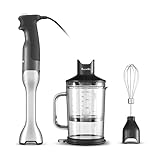
- The Control Grip Immersion Blender’s unique anti-suction technology means less liquid spilling out of your bowl and the ergonomic trigger grip makes use easier by giving your hand a natural position; 42oz jug and whisk attachment included
- ANTI-SUCTION BLENDING TECHNOLOGY: Revolutionary bell-shaped blending base combines with internal ribbing to reduce suction for greater control, also making the Control Grip act as an efficient hand blender
- ERGONOMIC TRIGGER GRIP: Trigger switch operation allows for natural hand position; Provides increased stability and control with soft touch finish; A great fit for home and kitchen; Puree soup, make delicious smoothies, blend baby food, and more
- NON SCRATCH IMMERSION BLENDER: 8” immersion depth lets you blend large quantities directly into a tall pot or container; Non-scratch base protects your pots and pans; handheld blender and accessories fit easily on your kitchen counter or shelves
- INCLUDES BLENDING ACCESSORIES: Blender comes with 42oz jug with dual-purpose storage lid and anti-slip mat; 25 oz. chopping bowl with mini blade system; Whisk attachment
Best 6-Cup Food Processor Types for Different Kitchens
The market does not always give clean choices labeled exactly 6 cups. In 2026, many models around this size are sold as 5-cup, 6-cup, 7-cup, or 8-cup compact processors. That is why the smartest way to shop is by use case, not just the number printed on the box.
| Type | Typical Capacity | Typical 2026 Price | Best Use | Watch For |
|---|---|---|---|---|
| Budget compact chopper | 3 to 5 cups | $25 to $60 | Onions, herbs, dips, small sauces | Limited accessories, smaller motor, less even chopping |
| True compact processor | 5 to 7 cups | $40 to $120 | Daily prep, salsa, shredding small batches, sauces | Feed tube size, lid lock, replacement parts |
| Premium compact processor | 5 to 8 cups | $120 to $250+ | Frequent cooks who want better accessories and fit | Higher price, brand-specific parts |
| Full-size processor | 11 to 14 cups | $130 to $315+ | Large families, batch prep, dough, bulk shredding | Storage space, weight, cleanup time |
Best Overall Choice: Midrange 5- to 7-Cup Processor
For most remodeled kitchens, this is the sweet spot. Expect to spend about $60 to $120 for a mainstream compact processor from a known kitchen-appliance brand. In this range, you are more likely to get a steadier base, better lid fit, usable pulse control, and useful accessories such as a reversible slicing or shredding disc.
This is the category we would steer most homeowners toward if they cook several nights a week but do not want another large appliance living on the counter. It can handle mirepoix for soup, salsa for dinner, dressing, pesto, chopped nuts, breadcrumbs, and a block or two of cheese. It is also small enough that cleaning does not feel like a project.
Best Budget Choice: 3- to 5-Cup Chopper
If your real use is chopping half an onion, making vinaigrette, or mincing herbs, a smaller chopper may be the better buy. Budget compact machines often cost $25 to $60 and take up very little cabinet space. The tradeoff is capability. Many do not slice or shred, and the smaller bowl fills fast.
We would not build a kitchen storage plan around this category unless the homeowner has a very small kitchen or already knows they rarely batch prep. It is a helpful tool, but not a full substitute for a compact food processor.
Best Premium Choice: Compact Processor With Better Accessories
Premium compact or brand-ecosystem models often run $120 to $250 or more. The extra cost usually goes into motor quality, stainless finishes, accessory discs, storage cases, longer warranties, cordless designs, or compatibility with a stand-mixer system.
This can make sense if the appliance will be used several times a week and stored in an easy-access prep area. If the premium model is going into a hard-to-reach cabinet, spend the money on better storage first.
When to Skip 6 Cups and Buy Full Size
Buy an 11- to 14-cup processor if you regularly shred cabbage, make large batches of dough, prep vegetables for a crowd, or cook in bulk on weekends. Full-size processors commonly sell around $130 to $315 or more, and they need more cabinet or counter space. They are heavier, but they are better suited to large-volume work.
What’s actually slowing this PC down?
Pick the symptom - the matching free tool is one click away.
A 6-cup unit is a space-saving tool. It is not a direct replacement for a serious batch-prep machine.
How Much Should You Spend in 2026?
Broad food-processor pricing at big-box retailers can run from roughly $20 to $900, but that range includes tiny choppers, premium full-size home models, commercial-style units, and specialty systems. For a normal homeowner shopping for a compact 5- to 7-cup food processor, the realistic 2026 budget is about $40 to $120.
Also popular on Amazon

- Braun is the #1 hand blender brand* *Source: Independent Research Institute, Sales Leader Full Year 2024
- SINGLE-HAND OPERATION: The world's first Easy SmartSpeed technology has no predefined speed settings; just follow your intuition for the results you want. Push gently for coarse and roughly chopped results; increase the push of the button for more power and finer results.
- FASTER, FINER RESULTS: The world’s first ACTIVEBlade technology incorporates a flexible shaft that moves the blade up and down; resulting in 250% more active cutting surface. This motion gives you flavorful, smooth results with no unwanted pieces; the hardest foods stand no chance with the 500-watt motor.
- SPLASHING IS UNDER CONTROL: Advanced SPLASHcontrol technology prevents splashing and delivers the best blending results to keep you and your kitchen clean; the MQ7 has 25% less suction for effortless handling and perfect control. (Compared to Braun MQ500).
- EXTRA BLADE FOR EXTRA POWER: The patented POWERBell Plus features an extra milling blade to provide more slices per rotation; blending large pieces and hard ingredients more easily.
| Budget | What You Usually Get | Good Fit |
|---|---|---|
| $25 to $60 | Small bowl, simple controls, basic chopping blade, lighter body | Occasional use, small kitchens, sauces, herbs, onions |
| $60 to $120 | Better bowl and lid, stronger motor, pulse control, possible slicing/shredding disc | Most homeowners wanting a practical 6-cup machine |
| $120 to $250+ | Premium motor, accessory storage, better finish, longer warranty, ecosystem compatibility | Frequent cooks or remodels with a planned appliance station |
| $130 to $315+ | Full-size 11- to 14-cup capacity, larger feed tube, more power | Batch cooking, larger families, dough, bulk prep |
Do not pay extra for an energy label that does not apply. ENERGY STAR is meaningful for many major appliances, but food processors are not typically treated as a normal consumer ENERGY STAR category. Because runtime is short, the annual electricity cost is usually only a few dollars.
Spend more when the upgrade changes daily usability: better lid locking, a wider feed tube, dishwasher-safe parts, accessory discs you will actually use, cord storage, and available replacement parts. Spend less when your tasks are simple and infrequent.
PC Slower Than It Used to Be?
A free scan shows the junk files, broken settings and background clutter dragging Windows down - then fixes them in one click.Free scan · Windows 10 & 11Outdated Drivers Are Slowing You Down
One free scan finds every outdated or missing driver and matches the right update for your exact hardware.Free scan · exact hardware matchKitchen Remodel Planning: Will Your Layout Support the Appliance?
This is where a construction company can give better advice than a generic appliance list. A food processor is a small appliance, but small appliances shape the way a kitchen works. During remodel planning, we ask homeowners to inventory every countertop device before finalizing electrical and cabinet drawings.
Count the coffee maker, toaster, blender, air fryer, mixer, food processor, kettle, charging devices, under-cabinet lighting, and anything used at a pantry counter or island. Then decide where each one will live, where it will be used, and where it will be plugged in.
Plan a Real Prep Zone
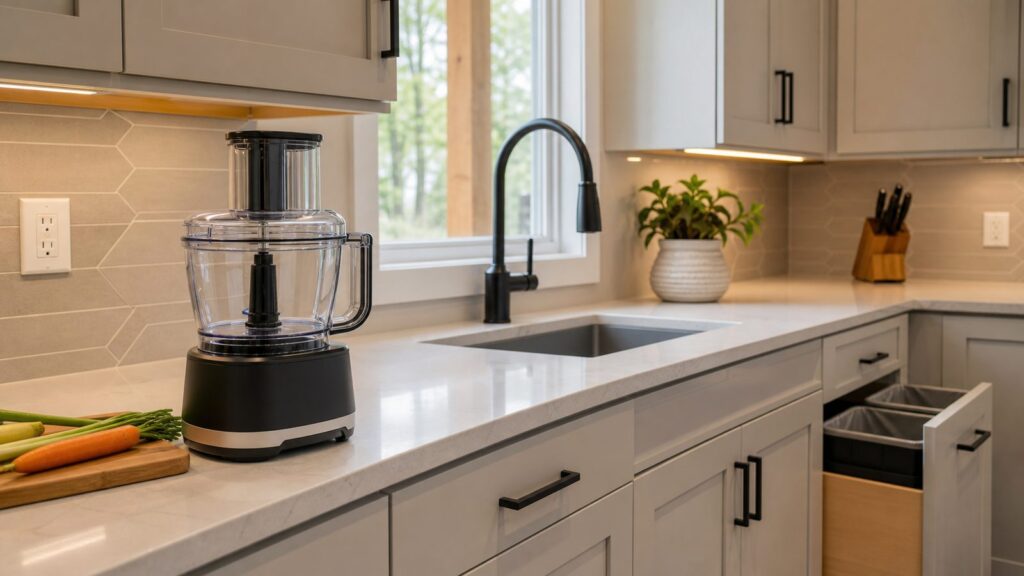
The best place for a 6-cup food processor is usually near the sink, trash, compost pullout, and main prep counter. You want enough landing space to wash vegetables, trim them, process them, and move them to a pan or bowl without crossing the kitchen.
For most homes, a practical prep zone needs at least 24 to 36 inches of clear counter width. More is better if two people cook together. Avoid putting the only convenient outlet behind the cooktop or across the sink. A cord crossing a wet zone or hot zone is a design failure, not a minor inconvenience.
Think About Outlet Placement Early
Modern kitchen electrical rules are more demanding than older kitchens, and local amendments matter. Countertop receptacles commonly need GFCI protection, and many jurisdictions require AFCI protection as well. Kitchens also need 20-amp small-appliance branch circuits for countertop loads. A compact food processor usually does not need its own dedicated circuit, but it does need to be part of a sensible countertop electrical plan.
That matters because homeowners rarely run one appliance at a time. A toaster, coffee maker, air fryer, microwave, and food processor can overload a poorly planned area. During design, we separate the real work zones so one corner is not carrying the entire morning routine.
Islands, Peninsulas, and Appliance Garages
Kitchen island and peninsula receptacle rules have changed in recent code cycles, and local adoption varies. The practical takeaway is simple: do not assume an old island outlet layout will pass inspection today. If you want to use a food processor on an island, confirm the receptacle plan with your electrician before cabinets and countertops are ordered.
Appliance garages also need careful planning. If the processor will be stored and used inside a garage-style cabinet, the receptacle, cord clearance, ventilation, door hardware, and countertop surface all need to work together. Some jurisdictions and inspectors have specific expectations for receptacles serving appliance garages. Get that detail settled during permit drawings, not after tile and stone are installed.
Do these 3 things before closing this tab:
1Repair Windows errors before they cause bigger problems2Fix the driver behind crashes, sound loss and screen glitches3Clear out junk files and repair common Windows errorsAlso popular on Amazon

- THE GLOBAL #1 HAND BLENDER BRAND*: Experience the precision of German engineering. The MultiQuick 515 puts the power of a durable 500-watt motor into a slim, ergonomic 3-in-1 immersion blender that’s easy to handle. *Source: Independent Research Institute, Sales Leader Full Year 2024
- 7x FINER RESULTS WITH POWERBELL VPLUS: Stop just blending, start perfecting. Our innovative milling blade and six internal ribs draw ingredients inward for more blade contact, delivering up to 7x finer results* *Compared to Braun MQ500
- VERSATILITY, MULTIPLIED: Transition from blending to whisking in a single click with the EasyClick System Plus. Swap in additional EasyClick attachments, like a mini chopper or masher (sold separately).
- EASY CLEAN UP, NO MESS: Blend directly in the pot without the mess. Our unique bell-shaped design virtually eliminates splashing, keeping your countertops spotless and your prep effortless.
- INTUITIVE 2-SPEED: Master any recipe with simple, one-touch control. From smooth whipped cream to finely pureed baby food, get the consistent performance and speed you need to cook with total confidence.
Storage That Actually Gets Used
A 6-cup food processor typically needs a footprint in the range of a small mixing bowl or compact blender base, but exact dimensions vary by model. Measure the width, depth, height, and lid-removal clearance. If the appliance is 10 inches tall but needs 15 inches to lift the lid off comfortably, a tight shelf will be annoying every time.
Good storage options include a pantry counter, a front-positioned base-cabinet pullout, a deep drawer with enough height, or a mixer-lift style shelf if the homeowner has several heavy appliances. Drawer inserts and pull-out shelves add cost, but they often determine whether the appliance becomes part of daily cooking or stays buried.
When to DIY vs. When to Hire a Pro
Buying the processor is a DIY decision. Planning the electrical and built-in storage around it may not be.
Good DIY Tasks
You can measure your storage space, compare appliance dimensions, test where you naturally prep food, and list every countertop appliance you own. You can also improve day-to-day use with non-permanent fixes: a cord wrap, a front-of-cabinet storage bin, a nonslip mat, or a shelf riser.
You can also do a simple workflow test before a remodel. Put a cutting board where you expect to prep, place a bowl where the processor would sit, and pretend to move from sink to trash to processor to cooktop. If the path feels awkward during a dry run, it will be worse during dinner.
Hire a Licensed Pro For Electrical Changes
Hire a licensed electrician or qualified remodeler when adding outlets, relocating receptacles, changing circuits, adding GFCI or AFCI protection, modifying an island or peninsula electrical layout, or wiring an appliance garage. In many US jurisdictions, adding or moving kitchen outlets requires a permit and inspection. Rules vary by city and state, but kitchen electrical work is not the place to guess.
Expect remodel-related cost drivers to include new 20-amp small-appliance circuits, GFCI/AFCI devices or breakers, under-cabinet plugmold, countertop drilling or cutouts, appliance-garage construction, pull-out shelves, and drawer inserts. The final cost depends on access, panel capacity, wall conditions, countertop material, and local inspection requirements.
Independent reader supportYour contribution helps us test, update, and keep practical guides available for everyone.Common Buying Mistakes
The most common mistake is buying by cup capacity alone. A 6-cup bowl with a weak motor, tiny feed tube, and awkward lid can be less useful than a well-designed 5-cup model.
Recommended Free Tools
The second mistake is expecting a compact processor to perform like a full-size one. If you want to knead heavy dough, shred multiple pounds of vegetables, or meal prep for a large family, buy the larger machine and design storage for it.
The third mistake is overfilling the bowl. Overfilling causes uneven chopping, leaks, motor strain, and poor puree texture. Work in batches when the food stops circulating.
Also popular on Amazon

- Powerful Blending, Built to Last: Equipped with a 1,000W pure copper motor and a 4-blade stainless steel cutting assembly, the immersion blender delivers smooth, precise blending every time. The durable motor construction extends the lifespan by up to three times for long-lasting reliability.
- 16 Speeds for Total Control: Customize your blending with 16 speed settings, perfect for everything from silky purees to frothy drinks. When more power is needed, TURBO mode provides an instant boost to tackle even the toughest ingredients.
- All-in-One Versatility: This versatile kitchen companion includes an 800 mL beaker, snap-on whisk, frother, and 600 mL chopper. Effortlessly blend, whisk, froth, or chop—ideal for quick meal prep and tear-free onion dicing!
- Effortless Cleanup: The detachable blending shaft, whisk, and frother are dishwasher-safe for easy cleaning, or can be quickly hand-washed. The electronic components only require a simple wipe to stay clean. Warm Tips: the electronic components and the chopper bowl lid are not diswasher-safe.
- A Thoughtful Gift for Foodies: With its sleek, ergonomic design, this blender makes an excellent gift for anyone who appreciates quality kitchen appliances. Perfect for housewarmings, weddings, and more, it's a stylish and practical addition to any kitchen.
The fourth mistake is storing the processor where it is inconvenient. If it takes three minutes to retrieve and another three to put away, most people will stop using it. The best storage location is close to the prep counter, not wherever there happens to be leftover cabinet space.
The fifth mistake is ignoring replacement parts. Bowls, lids, blades, and discs are wear items. If parts are unavailable or unusually expensive, the appliance has a shorter useful life.
Our Practical Recommendation
For most homeowners, the best 6-cup food processor is a midrange compact model in the $60 to $120 range with a stable base, strong pulse control, dishwasher-safe bowl and lid, stainless chopping blade, at least one slicing or shredding disc, cord storage, and replacement parts available from the manufacturer.
If your kitchen is small, a 5-cup model may be the better fit. If you cook in large batches, move up to 8 cups or full size. If you are remodeling, decide where the processor will live before cabinets, outlets, and countertops are finalized. A small appliance that has a proper home, a safe outlet, and 30 inches of clear prep space will do more for your kitchen than a more expensive model trapped in the wrong layout.
The right choice is not the biggest machine. It is the one that matches how you cook, fits where your hand naturally reaches, cleans up quickly, and works with the kitchen you are building.
Frequently Asked Questions
Is a 6-cup food processor big enough for a family?
For a couple or small family, yes. A 6-cup processor handles sauces, salsa, chopped vegetables, breadcrumbs, dressings, and small shredding jobs well. For large families, bulk prep, cabbage, or dough, an 11- to 14-cup model is usually better.
Do these 3 things before closing this tab:
1Repair Windows errors before they cause bigger problems2Scan for outdated or missing drivers - takes under a minute3Clear out junk files and repair common Windows errorsWhat is the difference between a mini chopper and a 6-cup food processor?
A mini chopper is usually 3 to 4 cups and mainly chops or mixes small amounts. A 6-cup food processor has more working capacity and may include a feed tube plus slicing or shredding discs, depending on the model.
How much should I spend on a good 6-cup food processor in 2026?
Most homeowners should budget about $60 to $120 for a capable compact 5- to 7-cup processor. Budget models can run $25 to $60, while premium compact models with better accessories or finishes can cost $120 to $250 or more.
Does a food processor need a dedicated electrical circuit?
A compact food processor usually does not need its own dedicated circuit because it runs for short periods. It should, however, be served by a properly planned kitchen countertop circuit with required GFCI protection and any local AFCI requirements.
Can I use a food processor inside an appliance garage?
Possibly, but the cabinet needs enough clearance, a safe receptacle location, ventilation, and a door design that does not interfere with operation. If you are building or wiring an appliance garage, confirm the detail with your remodeler or electrician.
Free tools Windows power users keep installed
One-click scans. No signup required.
Is a 6-cup food processor good for dough?
It can handle limited light dough work, but it is not the best choice for heavy bread dough or large baking batches. If dough is a regular task, look at a stronger full-size processor or a stand mixer.
Quick Recap
Product prices and availability are accurate as of the date/time indicated and are subject to change. Any price and availability information displayed on Amazon at the time of purchase will apply.

