Some links on this page are affiliate links: if you buy through them we may earn a commission, at no extra cost to you.
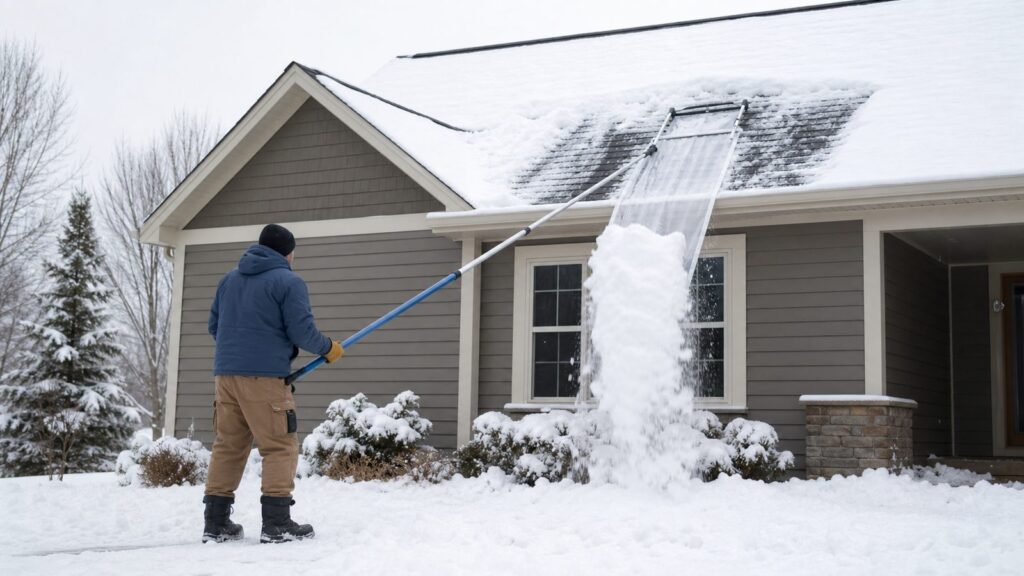
The Avalanche roof rake and snow removal system is one of the better DIY tools for clearing fresh snow from roof edges, especially on one-story homes and some simple two-story houses. It is faster than a basic pull rake because the head cuts under the snow and sends it down a slide instead of making you drag every load off the roof by force.
That does not make it the right tool for every roof. In our work, the Avalanche system makes the most sense as a preventive maintenance tool after storms: clear the lower 3 to 6 feet of roof edge, reduce ice-dam risk, and remove localized weight before snow settles, absorbs water, or freezes into a hard layer. It is not a cure for a failing roof, a hardened ice dam, a commercial snow-load emergency, or a roof that requires ladder work to reach safely.
As an Amazon Associate I earn from qualifying purchases.
Windows Errors? Fix Them Before They Spread
Repair common Windows errors and clear accumulated junk for a smoother, more stable PC - no reinstall needed.Free scan · no reinstallOutdated Drivers Are Slowing You Down
One free scan finds every outdated or missing driver and matches the right update for your exact hardware.Free scan · exact hardware matchFor 2026, the numbers are fairly clear. An Avalanche 500 typically costs about $135 to $185, while the heavier-duty Avalanche 750 usually runs about $164 to $200. Professional roof snow removal commonly costs $150 to $1,000 per visit, with many homeowners seeing averages around $300 to $350. So the tool can pay for itself after one low-end service call. The question is whether your roof, snow condition, and access make DIY removal reasonable.
What the Avalanche System Is Designed to Do
The Avalanche is not a traditional roof rake with a flat blade that you pull down through the snow. It uses a cutting head with wheels and a long slide sheet. You push the head up under the snowpack from the eave, the snow separates from the roof surface, and gravity carries it down the plastic or vinyl slide to the ground.
That design is the main reason people like it. On a simple roof edge with loose snow, it can move a lot of material quickly. Instead of wrestling a heavy blade full of wet snow, you are mostly pushing the head upward and letting the slide do the carrying. For a homeowner who has 12 to 24 inches of fresh snow sitting over the eaves, that difference matters.
#1 Best Overall

- The Avalanche! 500 is designed to quick and easy snow removal from roofs. It features a quick snap-together assembly that comes complete with four lightweight fiberglass handle sections to form a 15.5’ pole, allowing you to work from the ground.
- This snow tool features a smooth 17” wide, 12’ long plastic slide providing a slick surface for snow to slide off roof.
- The Avalanche! 500 has 1.5” wheels that provide adequate space for slide to glide safely over asphalt shingle roofs.
- Proudly Made in the USA
The tradeoff is control. When the snow releases, it can come down in large sheets or chunks. That is manageable if the drop zone is clear. It is a problem if the snow lands on a person, dog, basement stairwell, deck railing, shrubs, furnace vent, gas meter, heat pump, parked vehicle, or a walkway you just cleared.
On our job sites, we treat any roof-snow tool as part of a controlled work area. Before the first pass, clear the ground path, move cars, keep people out of the drop zone, and know where the snow will stack up. A roof rake is not dangerous only at the roofline. The snow it releases becomes the hazard.
Avalanche 500 vs Avalanche 750: Which Model Fits Your Roof?
The two models most homeowners compare are the Avalanche 500 and Avalanche 750. Both use the same basic slide concept, but they are aimed at different roof surfaces and clearance needs.
Avalanche 500
The Avalanche 500 is the standard residential model. It is mainly intended for asphalt shingle roofs, which still make up a large share of residential roofing in the United States. Common specs include a 17-inch-wide cutting head, 1.5-inch wheels, a 12-foot plastic slide, and a lightweight fiberglass handle around 15.5 to 16 feet long. The handle breaks into 4-foot sections, which helps with storage and lets you adjust reach somewhat as you work.
For a typical one-story ranch, Cape, small colonial, garage, porch roof, or shed roof with asphalt shingles, the 500 is usually the model we would look at first. It has enough reach for many eaves, and the smaller wheel profile is fine when the roof surface is relatively flat and durable.
Avalanche 750
The Avalanche 750 is the heavier-duty version. It uses larger 3-inch wheels and a cut-resistant, tear-resistant vinyl-coated polyester slide. It is commonly positioned for metal roofing, cedar shake, tile, specialty roof profiles, and solar-panel roofs where extra wheel clearance helps keep the head and slide away from more fragile or raised surfaces.
For 2026 pricing, the 750 is typically about $164 to $200, with manufacturer and retailer listings commonly near the upper end of that range. The added cost is not huge, but it only makes sense if your roof needs the extra clearance or more durable slide material. If you have a basic asphalt shingle roof and no solar panels, the 500 is usually the better value.
| Roof or Situation | Better Fit | Why |
|---|---|---|
| Standard asphalt shingles | Avalanche 500 | Designed for typical residential shingle roofs; lower cost; adequate clearance for most smooth shingle surfaces. |
| Standing-seam or metal roofing | Avalanche 750 | 3-inch wheels give more clearance, and the heavier slide material is better suited to sharper roof profiles. |
| Cedar shake or textured specialty roofing | Avalanche 750, with caution | More clearance helps, but brittle, cupped, or aged material can still be damaged by aggressive use. |
| Clay tile, slate, or fragile roofing | Usually hire a pro | These materials can crack under impact or poor tool contact; DIY scraping is often not worth the risk. |
| Solar panels | Avalanche 750, only with known clearances | Extra wheel height may help, but panel edges, wiring, mounts, and rails must be understood before use. |
| Two-story or steep roofs | Often hire a pro | Reach, falling snow, visibility, and ladder temptation increase the risk quickly. |
What It Costs in 2026
Avalanche tools sit in the middle-to-upper range of homeowner snow removal tools. Budget telescoping roof rakes can cost about $25 to $90, but those are usually simple pull rakes. Midrange wheeled or slide systems often run $100 to $200. Premium long-reach slide systems can reach $200 to $300 or more, especially when extension kits are added.
Current 2026 pricing puts the Avalanche 500 at roughly $135 to $185 depending on retailer and seasonal demand. The Avalanche 750 usually lands around $164 to $200, with some listings near $190. Add-ons, replacement parts, and extension kits can push the total above $200.
Rank #2

- The Avalanche! 750 is a snow roof rake designed specifically for easy and quick roof snow removal. It features a quick snap-together assembly that comes complete with four lightweight fiberglass handle sections to form a 15.5’ pole, allowing you to work from the ground.
- This snow roof rake tool features a smooth 17” wide, 12’ long plastic slide providing a slick surface for snow to slide off the roof. The heavy-duty vinyl coated polyester slide is cut and tear resistant.
- Equipped with 3” wheels, the Avalanche! 750 roof rake provides adequate space for the slide to glide safely over tile, cedar shake, metal, and solar panel roofs.
- Features a quick snap-together assembly that comes complete with four lightweight fiberglass handle sections to form a 15.5’ pole, allowing you to work from the ground.
- Proudly manufactured in the USA with Global Materials.
Professional roof snow removal is a different cost category. National consumer-cost sources show about $150 to $1,000 per visit, with common averages around $300 to $350. Angi reports a $350 average and a typical $200 to $600 range. HomeAdvisor reports a $300 average and a $150 to $1,000 range. Homewyse’s January 2026 estimating starts around $0.26 to $0.32 per square foot before local conditions and options.
Driveway and walkway snow removal is cheaper, often around $45 to $203 per visit depending on the source and location, because it does not carry the same roof-access, fall, liability, and roof-damage risks. Rooftop snow work costs more for good reasons.
| Option | Typical 2026 Cost | Best Use |
|---|---|---|
| Budget roof rake | $25-$90 | Light snow, occasional use, simple eaves, limited reach. |
| Avalanche 500 | $135-$185 | Routine asphalt-shingle roof-edge clearing from the ground. |
| Avalanche 750 | $164-$200 | Metal, shake, specialty profiles, or solar-panel situations where clearance matters. |
| Professional roof snow removal | $150-$1,000 per visit; often $300-$350 average | Deep, wet, icy, high, steep, complex, or structurally questionable roofs. |
If you will use the tool several times over a snowy season, buying one can be economical. If you only face a roof-snow problem once every few years, or if your roof has high-risk conditions, the math changes. A $175 tool is not a bargain if one bad pass damages shingles, gutters, solar equipment, flashing, or a brittle roof covering.
Where the Avalanche Works Well
The Avalanche works best on fresh to moderately packed snow. It is particularly useful after a significant snowfall, before sun, wind, and freeze-thaw cycles bond the snow into crust or ice. The sweet spot is a roof edge you can reach from the ground, with enough open space below for the snow to slide and land safely.
For ice-dam prevention, we generally focus on the lower 3 to 6 feet of roof near the eaves. That area matters because ice dams form when heat escaping from the building melts snow higher on the roof, water runs down, then refreezes near the colder eave. Clearing the entire roof is often unnecessary on steep residential roofs and can create more chances to damage the roof surface. Clearing the eave zone reduces the fuel source for ice buildup while keeping the work controlled.
Simple roof planes are the easiest. A straight ranch roof, garage roof, porch roof, low shed roof, or single gable end is a better candidate than a roof chopped up by valleys, dormers, skylights, sidewalls, chimneys, plumbing vents, and intersecting pitches. Every obstruction changes how the rake head moves and where snow can release.
We also like the Avalanche concept for homeowners who can stay disciplined about working from the ground. The tool’s major safety advantage is that it can reduce the urge to climb. Once a homeowner adds a ladder to reach a higher area, the risk profile changes. Snow, ice, bulky winter clothing, awkward tools, and ladders do not mix well.
Where It Is the Wrong Tool
The Avalanche is not an ice removal machine. If an ice dam is already hardened and bonded to shingles, chopping or prying at it with a roof rake can damage the roof faster than it solves the leak. Ice dams often need a different plan: controlled steaming by a qualified contractor, temporary water management, and later correction of attic air leaks, insulation gaps, ventilation problems, and roof-edge detailing.
Quick wins for a faster PC:
Scan for outdated or missing drivers - takes under a minuteDriver Scan →Clear out junk files and repair common Windows errorsFree Scan →Fix the driver behind crashes, sound loss and screen glitchesFind Drivers →It is also a poor fit for roofs that require you to stand on a ladder while pushing or pulling. The forces are awkward, the ground can be icy, and released snow can hit the ladder area. OSHA warns that workers are killed or seriously injured during rooftop snow and ice removal. While homeowners are not operating under the same workplace rules as a contractor, the physics are the same: elevated work in winter conditions is unforgiving.
Rank #3

- The original USA-made Snow Roof Rake
- Rugged - made of the highest quality strong, yet lightweight aluminum
- Smart engineering - rollers prevent shovel head from touching your roof
- Easy to use - remove snow with ease
Very steep roofs, tall two-story eaves, complicated roof geometry, and fragile roof materials all push the job toward a professional. So do roof surfaces with older brittle shingles, loose tabs, failing granules, exposed fasteners, marginal flashing, cracked sealant, damaged gutters, or unknown repairs. A roof rake can reveal weak materials by damaging them.
Solar-panel roofs deserve special caution. The 750’s 3-inch wheels are helpful, but that does not mean it is safe to run the tool over panel edges, wiring, conduit, clamps, or rail attachments. Panel glass, frames, and wiring should not be treated like a normal roof plane. If you do not know the layout and clearances, call the installer or a professional familiar with rooftop solar.
Snow Load: The Part Most Tool Reviews Skip
Snow depth alone does not tell you how much load is on a roof. FEMA guidance shows that 1 foot of fresh snow can range from about 3 pounds per square foot for light, dry snow to about 21 pounds per square foot for wet, heavy snow. That is a seven-fold difference at the same depth.
What’s actually slowing this PC down?
Pick the symptom - the matching free tool is one click away.
This is why a roof with 10 inches of wet snow can be more concerning than a roof with 18 inches of powder. Rain-on-snow events are especially serious because the snowpack can absorb water quickly. Wind also creates drifts, and drifts often load one roof area much more heavily than the rest. Snow behind a parapet, below a higher roof step, near a dormer, or in a valley can be the real problem even when the open roof field looks manageable.
Many residential discussions mention 20 pounds per square foot as a common baseline roof snow capacity, but that number should not be treated as a universal rule. Actual capacity depends on local code, roof geometry, exposure, thermal conditions, age, framing, prior alterations, roof pitch, and drift patterns. The ASCE Hazard Tool and local building departments are better starting points for understanding design snow loads in your area.
For commercial and low-slope roofs, do not improvise with a homeowner rake. A commercial snow-response plan should identify the roof design snow load, drainage paths, overflow scuppers, internal drains, drift zones, HVAC curbs, skylights, fall hazards, and safe sequencing. Removing snow unevenly can create load imbalance. Clearing one bay while leaving heavy drift loads on the next bay can stress framing in ways the building was not designed to handle.
How We Would Use an Avalanche Roof Rake
Start by walking the ground, not the roof. Check for overhead wires, buried obstacles, icy footing, windows, vents, gas meters, heat-pump units, shrubs, deck furniture, and walkways below the eaves. Decide where the snow will land before you release it. If the discharge zone is not safe, clear it or choose another approach.
Recommended Free Tools
Assemble only the handle length you can control. A 15.5- to 16-foot handle is useful, but the longer the pole gets, the more leverage works against you. Work in small sections, usually a strip about the width of the head. Push the head up under the snow, let the slide carry the snow down, then reset. Do not try to clear a full roof plane in one aggressive push.
Keep the head moving from the eave upward. For many homes, clearing the lower 3 to 6 feet is enough for ice-dam prevention after storms. If you must go higher, think carefully about where the next release will go. Snow sliding down the sheet can pile up at your feet, against foundation vents, or across a walkway. Pause as needed to move discharged snow away from doors, downspouts, dryer vents, furnace vents, and gas meters.
Rank #4

- Extra-Wide Blade: The snow rake for roof is equipped with a 17 in blade to efficiently clear roof snow, especially suitable for large areas. It allows you to clear more snow in one go, reducing repeated operations and saving effort.
- Aluminum Alloy Material: Crafted from aluminum alloy, this snow roof rake is sturdy and durable. With corrosion & pressure resistance, it is not easily deformed or damaged after long-term use. The thickened design enhances overall strength and stability.
- Adjustable Handle: The roof snow rake comes with an adjustable handle to fit different roof heights, allowing easy removal without ladders. The ergonomic round handle design provides a comfortable grip, ensuring a secure hold even in cold weather.
- Smooth Rolling Wheels: These wheels on the roof snow removal tool avoid the roof surface from scratches and damage. The wheel design ensures smooth sliding on slopes or uneven surfaces, improving controllability for more precise snow removal.
- Easy Installation & Storage: The roof rakes for snow can be assembled easily without tools. The detachable handle saves space for compact storage. It is ideal for residential, garage, and car roofs to clear snow and fallen leaves effortlessly.
Do not scrape to bare roofing. A good rule is to leave roughly 2 to 3 inches of snow as a protective layer. That layer helps keep the rake from abrading shingle granules, catching fasteners, scuffing coatings, lifting tabs, or damaging membrane and flashing details. On asphalt shingles, the granules are not decoration; they protect the mat from ultraviolet exposure and weathering.
If the tool starts chattering, catching, or dragging hard, stop. That can mean the snow is crusted, the head is hitting roof features, or the surface is not compatible with the tool. More force is usually the wrong answer.
Free tools Windows power users keep installed
One-click scans. No signup required.
When to DIY vs When to Hire a Pro
DIY roof snow removal is reasonable when the work can be done from the ground, the roof edge is simple, the snow is fresh or moderately packed, and you are only reducing the eave load or preventing ice dams. It is also reasonable when the roof material matches the tool, the discharge zone is clear, and no distress signs are present inside or outside the home.
Hire a pro when the roof requires ladder access, the snow is wet and heavy, the snow is deeper than you can control from the ground, or ice has bonded to the roof. Hire a pro for steep roofs, multi-story eaves, complex valleys, dormers, skylights, solar arrays, fragile roofing, or limited ground access around the house. If the contractor needs fall protection, staging, roof anchors, or specialized methods, that is part of why the service costs more.
Shift from contractor snow removal to structural evaluation if you see warning signs: a sagging roofline, new cracks in drywall or plaster, doors or windows that suddenly stick, popping or cracking sounds, bowing ceilings, large new roof deflections, blocked roof drains, heavy rain on existing snow, or deep drifts behind parapets or step roofs. In those cases, the roof rake review is over. The next call should be a qualified professional, and in some cases a structural engineer.
Independent reader supportYour contribution helps us test, update, and keep practical guides available for everyone.Roof Damage Risks and Warranty Concerns
Most roof damage from snow tools comes from trying to scrape too clean, using the wrong tool on the wrong material, or forcing the tool around obstructions. Gutters are a common casualty. So are plumbing vent boots, metal flashing edges, heat cables, satellite mounts, snow guards, ridge or intake vent details, and the lower courses of brittle shingles.
The Tool Desk
Outbyte Driver Updater FREEScan for outdated or missing drivers - takes under a minuteDriver Scan →Outbyte PC Repair FREEClear out junk files and repair common Windows errorsFree Scan →Manufacturers and roof warranties generally do not reward aggressive scraping. Abrasion, impact damage, lifted shingles, cracked tile, broken slate, punctured membrane, or damage from walking on cold brittle shingles may be treated as maintenance damage rather than a covered defect. If your roof is older or already marginal, leave more snow behind and use less force.
Metal roofs need a different mindset. Snow often releases faster from metal than asphalt, which is helpful until it is not. A large sheet of snow from a metal roof can move quickly and land hard. The Avalanche 750 is the better fit for many metal roofs because of the 3-inch wheels and tougher slide, but you still need to respect seams, fasteners, snow guards, and coatings.
Ice Dams: The Rake Helps, But It Is Not the Cure
A roof rake can reduce ice-dam risk by removing snow from the cold eave zone before repeated melting and refreezing build a dam. That is useful maintenance. It is not a building-science fix.
Best Value

- Compatible with AVA500, AVA750 and AVA1000 roof rakes. Not compatible with the SRD20 Deluxe Roof Rake
- Includes two 4 foot fiberglass poles and two aluminum couplers, providing up to 8 foot of extra snow busting length
- Quick snap together design allows for easy assembly and disassembly
- Lightweight fiberglass design allows for easier lifting
- Proudly Made in the USA with Global Materials
Recurring ice dams usually point to heat loss. Warm air leaks from the living space into the attic, melts snow from below, and sends water toward the eaves. Better long-term solutions include attic air sealing, adequate insulation, balanced ventilation, clean gutters and downspouts, and proper ice-barrier underlayment during reroofing. Many jurisdictions require ice-barrier protection in areas with a history of ice dams, but the exact requirement depends on the adopted code and local amendments.
Do these 3 things before closing this tab:
1Fix the driver behind crashes, sound loss and screen glitches2Repair Windows errors before they cause bigger problems3Scan for outdated or missing drivers - takes under a minuteIf you are raking the same roof edge after every storm and still getting leaks, the problem is probably not the rake. The rake is treating the symptom. The roof assembly, attic conditions, or drainage details need attention.
Our Verdict
The Avalanche roof rake is a legitimate tool, especially the Avalanche 500 for standard asphalt shingle roofs and the Avalanche 750 for roof materials or solar-panel situations where extra clearance matters. For a homeowner who can work from the ground and clear snow soon after storms, it is one of the more practical DIY options available.
The strongest use case is preventive maintenance: remove the lower 3 to 6 feet of roof-edge snow after significant snowfall, keep the slide path clear, and leave 2 to 3 inches of snow on the roof surface. Used that way, the tool can reduce ice-dam risk and localized eave loading without turning roof maintenance into roof demolition.
The weak points are the same ones we see with most roof-snow tools. It is easy to underestimate snow weight, overestimate roof capacity, and get too aggressive near shingles, gutters, flashing, vents, solar panels, and brittle roofing. It also releases snow quickly, so the ground hazard matters.
PC Slower Than It Used to Be?
A free scan shows the junk files, broken settings and background clutter dragging Windows down - then fixes them in one click.Free scan · Windows 10 & 11Outdated Drivers Are Slowing You Down
One free scan finds every outdated or missing driver and matches the right update for your exact hardware.Free scan · exact hardware matchBuy the tool if your roof is simple, reachable, and regularly gets manageable snow at the eaves. Hire a pro if the roof is high, steep, icy, wet-loaded, complex, fragile, or showing distress. Snow removal is maintenance. It is not a substitute for a roof structure designed and maintained for the snow loads in your location.
Frequently Asked Questions
Is the Avalanche roof rake safe for asphalt shingles?
Yes, the Avalanche 500 is generally the better fit for standard asphalt shingles, but it should not be scraped down to bare roofing. Leave roughly 2 to 3 inches of snow to protect shingle granules, flashing, and roof edges.
What is the difference between the Avalanche 500 and 750?
The Avalanche 500 is the standard residential model for asphalt shingles, with 1.5-inch wheels and a 12-foot slide. The Avalanche 750 has 3-inch wheels and a tougher vinyl-coated polyester slide, making it better suited to metal, shake, specialty roofs, and some solar-panel situations.
How much does an Avalanche roof rake cost in 2026?
The Avalanche 500 typically costs about $135 to $185, while the Avalanche 750 usually costs about $164 to $200. Extension kits or premium packages can push the total above $200.
What’s actually slowing this PC down?
Pick the symptom - the matching free tool is one click away.
How much snow should I remove from my roof?
For ice-dam prevention on many homes, clearing the lower 3 to 6 feet above the eaves is usually the practical target. Full-roof scraping is often unnecessary and can increase the chance of roof damage.
When should I hire a professional for roof snow removal?
Hire a pro when the work requires a ladder, the roof is steep or high, snow is wet and heavy, ice has bonded to the roof, solar panels or fragile roofing are involved, or you see warning signs such as sagging, new cracks, stuck doors, or popping sounds.
Quick Recap
Product prices and availability are accurate as of the date/time indicated and are subject to change. Any price and availability information displayed on Amazon at the time of purchase will apply.

