What’s actually slowing this PC down?
Pick the symptom - the matching free tool is one click away.
The best alternative to solder wick depends on the joint. For occasional through-hole repairs, use a manual desoldering pump. For repeated through-hole work, a heated vacuum desoldering gun is faster. Use hot air for multi-pin SMD parts, hot tweezers for small two-terminal components, and low-melting-point alloy for stubborn or fine-pitch joints.
None of these methods eliminates heat: effective solder removal still requires a soldering iron, heated nozzle, hot air, or a low-melting alloy. Choose according to the board geometry rather than simply buying the most expensive tool.
As an Amazon Associate I earn from qualifying purchases.
What solder wick does—and why you might use something else
Solder wick, also called desoldering braid, is fluxed copper braid. When placed on molten solder, it draws the solder into its strands through capillary action. It remains useful for flattening pads, removing solder bridges, and cleaning the final residue from a joint.
Free tools Windows power users keep installed
One-click scans. No signup required.
However, wick is not always the most convenient choice. You may need to clear a plated through-hole, remove a multi-pin connector, work on a fine-pitch SMD component, avoid wasting braid, or simply have no wick available. The alternatives below solve different parts of the desoldering problem; no single one is best for every job. Hakko separates powered desoldering, hot-air rework, and hot-tweezer systems into distinct categories, while iFixit lists manual pumps and low-melting alloy among its desoldering tools (Hakko; iFixit).
#1 Best Overall
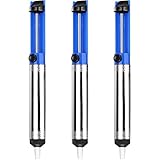
- UNPARALLELED SUCTION POWER - Good little solder sucker, have a good bit of suction,you can just hang onto it and use your thumb to reset and suck. The ideal tool for intricate soldering jobs
- ONE-HANDED OPERATION - Simple design allows easy one-handed use,lightweight and compact,suck the solder away easily. Say goodbye to tedious two-handed solder extraction and .quickly and easily removing solder
- DURABILITY AND LONGEVITY - Very sturdy,will worke good to remove existing solder from a circuit board. Made with high-quality materials and designed to withstand heavy usage, our Solder Sucker ensures longevity and performance, saving you time and money in the long run
- ERGONOMIC DESIGN - Heated up the solder pushed the button and bam,all solder sucked up,super easy to use for desoldering. The comfortable, non-slip handle and lightweight body make our Solder Sucker easy to handle, ensuring maximum control and precision
- VERSATILE APPLICATIONS - A must have excellent solder sucker which fits nicely in your tool box. Our solder sucker desoldering pump is not just limited to soldering. It can also be used for desoldering, removing hair, lint, and dust, and even for cleaning delicate electronics. The ultimate multi-purpose tool for any DIY enthusiast
Quick comparison
| Method | Best for | Cost level | Main drawback |
|---|---|---|---|
| Manual desoldering pump | Occasional through-hole work | Low | Requires timing and two-handed coordination |
| Heated vacuum gun | Repeated through-hole repairs | High | Higher cost and maintenance |
| Hot-air rework station | Multi-pin SMD parts and connectors | Medium to very high | Can overheat or displace nearby parts |
| Hot tweezers | Small two-terminal SMD components | Medium to high | Limited package compatibility |
| Low-melting-point alloy | Stubborn or fine-pitch joints | Low to medium consumable cost | Needs an iron and leaves an alloy mixture to clean |
1. Manual desoldering pump (solder sucker)
A manual desoldering pump is a spring-loaded vacuum tool. You melt the solder with a separate iron, place the pump over the liquid solder, and trigger its suction. It is the cheapest useful replacement for solder wick and the best default for most occasional through-hole repairs.
Best uses
- Through-hole component leads
- Large solder blobs
- Clearing solder from plated holes
- Occasional keyboard, controller, cable, and circuit-board repairs
How to use it
- Disconnect power and secure the board so it cannot move.
- Clean and tin the iron tip. Add a small amount of fresh solder and flux if the joint is oxidized or does not melt evenly.
- Charge the pump’s spring mechanism.
- Heat the joint until the solder is fully liquid.
- Place the heat-resistant nozzle close to, or over, the molten solder.
- Trigger the pump while keeping the joint heated. The timing matters: pulling the iron away first lets the solder solidify.
- Inspect the hole or lead. Repeat rather than forcing the component out.
iFixit describes its manual pump as a one-handed, push-button tool with a heat-resistant nozzle and removable construction; its usage guide illustrates the operating sequence.
Advantages and limitations
A pump is inexpensive, portable, reusable, and particularly effective on through-hole joints. Its weaknesses are equally important: it requires a separate iron, leaves a thin film of solder in some holes, and is awkward for fine-pitch SMD work. Pressing the nozzle hard against the PCB can damage a pad, and repeated heating can lift pads on inexpensive, thin, or previously damaged boards.
If the solder refuses to melt, do not keep dwelling on one pad. Add fresh solder and flux, use a clean chisel tip for better contact, or move to a heated gun, preheater, or low-melting alloy.
2. Heated vacuum desoldering gun
A heated desoldering gun combines a soldering iron, hollow heated nozzle, and vacuum pump in one handpiece. It melts and extracts solder through the nozzle in one operation, leaving both hands available to support the board or component.
Best uses
- Repeated through-hole repairs
- Large connectors and switches
- Clearing many solder-filled plated holes
- Lead-free joints that need consistent heat transfer
Compared with a manual pump, the gun keeps heat at the extraction point while suction removes the solder. That makes it substantially faster for production or frequent repair work, but expensive for a single job.
As one concrete example, Hakko lists the FR-301 with a controlled temperature range of 350–500°C, vacuum pressure of 81 kPa, suction flow of 11 L/min, and a standard 1.0 mm nozzle. These are specifications for that model, not universal settings or requirements. See the FR-301 product page and technical specifications.
The Tool Desk
Outbyte PC Repair FREERepair Windows errors before they cause bigger problemsFix Now →Outbyte Driver Updater FREEFix the driver behind crashes, sound loss and screen glitchesFind Drivers →Rank #2

- This is a plug-n-play desoldering iron; This product regulates temperature automatically, and the temperature value is fixed (non-adjustable); Preheat the desoldering iron for approximately 3 to 5 minutes to ensure normal heating for soldering
- This 929D-V desoldering iron integrates soldering iron and desoldering pump, you can enjoy the single-handed and continuous desoldering with its short charging handle to rid the hassle of changing grip positions. If you are looking to purchase a desoldering tool that can handle the desoldering jobs of through-hole components and removing excess solder (solder bridges) without jamming up, this is a great choice.
- Different from the traditional use-and-throw desoldering irons, the 929D-V can be used, easily cleaned, and reused. You can lift and pull out the scrap solder storage tube and clean the solder out like a breeze. Meanwhile, we also included 2 different and interchangeable diameters (φ1.0mm & φ1.2mm) desoldering nozzles for different sizes of through-hole components. NOTE: change the nozzle after the desoldering iron has cooled completely.
- This desoldering iron comes with a heat deflector at the end of the heating element, and this prevents the excess heat from transferring onto the hand when desoldering continuously. You can desolder joints after joints without your hands feeling uncomfortably hot.
- Choose YIHUA with Confidence – Enjoy our 12-month US- exclusive manufacturer technical coverage and 24/7 professional assistance on Amazon. Note: This model is designed to operate on 110-127V with a US-standard power plug.
Nozzle choice and maintenance
Choose a nozzle diameter appropriate to the joint. A nozzle that is too large may contact adjacent pads; one that is too small may not transfer enough heat. Periodically clear the nozzle, empty the solder chamber, replace filters, and use the manufacturer’s cleaning pins and replacement parts. Clogged nozzles reduce both heating and suction. Hakko’s FR-301 options and maintenance information covers filters, nozzles, and cleaning accessories.
A powered gun is the productivity upgrade, not the universal answer. Excessive dwell time can still lift pads or delaminate the PCB.
3. Hot-air rework station
A hot-air station heats a localized area without direct iron contact. Once all the solder joints are liquid, lift the component with tweezers or a vacuum pickup tool.
Best uses
- QFP, QFN, and other multi-pin SMD packages
- USB, HDMI, and similar multi-pin connectors
- Components whose joints cannot be heated simultaneously with an iron
- Board salvage and rework
Basic technique
- Shield nearby plastic, labels, sockets, cables, and heat-sensitive components.
- Apply compatible flux when appropriate.
- Choose a nozzle that covers the target without unnecessarily heating the surrounding board.
- Use moderate airflow and temperature, then preheat the area gradually.
- Move the nozzle continuously rather than holding it motionless over one pad.
- Test the component with light upward pressure. Lift only when every joint is molten.
- Let the board cool before cleaning and inspecting it.
Hot air is not the same as a household paint-stripping heat gun. A general-purpose heat gun usually has less precise airflow and temperature control, can blow small components away, and heats a much larger area. Hakko describes electronics hot-air rework as contactless heating and identifies systems with vacuum pickup and thermal profiling for SMD work (Hakko rework lineup).
Crashes, No Sound, or Screen Glitches?
Random freezes, missing sound and display glitches usually trace back to one bad driver. Find and replace yours safely.Free scan · under a minutePC Slower Than It Used to Be?
A free scan shows the junk files, broken settings and background clutter dragging Windows down - then fixes them in one click.Free scan · Windows 10 & 11Hot air heats several joints at once and avoids direct mechanical pressure, but it has a steep learning curve. Airflow can displace 0201 and 0402 components, and heat can damage nearby capacitors, connectors, sockets, or the board itself. It is usually excessive for one through-hole resistor or wire.
4. Hot tweezers
Hot tweezers use two heated tips to contact both ends of a small component simultaneously. They provide localized heat without the broad airflow of a hot-air station.
Best uses
- Small resistors and capacitors
- Diodes and ferrite beads
- Other two-terminal SMD components
- Some small two-terminal connectors
Hakko identifies micro hot tweezers as suitable for very small components, including 0402 packages. Apply a small amount of flux, place one tip on each end, wait until both joints are liquid, and lift gently and vertically. After removal, use an appropriate cleanup method if the pads must be flat, then clean flux residue according to the flux manufacturer’s instructions.
Rank #3
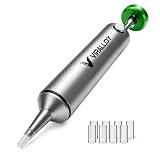
- Spring-Loaded & Max Desolder Suction: High-tension spring delivers unbeatable one-shot vacuum to clear molten soder in a single trigger.
- Self-Cleaning Solder Vacuum Tool: Every reset ejects solder waste, preventing jams and keeping you working smoothly.
- Low Maintenance vs Electric Desoldering Iron: Enjoy truly manual desoldering—no batteries, cords, or filter changes required, unlike electric desoldering station.
- One-Handed & Pinecil V2 Compatible: Ergonomic portable solder pump pairs seamlessly with Pine64 and Pinecil V2 irons for true on-the-go, cordless desoldering.
- Aircraft-Grade Aluminum & Durable Build: CNC-machined body resists corrosion and wear, ensuring a lifetime of reliable performance.
Hot tweezers are not a substitute for a solder sucker or heated gun when the task is clearing a plated through-hole. They are also a poor choice for large packages or components with more than two primary soldered sides. Tip alignment matters: oversized tips can bridge neighboring pads, and the handpiece may require a compatible soldering station.
Do these 3 things before closing this tab:
1Scan for outdated or missing drivers - takes under a minute2Repair Windows errors before they cause bigger problems3Fix the driver behind crashes, sound loss and screen glitches5. Low-melting-point desoldering alloy
Low-melting alloy is a consumable-assisted method, not a standalone tool. You add it to existing solder, heat the mixture with an iron, and keep the joint molten longer so a component can be lifted or moved.
Best uses
- Stubborn lead-free solder
- Fine-pitch SMD components
- Parts with several joints that are difficult to keep liquid simultaneously
- Situations where extending working time is preferable to simply raising iron temperature
- Apply compatible flux.
- Add low-melt alloy to each joint.
- Heat until the original solder and alloy are fully mixed.
- Keep the area molten while lifting or moving the component.
- Remove the remaining mixture with a pump, iron tip, or another suitable cleanup method.
- Inspect carefully for bridges before installing the replacement.
The alloy does not remove solder by itself; it changes the melting behavior of the joint. It consumes material, leaves a mixture that may need to be removed before reassembly, and requires attention to composition and process compatibility. iFixit lists ChipQuik SMD solder alloy among its desoldering options.
Choose by joint geometry
- Plated through-hole: Start with a manual pump. Choose a heated vacuum gun if you do this repeatedly or need to clear many holes.
- Large connector or heat-sinking ground plane: Use fresh solder and flux with a pump, or use a heated gun and preheat when necessary.
- Multi-pin SMD connector or IC: Use controlled hot air, often with shielding and preheating. Low-melt alloy can help with stubborn joints.
- Small two-terminal SMD part: Use hot tweezers for the most localized heating.
- Solder bridge or final pad cleanup: Solder wick is still often the most convenient option, even if it was not used for the main removal.
For a typical home repair, the manual pump is the sensible first purchase. Upgrade to a heated gun when through-hole work becomes frequent, choose hot air for multi-pin SMD work, hot tweezers for tiny two-terminal parts, and low-melt alloy as an inexpensive rescue consumable for difficult lead-free joints.
Independent reader supportYour contribution helps us test, update, and keep practical guides available for everyone.Troubleshooting without solder wick
The solder will not melt
- Clean and tin the iron tip.
- Add flux.
- Add a small amount of fresh solder to improve heat transfer.
- Use a broader chisel tip instead of a needle tip.
- Use a higher-power iron or preheat the board.
- Try low-melt alloy on a difficult lead-free joint.
- Switch to hot air or a heated gun when the joint type requires it.
Do not increase temperature indefinitely. Prolonged heating can damage the pad, laminate, or nearby components.
The solder will not leave the hole
Make sure the solder is fully liquid before triggering the pump or gun. Check both sides of the board and look for a large copper plane drawing heat away. Add fresh solder, improve tip contact, or use preheating. Repeat controlled passes rather than forcing the component through.
The component remains attached
Do not pull harder. Reheat every joint and check for solder on the opposite side. For multi-pin parts, switch to hot air or low-melt alloy. If the component is disposable, cutting its leads may be safer than prolonged heating—but only when doing so will not damage pads or traces.
Rank #4

- 1. Wide range of uses:Desoldering pump is widely used in the electronics and electrical industries, suitable for precision small devices, integrated circuit pins, home appliance repairs, digital repairs, etc., efficient and portable to remove waste tin residue
- 2. Ergonomic design: Desolder pump adopts aluminum alloy shell, utilization is not slippery, the grip is comfortable, and the use is convenient
- 3. High-quality suction nozzle: Good solvent resistance, lightweight design, easy to carry, suitable for long-term use, and improve work efficiency
- 4. Strong suction power: Solder sucker desoldering pump adopts stainless steel push rod, internal spring adopts back pull design, instant suction power is strong
- 5. Press lightly and quickly rebound: Desoldering suction pump adopts high-efficiency tin scraping method, which is easy to remove tin debris from the suction nozzle and not easy to block. If you have any product questions, you can contact us at any time
A powered tool is clogged
Stop using it, allow it to cool as required by the manufacturer, clear the nozzle with the specified cleaning tool, empty the collection chamber, and inspect or replace the filter. Do not force debris deeper into the nozzle.
A pad begins to lift
Stop pulling immediately and let the area cool. Photograph the original trace routing, then assess the board as damaged rather than continuing normal removal. Repair may require stabilizing the copper with suitable adhesive and restoring the connection with jumper wire or another board-repair technique.
Safety and board-protection checklist
- Disconnect power, batteries, chargers, and external supplies.
- Work with ventilation and suitable eye and skin protection; molten solder can burn.
- Use ESD precautions where the board or component requires them.
- Secure the PCB and keep flammable materials away from heated tools.
- Shield heat-sensitive nearby parts during hot-air work.
- Use the lowest effective heat and shortest practical dwell time.
- Never use an open flame or uncontrolled heat source on a PCB.
iFixit also recommends adequate ventilation and personal protective equipment while soldering or desoldering (safety information).
Which method should you use?
For an occasional beginner repair: buy a manual desoldering pump and use it with a properly tinned soldering iron.
For frequent through-hole work: a heated vacuum desoldering gun justifies its higher cost through speed, integrated heating, and easier repeated extraction.
For multi-pin SMD repair: use a controlled hot-air rework station, with shielding and careful airflow.
Quick wins for a faster PC:
Scan for outdated or missing drivers - takes under a minuteDriver Scan →Clear out junk files and repair common Windows errorsFree Scan →Fix the driver behind crashes, sound loss and screen glitchesFind Drivers →For 0402 resistors, capacitors, and similar parts: hot tweezers provide localized simultaneous heating.
For stubborn lead-free or fine-pitch joints: add low-melting alloy to a controlled soldering-iron workflow.
These methods are alternatives to solder wick for specific jobs, not universal replacements. Component geometry, board construction, heat sinking, dwell time, and operator control determine which approach is least likely to damage the PCB.
Quick Recap
Product prices and availability are accurate as of the date/time indicated and are subject to change. Any price and availability information displayed on Amazon at the time of purchase will apply.




