Quick wins for a faster PC:
Repair Windows errors before they cause bigger problemsFix Now →Scan for outdated or missing drivers - takes under a minuteDriver Scan →Window treatments are one of the most visible finish choices in a home, but in 2026 they are also doing more technical work than most homeowners realize. The right blinds, shades, shutters, or drapery can reduce glare, improve privacy, soften acoustics, support child safety, help with heating and cooling loads, and make a new window package look intentional instead of unfinished.
The short version: the strongest window treatment trends for 2026 are layered drapery, cordless and motorized controls, energy-efficient cellular shades, natural woven textures, smarter roller shade systems, warmer color and pattern, and better solar-control planning for large glass. The best choice depends on the room, window orientation, humidity, budget, trim details, egress needs, and whether you want manual, battery-powered, or hardwired operation.
On our job sites, we treat window coverings as part of the finish schedule, not an afterthought. That means confirming window sizes after trim is installed, checking handle and crank clearances, planning blocking for heavy rods or tracks, and deciding early if any shades need low-voltage wiring or smart-home integration. Those steps matter more than chasing a trend photo.
As an Amazon Associate I earn from qualifying purchases.
1. Layered Window Treatments Are the Finished Look for 2026
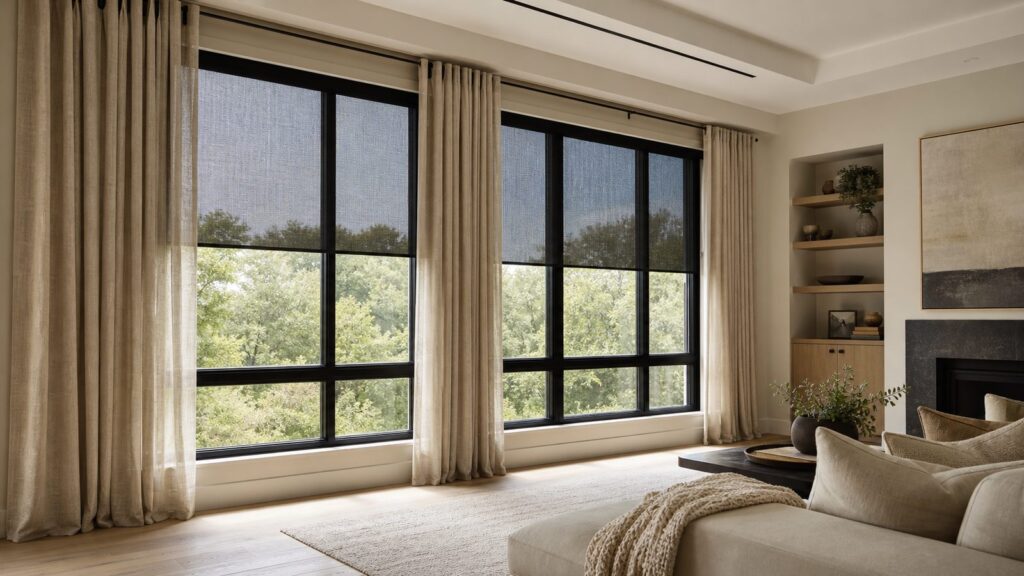
Layering is the biggest style shift because it solves real problems. A single product rarely handles daylight, privacy, insulation, nighttime comfort, and room softness equally well. In 2026, the better approach is often two complementary layers: a functional shade near the glass and a softer decorative layer outside the opening.
Common combinations include solar shades with linen drapery, Woven wood shades with privacy-lined panels, sheers with blackout drapes, or an inside-mount cellular shade with an outside-mount curtain rod. The result is more flexible than a single blind. During the day, a solar or sheer layer can cut glare while keeping a view. At night, a lined drape or blackout layer gives privacy and better light control.
For proportions, we typically mount drapery rods high and wide when the wall allows it. A common residential target is 4 to 8 inches above the window casing and 6 to 12 inches beyond each side of the opening. In rooms with 9-foot or taller ceilings, a rod placed closer to the ceiling or crown line can make the window feel larger. The key is not just height; the stack space matters. If the panels cannot clear the glass when open, the room loses daylight.
Layered treatments are especially useful in living rooms, bedrooms, dining rooms, media rooms, and primary suites. They are less practical in tight kitchens, tub alcoves, and small bathrooms unless the materials are moisture resistant and easy to clean.
The Tool Desk
Outbyte Driver Updater FREEScan for outdated or missing drivers - takes under a minuteDriver Scan →Outbyte PC Repair FREERepair Windows errors before they cause bigger problemsFix Now →#1 Best Overall

- How to Order Inside Mount: Each cellular shade is produced at the exact size you order. For an inside mount, order the shade width 1/4" to 1/2" narrower than the window opening width. IMPORTANT: This shade fits windows measuring 35-1/4" to 35-1/2" wide for inside mount.
- How to Order Outside Mount: For an outside mount, simply order the shade size that matches the width of the area you want the shade to cover. Please refer to the how to measure and how to order illustrations.
- Versatile Pull-Down Control: Our Free Stop cordless system eliminates the need for exact custom lengths. For windows under 48", order the 48" height—or the 72" for taller windows—and simply pull down to your window sill for a perfect fit.
- Child & Pet Safe: Our cordless blind eliminates dangling cords, creating a safer indoor space for every baby or pet. This covering provides essential privacy for any bedroom, bathroom, doors, or kitchen window.
- Cellular Fabric Design: These cellular treatments keeps your bedroom cooler in the summer heat and warmer in winter. The honeycomb coverings dampen noise and covers any window or door with a quiet, energy-saving layer.
Builder Details That Make Layering Work
Heavy drapery needs solid fastening. Drywall anchors alone are a weak plan for long rods, dense lined panels, or ceiling-mounted tracks. For new construction and major remodels, we like to add blocking at the intended rod or track location before drywall. For retrofit work, fasteners should hit studs where possible, or the installer should use hardware rated for the actual load.
Projection also matters. A layered setup must clear casing, window cranks, handles, locks, tilt-turn hardware, and door operation. On patio doors, confirm the active panel, traffic path, and where the fabric stacks. A beautiful drape that bunches into the walking path will become a daily frustration.
2. Cordless and Motorized Controls Are Becoming the Baseline
Cordless window coverings are no longer just a premium upgrade. They are the safety-forward default, especially in homes with children, rental properties, schools, multifamily housing, and short-term rentals. Long operating cords have well-known strangulation risks, and modern US safety standards have pushed the industry toward cordless, inaccessible-cord, or motorized designs for many products.
For homeowners, the practical takeaway is simple: choose cordless unless there is a clear reason not to. If a corded custom product is being considered, document why, confirm the product complies with current safety rules, and use proper tension devices or inaccessible-cord designs where applicable.
Free tools Windows power users keep installed
One-click scans. No signup required.
Motorization is the next step up. In 2026, motorized shades are moving from luxury novelty to practical convenience. They make the most sense for tall windows, west-facing glass, clerestory windows, stairwells, media rooms, aging-in-place projects, and whole-home routines that lower shades during peak heat or raise them with morning light.
Battery, Rechargeable, or Hardwired?
Battery and rechargeable motors are useful for remodels because they avoid opening walls. They are usually cleaner than visible cords and easier to add after the fact. The tradeoff is maintenance: batteries need replacement or charging, often every several months to more than a year depending on shade size, use frequency, and motor type.
Hardwired shades are cleaner for new construction and major remodels. They require early planning, transformer locations, wiring routes, control locations, and coordination with the electrician and smart-home installer. The decision should be made before drywall, not after paint. Late hardwiring is more expensive and usually less elegant.
Expect motorized products to cost substantially more than manual versions. For large openings, specialty fabrics, rechargeable motors, automated drapery tracks, and smart-home integration, $600 to $1,500 or more per opening is realistic. A high-end whole-home package can reach five figures quickly.
What’s actually slowing this PC down?
Pick the symptom - the matching free tool is one click away.
3. Cellular Shades Are the Practical Energy Trend
Cellular shades, also called honeycomb shades, deserve more attention than they get in style-driven trend lists. They trap air in structured cells, which can improve comfort at the glass. According to Department of Energy research, cellular shades can save about 15% of annual HVAC energy use compared with vinyl blinds, depending on climate, window orientation, product type, and how consistently the shades are used.
That does not mean cellular shades replace good windows, air sealing, insulation, or proper HVAC design. They are a finish-layer improvement. But in bedrooms, nurseries, offices, bonus rooms, and west- or north-facing rooms that feel uncomfortable, they can make a noticeable difference.
Single-cell shades are usually thinner and less expensive. Double-cell shades add more insulation but can cost more and may require more mounting depth. Light-filtering fabric softens daylight. Room-darkening and blackout fabrics are better for bedrooms and media rooms, although side gaps still matter. For better performance, inside mount shades should fit tightly, while outside mount shades should overlap the opening enough to reduce light and air gaps.
Where Cellular Shades Fit Best
Cellular shades are strong choices for bedrooms, kids’ rooms, home offices, bonus rooms over garages, and rooms with temperature swings. They are also helpful where a clean appearance is preferred over curtains. For bathrooms and kitchens, confirm the fabric and adhesive construction can handle humidity, splashes, and cleaning needs.
For serious energy claims, look for rated products, including AERC-rated options where available. The rating helps compare performance instead of relying only on sales language.
4. Natural Woven Texture Is Still Strong, With Practical Limits
Woven wood shades, bamboo, matchstick, grasscloth-style textures, linen-look fabrics, and textured neutral weaves are still popular in 2026. They add warmth to white walls, painted trim, quartz counters, smooth drywall, and modern millwork. This trend works because homes have become cleaner and more simplified, and natural texture keeps them from feeling flat.
Rank #2
- How to Order Inside Mount: Each cellular shade is produced at the exact size you order. For an inside mount, order the shade width 1/4" to 1/2" narrower than the window opening width. IMPORTANT: This shade fits windows measuring 24-1/4" to 24-1/2" wide for inside mount.
- How to Order Outside Mount: For an outside mount, simply order the shade size that matches the width of the area you want the shade to cover. Please refer to the how to measure and how to order illustrations.
- Versatile Pull-Down Control: Our Free Stop cordless system eliminates the need for exact custom lengths. For windows under 48", order the 48" height—or the 72" for taller windows—and simply pull down to your window sill for a perfect fit.
- Child & Pet Safe: Our cordless blind eliminates dangling cords, creating a safer indoor space for every baby or pet. This covering provides essential privacy for any bedroom, bathroom, doors, or kitchen window.
- Cellular Fabric Design: These cellular treatments keeps your bedroom cooler in the summer heat and warmer in winter. The honeycomb coverings dampen noise and covers any window or door with a quiet, energy-saving layer.
The construction caveat is material behavior. Natural woven products can fade in strong UV exposure, move slightly with humidity, and vary in color or weave from sample to final product. They also may not provide enough privacy without a liner. A woven shade that looks perfect in a showroom can become nearly transparent at night when lights are on inside.
For street-facing bedrooms, bathrooms, and close neighboring homes, specify a privacy liner or blackout liner. In living spaces where view matters, an unlined or light-filtering liner may be enough. In humid rooms, faux wood, composite shutters, vinyl roller shades, or moisture-resistant fabrics are usually safer than untreated natural wood or grass materials.
Outdated Drivers Are Slowing You Down
One free scan finds every outdated or missing driver and matches the right update for your exact hardware.Free scan · exact hardware matchWindows Errors? Fix Them Before They Spread
Repair common Windows errors and clear accumulated junk for a smoother, more stable PC - no reinstall needed.Free scan · no reinstallBest Rooms for Woven Shades
Woven shades work well in dining rooms, living rooms, offices, guest rooms, and covered spaces with controlled humidity. They pair especially well with simple drapery panels because the shade provides texture and the panels provide softness, privacy, and better light control.
For large sunny windows, ask about UV stability and liner options. South- and west-facing glass can be hard on natural fibers, dark dyes, and delicate fabrics.
5. Roller Shades Are Cleaner, Smarter, and More Layered
Roller shades remain one of the cleanest modern choices, but the better 2026 versions are more refined than the plain white rollers many people remember. Solar screen fabrics, blackout rollers, dual rollers, cassette valances, side channels, and recessed shade pockets make them suitable for both contemporary homes and transitional remodels.
Solar shades are useful where glare and heat are the problem during the day. Openness factors commonly range from about 1% to 10%. A lower openness number blocks more view and more light. A higher openness number preserves more view but gives less privacy and less glare control. At night, solar shades generally do not provide privacy when the lights are on inside, so many rooms need a second layer.
Blackout roller shades are better for bedrooms and media rooms, but homeowners should understand the difference between blackout fabric and blackout installation. If the shade has side gaps, light will still leak around the edges. For a true dark room, consider side channels, outside mounting with generous overlap, or drapery over the shade.
Recessed pockets are a good detail for new construction and high-end remodels. They hide the roller and make the shade look built in. But they require early coordination with framing, drywall, window placement, and sometimes electrical. A pocket added late usually looks like a compromise.
6. Color, Pattern, and Trim Are Returning
After years of mostly white, gray, and plain neutral treatments, color and pattern are returning. For 2026, expect warm earth tones, olive, rust, clay, muted blue, patterned Roman shades, small florals, chintz-inspired fabrics, geometrics, contrast trim, tape borders, and textured solids.
This is a finish-selection trend, not a structural requirement. The right amount depends on the room. A patterned Roman shade can carry a powder room or breakfast nook. A colored edge tape can sharpen a neutral drape. A warm linen-look panel can make a white bedroom feel finished without turning the window into the focal point.
Do these 3 things before closing this tab:
1Clear out junk files and repair common Windows errors2Scan for outdated or missing drivers - takes under a minute3Repair Windows errors before they cause bigger problemsFrom a builder’s perspective, the risk is ordering expensive custom fabric too early. Paint, flooring, tile, counters, cabinet color, and lighting temperature all affect how a fabric reads. Final fabric selection should happen when the permanent finishes are known, and final measurements should happen after trim, tile returns, and window replacement work are complete.
Where Pattern Works Best
Powder rooms, dining rooms, offices, nurseries, guest rooms, and breakfast areas are good candidates. Large open-plan spaces need more restraint because one loud fabric may be visible from the kitchen, living room, and entry. In those spaces, use texture, tape trim, or a muted color instead of a dominant pattern.
7. Solar Control Is Moving Inside and Outside the Window
Large glass is common in new homes and major remodels, but it creates real comfort issues when orientation is ignored. West-facing sliders, two-story great-room windows, black-framed units, and wide patio doors can bring heat, glare, fading, and privacy problems. In 2026, better projects plan solar control as part of the window package.
Interior options include solar roller shades, cellular shades, lined drapery, shutters, and layered systems. Exterior options can include awnings, exterior shades, overhangs, pergolas, and screen systems. Exterior shading often blocks solar gain before it reaches the glass, which can be more effective for heat control, but it has to be designed for wind, weather, drainage, mounting, and local architectural rules.
Rank #3

- Inside Mount ONLY. For better internal installation, a standard 3/8 inch deduction is made to the width for a proper INSIDE MOUNT fit. The actual blind size is 21 5/8" W x 36" H, perfect for window 22" W x 36" H. The unique spring rod can extend 1 inch in total, allow the blind to fit for window size W21.7-22.6 X H36".
- No Drill Blinds: LazBlinds patented technology No Tools-No Drill system allow it no need to drill any holes on your window frame, great for Renter, Landlord, and Home Buyer. Easy to Install in 30 seconds with no tools-no drill, screws, or brackets. And it can afford maximum 30kg. Fit All Kinds of Walls, like woodiness metope, tile marble, concrete wall and rough tile.
- Cordless Blinds for Windows: The cord-free design provides a clean, tangle-free look to the window and creates a safer environment for children and pets. Easy to raise up or lower down to gently filter sunlight.
- Sound & Heat Insulation: The unique honeycomb structure creates air pockets to insulate your home against outside thermal energy in summer and keeps outside cold away from your warm house in winter by trapping air in the cells. It also works well in noise reduction and privacy protection, so as to provide you with a comfortable space.
- Light Filtering: Premium soft non-woven polyester fabric provide privacy while allowing a soft light into the room. Perfect for living room, family room, bedroom, dinning room.
For wide sliders and patio doors, do not default automatically to old-style vertical blinds. Better choices may include panel tracks, vertical cellular shades, drapery, updated vertical blinds, or a solar shade with side-by-side panels. The right answer depends on pets, children, door traffic, view, privacy, and stack space.
2026 Window Treatment Cost Guide
Costs vary widely because window treatments range from stock mini blinds to custom motorized drapery. For budgeting, separate product, measurement, installation, removal, disposal, electrical work, and smart-home setup. A low product price does not always mean a low finished cost.
National installed-cost references put many blind or shutter projects around $600 to $2,700, shade projects around $900 to $2,600, and valance, drape, or curtain projects around $1,800 to $3,000, depending on scope and material quality. Per-window blind installation references commonly fall around $109 to $198 per window, with broader ranges up to about $468 depending on material, size, and labor. Big-box installed blind projects often start around $250 to $300 per window including product, with customization increasing the price.
| Window treatment type | Typical 2026 budget range | Best use | Watch-outs |
|---|---|---|---|
| Basic mini blinds or stock vinyl blinds | Often under $25-$100 per window before installation | Utility rooms, rentals, short-term budget fixes | Limited durability, weaker fit, more light gaps |
| faux wood blinds | Low hundreds per window for many custom products | Bedrooms, offices, living areas, some baths | Can be heavy on large windows; check tilt and lift controls |
| Cellular shades | Common shade projects often $350-$950; custom packages cost more | Energy comfort, bedrooms, offices | Confirm depth, side gaps, opacity, and moisture limits |
| Roller or solar shades | From budget stock products to several hundred dollars per opening | Modern interiors, glare control, large glass | Solar fabric is not nighttime privacy; blackout still has edge gaps |
| Woven wood or Roman shades | Often low hundreds per window before premium liners and fabrics | Dining rooms, living rooms, offices, guest rooms | Privacy liners, UV fading, and humidity movement |
| Layered drapery systems | Often $1,800-$3,000+ for larger projects | Finished rooms, bedrooms, media rooms, large windows | Needs blocking, stack space, correct rod height, and fabric planning |
| Motorized shades or tracks | Often $600-$1,500+ per opening for premium systems | Tall glass, smart homes, aging-in-place, west-facing windows | Power source, controls, charging, wiring, and integration costs |
Cost drivers include window count, window size, inside versus outside mount, custom versus stock sizing, material, liner type, blackout fabric, cordless controls, motorization, battery versus hardwired power, smart-home integration, ceiling height, access difficulty, old treatment removal, disposal, trim condition, and local labor rates.
Installation Details Most Trend Lists Miss
The difference between a good window treatment and an annoying one is often in the field details. We recommend creating a window treatment schedule for every serious remodel or new build. At minimum, list the room, window ID, width, height, depth, mount type, fabric opacity, control type, power source, child-safety requirement, and notes for handles, cranks, locks, tile, casing, and egress.
For inside-mount products, measure the actual opening width at the top, middle, and bottom, then measure height at the left, center, and right. Also measure depth. Out-of-square openings, thick tile returns, replacement window frames, and protruding locks can all change what fits. For outside mount, decide the overlap intentionally. A common overlap is 2 to 3 inches per side for shades, but blackout rooms may need more.
Final measurements should usually happen after drywall, trim, tile, and window replacement are complete. Ordering too early is one of the most expensive mistakes. Many custom suppliers limit fit guarantees if the homeowner measured instead of the installer.
Egress, Doors, and Code Awareness
Window treatments should not block emergency escape windows. Bedrooms and basements with required egress openings need treatments that open quickly and do not reduce the clear opening in a practical emergency. Avoid fixed panels, awkward tracks, heavy furniture placement, or complicated controls at egress windows.
Recommended Free Tools
Most ordinary interior blinds and shades do not require a building permit by themselves. But permits and code review may become relevant when treatments are part of window replacement, structural changes, electrical work for hardwired shades, exterior shade structures, multifamily renovations, commercial spaces, or historic-district work. Local rules vary, so confirm requirements before work starts.
When to DIY and When to Hire a Pro
DIY can work well for simple stock blinds, basic roller shades, and straightforward windows in low-risk rooms. If the window is square, reachable, not oversized, and the product is inexpensive, a careful homeowner can often install it with a drill, level, tape measure, pencil, anchors, and the supplied brackets. Plan 20 to 45 minutes per simple opening after the first one.
Hire a pro for custom products, expensive fabrics, tall windows, two-story rooms, layered drapery, shutters, specialty shapes, arched windows, wide sliders, motorized shades, hardwired controls, smart-home integration, tile returns, uncertain mount depth, or homes where child-safety compliance is a concern. Professional measuring is also worth it when the product has a long lead time or limited remake policy.
For custom work, expect a practical timeline of 1 to 3 weeks for measurement, quoting, and selection, then roughly 3 to 8 weeks for fabrication depending on product and supplier. Installation may take a few hours for a small project or 1 to 2 days for a whole-home package with motorization or drapery hardware.
Rank #4
- How to Order Inside Mount: Each cellular shade is produced at the exact size you order. For an inside mount, order the shade width 1/4" to 1/2" narrower than the window opening width. IMPORTANT: This shade fits windows measuring 27-1/4" to 27-1/2" wide for inside mount.
- How to Order Outside Mount: For an outside mount, simply order the shade size that matches the width of the area you want the shade to cover. Please refer to the how to measure and how to order illustrations.
- Versatile Pull-Down Control: Our Free Stop cordless system eliminates the need for exact custom lengths. For windows under 48", order the 48" height—or the 72" for taller windows—and simply pull down to your window sill for a perfect fit.
- Child & Pet Safe: Our cordless blind eliminates dangling cords, creating a safer indoor space for every baby or pet. This covering provides essential privacy for any bedroom, bathroom, doors, or kitchen window.
- Cellular Fabric Design: These cellular treatments keeps your bedroom cooler in the summer heat and warmer in winter. The honeycomb coverings dampen noise and covers any window or door with a quiet, energy-saving layer.
How to Choose the Right Treatment by Room
Bedrooms usually need privacy, darkness, and comfort. Good options include blackout cellular shades, blackout roller shades with side overlap, Roman shades with blackout lining, or layered shades and drapery. For children’s rooms, cordless should be the baseline.
Living rooms and dining rooms benefit from layered control. Solar shades plus drapery, woven shades plus panels, or tailored Roman shades can provide daylight control without making the room feel closed off. If the windows face west or south, think carefully about glare and UV exposure.
Kitchens need cleanability and clearance. Roller shades, faux wood blinds, composite shutters, and washable fabrics usually perform better than delicate natural materials near sinks, cooking areas, or heavy moisture. Keep fabric away from ranges and confirm local fire-safety concerns where applicable.
Bathrooms need privacy and moisture resistance. Faux wood, composite shutters, vinyl roller shades, and moisture-rated fabrics are safer than untreated real wood or natural woven products. For windows inside shower zones or tub surrounds, verify the material can handle direct moisture and cleaning.
What’s actually slowing this PC down?
Pick the symptom - the matching free tool is one click away.
Home offices need glare control first. Solar shades can reduce screen glare while preserving daylight. If the office doubles as a guest room, add a privacy or blackout layer. Media rooms need deeper light control: blackout shades, side channels, lined drapery, or layered systems.
Our Practical 2026 Recommendation
If you want a current look that will still function well after the trend cycle moves on, start with the room’s job. Use solar shade plus drapery in main living areas, cellular shades in bedrooms where comfort matters, moisture-resistant faux wood or roller shades in baths, and motorized shades for tall or west-facing glass. Use natural woven texture where humidity and privacy conditions make sense. Add color and pattern in controlled doses through Roman shades, drapery trim, or smaller rooms.
Most importantly, decide early. Window treatments interact with trim depth, drywall returns, electrical planning, furniture layout, egress, door swings, and final paint and fabric selections. When they are planned like a finish package instead of purchased at the end, they look better, operate better, and cost fewer surprises.
Frequently Asked Questions
What window treatments are in style for 2026?
The strongest 2026 trends are layered drapery, cordless and motorized shades, cellular shades, woven natural textures, tailored roller shades, warmer colors, patterned Roman shades, and better solar-control systems for large glass.
Do these 3 things before closing this tab:
1Scan for outdated or missing drivers - takes under a minute2Repair Windows errors before they cause bigger problems3Fix the driver behind crashes, sound loss and screen glitchesHow much do window treatments cost per window in 2026?
Basic stock products can be under $25-$100 per window before installation. Installed blind projects often start around $250-$300 per window, while premium custom or motorized openings can run $600-$1,500 or more.
Are corded blinds still allowed in the US?
Some corded custom products may still be available if they meet current safety standards, but cordless, inaccessible-cord, or motorized products are the safer default, especially in homes with children, rentals, schools, and multifamily properties.
What are the best window treatments for energy efficiency?
Cellular or honeycomb shades are one of the strongest interior options. DOE research indicates cellular shades can save about 15% of annual HVAC energy use compared with vinyl blinds, depending on climate, orientation, product type, and use schedule.
Do window treatments require a permit?
Most standard interior blinds, shades, and curtains do not require a permit by themselves. Permits may apply when the work includes hardwired electrical, exterior shade structures, window replacement, structural changes, commercial work, multifamily rules, or historic-district requirements.
Quick wins for a faster PC:
Repair Windows errors before they cause bigger problemsFix Now →Scan for outdated or missing drivers - takes under a minuteDriver Scan →Can window treatments block an egress window?
They should not. Treatments on required egress windows must open quickly and should not reduce the clear emergency escape path. Avoid fixed panels, difficult controls, or heavy coverings that slow escape.
Quick Recap
Product prices and availability are accurate as of the date/time indicated and are subject to change. Any price and availability information displayed on Amazon at the time of purchase will apply.

