The Tool Desk
Outbyte Driver Updater FREEScan for outdated or missing drivers - takes under a minuteDriver Scan →Outbyte PC Repair FREEClear out junk files and repair common Windows errorsFree Scan →The best evergreen shrubs for shade are Japanese yew, hybrid yew, Japanese plum yew, aucuba, leucothoe, skimmia, sweet box, and Oregon grape holly. They can retain useful foliage in part shade or full shade, but none is perfect for every dark corner. The right choice also depends on whether the shade is dry or moist, whether the soil is acidic or alkaline, how cold and windy the winter is, and how much room the mature shrub will need.
This guide compares 20 shade-tolerant evergreen shrubs for U.S. gardens. Each profile identifies the light level the plant actually prefers, approximate USDA zones and mature size, soil and moisture requirements, landscape uses, and important cautions. Treat the hardiness ranges as guidelines rather than guarantees: the USDA 2023 Plant Hardiness Zone Map describes average annual extreme minimum temperatures, not every site’s wind, winter sun, drainage, summer heat, or microclimate.
First, identify what kind of shade you have
“Shade” is not a single growing condition. A north-facing foundation bed with visible sky may be bright and relatively dry, while the ground beneath a dense mature tree canopy may receive almost no direct sun and be severely short of water. Pennsylvania State University’s guide to evergreen shrubs and trees distinguishes several useful shade conditions:
| # | Preview | Product | Price | |
|---|---|---|---|---|
| 1 |
|
Sawtoothed Japanese Aucuba, Live Evergreen Shrub, 3 Gallon | $54.99 | Buy on Amazon |
| 2 |

|
Southern Living 2 Gal. Obsession Nandina Shrub | $27.84 | Buy on Amazon |
| 3 |
|
Proven Winners Sprinter Boxwood, Live Evergreen Shrub, 3 Gallon | $59.99 | Buy on Amazon |
As an Amazon Associate I earn from qualifying purchases.
Crashes, No Sound, or Screen Glitches?
Random freezes, missing sound and display glitches usually trace back to one bad driver. Find and replace yours safely.Free scan · under a minuteWindows Errors? Fix Them Before They Spread
Repair common Windows errors and clear accumulated junk for a smoother, more stable PC - no reinstall needed.Free scan · no reinstall- Full shade: Little or no direct sunlight, but not complete darkness. Reflected light and open sky still matter.
- Open shade: A site such as the north side of a building or beneath a high canopy where the sky remains visible.
- Part shade or half shade: Direct sun for part of the day, often morning sun or afternoon shade.
- Dappled or light shade: Sun filtered through tree branches or foliage.
- Dry shade: Shade combined with low soil moisture, commonly beneath mature trees whose roots compete with shrubs for water.
- Cool, moist shade: The woodland-like condition preferred by many rhododendrons, azaleas, leucothoe, Mountain laurel, and related acid-loving shrubs.
A plant may survive in deep shade yet grow sparsely, flower lightly, or produce few berries. Flowering shrubs generally bloom best in brighter filtered light, while too much direct sun can scorch broad evergreen leaves. The profiles below therefore use two practical labels: deep-shade tolerant and best in dappled or part shade.
Quick comparison: 20 evergreen shrubs for shade
Sizes are approximate and refer to the species or a commonly grown form. Cultivars can be dramatically smaller, narrower, or more vigorous than the parent species. Check the nursery tag and local extension recommendations before planting.
#1 Best Overall
- We cannot ship our plants to the following states: AK, AZ, CA, CO, HI, ID, MT, NM, NV, OR, UT, WA, or WY. All orders to these states will be automatically cancelled.
- Sawtoothed Japanese Aucuba is a shade-loving, broad-leaved evergreen shrub valued for its long dark glossy green leaves with sharply serrated edges. It will produce red berries in the fall and winter if there is a nearby male aubua plant.
- Grows in USDA zones 6-10 and prefers full shade or partial shade and moderately moist soil. It is the most excellent shade-friendly evergreen out there and will grow where all other plants fail. Too much sun will cause its leaves to turn yellow and burn.
- Rounded habit and with an almost tropical look, this handsome aucuba will reach 6-8 feet tall and 4-6 feet wide when matured.
- It can handle many climatic challenges. Overall, it is very low maintenance and tough! Plant anywhere in the shade or under canopies of large trees.
| Shrub | Best light | Approximate zones | Typical mature size | Soil and moisture | Interest and best use | Main caution |
|---|---|---|---|---|---|---|
| Japanese yew Taxus cuspidata |
Part shade to heavy shade | 4–7 | Species 30–50 ft; shrub cultivars much smaller | Well-drained; tolerates some dryness once established | Dense needles; hedges, screens, foundations | Poisonous; avoid wet soil and exposed winter wind |
| Anglo-Japanese hybrid yew Taxus × media |
Part shade to full shade | 4–7 | About 2–20 ft, depending on cultivar | Well-drained; adaptable but not for standing water | Formal hedges, clipped shapes, screens | Huge cultivar variation; poisonous |
| Japanese plum yew Cephalotaxus harringtonia |
Part shade to full shade | 6–9 | About 5–10 ft; dwarf forms available | Moist but well-drained | Soft, dark green needles; hot-summer shade | Slow-growing; marginal in cold Zone 5; separate sexes |
| Japanese aucuba Aucuba japonica |
Full shade, dry shade, filtered shade | 6b–9 | 6–10 ft | Adaptable, but not stagnant or poorly drained | Large glossy or speckled foliage; deep shade | Winter exposure can burn leaves; separate sexes for fruit |
| Japanese aralia Fatsia japonica |
Part shade to full shade | 8–10 | 6–16 ft, potentially larger | Moist, well-drained; avoid excessive wetness | Bold tropical-looking leaves; warm-climate shade | Not reliably hardy in most cold regions; wind can brown leaves |
| Japanese camellia Camellia japonica |
Sheltered shade to part shade | Generally 6–9 | A few feet to a large shrub, by cultivar | Acidic, organic, moist, well-drained | Glossy leaves; late-winter and spring flowers | Drought, cold, dense shade, and late pruning reduce performance |
| Japanese pieris Pieris japonica |
Dappled or afternoon shade | 5–8 | 9–12 ft; smaller cultivars available | Acidic, rich, moist but well-drained | Colored new foliage and hanging spring flowers | Lace bugs, winter scorch, and unsuitable soil can cause decline |
| Mountain laurel Kalmia latifolia |
Part shade, from open to fairly deep shade | 4–9 | Usually 5–15 ft | Cool, moist, acidic, humus-rich, well-drained | Native eastern U.S. shrub; excellent spring flowers | All parts are toxic; heavy clay and poor drainage are serious problems |
| PJM rhododendron Rhododendron PJM Group |
Part shade to open shade | 4–8 | About 3–6 ft | Acidic, well-drained, evenly moist | Early flowers and winter-bronzing evergreen leaves | Fails in alkaline, wet, or severely dry soil |
| Evergreen azaleas Rhododendron hybrids |
High open shade or dappled shade | Commonly 5–8, cultivar-specific | Many are about 3–5 ft | Acidic, mulched, reliably moist, well-drained | Colorful flowers; woodland and foundation beds | Not every azalea is evergreen; many are less cold-hardy than deciduous types |
| Drooping laurel Leucothoe fontanesiana |
Part shade to full shade | 5–8 | About 2–6 ft | Moist, acidic, organic, well-drained | Arching habit, evergreen leaves, spring flowers | Low drought tolerance; may sucker into colonies |
| Japanese skimmia Skimmia japonica |
Part shade to full shade | 6–8 | About 3–4 ft tall and up to 5 ft wide | Acidic, moist but well-drained | Fragrant flowers, evergreen leaves, winter berries | Separate male and female plants; red fruit is poisonous |
| Fragrant sweet box Sarcococca ruscifolia |
Part shade to sheltered deep shade | 7–9 | About 3–4 ft | Acidic, rich, consistently moist, well-drained | Exceptionally fragrant late-winter flowers | Warm-climate shrub; may burn in full sun |
| Japanese holly Ilex crenata |
Part shade or light shade | 5–8 | Species 5–10 ft; compact forms available | Well-drained; avoid persistent wetness | Small leaves and dense habit; boxwood substitute | Separate sexes; can struggle in hot, humid conditions |
| Inkberry Ilex glabra |
Part shade | 4–9 | Species 5–10 ft; Compacta about 3–4 ft | Acidic, moist; handles wet conditions better than most here | Native foliage and berries; rain gardens and informal screens | Can sucker; high pH causes chlorosis; high flammability rating near homes |
| Boxwood Buxus spp. |
Part, dappled, or light shade | Usually 5–9, species-specific | Varies from edging size to large shrub | Well-drained; evenly moist but not wet | Dense foliage; hedges, edging, topiary | Deep shade thins plants; blight, leafminer, mites, and moth may occur |
| Oregon grape holly Berberis aquifolium syn. Mahonia aquifolium |
Part shade to full shade | 5–8 | About 3–6 ft | Acidic, well-drained; moderate moisture | Yellow flowers, blue-black berries, purple winter foliage | Spreads by stolons; wind and intense sun can damage it |
| Laurustinus Viburnum tinus |
Coastal or mild-climate part shade | 8–10 | 6–12 ft tall and 6–10 ft wide | Moist but well-drained; needs room | Fragrant winter-to-spring flowers and dark fruit | Not a cold-climate choice; severe winter wind is damaging |
| Salal Gaultheria shallon |
Shade to part shade | 6–10 | About 1–10 ft; often smaller in gardens | Moist; relatively low drought tolerance | Pacific Northwest native; dark edible fruit and wildlife value | Rhizomatous and colony-forming; shade does not eliminate watering needs |
| Holly olive Osmanthus heterophyllus |
Part shade, especially afternoon shade in hot areas | 7–9 | About 8–10 ft tall and wide | Rich, consistently moist, well-drained | Dense screen, fragrant fall flowers, holly-like juvenile leaves | May need Zone 6 winter protection; drought tolerance is only moderate |
The 20 best evergreen shrubs for shade
1. Japanese yew — Taxus cuspidata
Best for: dependable evergreen structure, foundation planting, screens, and clipped hedges.
Light and size: Japanese yew tolerates part shade through heavy shade and is one of the most dependable needled evergreens for a genuinely dark garden. The unselected species can eventually become a 30- to 50-foot plant, so ordinary residential beds should use a compact, spreading, columnar, or otherwise shrub-form cultivar. The cultivar’s mature height and width matter more than the species name on the front of the tag.
Soil and care: Give it well-drained soil. It tolerates urban conditions and some dry shade better than many broadleaf evergreens, but it is not suited to saturated ground. Water new plants deeply while they establish, especially beneath trees, and protect exposed foliage from drying winter wind.
Safety: Yew foliage, bark, and seeds are highly poisonous if ingested. The fleshy red aril is the exception identified by plant references, but its seed is not safe. Do not plant yew where children, pets, or livestock are likely to chew it; confirm the botanical identity with a local extension or poison-control resource if safety is a concern. See the Missouri Botanical Garden profile and NC State’s Taxus reference.
2. Anglo-Japanese hybrid yew — Taxus × media
Best for: formal hedges, foundation masses, screens, and shapes that need regular pruning.
Light and size: Hybrid yews tolerate part shade to full shade and combine useful characteristics of their parent species. Depending on the cultivar, they may remain about 2 feet tall or become a 15- to 20-foot screen. This is one of the best choices when you want a substantial evergreen shrub but need a predictable form: select the cultivar by mature dimensions and habit, not simply by the word yew.
Soil and care: Use well-drained soil and avoid low spots where water remains around the roots. Yews tolerate pruning well, including formal shearing, but a naturally shaped cultivar often needs less maintenance. They can be useful in difficult foundation or urban sites, provided drainage is corrected first.
Safety: Like other yews, hybrid yews are poisonous if ingested. The Missouri Botanical Garden profile is a useful starting point for comparing cultivar forms.
3. Japanese plum yew — Cephalotaxus harringtonia
Best for: hot-summer shade, deep woodland beds, and a softer-looking alternative to true yew.
Light and size: Japanese plum yew tolerates part shade to full shade and is generally 5 to 10 feet tall, with dwarf cultivars for smaller spaces. Its broad, dark green needles have a distinctive soft texture. It is particularly valuable in the Southeast, where some conventional conifers struggle with summer heat.
Soil and care: Plant it in moist but well-drained soil. It is slow-growing, so do not install it where you need an instant screen unless you are willing to wait. It can handle shade well after establishment, but a tree-root site may still require irrigation during drought.
Pollination and hardiness: Male and female plants are separate. You need both sexes if fruit is a goal; a single plant remains useful for foliage. The shrub is generally recommended for Zones 6–9 and is not reliably hardy in colder Zone 5 locations. Consult the plant profile before using it in a marginal climate.
4. Japanese aucuba or spotted laurel — Aucuba japonica
Best for: deep shade, dry shade, and large glossy leaves where flowering is not the main objective.
Light and size: Aucuba is one of the strongest broadleaf evergreen choices for full shade. It grows about 6 to 10 feet tall and offers solid green or yellow-speckled foliage that brightens a dark corner without requiring direct sun. It is often more useful than a flowering shrub beneath a dense canopy because its foliage remains the primary attraction.
Soil and care: Aucuba tolerates dry shade better than many acid-loving woodland shrubs, but it still needs water during establishment and prolonged drought. Use a sheltered site in colder parts of its range. Harsh winter wind and winter sun can scorch or blacken leaves, while stagnant wet soil can lead to root problems.
Pollination: Male and female plants are separate. A female plant needs a compatible male nearby to produce red fruit; many popular ornamental cultivars are male and fruitless. See the Aucuba japonica profile for form and cultural details.
5. Japanese aralia — Fatsia japonica
Best for: bold, tropical-looking foliage in warm-climate shade.
Light and size: Fatsia tolerates part shade to full shade and produces large, glossy, hand-shaped leaves. It typically reaches 6 to 16 feet in Zones 8–10 and may become larger in a protected, favorable site. It is a dramatic choice beside a shaded entrance, courtyard, or sheltered wall.
Free tools Windows power users keep installed
One-click scans. No signup required.
Soil and care: Keep the soil moist but well-drained. Full sun and drying wind can brown the leaves, while excessive moisture can cause root rot. Fatsia is not reliably hardy through most colder U.S. winters, so it should not be treated as a universal shade shrub simply because it performs well in warm climates. The NC State plant profile provides a useful regional reference.
6. Japanese camellia — Camellia japonica
Best for: sheltered woodland gardens where glossy foliage and large late-winter or spring flowers are priorities.
Light and size: Japanese camellia prefers shade to part shade, particularly protection from harsh afternoon sun and drying wind. Cultivars range from a few feet to large shrubs, so verify the mature size before placing one near a walk, window, or foundation. It flowers better in bright filtered light than in dense, lightless shade.
Soil and moisture: Camellias need acidic, organic, well-drained soil with consistent moisture. They dislike both drought and waterlogged roots. If the soil is alkaline, test it before planting and choose a species suited to the existing conditions rather than trying to make a small planting pocket radically different from the surrounding bed.
Do these 3 things before closing this tab:
1Scan for outdated or missing drivers - takes under a minute2Repair Windows errors before they cause bigger problems3Fix the driver behind crashes, sound loss and screen glitchesPruning and winter: Prune immediately after flowering. The plant forms next year’s flower buds on old wood, so late pruning can remove the following season’s display. Cold, winter sun, dense shade, and drought can all reduce flowering or damage foliage. See NC State’s Camellia japonica guide.
7. Japanese pieris — Pieris japonica
Best for: dappled shade, colorful new growth, and dangling clusters of spring flowers.
Light and size: Japanese pieris is usually happiest in dappled shade or afternoon shade, although some cultivars tolerate heavier shade. The species commonly reaches 9 to 12 feet, with smaller forms available. New leaves can emerge bronze, red, or pink depending on the cultivar, and the shrub carries attractive flower buds through winter.
Soil and moisture: Plant it in acidic, organically rich, well-drained soil that does not dry out. Lace bugs may become troublesome, especially when plants are stressed by heat or too much sun. Winter scorch and summer decline are signs that the site may be too exposed, too dry, too alkaline, or otherwise unsuitable. The plant profile includes additional cultural information.
Quick wins for a faster PC:
Scan for outdated or missing drivers - takes under a minuteDriver Scan →Repair Windows errors before they cause bigger problemsFix Now →8. Mountain laurel — Kalmia latifolia
Best for: an eastern North American native with leathery evergreen foliage and exceptional spring flowers.
Light and size: Mountain laurel tolerates conditions from full sun to full shade but generally performs best in part shade. It commonly reaches 5 to 15 feet, sometimes more. Its sculptural buds and cupped flowers make it a strong focal shrub for a woodland border or naturalistic foundation bed.
Soil and moisture: It prefers cool, moist, acidic, humus-rich soil with good drainage. The combination is important: mountain laurel likes moisture but does not want roots sitting in stagnant water. Heavy clay, compacted construction soil, and poorly graded planting beds are frequent failure points.
Safety: All parts of mountain laurel are toxic if ingested. Use caution around children, pets, and livestock. For identification and growing details, consult the Missouri Botanical Garden profile and NC State’s safety reference.
Recommended Free Tools
9. PJM rhododendron — Rhododendron PJM Group
Best for: compact evergreen structure and early flowers in cool, open shade.
Light and size: PJM rhododendrons generally grow about 3 to 6 feet tall. They tolerate part shade and open shade, and their leaves may turn bronze or purplish in winter. Early spring flowers add color before many other shrubs are active.
Soil and moisture: Like other rhododendrons, PJM types require acidic, well-drained soil and steady moisture. They are poor choices for alkaline soil, wet feet, or a dry tree-root zone unless irrigation and soil conditions can be improved. Mulch over the root zone, but avoid piling it against the stems. The PJM profile is a useful cultivar reference.
Rank #2
- Stunning leaf color throughout all seasons
- USDA zones 6-10
- Plant in sun to part shade
- Low maintenance
- Water twice per week until established, then water once per week
10. Evergreen azaleas — Rhododendron hybrids and cultivars
Best for: colorful flowering displays in high open shade, dappled shade, or morning sun with afternoon shade.
What’s actually slowing this PC down?
Pick the symptom - the matching free tool is one click away.
Light and size: Many evergreen azaleas mature around 3 to 5 feet, although the range is cultivar-specific. They are among the most useful shrubs for woodland and foundation gardens, but their flowers are usually heavier in bright filtered light than under a dense canopy.
Soil and care: Evergreen azaleas need acidic soil, reliable moisture, organic matter, and good drainage. Mulch helps moderate temperature and moisture, but it does not correct alkaline soil or compacted drainage. Do not assume every plant sold as an azalea is evergreen: many azaleas are deciduous or semi-evergreen. Evergreen types are also generally less winter-hardy than deciduous azaleas, so verify the specific cultivar’s hardiness. The Missouri Botanical Garden azalea reference can help distinguish forms.
11. Drooping laurel or doghobble — Leucothoe fontanesiana
Best for: moist woodland beds, shady slopes, and graceful arching texture.
Light and size: Leucothoe tolerates part shade to full shade and usually grows about 2 to 6 feet tall, depending on the cultivar and site. Its arching stems, evergreen foliage, and small spring flowers provide interest where a rigid hedge would look out of place.
Soil and moisture: This is an acid-loving plant for consistently moist, organically rich, well-drained soil. It is not a good choice for dry shade beneath thirsty mature trees unless supplemental irrigation is available. Leucothoe can sucker and form colonies, which is useful for a naturalized woodland effect but less desirable in a tightly controlled foundation bed. See the plant profile.
12. Japanese skimmia — Skimmia japonica
Best for: compact, fragrant evergreen planting in sheltered shade.
Light and size: Japanese skimmia is generally 3 to 4 feet tall and up to 5 feet wide. It tolerates part shade to full shade, with dappled shade often producing the best balance of foliage, flowers, and fruit. Fragrant flowers appear in spring, followed by red berries on female plants when pollination occurs.
Soil and moisture: It requires acidic, moist but well-drained soil. It is a poor choice for alkaline fill or a bed that alternates between drought and saturation.
Do these 3 things before closing this tab:
1Repair Windows errors before they cause bigger problems2Scan for outdated or missing drivers - takes under a minute3Clear out junk files and repair common Windows errorsPollination and safety: Skimmia plants are male or female. A commonly recommended arrangement is approximately one male for every six females if berries are desired. The red fruits are poisonous. A single plant is still worthwhile for foliage and flowers if fruit is not important. See NC State’s Skimmia japonica reference.
13. Fragrant sweet box — Sarcococca ruscifolia
Best for: sheltered deep shade where winter fragrance matters more than dramatic size.
Light and size: Sweet box reaches roughly 3 to 4 feet tall and wide and tolerates part shade to full shade. Its small, understated flowers are easy to overlook visually but can perfume a path or entrance in late winter or early spring.
Soil and care: Give it acidic, organically rich, consistently moist but well-drained soil. It is a warm-climate choice for Zones 7–9 and may suffer in colder or exposed sites. Full sun can burn the foliage. The plant profile provides additional growing information.
PC Slower Than It Used to Be?
A free scan shows the junk files, broken settings and background clutter dragging Windows down - then fixes them in one click.Free scan · Windows 10 & 11Outdated Drivers Are Slowing You Down
One free scan finds every outdated or missing driver and matches the right update for your exact hardware.Free scan · exact hardware match14. Japanese holly — Ilex crenata
Best for: small-leaved evergreen hedges, edging, and foundation planting as an alternative to boxwood.
Light and size: Japanese holly tolerates part shade or light shade. The species commonly reaches 5 to 10 feet, while compact cultivars can fit smaller beds. It has a dense, fine texture and responds well to shaping.
Soil and care: Provide good drainage and regular moisture during establishment. It may struggle in hot, humid climates, particularly when root conditions are poor. Japanese holly is not a wet-site shrub even though it tolerates some shade.
Pollination: Plants are male or female. Female shrubs need a compatible male nearby to produce berries. If berries do not matter, select the plant for its foliage and habit. See the Japanese holly profile.
15. Inkberry — Ilex glabra
Best for: a native evergreen for moist, acidic shade and informal wildlife-friendly plantings.
Light and size: Inkberry tolerates part shade and generally grows 5 to 10 feet tall. The cultivar Compacta is commonly around 3 to 4 feet. Its dark green leaves are less prickly than those of many hollies, and female plants can produce dark berries.
Soil and moisture: Inkberry handles moist sites better than most shrubs in this list, making it useful where the soil stays damp but is not permanently stagnant. It can sucker and form colonies, so allow room for a natural spread. High-pH soil may cause chlorosis, making a soil test worthwhile before installation.
Pollination and fire safety: Female plants need a male pollinator for berries. Inkberry also carries a high flammability rating near homes in defensible-space areas; follow local fire-safety guidance before using it close to structures. Consult the Missouri Botanical Garden profile and NC State’s reference.
16. Boxwood — Buxus spp.
Best for: clipped hedges, edging, topiary, and formal foundation designs.
Light and size: Boxwoods tolerate part shade, dappled shade, and light shade. Species and cultivars range from low edging plants to large shrubs, so match the mature size to the bed rather than planning to control an oversized shrub with constant shearing. Deep shade can make boxwood thin and less vigorous.
Soil and care: Boxwood needs good drainage and even moisture. Avoid poorly drained soil, strong winter wind, and full winter sun, especially in cold regions. Common regional problems include boxwood blight, leafminer, mites, and box tree moth. Sanitize tools between plants when disease is suspected and check local extension guidance for current pest concerns. The NC State boxwood reference and Missouri Botanical Garden profile are useful starting points.
Safety: Boxwood has low-severity poison characteristics if ingested. That does not make it a good browsing plant for pets or children.
What’s actually slowing this PC down?
Pick the symptom - the matching free tool is one click away.
17. Oregon grape holly — Berberis aquifolium, formerly Mahonia aquifolium
Best for: regional native plantings, woodland borders, and wildlife value in part to full shade.
Light and size: Oregon grape holly grows about 3 to 6 feet tall. It produces yellow flowers, blue-black berries, and foliage that can become purplish in winter. It tolerates shade well but fruits more successfully when grown in a group.
Soil and care: It prefers well-drained soil and moderate moisture. The plant spreads by stolons and may form colonies, which can be an advantage for a naturalistic border and a problem in a small, tightly bounded bed. Protect it from strong wind and intense sun. Its native status is regional: it is a North American native associated especially with western regions, not a universally native choice for every U.S. garden. The plant profile has additional information.
18. Laurustinus — Viburnum tinus
Best for: mild coastal climates where winter fragrance and evergreen screening are wanted.
Free tools Windows power users keep installed
One-click scans. No signup required.
Light and size: Laurustinus tolerates part shade and grows approximately 6 to 12 feet tall and 6 to 10 feet wide. It produces fragrant winter-to-spring flowers and metallic blue to black fruit. More than one plant nearby can improve fruiting.
Soil and care: Give it room, good drainage, and protection from severe winter wind. This is a Zones 8–10 shrub, not a general recommendation for cold climates. A plant that remains evergreen in a mild coastal garden may be damaged or lose foliage in a marginal site. See the NC State profile.
19. Salal — Gaultheria shallon
Best for: Pacific Northwest woodland gardens, native habitat plantings, and dense understory cover.
Light and size: Salal tolerates shade to part shade and commonly grows anywhere from 1 to 10 feet, often remaining smaller in cultivation. It has leathery evergreen foliage and dark edible fruit that can provide wildlife value.
Rank #3
- PREMIUM NURSERY GROWN: Arrives established with healthy root development to help your plant thrive. We cannot ship our plants to the following states: AK, AZ, CA, CO, HI, ID, MT, NM, NV, OR, UT, WA, or WY. All orders to these states will be automatically cancelled
- FAST-GROWING HEDGES: Sprinter Boxwood is an improved form of Winter Gem known for vigorous growth and dense branching, creating a compact habit that fills in quickly
- YEAR-ROUND BEAUTY: Enjoy glossy green foliage throughout every season, bringing dependable structure, texture, and color to your landscape long after flowering shrubs have gone dormant
- IDEAL GROWTH CONDITIONS: Grows best in USDA Zones 5-9 and thrives in full sun to partial shade. For best results, plant in moist, well-drained soil
- READY FOR PLANTING: Grows into a dense shrub approximately 2 to 4 feet tall and wide, making it a beautiful choice for elegant landscaping, hedging, or low plantings
Soil and care: Salal spreads by rhizomes and can become a dense colony. It tolerates shade but has relatively low drought tolerance, so it should not be treated as a no-water shrub beneath trees. Water it during establishment and extended dry periods. Its strongest regional fit is the Pacific Northwest; the Oregon State native-plant guide is especially relevant there.
20. Holly olive — Osmanthus heterophyllus
Best for: dense evergreen screening and fragrant fall flowers in warm regions.
Light and size: Holly olive commonly reaches about 8 to 10 feet tall and wide and prefers part shade, particularly afternoon shade in hot climates. Young foliage may have holly-like spines, while mature leaves can become less sharply lobed. Fragrant fall flowers are a useful seasonal feature.
Soil and care: Plant it in rich, consistently moist, well-drained soil. It tolerates some drought after establishment, but new plants still need irrigation and dry, exposed sites can reduce performance. It is generally suited to Zones 7–9 and may need winter protection in Zone 6. Consult the plant profile before using it in a marginal climate.
Quick wins for a faster PC:
Repair Windows errors before they cause bigger problemsFix Now →Scan for outdated or missing drivers - takes under a minuteDriver Scan →Clear out junk files and repair common Windows errorsFree Scan →Best choices by site and purpose
For truly deep or heavy shade
Start with Japanese yew, hybrid yew, Japanese plum yew, aucuba, leucothoe, skimmia, sweet box, or Oregon grape holly. Fatsia is also excellent in Zones 8–10. Aucuba and yews are especially useful when the site is dry as well as dark. Flowering will generally be lighter in the deepest shade.
For dry shade beneath mature trees
Try aucuba, Japanese yew, hybrid yew, Japanese plum yew after establishment, Oregon grape holly, or some Osmanthus cultivars. None should be installed and abandoned without water. Tree roots compete for moisture and nutrients, and soil can be difficult to dig without damaging large roots. Irrigation and mulch are part of the planting plan.
For cool, moist, acidic shade
Choose from mountain laurel, PJM rhododendron, evergreen azaleas, Japanese pieris, leucothoe, camellia, skimmia, sweet box, and inkberry. These plants are a poor match for alkaline fill, but acidic soil alone is not enough: their roots still need oxygen and drainage.
For wet shade
Inkberry is the strongest candidate on this list because it handles moist soil better than most. Leucothoe can work in consistently moist but well-drained ground. Aucuba may tolerate moisture if drainage is adequate. Do not call yew, boxwood, camellia, plum yew, or sweet box wet-soil plants. If water stands after rain, correct grading or drainage rather than expecting a shrub to solve the problem.
Recommended Free Tools
For formal hedges and clipped shapes
Use hybrid yew, Japanese yew cultivars, boxwood, Japanese holly, or Osmanthus. Yews and boxwoods tolerate regular pruning particularly well. Select a cultivar that naturally fits the intended height; repeated severe shearing is not a substitute for adequate space.
For flowers and fragrance
Best choices include camellia, mountain laurel, Japanese pieris, PJM rhododendron, evergreen azalea, leucothoe, skimmia, sweet box, holly olive, and laurustinus in warm climates. Give flowering shrubs bright filtered light where possible. Dense shade may keep them alive but reduce the display.
For smaller gardens
Look for compact forms of Japanese yew, hybrid yew, plum yew, boxwood, and inkberry. Evergreen azaleas, skimmia, and sweet box are naturally useful at smaller scales. Always confirm the mature width, not only the height, because a shrub that grows into a walkway or against a wall will require corrective pruning.
For wildlife value and regional natives
Inkberry is an eastern and southeastern U.S. native, mountain laurel is native to eastern North America, Oregon grape holly is native to northern and western parts of North America, and salal is a Pacific Northwest native. Aucuba, skimmia, laurustinus, and rhododendrons can also provide fruit, shelter, or pollinator interest, but native status is regional rather than national. Choose plants native to your own ecosystem when supporting local wildlife is a primary goal.
For deer pressure
Yews, mountain laurel, Japanese plum yew, boxwood, Oregon grape holly, and some aucuba and Osmanthus selections are often less preferred by deer. No shrub is deer-proof. Browsing varies with region, season, herd pressure, and available food; even a normally avoided plant may be damaged during severe winter conditions.
Soil pH: the acid-loving group
Test the soil before planting camellia, Japanese pieris, mountain laurel, rhododendrons, evergreen azaleas, leucothoe, skimmia, sweet box, Oregon grape holly, or inkberry. Inkberry is especially prone to chlorosis in high-pH soil. Do not rely on an untested application of coffee grounds or a small pocket of amended soil. A soil test can show whether the existing bed suits the plant and whether a long-term amendment program is realistic.
Acid-loving does not mean wet-loving. These shrubs need moisture-retentive soil with air spaces and drainage. Compacted clay, construction fill, and a planting hole that acts like a bowl can cause root decline even when the pH is correct.
How to plant and maintain evergreen shrubs beneath trees
Before buying
- Confirm the hardiness zone. Use the USDA map and its limitations as a starting point. Then account for winter wind, snow cover, reflected heat, and the actual cultivar.
- Observe the light throughout the day. Identify open shade, dappled shade, deep shade, and any winter sun that may dry or scorch foliage.
- Determine whether the shade is dry. Dig carefully or inspect the soil after a dry period. Large tree roots may make a suitable light level an unsuitable moisture environment.
- Test soil pH and drainage. This is especially important for the acid-loving group.
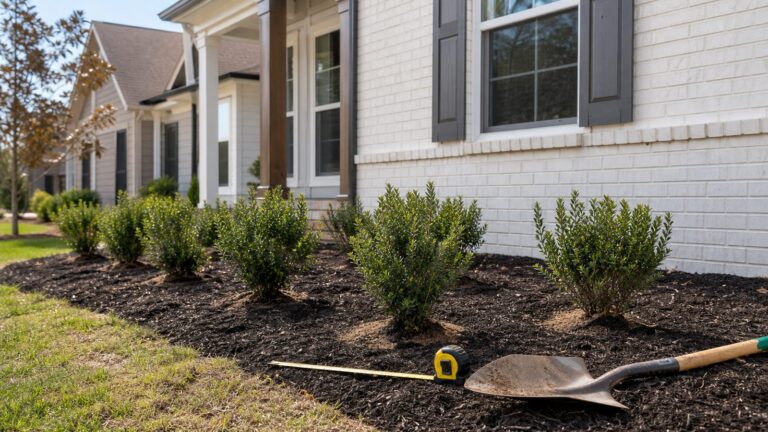
- Measure the available space. Include mature height and width, access for pruning, windows, walks, utility lines, and the space needed to inspect a foundation.
- Verify evergreen performance. A plant may be technically evergreen in its preferred range but semi-evergreen, scorched, or temporarily defoliated in a colder or more exposed garden.
Planting near a foundation or construction-improved bed
Do not use an evergreen shrub to conceal a grading or drainage defect. Check where roof runoff travels, make sure the planting bed does not trap water against the foundation, and preserve access for inspections and maintenance. A shrub that needs constant irrigation should not be placed where watering will routinely wet siding, masonry, or the foundation edge.
When installing beneath trees, do not sever large structural roots merely to make a planting hole. Improve the soil across the bed rather than creating a tiny pocket with sharply different texture. Set the shrub’s root flare at the soil surface, water the root ball thoroughly, and apply a moderate layer of mulch over the root zone. Keep mulch away from the stems.
Water deeply during the establishment period and during extended dry spells. Avoid routine deep cultivation around shallow-rooted shrubs such as boxwood, rhododendrons, and azaleas. Mulch conserves moisture and moderates soil temperature, but it cannot replace irrigation in dry shade.
Preventing winter burn
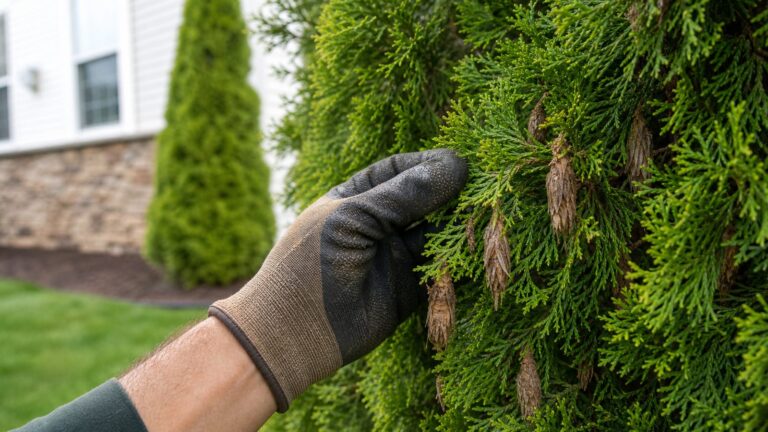
Evergreen leaves continue to lose water in winter while frozen soil may prevent roots from replacing it. Winter sun and drying wind can injure yew, hemlock, arborvitae, boxwood, rhododendrons, camellias, and other broadleaf evergreens. Practical protection includes:
- Watering adequately through the growing season and before the soil freezes.
- Using naturally sheltered sites, including north or northeast exposures where appropriate.
- Installing a breathable wind barrier around exposed shrubs rather than wrapping foliage airtight.
- Avoiding late-season pruning that encourages tender new growth.
- Waiting until spring to prune branches that may have suffered winter injury.
The University of Minnesota winter-protection guide explains why winter sun, wind, frozen soil, and plant exposure matter even for hardy evergreens.
The Tool Desk
Outbyte Driver Updater FREEScan for outdated or missing drivers - takes under a minuteDriver Scan →Outbyte PC Repair FREEClear out junk files and repair common Windows errorsFree Scan →Pruning without reducing next year’s display
- Yews and boxwoods: Tolerate regular pruning and shearing. Shape them after the season’s main flush of growth or according to the desired formal design.
- Camellias: Prune immediately after flowering. Late pruning can remove next year’s flower buds, which form on old wood.
- Rhododendrons, azaleas, pieris, mountain laurel, leucothoe, and skimmia: Use light, selective pruning and remove spent flowers where appropriate rather than repeatedly shearing the whole plant.
- Evergreen conifers generally: Avoid cutting back into old, leafless wood because many will not regenerate from it. Yews are a notable pruning-tolerant exception, but the mature form should still guide the planting decision.
For broader evergreen pruning guidance, see the RHS evergreen shrub reference.
Safety, pollination, and invasive-plant cautions
Safety around children, pets, and livestock: Yews have high-severity poison characteristics; mountain laurel is poisonous if ingested; skimmia berries are poisonous; and boxwood can cause adverse effects if eaten. Other plants can also cause reactions. Keep plant labels, confirm botanical identity, and consult a local extension service or poison-control resource before installing a questionable shrub in an area where browsing is likely.
When one plant will not produce berries
Several shrubs have separate male and female plants or benefit from cross-pollination:
- Aucuba: A compatible male is needed near a female for fruit.
- Japanese skimmia: Plant male and female shrubs; approximately one male to six females is a commonly cited ratio for good fruit production.
- Japanese holly: Female plants need a compatible male for berries.
- Inkberry: Female plants need a male pollinator.
- Japanese plum yew: Male and female plants are needed for fruit.
- Oregon grape holly: Group planting can improve fruit production.
If berries are not important, a single plant can still be an excellent foliage shrub. Do not buy an extra pollinator merely because a short plant label mentions fruit.
What’s actually slowing this PC down?
Pick the symptom - the matching free tool is one click away.
Plants often listed for shade but not included as straightforward choices
Canadian hemlock is an excellent shade-tolerant evergreen, but the species is normally a 40- to 70-foot tree rather than a conventional shrub. It belongs in a shrub plan only when a dwarf or shrub-form cultivar has been selected and its mature size has been verified. See the Canadian hemlock profile.
Wintercreeper euonymus (Euonymus fortunei) tolerates shade but is identified by the Missouri Botanical Garden as highly invasive in much of the eastern United States and a noxious weed in some Midwestern states. Good growth is not enough reason to make it a general recommendation; check state regulations and local invasive-plant lists.
Leatherleaf mahonia (Mahonia bealei) is shade tolerant but has escaped cultivation and naturalized in parts of the Southeast. The more regionally appropriate Oregon grape holly is a better general recommendation, although local invasive status should still be checked.
How to make the final choice
- Determine the USDA zone and winter exposure. Eliminate warm-climate shrubs such as Fatsia, laurustinus, and sweet box if the local winter is outside their dependable range.
- Classify the light. For deep shade, begin with yew, plum yew, aucuba, leucothoe, skimmia, or sweet box. For flowers, look for bright filtered or part shade.
- Classify the moisture. Dry shade points toward aucuba and yews; moist shade opens the door to rhododendrons, azaleas, leucothoe, and mountain laurel; wetter conditions favor inkberry only where drainage remains adequate.
- Test the soil. Acid-loving shrubs should not be planted casually in alkaline construction fill.
- Measure the mature space. Select the cultivar by final height and width, not by the nursery container size.
- Choose the primary purpose. Decide whether the bed needs foliage, flowers, berries, fragrance, privacy, a clipped hedge, or wildlife value.
- Check safety, pollination, fire, and invasive-plant guidance. Confirm whether the plant is poisonous, whether a male pollinator is necessary, and whether the species is appropriate for the state and proximity to structures.
Frequently Asked Questions
What is the best evergreen shrub for deep shade?
Japanese yew, hybrid yew, Japanese plum yew, and Japanese aucuba are among the most dependable choices. Leucothoe, skimmia, sweet box, and Oregon grape holly can also work when soil and climate match their requirements. Aucuba and yews are especially useful when deep shade is also dry, but every new planting needs water during establishment.
Can evergreen shrubs grow beneath mature trees?
Yes, but the main problem may be root competition rather than light. Mature tree roots can make shaded soil dry, nutrient-poor, and difficult to dig. Do not cut large structural roots to create a planting hole. Use careful planting, broad soil improvement, mulch, and irrigation during dry periods.
Which shade shrubs need acidic soil?
Camellia, Japanese pieris, mountain laurel, rhododendrons, evergreen azaleas, leucothoe, skimmia, sweet box, Oregon grape holly, and inkberry generally prefer acidic soil. Test the soil before planting. These shrubs also require drainage; acidic soil does not make waterlogged roots safe.
Will an evergreen shrub stay green all winter?
Not necessarily. Broadleaf evergreens can suffer winter burn, lose leaves temporarily, or become semi-evergreen near the edge of their hardiness range. Cultivar, winter wind, exposure, drainage, snow cover, and local microclimate all affect whether foliage remains attractive year-round.
The Bottom Line
The most reliable answer for a genuinely shady U.S. site is usually a shrub-form yew, hybrid yew, plum yew, or aucuba. Choose rhododendron, azalea, camellia, pieris, mountain laurel, leucothoe, or skimmia when the site is cooler, moist, well-drained, and acidic. For wet shade, favor inkberry; for warm climates, consider Fatsia, laurustinus, or holly olive. Verify the cultivar’s mature size, hardiness, soil requirements, toxicity, pollination needs, and local invasive or fire-safety guidance before planting.
The Tool Desk
Outbyte Driver Updater FREEFix the driver behind crashes, sound loss and screen glitchesFind Drivers →Outbyte PC Repair FREERepair Windows errors before they cause bigger problemsFix Now →Quick Recap
Product prices and availability are accurate as of the date/time indicated and are subject to change. Any price and availability information displayed on Amazon at the time of purchase will apply.