Some links on this page are affiliate links: if you buy through them we may earn a commission, at no extra cost to you.
Zero-VOC paint can reduce one important source of renovation emissions, but “zero VOC” does not mean emission-free, chemical-free, or universally safe for every occupant. For a healthier interior repaint, choose a water-based coating with a current product-specific zero- or very-low-VOC claim, look for a low-emissions certification such as UL GREENGUARD Gold, verify whether the claim still applies after tinting, read the technical and safety data sheets, and ventilate the space during application and curing.
The best paint depends on what you value most: retail availability and price, a clearly stated after-tinting claim, formaldehyde- or odor-reduction features, biobased content, or documentation aimed at chemically sensitive occupants. No product in the available evidence can responsibly be called the universally “healthiest” paint.
As an Amazon Associate I earn from qualifying purchases.
The Tool Desk
Outbyte PC Repair FREERepair Windows errors before they cause bigger problemsFix Now →Outbyte Driver Updater FREEScan for outdated or missing drivers - takes under a minuteDriver Scan →What “zero VOC” actually means
VOC stands for volatile organic compound—an organic chemical that can evaporate into the air under normal conditions. Paint is only one possible indoor source. Primers, caulk, patching compound, adhesives, flooring, cabinets, furnishings, cleaning products, and existing coatings may also release volatile chemicals.
The important complication is that “VOC” can mean different things in different contexts. The U.S. Environmental Protection Agency distinguishes the broader indoor-air meaning of VOC from regulatory definitions used for outdoor air and ozone formation. Some compounds are exempt from outdoor-VOC calculations because they are not considered photochemically reactive, yet those compounds can still be volatile indoors. A paint can therefore meet a regulatory “zero-VOC” or “no-VOC” claim without being free of every volatile chemical or every indoor-air concern.
Popular on Amazon
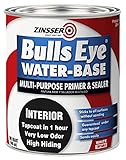
- Use to prime interior surfaces such as walls, doors, trim, plaster, concrete and more
- Water-based low-odor formula provides exceptional stain hiding even on dark or porous surfaces
- Dries to the touch in 30 minutes and covers up to 100 sq. ft. per quart
- Creates a uniform flat-finish surface ideal for top coating
- Adheres to slick surfaces without the need for deglossing or sanding
EPA also cautions that labels and certifications for wet products such as paints and adhesives do not necessarily assess every chemical released into indoor air. Treat the label as a screening tool—not as a complete toxicology assessment.
Zero VOC is not the same as zero emissions
- VOC content: The amount of regulated VOC in the product, usually expressed in grams per liter. This may be measured for an untinted base and may exclude exempt compounds.
- Emissions: What the finished coating releases into indoor air as it dries and cures. Emissions testing uses an environmental chamber and a defined list of chemicals and conditions.
- Odor: What people can smell. Odor is not a dependable measure of toxicity or total emissions. A low-odor paint may still release chemicals, while the absence of a strong odor does not prove that emissions are zero.
“Low odor,” “non-toxic,” “chemical-free,” and “safe for babies” are broader claims than the evidence generally supports. Do not use those terms interchangeably with zero VOC.
How to compare zero-VOC interior paint
1. Check whether the claim applies after tinting
Colorants can change the final formulation. A product may be advertised as zero VOC in its untinted base while the finished, colored paint has different characteristics. Before ordering, ask the retailer or manufacturer:
- Does the zero-VOC claim apply to the exact tint base?
- Does it apply after the selected colorant is added?
- Is the claim valid for the exact sheen—flat, eggshell, satin, pearl, or semi-gloss?
- Is the product sold in the location where the work will take place?
Benjamin Moore explicitly states that its Eco Spec line maintains zero VOCs and zero emissions after tinting. That is a useful, specific manufacturer claim. For other products, verify the tint language product by product rather than assuming that the same statement applies to the entire brand.
2. Prefer emissions certification over a content claim alone
A product-specific emissions certification provides different information from a VOC-content number. It does not prove that a paint is risk-free, but it gives you a defined testing protocol to examine.
- UL GREENGUARD Gold: UL says this certification limits emissions of more than 360 VOCs as well as total chemical emissions. It incorporates requirements from the California Department of Public Health Standard Method and is intended for more sensitive environments, including homes with children, schools, healthcare facilities, and nurseries.
- CDPH Standard Method v1.2: This is an environmental-chamber method for measuring volatile chemical emissions from indoor sources. The January 2017 version superseded v1.1 and amended the benzene pass/fail level to 1.5 micrograms per cubic meter, effective April 1, 2017. Passing a chamber protocol is not the same as a clinical safety guarantee.
- Green Seal GS-11: Green Seal’s listed GS-11 Edition 4.1 is dated March 11, 2025; the standard was also republished with clarifications in April 2026. It covers architectural coatings and includes broader environmental and human-health requirements, not just a single VOC-content number. Verify that the exact product and current formulation remain certified.
Green Seal certification should not automatically be described as zero VOC. The standard’s informative CARB SCM 2007 table includes category limits such as 50 g/L for flat coatings, 100 g/L for nonflat coatings, and 150 g/L for nonflat high-gloss coatings. Those are limits within a standard, not a universal zero-VOC threshold.
What’s actually slowing this PC down?
Pick the symptom - the matching free tool is one click away.
Also popular on Amazon

- Interior/Exterior use on new or previously painted drywall, concrete, wood, masonry, metal and glossy or difficult surfaces
- Water-based formula seals uniformly and will stick to surface without sanding
- Dries to the touch in just 30 minutes, ready to recoat in 1 hour and covers up to 100 sq. ft.
- Has excellent stain blocking resistance and can be used over any oil or latex topcoat
- Gray color of primer works great under vibrant, vivid colors saving time and money by improving hide and coverage of deep topcoats
3. Read the technical data sheet and safety data sheet
The product label is not the whole specification. Look for the current technical data sheet, safety data sheet, and certification listing for the exact product, sheen, and tint base. Pay particular attention to documentation about:
- formaldehyde and formaldehyde-reduction claims;
- ammonia and aromatic hydrocarbons;
- hazardous air pollutants;
- exempt solvents that may not appear in a regulatory VOC number;
- antimicrobial preservatives or biocides;
- required ventilation, drying, recoat, and cleanup procedures; and
- storage, disposal, and first-aid instructions.
Do not infer that a zero-VOC label means formaldehyde-free. That claim must be made for the exact product by the manufacturer, and it still should not be expanded into a guarantee that the paint will not affect a particular person.
4. Match the coating to the room
Health-related selection is only part of a successful renovation. A coating that hides poorly or fails in service may require extra coats, repeated sanding, or an early repaint—using more material and extending the period of disruption.
| Room or surface | Typical sheen to consider | Reasoning |
|---|---|---|
| Ceilings and low-traffic walls | Flat | Minimizes reflected light and helps conceal minor surface irregularities. |
| Bedrooms, living rooms, and general walls | Eggshell or satin | Usually offers a practical balance of washability and lower sheen. |
| Trim, doors, and surfaces needing frequent cleaning | Satin or semi-gloss | More durable and washable, although higher sheen can reveal surface defects. |
| Higher-moisture areas | Product-specific satin or semi-gloss | Use a coating approved for the substrate and moisture conditions; paint alone does not correct leaks or chronic condensation. |
Current zero-VOC paint candidates
The products below are candidates for different priorities, not a ranking of universal safety. The claims are primarily manufacturer claims unless otherwise noted. Product formulations, certification status, color bases, sheen availability, and local stock can change.
Free tools Windows power users keep installed
One-click scans. No signup required.
| Product line | Why it may fit | Important qualification |
|---|---|---|
| Benjamin Moore Eco Spec | Manufacturer describes it as a zero-VOC, zero-emissions, low-odor interior paint and primer line, including after tinting. The line is presented with Green Seal, MPI Extreme Green Performance, Asthma & Allergy Friendly, and LEED v4 indoor-air-quality eligibility references. Flat, eggshell, and semi-gloss topcoats are listed. | The after-tinting and zero-emissions statements are manufacturer claims, not independent comparative proof that the product is safest for every household. |
| Sherwin-Williams Harmony | Manufacturer describes Harmony Interior Acrylic Latex as zero VOC, with formaldehyde-reducing and odor-reducing technology, antimicrobial agents, and UL GREENGUARD Gold certification. Flat, eggshell, and semi-gloss sheens and a matching zero-VOC wall primer are listed. | Formaldehyde reduction and odor reduction are product claims, not evidence of zero emissions or independent clinical benefit. Confirm current local availability and the exact technical data for the chosen sheen. |
| BEHR PREMIUM PLUS Interior | A mainstream paint-and-primer option identified by the manufacturer as zero VOC and low odor, with GREENGUARD Gold certification. Flat, eggshell, satin, and semi-gloss versions are listed. Manufacturer information gives approximately 250–400 square feet per gallon, about one-hour drying, and generally two-hour recoat timing. | Actual coverage and dry time vary with the surface, temperature, humidity, application method, and product. BEHR states that most emissions occur during painting and the first 48 hours, with some continuing for two weeks or longer. Consumer Reports’ 2026 product information lists a reported VOC value below 5 g/L, but the exact current SKU and tint base should be checked. |
| BEHR PREMIUM PLUS ECOMIX | A plant-based-content option. BEHR describes the line as containing at least 20% plant-based ingredients verified through ASTM D6866, with USDA Certified Biobased status, zero-VOC and low-odor claims, GREENGUARD Gold certification, and flat, eggshell, and semi-gloss sheens. | Biobased content does not mean that the complete formula is natural, non-toxic, or emission-free. Consider the biobased claim separately from the indoor-air and performance documentation. |
| AFM Safecoat Zero VOC | A specialty water-based, tintable wall-and-ceiling coating offered in flat, pearl, eggshell, and semi-gloss. AFM’s technical materials state that the line contains zero VOCs and is made without formaldehyde, ammonia, aromatic hydrocarbons, exempt solvents, or hazardous air pollutants. It is marketed for homes, schools, hospitals, offices, and chemically sensitive occupants. | These are manufacturer statements, not independent head-to-head clinical or emissions evidence. AFM indicates that the line is primarily sold through independent dealers, so availability may be less convenient than mainstream retail brands. |
Which candidate fits which project?
- For broad retail access and value: Start by comparing the exact BEHR PREMIUM PLUS Interior SKU, including its tint base and current certification information.
- For the clearest after-tinting statement: Benjamin Moore Eco Spec has the most explicit documented manufacturer language among these candidates.
- For a mainstream line with indoor-air-related features: Sherwin-Williams Harmony combines a zero-VOC claim with formaldehyde-reduction, odor-reduction, and GREENGUARD Gold claims.
- For biobased content: BEHR PREMIUM PLUS ECOMIX adds a USDA Certified Biobased and minimum-20%-plant-based claim, but that does not by itself establish a health advantage.
- For specialty chemical-sensitivity documentation: AFM Safecoat Zero VOC provides the most explicit list of excluded ingredients in the available manufacturer materials, although its specialty positioning is not independent proof of superior health outcomes.
If you are comparing retailers, use an exact current zero-VOC interior paint SKU rather than a broad brand search. Confirm that the listing identifies the same product line, sheen, base, certification, and tinting conditions described in the technical documents.
A practical buying checklist
- Identify the actual project: Record the room, substrate, existing coating, sheen, expected traffic, moisture exposure, and approximate area.
- Screen for zero VOC: Look for a product-specific claim, not merely a retailer category label.
- Check the emissions certification: Look for UL GREENGUARD Gold or another clearly documented standard. Verify the exact product, not just the manufacturer’s general portfolio.
- Confirm tinting: Ask whether the claim applies after the selected colorant is mixed into the chosen base.
- Review the TDS and SDS: Check ingredients or exclusions relevant to the household, application instructions, ventilation requirements, and cleanup.
- Check performance: Compare hiding, coverage, recoat time, washability, and the number of coats expected. A product that needs substantially more material may not be the lower-emission choice for the complete job.
- Inspect the existing surface: Test adhesion and determine whether primer, patching, caulk, stain blocking, or removal is needed. Do not paint over an unresolved leak, dampness, mold source, or condensation problem.
- Plan the occupants’ schedule: Arrange for children, pregnant people, pets, and chemically sensitive occupants to remain out of the work area during application and curing when feasible.
Preparation matters as much as the topcoat
New paint does not seal away every source of indoor pollution. Before coating, identify what is already on the walls and what else will be installed during the renovation. Old primer, adhesive, caulk, cabinet finish, flooring, furniture, and patching products can all affect indoor air.
Also popular on Amazon

- Interior use on including wood, drywall, plaster, concrete, masonry and more
- Low-VOC oil-based primer is great for residental and commercial use
- Dries to touch in 30 minutes and covers up to 100 sq ft
- High solids formula provides excellent coverage over all topcoats
- Flat bright white finish does not yellow over time
Moisture deserves special attention. Repair leaks, improve ventilation, correct condensation, and allow damp materials to dry before repainting. Painting over a moisture problem can trap defects, encourage continued deterioration, and create a reason to repeat the work.
For homes built before 1978 in the United States, treat existing paint as potentially lead-based unless it has been properly inspected or tested. Sanding, scraping, or otherwise disturbing lead paint creates a serious dust hazard. A new zero-VOC coating does not remove that hazard. Use lead-safe renovation practices and qualified professionals where applicable.
How to ventilate during and after painting
Ventilation is necessary even when the label says zero VOC or low odor. EPA remodeling guidance describes maximum ventilation during installation and for at least 72 hours afterward. Another EPA recommendation is to operate exhaust fans and provide as much ventilation as possible continuously from the beginning of painting until two or three days after completion.
- Create an outdoor exhaust path. Use an exhaust fan or a box fan positioned to discharge air outdoors. A fan that merely circulates air within the room does not remove contaminants from the house.
- Provide replacement air. Open an appropriate window or door on the opposite side of the room or home so air can move toward the exhaust rather than simply swirling around the work area.
- Prevent HVAC redistribution. Do not allow the central HVAC system to pull air from the painted room and distribute it through the home. EPA guidance recommends blocking return openings or turning off regular circulation when appropriate. Follow equipment requirements and do not interfere with combustion-air or safety systems.
- Keep sensitive occupants away. Keep children, pets, pregnant people, and chemically sensitive individuals out of the work area during application and curing whenever feasible. For a whole-room renovation, plan an alternate living or sleeping area.
- Continue beyond the touch-dry time. Paint may feel dry before curing is complete. Follow the label and TDS rather than relying on touch or odor. BEHR notes that some emissions can continue for two weeks or longer even though most occur during painting and the first 48 hours.
- Store materials safely. Seal leftover paint tightly and keep it outside occupied living areas. Dispose of paint and contaminated materials according to local requirements.
An activated-carbon air purifier for paint fumes may be a supplemental measure in some homes, but it is not a substitute for exhausting air outdoors, following the product instructions, or keeping occupants away during the highest-emission period. Do not assume that any purifier removes every volatile chemical.
What about a respirator?
Do not rely on a particulate-only dust mask for paint vapors. For ordinary brush-and-roller work, the available evidence does not establish that one particular respirator model is necessary. If the product label, SDS, work method, or existing coating creates a respiratory hazard, select protection for that specific hazard and follow applicable occupational-safety guidance. A respirator must be appropriate for the contaminant, fitted correctly, and used according to its instructions.
Independent reader supportYour contribution helps us test, update, and keep practical guides available for everyone.Application details that reduce avoidable problems
- Use the primer recommended for the substrate and the selected topcoat; “paint and primer” does not mean every surface needs no separate preparation.
- Apply at the temperature and humidity range stated in the TDS. High humidity, cold surfaces, poor airflow, and heavy application can extend drying and curing.
- Use the correct nap roller and a clean brush for the surface. A basic paint roller kit, edging tool, and properly lined tray can help maintain a consistent film and reduce rework.
- Do not add unapproved conditioners, solvents, fragrances, or antimicrobial products to change the paint’s behavior.
- Allow the stated recoat time. Applying a second coat too soon can interfere with film formation and extend the project.
- Clean spills and tools as directed. Do not wash paint or contaminated rinse water into a drain unless local instructions explicitly allow it.
How the certifications differ
| Evidence type | What it can tell you | What it cannot establish |
|---|---|---|
| Zero-VOC content claim | The product meets the manufacturer’s or applicable regulatory definition for a stated VOC-content level. | That every volatile chemical is absent, that the tinted product is identical to the base, or that no occupant will react. |
| UL GREENGUARD Gold | The product passed defined emissions limits covering more than 360 VOCs and total chemical emissions under the certification protocol. | That every possible chemical was tested, that emissions are literally zero, or that symptoms are impossible. |
| CDPH Standard Method v1.2 | A chamber-testing method for volatile chemical emissions from indoor sources. | A diagnosis of health effects or a guarantee for a particular household. |
| Green Seal GS-11 | Broader requirements for architectural coatings, including category-specific VOC limits and environmental and human-health criteria. | That the product meets a universal zero-VOC definition. |
| Biobased-content certification | The proportion or status of materials derived from biobased sources, when stated by the certification. | That the entire formula is natural, non-toxic, allergen-free, or emission-free. |
For readers who want to shop by a standard rather than a marketing phrase, compare a current Green Seal-certified paint listing with the manufacturer’s technical documents. Certification is useful only when it applies to the exact product being purchased and has not expired or been replaced by a different formulation.
Quick wins for a faster PC:
Repair Windows errors before they cause bigger problemsFix Now →Scan for outdated or missing drivers - takes under a minuteDriver Scan →Clear out junk files and repair common Windows errorsFree Scan →Common mistakes to avoid
Choosing the lowest VOC number without checking emissions
A content number is not an emissions profile. Look for both a product-specific VOC claim and a defined low-emissions certification when indoor air is a priority.
Also popular on Amazon

- ALL-IN-1 PAINT & PRIMER: A hardy multi-purpose and multi-surface one-coat paint and primer in one for almost any indoor or outdoor surface. A wall, ceiling, floor, skirting board, cabinet, furniture and door paint for your bathroom, kitchen, home and garden.
- DURABLE & VERSATILE: A highly pigmented, thick formula available in 12 bold colours and a Matte, Satin or Gloss finish. Ideal for interior and exterior paint jobs on wood, laminate, plastic/UPVC, metal, concrete, brick, masonry, stone, glass and more.
- EFFECTIVE MONEY & TIME SAVER: A quick painting solution for DIY or professional builders and painters; our luxuriously opaque formula requires just 1 coat and is fast drying for a premium finish.
- ADVANCED ECO FORMULA: Our UK-made chalk paint is water-based, non-toxic, low odour, and has low VOCs for an environmentally friendly decorating choice.
- EASY APPLICATION: Remove dirt with a damp cloth, wipe the surface clean and dry, sand/score the surface (optional based upon the finish required), stir to mix the colour and paint with a brush or roller.
Assuming low odor means safe
Smell varies by person and chemical. Odor can fade before all emissions have stopped, and some chemicals may be difficult to smell. Continue ventilation for the recommended period.
Ignoring the tint base
The colorant is part of the finished product. Recheck the claim after choosing a deep or vivid color and ask for documentation for the exact base.
Painting over dampness or contamination
Paint is not a moisture-control system or a substitute for correcting a leak, condensation, deteriorated substrate, or mold source.
Crashes, No Sound, or Screen Glitches?
Random freezes, missing sound and display glitches usually trace back to one bad driver. Find and replace yours safely.Free scan · under a minuteWindows Errors? Fix Them Before They Spread
Repair common Windows errors and clear accumulated junk for a smoother, more stable PC - no reinstall needed.Free scan · no reinstallUsing a recirculating fan as ventilation
Moving contaminated air around the room can make the space feel less stagnant without removing the source. Exhaust outdoors whenever feasible.
Calling a product “non-toxic” because it is zero VOC
That conclusion is broader than the label supports. Use precise language: zero VOC under the stated definition, low emissions under a named protocol, or a manufacturer-stated ingredient exclusion.
A sensible decision for most renovation projects
For a typical U.S. home repaint, a reasonable hierarchy is:
- Correct moisture, substrate, and lead-paint issues before painting.
- Choose a water-based interior coating with a current product-specific zero- or very-low-VOC claim.
- Prefer UL GREENGUARD Gold or comparable emissions documentation when children, pregnancy, asthma, chemical sensitivity, or limited ventilation makes indoor air a particular concern.
- Confirm that the documentation applies to the exact sheen, tint base, and finished color.
- Choose a coating that will cover and perform in the room without excessive rework.
- Exhaust outdoors during application and for at least 72 hours afterward—or longer if the label, TDS, odor, or occupant response indicates the space needs more time.
That approach is more protective and more accurate than choosing a paint solely because the front label says “zero VOC.”
Recommended Free Tools
The Bottom Line
Bottom line: Zero-VOC interior paint is a useful first filter, not a guarantee of clean indoor air. Compare the exact tinted product, emissions certification, technical and safety documentation, ingredient disclosures, and room-specific performance. Then control the renovation environment with outdoor exhaust, HVAC isolation where appropriate, adequate curing time, and careful attention to existing paint and moisture hazards.
Quick Recap
Product prices and availability are accurate as of the date/time indicated and are subject to change. Any price and availability information displayed on Amazon at the time of purchase will apply.

