The Tool Desk
Outbyte PC Repair FREERepair Windows errors before they cause bigger problemsFix Now →Outbyte Driver Updater FREEFix the driver behind crashes, sound loss and screen glitchesFind Drivers →The best workshop dust-control system captures dust at the tool, moves it through a collector or extractor matched to the machine, filters the exhaust, removes escaped dust without creating a cloud, and uses respiratory protection as a final layer. An ambient air cleaner or dust mask alone cannot compensate for a poorly positioned hood, a blocked hose, a leaking connection, or an undersized collector.
For a small bench, that usually means a close-fitting tool port connected to a suitable mobile extractor, short sealed hose, optional cyclone pre-separator, routine vacuuming, and an appropriate respirator when required. Larger woodworking shops need machine-specific hoods, engineered ductwork, filtration, housekeeping, and a review of combustible-dust risks.
As an Amazon Associate I earn from qualifying purchases.
What workshop dust control is supposed to accomplish
Dust control has four separate jobs:
- Capture: collect chips and airborne dust as close as possible to the cutting, sanding, routing, or drilling point.
- Transport: move the material through a hose or duct system without losing the airflow needed for capture or allowing blockages.
- Contain and filter: separate the collected material and prevent fine particles from being returned to the room through the extractor exhaust.
- Protect and clean: control the dust that escapes and provide suitable respiratory protection and housekeeping.
This is a control hierarchy, not a shopping list. Improving a later layer does not fix a failure in an earlier one. A high-efficiency filter cannot collect dust that never reaches the extractor, and a respirator does not make it acceptable to let dust accumulate on rafters, ledges, motors, or other surfaces.
The guidance below focuses primarily on wood dust in hobby, construction, and professional woodworking shops. If the workshop also cuts concrete, masonry, engineered stone, treated materials, or uses solvent-based finishes, apply the material-specific exposure controls and workplace requirements for those hazards as well.
#1 Best Overall

- WHY CHOOSE AHAM VERIFIDE AIR PURIFIERS: AHAM (Association of Home Appliance Manufacturers) is an ANSI-accredited organization that sets strict standards for appliance performance. Air purifiers with the AHAM VERIFIDE seal have been independently tested for air cleaning performance and energy efficiency. When you choose an AHAM certified air purifier, you're choosing a product trusted for reliable and effective indoor air quality improvement
- HIGH-PERFORMANCE AIR PURIFICATION: A powerful 56W high-torque motor and 143 CFM CADR delivers fast, effective cleaning. The Levoit Original Filter is HEPA-grade while operating in Sleep Mode (Based on IEST RP C001.7). Ideal for home, bedroom, or office
- AHAM VERIFIDE, PROVEN PERFORMANCE: AHAM VERIFIDE with a CADR (Clean Air Delivery Rate) rating of 143 CFM for smoke, 153 CFM for dust, and 167 CFM for pollen—refreshing air in a 222 ft² room 4.8 times per hour and a 1,073 ft² room once per hour
- GENUINE REPLACEMENT FILTERS: For the best performance and longest lifespan, use official Levoit filters designed specifically for Levoit air purifiers. Levoit replacement filters ensure the best fit and high-efficiency filtration, while off-brand filters may be unreliable and may damage your Levoit air purifier
- FIND COMFORT: Our filter has strong filtration performance of fine particles. 99.97% filtration efficiency for 0.1 to 0.3μm airborne particulates, including pollen, dust, and animal dander allergens. Tested by an independent lab
Why wood dust deserves serious control
Wood dust can irritate the eyes, skin, nose, and respiratory system. Repeated exposure has been associated with sensitization, asthma, chronic bronchitis, hypersensitivity pneumonitis, and certain cancers. The risk is not limited to the visible chips on the floor: sanding, routing, and shaping can produce a fine fraction that stays airborne longer and settles on hidden or elevated surfaces.
For US occupational settings, OSHA woodworking guidance lists a nuisance-dust permissible exposure limit of 15 mg/m3 for total dust and 5 mg/m3 for the respirable fraction, each as an eight-hour time-weighted average. NIOSH identifies a recommended exposure level of 1 mg/m3 for total dust. These are occupational-hygiene references, not a guarantee that a home or job-site workshop is safe below a particular reading. Applicable limits may also differ by jurisdiction, material, and workplace circumstances.
Fine wood dust is also a combustible-dust concern. Dust can travel away from the machine and accumulate on rafters, high ledges, ductwork, and other areas that are easy to overlook. Sanders, routers, and shapers are particularly important because their fine particles may not behave like the larger chips produced by a planer or jointer. OSHA warns against treating visible floor dust as the only housekeeping problem.
1. Capture dust at the source
Source capture is the most important part of the system. Use the machine’s integrated port, guard, hood, or shroud whenever it is designed to collect dust, and position the opening as close as practical to the emission point. A hood that is remote from the cut may leave the dust cloud outside the useful airflow even if the collector is powerful.
Use the right type of hood
- Portable sanders: connect directly to the sander’s port and use the manufacturer’s pad or shroud arrangement. Sanding can generate a large quantity of fine dust, so a clean filter and leak-free hose matter as much as nominal suction.
- Routers and circular saws: use the tool-integrated extraction port or a close shroud. Check that the hose does not interfere with the cut, guard, or safe handling of the tool.
- Table saws: collect beneath the blade where practical, but do not assume an under-table connection captures everything. Dust thrown above the table can escape through the blade opening and around the workpiece. NIOSH reported that a tested auxiliary overhead hood reduced emissions by more than 90% on a typical table saw under laboratory conditions. That particular NIOSH hood was not commercially available when the source was published, so the finding should be treated as evidence for overhead capture—not as a recommendation to purchase a specific NIOSH-branded consumer product.
- Planers, jointers, and similar machines: use the machine-specific hood and a collector designed for the larger chip load and duct size. These machines commonly need a different collection arrangement from a portable sander.
OSHA gives a general duct-velocity range of approximately 2,500 to 4,000 feet per minute for moving light dry sawdust, heavier wood chips, and green shavings without plugging. This is a design reference, not a universal sizing rule. Actual performance depends on duct diameter, fittings, hose length, hood geometry, leaks, static pressure, the collector, and the material.
Make capture observable
After connecting a tool, inspect the port and hood while the machine is running. Look for dust trails escaping at the blade, bit, sanding pad, or work surface; check whether the hose or port is visibly obstructed; and inspect where dust settles after a representative task. A system that appears strong at an open hose inlet may perform poorly once connected to a restrictive tool port or a long, corrugated hose.
For stationary machines, a woodworking dust collector should be selected around the actual machines, hoods, duct diameter, and intended simultaneous use—not around advertised peak horsepower alone. The collector is only one part of the airflow path.
2. Match the extractor or collector to the tool
A mobile extractor or shop vacuum is generally suited to portable tools with smaller ports and relatively fine dust. A stationary dust collector is generally more appropriate for machines that produce larger chips and need higher airflow through larger ductwork. The boundary is not determined by brand name or horsepower; it is determined by the tool’s collection requirement and the resistance of the complete system.
| Workshop task | Usually the better starting point | Important checks |
|---|---|---|
| Portable sander | Mobile extractor connected directly to the tool | Fine-particle filtration, filter condition, close port, and hose flexibility |
| Router or circular saw | Mobile extractor with a tool shroud or integrated port | Port geometry, guard clearance, short hose, and leakage |
| One table saw | Extractor or collector matched to both under-table and above-table capture | Blade-area escape, overhead capture, hood position, and airflow under load |
| Planer or jointer | Stationary collector designed for the machine’s larger chip flow | Machine hood, duct diameter, chip capacity, blockages, and filter loading |
| Several stationary machines | Engineered stationary collection system | Duct layout, blast gates, simultaneous-use assumptions, filtration, fire protection, and maintenance access |
Why advertised CFM is not enough
Manufacturers may publish airflow measured under conditions that do not represent a connected tool. A restrictive hose, small port, sharp bend, partially loaded filter, full bag, or leaking fitting can substantially change the airflow delivered at the hood. Compare:
Rank #2
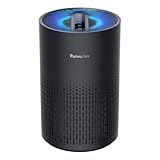
- Cleaner Air In Minutes: Purivortex is proven to filter common pollutants from your home’s air. This air purifier purifies rooms up to 880 ft² in one hour. It can purify a 215 ft² room in about 15 minutes, giving you noticeably fresher air in a short time. Breathe clean, crisp air and feel the difference in your space. (*Tested in an ISO 17025 certified laboratory under typical residential room ventilation conditions.)
- Breathe Easier with 99.97% Filtration: Purivortex HEPA air purifiers for home feature a powerful 3-layer filtration system — a pre-filter, HEPA filter, and activated carbon—that filter up to 99.97% of pollutants, including dust, smoke, pollen, pet dander, and VOCs. Purivortex air filters filter out particles as small as 0.1 microns, while the carbon filter helps reduce light household odors from smoke, pets, and cooking.**(**Independently tested in an ISO 17025 laboratory.)
- Bigger Filter, Better Purification: Purivortex goes beyond the standard—while most purifiers of this size use a 4 inch filter, Purivortex air filters stand tall at 6 inches. That’s nearly 1.5× larger, pulling in more air and delivering cleaner results, faster. Filter made of FSC-Certified paper, sourced from responsibly managed forests, ensuring both high performance and care for the environment.
- Backed by Science, Trusted by Standards: Purivortex air purifiers are rigorously tested to deliver powerful purification performance. Certified by ETL, FCC, and CARB for safety and energy efficiency, and verified through independent SGS laboratory testing to prove their effectiveness. With Purivortex, you get science-backed confidence in every breath.
- 2 Years of Guaranteed Confidence: Purivortex stands behind the quality and performance of every purifier, which is why Purivortex air purifiers come with a full 2-year warranty. More than 500,000 families have already chosen Purivortex for cleaner, fresher air. With added convenience features such as 3 timer settings (4H/8H/12H), 4 fan modes (Sleep/Low/Med/High), and 4 night light modes (Multicolor, Blue, Green, Purple), Purivortex delivers comfort tailored to your lifestyle.
- the machine’s port diameter and hood design;
- airflow under static pressure, where published;
- the collector’s filter area and filtration specification;
- the length, diameter, and flexibility of the hose or duct;
- the number of bends, reducers, blast gates, and branches;
- the material volume and particle size the machine produces; and
- how readily filters, bags, seals, and replacement parts can be maintained.
A more powerful motor does not automatically produce better capture at a badly designed hood. Conversely, a modest mobile extractor can be highly effective when it is connected directly to a portable tool with a close-fitting port and a short, sealed hose.
HEPA filtration: valuable, but not a complete control system
For mixed portable-tool work, a HEPA workshop dust extractor can reduce the fine dust returned through the extractor exhaust. As one official product example, Bosch states that its GAS20-17AH is a 17-gallon extractor with automatic filter cleaning and HEPA capture efficiency of 99.97% at 0.3 microns or larger. That specification describes the filter under its stated test conditions; it does not guarantee whole-system capture at every tool, nor does it prove that the room will remain below an occupational exposure limit.
Do these 3 things before closing this tab:
1Repair Windows errors before they cause bigger problems2Fix the driver behind crashes, sound loss and screen glitches3Clear out junk files and repair common Windows errorsFestool’s US workshop-extractor range is another example of a premium mobile-extractor ecosystem built around suction, filtration, capacity, accessories, and compatibility with additions such as a cyclone. It is reasonable to compare such features when they fit the work, but no brand or model should be called universally best without comparable testing using the same tools, hoods, hose arrangements, and loading conditions.
3. Add a cyclone when it solves a real problem
A cyclone separator placed before a shop vacuum or extractor can intercept bulk chips and a substantial portion of dust before those materials reach the vacuum filter. This can reduce filter loading, preserve suction, simplify emptying, and lower the frequency of bag or filter changes.
Oneida states that its Dust Deputy cyclones can separate up to 99.9% of fine dust and bulk debris from the incoming airstream under the manufacturer’s conditions. That is a manufacturer claim for the specified equipment and setup, not a universal result for every cyclone, hose arrangement, or type of dust. A cyclone does not remove all fine dust and does not replace source capture or final filtration.
A cyclone dust separator is most useful when the shop vacuum filter clogs quickly, the workshop produces a large amount of chips, or sanding creates enough material to fill the collection container frequently. Size the separator, hoses, container, and fittings as a system. A poor seal or unsuitable container can undo the benefit.
Outdated Drivers Are Slowing You Down
One free scan finds every outdated or missing driver and matches the right update for your exact hardware.Free scan · exact hardware matchPC Slower Than It Used to Be?
A free scan shows the junk files, broken settings and background clutter dragging Windows down - then fixes them in one click.Free scan · Windows 10 & 11Follow the cyclone and extractor instructions concerning hot material, embers, liquids, solvents, flammable substances, and combustible dust. Oneida’s instructions include restrictions concerning certain flammable or combustible materials. Do not assume that a plastic separator, ordinary shop vacuum, or improvised container is suitable for every dust hazard.
4. Build a low-loss connection path
Once the tool and collector are selected, the connection between them becomes the working airflow path. Improve it before buying a larger motor.
- Keep the hose or duct as short and direct as the layout allows.
- Use a diameter that matches the tool port, hood, and collector rather than adding unnecessary reductions.
- Prefer gradual bends to sharp turns where the system allows.
- Seal joints, clamps, access doors, blast gates, and machine ports so air enters at the hood instead of through leaks.
- Inspect corrugated hose for internal damage, crushed sections, and packed dust.
- Keep blast gates and unused branches closed when the design requires it.
- Make sure the hose cannot catch on the workpiece, blade guard, or operator.
- Follow the manufacturer’s instructions for grounding, bonding, and static control. Do not improvise electrical or static-control modifications around a combustible-dust system.
For connection work, dust-collection hose, fittings, and machine hood should be treated as performance components rather than cosmetic accessories. A close-fitting hood and intact, appropriately sized connection can improve capture more than a nominally larger collector attached to a leaking or restrictive path.
5. Control fine dust that escapes
Use an ambient air cleaner only as a secondary layer
An ambient air cleaner can remove some suspended particles that escaped the tool’s local exhaust. It can be useful after sanding or during cleanup, but it should not be the primary control. EPA guidance explains that particulate matter includes dust and that air cleaners differ in what they remove; it does not establish that a consumer room air cleaner is an adequate substitute for local exhaust ventilation at a woodworking machine.
What’s actually slowing this PC down?
Pick the symptom - the matching free tool is one click away.
Do not position an air cleaner so its discharge blows dust away from the source hood or across the operator’s breathing zone. It should support the source-capture system, not spread the dust cloud around the room. Continue to use the machine hood, extractor, filtration, and housekeeping even when an ambient unit is running.
Clean settled dust without making it airborne
Use a vacuum designed and approved for the material and application, and follow its instructions for filters, bags, static control, and combustible materials. Clean floors, ledges, rafters, motors, duct exteriors, and other collection surfaces rather than allowing layers to accumulate.
Rank #3

- 𝗪𝗛𝗬 𝗖𝗛𝗢𝗢𝗦𝗘 𝗔𝗛𝗔𝗠 𝗩𝗘𝗥𝗜𝗙𝗜𝗗𝗘 𝗔𝗜𝗥 𝗣𝗨𝗥𝗜𝗙𝗜𝗘𝗥𝗦: AHAM (Association of Home Appliance Manufacturers) is an ANSI-accredited organization that sets strict standards for appliance performance. Air purifiers with the AHAM VERIFIDE seal have been independently tested for air cleaning performance, safety, and energy efficiency. When you choose an AHAM certified air purifier, you're choosing a product trusted for reliable and effective indoor air quality improvement
- 𝗥𝗘𝗠𝗢𝗩𝗘 𝗣𝗢𝗟𝗟𝗨𝗧𝗔𝗡𝗧𝗦 𝗘𝗩𝗘𝗥𝗬𝗪𝗛𝗘𝗥𝗘: Our Pre-Filter and Main Filter capture lint, hair, pet dander, fine airborne pollutants, and smoke particles, helping achieve a cleaner environment for you
- 𝗛𝗘𝗟𝗣𝗦 𝗠𝗔𝗞𝗘 𝗢𝗗𝗢𝗥𝗦 𝗢𝗗𝗢𝗥𝗟𝗘𝗦𝗦: The air purifier helps neutralize smoke, odors, and fumes. You'll love the feeling of breathing clean air at home
- 𝗨𝗦𝗘 𝗜𝗧 𝗔𝗡𝗬𝗪𝗛𝗘𝗥𝗘: With the Levoit Core Mini-P, you can focus on your activities in the bedroom, kitchen, or office. It offers an auto-off display, sleep mode for fewer interruptions, and relaxing aromatherapy, all while operating more quietly than a whisper
- #𝟭 𝗔𝗜𝗥 𝗣𝗨𝗥𝗜𝗙𝗜𝗘𝗥 𝗕𝗥𝗔𝗡𝗗: Levoit has sold over 6.5 million products worldwide and has been a pioneer in air purification technology for 6 years.
Do not use compressed air to blow down accumulated wood dust. OSHA warns that blow-down can create an airborne dust cloud associated with explosion hazards and can redistribute fine particles throughout the shop. Dry sweeping can create a similar nuisance even when it does not produce a visible cloud. Where combustible-dust accumulation is substantial or the system is part of a commercial operation, obtain qualified dust-collection and fire-safety advice rather than improvising a cleanup method.
6. Use respiratory protection as supplemental protection
Respiratory protection is the last layer, not a substitute for local exhaust ventilation, filtration, maintenance, and housekeeping. Choose protection for the actual hazard and use it correctly.
For particulate wood dust, one example is a P100 respirator for woodworking. 3M states that its 2091 P100 particulate filter is NIOSH-approved, filters at least 99.97% of certain airborne particles, and is intended for use with specified 3M facepieces in applications that include woodworking. The 2091 is a filter component, not a complete respirator. Confirm facepiece compatibility, approval configuration, fit, and the manufacturer’s limitations.
There are two common approaches:
- Disposable particulate respirators: convenient for intermittent work, but they must be the correct approved type, fit the wearer, and be replaced when damaged, soiled, difficult to breathe through, or otherwise specified by the manufacturer or workplace program.
- Reusable half-mask respirators with replaceable filters: useful for repeated work when the facepiece fits correctly and can be cleaned and maintained. They still require the correct particulate filters and do not automatically protect against vapors.
Particulate filters are not general-purpose protection from solvent vapors, finish fumes, or every contaminant found in a construction workshop. If the task includes coatings, adhesives, solvents, or another non-particulate hazard, select protection and ventilation for that hazard instead of assuming a P100 filter covers it.
In a US workplace where respirators are required, OSHA’s respiratory-protection requirements can involve a written program, medical evaluation, fit testing, training, proper selection, maintenance, and filter or cartridge-change procedures. Requirements depend on the circumstances, so employers should involve a competent safety professional rather than treating a consumer dust mask as a complete respiratory-protection program.
Workshop setups by scale
Small garage or hobby bench
Start with a portable extractor or shop vacuum connected directly to the tool that produces the dust. Use the tool’s shroud or guard, keep the hose short, and seal the connection. Add a cyclone if chips or sanding dust load the vacuum filter quickly. Maintain the filter and empty the container before it restricts airflow.
Free tools Windows power users keep installed
One-click scans. No signup required.
This arrangement is appropriate for portable sanders, routers, circular saws, and light-to-moderate intermittent work when the port and hood are effective. It is not equivalent to an engineered stationary system serving multiple production machines. Use a suitable respirator when required and vacuum settled dust instead of blowing it into the garage.
Mixed portable-tool workshop
Prioritize a mobile extractor with good fine-particle filtration, automatic start if useful for your workflow, accessible replacement bags and filters, and hose connections that fit the tools you use most. Give special attention to sanders and routers because their fine dust can be difficult to control with a conventional under-machine arrangement.
Keep a cyclone in the upgrade plan if the extractor loses suction as the filter loads or if the shop produces substantial chip volume. An ambient air cleaner may provide additional control for escaped airborne dust, but only after the tool connections and extractor are working correctly.
Rank #4

- Effortless Operation: Simplified control panel with intuitive design makes it easy to operate. No complicated setup—just one tap, and you're on your way to cleaner air, saving time and letting you relax with ease
- Compact Yet Powerful: Covers up to 1,076 ft² while maintaining a compact size of just 6.69 x 6.69 x 9.84 inches. Its small frame makes placement a breeze—whether on your desk or in a corner, it's ready to work hard wherever you need it (Laboratory Tested: Our air purifier efficiently cleans 250 ft² every 15 minutes, covering up to 1,076 ft² per hour)
- 360° Airflow & High Efficiency Filtration: The elegantly engineered 360° surround air intake, coupled with the sophisticated a triple-layer filtration system, meticulously captures an astounding 99.97% of airborne pollutants, transforming your living space into a sanctuary of purity and vitality
- Quiet with Essential Oil Option: Operates as quietly as 22dB, perfect for undisturbed sleep. The built-in essential oil tray lets you add 3–5 drops to infuse your space with soothing scents while enjoying purified air
- Fully Certified: Backed by DOE, ETL, FCC, CARB, CE, and ROHS certifications, our air purifier meets the highest standards for performance, giving you peace of mind with every use
Stationary woodworking machines
Use machine-specific hoods and a stationary collector designed for the required ductwork and airflow. Keep duct runs short and direct where possible, inspect flexible connections and seals, maintain filters and collection bags, and verify that unused branches do not leak or remain open.
Quick wins for a faster PC:
Clear out junk files and repair common Windows errorsFree Scan →Scan for outdated or missing drivers - takes under a minuteDriver Scan →Repair Windows errors before they cause bigger problemsFix Now →For larger shops, extensive duct networks, or operations with significant combustible-dust accumulation, a design review by a qualified dust-collection professional is appropriate. OSHA advises that dust collectors generally be located outside the building unless applicable standards and exceptions are satisfied. Building layout, fire separation, explosion protection, electrical classification, and local requirements must be reviewed for the actual installation.
A practical installation and commissioning checklist
- List each machine: record whether it makes fine dust, large chips, or both; note the port diameter and whether the hood captures above, below, or beside the work.
- Group machines by collector type: portable tools commonly use a mobile extractor; larger stationary machines commonly need a stationary collector and larger ductwork.
- Install the source hood first: position it close to the emission point without interfering with guards, visibility, feed direction, or safe operation.
- Build the shortest practical route: minimize unnecessary hose length, sharp bends, reducers, and unused branches.
- Seal and inspect: check clamps, gaskets, access doors, blast gates, machine ports, and container lids for leaks.
- Check the filter and container: begin with a clean, correctly installed filter and an empty collection container so the test represents normal operation rather than a partially blocked system.
- Run a representative task: test the actual material and operation, not only an open hose. Look for visible escape at the hood and unusual dust settling nearby.
- Correct the source before adding room equipment: improve hood position, hose routing, seals, filter condition, or collector compatibility before relying on an ambient air cleaner.
- Document maintenance: record filter cleaning, bag changes, inspections, and recurring blockages so performance decline is noticed early.
Troubleshooting common failures
| Symptom | Likely areas to inspect | First corrective action |
|---|---|---|
| Dust escapes at the cut or sanding pad | Hood too far away, wrong hood geometry, blocked port, inadequate airflow at the tool, or an operation that needs overhead capture | Move or improve the hood, clear the port, check the hose and filter, and reassess the extractor under load |
| Suction drops during the job | Loaded filter, full container, packed hose, closed or leaking gate, cyclone container full, or damaged connection | Stop safely, isolate the equipment, inspect the full airflow path, and clean or replace components according to instructions |
| Fine haze remains after sanding | Poor sander shroud, leaks, unsuitable filtration, filter-cleaning failure, or dust released during cleanup | Improve direct capture and filtration first; use ambient cleaning only as a secondary layer and avoid blow-down |
| Dust appears on rafters or high ledges | Escaped fine dust, inadequate source capture, leakage, or ineffective housekeeping | Review the machine hoods and system leaks, then remove settled dust with a suitable vacuum method |
| The collector works well on one tool but poorly on another | Different port sizes, hood requirements, static pressure, hose restrictions, or chip volume | Match the tool-specific hood and connection rather than judging the whole system from the best-performing machine |
Maintenance schedule and safe housekeeping
Maintenance is part of dust control. A system that worked when new may become ineffective as filters load, bags fill, hoses split, seals harden, or blast gates stick.
- Inspect hoses, ducts, clamps, gaskets, machine ports, and container lids for leaks, damage, and blockages.
- Clean or replace filters and collection bags according to the extractor or collector manufacturer’s instructions.
- Verify that automatic filter-cleaning systems operate correctly rather than assuming the feature is working.
- Empty containers before they overfill and restrict airflow.
- Inspect cyclone containers and seals so the pre-separator does not become a source of leakage.
- Remove settled dust from floors, ledges, rafters, motors, and other elevated surfaces using an appropriate vacuum method.
- Do not use compressed air for routine dust blow-down.
- Follow warnings concerning hot embers, liquids, solvents, treated materials, and combustible substances.
- Keep filters, bags, hoses, and respirator components available before they are needed; a system that is left disconnected because a consumable is unavailable provides no capture.
Common buying mistakes
Buying by horsepower alone
Motor horsepower does not tell you how much airflow reaches a particular hood after hose, duct, filter, and fitting losses. Compare the complete system and the tool’s actual connection.
Assuming HEPA means every particle is captured
HEPA performance is a filter specification. It does not guarantee that dust was captured at the tool, that the housing seals correctly, or that no dust escaped during emptying and cleanup.
Using a cyclone as the primary control
A cyclone is a pre-separation stage. It can reduce filter loading, but the tool still needs a close hood, the extractor still needs suitable final filtration, and the workshop still needs housekeeping.
Putting an air cleaner in the room instead of connecting the tool
Ambient filtration can help with escaped suspended dust, but local exhaust ventilation at the emission source is the primary control identified in OSHA woodworking guidance.
Calling any face covering a respirator
A fabric covering or unapproved mask should not be confused with an approved respirator. Even an approved particulate respirator requires correct fit, compatibility, maintenance, and appropriate use. It also does not protect against solvent vapors.
Best Value

- 𝐇𝐢𝐠𝐡𝐞𝐫 𝐀𝐢𝐫 𝐈𝐧𝐭𝐚𝐤𝐞 & 𝐋𝐚𝐫𝐠𝐞𝐫 𝐂𝐨𝐯𝐞𝐫𝐚𝐠𝐞 𝐟𝐨𝐫 𝐏𝐞𝐭 𝐋𝐨𝐯𝐞𝐫𝐬: This air purifier for home pets is designed with a larger front air inlet and wider dual-side air inlet, which can pull air from multiple sides and trap airborne pet hairs and odors more easily. Engineered to tackle the wildfire smoke, floating ash, and heavy smog, this high-performance air purifier creates a safe haven indoors, keeping your indoor air fresh during severe air quality alerts
- 𝐒𝐦𝐚𝐫𝐭 𝐏𝐌𝟐.𝟓 𝐀𝐐𝐈 𝐃𝐢𝐬𝐩𝐥𝐚𝐲 & 𝐀𝐮𝐭𝐨 𝐌𝐨𝐝𝐞: Built-in high-precision PM2.5 air quality sensor, real-time monitoring and digital display of indoor air quality. In Auto Mode, the purifier automatically ramps up to higher speed the moment it detects incoming wildfire smoke or household odors, ensuring no-hassle, round-the-clock purification.
- 𝐖𝐚𝐬𝐡𝐚𝐛𝐥𝐞 𝐏𝐫𝐞-𝐅𝐢𝐥𝐭𝐞𝐫 & 𝟑-𝐒𝐭𝐚𝐠𝐞 𝐃𝐞𝐬𝐢𝐠𝐧: Equipped with a high-efficiency 3-stage filtration system, the air cleaner can capture micro-sized airborne particles, including harmful PM2.5 particulates, dusty combustion ash, seasonal pollen, and pet dander. Cleaning the pre-filter helps save your daily replacement cost and extend the life of the HEPA filter. More activated carbon pellets help absorb unpleasant odors
- 𝟒 𝐒𝐩𝐞𝐞𝐝𝐬 𝐚𝐧𝐝 𝐓𝐢𝐦𝐞𝐫𝐬 & 𝐄𝐧𝐞𝐫𝐠𝐲-𝐒𝐚𝐯𝐢𝐧𝐠: The room air purifier has 4 adjustable fan speeds. You can choose the fan speed according to the air quality. The higher the wind speed, the faster the purification speed. When you are out or resting, you can set the air purifier to automatically shut off after 2/4/6/8 hours to reduce energy costs. Running at maximum wind speed for 24 hours only consumes 0.63 kW·h of electricity
- 𝐐𝐮𝐢𝐞𝐭 𝟐𝟎𝐝𝐁 𝐒𝐥𝐞𝐞𝐩 𝐌𝐨𝐝𝐞 𝐟𝐨𝐫 𝐋𝐢𝐠𝐡𝐭 𝐒𝐥𝐞𝐞𝐩𝐞𝐫𝐬: Choose our quiet air purifier for bedroom. Noise is as low as 20dB in sleep mode. Low noise, low speed and no lights make it perfect for a good night's sleep. Even light-sleeping babies or pets can enjoy fresh and clean air on quiet nights
The best upgrade order for most workshops
If the budget is limited, improve the system in this order:
Recommended Free Tools
- Install or improve the machine-specific hood, guard, or shroud.
- Connect the tool directly to an extractor or collector appropriate for its port and dust volume.
- Shorten and seal the hose or duct route.
- Maintain the filter and collection container so airflow does not degrade.
- Add a cyclone when filter loading or chip volume justifies it.
- Add an ambient air cleaner for escaped fine dust, without treating it as local exhaust.
- Use a suitable respirator and implement the required workplace respiratory-protection program.
For a one-tool bench, the first four steps often provide more practical benefit than buying a large stationary collector. For a shop with a table saw, planer, jointer, router table, and multiple branches, the correct next step may be a system design review rather than another accessory.
Frequently Asked Questions
Is a shop vacuum enough for workshop dust control?
It can be suitable for portable sanders, routers, circular saws, and similar tools when connected to an effective close-fitting port with a short, sealed hose and appropriate filtration. It should not automatically be treated as adequate for planers, jointers, multiple stationary machines, or continuous production. Match the extractor to the tool’s hood, port, dust volume, and airflow demand.
Does a HEPA extractor make a woodworking shop safe?
No. HEPA filtration can reduce fine particles in the extractor exhaust, but it does not guarantee capture at the tool, prevent leaks, or remove dust released during emptying and cleanup. Source capture, system maintenance, housekeeping, and suitable respiratory protection remain necessary layers.
Should I use an air cleaner or a dust collector first?
Use source capture first. Connect each tool to an appropriate extractor or collector, make the hood and hose path work correctly, and then consider an ambient air cleaner for suspended dust that escaped. An air cleaner is a secondary control, not a replacement for local exhaust ventilation.
Do these 3 things before closing this tab:
1Repair Windows errors before they cause bigger problems2Fix the driver behind crashes, sound loss and screen glitches3Clear out junk files and repair common Windows errorsWhat is the benefit of adding a cyclone separator?
A cyclone placed before the extractor can intercept bulk chips and much of the dust before it reaches the vacuum filter. It can reduce filter loading and make disposal easier. It does not eliminate fine dust, replace final filtration, or make an unsuitable collector safe for combustible materials.
Is a P100 filter the same as a complete respirator?
No. A P100 filter is a particulate-filter component or part of an approved respirator configuration. It must be used with a compatible facepiece and fit correctly. Particulate filters do not provide general protection from solvent vapors or other non-particulate hazards, and workplace use may require a formal respiratory-protection program.
},{
The Bottom Line
Build workshop dust control from the tool outward: capture close to the cut, use a collector or extractor that can maintain useful airflow through the actual hose and hood, keep the filter and connections in working order, separate chips when a cyclone makes sense, and vacuum escaped dust instead of blowing it into the room. Treat ambient filtration and respiratory protection as supplemental layers. If the shop has several stationary machines or significant combustible-dust accumulation, obtain a qualified system and fire-safety review rather than relying on a single product specification.
Quick Recap
Product prices and availability are accurate as of the date/time indicated and are subject to change. Any price and availability information displayed on Amazon at the time of purchase will apply.
The Tool Desk
Outbyte PC Repair FREERepair Windows errors before they cause bigger problemsFix Now →Outbyte Driver Updater FREEScan for outdated or missing drivers - takes under a minuteDriver Scan →
