Some links on this page are affiliate links: if you buy through them we may earn a commission, at no extra cost to you.
The best window dressing hardware is not the prettiest rod on the shelf. It is the rod, track, bracket, anchor, or motorized system that matches the weight of the treatment, the way the window is used, the structure behind the wall, and the safety requirements of the room.
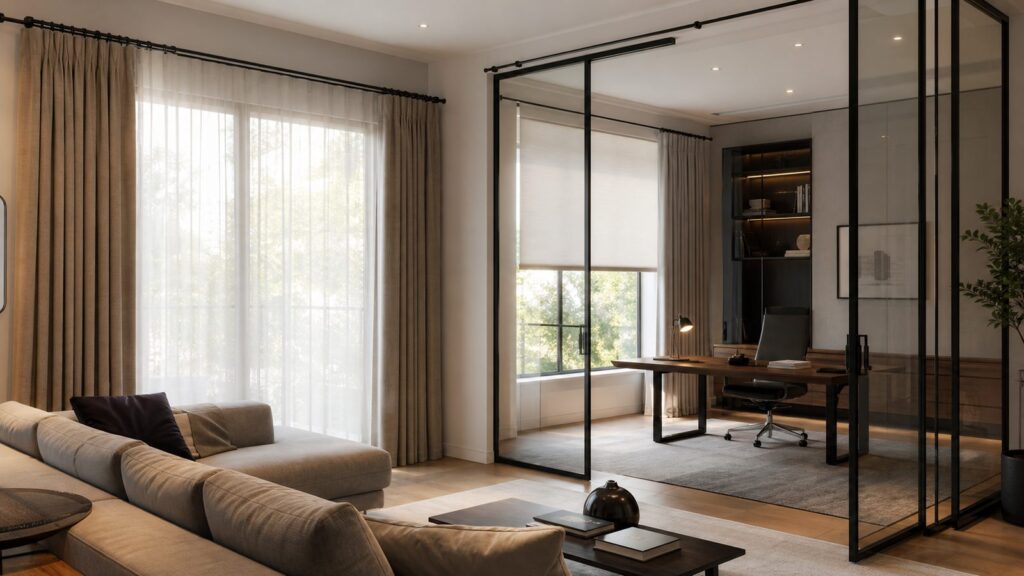
For a simple bedroom, that may mean a 1-inch steel curtain rod mounted 4 to 6 inches above the casing and 6 to 10 inches past each side of the window. For a conference room, it may mean a ceiling-mounted aluminum track, baton-draw carriers, blackout fabric, and controls located within accessible reach. For a new build, the best solution often starts before drywall, with wood blocking above the window and low-voltage wiring planned for future shades.
On our job sites, window hardware problems usually come from treating the hardware as decor instead of construction. Undersized rods sag. Drywall anchors loosen. Brackets pull out of plaster. Drapes cover too much glass because nobody calculated stack-back. Motorized shades end up with visible cords because wiring was not planned early. A clean installation depends on choices made before anyone drills the first hole.
As an Amazon Associate I earn from qualifying purchases.
Here is how we evaluate window dressing hardware for beautiful homes and professional offices, including real 2026 cost ranges, safety notes, and where DIY makes sense.
Start With the Window, the Wall, and the Way the Room Works
Before choosing hardware, answer four practical questions: how wide is the opening, how heavy is the treatment, how often will it move, and what is behind the finished wall?
Popular on Amazon

- Heavy-Duty Metal Structure Design: These curtain rod brackets are crafted from premium thickened iron metal with enhanced hardness and sturdiness. Solid integrated metal construction delivers excellent load-bearing capacity, not easy to bend or break, ensuring long-lasting durability for indoor and outdoor use.
- Easy & Complete Installation With All Hardware: No extra accessories needed! Each package comes with matched mounting screws and wall anchors, providing a full set of installation tools. The standardized wall mount design fits most wall surfaces perfectly. You can finish stable and firm installation quickly by following simple steps, saving your time and effort on home curtain rod replacement and renovation.
- Adjustable Size & Universal Compatibility: Featuring flexible adjustable design, the curtain rod support extends from 3.54 to 4.7 inches away from the wall. Perfectly compatible with all standard 1-inch diameter curtain rods. The adjustable hook structure meets different installation spacing needs, suitable for various household window layouts and decoration styles.
- Wide Versatile Application for Multiple Scenes: This multifunctional drapery rod holder works great for new installations or old bracket replacements. Ideal for window curtains, door curtains, shower curtains, layered drapes and blinds extension. Perfect for living room, bedroom, bathroom, kitchen, patio and other indoor outdoor spaces to upgrade your home decoration.
- Nice Smooth Finish: Our curtain rod holders and hooks feature a sleek, uniform paint finish for lasting beauty. Designed to fit standard 1-inch curtain rods and poles, this adjustable mount works seamlessly for both tight and wide wall installation spaces.
A 36-inch bedroom window with lightweight cotton panels is a very different installation from a 144-inch office glass wall with lined blackout drapery. The first may work with a standard decorative rod and two brackets. The second needs a properly rated track or rod, center supports, secure backing, and a draw system that keeps users from tugging fabric by hand every day.
For most residential rooms, we measure the actual window casing, then add width for stack-back. Stack-back is the space where the curtain gathers when open. A common residential layout is to extend the rod 6 to 10 inches beyond the casing on each side. For heavier or fuller drapery, 10 to 15 inches per side may be more appropriate so the fabric clears the glass and the room gets more daylight.
Height matters too. Mounting a rod 4 to 6 inches above the top casing is common. In rooms with 8-foot ceilings, we often mount between the casing and ceiling line to visually lift the window without crowding crown molding. For tall rooms, rods may sit 8 to 12 inches above the casing, but the bracket location still has to land in framing or reliable blocking.
In offices, we think less about decoration and more about repeated use, glare, privacy, maintenance, and code documentation. A private office may need roller shades. A conference room may need blackout plus solar control. A lobby may need commercial fabric with flame-propagation documentation. A school, healthcare space, hotel, or assembly area may need NFPA 701 documentation accepted by the local authority.
Best Hardware Options by Use Case
Most projects fall into a handful of hardware categories. The right answer depends on the treatment, not just the room style.
Decorative Curtain Rods
Decorative rods are the standard choice for residential curtain panels. They are visible, so finish and diameter matter. Steel and metal rods are the most versatile because they resist bowing better than light plastic and many thin telescoping rods. Wood rods still look right in traditional interiors, especially with stained trim, built-ins, or heavier classic drapery.
For light to medium panels, basic ready-made rod hardware commonly runs about $15 to $75 per window. Better decorative rods, longer rods, larger diameters, and heavier brackets often run $75 to $200 or more per window before labor. For a typical living room with three windows, hardware alone can range from about $150 for basic rods to $600 or more for better decorative hardware.
For a clean residential installation, choose a rod diameter that fits the span and curtain weight. A 3/4-inch rod may be fine for small lightweight panels. A 1-inch to 1 1/4-inch steel rod is a safer choice for standard lined panels over wider openings. Heavy drapery, long spans, and daily use should move into fixed-width rods, commercial-grade rods, or tracks instead of lightweight telescoping hardware.
Double Rods for Layered Rooms
Double rods allow two independent layers, usually sheers in front of the glass and blackout or decorative panels on the room side. They work well in bedrooms, nurseries, living rooms, and street-facing windows where privacy and daylight need to operate separately.
Free tools Windows power users keep installed
One-click scans. No signup required.
Residential double rod kits commonly cost about $50 to $200 or more per window. Installation takes more care than a single rod because projection, bracket depth, curtain ring clearance, and the distance between layers all matter. If the back sheer rubs the front panel, the system will feel cheap no matter how good the fabric is.
We usually recommend double rods when the homeowner actually uses both layers. If the sheer is decorative and never moves, a simpler rod plus stationary panels may be enough. If both layers open and close daily, dual tracks are often smoother than two round rods.
Traverse Rods and Baton-Draw Systems
Traverse rods use carriers that move across the rod or track. They are best when curtains open and close often. Cordless traverse rods and baton-draw systems are especially useful because the user pulls a wand instead of pulling the fabric.
National retailers list traverse curtain rods in aluminum, wood, and steel, with category pricing commonly around $30 to $400. We see many residential traverse products in the $68 to $170 range depending on length, finish, and operation style. Commercial-grade systems cost more but handle wider spans and heavier use.
What’s actually slowing this PC down?
Pick the symptom - the matching free tool is one click away.
For offices, rentals, hospitality, and busy family spaces, a baton-draw system usually holds up better than asking people to yank on fabric. It also keeps hands off the leading edge of the drape, which reduces staining and seam stress.
Ceiling-Mounted and Wall-Mounted Tracks
Aluminum tracks are one of the best solutions for modern interiors, offices, sliding doors, tall glazing, room dividers, and wide spans. They are quiet, clean-looking, and easier to curve or custom-fit than most rods. Ceiling-mounted tracks can make drapery look architectural instead of applied afterward.
Budget plastic track kits may be under $100, but aluminum, curved, ripplefold, recessed, or commercial systems can run several hundred dollars before labor. The price depends on length, carrier type, finish, bends, splices, and whether the system is hand-draw, baton-draw, corded, or motorized.
Tracks need straight layout lines and secure fastening. On drywall ceilings, we prefer fastening into joists or blocking. Toggle anchors can work for light treatments, but they are not our first choice for heavy drapes or daily-use commercial installations. In new construction, adding blocking above window heads and along planned ceiling track lines is inexpensive compared with opening finished drywall later.
Recommended Free Tools
Tension, Cafe, and Concealed Rods
Tension rods, cafe rods, and concealed rods have a place, but they are limited tools. Tension rods are useful for temporary light curtains, rentals, or inside-frame applications where drilling is not allowed. They are not a professional answer for heavy panels, tall windows, or daily operation.
Also popular on Amazon

- EXCELLENT DESIGN: The curtain rod brackets have T shaped design, easy to install with screwsdriver. The more longer screw position distance let the rod holder have more weight capacity
- ADJUSTABLE DISTANCE: The brackets allow you to adjust the distance between the rod and wall, from 3.6 inch to 4.5 inch, thus adjusting where the curtains will hang in front of a window
- STURDY AND STRONG: The iron metal black curtain rod holders 3 mm thick, even hold 30 lb weight of the heavy blackout curtains and curtain rods to meet your extra support, Set of 3
- NICE FINISH: Our curtain rod holders and hooks have nice finish and paint, rustproof, fit for 1 inch curtain rod and pole, can be easily adapted to crowded and spacious wall space
- WIDE APPLICATION: Adjustable curtain rod brackets hooks can be used in living room, kitchen room, dinning room, bedroom, dressing room, great for curtain rods, door curtain rods
Cafe rods work for kitchens, small bathrooms, and partial-height privacy treatments. Concealed rods are useful where the goal is to hide the hardware behind a valance, cornice, or pocket. For high-end work, concealed hardware should still be installed like structural hardware: level, backed, and rated for the fabric.
Hardware Selection Matrix
The table below is the way we would narrow the choice early in a remodel, office buildout, or finish carpentry package.
| Situation | Best Hardware | Typical 2026 Cost Range | Builder Notes |
|---|---|---|---|
| Standard bedroom or living room panels | Steel or metal decorative rod | $15 to $200+ per window for hardware | Use studs or blocking where possible; add center support on wider spans. |
| Sheer plus blackout layers | Double rod or dual track | $50 to $200+ per window for common kits | Check projection so layers do not rub or bind. |
| Daily-use drapery | Traverse rod or baton-draw track | $30 to $400 for many rod and track kits | Better for fabric life and smoother operation. |
| Wide office glazing or sliding doors | Ceiling-mounted aluminum track | Under $100 for basic DIY kits; several hundred for custom aluminum systems | Plan blocking, carrier count, and stack-back before ordering. |
| High windows or accessibility needs | Motorized shades or motorized track | $300 to $1,000 per window installed on average | Coordinate power, controls, and smart-home or building controls early. |
| Public, hospitality, school, or healthcare spaces | Commercial-grade track and documented fabric | Often several hundred dollars per opening before specialty fabric | Collect NFPA 701 or required fire documentation before ordering. |
Costs: What Homeowners and Office Owners Should Budget in 2026
Window treatment budgets vary because the visible fabric is only part of the cost. Hardware, brackets, fasteners, labor, wall conditions, motorization, controls, and access equipment all affect the final number.
For broad planning, installed window treatments in the U.S. commonly run about $30 to $600 per window for blinds, curtains, or shades. Blinds often fall around $30 to $600 installed, curtains around $50 to $500 installed, and shades around $60 to $600 installed. Motorized and custom products are the main reasons a project exceeds that range.
For blinds, large national installed projects often start around $250 to $300 per window including products. A typical multi-window project may involve six to eight blinds and about $1,200 total for product plus labor, depending on size, material, installer pricing, and market. Independent labor markets vary widely. In major cities, blind-installation labor averages can range from about $45 per hour in Los Angeles and Orange County to around $78 per hour in New York City, with average task invoices in many large markets landing around $117 to $163.
Curtain rod installation labor commonly runs about $65 to $150 per standard window in 2026, excluding rods and brackets. That price assumes normal height, straightforward drywall or wood trim, and no unusual access problems. Double rods, tile, brick, concrete, plaster, high ceilings, bay windows, extra-long rods, heavy drapes, and wide openings needing multiple supports can push labor to $150 to $300 or more per opening.
Motorized blinds and shades are premium products. A realistic average is about $300 to $1,000 per window installed. Battery-operated systems are usually less expensive and simpler to retrofit. Plug-in systems need a nearby outlet. Low-voltage and line-voltage hardwired systems cost more because they require earlier electrical coordination, but they produce the cleanest result in offices, new homes, and large remodels.
Quick wins for a faster PC:
Scan for outdated or missing drivers - takes under a minuteDriver Scan →Clear out junk files and repair common Windows errorsFree Scan →Custom drapery is a separate budget category. Standard installed curtains may stay within $50 to $500 per window, but custom drapery with fabric, lining, fabrication labor, fullness, decorative hardware, and installation can reach $300 to $4,000 per window. Specialty providers may quote $2,000 to $4,000 per window for high-end full packages. That is why hardware should be selected before fabric is fabricated. A $3,000 drape on a weak rod is a bad detail.
What We Look for in Strong Hardware
Good hardware has four traits: enough strength for the span, brackets that land securely, smooth operation, and a finish that fits the room.
For strength, look beyond the package photo. Check the rod diameter, wall thickness if available, bracket count, center support requirements, and stated weight rating. If no load rating is available and the treatment is heavy, we treat that as a warning. Thin telescoping rods can be acceptable for light panels, but they often sag over wide spans and bind where the telescoping sections overlap.
For brackets, projection matters. Projection is the distance from the wall to the rod centerline or track. Standard curtain brackets may project 3 to 4 inches. Double rods may project 5 to 7 inches. Deep window trim, plantation shutters, crank handles, radiators, or roller shades mounted behind drapery can require more clearance. If the front layer hits a window crank or the back layer drags on trim, the hardware was not planned correctly.
Do these 3 things before closing this tab:
1Clear out junk files and repair common Windows errors2Fix the driver behind crashes, sound loss and screen glitches3Repair Windows errors before they cause bigger problemsFor smooth operation, tracks usually beat rods. Rings on rods can work well, especially with quality rings and a properly sized rod, but wide daily-use treatments are easier on a track. Ripplefold systems need compatible carriers and tape. Pinch pleat drapery needs the correct hook height and carrier spacing. Roller shade brackets need to be square and level or the shade can telescope to one side as it rolls.
For finish, match the architecture, not just the faucet. Matte black works in many modern homes but can look heavy on small windows. Brushed nickel and warm brass are common, but should relate to door hardware, light fixtures, cabinet hardware, or other permanent finishes. White tracks disappear against many ceilings. Clear anodized or white aluminum tracks are common in offices because they look clean and are easy to maintain.
Fasteners, Blocking, and Wall Conditions Matter More Than People Think
Most failed curtain hardware is not a rod problem. It is a fastening problem.
Drywall alone is not structure. Plastic anchors may hold a light rod for a while, but repeated pulling, heavy drapes, and long brackets create leverage. That leverage loosens anchors and crushes drywall. For anything heavy or used daily, we want screws into studs, header framing, trim backing, plywood blocking, or a properly chosen hollow-wall anchor rated for the load and wall thickness.
The Tool Desk
Outbyte PC Repair FREERepair Windows errors before they cause bigger problemsFix Now →Outbyte Driver Updater FREEScan for outdated or missing drivers - takes under a minuteDriver Scan →In new construction and major remodels, we like to add wood blocking above windows before drywall. A 2×6, 2×8, or plywood backing strip positioned above the window head gives installers flexibility later. For ceiling tracks, blocking should follow the planned track line. For motorized shades, shade pockets and wiring should be coordinated before insulation and drywall.
Older homes bring their own conditions. Plaster walls may be brittle. Brick and concrete need masonry bits and anchors. Tile around a bathroom window requires diamond bits or specialty drilling, and one cracked tile can cost more than the rod installation. Metal studs in commercial offices require the correct fasteners or blocking. Suspended ceilings are not structural supports for heavy drapery tracks unless a separate support system is designed above them.
Also popular on Amazon
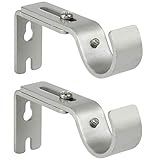
- Anndason Heavy Duty Adjustable Curtain Rod Brackets,add a dash of Style and Elegance to your – home, office or anywhere else you decide to use then.
- Adjustable Curtain Rod Brackets perfect for your office, living room, bedroom,dining room, and kitchen,or other place in your home
- Heavy Duty Curtain Rod Brackets is made of High quality iron,strong hardness,sprayed with elegant silver paint on the exposed parts to provent rust.
- The Rod Brackets cup holds diameter of 1 inch rod.Fits rods up to 1-inch (2.54) in diameter.Adjustable length: Extends from 3.5 to 4.6 inches out from the wall
- Strong sunlight shines in your room. Do you not want to have a blackout curtain? The curtain bracket is perfectly matched with your curtain rod to enjoy a beautiful day.
When we install hardware, we mark bracket centers, confirm level across the full run, predrill where needed, and test the substrate before hanging fabric. On wide openings, we plan center supports so they do not interfere with curtain travel. If a center bracket blocks a pair of panels from closing, the design should change to a split draw, traverse system, or track with proper carriers.
Residential Solutions That Look Finished
In homes, the best hardware improves the proportions of the room. A rod mounted directly on the casing can look cramped. A rod mounted too low can make the ceiling feel lower. Panels that cover glass when open make the room darker than it needs to be.
PC Slower Than It Used to Be?
A free scan shows the junk files, broken settings and background clutter dragging Windows down - then fixes them in one click.Free scan · Windows 10 & 11Outdated Drivers Are Slowing You Down
One free scan finds every outdated or missing driver and matches the right update for your exact hardware.Free scan · exact hardware matchFor most standard rooms, a strong starting point is to mount the rod 4 to 6 inches above the casing and extend it 6 to 10 inches beyond the casing on both sides. For larger windows or fuller drapery, increase side extension to 10 to 15 inches. For floor-length panels, keep the fabric about 1/2 inch above the floor for easy cleaning, kiss the floor for a tailored look, or puddle only when the homeowner understands the maintenance tradeoff.
In bedrooms, double rods or dual tracks are often worth the extra cost because they separate privacy from sleep control. Sheers can stay closed during the day while blackout panels close at night. In living rooms, decorative rods and rings offer a more furnished look. In media rooms, tracks with blackout lining and side returns control light better than decorative panels alone.
For sliding glass doors, we usually avoid flimsy extra-long telescoping rods. A wall-mounted or ceiling-mounted track is cleaner and easier to operate. It also allows the fabric to stack to the side without fighting a center joint in the rod. For doors used every day, baton-draw or traverse operation is worth considering.
Office and Commercial Hardware Needs a Different Standard
Office window dressing hardware has to survive repeated use by people who did not buy it and may not be gentle with it. That changes the specification.
For private offices, solar shades are often the best first layer because they reduce glare while keeping some view. For conference rooms, blackout shades or drapery may be needed for screens and video calls. For street-facing offices, dual shade systems can combine daytime solar control with nighttime privacy.
Ceiling-mounted aluminum tracks, commercial roller shade brackets, and baton or motorized controls are common because they are clean, repairable, and predictable. We also look at control location. Accessible workspaces and public accommodations should keep operable parts within accessible reach ranges. A common planning range is 15 inches minimum to 48 inches maximum above the finished floor, unless an obstruction changes the allowed reach. Controls should generally be operable with one hand without tight grasping, pinching, or twisting.
Commercial fabric can raise fire-code questions. In offices, hotels, schools, healthcare spaces, assembly spaces, and other public-facing interiors, hanging textiles and some window-treatment fabrics may need NFPA 701 flame-propagation documentation. The practical advice is simple: collect the documentation before ordering. Do not wait until inspection, turnover, or a fire marshal review to find out the fabric lacks the paperwork.
Motorized Shades and Tracks: When the Cost Makes Sense
Motorized window hardware is not necessary for every project, but it is the right answer in several cases: high windows, large glass walls, conference rooms, bedrooms with multiple shades, accessible spaces, luxury homes, and offices that need consistent glare control.
Free tools Windows power users keep installed
One-click scans. No signup required.
Installed motorized blinds or shades commonly run about $300 to $1,000 per window. Battery systems are the easiest retrofit and keep electrical work limited. Batteries still need service, so they are best where the shade is reachable. Plug-in motors work when an outlet can be placed cleanly nearby. Low-voltage systems are common in better planned projects because small control wires can be concealed. Line-voltage systems require proper electrical coordination and may involve permits or licensed electrical work depending on jurisdiction.
The key decision is timing. If walls are open, decide on motorization early. We want to know shade locations, pocket dimensions, wire routing, switch locations, transformer locations, and whether the system will tie into smart-home or building controls. If that decision waits until paint is finished, the project often ends up with visible wire channels, exposed plugs, or a more expensive retrofit.
Motorization also helps accessibility. A wall switch, keypad, remote, or app control can make high or hard-to-reach treatments usable. In commercial settings, centralized controls can reduce wear because staff are not pulling on fabric, chains, or cords throughout the day.
Independent reader supportYour contribution helps us test, update, and keep practical guides available for everyone.Safety Rules: Cordless Is Now the Baseline
Window covering safety changed significantly in recent years. Since June 1, 2024, window coverings sold under the updated ANSI/WCMA A100.1-2022 safety standard are largely cordless or use inaccessible or compliant cords. Continuous-loop systems need compliant tension devices.
The Tool Desk
Outbyte PC Repair FREERepair Windows errors before they cause bigger problemsFix Now →Outbyte Driver Updater FREEFix the driver behind crashes, sound loss and screen glitchesFind Drivers →For homes with children, rentals, schools, daycare spaces, and family-friendly offices, cordless, wand, baton, or motorized operation should be the default. Do not leave long free-hanging cords accessible. If a continuous loop is used, the tension device must be installed correctly, not left in the package. A compliant product can become unsafe if its safety hardware is skipped during installation.
From a construction standpoint, safety also includes the hardware staying on the wall. Heavy rods over beds, desks, cribs, or seating areas deserve better fastening than plastic anchors in drywall. Tall installations should be mounted from stable ladders or lifts, not improvised access. In offices, cords and controls should not create trip hazards, snag points, or maintenance problems.
Also popular on Amazon

- MAGNETIC COVER DESIGN: Patent pending magnetic cover conceals screws and installation imperfections on these curtain rod brackets for wall; creates a designer level finish for your window curtain hooks and curtain hardware brackets
- ADJUSTABLE LENGTH - Easily adjust heavy duty curtain rod brackets to fit your space setup. Minimum length for the curtain hardware bracket is 3.5 inch and can be extended up to 5 inch. Long curtain rod brackets fit various window hardware setups.
- TWO INSTALLATION KITS - Each curtain rod bracket has two installation kits included - drywall anchors as well as brick/concrete anchors and screws. No need to rush to a hardware store - you got everything to install curtain brackets for curtain rods
- OVER THE BLINDS INSTALLATION - with the maximum length of 5 inch these extended curtain rod brackets can easily serve as an over blinds curtain rod brackets or curtain rod extender. Adjustable curtain rod bracket fits 1 inch curtain rods; soporte para cortinas de Ventana
- ELEGANT ROOM ENHANCEMENT: Decorative curtain rod bracket with magnetic cover elevates any space; curtain rod holders for wall enhance bedroom kitchen or living room; hooks for curtain rods with clean modern rod holder design
When to DIY and When to Hire a Pro
DIY can make sense for light residential hardware on standard drywall or wood trim, especially if the homeowner has a level, drill, stud finder, tape measure, and patience. A basic single rod over a 30- to 48-inch window is a reasonable project if the curtains are light and the brackets can land in framing or reliable anchors.
Plan 30 to 60 minutes per standard window for a careful DIY installation. Add time for measuring, patching old holes, finding studs, and adjusting panel height. The most common DIY mistake is drilling too soon. Mark both bracket heights, check level across the full span, confirm the curtain length, and hold the rod in place before making holes.
Quick wins for a faster PC:
Repair Windows errors before they cause bigger problemsFix Now →Fix the driver behind crashes, sound loss and screen glitchesFind Drivers →Hire a pro when the installation involves heavy drapery, double rods across multiple windows, masonry, tile, plaster, high ceilings, bay windows, ceiling tracks, motorized shades, extra-wide spans, custom drapery, or commercial requirements. Labor at $65 to $150 per standard curtain rod opening is often cheaper than repairing cracked tile, torn drywall, or misaligned holes across a finished room. More difficult openings at $150 to $300 or more are still worth pricing professionally when the treatment itself costs hundreds or thousands of dollars.
For offices, we recommend professional installation for almost everything beyond simple blinds. The cost of disruption, uneven sightlines, failed anchors, or noncompliant controls is usually higher than the labor savings.
Pre-Drywall Checklist for New Builds and Remodels
The best time to plan window dressing hardware is when framing is still visible. A few decisions made at rough-in can save thousands later.
- Add wood blocking above window heads where rods, tracks, or shade brackets may mount.
- Add ceiling blocking for planned ceiling-mounted tracks, room dividers, or full-height drapery.
- Confirm whether curtains need stack-back outside the casing and leave wall space for it.
- Coordinate shade pockets before drywall if the design calls for concealed roller shades.
- Choose battery, plug-in, low-voltage, or line-voltage motorized systems before electrical rough-in.
- Place switches, keypads, or controls within practical and accessible reach, commonly 15 to 48 inches above finished floor where applicable.
- Verify trim depth, window crank clearance, door swings, and furniture locations before final hardware projection is selected.
- For commercial projects, request flame documentation and product data early enough for review.
Blocking is cheap when the wall is open. After drywall, paint, and trim, the same fix means locating framing, opening walls, patching, sanding, repainting, and delaying the final installation.
Common Failures We See and How to Avoid Them
The first failure is sagging hardware. This happens when a lightweight telescoping rod is stretched too far or asked to carry lined drapery. Use a larger-diameter steel rod, a fixed-width rod, a center support, or a track rated for the span.
The second failure is loose brackets. If the bracket moves when you tug the curtain, the wall connection is wrong. Fasten into framing or blocking whenever possible. Use substrate-specific anchors for drywall, plaster, masonry, tile, or metal studs. Do not use the small generic anchors in the package for every wall condition.
The third failure is poor stack-back. If panels block a third of the glass when open, the rod or track is too narrow. Extend the hardware beyond the casing and calculate how much fabric must gather at each side.
The fourth failure is bad alignment. A rod can be level over one window and still look wrong across a room if adjacent rods are at different heights. In rooms with multiple windows, establish one consistent elevation unless the architecture clearly requires otherwise.
The fifth failure is late motorization. Once drywall is finished, motorized shades are still possible, but the cleanest options may be gone. Early planning keeps wiring, pockets, transformers, and controls integrated into the construction instead of added afterward.
Our Practical Recommendation
For most beautiful homes, use sturdy steel or metal rods for standard panels, double rods or dual tracks where privacy and light control need to work separately, and ceiling-mounted aluminum tracks for wide openings, sliding doors, and contemporary rooms. For heavy drapery, daily-use curtains, or expensive custom fabric, step up to traverse, baton-draw, or commercial-grade track hardware.
For offices, prioritize smooth operation, safety, accessibility, and documentation. Cordless, baton, or motorized controls are better than loose cords. Aluminum tracks and commercial shade systems usually outperform decorative residential rods. Fire documentation and accessible control placement should be handled before products are ordered.
The hardware is a small part of the visual design, but it is a large part of how the room performs. Select it like a builder: measure the span, understand the wall, match the load, plan the operation, and install into something solid.
Recommended Free Tools
Frequently Asked Questions
What is the best curtain hardware for heavy drapes?
Use a fixed-width steel rod, commercial-grade traverse rod, or aluminum track with proper load rating and center supports. Avoid lightweight telescoping rods for heavy lined drapery or wide spans.
How much does curtain rod installation cost in 2026?
Typical labor runs about $65 to $150 per standard window, excluding rods and brackets. Difficult walls, double rods, high ceilings, masonry, tile, bay windows, and wide spans can raise labor to $150 to $300 or more per opening.
Are motorized shades worth it?
They are worth it for high windows, large glass walls, bedrooms with many shades, conference rooms, accessibility needs, and clean new-build wiring. Expect about $300 to $1,000 per window installed on average.
Should curtain rods be mounted into studs?
Studs or wood blocking are best, especially for heavy curtains or daily use. Drywall anchors can work for light treatments, but they must be rated for the wall condition and load.
What window covering hardware is safest for children?
Cordless, wand, baton-draw, and motorized systems are the safest choices. Since June 1, 2024, updated U.S. safety standards have pushed most window coverings toward cordless or inaccessible compliant cord designs.
Quick Recap
Product prices and availability are accurate as of the date/time indicated and are subject to change. Any price and availability information displayed on Amazon at the time of purchase will apply.

