Some links on this page are affiliate links: if you buy through them we may earn a commission, at no extra cost to you.
A weak shower usually comes from a restricted showerhead, hose, valve, or local pipe—not necessarily low pressure in the whole house. Compare this shower with other fixtures, test hot and cold separately, then measure household pressure and the shower’s flow before buying parts. That sequence tells you whether a simple cleaning will solve the problem or whether the main, pressure-reducing valve, water heater, leaking pipe, or utility supply needs attention.
Pressure and flow are different problems
People often use “low pressure” to describe any disappointing shower. Technically, pressure is the force moving water through the plumbing, while flow rate is the amount delivered over time. A blocked showerhead can leave household pressure normal while reducing the water that exits the spray nozzles. A supply interruption, open valve, failing pressure-reducing valve, or leak can lower pressure and affect several fixtures.
As an Amazon Associate I earn from qualifying purchases.
Recommended Free Tools
The Portland Water Bureau explains this pressure-versus-flow distinction. Treat the symptom’s location as your first diagnostic clue rather than assuming every weak shower needs a new head.
Use the symptom pattern to narrow the cause
Run the shower at its normal temperature and compare it with nearby fixtures. If possible, test another shower, a bathtub spout, a bathroom basin, and a kitchen tap. Then compare hot and cold flow at the affected shower. The pattern usually points to the right part of the system:
Popular on Amazon

- MAGNETIX DOCKING SYSTEM: Magnetic dock allows the handshower to release easily and securely snap back into place
- 6 SPRAY SETTINGS: Customize your shower experience with multiple spray options for everyday comfort and flexibility
- ADJUSTABLE SPRAY SETTINGS: Hand held shower head with hose includes 6 functions including pause, rinse, downpour, and relaxing massage, allowing you to adjust the showerhead spray to your preference
- HANDHELD SHOWERHEAD: Detachable design provides added reach for rinsing, cleaning, bathing children, and pet care
- WATERSENSE CERTIFIED: Moen Engage Magnetix water-saving handheld shower head with hose Meets EPA WaterSense criteria to conserve water with lower GPM without sacrificing performance
| What you observe | What it points toward | Best next check |
|---|---|---|
| Only one shower is weak; other taps and showers are normal | Showerhead screen, shower hose, valve cartridge, local shutoff, or branch pipe | Clean the head and screen, inspect the hose, then investigate the valve if flow does not improve |
| Several fixtures are weak on hot and cold | Main or meter valve, pressure-reducing valve, whole-house filter, leak, corroded galvanized piping, or utility service | Check accessible valves, filter, pressure, meter movement, and utility notices |
| Hot and cold are both weak only at one shower | Restriction in that shower’s head, hose, valve, or local pipe | Remove the head, flush the arm, and test again before opening the wall |
| Hot flow is weak at multiple fixtures but cold flow is normal | Water-heater leak, valve problem, or another hot-water-system fault | Inspect the heater and its valves; call a plumber or property manager if the cause is not obvious |
| A sudden change affects the entire home | Utility work, a water-main event, a newly closed valve, leak, or equipment failure | Check the utility and your pressure gauge before replacing shower parts |
These are directional clues, not a diagnosis. The Portland Water Bureau’s troubleshooting guidance emphasizes comparing fixtures and considering the main, valves, filters, leaks, old galvanized pipes, and utility conditions when the change is widespread.
Measure before you buy parts
Check household pressure with a hose-bibb gauge
Use a pressure gauge made for a hose connection at an accessible hose bibb, such as an outdoor faucet. Close every tap and stop appliances that use water, including washing machines, dishwashers, ice makers, and irrigation. Open the hose bibb fully and read the gauge with no water flowing elsewhere. This is a static service-pressure reading; it does not tell you how much water the showerhead can pass.
Do these 3 things before closing this tab:
1Clear out junk files and repair common Windows errors2Scan for outdated or missing drivers - takes under a minute3Repair Windows errors before they cause bigger problemsThe U.S. Environmental Protection Agency says household fixtures generally operate best when incoming service pressure is between 45 and 60 psi. That is general U.S. household guidance, and the publication date is not stated on the reviewed EPA Home Maintenance page. A substantially lower reading can justify searching for a leak or supply restriction. A substantially higher reading can require professional adjustment or installation of a pressure-reducing valve (PRV); do not turn a PRV blindly because an incorrect adjustment can damage fixtures or leave the home with unsafe pressure.
Portland’s water bureau says it manages its system so most homes receive roughly 40–80 psi, while noting that pressure varies by location. That is Portland-specific operating context, not a universal target for every house or municipality.
Measure shower flow with a timed container
- Remove the showerhead if you can do so without damaging the finish. If you cannot remove it, hold a one-gallon container under the spray as accurately as possible.
- Turn the shower to the setting you normally use and start timing as the container begins filling.
- Stop when one gallon is collected and record the elapsed time in minutes.
- Calculate flow as 1 gallon divided by the elapsed minutes. For example, 30 seconds is 0.5 minutes, so 1 ÷ 0.5 equals 2.0 gallons per minute.
This timed one-gallon method and the 2.0-gpm example come from Delta Faucet’s shower troubleshooting guidance. It measures flow at the shower, not static household pressure. Repeat the test after cleaning so you can see whether the restriction was local.
Also popular on Amazon

- 10 Versatile Spray Modes – Enjoy a customized shower experience with 10 distinct patterns: rain, pulse, mist, spray, mixed, and a water-saving mode for pausing water during shampooing, soaping, or grooming.
- High-Pressure Performance with Air-Induction-Induction Tech – Infuses water with air to deliver a strong and consistent water flow even under low water pressure, enhancing your shower. Features 90 anti-clog nozzles and 100 pieces Steel plate water outlets that prevent limescale and hard water buildup, ensuring a consistent, refreshing flow.
- 360° Adjustable Bracket & 59-Inch Flexible Hose – The durable bracket with a brass swivel ball joint allows effortless angle adjustments for both overhead and handheld use. The extra-long 59-inch stainless steel hose is lightweight and flexible, making it easy to reach every spot.
- Premium Materials & Anti-Clog Design – Crafted from high-quality ABS for lightweight, rust-proof, and fade-proof durability.
Fix a clogged or scaled showerhead first
Mineral scale, rust flakes, and other debris can narrow the small passages in a showerhead or its inlet screen. This is the most proportionate first repair when other fixtures work normally.
- Turn the head counterclockwise by hand. If a wrench is necessary, protect the finish with a cloth and grip the connecting nut rather than the spray face.
- Look for a small debris screen in the inlet and rinse it under running water. Brush away deposits with a soft brush.
- Soak removable parts in vinegar or use a showerhead descaler that is suitable for the head’s materials. Follow the product’s contact-time instructions and rinse thoroughly.
- With the head still off, open the shower briefly and flush the shower arm for 30–60 seconds into a bucket. This clears loose debris from the arm without forcing it through the newly cleaned head.
- Reinstall the head, tighten it securely without over-tightening, and run the shower. Check the connection for leaks.
- For a handheld shower, inspect the hose for a kink, crushed section, or leak; a damaged hose can reduce delivered flow even when the head is clean.
Delta recommends this removal, screen cleaning, 30–60-second arm flush, and leak check. The EPA also recommends periodically inspecting showerheads for scale and using vinegar or an appropriate cleaning product. If cleaning does not restore a damaged or internally blocked head, replace it with a WaterSense-labeled model that meets the program’s efficiency and performance criteria.
Do not treat removal of a flow restrictor as a routine fix. Delta warns that removing one may void the showerhead warranty, and it does not correct low pressure elsewhere in the house.
Investigate the shower valve, cartridge, and local shutoff
If the head and hose are clear but one shower remains weak, the restriction may be inside the valve, cartridge, local shutoff, or the short branch serving that shower. A worn or obstructed cartridge can limit the hot side, cold side, or both, depending on the valve design.
Identify the valve before ordering a cartridge
Cartridges are not universal. Remove the trim only if you can identify the exact valve make and model and shut off the water safely. Photograph the valve and compare its model information with the manufacturer’s parts diagram. A generic cartridge may fit poorly, leak, or fail to correct the restriction. If the valve is behind finished tile, the shutoff is inaccessible, or the repair requires opening the wall, use a qualified plumber or, in a rental, the property manager.
Free tools Windows power users keep installed
One-click scans. No signup required.
Also popular on Amazon

- Multi-Stage Filtration: This filtered shower head uses KDF, maifanstone, vitamin C media and multiple filtration layers to help reduce chlorine and certain impurities, supporting a more comfortable everyday shower experience
- 9 Spray: Features 9 dedicated spray settings including Full Rain, Rain, Powerful Rain, Mist+Massage, Massage, Mist, Rain +Massage, Wide Fan and Pause. Flip the showerhead to activate Power Wash for rinsing tubs, tiles, pets and other targeted cleaning tasks.
- Replaceable Filter Cartridge: Replace every 3–6 months depending on water quality and usage; replace more often with heavier use or higher chlorine levels, Replace filter ASIN: B0D1TYCDPB
- 3-Minute Tool-Free Install: Universal G1/2" thread fits any standard shower arm. Includes handheld shower head (filter built in), bracket, hose, Teflon tape, and washers. Everything you need in the box.
- Five Year Limited Warranty: Manufacturer's limited warranty covers eligible product or part defects for 5 years from the purchase date, we'll get back to you within 24 hours. For replacement filter cartridges
Check an accessible local shutoff
Some homes have service stops near a bathroom or in an access panel. Confirm that the hot and cold stops are fully open. Do not force a seized valve; forcing it can create a leak. If opening a stop changes flow only briefly or produces new dripping, close it and arrange professional service.
When the whole house has weak flow
Multiple weak fixtures call for a system-level check rather than a showerhead purchase.
Verify the main and meter valves
A partially closed valve near the water meter or where the service enters the building can restrict every fixture. Check only valves you can access safely and identify confidently. If the valve is buried, damaged, or difficult to turn, have the utility or a plumber handle it.
Inspect a whole-house filter
A clogged sediment filter can reduce flow throughout the home. If a filter is installed, read its pressure indicator or service instructions and replace the cartridge only with the correct size and rating. A filter that clogs again quickly may be collecting unusual sediment or may signal a larger supply problem.
Windows Errors? Fix Them Before They Spread
Repair common Windows errors and clear accumulated junk for a smoother, more stable PC - no reinstall needed.Free scan · no reinstallOutdated Drivers Are Slowing You Down
One free scan finds every outdated or missing driver and matches the right update for your exact hardware.Free scan · exact hardware matchLook for leaks and unexplained meter movement
Turn off all indoor and outdoor water use and watch the water meter. Movement suggests water is escaping somewhere, although some meters take time to settle. Check visible pipe joints, toilets, water-heater connections, crawlspaces, and ceilings for dampness. Concealed leaks can lower available pressure and cause structural damage, so do not open finished walls merely to chase a shower symptom; call a plumber.
Also popular on Amazon
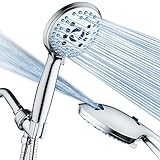
- MORE WATER PRESSURE, LESS CLEANING - Revolutionary AquaCare hand shower features advanced 8-setting 5-zone Powerhead with Self-clean Anti-clog Nozzles that prevent accumulation of grime inside. So while other showerheads clog and lose water pressure over time, AquaCare nozzles remain clean and clog-free for years of flawless performance. Designed in USA by top American shower experts. Removable Flow Regulator.
- PURE-CLEAN PROTECTION - Studies show that ordinary shower heads are often infested with grime that rapidly grows overnight, then gets flushed out in your face with the morning shower. That's why keeping your showerhead clean is essential for good shower hygiene. AquaCare nozzles are made with special revolutionary material that works 24/7 on molecular level to protect from degradation. This protection is 100% safe and effective for the life of the product and can never wear off.
- BUILT-IN 2-MODE TUB & TILE POWER WASH - Tired of that disgusting soap scum and dried hair left behind after each shower? Clean it all in seconds from up to 6 feet away, without setting a foot in your shower. Simply flip the AquaCare handle and turn it into a High-pressure Power Wash! Use Wide Fan to quickly rinse off large areas, or switch to Point Jet and instantly blast away that stubborn grime! Patented.
- IDEAL PET SHOWER - AquaCare was designed to be relentless on the toughest grime, yet gentle on your pet. Simply set your faucet to the best water pressure for your dog's fur length and density, then use our unique Dual-width Fan Spray to thoroughly rinse out shampoo in seconds. It provides the perfect flow pattern for a fast and effortless pet shower, regardless of their size and breed.
- PREMIUM CONVENIENCE PACKAGE - Enjoy added mobility and reach with Extra-long 72-inch Heavy-duty Stainless Steel Hose, Angle-adjustable Overhead Bracket, and an additional Low-reach Wall Bracket that mounts instantly and securely on any surface with power adhesive back. Ideal for Child Care, Senior Care, Pet Care, Bathing and Cleaning applications, AquaCare is your TOTAL SHOWER CARE system that creates a better shower hygiene and cleaner shower environment for your entire family.
Consider old galvanized pipes
Galvanized steel piping can corrode internally. The opening becomes smaller over decades, producing persistent low flow even when the incoming pressure is acceptable. Cleaning a showerhead cannot remove that restriction. A plumber can assess exposed pipe, compare pressure at different points, and explain whether localized replacement or broader repiping is warranted.
Ask the utility about sudden changes
If pressure changed abruptly across the home, contact the water utility and ask about nearby construction, a water-main break, flushing, or a temporary service interruption. A neighborhood event can mimic a plumbing failure. The Portland Water Bureau lists utility work and water-main events among possible explanations for sudden changes.
Independent reader supportYour contribution helps us test, update, and keep practical guides available for everyone.Diagnose a weak hot-water side
Run the affected shower on cold only, then hot only, and compare both with another fixture. If cold is strong but hot is weak at several taps, inspect the water heater’s inlet and outlet valves, visible leaks, and any hot-water filter or mixing equipment. A heater fault or leak can affect the entire hot-water system.
What’s actually slowing this PC down?
Pick the symptom - the matching free tool is one click away.
If every other fixture has normal hot flow and only one shower is affected, the restriction is more likely in that shower’s hot passage, cartridge, or local pipe. The available guidance does not establish one universal cause for this narrower symptom, so do not replace the water heater based on a single weak shower. Have the valve diagnosed first.
Do not confuse a lower-flow replacement head with a pressure failure
A new showerhead can feel weaker simply because its labeled flow rate is lower than the old head’s. Check the package or head for its rated gallons per minute, then perform the timed one-gallon test. If household pressure is unchanged and the measured flow matches the new head’s design, the plumbing may be working normally.
For a replacement, choose a WaterSense-labeled showerhead after cleaning fails or the existing head is damaged. WaterSense labeling addresses efficiency and performance criteria; it does not increase pressure throughout the home. A new head cannot repair a closed main valve, a failed PRV, a leaking pipe, or corroded branch plumbing.
A practical troubleshooting sequence
- Map the symptom. Test another shower or tap, and compare hot and cold. Record whether the problem is local or widespread.
- Inspect the head and hose. Remove scale, clean the inlet screen, check for kinks, and flush the shower arm for 30–60 seconds.
- Retest flow. Use the one-gallon timed test and calculate gallons per minute.
- Measure service pressure. Attach a hose-bibb gauge with all water use stopped. Compare the reading with the EPA’s general 45–60-psi operating range, while recognizing that local systems vary.
- Check accessible system components. Confirm main and local valves are open, inspect a whole-house filter, look for leaks, and watch the meter with water use stopped.
- Escalate according to scope. A single unresolved shower points to a valve or branch-pipe diagnosis; widespread or sudden problems call for a plumber, property manager, or water utility as appropriate.
When to call a plumber, property manager, or utility
- Call a plumber for persistent low flow after head cleaning, suspected concealed leaks, corroded or restricted piping, a cartridge or valve fault requiring in-wall work, or pressure readings that remain abnormal without an obvious service issue.
- Contact the property manager before disassembling plumbing in a rental or opening walls. The building owner may control the shutoff, PRV, heater, or branch piping.
- Contact the water utility when the whole home changed suddenly or neighbors are reporting a service interruption, main break, construction, or flushing.
- Seek professional help for high pressure rather than adjusting a PRV experimentally. The EPA specifically directs homeowners toward professional evaluation when pressure is too high.
Useful equipment and its limits
| Item | What it helps you determine | What it cannot fix |
|---|---|---|
| Hose-bibb pressure gauge | Static service pressure with household water use stopped | A clogged showerhead, blocked cartridge, or restricted branch by itself |
| One-gallon container and timer | Flow rate at the shower; 30 seconds for one gallon equals 2.0 gpm | Household static pressure or the cause of a whole-house restriction |
| Showerhead descaler and soft brush | Mineral scale and loose debris on removable head parts | Corroded pipes, a failed valve, low utility pressure, or a leaking heater |
| WaterSense-labeled replacement showerhead | Replacement when cleaning fails or the head is damaged, with efficiency and performance criteria | Low pressure throughout the house or a closed valve |
| Model-specific shower-valve cartridge | Repair after the exact valve has been identified and the cartridge diagnosed | Restrictions elsewhere in the plumbing system |
Common mistakes that waste time or cause damage
- Buying a new head first: A new head may hide the symptom temporarily or have a lower rated flow. Test and clean the existing head before spending money.
- Calling every weak spray “low pressure”: A flow restriction at one head does not prove a pressure problem. Use both a gauge and a timed flow test when the cause is unclear.
- Removing the flow restrictor: This can void the head’s warranty and does not solve a household-wide restriction.
- Installing a generic cartridge: Cartridge dimensions and operating details depend on the valve model. Identify the valve first.
- Adjusting a PRV without a reading: Measure pressure and obtain professional help for high-pressure conditions instead of turning an adjustment screw at random.
- Ignoring hot-versus-cold comparisons: A hot-only problem across several fixtures directs attention to the water heater and hot-water system, not just the showerhead.
- Opening walls for a local symptom: Start with the removable head, hose, screen, and accessible valve. In-wall work is proportionate only after those checks indicate a concealed restriction.
Start with the least invasive test: compare fixtures, clean and flush the showerhead, and measure both flow and household pressure. A local restriction usually stays local; a pressure, leak, valve, corroded-pipe, or utility problem reveals itself across more fixtures. Matching the repair to that pattern prevents unnecessary parts, protects the plumbing, and gets professional help involved when the issue is beyond a showerhead.
The Tool Desk
Outbyte PC Repair FREERepair Windows errors before they cause bigger problemsFix Now →Outbyte Driver Updater FREEFix the driver behind crashes, sound loss and screen glitchesFind Drivers →Quick Recap
Product prices and availability are accurate as of the date/time indicated and are subject to change. Any price and availability information displayed on Amazon at the time of purchase will apply.

