Grass seed often fails because the seedbed dried out, the seed was buried too deeply or did not touch soil, or the grass was sown at the wrong time for the species and local climate. Seed quality, compacted soil, shade and competition can also prevent a lawn from establishing. The right fix depends on what happened: check the seed label and site, correct the seedbed, and keep the seed zone moist without saturating it. Fall timing varies by region, so local extension guidance matters more than a nationwide calendar date.
Why is my grass seed not growing?
First, distinguish seed that never germinated from seedlings that emerged and then died. Those outcomes point to different problems, and a lawn’s location, grass type, weather and watering history all matter. Check when and where you sowed, how much sun the area gets, how the soil was prepared, and whether you saw seedlings before they disappeared.
As an Amazon Associate I earn from qualifying purchases.
If no seedlings appeared
- The seedbed dried out. Newly sown seed can dry quickly at the surface. If it dries during germination, emergence may be delayed or fail.
- Seed was buried too deeply or lacked soil contact. Seed scattered onto thatch or loose debris may not establish; seed buried under too much soil may struggle to emerge. Recommendations differ by method, so follow the seed label and local extension advice. Virginia Tech cautions against burying slit-seeded seed, while Iowa State describes shallow coverage.
- Conditions were too cold or the timing was too late. Germination and establishment depend on species and conditions. Late sowing can leave too little time for roots to develop before winter.
- The seed was unsuitable or had poor viability. Check the species or blend, the germination test date and the label directions. Old seed or a grass poorly suited to the site can reduce the chance of success.
If growth is patchy
Look for uneven spreading, dry areas, runoff, poor seed-to-soil contact, shade, compacted soil, or competition from established grass and weeds. A spreader can help distribute seed evenly; light raking can improve contact where appropriate. On a slope or exposed area, water may displace seed, so account for the surface and local seeding guidance.
Free tools Windows power users keep installed
One-click scans. No signup required.
If seedlings appeared and disappeared
Possible causes include the seedbed drying after germination began, erosion, heavy watering that washed seed or seedlings away, or late-season conditions that did not allow establishment. These are possibilities, not a diagnosis: use the site’s watering, weather and surface history to narrow them down.
#1 Best Overall

- SUN AND SHADE GRASS SEED: This combination lawn seed, grass fertilizer, and soil improver thrives in a variety of conditions
- WHEN TO APPLY: Use this sun and shade lawn grass seed mix to seed a new lawn or overseed an existing lawn in the spring or fall when daily average soil temperatures are consistently between 55°F and 70°F, or air temperatures between 60°F and 80°F
- GROW THICK, GREEN GRASS: Scotts Turf Builder Grass Seed Sun & Shade Mix features Root-Building Nutrition crafted to help establish deep roots to build a better, stronger lawn
- WHERE TO USE: This grass seed for lawns is designed for full sun and moderate shade, and has medium drought resistance with medium to high durability
- COVERAGE: One 5.6 lb. bag of Scotts Turf Builder Grass Seed Sun & Shade Mix has a new lawn coverage of 745 sq. ft. and an overseeding coverage of 2,240 sq. ft.
How long does grass seed take to germinate?
Oregon State University Extension Service says most grasses germinate in 5 to 10 days under optimal temperatures. That is a conditional range, not a guarantee or a deadline for deciding seed has failed. Species, soil temperature, moisture and other conditions affect how quickly seedlings appear.
University of Maryland Extension gives 50 to 70°F soil temperature, measured about 1 inch deep, as an optimum germination range for grass seed. This is that source’s guidance, not a universal target for every grass species or climate. If emergence is slower than expected, check the seed label and local extension recommendations before reseeding.
Rank #2

- Sun and shade grass seed for use in full sun to medium-shaded areas
- This bag of tall fescue grass seeds for lawns covers up to 4,000 sq. ft.
How should I water new grass seed?
Keep the seed zone consistently moist with light, frequent watering. The goal is moisture without waterlogging: avoid standing water, puddles and runoff. Adjust for rain, soil drainage, slope, sun and wind rather than relying on a fixed schedule. Do not allow the seedbed to dry out once germination has started.
Recommended Free Tools
As the seedlings establish, gradually shift to less frequent, deeper watering. This transition should be gradual; the immediate priority for newly sown seed is keeping the surface seed zone moist.
Rank #3

- This pack of lawn seeds is ideal for new lawns, overseeding and lawn repair
- All-purpose lawn grass seed mix formulated and mixed specifically for the region of the country where it is sold
- Pennington Contractors Grass Seed Mix is a pack of spring and fall grass seeds for lawn
- Pennington Contractors Grass Seed Mix is a pack of spring and fall grass seeds for lawn
- See effects in 7 to 21 days with this grass patch repair for lawn
How do I fix the seedbed before reseeding?
- Check the seed. Identify the grass species or blend and read the label, including the germination test date, application rate and directions. Virginia Cooperative Extension recommends certified seed and checking label values.
- Prepare the surface. Improve seed-to-soil contact by preparing or lightly roughening the soil. Address compaction and remove competing weeds where appropriate. Avoid burying seed deeply; use the label and local extension advice for the species and seeding method.
- Apply seed evenly. Use the label’s rate. A spreader can help with even coverage; follow the label’s spreader setting.
- Water for steady moisture. Water lightly and frequently enough to keep the seed zone moist, adjusting for conditions and avoiding saturation or runoff.
- Change the watering pattern as grass establishes. Gradually move to less frequent, deeper watering as seedlings develop.
Is it too late to plant grass seed this fall?
There is no single fall cutoff that applies everywhere. Late summer to early fall is commonly recommended for cool-season lawn seeding, but the useful window depends on region, grass species and local weather. If seed goes down too late, cooler soil and shorter days can leave too little growing time for roots to establish before winter.
For context, Iowa State University Extension and Outreach identifies mid-August to mid-September as the best new-lawn seeding window for Iowa. That date range is Iowa guidance, not a national schedule. Check your state or local extension service for timing that fits your climate and grass type.
Rank #4
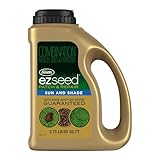
- WHEN TO APPLY : This lawn seed mix of Kentucky bluegrass seed, perennial ryegrass, and fine fescue grass seed germinates best when daytime temperatures are between 60°F and 80°F with no danger of frost
- PATCH & REPAIR: Scotts EZ Seed Patch & Repair Sun and Shade is a revolutionary grass seeding product that makes grass patch repair for lawns easy; it's designed to fill in bare spots and repair lawn damage
- COVERAGE: One 3.75 lb. jug of EZ Seed Patch & Repair lawn grass seed mix covers up to 85 sq. ft. in 3 easy steps: prep the area, evenly apply the seed and water until no more water is being absorbed
- WHERE TO USE: This sun and shade lawn repair grass seed mix is guaranteed to grow anywhere with proper care including in full sun, dense shade, high traffic areas and on slopes
- SUN AND SHADE GRASS: Contains a combination of high performance grass seed for lawns, mulch that expands to surround the seed, controlled release fertilizer, tackifier to help keep seed from washing away and a protectant to help keep seedlings safe
Should I dormant seed or wait until spring?
If fall conditions no longer allow useful establishment, dormant seeding or spring repair may be options, but neither guarantees success. Compare the choices against local soil and air temperatures, time remaining before winter, daylight and growing season, irrigation availability, and the chance of seed loss or needing follow-up in spring.
What’s actually slowing this PC down?
Pick the symptom - the matching free tool is one click away.
| Option | When it may fit | Important consideration |
|---|---|---|
| Fall seeding | When the local recommended window remains open and conditions support germination and establishment. | Late sowing can leave inadequate time for root development before winter; check regional guidance. |
| Dormant seeding | When turf growth has stopped but the ground is not yet frozen, under local recommendations. | Iowa State describes dormant seeding at soil temperatures of 40°F or lower and before the ground freezes. This is Iowa guidance; local timing and weather conditions matter. |
| Spring seeding | When the fall window has passed and local advice favors repairing the lawn in spring. | Use local guidance for timing and plan around the conditions needed for establishment. |
What should I check before deciding what went wrong?
- Where and when was the seed sown, and what species or blend was used?
- Did seedlings never appear, or did they emerge and then die?
- Did the seed zone stay moist, or did it dry out between watering or rainfall?
- Was seed lightly covered and in contact with soil, or could it have washed away?
- How much sun does the site receive, and is the soil compacted or crowded by weeds or existing turf?
- Does the seed label show a recent germination test date and instructions suited to the intended use?
These observations help identify likely causes, but no single cause can be established from the question alone. Local weather and site conditions are essential to a reliable diagnosis.
Quick Recap
Product prices and availability are accurate as of the date/time indicated and are subject to change. Any price and availability information displayed on Amazon at the time of purchase will apply.

