A whole-home audio system can cost roughly $1,500–$3,000 for a small DIY or single-room expansion, $8,000–$30,000 for many professionally installed multi-zone projects, and $25,000–$60,000 or more for larger, premium, outdoor, or automation-integrated systems. These are U.S. planning ranges, not guaranteed prices: construction access, zone count, equipment, networking, labor, and finish work all change the total.
The most useful way to budget is by independently controlled zones plus project overhead—not by counting speakers. A zone might be one room with a stereo pair, or multiple rooms that share a source and volume setting. Establish what each area needs to do before comparing quotes.
As an Amazon Associate I earn from qualifying purchases.
What a whole-home audio system includes
Whole-home audio can mean anything from several app-controlled wireless speakers to concealed speakers wired to a centralized amplifier. A complete project may include speakers, amplification, streaming sources, speaker and network cabling, power, controls, equipment storage, setup, and documentation.
Quick wins for a faster PC:
Fix the driver behind crashes, sound loss and screen glitchesFind Drivers →Repair Windows errors before they cause bigger problemsFix Now →Scan for outdated or missing drivers - takes under a minuteDriver Scan →“Music in every room” does not necessarily mean a separate source in every room. Decide whether each space needs the same music, different music, independent volume, stereo playback, TV audio, voice control, or integration with lighting and other home systems.
#1 Best Overall

- Package Includes: (1) Rockville RCS80-1 60 Watt 70V Commercial/Restaurant Amplifier/Bluetooth Receiver, (8) Rockville CCL6T White 70V 6" Commercial Ceiling Speakers, (1) Rockville VOL70100 White 100 Watt 70V Wall Volume Control Zone Controller Box. Everything you need for a professional audio setup in one bundle, perfect for restaurants, offices, or schools.
- Powerful Audio Performance: The RCS80-1 delivers 60W RMS at 70V, supporting up to 60W of speakers across multiple zones. Features Bluetooth, USB/SD inputs, and dual mic inputs for announcements or karaoke, ensuring versatile, high-quality sound for any commercial space.
- Customizable Sound Distribution: CCL6T speakers offer 10W, 5W, or 2.5W taps, allowing tailored volume per area—louder in dining rooms, softer in hallways. 70V technology simplifies wiring, supports long runs, and eliminates impedance concerns.
- Precise Volume Control: The VOL70100 zone controller adjusts sound levels for a 100W zone with 11-step attenuation. Its detachable Euro-block terminals and dust-protected circuit board ensure easy installation and long-lasting reliability in any setting.
- Durable and Stylish Design: Paintable CCL6T grills blend seamlessly into ceilings, while the RCS80-1’s rack-mountable design and cooling system ensure durability. Ideal for restaurants, bars, or offices seeking professional audio with a sleek aesthetic.
Understand zones before counting speakers
A zone is an independently controllable audio area. One room with a stereo speaker pair is usually one zone. An open-plan kitchen, dining area, and living room might be one zone if they share playback and volume, or several if independent control matters. Two bedrooms can share a zone when separate control is unnecessary.
A large room may need several speaker pairs for even coverage without needing several zones. Conversely, a patio and pool area may need separate zones if people want different music or volume levels. Ask for a zone map that identifies source, volume control, speakers, amplifier assignment, and grouping options.
Choose a system type that fits the house
| Type | How it works | Best fit | Main trade-off |
|---|---|---|---|
| Wireless powered speakers | Each room has a powered network speaker, typically plugged into an outlet. | Finished homes, gradual expansion, background listening, and homeowners comfortable managing apps and Wi-Fi. | Minimal construction work, but speakers and power cords remain visible and playback depends more heavily on the network and vendor software. |
| Wired architectural audio | Passive in-wall or in-ceiling speakers connect by speaker wire to streaming amplifiers or a central multi-zone amplifier. | New construction, major remodels, concealed speakers, outdoor coverage, and centralized equipment. | More planning and installation work; retrofitting after drywall is finished can be difficult and costly. |
| Hybrid | Architectural speakers serve key rooms; wireless speakers cover flexible or lower-priority spaces. | Homes where some rooms justify concealed speakers but others do not. | Balances construction cost and discretion, but mixed platforms need a clearly planned control and grouping approach. |
Wireless often reduces wiring and finish-repair labor, but it is not automatically the least expensive overall: a home filled with premium powered speakers can cost more than a modest wired system using shared amplification. Wired architecture offers more flexibility in placement, amplification, and speaker choice; results depend on design and installation rather than the cable alone.
When wireless makes sense
- The home is finished and opening walls or ceilings is undesirable.
- You want to add rooms gradually and can provide reliable Wi-Fi and power where speakers will sit.
- Background music and convenience matter more than concealed installation.
- You are prepared to manage app setup and basic network troubleshooting.
When wired audio makes sense
- Walls or ceilings are open for construction, making wire routing and speaker placement easier.
- You want discreet speakers, consistent coverage, or more robust outdoor audio.
- The system needs centralized equipment, documented cabling, or professional control integration.
- You can plan equipment access, ventilation, power, and future service before finishes are complete.
Why a hybrid design often works
Consider wiring the living room, kitchen, patio, and other primary listening areas, then using wireless speakers in bedrooms, offices, guest rooms, or spaces likely to change function. This reserves construction work for areas where concealment or coverage brings clear value.
Whole-home audio cost by project size
The following U.S. planning ranges synthesize published installer examples; they are not a standardized national survey or a quote. Scope and price can overlap: a small number of premium zones may cost more than a larger basic system.
| Project size | Illustrative scope | Planning range |
|---|---|---|
| Small DIY | Two or three wireless rooms with powered speakers; equipment and accessories depend on product choice. | $1,500–$4,000 |
| Small installed | One or two architectural zones, with installation and project scope varying by access and equipment. | $3,000–$8,000 |
| Mid-size | Four to six zones, often with a mix of architectural speakers, streaming amplification, and setup. | $10,000–$25,000 |
| Larger architectural | Six to eight zones; rack, outdoor audio, higher-grade speakers, network work, or control can increase cost. | $8,000–$30,000 or more |
| Premium or luxury | Eight to twelve or more zones, potentially with outdoor coverage, centralized equipment, and automation. | $25,000–$60,000 or more |
The ranges are broad because the label “zone” is not used consistently across proposals, and because labor, region, construction type, equipment, taxes, and permits vary. Davis Audio’s 2026 guide gives examples of about $3,000–$8,000 for one or two architectural rooms, $10,000–$25,000 for four to six zones, and $25,000–$60,000 or more for larger, more elaborate systems; other installer examples differ. See Davis Audio’s whole-home audio cost guide and Hargrett Electronics’ package examples.
Rank #2

- ✅ 【WHOLE HOME AUDIO SYSTEM – MUSIC IN EVERY ROOM】 The WS66i lets you distribute music to 6 rooms with independent control. Stream different music in each zone or play the same source throughout your entire home.
- ✅【6 SOURCE INPUTS × 6 ZONE OUTPUTS】 Connect TVs, streamers, media players, or DACs. The system supports 6 audio sources and 6 zones, allowing flexible multi-room audio distribution across your home.
- ✅【APP + WALL KEYPAD CONTROL】 Flexible App & In-Wall Keypad Control – Manage your music from the mobile app or the included wall keypads. Instantly adjust volume, change sources, or control playback in each zone without reaching for your phone.
- ✅【DUAL BUILT-IN MUSIC STREAMERS】 Enjoy wireless music streaming with support for AirPlay, Spotify Connect, DLNA, and USB playback, giving you multiple ways to stream music throughout your home.
- ✅【EXPANDABLE TO 18 ZONES】 Need more rooms? Multiple WS66i units can be linked together to expand your system up to 18 zones, ideal for larger homes or custom installations.
Hargrett lists basic room packages beginning around $1,500, WiiM Amp packages around $1,700, and Sonos Amp packages around $1,800 per room; these are that installer’s examples, not national installed-price standards. Phantom Sound separately lists starter three- to four-zone systems at $3,500–$10,000 and typical six- to eight-zone systems at $8,000–$30,000 installed. See Phantom Sound’s pricing examples.
What equipment costs—and what those prices leave out
Equipment may include speakers, streaming amplifiers or a central amplifier, source components, wire, network hardware, rack or shelving, controls, and outdoor-rated parts. A product price is only one part of an installed zone.
As of the U.S. pricing check in August 2026, Sonos listed the Amp at $799. Sonos specifies 125 watts per channel at 8 ohms and lists Wi-Fi, HDMI ARC, and line input among its features. The Amp powers passive speakers, but its price does not include those speakers, wire, installation, network work, rack equipment, setup, or tax. Confirm current pricing and specifications on the Sonos Amp product page.
A July 2026 integrator pricing check reported a six-inch Sonos/Sonance in-ceiling pair at about $729. Combined with a Sonos Amp at the listed $799 price, that is a representative hardware subtotal of about $1,528 for a stereo architectural zone before wire, brackets, labor, networking, rack work, programming, tuning, or tax. This speaker figure comes from a third-party price-list reproduction, so check availability and current pricing with the seller; it is not an installed price. See the March 2026 U.S. Sonos price-list reproduction.
Sonos also listed the Port at $499 on its product comparison page. A Port adds Sonos streaming to an existing receiver or amplifier; it does not amplify passive speakers on its own. Check the Sonos product comparison for current listed prices and product details.
Recommended Free Tools
Speaker costs vary with size, sensitivity, moisture or outdoor rating, grille design, bass capability, brand and dealer channel, and whether the price is for one speaker or a pair. Back boxes and rough-in brackets may also be separate. Always confirm quantities and model numbers before treating a speaker figure as a zone budget.
Rank #3
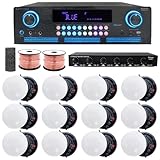
- ULTIMATE AUDIO UPGRADE KIT – Elevate your sound system with this all-in-one package, including a powerful home theater receiver, premium ceiling speakers, durable speaker wire, and a 6-channel speaker selector w/ volume control. Ideal for easy installation and delivering rich, immersive audio in homes, offices, or restaurants.
- HIGH-POWER AMPLIFIER WITH MULTIPLE CONNECTION OPTIONS – 2000 Watts Bluetooth amplifier with a sleek digital spectrum display. Enjoy versatile connectivity with RCA, USB, SD Card, AUX, and HDMI inputs. Built-in recording/playback for .mp3 and .wav files. Fully adjustable bass, treble, and balance controls, plus a cooling fan for enhanced performance. Perfect for home theaters, parties, and professional sound systems.
- IMMERSIVE SOUND FOR ANY SPACE: Elevate your audio with 12 high-performance 5.25" Frameless Ceiling Speakers, each delivering 175W (total 2100W). With a frequency range of 80Hz to 20kHz and 89 dB sensitivity, these speakers provide rich, clear sound. Featuring a 10" voice coil and electronic crossover, they’re perfect for home theaters, office sound systems, or commercial installations.
- VAIYER 6-CHANNEL SPEAKER SELECTOR WITH VOLUME CONTROL: Easily manage up to six speaker pairs with individual volume control, supporting dual-source operation (AMP A & AMP B), and autoformer-based impedance matching for amplifier protection; ideal for both home & commercial use, handling up to 900W max power (450W RMS). Features a durable steel chassis, 9-step rotary volume knob & supports 16–22 gauge wire. Perfect for larger audio systems in spaces like restaurants, gyms, event venues.
- PREMIUM IN-CEILING SPEAKER SYSTEM FOR HOME THEATER & WHOLE-HOUSE AUDIO: Enjoy clear, powerful sound with this complete ceiling speaker kit, perfect for home theater setups, and multi-room audio. The clean in-ceiling design fits living rooms, bedrooms, kitchens, and offices, and is also great for restaurants, lounges, and commercial spaces. Ideal for movies, TV, music, and background audio, this system delivers balanced sound coverage, making it a reliable choice for any home audio.
Equipment and infrastructure to include in the scope
- Passive or powered speakers, including outdoor-rated models where needed.
- Streaming amplifiers, central multi-zone amplification, streamers, or other sources.
- Speaker wire, Ethernet cable, terminations, wall plates, brackets, and back boxes.
- Access points, wired network drops, switches, and any network configuration.
- Rack, shelving, cable management, ventilation, and power protection.
- Volume controls, keypads, touch panels, subwoofers, and control-system components.
- Design drawings, installation, configuration, programming, tuning, documentation, and homeowner training.
Installation cost: new construction versus retrofit
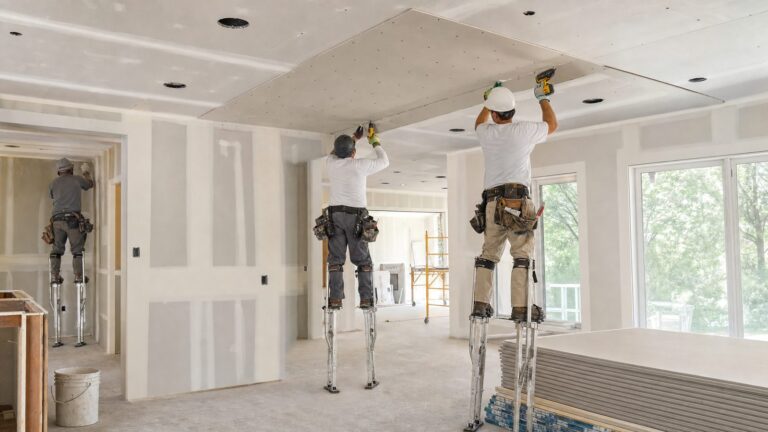
During framing, installers can route wire before drywall, coordinate speaker positions with lighting, HVAC, and framing, and fit brackets or back boxes without opening finished surfaces. A Texas estimate published in 2026 puts an eight-zone prewire during framing at roughly $800–$1,500, compared with approximately $3,500–$8,000 for a similar retrofit rough-in. Those are local planning examples, not national rates. See the Texas installation estimate.
Retrofit work may require fishing cable through inaccessible cavities, working around insulation and fire blocking, avoiding plumbing, ducts, and electrical, cutting exploratory openings, and coordinating patching and paint. A finished ceiling with limited access can change the design as well as the labor price.
If construction is already planned, ask whether to run speaker wire, Cat6, conduit, and spare pull strings to likely locations even if the complete system will come later. Label both ends and keep the route documented. Infrastructure installed while the structure is open can preserve options without committing to a particular speaker or streaming platform.
The Tool Desk
Outbyte Driver Updater FREEFix the driver behind crashes, sound loss and screen glitchesFind Drivers →Outbyte PC Repair FREEClear out junk files and repair common Windows errorsFree Scan →Separate the kinds of labor
- Low-voltage installation: wire routing, terminations, speaker installation, and rack work.
- Electrical: outlets behind equipment, dedicated circuits, and code-required work.
- Finish repair: drywall, plaster, paint, trim, texture matching, or access panels.
- Programming and commissioning: network setup, zones, scenes, controls, and listening checks.
- Service: troubleshooting, configuration changes, and future equipment replacement.
Full Spectrum’s Bay Area planning guidance gives licensed low-voltage and integration labor as roughly $185–$250 per hour. Treat that as a regional example only; it is not a national rate. See Full Spectrum’s whole-house audio guidance.
Hidden costs to identify before accepting a quote
Network improvements
Networked audio needs reliable connectivity and device discovery. A project may need mesh access points, wired Ethernet, managed switches, or configuration for multicast and discovery traffic. Guest-network isolation, segmented IoT networks, wireless extenders, and unstable roaming can cause dropouts, delayed playback, desynchronization, or rooms disappearing from the app. Ask the installer to state required network behavior and identify who will configure and support it.
Electrical power and protection
Central equipment may need new outlets, a dedicated circuit, surge protection, power conditioning, or a UPS for network and control equipment. Establish whether electrical work is included, who performs it, and whether code or permit requirements apply.
Rank #4

- Six source inputs, six zone outputs; expandable to 18 zones
- System controlled by IR remote, keypad, or automation system via RS232 interface
- Class D amplifier produces 25 watts per channel at 8 ohms x 12 channels
- Bridgeable outputs provide 100 watts per channel, up to six channels total
- Built-in IR repeater for control of source inputs from any zone; compatible with 12V IR components
Rack, heat, and access
Centralized systems may need a rack cabinet, shelves, cable management, ventilation, lighting, labeling, and service clearance. Do not put heat-producing amplifiers in a sealed closet without confirming their ventilation requirements. A rack that cannot be reached or serviced can turn a small failure into a larger repair.
Construction finishes and outdoor coverage
Clarify responsibility for drywall or plaster patching, painting, ceiling texture, reinforcement, fire-rated back boxes, and access panels. Outdoor installations may add weather-resistant speakers, burial-rated cable, conduit, landscape speakers or satellite/subwoofer systems, separate amplification, weatherproof equipment placement, and surge protection. Hargrett lists outdoor packages beginning around $1,600 and premium packages around $2,000; another installer cites about $2,500 to start for a basic four-speaker patio setup. These are installer-specific starting prices, not a universal outdoor-system cost. See Hargrett’s audio package examples.
A patio may need several speakers playing at lower volume for more even coverage rather than two speakers played loudly. Pools and landscape systems also bring cable-routing, weather, drainage, and electrical-safety considerations. Kitchens, bathrooms, and high-ceiling rooms need appropriate speaker selection and placement; not every architectural speaker is suitable for a wet location or a difficult acoustic space.
Control, tax, permits, and service
Phone-app control may be sufficient for a small system. Keypads, touch panels, voice control, or integration with platforms such as Control4, Savant, or Josh.ai can add programming and future service considerations. Confirm sales tax, shipping, permit fees, lift or access equipment, after-hours work, hardware substitutions, dealer markup, and disposal of packaging. State whether warranty support and future service are included or billed separately.
Independent reader supportYour contribution helps us test, update, and keep practical guides available for everyone.How many zones do you need?
Start with activities and control needs, not the number of rooms on a floor plan. For each area, record whether it needs independent source selection and volume, stereo or background playback, TV audio, voice or physical controls, and indoor or outdoor-rated equipment.
- Open-plan kitchen, dining, and living: one zone may be adequate if everyone shares content and volume; split areas only if independent listening matters.
- Bedrooms and offices: separate zones are useful when occupants need different music or volume. Rooms with the same listening needs can share a zone.
- Large great room: more speakers may improve coverage without requiring more zones.
- Patio, pool, or landscape: choose one or multiple zones based on coverage, separate volume needs, and whether indoor rooms will be grouped with outdoor listening.
- TV or home theater: specify the audio path separately. A distributed music zone is not automatically a theater system.
Home theater is a related but separate design
TV and theater listening may require HDMI ARC or eARC compatibility, surround processing, low-latency playback, a center channel for dialogue, subwoofer integration, and lip-sync control. Ask whether the proposal includes a theater-specific system and how it will behave when grouped with whole-home music; do not assume every multi-room amplifier handles those needs.
Best Value

- Unleash Premium Sound: The WiiM Amp Pro is our most advanced streaming amplifier yet, featuring PFFB technology, Wi-Fi 6, an innovative thermal design, and a premium DAC for superior audio performance. It delivers 60W per channel power for 8 ohms, and 120W per channel power for 4 ohms. It incorporates the latest Wi-Fi 6 and BT 5.3 with two antennas, offering rock solid wireless audio streaming.
- Does It All Like Magic: Master your audio universe with the WiiM Home App. Stream from top music services and manage your system effortlessly, room by room. Adjust volume, sync speakers, save favorites, set alarms, and tweak settings—all in one place. Prefer your go-to music app? No problem, play straight from it. Plus, go hands-free with voice commands. Whether you're using Alexa, or Google Assistant, control is just a word away, even with the included voice remote.
- Home Theater Magic, Simplified: Elevate your entertainment experience effortlessly with the WiiM Amp Pro's HDMI ARC port. Plug in your TV and immerse yourself in rich stereo sound for shows, movies, and video games. Craving that extra oomph? Simply add a powered subwoofer to take your audio to cinematic levels. With minimal setup required, the WiiM Amp Pro offers a seamlessly integrated AV system that turns your living room into a home theater paradise.
- Seamless Multiroom Audio: Effortlessly create a unified sound system across your home using the WiiM Amp Pro with existing Amazon Echo, Google Home, and WiiM devices. Easily manage music streaming throughout your space with the intuitive WiiM Home App—control volume, synchronize speakers, save your favorite tunes, set alarms, and customize settings, all from one central hub.
- Hi-Res Sound Shaped by You: Stream crystal-clear music up to 24-bit/192 kHz from platforms like Spotify, Amazon Music, TIDAL, Qobuz, or your own library. Enjoy gapless playback and superior sound quality. Personalize your audio with advanced room correction and independent EQ settings tailored to your space.
How to compare installer proposals
Ask every bidder to price the same written scope. A low total may simply omit wire, finish repair, network work, or programming.
- List the number of zones and provide a zone map showing which rooms can play independently and which can be grouped.
- Specify speaker locations, model numbers, quantities, and whether listed speaker prices are per unit or pair.
- Identify each amplifier or streamer, output capacity, source options, and supported control method.
- State wire type, gauge, routing, terminations, labeling, network requirements, and any network-upgrade allowance.
- Detail rack or shelf, ventilation, power protection, electrical work, and service access.
- Assign responsibility for patching, paint, plaster, trim, and other finish repairs.
- For outdoor areas, identify weather ratings, cable type, conduit, equipment location, and zone coverage.
- Include configuration, programming, calibration or listening checks, training, and documentation.
- List tax, shipping, permits, exclusions, warranty coverage, ongoing service rates, and change-order rates for concealed conditions.
For planning help before choosing an integrator, Crutchfield advertises a free residential system-design consultation covering multi-room music and speaker placement. Its residential and installation-assistance information is at Crutchfield residential services and Crutchfield design and installation services.
Reduce cost without undermining the design
- Install independent zones only where separate source or volume control is genuinely useful.
- Prioritize the main living areas, then add flexible wireless speakers in lower-priority rooms.
- Use a hybrid layout when some spaces benefit from concealed speakers and others do not.
- Prewire while framing is open, and document the routes even if equipment will be purchased later.
- Skip automation features and keypads that do not solve a real control need.
- Share a source across rooms when independent playback is not required.
- Match speaker quantity and capability to the room; a high ceiling or noisy kitchen may need a better coverage plan, not simply a more powerful amplifier.
Plan for service and future changes
No system is future-proof. Cable infrastructure can outlast speakers, amplifiers, streaming services, and control apps, so preserve options: use quality speaker wire, Cat6 and conduit where practical, leave pull strings, photograph open walls before closing them, label both cable ends, and retain wiring diagrams and equipment serial numbers. Leave rack space, power capacity, and amplifier capacity for likely expansion.
Do these 3 things before closing this tab:
1Fix the driver behind crashes, sound loss and screen glitches2Clear out junk files and repair common Windows errors3Scan for outdated or missing drivers - takes under a minuteAsk how local playback, Bluetooth, AirPlay, line-in sources, TV audio, streaming-service integrations, and voice control work—and what still functions during an internet outage. A platform may change its service integrations over time. For larger systems, get an equipment inventory, zone and network diagrams, ownership-transfer instructions, written warranty terms, and configuration backups where available. Do not assume a specialized rack or proprietary control system will add its full cost to resale value.
When professional installation is worth considering
Professional design and installation are most valuable when ceilings are finished and wire paths are complex, speakers must be concealed, outdoor coverage is substantial, a home has many zones, or the system must coordinate with lighting, shades, security, or theater controls. A qualified installer should explain the network requirements, document the system, and provide a clear plan for warranty and future service. For simpler wireless expansion, a homeowner may prefer to buy room by room and handle app and network setup independently.
Quick Recap
Product prices and availability are accurate as of the date/time indicated and are subject to change. Any price and availability information displayed on Amazon at the time of purchase will apply.