Usually, the builder or developer is the party legally required to report and remit a construction excise tax, but that does not determine who ultimately bears its economic cost. Depending on local law and market conditions, the charge may be reflected in a higher sale price, reduce the developer’s return, lower the price paid for development land, or prevent a marginal project from proceeding.
There is no nationwide rule. The answer depends on the city and state, the exact tax, its rate and exemptions, when it is collected, and the purchase contract. Portland, Oregon, and Los Angeles, California, illustrate how different local ordinances can assign legal responsibility.

As an Amazon Associate I earn from qualifying purchases.
Legal payer and economic payer are different
When people ask “who pays the construction excise tax,” they may mean two different things:
- Legal liability: Which person or entity the ordinance names as responsible for paying or remitting the tax to the government?
- Economic incidence: Who is worse off after the charge affects prices, land values, profits, rents, or whether the home is built?
The ordinance answers the first question. The market answers the second. A builder may write the check when a permit is issued, while the project’s price, land contract, or profit margin absorbs some or all of the cost. Conversely, a tax legally imposed on a developer is not automatically a separate line item that a buyer must pay at closing.
#1 Best Overall
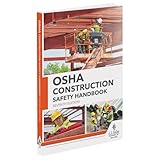
- 2024 OSHA Construction Safety Book is the seventh edition with the new OSHA HazCom final rule on 5/20/24. While the rule takes effect 7/19/24, the compliance dates don’t begin until 1/19/26 per 29 CFR 1910.1200(j).
- Construction Site Book offers quick access to essential OSHA regulations, jobsite hazards, and practical safety tips. It also helps employees identify hazards and prevent injuries and illnesses.
- Features easy-to-read format, full-color images, chapter quizzes with answer key, and comes in a compact size making it a convenient reference for employees.
- Critical topics include Confined Space Entry; Cranes & Derricks; Electrical Safety; Emergency Response; Ergonomics & Back Safety; Excavations; Fall Protection; First Aid & Bloodborne Pathogens; HazCom; Health & Wellness; Jobsite Exposures; Lockout/Tagout; Ladders & Stairways; Materials Handling/Storage; Motor Vehicles; PPE; Scaffolds; Site Safety & Security; Slips, Trips & Falls; Tool Safety; Welding, Cutting & Brazing; and Work Zone Safety.
- Specifications: 5 1/4” x 7 1/4", English, Soft bound. 7th Edition. Copyright 2024.
“Construction excise tax” is also not a standardized national category. One jurisdiction may calculate a percentage of construction value; another may charge a fixed amount per dwelling unit. A fee called an impact fee or development fee may have a different legal basis and tax base. Do not apply a rule from one city to a new home in another.
What local ordinances show
The following examples were current as checked on October 13, 2026. They demonstrate legal drafting, not a universal rule for every new home.
| Jurisdiction and provision | Person legally responsible | Tax base and rate | When due and notable qualifications |
|---|---|---|---|
| Portland, Oregon, City Code §6.08.050 | Each person applying to construct a residential improvement | 1% of the improvement’s value | Payable before the building permit is issued. Exemptions include qualifying long-term affordable housing and improvements valued at $100,000 or less. Relevant amendments took effect January 1, 2025. |
| Los Angeles, California, Municipal Code §21.13.3 | A person who constructs or causes construction of a new dwelling unit in the city and has equity or title in it | $300 per dwelling unit | The provision also reaches certain conversions and contains specified exceptions. The code page identifies itself as a 2026 revision and warns that online posting may lag later legislation. |
Portland: a permit-stage percentage tax
Under Portland City Code §6.08.050, the person applying to construct a residential improvement must pay a residential construction excise tax equal to 1% of the improvement’s value before the building permit is issued. The code lists exemptions, including qualifying long-term affordable housing and improvements valued at $100,000 or less. The amendments relevant to this provision took effect January 1, 2025.
Recommended Free Tools
That wording makes the permit applicant the legal remitter. It does not say that a future homebuyer is personally liable merely because the buyer will purchase the completed house. Whether the builder recovers the amount through the sale price is an economic and contractual question.
Los Angeles: a per-unit charge tied to equity or title
Los Angeles Municipal Code §21.13.3 imposes a $300 residential development tax for each dwelling unit on a person who constructs or causes construction of a new dwelling unit in the city while holding equity or title in it. The rule also addresses certain conversions and contains stated exceptions. The online code identifies itself as a 2026 revision and cautions that its posting may not immediately reflect every legislative change.
Rank #2

- The 2024 ERG guide helps satisfy 49 CFR 172.602 DOT requirement. This requirement states that hazmat shipments be accompanied by emergency response info.
- Pocketbook aids in emergency preparedness, planning, and training with ERGs numerically indexed and color-coded to help emergency responders find vital information fast.
- 2024 Updates: The Pipeline and Hazardous Materials Safety Administration (PHMSA) released a comprehensive summary of updates. Most significantly a QR code on the back cover that provides access to critical incident reporting information.
- Other changes for 2024 have been made to continue to provide the most accurate emergency response information to help all front-line persons and all first responders stay safe during transportation emergencies.
- Specifications: 4" x 5 1/2" Pocketbook Size, English, Spiralbound. Copyright 2024.
This formulation differs from Portland’s. It focuses on the person undertaking or causing construction who has an ownership interest, and it uses a fixed per-unit amount rather than a percentage of improvement value. A buyer should therefore not infer from the Los Angeles example that every city charges a similar amount or assigns liability to the same party.
How the cost can move through a housing market
The California Department of Housing and Community Development’s 2020 report Residential Impact Fees in California describes the possible channels. As the report explains: “While developers can pay the fee themselves (by accepting a lower return), they can also ‘pass’ these costs to the sellers of developable land (who could accept a lower price for their land), or to the residents of the new developments (in the form of higher home prices).”
Quick wins for a faster PC:
Repair Windows errors before they cause bigger problemsFix Now →Fix the driver behind crashes, sound loss and screen glitchesFind Drivers →Clear out junk files and repair common Windows errorsFree Scan →That is an incidence framework, not a promise that a buyer pays a particular percentage. A project can distribute the burden among several parties at once.
Higher prices for new homes
A builder may include the tax in the project’s pro forma and seek a higher selling price. Pass-through is more feasible when buyers strongly want homes in that location and there are few comparable sites where the charge does not apply. If competing builders face the same tax, a price adjustment may be easier to sustain because no local competitor can avoid it.
Pass-through is neither automatic nor necessarily complete. Buyers may resist a higher price, lenders may cap the appraised value, or competing homes may force the builder to hold the advertised price. In those circumstances, the builder may absorb part of the charge or alter the project.
Rank #3
Lower developer returns
If the market will not support a higher price, the developer can accept a smaller return on cost or profit margin. This is most likely when the land was already purchased at a fixed price, construction contracts are committed, or buyers have alternatives. A lower return can be a temporary choice for a strategically important project, but a lender or investor may reject a deal that no longer meets its risk-adjusted return threshold.
The Tool Desk
Outbyte PC Repair FREERepair Windows errors before they cause bigger problemsFix Now →Outbyte Driver Updater FREEFix the driver behind crashes, sound loss and screen glitchesFind Drivers →Lower prices for development land
Over time, a recurring charge can be capitalized into the price of developable land. A developer who knows that a site will incur a tax may offer the landowner less, leaving the land seller with part of the economic burden. This adjustment generally requires time: existing land contracts cannot always be renegotiated, and sellers may wait for a buyer willing to pay more.
Delay, redesign, or cancellation
When a fee pushes a project below its financing or return threshold, the response may not be a higher home price. The developer may reduce unit size, change the mix of homes, delay construction, search for a cheaper site, or abandon the project. In the short term, that can reduce the number of new homes rather than produce a visible tax line on a buyer’s settlement statement.
Why market conditions change the result
Two variables are especially important: the strength of housing demand and the availability of substitute development sites.
Strong demand and few alternatives
In a market with more willing buyers than available homes, demand is relatively inelastic: buyers are less able or willing to switch to another location or product. If nearby sites face the same charge, or if lower-fee sites are scarce, a builder has more ability to incorporate the tax into asking prices. Buyers may then bear a meaningful share through the price of new and, indirectly, existing homes.
Crashes, No Sound, or Screen Glitches?
Random freezes, missing sound and display glitches usually trace back to one bad driver. Find and replace yours safely.Free scan · under a minutePC Slower Than It Used to Be?
A free scan shows the junk files, broken settings and background clutter dragging Windows down - then fixes them in one click.Free scan · Windows 10 & 11Weak demand or many lower-fee sites
When demand is weaker, a buyer can wait, choose an existing home, or purchase in a nearby jurisdiction without the charge. The builder has less pricing power and may absorb more of the cost through a lower margin. Landowners may also accept less for a site, and construction may fall in the short term if expected returns no longer justify the risk.
Short run versus long run
Incidence can change with time. Immediately after a new fee takes effect, a developer with land and construction commitments may be unable to adjust those contracts and may bear more of the charge. In later transactions, land prices and project designs can adapt. A statement that “the builder pays” or “the buyer pays” without a time frame hides this adjustment process.
What the available evidence does—and does not—show
The HCD report summarizes studies finding that impact fees have often been borne by buyers of both new and existing housing, particularly in strong markets or soon after a fee is introduced. The studies also find that landowners bear part of the burden in some cases. HCD says the developer share and the factors determining it remain unclear, in part because researchers generally lack detailed information about developers’ financial circumstances.
Those findings concern impact fees reviewed in the report. They inform the economics of a construction-related charge but are not a universal estimate for every local construction excise tax. No general percentage establishes how much of any such tax buyers always pay.
A South Bay scenario is not a national average
One HCD prototype analysis modeled a 160-unit residential project in California’s South Bay. In that scenario, increasing impact fees from $40,000 per unit to $60,000 per unit reduced the modeled return on cost and could make construction less likely unless higher rents or another offset made up the difference. The figures describe a specific modeling exercise, not a typical fee, a current charge for every home, or a national estimate of buyer incidence.
Best Value

- TRACK 1,674 TRIPS IN ONE ORGANIZED LOG BOOK — Keep a clear record of your business and personal driving with 128 pages and 1,674 trip entries. Each entry provides space for the date, business purpose, starting and ending odometer readings, and total mileage, making it easy to keep your mileage records organized and easy to review.
- KEEP BUSINESS MILEAGE RECORDS READY FOR TAX TIME — Record the driving information you need throughout the year instead of trying to reconstruct your mileage months later. A dedicated space for business purpose and mileage helps you maintain a consistent written record for your own tax and expense documentation.
- MORE THAN A MILEAGE LOG — KEEP IMPORTANT VEHICLE RECORDS TOGETHER — This all-in-one log book also includes dedicated space for vehicle maintenance records, insurance information, and emergency contacts. Keep essential vehicle information in one convenient place instead of scattered across notes, apps, and paperwork.
- SIMPLE, PRACTICAL FORMAT FOR EVERYDAY DRIVING — Designed for quick, straightforward record keeping without complicated forms or unnecessary details. The 5.8” × 8.3” size gives you plenty of writing space while remaining compact enough for a desk, glove box, work bag, or vehicle organizer.
- A PRACTICAL GIFT FOR DRIVERS & BUSINESS OWNERS — A useful choice for anyone who regularly tracks mileage, including small business owners, independent contractors, sales professionals, delivery drivers, and commuters who need a convenient way to organize vehicle records. The durable format makes it a practical addition to any driver’s everyday essentials.
How to determine who is responsible in a particular transaction
A buyer, builder, or seller needs the exact jurisdiction and transaction documents before reaching a reliable answer. Use this sequence.
- Identify the government imposing the charge. Confirm the city, county, special district, or other authority in which the home is located. A subdivision can cross boundaries or be subject to more than one charge.
- Find the exact legal name. “Construction excise tax,” “residential development tax,” “impact fee,” and “development fee” may trigger different rules. Locate the current code section or official fee schedule, not an old estimate in a listing.
- Read the liability clause. Look for terms such as applicant, owner, developer, person constructing, or person causing construction. That clause identifies the legal remitter.
- Check the tax base, rate, trigger, and deadline. Determine whether the charge is a percentage of improvement value or a fixed amount per unit, and whether it is collected at application, permit issuance, certificate of occupancy, sale, or another event.
- Review exemptions, credits, and special programs. Affordable-housing projects, low-value improvements, conversions, public entities, or other categories may be treated differently. Confirm eligibility rather than assuming a general exemption applies.
- Read the purchase agreement and builder disclosures. Look for clauses allocating permit fees, development charges, governmental assessments, or later-enacted taxes. The legal obligation to the government and the contract’s allocation between buyer and seller are separate questions.
- Check the closing disclosure or settlement statement. A charge allocated directly to the buyer should appear in the transaction documents. Its appearance does not prove that the buyer was the ordinance’s legally liable person; it shows how the contract allocated the cost.
- Confirm timing with the building department. Rates and code pages can change. In Los Angeles, for example, the online code warns that posting may lag legislation. Obtain the amount applicable on the permit or other triggering date.
Questions to ask a builder or closing professional
- What is the official name and code section for this charge?
- Who must remit it, and has it already been paid?
- What rate or formula was used, and what date controls?
- Does the project qualify for an exemption or credit?
- Is the amount included in the home’s advertised price or charged separately?
- Does the contract allow the builder to pass through a new or increased governmental charge?
- Where will the allocation appear on the settlement statement?
For a high-value or disputed transaction, the relevant city or county building department can confirm the ordinance and timing. A qualified real-estate attorney or tax professional can interpret a contract or closing disclosure; the local rule should be verified before relying on a general explanation.
Common mistakes
Assuming the person who pays the government is the person who bears the cost
Permit-stage remittance establishes compliance, not the final economic burden. Pricing, land negotiations, and project feasibility can shift the cost.
Free tools Windows power users keep installed
One-click scans. No signup required.
Using a neighboring city’s rate
Even nearby jurisdictions may use different tax bases, rates, triggers, and exemptions. Portland’s 1% permit-stage rule and Los Angeles’s $300-per-unit rule cannot be substituted for the ordinance where the home is being built.
Treating an impact-fee study as a tax guarantee
Research about impact fees describes tendencies under particular market conditions. It does not establish that a buyer will pay a fixed share of every construction excise tax.
Ignoring the contract
An ordinance may make the builder liable while a purchase agreement separately lets the builder recover a cost in the price or as a disclosed charge. Read both documents.
The practical answer
In most local systems, start by looking for the builder, developer, permit applicant, or owner named in the ordinance. That party is commonly responsible for remitting the charge. Then analyze incidence: strong demand and few alternative sites make a higher home price more feasible; weaker demand and available lower-fee sites increase the chance of lower developer returns, lower land prices, delayed construction, or no project.
Do these 3 things before closing this tab:
1Scan for outdated or missing drivers - takes under a minute2Repair Windows errors before they cause bigger problems3Fix the driver behind crashes, sound loss and screen glitchesFor any specific new home, only the applicable jurisdiction’s current code and the signed transaction documents can establish the legal obligation and contractual allocation. Without the city and state, the tax’s exact name, and the purchase or construction arrangement, “builders or buyers” has no single legally correct answer.
Quick Recap
Product prices and availability are accurate as of the date/time indicated and are subject to change. Any price and availability information displayed on Amazon at the time of purchase will apply.

