Do these 3 things before closing this tab:
1Clear out junk files and repair common Windows errors2Fix the driver behind crashes, sound loss and screen glitches3Repair Windows errors before they cause bigger problemsApply pre-emergent herbicide before the target weed’s seeds germinate—not on a fixed date everywhere. For spring crabgrass prevention, local soil-temperature trends are a useful signal, but extension guidance defines the trigger differently: Iowa State cites 55°F, Maryland Extension cites sustained 53–55°F for five days, and South Dakota State University associates emergence with average daily soil temperatures above 60°F. Treat these as source-specific guides, then follow local advice and the product label.
When should I apply pre-emergent?
Apply it early enough to be in place before the weed you are targeting germinates. Pre-emergents act on germinating seeds; they do not control weeds that are already established. The right window therefore depends first on the weed’s germination season, then on local conditions and the directions for the product you choose.
As an Amazon Associate I earn from qualifying purchases.
For crabgrass and other summer annuals, that usually means a spring application before germination begins. For winter annuals, it means a late-summer or early-fall application before fall germination. A date from another state can provide context, but it is not a reliable schedule for your lawn: weather, shade, moisture, irrigation, turf density, and weed species can shift the useful window.
The Tool Desk
Outbyte PC Repair FREEClear out junk files and repair common Windows errorsFree Scan →Outbyte Driver Updater FREEScan for outdated or missing drivers - takes under a minuteDriver Scan →Applying too early can leave the treatment poorly timed by the time seeds germinate; applying after germination has started can miss the opportunity to prevent those weeds. Use soil-temperature trends as a practical local cue, not as a guarantee that every weed or every part of a property will respond on the same day.
#1 Best Overall

- 【4 in 1 function】This is a 4-in-1 multifunctional soil tester.Our soil tester fastly to measure soil moisture, pH, temperature and sunlight to help you take better care of flowers and plants.You can know when you need to water your soil by measuring moisture and pH & Temperature value of the soil and sunlight level of plants with it.
- 【Large Screen & Backlight LCD Display】The Soil Tester uses a large LCD screen and white backlight to conveniently display and read digital parameter in day or dark.Use AAA1.5V * 4 batteries (not included),it will alert when the battery is low.
- 【Quick Accurate measurement】The latest probe detection technology in 2026 can quickly and accurately measure the pH, moisture and temperature in the soil,with the light intensity of the light sensor analysis on the instrument, it can allow you to know when to water, to control the pH and temperature acidity, and determine whether the plants have enough light to better cultivate the plants more scientifically.
- 【Easy to use】Just simply plug the probe into the soil about 4 inches(10cm) , wait 10 seconds to read intuitive data,and you will get an accurate and precise reading immediately.(This soil tester cannot be used directly to test any liquid. When measuring the soil, if the soil is too dry, do not insert it into dry and hard soil. Before testing, please water the soil test area and wait for 10 minutes, otherwise the testing machine will be damaged.)When testing soil pH and moisture, you need to read data from at least 5 locations in the soil. The average value of all the data will be the final soil pH and moisture.
- 【More convenient to read】The screen content adopts visual content design, which helps you read the data through specific values and easy to understand graphics, so that even novice growers can easily understand your soil conditions. The 45° rotating head design allows you to bend your head 0°-45°, allowing you to easily view the screen content without bending over.
What soil temperature should I apply pre-emergent?
There is no single cutoff shared by all extension sources, partly because they describe the trigger differently. Iowa State University says crabgrass germination begins when soil reaches 55°F. Maryland Extension describes germination beginning after soil temperatures remain at 53–55°F for five days. South Dakota State University (SDSU) associates crabgrass emergence with average daily soil temperatures above 60°F.
| Source | Temperature guidance | How to interpret it |
|---|---|---|
| Iowa State University | 55°F | Identifies this as the point when crabgrass germination begins. |
| Maryland Extension | 53–55°F sustained for five days | Uses a sustained-temperature trigger rather than a single reading. |
| SDSU Extension | Average daily soil temperatures above 60°F | Describes conditions associated with crabgrass emergence. |
These figures are not interchangeable measurements of one universal threshold: the sources refer to germination or emergence and use different descriptions of temperature. For a decision, follow the temperature method in the local extension guidance you rely on, consider the trend rather than one isolated reading, and check the label for the selected product.
How to measure a local trend
A soil thermometer is useful if you want a measurement at your own site. SDSU Extension describes measuring the daily minimum at sunrise with the thermometer inserted one inch into the soil. Keep the time and depth consistent from one reading to the next so that you are comparing like with like. Consult your local extension service for how it defines and applies its own trigger.
One reading does not capture how conditions are changing. A run of readings can show whether soil is warming toward a locally recommended range; the five-day period in Maryland Extension’s guidance is one explicit example of a sustained trigger. Do not convert SDSU’s average-daily-temperature guidance into a sunrise minimum, or treat a sunrise minimum as an average.
Rank #2
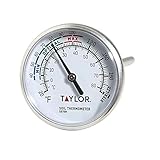
- PRECISE SOIL TEMPERATURE READINGS: Measures soil temperatures from 20 degrees F to 180 degrees F (0 degrees C to 80 degrees C) with a large, easy-to-read analog dial face - no batteries or digital screens needed for reliable results every time
- BUILT-IN PLANTING GUIDANCE: Dial face features clearly marked min, max, and optimal temperature zones so you know exactly when conditions are right for seed germination and planting - takes the guesswork out of your garden schedule
- READS BELOW THE SURFACE: The 4-inch stainless steel stem inserts at least 2 inches into the soil for accurate subsurface temperature measurements; ideal for vegetable gardens, raised beds, greenhouses, and container plantings
- HEAVY-DUTY STAINLESS STEEL CONSTRUCTION: Built with durable stainless steel materials designed to withstand repeated outdoor use in soil, moisture, and varying weather conditions - a long-lasting tool for serious gardeners and growers
- VERSATILE MONITORING WITH STEM CLIP INCLUDED: Leave the thermometer in one location to track daily temperature trends or move it quickly between multiple garden beds and containers; includes a stem clip for easy attachment to planters and pots
Use seasonal signs as supporting context
Plant cues can help orient a decision, but should not replace local conditions. Iowa State describes mid-April as typical for Iowa when forsythia blossoms start dropping or redbud trees begin to bloom, while noting that spring timing varies from year to year. Those cues are specific to the Iowa guidance; they are not a nationwide calendar rule.
When should I put down crabgrass preventer?
Put it down before crabgrass germinates, using your local soil-temperature trend and the product label to set the timing. The date examples below illustrate how widely the calendar can differ by region. They should not be read as interchangeable recommendations.
| Region and source | Spring timing example | Qualification |
|---|---|---|
| Iowa, Iowa State University | Around mid-April | A typical Iowa window, not a fixed date; the guidance ties timing to spring conditions and seasonal cues. |
| North Georgia, UGA Bartow County | March 1–20 | A regional calendar example for North Georgia. |
| South Dakota, SDSU Extension | April is the normal turf application window; earlier in warmer years | The March 31, 2026 update describes emergence in association with average daily soil temperatures above 60°F. |
The differences reflect geography and weather, as well as the way each source describes its temperature trigger. A warm spring can bring the useful window earlier; a cooler spring can delay it. Use local guidance rather than shifting a calendar date from another region by guesswork.
Outdated Drivers Are Slowing You Down
One free scan finds every outdated or missing driver and matches the right update for your exact hardware.Free scan · exact hardware matchPC Slower Than It Used to Be?
A free scan shows the junk files, broken settings and background clutter dragging Windows down - then fixes them in one click.Free scan · Windows 10 & 11When should I apply fall pre-emergent?
Fall applications target fall-germinating winter annuals, not the spring crabgrass window. Apply before those weeds germinate, using local conditions and the target species to guide timing. Fall dates are also regional examples rather than universal deadlines.
Rank #3
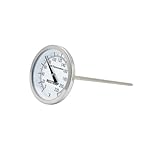
- Corrosion Resistant 304 Stainless Steel Case, Bezel and 5" Stem
- Perfect for Seeding, Transplanting and Gardening
- Easy-to-Read 2" Dial, Fahrenheit 0-220F Temperature Scale
- Factory Calibrated and Ready to Use
- Waterproof for Easy Cleaning, Glass Lens Will Not Yellow Over Time
| Region and source | Fall timing example | Qualification |
|---|---|---|
| North Georgia, UGA Bartow County | September 1–15 | A North Georgia example published May 11, 2026. |
| Oklahoma, Oklahoma State University | September 15 as a planning target | The September 18, 2026 advice presents this as a useful target, not an exact deadline, for Oklahoma. |
Oklahoma State’s 2026 guidance notes that shaded, irrigated, moist areas may cool and become favorable for germination while nearby full-sun areas remain hot and dry. Temperature is only one part of the decision: moisture, rainfall, irrigation, shade, turf density, site history, and weed species also affect germination. As the article puts it, “There is no single answer for every property.”
Choose the product for the weed, lawn, and application site
Extension sources name pendimethalin, prodiamine, benefin, bensulide, and dithiopyr among active ingredients used for crabgrass pre-emergence control. That list is not a universal product recommendation. The suitable active ingredient and formulation depend on the target weed, turf, permitted use site, and current label directions for your location.
Before applying, compare the label and your situation on the points that determine whether the product is appropriate:
- Target weed: Confirm that the label covers the weed you want to prevent and that the application timing matches its germination season.
- Turf and site: Check permitted turf species, application locations, and any restrictions for the condition of your lawn.
- Rate and schedule: Use the label’s application rate, repeat interval, and annual maximum. Do not infer them from another product or another year’s directions.
- Watering: Some products need water after application. Minnesota Extension advises watering in pre-emergents; Maryland Extension says to water granular applications according to the label. The product label determines the required method and amount.
- Formulation and equipment: Granular products may be applied with a spreader, as described by Maryland Extension. Follow the label for application technique and any equipment-specific directions.
When comparing options, start with the weed and the site rather than a brand name. A product formulated for a different target, turf type, or permitted location may not suit your lawn even if its active ingredient appears on a list of crabgrass controls. Then compare the formulation and label instructions: the labeled rate, whether watering is required, whether repeat applications are allowed, the interval between them, and the annual maximum. No universally best product or brand is established, and those application details cannot safely be transferred from one label to another.
Rank #4

- COMPOST SOIL THERMOMETER: A soil compost thermometer is a useful tool for gardening and composting. These thermometers are specifically designed to measure the temperature of the soil, making them ideal for monitoring compost piles, soil temperature for planting, and ensuring optimal conditions for plant growth.
- WATERPROOF SOIL TEMPERATURE THERMOMETER: The 16-inch stainless steel thermometer is durable and resistant to rust, making it suitable for outdoor use in various weather conditions. The waterproof design ensures that the thermometer can withstand moisture and can be used in wet environments, such as compost piles or moist soil.
- COMPOST THERMOMETER 16 INCH STEM: Monitoring the temperature of compost is essential for successful decomposition and avoiding issues such as overheating or insufficient decomposition. Composting at the right temperature helps to break down organic matter efficiently, resulting in rich, nutrient-dense compost for your garden.
- GARDENING TOOL FOR PLANT CARE: Different plants have specific temperature preferences, and ensuring that the soil is at the right temperature can help promote healthy growth and development.
- ACCURATE & CLEAR READING: Large diameter with numbers and lining makes it easy to read the intuitive data after inserting the stem for 10 minutes. Premium Compost thermometer let you know the temperature of your compost pile.
Seeding or renovating? Check the reseeding interval first
Many lawn pre-emergents can inhibit desirable grass seed as well as weed seeds. Minnesota Extension cautions against using crabgrass pre-emergent on weak or recently seeded turf. UGA advises avoiding pre-emergent when planning to reseed or resod until the lawn is established. The exact waiting period, permitted turf conditions, and restrictions vary by product, so check its current label before treating a lawn that has been seeded recently or is about to be renovated.
This is a timing trade-off: an application intended to prevent weeds may interfere with establishing the grass you want. If seeding is part of the plan, read the label’s reseeding restrictions before applying rather than assuming that a standard spring or fall calendar applies.
A practical decision sequence
- Identify the weed and season. Decide whether you are preventing a spring/summer annual such as crabgrass or a fall-germinating winter annual. Pre-emergent timing is tied to the target weed’s germination.
- Check local guidance. Find the regional extension trigger and note whether it describes a single temperature, a sustained period, an average, germination, or emergence.
- Track conditions at the site. If measuring soil, use a thermometer consistently. SDSU’s described daily-minimum method is at sunrise, one inch into the soil; do not compare it as though it were an average-daily reading.
- Account for the property. Consider moisture, irrigation, shade, turf density, weather, and site history, especially when different areas of the lawn have different conditions.
- Check the label before application. Confirm target weed, turf type, permitted location, rate, watering directions, repeat interval, annual limit, and reseeding restrictions.
- Apply within the label’s instructions. Do not use a calendar example or temperature cue to override product directions.
Common timing mistakes
- Using a date from another state as a deadline: March 1–20 in North Georgia and mid-April in Iowa are regional examples. Local weather can move the window.
- Treating one temperature as a universal rule: Extension sources use distinct thresholds and definitions. Follow a local method rather than combining them into a falsely exact cutoff.
- Waiting until weeds are established: Pre-emergents target germinating seeds, not emerged plants.
- Applying without considering planned seeding: A product may suppress desirable grass seed. Check label restrictions before reseeding or resodding.
- Assuming all products need the same watering or repeat schedule: Watering, rates, application intervals, and annual limits are label-specific.
Which guidance applies to your lawn?
The calendar examples and measurements here come from regional extension sources: Iowa State’s crabgrass guidance is Iowa-specific and was last reviewed in June 2025; Minnesota Extension provides general crabgrass timing and cautions; SDSU updated its pre-emergence crabgrass article on March 31, 2026; UGA Bartow County’s calendar examples concern North Georgia and were published May 11, 2026; and Oklahoma State’s warm-fall advice was published September 18, 2026 for Oklahoma’s 2026 conditions. Use the source that matches your region where possible, and treat another region’s dates as context rather than a prescription.
Quick wins for a faster PC:
Fix the driver behind crashes, sound loss and screen glitchesFind Drivers →Repair Windows errors before they cause bigger problemsFix Now →Pesticide use instructions, permitted locations, rates, watering requirements, and reseeding restrictions must come from the current label for your region. Where local extension timing and label directions both apply, use the label to determine how the product may be used and local guidance to inform when the target weed is likely to germinate.
Best Value
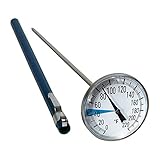
- PRACTICAL SOLUTION - While other Soil Thermometers can’t tell the correct temperature, fogs up, and get broken easily, our soil thermometer has high precision performance, high-visibility, and is designed to last
- REMARKABLE PLANTING RESULTS - For both, Indoor & Outdoor potting and gardening. Your plants will be healthy because now you can easily monitor the temperature in compost heaps and soil
- HIGH QUALITY DESIGN - Rugged stainless steel components, 1.5” glass-covered dial display, 5’’ long stem is more accurate and easier to read than digital garden thermometers.
- TIME-SAVING & COST EFFECTIVE! - Do you have problems finding out when is the best time to start planting your seedlings and young plants? We did too, this is why we’ve created this premium compost and soil thermometer. Not only it saves you a lot of money, no more fragile and slow growing plants, it also saves your time. Add this great tool to your garden supply list
- WE STAND FOR HIGH QUALITY AND PROVIDE 100% SATISFACTION GUARANTEE - If at any point you are not satisfied with any of our products, simply write us a message and we will refund your purchase or send you a replacement within 24 hours.
Frequently Asked Questions
When should I apply pre-emergent?
Apply before the target weed germinates. For spring crabgrass, use local soil-temperature guidance and the product label; for fall applications, time treatment before fall-germinating winter annuals. Dates vary by region and year.
What soil temperature should I apply pre-emergent?
There is no single universal cutoff in the cited extension guidance. Iowa State identifies 55°F for crabgrass germination, Maryland Extension uses 53–55°F sustained for five days, and SDSU associates emergence with average daily soil temperatures above 60°F. Follow the local method and distinguish its measurement from other sources’ readings.
When should I put down crabgrass preventer?
Put it down before crabgrass germinates, guided by local soil temperatures and the label. Examples include around mid-April in Iowa, March 1–20 in North Georgia, and April as SDSU’s normal turf application window, earlier in warmer years. These are regional examples, not nationwide dates.
Free tools Windows power users keep installed
One-click scans. No signup required.
When should I apply fall pre-emergent?
Apply before fall-germinating winter annuals emerge. North Georgia guidance gives September 1–15 as an example; Oklahoma State’s September 15 target is a planning guide, not an exact deadline. Local temperature, moisture, shade, irrigation, turf density, and weed species matter.
Do I need to water in pre-emergent herbicide?
Some products require watering after application, but directions vary. Minnesota Extension advises watering in pre-emergents, and Maryland Extension says to water granular applications according to the label. Follow the specific product’s current directions rather than assuming all formulations need the same amount or timing.
Can I apply pre-emergent if I plan to reseed or resod?
Check the label before applying. Many pre-emergents can inhibit desirable grass seed, and Minnesota Extension cautions against use on weak or recently seeded turf. UGA advises avoiding pre-emergent while planning to reseed or resod until the lawn is established. The applicable interval depends on the product.
The Bottom Line
Time pre-emergent for the target weed—not a universal date. For crabgrass, track the local soil-temperature trend and use the threshold method your regional extension source specifies; for fall weeds, account for local moisture and site conditions. Before applying, verify the current label for target weed, turf, rate, watering, repeat limits, and reseeding restrictions.
Recommended Free Tools
Quick Recap
Product prices and availability are accurate as of the date/time indicated and are subject to change. Any price and availability information displayed on Amazon at the time of purchase will apply.