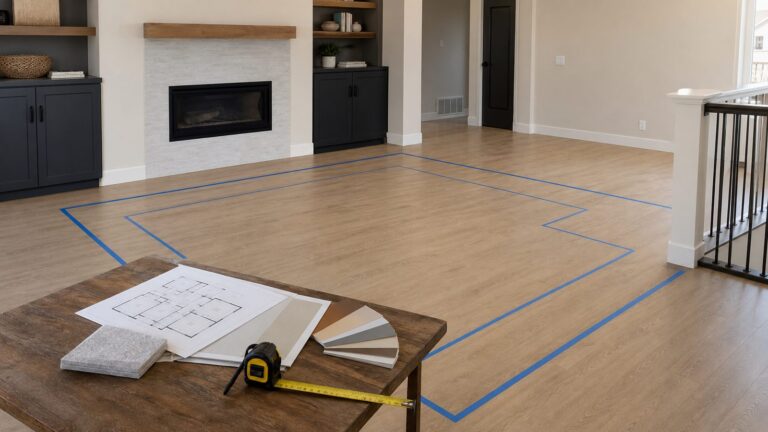
Budget from the full written specification and contract—not the advertised base price. Ask the builder to identify what is included, excluded, priced as an allowance, or treated as an extra. Then account for transaction costs, site conditions, finishes, upgrades, inspections, payment timing, recurring charges, and a contingency. The exact taxes, fees, contract protections, and building rules depend on where you are buying.
Start with the complete cost, not the advertised price
A headline price is only meaningful when you know what it covers. Two new-build offers can look comparable while including different specifications, site assumptions, finishes, or allowances. Your working budget should reflect the total expected cost of getting the home to the condition you want, plus a separate reserve for costs that remain uncertain.
As an Amazon Associate I earn from qualifying purchases.
Ask each builder for a written standard specification and a detailed breakdown of the offer. YourHome, the Australian Government’s off-the-plan buyer guide, advises buyers to budget for the total amount they want to spend, including sustainability features and contingency. Its guidance is useful for framing the question, but contract terms and cost categories need to be checked against your location.
Recommended Free Tools
In practical terms, distinguish three numbers: the advertised or quoted price, the total expected spend after adding known exclusions and choices, and the contingency you will keep outside committed spending. This prevents a provisional allowance or an estimated extra from being mistaken for money already set aside. It also makes it easier to see whether two offers really differ in price or simply include different things.
#1 Best Overall

- Valued Carpenter Pencil Set: You will get 2 pcs solid carpenter pencils with 26 piece 2.8 mm refills, 1 replaceable sharpener, 1 plastic storage box.The complete carpenter pencils combination allows you to finish your work faster and more easily
- Deep Hole Marker Pencil: The deep-hole construction pencils adopts 45mm elongated tip design, which is more convenient to mark in the small hole or in other tight areas that other carpenter markers cannot reach
- Carpenter Pencils with Sharpener: The sharpener is screwed into the top of the work pencil, which won't get lost either. Built-in pencil sharpener that keep the lead with pointed and smooth to Improves line of sight in fine work
- Stronger Solid Lead: This work pencil is matched with a 2.8 mm thick lead , which is much thicker and stronger during the drawing process of construction work, it will not break or damage easily
- Marks on Various Surfaces: 3 colors solid construction pencil can marks on various surfaces,such as metal, plastic, wood, paper etc. Ideals for woodworkers, contractors, craftsmen, builders, merchants and masons
Build a line-by-line worksheet
Use one row for every cost, and record its amount or basis, whether it is included, who is responsible for it, when it is due, and what could change it.
| Budget line | What to establish | When it may be payable |
|---|---|---|
| Purchase and transaction costs | Applicable taxes, legal or conveyancing fees, lender and mortgage fees, searches, registration, and reservation payments | Reservation, loan approval, contract, or closing, depending on the transaction |
| Base-price inclusions and exclusions | Fixtures, fittings, appliances, finishes, plans, and specifications included in the quoted price | Some are covered by the contract price; buyer-supplied items may be purchased separately |
| Site and ground work | Excavation, drainage, retaining walls, footing requirements, fencing, utility connections, and any site allowances | May be priced up front, included as an allowance, or arise as work proceeds, as the contract provides |
| Finishing work | Landscaping, driveway, fencing, and other work needed to complete the property to your intended standard | During construction or after handover if excluded |
| Upgrades and changes | Material, fixture, layout, window, energy-feature, and appliance choices, including the process for approving variations | At the selection deadline or when a variation is approved |
| Inspection and snagging | Whether an independent inspection or snagging survey is appropriate, allowed, and scheduled | During construction or before completion, subject to access and contract arrangements |
| Contingency | A reserve outside committed spending for risks not fully resolved in the contract | Held back and used only if needed |
| Ongoing ownership costs | Any estate or facility charges and other recurring charges disclosed for the property | According to the relevant agreement or billing schedule |
For each row, note the source of the figure: a fixed contract amount, written builder quote, allowance, local professional estimate, or your own provisional estimate. Mark items that still need confirmation rather than silently treating them as zero. Add a column for the document or person who can resolve the question, such as the specification, payment schedule, lender, conveyancer, or builder. Update the worksheet when a written variation or other contract document changes the scope.
Which extra costs should you check?
Transaction costs and deposits
Allow for costs associated with buying and financing the property, not just construction. Depending on the jurisdiction and the transaction, these can include taxes, legal or conveyancing fees, mortgage and lender fees, searches, land registration, and reservation or deposit payments. For England and Wales, GOV.UK lists taxes, surveys, solicitor’s fees, mortgage fees, search fees, and land registration fees among home-buying costs. That list is specific to its jurisdiction; it is not a fee schedule for buyers elsewhere.
For a new build, check whether a reservation fee is required, whether it is credited toward the purchase, and the conditions under which it is refundable. Ask whether the development has estate or facility charges, how they are described in the contract, and whether they recur.
Do not assume that a fee with a familiar name works the same way in every location. The sources reviewed cover Australia, England and Wales, and Alberta, Canada, and they do not create one combined fee schedule. Confirm locally which taxes and transaction charges apply, when each is due, and whether any reservation or deposit payment is refundable under the actual written terms. If you are comparing homes in different jurisdictions, keep the local cost lists separate.
Inclusions, exclusions, and allowances
Get the builder’s written standard specification and compare it against the home you expect to receive. Confirm the exact models or grades of fixtures, fittings, appliances, and finishes where those details matter to your decision. Ask which items are upgrades, which you must supply yourself, and whether any quoted amount is an allowance rather than a fixed cost.
Alberta’s new-home buyer guidance recommends understanding the breakdown of the total cost and says the contract should describe extras such as upgrades and appliances. The important practical point is to connect each promised item to the contract documents: a sales conversation or display home alone may not establish what is included in your purchase.
Windows Errors? Fix Them Before They Spread
Repair common Windows errors and clear accumulated junk for a smoother, more stable PC - no reinstall needed.Free scan · no reinstallCrashes, No Sound, or Screen Glitches?
Random freezes, missing sound and display glitches usually trace back to one bad driver. Find and replace yours safely.Free scan · under a minuteFor each inclusion, establish whether the contract identifies a particular product, grade, or scope of work, or merely describes a general category. If the display home shows finishes or appliances that are not part of the standard offer, list them as either an optional upgrade or a buyer-supplied item and find out how that choice affects the price. A written specification gives you a basis for identifying those differences before you commit.
An allowance is not automatically the same as a fixed, final price. Ask what it covers, how the actual amount will be established, what happens if the selected item or required work costs more than allowed for, and whether any unused amount changes what you pay. Ask the builder to explain any provisional sums in the same way. The contract and local rules determine the actual effect, so record the answer against the specific clause or schedule rather than relying on a general label.
Site conditions and preliminary costs
Site conditions can affect what it costs to prepare the lot and build the home. YourHome’s Australian off-the-plan guidance lists plans, approvals, geotechnical and engineering certification, surveyor’s fees, insurance, bank and legal fees, and site allowances as costs to consider. Depending on the lot and contract, physical work may also include excavation, drainage, retaining walls, stronger footings, fencing, or other ground and finishing work.
Rank #2

- Ergonomically Designed: Work in tight areas with a compact design that gets into tough spots
- Compact and Lightweight: Both tools are designed to fit into difficult to reach spaces. The 1/4" impact driver has a length of 5.55 in. and weighs just 2.8 lbs, while the 1/2" drill/driver measures only 7.5 in. and weighs 3.6 lbs
- Both the DEWALT impact driver and electric drill driver feature integrated LED work lights with a convenient 20-second delay, ensuring enhanced visibility in dimly lit or challenging work areas
- One-Handed Loading - Keep one hand free with a 1/4 in. hex chuck that accepts 1 in. bit tips
- Power drill cordless with 1/2" single sleeve ratcheting chuck provides tight bit gripping strength, making bit changes faster and more secure
Ask what site assumptions the price is based on and which costs are fixed, included, or allowed for provisionally. If ground conditions or foundation requirements turn out differently from those assumptions, the contract should make clear how the added cost is assessed and who bears it.
The Tool Desk
Outbyte Driver Updater FREEScan for outdated or missing drivers - takes under a minuteDriver Scan →Outbyte PC Repair FREERepair Windows errors before they cause bigger problemsFix Now →Unknown ground or subsoil conditions are a particular reason to find out what remains uncertain. YourHome identifies subsoil or foundation issues as examples of risks for which a contingency may be needed. Ask whether the quoted site figure includes the relevant investigation or engineering work, whether a site allowance is being used, and what process applies if the actual work differs from the assumption. Do not presume that a site allowance caps your exposure unless the contract says so and the applicable law supports that reading.
Also ask whether the builder’s offer covers only construction on the lot or includes adjacent and connection work such as drainage and utilities. The precise division of responsibility depends on the lot, offer, and contract; the purpose of the question is to expose gaps before they become unplanned work after signing.
Finishes beyond the house itself
A new home may not arrive with every external feature you assume is part of a finished property. Landscaping and driveways are common items to verify explicitly; Victoria’s building regulator notes that landscaping may not be included with a new house. Also check fencing, drainage, retaining walls, and utility connections rather than inferring their inclusion from plans or marketing images.
Make a short list of what “ready to live in” means to you, then compare that list with the written scope. For example, if you expect a driveway or landscaping, ask whether it is included, what extent or specification is covered, and whether the work will be done before completion or left for you to arrange later. The point is not to assume every home excludes these items, but to avoid funding an unstated assumption from the base price.
Upgrades and changes
Choices made before or during construction can increase the price. Cost changes to materials, fixtures, layout, windows, energy features, appliances, and other options before authorizing them. YourHome advises obtaining the cost of adjustments in writing before signing and cautions that too many changes can raise the overall price.
Ask for the variation process, the deadline for making choices, and the method used to calculate each adjustment. Do not rely on a verbal estimate: record the scope, price effect, and any effect on timing in the builder’s written variation approval.
Before choosing an upgrade, check whether its cost is a clear addition to the contract, whether it replaces an item already included, and whether there are related changes to other selections or work. A written price is most useful when it states what is changing and lets you compare the revised scope with the original specification. Track all approved changes in the worksheet so that a string of individually small decisions does not disappear from view as the total rises.
Where a choice can still be made before signing, getting the adjustment costed and documented then can make the overall budget clearer. Once construction is under way, ask about approval deadlines and any timing effects before committing. The variation fee or deadline is not universal; these are contract-specific questions to resolve with the builder.
Do these 3 things before closing this tab:
1Repair Windows errors before they cause bigger problems2Scan for outdated or missing drivers - takes under a minute3Clear out junk files and repair common Windows errorsInspection and snagging
An independent inspection may help identify concerns while there is still an opportunity to raise them under the applicable contract process. YourHome suggests considering an independent building assessor during construction. GOV.UK defines snagging issues as defects or unfinished work in a new-build home and advises buyers to consider agreeing to a snagging survey after construction and before completion.
Rank #3

- 【Great Compatibility】This Katerk 1/4 inch hex shank bit holder is specifically designed for 1/4 inch hex shank drill bits. It's compatible with most 1/4 fast hex handles, hex sockets, various electric screwdrivers, and handheld screwdrivers. The bit holder makes it a valuable addition for any handyman.
- 【Secure and Safe】Built with a secure backup nut design, each drill bit holder securely locks onto your bits, ensuring they stay firmly in place. Additionally, our bit holder incorporates a high-quality steel ball rolling design that holds up to several kilograms of weight, ensuring your various drill bits don't fall off.
- 【Easy One-Handed Operation】The bit holder for impact driver allows you to change bits single-handedly, simplifying your workflow. Its multi-color design further allows for quick identification of the drill bit you need.
- 【Compact and Convenient】Thanks to its compact size, this 1/4 inch bit holder is easy to carry around. The bit holder allows for easy attachment to various tools, making this a convenient addition to your construction accessories. The Katerk bit holder is cast from high-quality alloy material, promising a long product lifespan. Despite its rugged strength, the bit holder remains lightweight, making it portable.
- 【Cool Christmas Gift For Men Stocking Stuffers】 This screwdriver bit holder, driver bit holder, impact bit holder, can be given as a gift to your loved one, especially for anyone involved in construction or electrical work. It's a must-have for stocking stuffers for men and women, tools gifts for dad, tech gadgets for men, gifts for dad, gifts for him, gifts for husband, gifts for boyfriend, cool gadgets for men, and cool gifts for dad.
Before budgeting for an inspection, ask whether the builder allows access, at what stages, and how defects must be reported. The cited guidance does not establish a standard inspection fee; get a local quote if you decide an inspection is appropriate.
Clarify the timetable as well as the price: when an assessor can visit, whether access needs to be arranged in advance, and when you must tell the builder about defects or unfinished work. A snagging survey after construction but before completion may be worth discussing, but do not assume that a survey replaces the contract’s process for reporting or resolving issues. Ask an appropriate local professional how the inspection fits the purchase and the applicable terms.
Set a contingency that reflects what is still uncertain
Keep contingency separate from the amount already committed in the purchase contract. YourHome describes contingency sums or allowances as one way to manage unknown risks, including issues such as subsoil or foundations. Ask whether a quoted allowance is part of the contract price or a reserve for a possible extra, what it covers, and who pays if actual costs exceed it.
Victoria’s Building and Plumbing Commission gives a general rule of thumb of 10–20% of total cost for contingency; the source page does not state a publication year. Treat that as Victorian guidance, not a universal standard or a guaranteed amount that will cover every project. The buffer appropriate to your purchase depends on known site risks, what the contract includes, and how it allocates cost overruns. Do not count an allowance inside the contract as though it were also an unspent reserve.
Use the percentage only with its stated scope: the cited Victorian guidance frames it as a contingency against total cost, while offering no universal formula for every new-build purchase. If you use that reference point, distinguish the contingency from the contracted amount and avoid presenting it as a requirement elsewhere. A lower apparent risk on paper does not remove the need to understand what the builder’s allowances cover; conversely, a larger buffer does not substitute for clarifying ambiguous scope and responsibility.
Review the reserve when the scope changes. If you approve upgrades, add buyer-supplied items, or discover that a site item is excluded, update the expected total and the remaining reserve rather than leaving the original contingency figure untouched. If a risk is resolved or included in a fixed price, note that too. The objective is a transparent view of what is committed, what is expected, and what remains uncertain—not a single reassuring number.
Compare builder offers on the same scope
Do not choose between headline prices until you have checked that the offers cover the same home and site work. Use the same questions for every builder and record the answers in writing.
Free tools Windows power users keep installed
One-click scans. No signup required.
- Scope: Which plans, specifications, finishes, appliances, and site works are included?
- Allowances: Which items are allowances, provisional sums, or buyer choices, and how will the final cost be calculated?
- Overruns: Who pays for specified overruns, unexpected ground conditions, design changes, or escalation where the contract permits it?
- Variations: What is the approval process, and when do selection or change deadlines fall?
- Payments: What is due at reservation, contract, construction stages, and completion? When is a deposit refundable?
- Timing: What provisions address completion, delays, and the long-stop date?
- External work: Are landscaping, driveway, fencing, drainage, retaining walls, and utility connections included?
- Inspection: Is independent inspection permitted, and when must defects be reported?
YourHome recommends attaching the quote, approved plans, specifications, engineering details, and applicable schedules to the contract. Alberta guidance likewise emphasizes clear contract details and payment terms. Appropriate professionals can review the documents with you; the legal effect of any term depends on the jurisdiction and the contract.
A useful comparison is not simply “builder A costs less than builder B.” Compare total expected cost, scope and quality of inclusions, allowances and allocation of overruns, variation terms, payment schedule and deposit conditions, and delay and inspection provisions. If one builder includes a driveway and another excludes it, or their site assumptions differ, the headline totals do not describe the same purchase. Put the differences side by side and price any missing work as far as you can before deciding.
Ask each builder to identify the documents that define the offer and ensure the quote, approved plans, specifications, engineering details, and relevant schedules are attached to or incorporated into the contract as appropriate. Keep copies of written clarifications and approved variations. Because legal effect varies by jurisdiction, have the contract reviewed by an appropriate local professional rather than treating a checklist as a substitute for legal advice.
Rank #4

- Long Nib and Deep Hole Marker: Our mechanical carpenter pencil with 45mm nib is designed for easy marking of deep holes or narrow areas. These construction pencils are the great choice for woodworking tools, construction tools, carpenter tools, contractor tools, wood carpentry tools and architect tools
- Extra Refills in 2 Colors for Versatile Marking: The construction mechanical pencil comes with 12 extra 2.8mm refills, including 6 red and 6 black refills. The black refill is suitable for light surfaces, while the red wax is perfect for dark surfaces. Our carpenter mechanical pencil makes sure that you'll have an ample supply for extended use
- Built-in Sharpener: Our construction pencil comes with a built-in sharpener to ensure the mechanical pencil tip is always sharp and ready for use. Never buy an extra pencil sharpener again. A great tool for any woodworker pencil, contractor pencils. The refill can easily be extended or retracted with a simple click of the pencils mechanical, allowing you to work more efficiently and accurately
- Portable Clip Design: Our deep hole construction pencil features a portable clip design, easy to carry and attach to your pocket or tool box, so that you can keep the carpenter pencils mechanical close at hand, making it a convenient tool to have on the go. Great gifts choice for carpenters
- Stronger Pencil Lead: The black refills are made of lead, sturdy and smooth. The red refills are made of wax, clear and light. These marking pencils are much thicker and stronger than normal pencils during the marking process of construction work, suitable for various surfaces, such as glasses, metal, boards, floors, walls, furniture, etc. The written marks can be easily wiped with a wet paper towel when needed
Map costs to the payment schedule
A budget can be adequate in total and still fail if money is due before it is available. Make a dated cash-flow plan showing reservation and deposit payments, construction-stage advances, completion funds, and any separate charges for upgrades or buyer-supplied items. For each payment, record the amount or calculation, due date or trigger, and the contract clause or schedule that establishes it.
Quick wins for a faster PC:
Fix the driver behind crashes, sound loss and screen glitchesFind Drivers →Clear out junk files and repair common Windows errorsFree Scan →Also account for the possibility that completion timing changes. GOV.UK notes that a mortgage offer may need refreshing if completion moves beyond its limited validity period. This is England-and-Wales guidance, not a universal lending rule; ask your lender how a delay would affect your particular offer and financing timeline.
Separate one-time purchase and construction expenses from recurring ownership costs. If the development has an estate facility charge or another ongoing fee, include it in your household affordability calculation rather than treating it as a one-off closing cost.
Check the timing of each payment against the transaction documents and your financing plan. Alberta guidance calls attention to payment stages and closing amounts; the actual schedule and obligations depend on the local contract. Ask what is due at reservation, contract, construction milestones, and completion, and what conditions govern any refund of a reservation payment or deposit. Do not assume a payment is refundable or credited toward the purchase without confirming the written terms.
Delays matter because the schedule can move even when the total quoted price does not. Confirm which dates are estimates, what the contract says about completion and long-stop provisions, and whether a change could affect loan timing or other cash available to you. In England and Wales, GOV.UK says a mortgage offer may need refreshing if completion moves beyond its limited validity period; elsewhere, ask the lender directly how a delay affects your offer. This is a financing-timing check, not a claim that every lender follows the same rule.
What’s actually slowing this PC down?
Pick the symptom - the matching free tool is one click away.
Localize the numbers and contract checks
Taxes, closing fees, consumer protections, inspection access, builder-contract terms, and lending rules differ by jurisdiction. The official guidance cited here illustrates Australian, England-and-Wales, and Alberta cost considerations; its fee lists and legal context should not be combined into a single universal schedule. GOV.UK reports that buying a home takes about five months on average, but that is general home-buying context for England and Wales—not a new-build construction duration or a budget amount.
Before treating any figure or protection as applicable, confirm it with the relevant local authority, lender, conveyancer or lawyer, and the written contract. No universal total for new-build extras or standard inspection price is established by the guidance cited here.
Use jurisdiction-specific advice for the items that can materially change your budget: taxes and registration, legal or conveyancing costs, lender fees, deposit rules, inspection arrangements, and the treatment of allowances and variations. The official sources provide examples, not transferable legal rules. An Australian site-cost consideration, an England-and-Wales purchase fee, and an Alberta payment-term reminder should not be merged into a supposed standard package of fees or rights.
Frequently asked questions
What happens if you go over or under budget during construction?
First identify what caused the change and whether the contract treats it as an allowance, an approved variation, or an unexpected cost. Ask who pays if an allowance is exceeded, how the amount is calculated, and whether a written approval or contract process applies. If the expected cost rises, update your worksheet and contingency before approving further changes. If actual costs come in below an allowance, ask how the contract handles the difference rather than assuming it will automatically be refunded or credited. The answer depends on the written terms and local rules.
What extra costs should I expect when buying a new-build home?
There is no universal extra-cost total in the guidance reviewed. Check transaction expenses such as applicable taxes, legal or conveyancing and lender fees, searches, registration, and reservation payments; then check site work, finishes such as landscaping or a driveway, upgrades, inspection or snagging, recurring estate or facility charges, and any contingency for unresolved risks. Which categories apply, and when they are due, depend on the property, contract, and jurisdiction.
Best Value

- Milwaukee Ink all Fine Point Marker, Black, 4 Per Pack
- 4 per pack Features Clog Resistant Marker Tip Writes through Dusty, Wet and Oily Surfaces Durable Marker Tip for Writing on Concrete, OSB and Rough Surfaces
- Clog resistant tip writes on dusty, wet and oily surfaces and is optimized for rough surfaces such as OSB, cinderblock and concrete
- Hard hat clip- attaches for easy access
- Quick dry time with reduced smearing and marking
Are landscaping and the driveway included in a new-build price?
Not necessarily. Victoria’s building regulator gives landscaping as an example of something a new house may not include. Confirm landscaping and the driveway explicitly in the written specification, along with fencing, drainage, retaining walls, and utility connections. Do not infer that external work is included from the advertised price, plans, or marketing images.
How much contingency should I budget?
The Victorian Building and Plumbing Commission gives a 10–20% of total cost rule of thumb, but it is Victorian guidance, not a universal standard. Your reserve should reflect known site risks, the contract’s inclusions and allowances, and who bears any overrun. Keep contingency separate from the contract price and do not count a contract allowance as though it were unused cash.
Should I pay for an independent inspection or snagging survey?
Consider whether an independent building assessor during construction or a snagging survey after construction and before completion fits your purchase and contract timetable. GOV.UK describes snagging issues as defects or unfinished work, while YourHome advises considering an independent assessor. Ask about access and defect-reporting deadlines, and obtain a local fee quote; the sources do not establish a standard inspection price.
How do I compare two builders’ prices fairly?
Compare the same plans and specifications, quality and scope of inclusions, site work, allowances and overrun responsibility, variation terms, payment schedule, deposit conditions, delay provisions, and inspection access. A lower headline price may simply exclude work or rely on different site assumptions. Have the written quote, plans, specifications, and relevant schedules reviewed with the contract by an appropriate local professional.
Can a construction delay affect my financing?
It can affect financing timing, but the rule depends on your lender and location. GOV.UK says a mortgage offer in England and Wales may need refreshing if completion moves beyond its limited validity period. Ask your lender how a change to the expected completion date affects your particular offer; do not assume the England-and-Wales guidance applies everywhere.
Frequently Asked Questions
What happens if you go over or under budget during construction?
Find out whether the change is an allowance, an approved variation, or an unexpected cost, and check who is responsible under the contract. Update your worksheet and contingency before approving further changes. If costs are below an allowance, ask how the contract treats the difference rather than assuming it is refunded or credited.
What extra costs should I expect when buying a new-build home?
Check applicable taxes, legal or conveyancing and lender fees, searches, registration, and reservation payments, as well as site work, finishes, upgrades, inspection or snagging, recurring estate or facility charges, and contingency. The applicable costs and payment timing depend on the property, contract, and jurisdiction.
Quick wins for a faster PC:
Scan for outdated or missing drivers - takes under a minuteDriver Scan →Repair Windows errors before they cause bigger problemsFix Now →Are landscaping and the driveway included in a new-build price?
Not necessarily. Victoria’s building regulator notes that landscaping may not be included with a new house. Confirm landscaping, driveways, fencing, drainage, retaining walls, and utility connections explicitly in the written specification.
How much contingency should I budget?
Victoria’s Building and Plumbing Commission gives a 10–20% of total cost rule of thumb, but this is Victorian guidance, not a universal standard. Base your reserve on known site risks, contract inclusions and allowances, and who bears overruns. Keep it separate from the contract price.
Should I pay for an independent inspection or snagging survey?
Consider whether an independent building assessor during construction or a snagging survey after construction and before completion fits your contract timetable. Ask about access and defect-reporting deadlines, and obtain a local quote; the reviewed sources do not establish a standard fee.
How do I compare two builders’ prices fairly?
Compare plans, specifications, inclusions, site work, allowances and overrun responsibility, variation terms, payment schedules, deposit conditions, delay provisions, and inspection access. Headline prices are not comparable when scope or site assumptions differ.
Outdated Drivers Are Slowing You Down
One free scan finds every outdated or missing driver and matches the right update for your exact hardware.Free scan · exact hardware matchWindows Errors? Fix Them Before They Spread
Repair common Windows errors and clear accumulated junk for a smoother, more stable PC - no reinstall needed.Free scan · no reinstallCan a construction delay affect my financing?
It may affect financing timing, depending on the lender and jurisdiction. GOV.UK says an England-and-Wales mortgage offer may need refreshing if completion moves beyond its limited validity period. Ask your lender how a delay affects your particular offer.
The Bottom Line
Build your budget from the written specification and contract, not the advertised base price. Separate fixed costs, exclusions, allowances, approved upgrades, recurring charges, and contingency; compare builders on the same scope; and verify local fees, payment terms, inspection rules, and financing timing before committing.
Quick Recap
Product prices and availability are accurate as of the date/time indicated and are subject to change. Any price and availability information displayed on Amazon at the time of purchase will apply.