Do these 3 things before closing this tab:
1Scan for outdated or missing drivers - takes under a minute2Repair Windows errors before they cause bigger problems3Fix the driver behind crashes, sound loss and screen glitchesThe most efficient-looking house is not necessarily the most efficient one. Before you make an offer, verify how the home was built, how its equipment was sized and maintained, and what it has actually cost to operate. Treat labels, seller statements, utility bills and a quick viewing as evidence to investigate—not as proof by themselves.
Start with a documented performance trail
Ask the seller or builder for records before you compare finishes or appliances. A useful file may include an energy certification, construction verification documents, insulation details, window labels, HVAC installation and maintenance records, ductwork information, and utility bills. Missing paperwork does not prove a house is inefficient, but it increases the value of an independent assessment and makes price comparisons less certain.
As an Amazon Associate I earn from qualifying purchases.
What an ENERGY STAR certified home tells you
For new construction, ask whether the home is ENERGY STAR certified and request the certification or verification records. The U.S. Environmental Protection Agency’s ENERGY STAR program says certified homes are independently verified against requirements covering insulation, windows, air sealing and HVAC systems, and exceed minimum energy-code requirements by at least 10%. That is a meaningful construction-quality signal because it reflects checks beyond a seller’s description.
Certification is not a condition report for every home component. In an existing house, a certificate may describe how the home performed or was built at an earlier point; it does not establish that insulation remains dry and intact, ducts are still sealed, equipment has been maintained, or windows have not failed. Confirm the certificate’s address, date, scope and verifying organization, then inspect the current property.
#1 Best Overall

- Save up to 23% every year on heating and cooling costs, adjusts to your set schedule to save energy when you’re gone and optimize comfort when you’re home. Compared to a hold of 72
- Compatible with 85% of systems, check your system’s compatibility with our online ecobee Compatibility Checker on the ecobee support page
- Change your temperature by easily tapping the color touchscreen or using the ecobee app. Plus, free software upgrades ensure you get the best out of your Smart Thermostat Essential, for years to come
- Automatically adjusts to your set schedule to save energy when you’re gone and optimize comfort when you’re home. Keep track of your energy consumption when you're on the go on the ecobee app
- Easy DIY install. No C Wire, no problem. Get the ecobee Power Extender Kit (PEK) for homes without a C-Wire and keep your walls looking nice with our trim kit – both sold separately
Separate ratings from operating evidence
If a seller provides an energy score or rating, record the issuer, date, method, scale and whether it is a modeled estimate or a measured result. There is no single universally verified score for comparing every existing U.S. home. Two numbers on different scales—or produced with different assumptions—are not directly comparable. Use the rating as one input alongside the enclosure, mechanical systems and bills.
Inspect the building envelope before the equipment
The envelope—roof, attic, walls, foundation, windows, doors and the air barrier—controls how much heating and cooling the house needs. A high-efficiency furnace or heat pump cannot compensate for large uncontrolled heat flow and air leakage.
Attic and roof assembly
With permission and appropriate safety precautions, look in an accessible attic for insulation that is continuous, dry and evenly installed. It should not have obvious gaps, voids, wind-washed areas or compression. Check around recessed lights, plumbing and wiring penetrations, chimneys, duct boots and the attic hatch. The insulation should generally reach above the tops of the ceiling joists rather than stopping below them, but depth alone is not a complete assessment.
ENERGY STAR emphasizes that insulation installation quality matters as much as adding more material: “It’s not just the amount of insulation; it’s the quality of installation that makes all the difference.” Ask for the specified R-value and installation details. R-value measures resistance to heat flow; it is not a direct measure of air tightness, moisture safety or workmanship. Do not disturb insulation or enter a hazardous attic during a viewing. A professional can check concealed areas with the right equipment.
Air sealing and the continuous thermal boundary
Look for a continuous line separating conditioned space from the attic, crawlspace, garage and outdoors. Common leakage paths include attic hatches, top plates, plumbing and electrical penetrations, duct openings, rim joists, recessed fixtures, chimney chases and gaps around windows and doors. Weatherstripping that is cracked or compressed, daylight at a threshold, or drafts at outlets on exterior walls can justify closer testing.
Rank #2

- An Alexa thermostat - Amazon Smart Thermostat is an easy way to switch from a traditional thermostats for homes and help reduce energy usage.
- Create comfort zones throughout your home by connecting to select Alexa devices to automatically adjust heating and cooling based on temperature readings or presence detection.
- Save money and energy - After purchase, Amazon will send you an email with details about home thermostat rebates that may be available from energy providers in your area.
- Save energy - According to EPA estimates, ENERGY STAR certified thermostats save an average of $90 on yearly energy bills.
- Programmable thermostat and automatic control - Create your own home, away and sleep schedules, or have Alexa automatically control the temperature with Alexa+ advanced features.
Insulation slows heat flow; an air barrier stops moving air from bypassing it. A house can have thick insulation with poor performance if air moves around or through the material. Ask whether a blower-door test was performed, what result was recorded, and when. A test report is more useful than a statement that the house is “tight,” but have an assessor explain what the result means for this home and climate.
Walls, floors and foundations
During the inspection, look for signs that insulation or air sealing may be incomplete: cold or hot rooms, persistent drafts, stained insulation, mold-like odors, frost or condensation, unsealed plumbing penetrations, and exposed foundation or rim-joist areas. In a crawlspace or basement, note whether ducts, pipes and floor penetrations are sealed and whether moisture control is adequate. Energy efficiency and durability are linked; wet or displaced insulation can lose performance and signal a larger building problem.
What’s actually slowing this PC down?
Pick the symptom - the matching free tool is one click away.
Doors and other penetrations
Operate exterior doors and check that weatherstripping contacts the frame evenly. Look at garage-to-house doors, attic access panels and any wall opening for utilities. A single loose hatch or unsealed chase can undermine otherwise sound insulation. These observations identify questions for the inspector; they do not replace an air-leakage test.
Compare windows using the numbers on their labels
“Energy-efficient windows” is not a sufficient specification. Ask for each window’s product label or NFRC information and record its U-factor and solar heat-gain coefficient (SHGC). U-factor describes insulating performance; lower values generally indicate less heat flow through the window. SHGC describes how much solar heat the glazing admits. The useful combination depends on climate, orientation, shading and the home’s heating and cooling needs.
Match performance to climate and exposure
Use the home’s climate zone and the current ENERGY STAR criteria for that zone when evaluating the numbers. A south- or west-facing window with strong afternoon sun may need a different SHGC strategy from a shaded north-facing window. A specification that is advantageous in a predominantly heating climate can create unwanted cooling load in a hot climate, and vice versa. Do not rank windows by one national “best” value.
Rank #3

- PRIVACY PROTECTION*: Sensi won’t sell your personal information to third parties
- EASY DIY INSTALLATION: Use the built-in level and step-by-step app instructions for a quick installation. Works with HVAC equipment found in most homes. Common wire (c-wire) is not required in most applications
- SAVE ABOUT 23% ON HVAC ENERGY*: The ENERGY STAR-certified Sensi smart thermostat can help you save energy with features like flexible scheduling, remote access and usage reports
- SIMPLE CONFIGURATION: Looks and feels like a thermostat. Has buttons and fits the same space as a traditional thermostat so you don’t have to patch and paint your walls
- SMART MAINTENANCE: Sensi can help monitor the performance and efficiency of your HVAC system by delivering valuable usage reports, alerts about your equipment, and maintenance reminders like filter replacement
Check condition, not just specification
Inspect frames, seals, glazing and operation. Look for failed insulating glass (fogging between panes), water intrusion, damaged weatherstripping, binding sashes and gaps at trim. Ask when the windows were installed and whether replacements were installed with proper flashing and air sealing. A good label cannot correct a poor installation, and a sound older window may still perform acceptably when its condition and the local climate are considered.
Quick wins for a faster PC:
Repair Windows errors before they cause bigger problemsFix Now →Fix the driver behind crashes, sound loss and screen glitchesFind Drivers →Clear out junk files and repair common Windows errorsFree Scan →Evaluate heating, cooling and distribution as one system
Record the equipment type, fuel, model and serial numbers, approximate age, maintenance history and location. Note whether the home uses a furnace, boiler, air-source heat pump, ground-source system, ductless units, electric resistance or a combination. Ask for commissioning documents, service invoices and any history of refrigerant, heat-exchanger or condensate problems.
Confirm that capacity matches the house
Ask whether the installer performed a room-by-room load calculation, such as ACCA Manual J, and request the result. Equipment that is too large can cycle frequently, control humidity poorly and create uneven temperatures; equipment that is too small may run continuously without meeting the load. ENERGY STAR states: “Installing properly sized HVAC equipment for your home is essential to getting the best performance and comfort.” A model number alone cannot show whether the capacity fits the current envelope.
Inspect ducts and airflow
Find out where ducts run and whether they pass through an unconditioned attic, crawlspace, basement or garage. Ask how joints were sealed, whether ducts are insulated where required, and whether balancing or airflow testing was completed. Look for crushed flexible duct, disconnected runs, missing insulation and supply or return grilles blocked by furniture or filters.
Drafts and high bills are not automatically evidence of defective equipment. ENERGY STAR notes that major air leaks in the house and duct system can be the real source of problems rather than the HVAC equipment. A duct-leakage or airflow test can distinguish a distribution problem from a capacity problem and prevent an expensive replacement that leaves the underlying issue untouched.
Rank #4

- COMMON WIRE REQUIREMENTS: Designed to work without a C-wire in most homes, but for some systems, including heating only, cooling only, and heat pump systems, you’ll need a C-wire or other compatible power accessory
- EASY DIY INSTALLATION: Do it yourself fast with a built-in level and simple step-by-step instructions. Works with the HVAC equipment found in most homes
- SAVE ABOUT 23% ON HVAC ENERGY: ENERGY STAR-certified and packed with features that help you save money, including flexible scheduling, geofencing, remote access and usage reports
- PRIVACY PROTECTION: Sensi won’t sell your personal information to third parties or leverage your thermostat activity data for targeting or advertising purposes
- CONTROL FROM ANYWHERE: The top-rated mobile app for Android and iOS devices makes it easy to control your comfort from a smartphone or tablet
Check comfort and controls
Ask occupants which rooms are uncomfortable, how long the system runs during extreme weather, and whether humidity is difficult to control. Check thermostat location, zoning controls, filter size and replacement practice. A smart thermostat may help some households, but it is not proof that the envelope or HVAC system is efficient. ENERGY STAR estimates approximately $100 in annual savings for an eligible household with high heating and cooling bills or a home unoccupied much of the day; that is a conditional estimate, not a guaranteed saving or a rating of the property.
Use utility bills without mistaking them for a rating
Request at least 12 months of electric, gas, oil or delivered-fuel records when available. Compare bills for similar billing periods and identify which fuels serve space heating, water heating, cooking and other loads. Record the billing dates, consumption units, rates and fixed charges rather than comparing dollar totals alone.
Ask what changed during the billing period
Occupancy, thermostat settings, work-from-home schedules, supplemental heaters, appliance use, weather, fuel prices and utility rate structures can materially change a bill. Ask how many people lived there, whether the home was vacant, and whether any equipment or insulation was replaced. A low bill from a mostly unoccupied house is not evidence of low demand under normal use.
Compare cautiously across properties
There is no single reliable normalization formula established for arbitrary homes in this guide’s evidence. Weather-normalized data can be useful when prepared by a qualified professional, but it still depends on accurate floor area, occupancy and equipment information. For an apples-to-apples comparison that affects your offer, ask a local energy professional to analyze the records and explain the assumptions.
Outdated Drivers Are Slowing You Down
One free scan finds every outdated or missing driver and matches the right update for your exact hardware.Free scan · exact hardware matchWindows Errors? Fix Them Before They Spread
Repair common Windows errors and clear accumulated junk for a smoother, more stable PC - no reinstall needed.Free scan · no reinstallKnow what a viewing can—and cannot—prove
| Evidence you can collect | What it can indicate | What it cannot establish alone |
|---|---|---|
| Certification or rating document | That a named program or assessor evaluated specified criteria at a stated time | Current condition of every component or comparable performance on another rating scale |
| Attic and basement observations | Visible gaps, damaged insulation, moisture or unsealed penetrations | Hidden insulation levels, whole-house leakage or safety of inaccessible areas |
| Window U-factor and SHGC | Published insulating and solar-gain characteristics for the labeled product | Correct climate fit, installation quality or present seal condition |
| HVAC model, age and service history | Equipment type, approximate remaining-life context and maintenance record | Correct sizing, duct performance or actual seasonal efficiency |
| Utility bills | Past consumption and cost under stated household and weather conditions | Future bills, normalized performance or efficiency independent of occupant behavior |
Bring in the right professional when evidence is hidden
A standard home inspection is essential, but it may not measure envelope leakage, duct leakage, HVAC sizing or combustion safety in the depth needed for an energy comparison. Hire a qualified home-energy assessor or rater when records are missing, rooms are persistently uncomfortable, insulation is inaccessible, bills appear unusual, or a major retrofit is likely.
Best Value
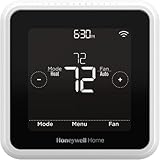
- High use of the scheduling feature of the T5 thermostat saved customers between 8 and 16% on heating and cooling bills. Dollar savings range based on nationwide average annual single-family detached home's heat and cooling bills; actual savings varies based on consumption.
- Save Energy and Get Rewarded. Check with your energy provider about available energy savings rebates to save on your purchase. Plus, eligible customers can enroll in their local Utility's "DEMAND RESPONSE PROGRAM" which can reward you for allowing the utility to slightly adjust your AC or furnace temperature settings when there is high energy demand.
- 7-Day Flexible Scheduling or Location Based Temperature Control. It’s your choice. 7-day scheduling programs your thermostat. Geofence technology helps make you comfortable by using your smartphone’s location to know when you’re away and when you return.
- Auto Home and Away Mode. Enjoy ideal temperatures at home, then save when away.
- ENERGY STAR certified. Help save energy, track your heating and cooling with monthly energy reports and get personalized tips on reducing energy use.
Request specific tests and deliverables
- Blower-door testing with the measured result and test conditions.
- Thermal-imaging or other investigation of insulation gaps, interpreted by a trained professional.
- Duct leakage, airflow and temperature-difference measurements where ducts are a concern.
- Review of HVAC capacity against a current load calculation.
- Inspection of attic, crawlspace, rim-joist and foundation interfaces.
- A written list separating urgent safety issues, efficiency improvements and optional upgrades.
Address combustion safety after air sealing
If fuel-burning equipment is located in an attic or another enclosed area, ask for combustion-safety testing after air-sealing work. ENERGY STAR specifically advises this check after air sealing when fuel-burning equipment is in the attic. The purpose is to verify that tighter construction has not created unsafe spillage or backdrafting conditions. This is a safety requirement for planned work, not a substitute for the normal property inspection.
Compare two homes with the same decision framework
Put both properties in one worksheet and document the source and date for every entry. Compare the following in order:
- Verification: certification or rating issuer, method, date and scope.
- Envelope: visible insulation quality, air-sealing evidence, moisture concerns and likely repair access.
- Windows: U-factor, SHGC, orientation, shading, condition and installation quality.
- HVAC: type, fuel, age, maintenance, load-calculation evidence, duct condition and comfort history.
- Operating history: bills, billing periods, fuels, occupancy and unusual usage.
- Uncertainty: inaccessible areas, missing records and the cost of professional testing.
Do not let a new-home certification automatically outrank a well-documented existing home with a sound envelope and tested systems. Conversely, do not treat attractive utility bills or a new heat pump as proof when the house has leakage, poor distribution or unusual occupancy. Price the verified repairs and the cost of resolving uncertainty, not an unverified efficiency claim.
Recommended Free Tools
Buyer’s pre-offer checklist
- Ask for certification, rating and verification records, with dates and addresses.
- Request 12 months of utility and delivered-fuel records, including consumption units.
- Record HVAC type, fuel, model, age, maintenance and any comfort complaints.
- Ask for the load-calculation method and evidence of duct sealing or airflow testing.
- Inspect accessible attic, crawlspace, basement, rim-joist, hatch and penetration areas.
- Photograph or transcribe window labels, including U-factor and SHGC.
- Look for moisture, condensation, failed glazing, drafts and uneven temperatures.
- Identify which observations require a qualified energy assessor rather than a visual inspection.
- Obtain local advice on current codes, utility programs and any incentives before relying on projected savings.
How to interpret the national ENERGY STAR figures
ENERGY STAR reported 190,000 certified homes and apartments in 2023, representing 12% of U.S. new homes that year. A current program page reports 2.7 million certified homes and apartments cumulatively. These figures describe program participation, not the performance of the particular property you are buying. Program requirements, counts, product criteria, incentives and local services can change, so verify current details for your location and construction year.
Quick Recap
Product prices and availability are accurate as of the date/time indicated and are subject to change. Any price and availability information displayed on Amazon at the time of purchase will apply.

