Some links on this page are affiliate links: if you buy through them we may earn a commission, at no extra cost to you.
During a power outage, start with safety, not troubleshooting: use battery lighting, keep the refrigerator and freezer closed, check vulnerable people and pets, protect essential medical equipment, and never run a generator indoors. Then confirm whether the outage is limited to your home, report it to the utility, and follow local emergency instructions.
This U.S.-focused guide separates the actions to take now from the preparations that make the next outage safer. A power failure can create carbon-monoxide, fire, food-safety, extreme-temperature, medication, medical-device, water, and communication risks—even when the outage initially seems minor.
As an Amazon Associate I earn from qualifying purchases.
Quick wins for a faster PC:
Repair Windows errors before they cause bigger problemsFix Now →Scan for outdated or missing drivers - takes under a minuteDriver Scan →Clear out junk files and repair common Windows errorsFree Scan →Immediate danger: If there is a fire, a burning smell, sparking, a downed line, flooding near electrical equipment, suspected carbon-monoxide exposure, severe heat illness, hypothermia, or a medical-device failure, move to a safe location and call 911 or your local emergency number. Do not touch downed wires or damaged electrical equipment.
What to do first during a power outage
- Check the situation from a safe location. Look outside for neighborhood outages, check your utility’s outage map or alert system if available, and ask a nearby neighbor whether their power is also out. If the outage appears limited to your home, look for obvious, safe-to-observe causes such as a tripped breaker. Do not open damaged electrical equipment, touch wet electrical components, investigate sparking, or approach downed lines. If there is damage, smoke, flooding, or a burning odor, call the utility or a qualified electrician.
- Switch to battery lighting. Use flashlights, headlamps, or a battery-powered lantern rather than candles. Keep spare batteries accessible, but do not mix old and new batteries or different battery types in one device. Put one light on a switch so the household knows when power returns.
- Conserve phone power. Turn on low-power mode, reduce screen brightness, close unnecessary apps, and use text messages when appropriate. Reserve battery capacity for emergency calls, utility updates, weather alerts, and communication with caregivers.
- Protect sensitive electronics. Unplug computers, televisions, network equipment, and other sensitive devices if the utility or equipment manufacturer advises doing so, particularly when storms or repeated voltage fluctuations are involved. Use only appropriate, properly rated surge protection; a surge protector is not a substitute for safe wiring, a backup system, or professional electrical repairs.
- Keep cold-storage doors closed. Do not repeatedly open the refrigerator or freezer to check food. Note the time the power failed, and use appliance thermometers if you have them.
- Check people, pets, and critical systems. Identify anyone who may be especially vulnerable to heat, cold, lack of water, refrigerated medication, or loss of powered medical equipment. Check pets and livestock as well. If the home depends on a well pump, sump pump, powered lift, electric heat, air conditioning, or another essential system, include it in the immediate plan.
- If you have a generator, stop before starting it. Verify its placement, fuel, cords, and intended loads first. The generator warning below is not optional: incorrect placement can cause fatal carbon-monoxide poisoning.
Generator and carbon-monoxide safety
The non-negotiable generator rule
Never operate a portable generator inside a home, garage, basement, crawlspace, shed, porch, carport, or any other enclosed or partially enclosed space. Opening a door or window does not make indoor operation safe. Current U.S. Consumer Product Safety Commission guidance says to operate a portable generator outdoors at least 20 feet from the house, with its exhaust directed away from the home and away from doors, windows, vents, and other openings.
Popular on Amazon

- 40% Smaller & Lighter Portable Charger: Powered by the industry’s first TinyCell high-density battery technology, this ultra-compact 10,000mAh portable charger power bank is 40% smaller and 36% lighter than conventional chargers. Whether you are an office user slipping a mini small portable battery into a purse for commuting, or a student looking for lightweight college essentials, you get powerful daily carry convenience without the extra bulk to keep you powered on the go.
- 45W Pro Speed Portable Phone Charger: This 45W fast charger boosts an iPhone 17 Pro Max to 76%, a Galaxy S25 Ultra to 84%, or an iPad Pro to 60% in just 30 minutes (charging from 20%). Whether you are a driver needing a quick portable charger for car, a commuter relying on a desk phone charger, or a gamer wanting a seamless Switch battery pack and Steam deck charger portable, you will spend less time tethered to a wall and more time enjoying your day.
- Detachable Cable for Multiple Devices: Unlike a standard portable charger with built in cable that becomes useless if the cord breaks, INIU's 0.4ft detachable braided USB-C cable can be swapped anytime to save your investment. It effortlessly transforms into a versatile travel charger for multiple devices, ensuring your family or group travelers always have a reliable portable charger for all cell phones to keep everyone connected without carrying messy cords.
- Airline-Safe Travel Essentials: This TSA-compliant, flight safe power bank provides nearly 2 full charges for your smartphone, making it the perfect battery pack flight safe for business trips, cruise vacations, and airplane travel essentials. Beyond flights, it empowers campers, hikers, and outdoor users with ultimate camping essentials and road trip essentials—so you can explore freely without battery anxiety, making it ideal gifts for travelers women and men.
- Trusted Emergency Backup: As the SAFE Fast Charge Pro trusted by over 38 million users, we ensure the safest charging with the highest-grade materials. When unexpected storms or hurricanes strike, it acts as a lifeline—providing a dependable power outage battery backup and emergency phone charger for emergency users.
A carbon-monoxide alarm does not make indoor generator use safe. It is an additional warning device—not permission to run a generator in an enclosed space.
Carbon monoxide is an odorless, colorless gas produced by fuel-burning equipment. Install working carbon-monoxide alarms according to the manufacturer’s instructions, and keep smoke alarms operational. If an alarm sounds or anyone develops possible carbon-monoxide symptoms such as headache, dizziness, weakness, nausea, chest pain, confusion, or unusual drowsiness, leave immediately for fresh air and call 911. Do not reenter until emergency personnel or qualified authorities say it is safe.
Crashes, No Sound, or Screen Glitches?
Random freezes, missing sound and display glitches usually trace back to one bad driver. Find and replace yours safely.Free scan · under a minutePC Slower Than It Used to Be?
A free scan shows the junk files, broken settings and background clutter dragging Windows down - then fixes them in one click.Free scan · Windows 10 & 11Safe generator operation
- Place the generator outdoors, at least 20 feet from the house, with exhaust pointed away from the building and all openings.
- Never use a gas stove, oven, charcoal grill, camp stove, or generator to heat the home unless the appliance is specifically designed and approved for indoor heating and its instructions permit that use. In particular, do not use a cooking appliance as a space heater.
- Never connect a portable generator to a wall outlet to energize house wiring. This practice, called backfeeding, can send electricity onto utility lines and seriously injure or kill workers. Use properly rated outdoor extension cords for individual appliances, or have a qualified electrician install an approved transfer-switch system.
- Check the generator’s running-watt and startup-watt limits before connecting anything. Motors and compressors may need substantially more power when starting.
- Use cords that are rated for the load and outdoor conditions, inspect them for damage, keep connections dry, and do not overload them.
- Turn the generator off and let it cool as directed by the manufacturer before refueling. Hot engine parts or spilled fuel can start a fire.
- Store fuel only in approved containers and in accordance with local rules and the manufacturer’s instructions. Keep it away from ignition sources and living areas.
- Do not operate a generator in wet conditions unless the manufacturer’s safety instructions specifically allow the setup and all applicable electrical-safety requirements are met. Keep the generator and its connections protected from rain without enclosing the generator or restricting ventilation.
Food safety: use time and temperature, not smell
Keep the refrigerator and freezer doors closed as much as possible. Under closed-door conditions, a refrigerator generally keeps food safe for up to four hours. A full freezer can hold a safe temperature for about 48 hours; a half-full freezer for about 24 hours. These are planning guidelines, not guarantees: the actual time depends on the freezer, room temperature, how often the door is opened, and how cold the food was when the outage began.
After four hours without power or another cold source, move refrigerated perishables to a cooler with ice or frozen gel packs if available. Keep them at 40°F or below. Refrigerated meat, poultry, fish, eggs, milk, cut produce, leftovers, and other perishable foods that have been above safe temperatures should be discarded. Never taste food to decide whether it is safe. Harmful bacteria may not change a food’s smell, appearance, or taste. When in doubt, throw it out.
A freezer item may generally be refrozen or cooked if it still contains ice crystals or is at 40°F or below, although quality may decline. Appliance thermometers in both the refrigerator and freezer turn a guess into a temperature-based decision. A refrigerator thermometer is a small preparation expense that can prevent both unsafe judgment and unnecessary food waste.
Water, medication, and medical equipment
Water and sanitation
Ready.gov’s basic U.S. emergency-kit recommendation is at least one gallon of water per person per day for at least three days. Treat that as a baseline, not a guarantee that every household will have enough. Increase the supply for hot climates, children, older adults, pregnancy, illness, pets, livestock, and sanitation needs, and follow local emergency-management guidance.
Free tools Windows power users keep installed
One-click scans. No signup required.
A power outage can also stop a well pump, water booster, treatment system, or sump pump. If the water utility issues a boil-water or other safety advisory, follow that notice rather than assuming tap water is safe. Keep stored water in clean, food-grade containers and include a method for obtaining additional water if the outage is prolonged.
Refrigerated medication
Some medications require refrigeration, including many liquid medicines. CDC guidance says that when power is out for a day or more, refrigerated medications should generally be discarded unless the label, pharmacist, or clinician says otherwise. The correct decision depends on the specific medicine, its temperature exposure, and its labeling.
Also popular on Amazon
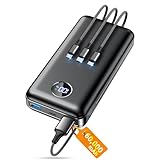
- Huge Capacity 60000mAh Power Bank: ZZI portable charger features a new high-density polymer battery that provides 10 charges for iPhone 15, freeing you from battery anxiety. Compatible with almost all types of smart devices on market including iPhone 17/16/15/14/13/12 Series, iPad, Samsung, Google Pixel series, Switch, and other Android phones and tablets.(IMPORTANT: 60000MAH PORTABLE CHARGER ARE NOT ALLOWED ON AIRPLANE)
- Charge 5 Devices Simultaneously: Portable charger power bank comes with a 3-in-1 high-strength nylon braided cable (Type-C / iOS / Micro USB) that has passed over 10,000 folding and plug-in/unplug tests, ensuring long-term durability and wear resistance. Charge up to five devices at once—suitable for home, travel, camping, hiking, vacation and outdoor trips
- 22.5W Super Fast Charging & Battery Protection: The battery charger can charge your iPhone 15 to 60% in just 30 minutes — 3 times faster than a standard portable phone charger. Built-in smart recognition chip automatically adjusts power output for different devices, delivering efficient and safe charging that protects your battery—so you can enjoy worry-free charging every time
- Ultra Compact & Smart LED Display: With its massive 60,000mAh capacity, ZZI battery bank provides long-lasting power without feeling bulky. Measuring only 5.8×2.9×1.1in, its size is similar to an iPhone 15, about twice the thickness, striking an ideal balance between capacity and portability. The LED digital display of portable battery shows the remaining battery in real time, allowing precise control over every charge
- Reliable 5-Layer Safety Protection: The battery pack portable charger features overcharge, overcurrent, overdischarge, overvoltage, and short-circuit protection, keeping your devices safe at all times, giving you complete confidence with every charge. What You Get: 1* power bank, 1* 3-in-1 USB cable, and 1* user manual
Do not change a dose, substitute a medication, or continue using a temperature-sensitive medicine based only on a general internet rule. If a life depends on the medication, contact the prescribing clinician, pharmacist, emergency service, or an emergency shelter as soon as possible for individualized instructions. Keep medication names, doses, prescription numbers, and clinician contact information on paper as well as on your phone.
Electricity-dependent medical equipment
Anyone using a ventilator, oxygen concentrator, nebulizer, powered wheelchair, dialysis-related equipment, refrigerated insulin, or another electricity-dependent device needs a device-specific outage plan made before an emergency. Contact the prescribing clinician, equipment supplier, and utility to identify warning signs, backup equipment, an appropriate battery or generator arrangement, and a safe place to go if power cannot be restored.
Never improvise a medical-device power connection. Verify the exact voltage, wattage, startup requirement, battery capacity, connector, grounding requirements, and expected runtime with the device manufacturer or a qualified medical-equipment provider. A generic battery pack or generator may not be compatible merely because it has a matching plug.
Keeping the home safe in extreme heat or cold
Cold-weather outages
- Close doors to unused rooms and close blinds or curtains to reduce heat loss.
- Dress in layers, wear a hat and warm socks, and use blankets.
- Do not use an oven, grill, generator, or other appliance not designed for indoor heating.
- Monitor infants, older adults, people with chronic illness, and anyone who may have difficulty recognizing or responding to cold stress.
- If the home becomes unsafe, move to a heated location or an emergency shelter using local emergency-management instructions.
Hot-weather outages
- Reduce exertion and stay in the coolest available location. Close blinds during the hottest part of the day if that helps block heat.
- Drink fluids when medically appropriate, following any fluid restrictions provided by a clinician.
- Check on older adults, infants, people with chronic illness, people who live alone, and anyone taking medication that may increase heat sensitivity.
- Use a cooling center, relative’s home, or other safe location if indoor temperatures become dangerous. Do not wait for a medical emergency.
For severe heat illness, hypothermia, breathing trouble, confusion, chest pain, or any other medical emergency, call 911. National Weather Service guidance also emphasizes safe supplemental heat and keeping generators at least 20 feet from doors, windows, and garages.
Communication and outage information
Keep at least one communication method that does not depend on household electricity. A charged phone with a power bank, a vehicle charger, or a battery-powered or hand-crank NOAA weather radio can provide redundancy. A NOAA weather radio is especially useful when severe weather is the reason for the outage or when cellular and internet service are unreliable.
Before the next outage, sign up for utility outage alerts and local emergency notifications. Write down the utility’s outage-reporting number, emergency contacts, medical information, insurance details, and the location of shutoffs in a waterproof container. Internet and cellular service may be degraded, so do not make a phone-only plan.
What’s actually slowing this PC down?
Pick the symptom - the matching free tool is one click away.
Also popular on Amazon

- Huge Capacity 50000mAh Portable Charger - The 50000mAh power bank ultra-high massive capacity will keep your phone and other device running for many days!Without extra worry about low phone battery. Ideal for traveling, camping and hiking.
- Latest PD 22.5W High-Speed Charging - OHOVIV 50000mAh Portable phone charger adopts the latest Super Charger Protocol and Fast Charger Protocol with 22.5W output USB-C port.Support QC4.0 QC3.0 huge capacity power bank with fast charging, it only takes 30 minutes to charge your iPhone 14 from 0% to 55%.(NOTE: The 50000mAh PORTABLE CHARGER ARE NOT ALLOWED ON AIRPLANE!!)
- Power 3 Devices at Once - Cell phone external battery pack is equipped with 2 USB-A (22.5W output) ports, 1 USB-C (18W input/22W output) port and 1, and it can charge three devices at the same time. The portable power bank is universally compatible with all products via USB charging cable, including all iOS and Android smartphones, watch, bluetooth headsets and so on.
- LED Digital Display & Compact Design - OHOVIV 50000mAh Cell phone portable charger comes with smart LED digital display, accurately keep track of remaining juice, allowing you to easily operate your power.Our battery pack charger portable is 13.4*7*3.4cm(5.27*2.75*1.33in), and weigh 613g (21.6oz), which is easy to carry.
- Safe Powerful Phone Charger - OHOVIV 50000mAh portable charger power bank with premium Li-polymer battery, this portable battery charger can charge your devices multiple times.Battery bank adopt smart chips to prevent overcharge, overvoltage, overcurrent, and short circuit to ensure customer safety.
How to prepare your home before the next outage
Build a layered kit rather than buying one oversized bundle and assuming it solves every risk. A preassembled power outage emergency kit can be a starting point, but check every item against your household’s people, pets, climate, medical needs, and home systems.
Baseline outage-kit checklist
- Water: at least one gallon per person per day for at least three days, with extra capacity for pets, infants, health conditions, and sanitation.
- Food: ready-to-eat, nonperishable food and a manual can opener.
- Lighting: flashlights or headlamps, a battery-powered lantern, and spare batteries.
- Information: a battery-powered or hand-crank NOAA weather radio, local maps, and a written list of key phone numbers.
- Health: first-aid supplies, prescription and commonly used over-the-counter medications, copies of prescriptions, glasses, and a written medical-device plan where needed.
- Charging: phone power banks, charging cables, and a vehicle charger. Test them periodically rather than storing them indefinitely at zero charge.
- Food-temperature control: a cooler, chemical ice packs or frozen gel packs, and refrigerator and freezer appliance thermometers.
- Fire and gas safety: battery-powered smoke alarms and carbon-monoxide alarms installed and tested according to the manufacturers’ instructions.
- Comfort and sanitation: blankets, warm clothing, hygiene supplies, hand sanitizer, toilet and waste supplies, and any infant-care items.
- Practical supplies: cash, a whistle, a wrench or pliers for appropriate utility shutoffs, and copies of important documents in a waterproof container.
- Pet supplies: food, water, medications, carriers, leashes, identification, and vaccination or medical records.
- Optional backup-power supplies: properly rated outdoor extension cords, power banks, or a backup system selected for the exact loads it must serve.
Store the kit where everyone can reach it without entering a dark basement, garage, or area that could be flooded. Check it at least twice a year and after every outage. Replace expired food, depleted batteries, used medical supplies, and damaged cords.
Choose backup power by the load—not by the headline capacity
Not every home needs a generator, and no single backup product powers every appliance or medical device. Start by listing the loads that matter most:
- Electricity-dependent medical equipment.
- Refrigeration for food or medication.
- Phone charging, lighting, and communications.
- Heating or cooling needed for health and safety.
- Sump pumps, well pumps, or other systems that protect the home.
For each device, record its running watts, startup or surge watts, required voltage, connector, and the number of hours it must operate. A device label or manufacturer’s manual is more reliable than a general online estimate. Add the running watts of devices you may use simultaneously, then confirm that the backup source can handle the highest startup demand as well as the continuous load.
| Backup option | Usually suited to | Important limits |
|---|---|---|
| USB power bank | Phones and small USB devices | Limited capacity; generally not suitable for household appliances or equipment that requires a standard AC outlet. |
| Portable power station | Phones, lights, routers, laptops, and selected low-wattage appliances for a limited period | Capacity, inverter output, surge rating, connector types, recharge time, and battery chemistry vary. Do not assume it can run a refrigerator or medical device without checking the exact specifications. |
| Fuel-powered portable generator | Higher loads when properly placed and connected | Requires strict carbon-monoxide and fire safety, fuel storage, weather protection, noise management, correctly rated cords, and load management. It must remain outdoors at least 20 feet from the house. |
| Permanently installed standby generator | Automatic or extended backup for selected or many household circuits | Requires professional installation, an approved transfer system, fuel planning, maintenance, and compliance with local electrical and building codes. |
A portable power station can be useful for low-wattage essentials, but compare usable watt-hours, continuous output, surge output, charging options, and the manufacturer’s restrictions. A simple planning estimate is watts multiplied by hours, with additional allowance for inverter losses and the fact that some devices cycle rather than run continuously. That estimate is not a substitute for the equipment manuals.
For a standby generator or transfer-switch installation, use a qualified electrician. The installation must prevent the generator from energizing utility lines and must match the home’s service, fuel source, grounding, and local-code requirements. If you are comparing solar-storage systems, portable generators, or standby generators, compare the complete installed system and maintenance obligations—not just the advertised battery size or generator wattage.
Also popular on Amazon

- 40% Smaller & Lighter Portable Charger: Powered by the industry’s first TinyCell high-density battery technology, this ultra-compact 10,000mAh portable charger power bank is 40% smaller and 36% lighter than conventional chargers. Whether you are an office user slipping a mini small portable battery into a purse for commuting, or a student looking for lightweight college essentials, you get powerful daily carry convenience without the extra bulk to keep you powered on the go.
- 45W Pro Speed Portable Phone Charger: This 45W fast charger boosts an iPhone 17 Pro Max to 76%, a Galaxy S25 Ultra to 84%, or an iPad Pro to 60% in just 30 minutes (charging from 20%). Whether you are a driver needing a quick portable charger for car, a commuter relying on a desk phone charger, or a gamer wanting a seamless Switch battery pack and Steam deck charger portable, you will spend less time tethered to a wall and more time enjoying your day.
- Detachable Cable for Multiple Devices: Unlike a standard portable charger with built in cable that becomes useless if the cord breaks, INIU's 0.4ft detachable braided USB-C cable can be swapped anytime to save your investment. It effortlessly transforms into a versatile travel charger for multiple devices, ensuring your family or group travelers always have a reliable portable charger for all cell phones to keep everyone connected without carrying messy cords.
- Airline-Safe Travel Essentials: This TSA-compliant, flight safe power bank provides nearly 2 full charges for your smartphone, making it the perfect battery pack flight safe for business trips, cruise vacations, and airplane travel essentials. Beyond flights, it empowers campers, hikers, and outdoor users with ultimate camping essentials and road trip essentials—so you can explore freely without battery anxiety, making it ideal gifts for travelers women and men.
- Trusted Emergency Backup: As the SAFE Fast Charge Pro trusted by over 38 million users, we ensure the safest charging with the highest-grade materials. When unexpected storms or hurricanes strike, it acts as a lifeline—providing a dependable power outage battery backup and emergency phone charger for emergency users.
Construction and renovation situations require extra caution
If an outage occurs while a home is being renovated or a construction site is active, treat temporary cords, unfinished panels, exposed conductors, powered tools, and partially completed circuits as energized until a qualified person verifies otherwise. Keep workers and household members away from wet tools, flooded areas, damaged service equipment, and downed lines.
Do not connect a generator to an unfinished panel, temporary wiring, or a house receptacle unless a qualified electrician has designed and installed the approved connection and transfer equipment. Pause work until the electrical system, temporary power, and weather conditions have been assessed. A construction site’s temporary setup is not automatically safe simply because it was operating before the outage.
Do these 3 things before closing this tab:
1Repair Windows errors before they cause bigger problems2Fix the driver behind crashes, sound loss and screen glitches3Clear out junk files and repair common Windows errorsWhat to do after power returns
- Follow instructions first. Wait for utility or emergency-management guidance before approaching storm debris, damaged lines, flooded electrical equipment, or a damaged service entrance.
- Check the home for hazards. If you smell burning, see sparks, find water near electrical equipment, or notice damaged wiring, leave the area and contact the utility or a qualified electrician. Do not repeatedly reset breakers to see whether a damaged circuit will hold.
- Handle temporary backup power safely. Turn off and disconnect a generator according to its manual, allow it to cool before storage or refueling, and remove temporary cords only when it is safe. Do not backfeed the home.
- Check food temperatures. Use the time-and-temperature rules, appliance thermometers, and ice-crystal guidance above. Do not taste questionable food.
- Check medications and medical equipment. Follow the pharmacist’s, clinician’s, device manufacturer’s, or equipment supplier’s instructions. Do not improvise a repair or continue a temperature-sensitive medication without professional guidance.
- Recharge and restock. Recharge power banks and radios, replace batteries, replenish water and food, replace used ice packs and first-aid supplies, and safely replenish fuel if permitted.
- Record what failed. Note the outage time, indoor temperature, food losses, battery runtime, medical-device needs, water problems, and communication gaps. Use that record to make the next plan specific to your home.
A practical 10-minute outage plan
When the lights go out, use this short sequence:
- Grab a flashlight or headlamp—not a candle.
- Check household members, pets, medical equipment, and immediate hazards.
- Look outside safely to determine whether the outage appears local or widespread.
- Report the outage and activate weather or emergency alerts.
- Unplug sensitive electronics if appropriate and leave one light switched on.
- Close the refrigerator and freezer.
- Move essential medications and medical-device users into the plan immediately.
- Check indoor temperature and decide early whether anyone needs a cooler, warmer, or more accessible location.
- If using a generator, verify outdoor placement at least 20 feet from the house before starting it.
- Write down the outage start time and begin tracking food, water, battery, and medication needs.
U.S. guidance used: This article follows outage and emergency-kit guidance from the Centers for Disease Control and Prevention, the U.S. Consumer Product Safety Commission, FEMA, Ready.gov, the National Weather Service, and the American Red Cross. Utility procedures, building codes, generator rules, shelter availability, and emergency numbers other than 911 vary by location; follow local instructions.
Frequently Asked Questions
How long is food safe in a refrigerator during a power outage?
With the refrigerator door kept closed, food is generally considered safe for up to four hours. After that, move refrigerated perishables to a cooler with ice or frozen packs and keep them at 40°F or below. Do not taste food to test it.
Can I run a portable generator in my garage if the garage door is open?
No. Never run a portable generator in a garage, even with the door open. Operate it outdoors at least 20 feet from the house, with exhaust directed away from doors, windows, vents, and other openings. A carbon-monoxide alarm does not make indoor operation safe.
Also popular on Amazon

- 87W Power to Share: Distribute 87W across three devices, with a single device receiving up to 65W, to rapidly charge iPhones, Samsung phones. Quickly charge a 14" MacBook Pro to 50% in under 40 minutes.
- Speedy Cable Charging: Utilize the built-in cable to elevate your iPhone 15 Pro to 58% or a MacBook Air to 52% in 30 minutes. You can also fully recharge this power bank in 1.5 hours with a 65W charger.
- 20,000mAh for Extended Use: Eliminate concerns about battery depletion with a 20,000mAh power bank that ensures consistent, reliable charging for all your devices, also approved for airline travel.
- Lasts Longer, Charges Faster: The integrated USB-C cable is designed to endure, withstanding over 10,000 bends for dependable charging and convenient storage.
- What You Get: Anker Power Bank (20K, 87W, Built-In USB-C Cable), 6.2 × 2.9 × 1.0 in (15.5 oz), welcome guide, 18-month warranty, and friendly customer service.
What should I do if refrigerated medication gets warm?
Check the medication label and contact a pharmacist, prescribing clinician, emergency service, or the medication manufacturer for instructions. Do not change the dose or assume that a medicine is safe or unsafe based only on general outage guidance.
Recommended Free Tools
Does a portable power station run a refrigerator?
It may, but only if the exact power station can handle the refrigerator’s running and startup wattage and has enough usable capacity for the required runtime. Check both manufacturers’ specifications; do not rely on the power station’s headline capacity alone.
How much emergency water should a household store?
Ready.gov’s baseline recommendation is at least one gallon per person per day for at least three days. Households should store more when conditions, health needs, pets, infants, livestock, sanitation requirements, or local emergency guidance call for it.
The Bottom Line
The safest outage plan is simple: light the home with batteries, keep cold food closed and measured, protect people and medical needs from heat or cold, maintain water and communications, and keep every generator outdoors at least 20 feet from the house. Prepare the kit and load calculations before the next outage, then restock and improve the plan when power returns.
Quick Recap
Product prices and availability are accurate as of the date/time indicated and are subject to change. Any price and availability information displayed on Amazon at the time of purchase will apply.
The Tool Desk
Outbyte PC Repair FREERepair Windows errors before they cause bigger problemsFix Now →Outbyte Driver Updater FREEScan for outdated or missing drivers - takes under a minuteDriver Scan →
