Some links on this page are affiliate links: if you buy through them we may earn a commission, at no extra cost to you.
The best way to cool an overheated upstairs is not always to lower the thermostat. Upper floors usually run hot because they receive more sun, sit below a hot attic, get less conditioned air, or have ducts that leak or lose heat before the air reaches the rooms. A colder thermostat setting may make the system run longer without fixing any of those problems.
Start with the least invasive measures: block direct sunlight, improve comfort with a ceiling fan, and check airflow. Then investigate attic air sealing, insulation, duct performance, filter restriction, thermostat location, and HVAC capacity. The right fix depends on your climate, home design, humidity, occupancy, and equipment.
As an Amazon Associate I earn from qualifying purchases.
Recommended Free Tools
First, identify why the upstairs is hot
Before buying equipment or scheduling an HVAC replacement, compare the symptoms:
- Hot mainly in the afternoon: solar heat through west- or south-facing windows is a likely contributor.
- Hot near the ceiling or on the top floor generally: the attic floor may have insufficient insulation or unsealed penetrations.
- Weak airflow from upstairs registers: suspect a closed damper, disconnected or crushed duct, duct leakage, excessive system resistance, or poor balancing.
- Strong airflow but rooms still stay hot: look at solar gain, attic heat transfer, room size, insulation, window performance, and system capacity.
- Downstairs is comfortable while the upstairs is not: a downstairs thermostat may satisfy the system before the upper floor reaches a comfortable temperature.
- Rooms feel clammy: humidity may be the problem rather than temperature alone. Night ventilation can make this worse in humid weather.
Use a thermometer to compare rooms at roughly the same time of day, and note whether the problem changes with sun, outdoor humidity, or the number of people at home. That simple record can help distinguish a distribution problem from a building-envelope problem.
Popular on Amazon

- Perfect Size for Rooms: This 52-inch ceiling fan is ideal for cooling and illuminating spacious areas like living rooms, bedrooms, and kitchen, featuring an 20W 2000LM bright light and powerful average 3057 Cubic Feet Per Minute airflow.
- High Configuration: The flush mount fan is equipped with APP & Remote Control, 10~100% Dimmable, Stepless Color Temperature (warm → neutral → cool white, 3000K→6500K), Memory Function (the memory function retains your settings), Energy-efficient LED Light, Pure Copper High-performance DC Motor, High-Quality Tough Plywood.
- Quiet and Efficient Operation: Experience peaceful relaxation with the energy-efficient, quiet, high-RPM motor that provides strong airflow without the noise.
- Stylish and Functional: Enhance your home decor with this modern ceiling fan featuring a sleek design and a built-in light kit. Choose from a variety of finishes to match your style.
- Year-Round Comfort: Enjoy a cool breeze in the summer and improved air circulation in the winter with the reversible blade feature.
1. Block direct sun at upstairs windows
Close blinds, shades, or curtains before direct afternoon sun reaches an upstairs room. Waiting until the glass and furnishings are already hot is less effective than preventing the solar gain in the first place.
Interior coverings such as thermal curtains and blackout cellular shades can reduce the sunlight entering a room. Exterior measures—including solar screens, awnings, overhangs, and exterior shutters—are generally more effective because they stop more solar energy before it passes through the glass. Window replacements with a suitable low solar-heat-gain coefficient (SHGC), or appropriate low-e glazing, may help during a renovation, but the best specification depends on climate, orientation, existing windows, and winter heating needs.
Do these 3 things before closing this tab:
1Scan for outdated or missing drivers - takes under a minute2Repair Windows errors before they cause bigger problems3Fix the driver behind crashes, sound loss and screen glitchesA solar shade or window sun shade is particularly useful for a room that overheats only when the sun reaches one elevation. Do not assume that a product labeled “thermal” or “blackout” has a particular energy certification or will produce a fixed temperature reduction; performance varies with the window, installation, color, and exposure.
Best first move: shade the most exposed windows and observe the room over several sunny afternoons before investing in larger HVAC changes.
2. Run ceiling fans for people—not empty rooms
A ceiling fan does not lower the temperature of an empty room. It cools people by moving air across their skin, which can make the room feel more comfortable and may allow occupants to set the thermostat somewhat higher while they are present. Turn the fan off when nobody is using the room.
In summer, the normal setting is counterclockwise when viewed from below, producing a downward breeze. Check the fan’s instructions because motor direction and controls vary.
What’s actually slowing this PC down?
Pick the symptom - the matching free tool is one click away.
ENERGY STAR’s approximate fan-sizing guidance is:
| Room area | Approximate fan diameter |
|---|---|
| Up to 75 sq. ft. | 29–36 inches |
| 76–144 sq. ft. | 36–42 inches |
| 144–225 sq. ft. | About 44 inches |
| 225–400 sq. ft. | 50–54 inches |
Install the fan with a properly rated electrical box and generally keep the blades at least 7 feet above the floor. A 52-inch ceiling fan may suit a typical bedroom, while a low-profile ceiling fan can work where the ceiling is low—but only if the installation still provides safe clearance.
A fan is a comfort tool, not a cure for a failed upstairs supply duct, missing attic insulation, or a major air leak. If the fan makes the room feel better but the ceiling remains hot and the AC runs continuously, continue the diagnosis.
Also popular on Amazon

- Ceiling Fan with Light: Decorate your home with Amico ceiling fan! While bringing you coolness and comfort, it also becomes a beautiful decorative piece for your home. Our 42 inch small ceiling fan with light remote control has A energy efficiency rating, which can avoid 80% of electricity loss compared with traditional fans.
- Ceiling Fans with Remote: All operations can be controlled by the remote controller, adjust the fan speed with 6 levels, select light color temperature, and supports timing (1/2/4 hour) sleep shutdown, on/off. The fan and light can be turned on separately. (Tips: After fixed, the remote control can be used as a wall switch)
- Low Profile Flush Mount: We provide very detailed instructions and installation videos to help you complete the flush mount installation. Suitable for farmhouse, living room, bedroom, office, study, kitchen or other small indoor spaces. Besides, this is also a outdoor ceiling fan for patio, breezeways, gazebos, pergolas and other outdoor spaces. (Not to be exposed directly to rain)
- Noise-free Experience: This modern ceiling fan with light is designed for light sleepers, brings you comfortable sleeping with a quiet living environment. The volume is low to 35dB when the fan is running, like the sound of falling leaves, or like a butterfly flaps its wings(30dB). It is more suitable for families with babies or elders. Super quiet, only wind.
- Reversible DC Motor: The high-quality & high-speed motor brings a perfect wind experience. The wind speed can be adjusted in 6 gears, you can choose between comfortable wind, natural wind and strong wind. Reversible dual-direction fan improves air circulation to keep you warm in winter and cool in summer. Our fan blades are double sided in different colors, one side is black and the other side is walnut. Choose the fan blade color that best fits your home decor!
3. Air-seal and insulate the attic floor
The ceiling below an attic is often the boundary between conditioned space and a very hot unconditioned space. Heat can move through insufficient insulation, but air leaks through ceiling penetrations and joints can also carry heat and moisture into the home.
Free tools Windows power users keep installed
One-click scans. No signup required.
Before adding more insulation, seal accessible penetrations and joints at the attic floor. Common locations include:
- ceiling light and electrical penetrations;
- plumbing and wiring openings;
- the tops of interior partition walls, or top plates;
- attic access panels or pull-down stairs;
- larger openings around chimneys, flues, and other building penetrations; and
- recessed lights, using only methods allowed for the specific fixture and local code.
Air sealing comes first because adding insulation over an unsealed opening can hide the problem without stopping the air movement. Once the boundary is properly sealed, additional attic insulation may improve comfort and reduce cooling demand when the home is under-insulated. The result is not guaranteed to lower utility bills; the benefit depends on the starting condition, climate, and how the HVAC system operates.
Simple weatherstripping around an attic hatch or caulk around appropriate small, nonhazardous gaps may be a reasonable DIY task. Attic work near electrical equipment, combustion flues, mold, asbestos, or difficult-to-reach areas deserves a qualified professional. Do not cover attic ventilation paths, combustion clearances, or recessed lights unless the fixture and applicable code specifically permit it. Products such as air-sealing caulk or attic spray foam are not interchangeable in every location.
If the attic floor has visible gaps, thin or uneven insulation, or a ceiling that becomes very hot, consider an attic air-sealing and insulation assessment rather than simply adding another layer of insulation.
4. Check ducts for leaks, damage, and attic heat gain
When the downstairs cools well but the upstairs receives little air, inspect the duct system. Upper-floor supply ducts may be disconnected, crushed, poorly insulated, undersized, or leaking in an attic or crawlspace. A duct that loses conditioned air before it reaches the register cannot be fixed by lowering the thermostat.
DOE guidance estimates that a typical home can lose roughly 20%–30% of the air moving through ducts through leaks, holes, and poor connections. That figure is a broad estimate, not a prediction for every house, but it illustrates why duct condition matters.
Also popular on Amazon

- Smart Ceiling Fans with APP & Remote Control: This modern ceiling fan with lights has all functions controllable via both the included remote and smartphone app. Adjust fan speed, light brightness/color, and set timers hands-free
- Ultra-Quiet Reversible DC Motor: Our low profile ceiling fan with light features a ultra-quiet DC motor with noise levels as low as 20 dB. With 6-speed settings delivering 4,580 CFM airflow, the reversible motor provides summer cooling breezes or winter warm air circulation – ideal for year-round climate control
- Dimmable LED & Stepless Color Temperature: Equipped with an energy-efficient 18W LED light, this flush mount ceiling fan offers stepless color temperature adjustment from 3000K warm light to 6000K cool white, along with 5%–100% brightness dimming. Enjoy eye-friendly, flicker-free illumination tailored to your needs, whether relaxing, reading, or working
- Modern Minimalist Style: The black ceiling fan with light features a double-sided 5-blade design with different colors, one side is black and the other side is wood-grey. This design allows the 52 inch ceiling fan to blend seamlessly with various home decor styles, suitable for indoor use in spaces like living room, bedroom, farmhouse, kitchen, office and outdoor use for coverd patio
- Easy 30-min Installation: Effortlessly install the fan on flat ceilings, this bedroom ceiling fan comes with all necessary mounting hardware and detailed installation instructions, following the instructional video ensures a hassle-free setup
With the system off, a homeowner may be able to inspect accessible ducts for disconnected joints, collapsed flexible duct, damaged insulation, or obvious gaps. A professional can go further with a duct leakage test, static-pressure measurement, airflow testing, and register balancing.
Appropriate repair materials include duct mastic and UL 181 foil tape used according to the product instructions. Ordinary cloth-backed “duct tape” is not a dependable substitute for HVAC-rated sealing materials. Ducts in unconditioned spaces may also need insulation after sealing.
Do not assume that sealing one visible joint solves the system. Leaks may be hidden, and a poorly designed or undersized duct run may still deliver inadequate airflow after it is sealed. Tight attic access, fragile flexible duct, and work near electrical or combustion equipment are good reasons to hire an HVAC professional.
5. Use the highest filter rating the system can actually handle
A dirty filter can restrict airflow, and an overly restrictive filter can create a similar problem. Replace the filter with the correct dimensions and install it in the direction shown by the airflow arrow.
EPA guidance recommends choosing the highest-rated filter the HVAC system and filter slot can accommodate, with MERV 13 or higher where the equipment can support it. That does not mean every system should receive a MERV 13 filter. Older or poorly designed systems may have insufficient blower capacity, a restrictive filter cabinet, or high static pressure. When compatibility is uncertain, ask an HVAC professional to check it.
A MERV 13 HVAC filter or other pleated AC filter can be a sensible replacement only after confirming the exact size and system requirements. Replace it according to the manufacturer’s guidance and household conditions; homes with pets, construction dust, or heavy use may load filters faster.
Quick wins for a faster PC:
Clear out junk files and repair common Windows errorsFree Scan →Fix the driver behind crashes, sound loss and screen glitchesFind Drivers →Repair Windows errors before they cause bigger problemsFix Now →Changing the filter protects airflow and equipment, but it is not a guaranteed solution for an upstairs temperature imbalance. If the new, correctly fitted filter does not improve airflow, investigate the duct system and equipment rather than installing an increasingly restrictive filter.
6. Adjust the thermostat schedule instead of simply turning the temperature down
A programmable or smart thermostat can reduce cooling during sleep or unoccupied periods and restore the setting before people return. This may reduce cooling demand, but savings vary with climate, insulation, equipment, occupancy, schedule, and user behavior. A thermostat cannot compensate for a disconnected duct or a severely overheated attic.
Also popular on Amazon

- All-in-One Cooling & Lighting: This 46-inch black ceiling fan light combines a powerful fan with dimmable, three-color LED lighting. Control everything by one remote—choose from 6 fan speeds and 3 light colors to match any mood or weather.
- Advanced Remote Control with Timer: Enjoy convenient control from anywhere in the room with the included remote. Adjust fan speed, set lighting color and brightness, or activate the 2-hour automatic shut-off timer for energy savings and peace of mind—all without leaving your bed or sofa.
- Sleek Design & Easy Flat-Mount Installation: Designed for flush ceiling installation (sloped ceilings not supported), this fan light combines a modern matte black finish with hassle-free setup. Just secure it directly to flat ceilings for a clean, integrated look that complements any decor.
- Energy-Efficient & Quiet Performance: Engineered for powerful yet silent operation, the fan delivers optimal airflow without distracting noise. The energy-saving LED lights provide bright, long-lasting illumination while reducing electricity costs, making it ideal for daily use in homes or offices.
- Reliable Quality & Assurance: Rest easy with our commitment to durability and customer satisfaction. This product comes with an ensuring long-term performance and support. Should any issues arise, our responsive service team is ready to assist.
Thermostat location is especially important in a two-story house. A downstairs thermostat may reach its target while the upstairs remains uncomfortable. A smart thermostat with room sensor can help you monitor upstairs conditions, and some systems can use a remote sensor to influence the temperature target. However, a remote sensor does not automatically create true HVAC zoning: on many systems it merely changes which temperature reading controls the system at a given time.
Before buying an ENERGY STAR smart thermostat, verify compatibility with the HVAC equipment. Pay particular attention to heat pumps, multistage systems, communicating equipment, systems requiring a common wire, and manufacturer-specific controls. Follow the manufacturer’s wiring and installation requirements or use a qualified installer.
Use the schedule to match actual occupancy. Running the AC harder all day to satisfy an upstairs room that is empty wastes energy and may still leave the room hot when occupants arrive. If the system cannot meet the scheduled temperature without running continuously, the underlying envelope, airflow, or capacity problem needs attention.
7. Flush the house with outdoor air only when conditions are favorable
Nighttime ventilation can remove stored heat when outdoor air becomes cooler and drier than indoor air. Open windows strategically or use a window fan to exhaust warm air and draw cooler air through another opening. A reversible window fan can be useful when its installation allows safe intake and exhaust airflow.
This strategy works best in dry or moderate climates with cool nights and a meaningful day-to-night temperature difference. It is usually a poor choice when:
- outdoor humidity is high enough to make the home clammy;
- outdoor air quality is poor because of smoke, pollution, or other contaminants;
- open windows create an unacceptable security risk;
- rain or severe weather could enter; or
- fuel-burning appliances may backdraft.
A whole-house fan can move substantially more air than a window fan, but it requires suitable building design, adequate makeup air, and safe installation. In humid climates it can bring unwanted moisture indoors. It can also contribute to combustion backdrafting if fuel-burning equipment is operating without adequate makeup air. Have the installation assessed when the home contains a furnace, boiler, fireplace, water heater, or other combustion appliance.
PC Slower Than It Used to Be?
A free scan shows the junk files, broken settings and background clutter dragging Windows down - then fixes them in one click.Free scan · Windows 10 & 11Outdated Drivers Are Slowing You Down
One free scan finds every outdated or missing driver and matches the right update for your exact hardware.Free scan · exact hardware matchDo not confuse a whole-house fan with an attic fan. An attic fan is not a guaranteed fix for a hot upstairs. If the attic boundary is poorly sealed, it may pull conditioned air from the house, and it has not necessarily been shown to reduce AC bills. Correct the building envelope before adding powered attic ventilation.
Independent reader supportYour contribution helps us test, update, and keep practical guides available for everyone.8. Have the HVAC system assessed when airflow or capacity is uneven
Schedule a professional assessment if upstairs registers have weak airflow, rooms remain hot after solar-control measures, the system runs continuously, or it short-cycles. Useful checks can include:
- filter and evaporator-coil condition;
- refrigerant and electrical performance;
- duct leakage and duct insulation;
- static pressure and delivered airflow;
- register and damper balancing;
- attic and wall insulation;
- thermostat operation and location; and
- equipment sizing and overall system design.
If equipment is being replaced, ask how the contractor determined the required capacity. ENERGY STAR recommends verifying proper sizing with a Manual J load calculation rather than selecting a replacement solely by matching the old unit’s tonnage. Oversizing can reduce comfort and humidity control, while undersizing may fail to cool the home during design conditions.
Depending on the diagnosis, possible solutions include duct modifications, balancing, improved insulation, a separate HVAC zone, a ductless mini-split, or a properly designed supplemental unit. These are design decisions, not universal upgrades. Obtain multiple qualified quotes for major work and ask each contractor to explain the measured problem, proposed correction, and assumptions behind the recommendation.
Also popular on Amazon
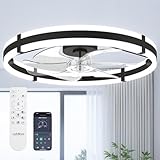
- Wider Airflow for Larger Rooms:Upgraded from our 20″ model, this 24″ low profile ceiling fan with light delivers up to 80% wider airflow coverage for stronger circulation. Perfect as a bedroom ceiling fan, kitchen ceiling fan, or living room flush mount ceiling fan in medium-sized spaces.
- Dimmable LED Light with 3 Color Temperatures:This ceiling fan with lights features an integrated LED panel that adjusts from 10%–100% brightness and supports 3000K warm white, 4500K natural white, and 6000K cool white. Easily create the right atmosphere for relaxing, working, or entertaining.
- Remote & APP Control with Memory Function: Control your ceiling fan with lights and remote or through the mobile app. Choose from 6 fan speeds, set 1- or 2-hour timers, and turn the fan or light on/off instantly. The built-in memory function restores your last-used light setting. When using the wall switch, please turn the power off for more than 5 seconds to activate the memory function. (No waiting time is required when using the remote.)
- Reversible DC Motor for Year-Round Comfort: Powered by an energy-efficient DC motor, this black ceiling fan with light runs quietly and smoothly. Switch between downdraft mode in summer and updraft mode in winter to improve air circulation throughout the year.
- Modern Flush Mount Fandelier Design: Designed as a flush mount ceiling fan, this small fandelier ceiling fan with light is ideal for low ceilings. The blade design enhances safety while maintaining strong airflow, making it suitable for bedrooms, kitchens, and living rooms.
If only one room remains persistently hot after the envelope and duct problems are addressed, an ENERGY STAR window AC or other room air conditioner may be a practical targeted solution. Size it for the room rather than buying the largest available unit. Oversizing can reduce comfort and humidity removal, and poor installation can allow substantial air leakage. Follow the manufacturer’s requirements for support, sealing, drainage, electrical load, and ventilation.
Choose the next step based on your situation
| Your situation | Most sensible starting point |
|---|---|
| Renter | Use blinds or shades, operate ceiling fans only when occupied, replace a filter only if permitted and correctly specified, and report weak registers, persistent overheating, or damaged ductwork to the landlord. |
| Homeowner with direct afternoon sun | Install or improve window shading before changing HVAC settings. Exterior shading is often the stronger long-term measure. |
| Homeowner with a hot ceiling or attic | Arrange an attic air-sealing and insulation assessment. Seal appropriate penetrations before adding insulation. |
| Dry climate with cool nights | Try controlled nighttime ventilation if outdoor air quality, humidity, security, and combustion safety are acceptable. |
| Humid climate | Be cautious with open-window ventilation and whole-house fans. Prioritize envelope, duct, humidity-control, and HVAC evaluation. |
| Weak upstairs airflow | Investigate registers, dampers, duct leakage, static pressure, and balancing before buying a portable AC. |
| Strong airflow but high temperature | Focus on solar gain, attic insulation and air sealing, room heat load, thermostat location, and equipment capacity. |
| One room remains hot | After correcting larger defects, consider a properly sized supplemental room AC or ductless solution. |
Safety limits that matter
- Attic work: protect yourself from falls, extreme heat, exposed wiring, nails, irritants, mold, and asbestos-containing materials. Do not seal or cover combustion flues or fixtures improperly.
- Electrical and refrigerant work: leave repairs, charging, wiring, and equipment modifications to qualified professionals.
- Filters: never assume a higher MERV rating is better if the blower and filter cabinet cannot handle it.
- Ventilation: check outdoor air quality and humidity before opening windows. Take combustion backdrafting seriously.
- Fans: install ceiling fans on fan-rated boxes and maintain safe blade clearance.
- Room AC: follow installation, support, drainage, electrical, and window-sealing instructions. A portable unit’s exhaust system must be installed as specified.
For professional work, an HVAC inspection, duct leakage test, airflow balancing, or Manual J load calculation is more useful than a generic promise that a larger air conditioner will solve the problem. An energy audit can also help identify whether the main defect is in the attic, windows, ducts, or HVAC system.
Frequently Asked Questions
Why is my upstairs hot when the downstairs is comfortable?
The upstairs may receive more solar and attic heat, while a downstairs thermostat satisfies the HVAC system before the upper floor reaches the target temperature. Weak or leaking upstairs ducts, poor balancing, insufficient insulation, and thermostat location are common contributors.
Will a ceiling fan make the upstairs room cooler?
It makes people feel cooler by moving air across the skin, but it does not substantially cool an unoccupied room. Use it when people are present and turn it off when the room is empty.
The Tool Desk
Outbyte PC Repair FREEClear out junk files and repair common Windows errorsFree Scan →Outbyte Driver Updater FREEFix the driver behind crashes, sound loss and screen glitchesFind Drivers →Should I install a MERV 13 filter to improve upstairs cooling?
Only if the HVAC system and filter slot can accommodate it. A dirty filter can restrict airflow, but an overly restrictive filter can also reduce airflow. Confirm the exact size and equipment compatibility first.
Is an attic fan a good solution for a hot upstairs?
Not automatically. If the attic boundary is poorly air-sealed, an attic fan can pull conditioned air from the home, and it is not guaranteed to reduce AC bills. Address air sealing and insulation first, then evaluate ventilation safely.
The Bottom Line
Start by blocking direct sun and using a ceiling fan for occupied rooms. If the upstairs still stays hot, check the attic boundary and the supply ducts before lowering the thermostat further. A qualified HVAC assessment can determine whether the remaining problem is airflow, balancing, humidity, equipment sizing, or a need for targeted supplemental cooling.
Quick Recap
Product prices and availability are accurate as of the date/time indicated and are subject to change. Any price and availability information displayed on Amazon at the time of purchase will apply.

