Quick wins for a faster PC:
Fix the driver behind crashes, sound loss and screen glitchesFind Drivers →Repair Windows errors before they cause bigger problemsFix Now →Before you buy a home near a new industrial warehouse, verify the project’s zoning and approvals, understand truck routes and operating hours, obtain stormwater and lighting plans, and investigate environmental history. Order a title search and survey, arrange a Phase I Environmental Site Assessment (ESA) that follows the U.S. Environmental Protection Agency’s All Appropriate Inquiries (AAI) framework, and visit the property during actual delivery and shift periods. Then compare noise, diesel exposure, drainage, safety, insurance, resale and mitigation costs with other homes before your inspection and financing contingencies expire.
Why a new warehouse deserves more than a normal home inspection
A warehouse is not a single type of neighbor. A small, daytime storage building can have a very different effect from a 24-hour distribution center with refrigerated trailers, generators and dozens of daily truck movements. The building’s size, tenants, loading-bay orientation, delivery schedule, road network and site engineering determine what you will experience at the house.
As an Amazon Associate I earn from qualifying purchases.
The most important information is usually held by public agencies and the project owner, not visible from a real-estate listing. Planning files can reveal approved hours, truck access and future expansion. Engineering documents show how runoff will be routed. Environmental records can identify former industrial uses, tanks or spills. Your own observations then test whether the approved plan matches conditions on the ground.
There is no credible national percentage that predicts health risk, noise exposure or property-value loss for every warehouse-adjacent home. U.S. EPA materials identify traffic, air and noise pollution, lighting and potential property-value decreases as possible community impacts, but the effect at a particular address must be established locally through permits, traffic studies, complaint records, professional environmental work and site measurements.
#1 Best Overall
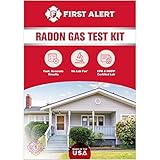
- The simple and safe way to test for radon
- Listed under the EPA radon gas measurement proficiency program
- Includes test materials and lab fees, excluding NJ state fees
- Results are emailed within 72 hours of lab receipt
- Recommended for use only within the United States
Assemble the project record before making an offer
Ask the seller, developer, planning department and other relevant agencies for the records below. Keep the documents together so your inspector, attorney, lender and insurer are reviewing the same assumptions.
Planning, zoning and approval documents
- Current zoning classification and the applicable zoning text.
- Approved site plan, including building footprint, setbacks, loading bays, parking, trailer storage, fencing and landscaping.
- Conditional-use permit, variance, site-plan approval, development agreement and any amendments.
- Approved operating hours, delivery windows, shift schedule and restrictions on overnight activity.
- Truck-route, driveway-access and traffic-impact plans, including proposed road or intersection upgrades.
- Lighting plan showing fixture locations, mounting heights, shielding, timers and illumination at property boundaries.
- Stormwater, grading, erosion-control and drainage documents, plus environmental permits related to discharges or construction.
- Master plans, planning studies and development-code provisions that could allow a larger building, additional loading or a change in use later.
EPA’s due-diligence guidance says a buyer should compare current zoning with master plans and planning studies and document development codes, prior plans, access roads and environmental features. A permit marked “warehouse” may not tell you whether the approved use includes cross-docking, refrigerated storage, fleet maintenance, late-night loading or hazardous-material handling, so read the conditions attached to the approval.
Questions to put in writing
- How many trucks and employee vehicles were projected in the traffic-impact study?
- What are the delivery windows, and are overnight or weekend arrivals allowed?
- Where do trucks queue if a loading bay is occupied?
- Are engines required to be shut off while waiting, and who enforces that rule?
- Which roads and bridges are designated for heavy vehicles, and are there weight, height or time restrictions?
- Can the owner add loading doors, trailer spaces, refrigeration equipment or a second shift without another public hearing?
- What complaints, code violations, permit modifications or enforcement actions have been recorded?
Request written answers and the underlying approvals rather than relying on a verbal description from a listing agent. Conditions can be enforceable only when they appear in a permit, ordinance, recorded agreement or other official document.
Free tools Windows power users keep installed
One-click scans. No signup required.
Investigate contamination and environmental liability
Order a Phase I ESA using the AAI standard
A Phase I ESA is the normal starting point when a home is near a current or former industrial property. Ask the environmental professional to perform the EPA’s AAI process, not merely a visual walk-through. A compliant investigation includes:
- Interviews with current and past owners, operators and occupants.
- Review of historical sources, such as aerial photographs, directories, maps and prior site uses.
- Searches of federal, state, Tribal and local environmental records.
- Visual inspection of the subject property and adjoining properties.
- Evaluation of data gaps and conditions that may represent recognized environmental conditions.
- A signed report prepared by an environmental professional.
Tell the consultant that the property is beside a new warehouse and provide any information about the former land use. EPA specifically flags adjoining industrial uses, including warehousing and transportation, as part of the surrounding-property review. The consultant should look for petroleum storage, underground or aboveground tanks, spills, drums, waste handling, wastewater systems, air emissions, stained soil, stressed vegetation and pathways to soil or groundwater.
Observe conditions that a records search can miss
During the inspection, look at the warehouse parcel and the home’s side of the boundary. Note smoke, fumes, diesel odor, unusual dust, noise, stained pavement, floor drains, chemical containers, waste-storage areas and drainage that runs toward the home. EPA’s AAI materials identify smoke, fumes and noise as relevant industrial-use conditions. These observations do not prove contamination, but they give the environmental professional specific issues to resolve.
Rank #2

- Portable Radon Detector: AEGTEST HOUND-1011S is a compact, portable radon detector for continuous monitoring. It measures radon levels from 0.09 to 1000 pCi/L, supports switching between pCi/L and Bq/m³ units, ensuring reliable protection against harmful radon gas
- Quick & Accurate Results:Equipped with a high-precision semiconductor sensor, the radon tester delivers fast, accurate readings. First results appear within 12 hours, with hourly updates for real-time accuracy. Data is reliable and testing can be restarted anytime
- Short-Term & Long-Term Monitoring: Multiple timeframes of radon concentration can be viewed — from the past 12 hours to 504 days — providing long-term, stable monitoring suitable for all environments. It helps safeguard against the health risks of prolonged radon exposure
- Long Battery Life: Supports long-term home use with a Type-C cable for continuous monitoring. The built-in battery lasts up to 45 days in sleep mode, ideal for travel—ensuring constant safety and peace of mind
- Easy to Use: The LCD screen displays data for the past 12H/24H/48H/72H/96H. Ready to use at startup with no learning curve. Comes with a stand and supports various environment monitoring. Includes 1× HOUND-1011S, 1× Charging Cable, 1× Lanyard, 1× Manual
Meet the AAI deadlines
For a buyer seeking CERCLA liability protections, AAI must be completed or updated within one year before acquisition. Several elements must be current within 180 days of the purchase: interviews, government-record review, visual inspection and environmental-lien searches. Put the expected closing date on the consultant’s scope of work so the report does not age past those limits while the transaction is delayed.
AAI is not a one-time shield. Continuing obligations include complying with land-use controls and taking reasonable steps to stop hazardous substances from spreading or becoming a human-exposure risk. Preserve the report, contracts, notices and maintenance records after closing, and ask counsel what actions your state and the federal CERCLA program require.
Know when a Phase II investigation is warranted
A Phase I report may recommend sampling if it identifies a recognized environmental condition, a data gap that matters, or a credible pathway from the warehouse parcel to the home. Soil, groundwater, vapor or indoor-air testing should be designed by an environmental professional for the specific chemicals and pathways involved. Do not waive sampling solely because the warehouse is newly constructed: the current building may have replaced an older industrial use, filled a former tank area or changed drainage without removing legacy contamination.
Check title, easements and residential-use restrictions
Order a title search and boundary survey
Have the title company and surveyor identify access easements, utility easements, shared drives, encroachments, liens, trailer-storage rights and any restrictions that affect the home or the warehouse parcel. Confirm where the property line lies relative to the loading yard, fence, retention pond, access road and proposed improvements. A survey can reveal that a road you assumed was public is subject to a private easement or that a drainage feature crosses the lot.
Search for institutional controls and environmental covenants
Environmental restrictions can be created by deed, environmental covenant, zoning ordinance, permit, administrative order or cleanup agreement. Read every recorded instrument, not just the standard exceptions in a title commitment. Restrictions may prohibit gardening, groundwater wells, excavation, basement construction, soil removal or residential occupancy, or may require ongoing monitoring and maintenance.
The Tool Desk
Outbyte Driver Updater FREEFix the driver behind crashes, sound loss and screen glitchesFind Drivers →Outbyte PC Repair FREERepair Windows errors before they cause bigger problemsFix Now →Confirm the cleanup standard for the property. EPA warns that land cleaned to a commercial or industrial standard may not be suitable for residential use without additional cleanup. If a restriction says the site is limited to commercial use, obtain written confirmation from the agency and an environmental attorney before treating the property as a normal residence.
Rank #3

- FIRST OF ITS KIND: The first battery-operated, digital radon detector. Monitor your home without the need for an outlet.
- LONG TERM MONITORING: Monitor for cancer-causing radon gas. Long term monitoring is necessary as radon levels fluctuate daily.
- BE IN CONTROL: Take action if your radon levels are high. Know if your improvements have worked by checking the short term, on-screen readings.
- RADON REPORT: Generate a radon self-inspection report easily, whenever you need it.
- FAST RESULTS: On-screen results show both long and short term readings, for a quick overview of your radon levels.
Measure truck traffic and road safety at the times that matter
Read the traffic study instead of counting one quiet afternoon
Extract the study’s projected truck counts, peak-hour movements, delivery windows, queue lengths, turning paths and assumptions about future tenants. Note whether counts are daily totals or peak-hour figures and whether they include employee cars, vans, waste vehicles and maintenance fleets. EPA notes that proximity to interstate highways and major truck routes drives industrial demand and can increase traffic-related air pollution.
Map the route from the warehouse entrance to the main highway. Look for homes, schools, bus stops, sidewalks, crossings, narrow bridges, steep grades and intersections where trucks must turn across pedestrian paths. Ask whether the approval requires a particular route and whether local authorities have imposed weight, time or idling restrictions.
Visit during representative operations
- Visit before a weekday shift begins and remain through the morning peak.
- Return at shift change, when employee traffic and truck movements may overlap.
- Observe the approved or advertised overnight delivery period.
- Visit on a weekend if the permit allows weekend loading.
- Stand at the home’s driveway, bedrooms, outdoor living areas and the nearest pedestrian route.
- Record truck counts, queue locations, braking, reversing, horn use, blocked driveways and near misses.
One visit cannot establish a reliable average. Keep a dated log and ask the planning or transportation agency whether it has automatic counts, crash data, truck-enforcement records or complaints for the surrounding roads. EPA’s ports and freight materials identify truck and equipment air and noise pollution as community impacts, so include both safety and exposure in your notes.
Evaluate noise, vibration, light and air at the home
Noise and vibration
Listen with windows open and closed during loading and unloading. Identify backup alarms, air brakes, refrigeration units, generators, forklifts, rolling dock doors, trailer coupling and pavement impacts. Low-frequency engine noise and vibration can travel farther through buildings and may be more noticeable at night even when a daytime sound reading appears acceptable.
Ask the local authority for noise ordinances, approved limits, variance records and complaint logs. If sleep or outdoor use is important, hire an acoustical professional to take measurements during the warehouse’s representative operating periods and explain the applicable local standard. A short measurement made while the site is idle does not characterize overnight activity.
Lighting and glare
Compare the approved lighting plan with what you can see from bedrooms, patios and driveways. Look for high-mast fixtures, illuminated signs, trailer lights and flashing or constantly changing sources. EPA identifies constant or flashing light as a possible impact. Check whether shielding, timers, curfews or maximum illumination levels are conditions of approval, and photograph glare from the home after dark.
Rank #4

- Prompt and In-depth Radon Analysis: Our PRO-LAB Radon Test Kit expertly identifies the invisible and odorless radon gas that may be lurking in your home. With our efficient testing process, expect to receive detailed lab results within a standard work week upon the lab's receipt of your detectors, ensuring a swift response to your radon safety concerns.
- Epa Approved Accuracy: Utilizes patented design for precise radon testing in as little as 48 hours. Ensure your home's safety with this reliable radon test kit. Trust in EPA-approved methods for accurate results.
- All-Inclusive Kit: Comes with two (2) short-term radon gas detectors for simultaneous home screening. Ideal for those seeking a comprehensive radon testing kit without the need for multiple purchases.
- Lab Fee Details: A $20 lab analysis fee is required per detector. Receive standard results within a week. Our radon test kit for home ensures transparency in pricing. (Additional $10.00 fee per detector required for NJ Residents)
- Easy & Safe: Designed for hassle-free use with EPA approved lab methods. Trust in a system that prioritizes your home's safety. Our radon tester kit is user-friendly and ensures peace of mind.
Diesel, dust and other air concerns
At the property line and inside the home, note diesel odor, exhaust plumes, dust from unpaved areas, generator operation and refrigeration units. Ask the air-quality agency for permits, inspection records, violations and complaint history. A warehouse may have little process equipment yet still generate emissions from trucks, yard equipment, boilers or emergency generators.
Do these 3 things before closing this tab:
1Repair Windows errors before they cause bigger problems2Scan for outdated or missing drivers - takes under a minute3Clear out junk files and repair common Windows errorsDo not convert an odor observation into a medical conclusion. The available EPA guidance does not provide a universal health-risk number for every warehouse-adjacent home. If a specific emission source concerns you, ask an industrial-hygiene or air-quality professional what monitoring is appropriate and whether filtration, window placement or HVAC controls would reduce exposure.
Inspect grading, stormwater, flooding and utilities
Trace where water will go
Obtain the approved grading and stormwater plans, including detention or retention basins, outfalls, pipes, swales, emergency overflow routes and maintenance responsibilities. Walk the site after rain if possible. Check the home’s low points, crawlspace or basement, driveway, retaining walls and the route between the warehouse and the residence. A large paved yard can change runoff volume and timing even when the warehouse itself is elevated.
Review FEMA and local flood maps, wetlands, surface-water features and flood-plain regulations. EPA’s due-diligence workbook includes utilities, roads, rail, waterways, wetlands, surface water and flood plains because each can affect access, construction and environmental risk. Ask who maintains the detention system and what happens if an outlet clogs or a storm exceeds the design event.
Confirm infrastructure capacity
- Verify water, sewer, electric, gas, telecommunications and fire-flow capacity with the relevant providers.
- Check whether construction will require utility easements, relocations or temporary access across the home’s parcel.
- Inspect road shoulders, bridges, culverts and sight lines for heavy-vehicle wear or constraints.
- Ask whether the project includes road widening, sidewalk construction, signal changes or future assessments.
Have an independent home inspector evaluate the residence’s structure, drainage, utilities and physical condition. Environmental due diligence and a conventional home inspection answer different questions; one does not replace the other.
Recommended Free Tools
Protect yourself in the purchase contract
Use a purchase agreement with enough time to complete records review, inspections, financing, insurance and legal and environmental review. The contract should make closing contingent on your written approval of those results and should state who pays for additional testing or cleanup if a problem is found.
Best Value

- Portable Radon Detector: AEGTEST HOUND-1011S is a compact, portable radon detector for continuous monitoring. It measures radon levels from 0.09 to 1000 pCi/L, supports switching between pCi/L and Bq/m³ units, ensuring reliable protection against harmful radon gas
- Quick & Accurate Results:Equipped with a high-precision semiconductor sensor, the radon tester delivers fast, accurate readings. First results appear within 12 hours, with hourly updates for real-time accuracy. Data is reliable and testing can be restarted anytime
- Short-Term & Long-Term Monitoring: Multiple timeframes of radon concentration can be viewed — from the past 12 hours to 504 days — providing long-term, stable monitoring suitable for all environments. It helps safeguard against the health risks of prolonged radon exposure
- Long Battery Life: Supports long-term home use with a Type-C cable for continuous monitoring. The built-in battery lasts up to 45 days in sleep mode, ideal for travel—ensuring constant safety and peace of mind
- Easy to Use: The LCD screen displays data for the past 12H/24H/48H/72H/96H. Ready to use at startup with no learning curve. Comes with a stand and supports various environment monitoring. Includes 1× HOUND-1011S, 1× Charging Cable, 1× Lanyard, 1× Manual
Ask an attorney to address access rights, easements, environmental covenants, disclosure obligations, permit changes and any indemnity offered by a seller or developer. An indemnity does not automatically transfer regulatory liability or make an unsuitable property safe for residential use. Your lawyer can also confirm whether local law gives you a right to cancel, renegotiate or require disclosure after a material discovery.
Provide the lender and insurer with the warehouse plans and any environmental reports early. A lender may require additional documentation, while an insurer may price or exclude risks related to flood, access, pollution or construction. Obtain actual quotes rather than assuming a standard homeowners policy will cover contamination or business-related impacts.
Compare this home with alternatives on the same facts
Create a side-by-side file for every candidate home. Use measured or documented information, not impressions from a single showing.
What’s actually slowing this PC down?
Pick the symptom - the matching free tool is one click away.
| Comparison factor | What to record |
|---|---|
| Truck exposure | Projected counts, delivery windows, queue locations, route restrictions and observed movements at shift changes and overnight periods |
| Noise and vibration | Observed sources, time of occurrence, window-open and window-closed conditions, complaint history and any professional measurements |
| Light and air | Fixture orientation, shielding, glare, diesel or dust observations, permits and agency records |
| Drainage and flooding | Grading, outfalls, detention maintenance, flood-map status, wetlands, low points and emergency overflow paths |
| Safety and access | Sidewalks, crossings, sight lines, truck turns, bridge limits, crashes, blocked driveways and road upgrades |
| Land-use certainty | Current zoning, permit conditions, expansion rights, variance history and future master-plan designations |
| Title and environmental controls | Easements, liens, covenants, institutional controls, cleanup standards and residential-use permissions |
| Financial exposure | Insurance quotes, testing, filtration, sound mitigation, drainage work, taxes or assessments and likely resale demand |
EPA identifies potential property-value decreases in near-industrial communities, but its guidance does not establish a universal percentage for a generic warehouse-adjacent home. Treat resale as a local market question: ask agents for comparable sales, days on market and buyer feedback for homes near similar freight uses, and disclose known conditions as required by local law.
A practical decision checklist before your contingency deadline
- Confirm the use. Read zoning, conditional-use and variance documents, including hours, loading, truck routes, lighting and expansion conditions.
- Obtain the engineering files. Review traffic, grading, stormwater, drainage, utility and road-improvement plans.
- Search the history. Order a Phase I ESA under AAI, review adjoining properties and investigate tanks, spills, waste, emissions and wastewater.
- Check timing. Make sure AAI is within one year of acquisition and that interviews, records, visual inspection and environmental-lien searches are within 180 days.
- Inspect at real operating times. Visit shift changes, overnight windows, weekends and after rain; log trucks, noise, light, odor, vibration and drainage.
- Resolve red flags. Obtain Phase II sampling, acoustical or air-quality work, drainage analysis or other specialist reviews when the evidence warrants it.
- Clear title and restrictions. Review the survey, easements, liens, environmental covenants, institutional controls and residential-use cleanup standards with counsel.
- Price the risk. Get insurance quotes and estimates for filtration, windows, sound barriers, drainage work, monitoring and future maintenance.
- Compare alternatives. Use the same evidence categories for other homes instead of accepting a discount without understanding what it compensates for.
- Decide in writing. Keep the contract contingency open until your independent professionals and attorney have delivered conclusions you can accept.
A radon test kit can be a useful screening aid because EPA includes radon among environmental conditions that may be evaluated during due diligence. It is not a substitute for a Phase I ESA, professional sampling or investigation of warehouse-related contaminants. Similarly, a standard home inspection is essential for the house but does not replace environmental, traffic, acoustical or legal review.
The safest purchase is not necessarily the home farthest from a warehouse; it is the home whose approved operations, environmental history, drainage, access and future land-use controls are documented well enough for you to understand and manage the remaining risk. If key records are unavailable, operating conditions cannot be observed, or residential use conflicts with an environmental restriction, pause the transaction until an independent environmental professional and attorney resolve the issue.
Quick Recap
Product prices and availability are accurate as of the date/time indicated and are subject to change. Any price and availability information displayed on Amazon at the time of purchase will apply.

