Recommended Free Tools
Choose a reversible connection by matching the joint to the components’ structural or service function, then to the outcome you need when the assembly is opened: maintenance, repair, adaptation, relocation or recovery for reuse. In practice, that means preferring accessible mechanical fasteners, planning the removal sequence before the joint is concealed, and checking that taking the joint apart will not damage either component. The final choice still requires project-specific structural design, applicable code checks and current manufacturer documentation.
The strongest published evidence for these principles concerns timber. Ottenhaus and coauthors’ peer-reviewed review, Design for adaptability, disassembly and reuse – A review of reversible timber connection systems, published in Construction and Building Materials on 12 October 2023, examines screws, bolts, threaded rods, washers, nuts, dowel-type fasteners and proprietary brackets. Those findings provide a useful framework for other building systems, but a timber connection should not be treated as a specification for steel, masonry, concrete, enclosure or services work.
As an Amazon Associate I earn from qualifying purchases.
What makes a connection reversible?
A reversible connection can be released with ordinary access to its joining hardware, while leaving the connected components and the connection itself sufficiently intact for their intended next use. “Undoable” is therefore only the first test. A joint may come apart yet leave crushed timber, enlarged holes, bent hardware, damaged coatings or distorted tolerances that prevent safe reuse.
The Tool Desk
Outbyte Driver Updater FREEScan for outdated or missing drivers - takes under a minuteDriver Scan →Outbyte PC Repair FREERepair Windows errors before they cause bigger problemsFix Now →Reversibility has two linked parts:
- Disassembly: the joint can be opened without destructive demolition or cutting through the connected components.
- Recovery: the fastener, connector and joined components retain enough integrity and dimensional accuracy for maintenance, repair, adaptation, relocation or reuse.
The purpose determines how demanding the design must be. A panel that needs occasional access to a service may only need a repeatable removable fastener. A building intended for repeated reconfiguration or eventual component recovery needs protected surfaces, documented hardware, predictable tolerances and a connection that remains usable after its design loading.
#1 Best Overall

- DIMENSIONS & SUPERIOR STRENGTH: Thread Diameter 0.25" - Head Diameter 0.55" - Length 3" - Use with T30 Star Bit. Crafted from heat treated steel, LIONMAX heavy duty lag screws offer unmatched strength and reliability for long-lasting woodworking projects
- ANTI-CORROSION COATINGS: The lag screws passed the 1000 Hour Salt Spray Test without coating failures. They come with double coatings that feature excellent protection against corrosion and rust, making them long-lasting even in harsh conditions
- KNURL THREAD & SELF-TAPPING: The knurled shank significantly reduce drill torque requirements, and the deep, sharp threads allow easy drilling into the wood without damage. The type 17 notched extra sharp point makes screwing a breeze, reducing the need for pre-drilling and saving you time and effort
- MODIFIED TRUSS WASHER HEAD & STAR DRIVE: The modified truss washer head design of structural lag screw provides a flush and neat finish, enhancing the overall appearance of your woodworking creations. Featuring a T30 star drive style, these wood screws enable safe and efficient fastening without slipping
- WIDE APPLICATIONS: LIONMAX lag screw bolts are ideal for outdoor, home and industrial applications such as deck building, log construction, timber framing, laminated beams and pole barns
The timber review states: “Reversible connections should generally remain in the elastic domain, i.e., undergo no or very low damage.” That principle matters because significant plastic deformation can make fastener reuse impracticable or unsafe, while permanent movement changes the joint’s performance and the fit of the components.
Read the full review at https://doi.org/10.1016/j.conbuildmat.2023.132823.
Begin with the joint’s job
Identify both components and the removable side
Write down exactly what the connection joins: for example, a timber beam to a post, a bracket to a panel, a removable lining to a frame, or a service-support element to a structural member. Decide which component must come away first and which one must stay stable. This affects fastener orientation, tool clearance, temporary support and whether access can be provided from one side or both.
Free tools Windows power users keep installed
One-click scans. No signup required.
Do not choose a connector from a catalogue before mapping the load path. The joint may transfer shear, tension, compression, bending, torsion, diaphragm action, restraint or a combination. It may also have a service function, such as keeping a lining aligned or allowing a panel to be removed for inspection. Connector types that look similar can have very different force directions and installation requirements.
Define the desired future action
| Future action | What the connection must enable | Design emphasis |
|---|---|---|
| Routine access | Opening and closing at planned inspection or service intervals | Visible hardware, clear tool access and a repeatable sequence |
| Repair or replacement | Removal of one damaged component while protecting adjacent work | Local isolation, replaceable parts and minimal collateral damage |
| Adaptation or reconfiguration | Changing the arrangement without rebuilding the surrounding assembly | Standardized details, spare capacity for revised geometry and documented hardware |
| Relocation or recovery for reuse | Separating components for another installation | Low damage, preserved tolerances, traceable parts and inspection after removal |
A connection designed for routine access is not automatically suitable for repeated reconfiguration. State the intended number and type of future interventions in the project brief, even if no exact intervention date is known.
Rank #2

- INDUSTRIAL-GRADE DURABILITY: Crafted from carbon steel, LIONMAX wood screws withstand heavy loads and resist bending or shearing, providing rock-solid stability in wood structures like decks, sheds, or outdoor furniture
- ANTI-CORROSION COATINGS: Construction lag wood screws passed the 1000 Hour Salt Spray Test. The black coating offers excellent protection against corrosion and rust, allowing them to be used even in humid climates, rainy environments, or salt-air coastal areas
- STAR DRIVE FLAT HEAD DESIGN: The T30 star drive design provides a secure grip, preventing unwanted slippage and stripping. Flat Countersunk Head sits flush with surfaces for safety and aesthetics, ideal for applications like flooring and trim work
- EASY TO INSTALL: The knurled shank and sharp threads of the structural screws greatly reduce drill torque requirements, allowing for easy drilling into wood without causing any damage. The type 17 notched extra sharp point makes pre-drilling unnecessary
- PACKAGE: #14 x 2-7/8 Inch Structural Wood Screws 50 Pieces, T30 Star Drive Bit Included. LIONMAX timber screws are neatly arranged in a container for easy storage, with a clear label for quick identification
Record the conditions that control performance
- Component materials, grades, dimensions and grain or reinforcement direction where relevant.
- Design actions, load combinations, movement, vibration and any accidental or temporary load.
- Moisture, temperature, corrosion, chemicals, fire exposure and other environmental conditions.
- Installation tolerances, edge distances, spacing, access for tools and the order in which parts can be supported.
- The jurisdiction, applicable structural and fire requirements, and the connector manufacturer’s current installation instructions.
Without these inputs, no universal screw, bolt or bracket can be selected safely. The title of a project is not a substitute for a connection design.
Apply design-for-disassembly principles
Prefer dry mechanical joints when they meet the design requirements
Mechanical fasteners can usually be released without destroying the joined materials. The review therefore favors fasteners over adhesives where disassembly is intended. Adhesive or wet-bonded joints may be appropriate for another performance requirement, but they generally make selective removal and component recovery more difficult. If an adhesive is unavoidable, treat the bonded layer as a likely removal constraint and provide a separate strategy for the component that must later be accessed.
Crashes, No Sound, or Screen Glitches?
Random freezes, missing sound and display glitches usually trace back to one bad driver. Find and replace yours safely.Free scan · under a minutePC Slower Than It Used to Be?
A free scan shows the junk files, broken settings and background clutter dragging Windows down - then fixes them in one click.Free scan · Windows 10 & 11Make the hardware visible and reachable
A fastener is not reversible in practice if it is buried behind a permanent finish, blocked by another component or reachable only with destructive opening-up. Keep heads, nuts, washers and bracket interfaces inspectable where the assembly permits. Provide enough room for the specified tool to engage fully, and check that the tool can turn through the required angle without striking adjacent work.
Access includes the removal path, not just the first fastener. A nut may be visible but impossible to withdraw because a beam, membrane or service run traps it. Draw the sequence in which each part is released and identify where temporary support is required before the last fastener is removed.
Reduce unnecessary connection points
Every additional screw, bolt or bracket adds a removal operation and another opportunity for damage, corrosion or misidentification. Use the number of connection points required by the structural and service design, not an arbitrary proliferation of small fixings. Fewer, well-detailed interfaces can simplify inspection and make the sequence easier to understand, provided the resulting forces and local stresses are checked.
Rank #3

- DIMENSIONS & SUPERIOR STRENGTH: Thread Diameter 0.25" - Head Diameter 0.55" - Length 6" - Use with T30 Star Bit. Crafted from heat treated steel, LIONMAX heavy duty lag screws offer unmatched strength and reliability for long-lasting woodworking projects
- ANTI-COROSSION COAT: The lag screws passed the 1000 Hour Salt Spray Test without coating failures. They come with double coatings that feature excellent protection against corrosion and rust, making them long-lasting even in harsh conditions
- KNURL THREAD & SELF-TAPPING: The knurled shank significantly reduce drill torque requirements, and the deep, sharp threads allow easy drilling into the wood without damage. The type 17 notched extra sharp point makes screwing a breeze, reducing the need for pre-drilling and saving you time and effort
- MODIFIED TRUSS WASHER HEAD & STAR DRIVE: The modified truss washer head design of structural lag screw provides a flush and neat finish, enhancing the overall appearance of your woodworking creations. Featuring a T30 star drive style, these wood screws enable safe and efficient fastening without slipping
- WIDE APPLICATIONS: LIONMAX lag screw bolts are ideal for outdoor, home and industrial applications such as deck building, log construction, timber framing, laminated beams and pole barns
Standardize details and document variants
Use a limited family of connector types and fastener sizes where the engineering design allows it. Standardization reduces tool changes, helps crews recognize which parts can be released and makes replacement hardware easier to identify. It must not override the force direction or capacity required at a particular joint; a standardized appearance does not make different connectors interchangeable.
Mark or record connector locations, fastener grades, tightening requirements and any washers, nuts or sleeves that must remain with a joint. Keep the information with the building record so a future team does not have to guess which hardware belongs to which interface.
Protect the components that are meant to survive
Place holes, bearing areas and bracket edges where repeated removal will not split, crush or excessively enlarge the component. Consider sacrificial or replaceable elements when a joint must absorb a specified overload. A replaceable ductile fuse can dissipate energy while protecting the principal connection elements, but it must be designed for replacement; a fuse or fastener that has yielded is not automatically reusable.
Timber connection options and what they do
The timber review discusses several mechanical categories. They should be compared by function and loading rather than treated as interchangeable products.
| Connection category | Use described in the timber evidence | Reversibility considerations | Questions to resolve in design |
|---|---|---|---|
| Screws | Connecting proprietary brackets to timber and forming mechanical timber joints | Can be removed with access to the head; repeated removal may affect the hole, thread engagement or surrounding timber | Compatible screw and bracket, withdrawal and shear actions, spacing, edge distances, moisture and installation torque |
| Bolts with washers and nuts | Through-bolted mechanical connections | Highly accessible when both sides remain reachable; reuse depends on elastic behavior and the condition of bolt, washers, nuts, holes and timber | Load direction, bearing and tear-out, hole tolerances, access to both ends, tightening method and inspection after release |
| Threaded rods with washers and nuts | Mechanical connections where a rod passes through or engages the connected timber parts | Removable when nuts and washers can be reached; long rods and concealed nuts can complicate the removal sequence | Rod anchorage, tension and shear actions, washer geometry, corrosion protection and temporary support during removal |
| Dowel-type fasteners | Mechanical timber connection systems using dowel action | Removal may be possible, but the timber around the dowel and the dowel itself must be checked for deformation or damage | Force direction, withdrawal or extraction method, hole condition, tolerances and whether the system is intended for repeated assembly |
| Proprietary timber brackets | Connector systems that transfer defined forces between timber members, often with screws or other fasteners | The bracket may be removable even when its attached fasteners or timber holes are damaged; the whole assembly must be assessed | Manufacturer geometry, required fastener set, load directions, installation order, access and current technical documentation |
The table is a selection framework, not a capacity ranking. The same category can be suitable in one geometry and unsuitable in another. A screw used to attach a bracket is not a substitute for a bolt or rod where the load path requires through-thickness clamping, and a bracket designed for one force direction should not be assumed to resist another.
What’s actually slowing this PC down?
Pick the symptom - the matching free tool is one click away.
Rank #4
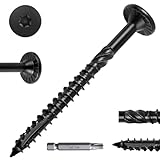
- Quality Material: These Heavy-Duty wood screws are made of high-quality alloy steel and are compatible with ACQ-treated lumber. They are built to last and can withstand harsh outdoor conditions.
- Rust-Resistant: These screws are coated with a rust-resistant finish that prevents corrosion and increases their lifespan, making them an excellent choice for outdoor use.
- Superior Grip: The serrated thread design of these Heavy-Duty wood screws provides a secure and stable connection, which is essential for decking projects.
- Easy Installation: The star-drive design maximizes torque and reduces cam-out, protecting the fastener and bit. The sharp, pointed tip and self-drilling feature make it easy to install these Heavy-Duty wood screws into decking and other wooden surfaces quickly and efficiently.
- Versatile: These screws are designed for use in multiple materials, including thin sheet metal, PVCu, MDF, chipboard, softwood, and hardwood. They are suitable for a variety of woodworking projects, such as decking, framing, fencing, and other outdoor applications.
A step-by-step selection method
- Map the load and service function. Sketch the connected components, supports and load path. Label the actions the joint must transfer and any movement, alignment or access function it must provide.
- Set the reversibility objective. Decide whether the joint is for occasional access, component replacement, reconfiguration, relocation or eventual recovery. Specify which parts must remain usable after release.
- Choose a dry mechanical concept. Shortlist screws, bolts, threaded rods, dowel-type fasteners or a proprietary bracket only after confirming that the concept can carry the required actions and fit the materials.
- Design the geometry around removal. Locate heads, nuts and washers where they can be seen and reached. Reserve tool clearance, withdrawal space and a safe temporary-support position. Check the full sequence, including the final fastener.
- Limit and standardize the hardware. Remove unnecessary connection points and use consistent, documented details where the engineering design allows. Keep any special connector or fastener variant clearly identified.
- Check component protection. Review edge distances, local bearing, splitting, crushing, hole enlargement, coating damage and any seal or membrane that could be torn during release. Design replaceable parts where damage is an expected result of an overload mechanism.
- Assess elastic behavior and overload. Confirm that the connection remains within its intended elastic range for the design actions. Define what must be replaced after an overload and which parts require inspection before reuse.
- Write the installation and removal instructions. State tool types, access sides, support points, tightening or torque requirements where specified by the design, and the order for releasing hardware. Include a method for labeling parts and recording damage.
- Verify the final detail. Have the responsible structural or building-services designer check the connection against applicable codes, project loads, exposure and fire requirements. Confirm the current connector manufacturer’s drawings, fastener schedule and limitations before construction.
Elastic behavior, damage and reuse decisions
Reversibility is strongest when the joint returns to its intended geometry after loading and can be released without permanent distortion. Plastic deformation changes hole size, bearing surfaces, bolt or rod shape, bracket alignment and the tolerances needed for reassembly. Even if a nut can still be removed, the altered joint may no longer have the design capacity or stiffness.
Inspect before calling a part reusable
- Look for bent, necked, cracked or galled fasteners; damaged threads; missing washers; and corrosion that reduces section or prevents proper tightening.
- Inspect timber for splitting, crushing, pulled-out threads, enlarged holes, moisture damage and permanent displacement around brackets or dowels.
- Check brackets for yielding, tears, elongated holes, coating loss and distortion that changes their bearing or alignment.
- Compare measured geometry with the tolerances needed for the next installation, rather than relying on visual appearance alone.
If the joint has experienced an overload, follow the project’s engineering disposition. Replace a designed sacrificial fuse when required, and do not return a visibly or permanently deformed connection to service merely because it can be dismantled.
Independent reader supportYour contribution helps us test, update, and keep practical guides available for everyone.Plan the physical disassembly
A reversible detail should come with a practical release sequence. A typical project procedure is:
- Review drawings, connector schedules and any recorded alterations before touching the joint.
- Isolate loads and services, and install the temporary support or restraint identified by the designer.
- Expose only the access needed to reach the hardware; avoid cutting components that are intended for recovery.
- Remove fasteners in the specified order, retaining washers, nuts, sleeves and bracket pieces together and labeling their original location.
- Withdraw components along the path allowed by the geometry. Stop if a part binds, twists or begins to split; forcing it can turn a reversible operation into permanent damage.
- Inspect and photograph each component, record deformation or corrosion, and segregate items that require engineering review or replacement.
- Store recoverable parts protected from moisture, impact and loss of identification until the next design is confirmed.
This sequence is part of the connection design, not merely a site-management note. If a worker cannot reach or support a part safely, the joint is not functionally reversible even when its fasteners are theoretically removable.
How to use the principles outside timber
Visible, accessible mechanical joints, limited connection points, standardized details and a documented removal sequence are broadly useful for steelwork, demountable partitions, façade subassemblies, plant supports and service installations. The material-specific behavior is not transferable by assumption. Steel bolts, for example, require checks for bolt tension, slip, bearing, corrosion and any pretension procedure; a masonry anchor or concrete insert introduces different substrate and edge-failure questions; a service coupling may be governed by pressure, leakage, electrical isolation or fire stopping.
Best Value

- Quality Material: These Heavy-Duty wood screws are made of high-quality alloy steel and are compatible with ACQ-treated lumber. They are built to last and can withstand harsh outdoor conditions.
- Rust-Resistant: These screws are coated with a rust-resistant finish that prevents corrosion and increases their lifespan, making them an excellent choice for outdoor use.
- Superior Grip: The serrated thread design of these Heavy-Duty wood screws provides a secure and stable connection, which is essential for decking projects.
- Easy Installation: The star-drive design maximizes torque and reduces cam-out, protecting the fastener and bit. The sharp, pointed tip and self-drilling feature make it easy to install these Heavy-Duty wood screws into decking and other wooden surfaces quickly and efficiently.
- Versatile: These screws are designed for use in multiple materials, including thin sheet metal, PVCu, MDF, chipboard, softwood, and hardwood. They are suitable for a variety of woodworking projects, such as decking, framing, fencing, and other outdoor applications.
Use the timber evidence as a design-for-disassembly method, then obtain the relevant material, product and jurisdictional checks for the actual system. The reviewed publication does not establish a universal connector specification or current local code requirements.
Common failure modes and corrections
| Observed problem | Why reversibility is lost | Correction for the next detail |
|---|---|---|
| Fastener is visible but a tool cannot turn | Adjacent work or insufficient clearance blocks the removal motion | Model tool access and the complete turning or withdrawal path before closing the assembly |
| One component can be removed only by cutting a membrane or finish | The joint was concealed without an access strategy | Provide an intentional access panel, removable trim or a different joint location |
| Many small fasteners have different heads or sizes | Removal is slow, error-prone and difficult to document | Reduce unnecessary points and standardize hardware where capacity permits |
| Joint comes apart but timber holes are enlarged or split | Local stresses, repeated extraction or inadequate geometry damaged the substrate | Recheck spacing, edge distances, bearing and the expected number of assembly cycles; replace or redesign the affected part |
| Bracket is undamaged but its fasteners are bent or yielded | The connection left the elastic range during loading | Inspect the complete connection, replace damaged hardware and review any sacrificial-fuse strategy |
| Recovered parts no longer align | Permanent deformation or undocumented tolerances changed the assembly geometry | Measure parts after removal and include adjustment or replacement provisions in the design |
| Replacement hardware is uncertain | Fastener grade, washer arrangement or connector variant was not recorded | Maintain a connector schedule with part identification, installation requirements and removal notes |
What to place in the project specification
A useful specification should identify the intended future action, not simply call for “removable” fixings. Include:
- The components and the connection’s structural or service function.
- Design actions, governing combinations, movement limits and environmental exposure.
- Connector category, material compatibility, fastener grade and the manufacturer’s required assembly.
- Access zones, tool clearance, temporary support points and the release order.
- Inspection criteria for reused fasteners, brackets and component holes.
- Any sacrificial ductile element, its replacement procedure and the conditions that trigger replacement.
- Applicable codes, approvals, fire or corrosion requirements and the responsible designer’s review.
- Drawings or a digital record showing connector locations, variants, tightening information and labeling conventions.
These records let a future contractor distinguish a deliberately reversible joint from a conventional joint that merely happens to have exposed bolts.
Quick wins for a faster PC:
Scan for outdated or missing drivers - takes under a minuteDriver Scan →Repair Windows errors before they cause bigger problemsFix Now →Fix the driver behind crashes, sound loss and screen glitchesFind Drivers →Decision examples
Access panel beside a service zone
If the main requirement is periodic inspection, prioritize one-sided access, visible heads and a sequence that lets the panel be supported while the last fastener is removed. Protect the panel edges and finish from repeated handling. A highly specialized connector is unnecessary unless the loads or alignment requirements demand it.
Replaceable timber member in a frame
Map the frame’s load path first and provide temporary support for the member before releasing its connection. A bolted or threaded-rod arrangement may offer clear access when both sides remain reachable; a screw-fastened proprietary bracket may suit a different geometry. In either case, check the timber around every hole and define how a damaged fastener or bracket is assessed before reuse.
Assembly intended for relocation
Design for more than a single successful dismantling. Standardize parts, record their locations, avoid concealed hardware, protect surfaces and verify that the joint remains in the elastic range under expected loading. Measure and label every recovered component so the next installation does not depend on guesswork.
Quick Recap
Product prices and availability are accurate as of the date/time indicated and are subject to change. Any price and availability information displayed on Amazon at the time of purchase will apply.

