Quick wins for a faster PC:
Fix the driver behind crashes, sound loss and screen glitchesFind Drivers →Repair Windows errors before they cause bigger problemsFix Now →Scan for outdated or missing drivers - takes under a minuteDriver Scan →After construction, inspect the finished shoreline work or pier against the approved plans and as-built record, establish a site-specific baseline, and document repeatable observations of structure condition, ground or bed changes, scour, drainage, and relevant environmental or neighboring effects. The inspection is not a one-size-fits-all checklist: the structure type, materials, exposure, permit conditions, and local authority determine what must be checked and how often.
Start with the approved design and a defensible baseline
The first post-construction inspection is a close-out comparison, not merely a walk-around. Confirm that the completed work occupies the approved location and footprint, uses the specified materials, and has the intended dimensions, slopes, elevations, piles, anchors, drainage features, and end treatments. Record every approved change and distinguish it from an unapproved field change.
As an Amazon Associate I earn from qualifying purchases.
Gather the documents before going to the site:
- Approved drawings, specifications, permit conditions, and mitigation requirements.
- As-built drawings, contractor statements, survey points, and construction inspection records.
- Photographs taken during installation, including buried layers, geotextile, footing excavations, pile installation, connections, and drainage outlets.
- Pre-construction photographs, beach or bank profiles, tide or water-level information, and any prior erosion observations.
- Names and contact details for the designer, contractor, required inspector, surveyor, and permitting authority.
Mark the precise observation points on a plan. A baseline should identify where measurements and photographs were taken, the date and approximate water or tide conditions, and the season or time window. The California Coastal Commission’s staff guidance states: “Without information on local conditions prior to the project, it is usually impossible to separate project related changes from natural variability.” That January 1997 guidance, prepared by Lesley Ewing, is a staff resource rather than a binding standard, but its principle applies broadly: without a known starting condition, later movement can be misread as construction failure or natural fluctuation.
Recommended Free Tools
What to inspect on shoreline protection
Choose observations that match the design and its credible failure modes. A revetment, seawall, living shoreline, bank stabilization project, and toe structure do not require identical checks.
#1 Best Overall

- Crafted from the highest quality materials
- Built for performance and durability
- Made in United States
Structure condition and geometry
- Look for displaced, missing, cracked, fractured, or weathered armor units, rock, blocks, panels, piles, walls, or other facing materials.
- Check whether the crest, toe, slope, alignment, and transitions remain within the approved footprint and profile.
- Look for settlement, bulging, slumping, tilting, open joints, loss of interlocking, or a changed slope.
- Inspect exposed underlayers, filter fabric, bedding, drainage outlets, weep holes, and tie-ins at the ends.
- Record vegetation or debris that hides defects, and note whether maintenance access remains available.
Beach, bank, and bluff changes
Where the project is intended to protect a beach, bank, or bluff, measure the features that matter to its performance. Possible observations include beach width in front of the structure and down-coast, beach or bed profile, upper-bluff retreat, bank erosion, and changes in the revetment edge or slope. Use the same fixed points and comparable conditions so that a seasonal water-level change is not mistaken for permanent retreat.
Toe scour and bed levels
Scour at the toe can remove support while the visible face still appears intact. Check for a lowered bed, a deeper channel or hole beside the structure, exposed foundation material, undermined toe rock, voids, or a sudden drop at the structure edge. The Environment Agency’s Toe structures management manual, published 12 December 2012, describes its purpose as providing “those responsible for flood defences, coastal erosion protection structures and other coastal structures with practical guidance on how to determine, monitor, assess and mitigate for the effects of toe scour.” A scour observation is not, by itself, a structural diagnosis; it is a reason to compare levels with the design and obtain qualified advice when support may be compromised.
Ends, transitions, and drainage
Many problems begin at the ends rather than in the middle of a protection line. Photograph and measure the up-coast and down-coast transitions, adjacent unprotected bank, return walls, and any abrupt change in slope. Note concentrated flow, ponding, blocked drains, leaking outlets, rills, gullies, or runoff that bypasses the intended drainage path. Compare neighboring shoreline levels and widths where end effects could transfer erosion beyond the project.
What to inspect on a pier or dock
A pier inspection should connect visible condition to the support system shown in the as-built documents. A floating structure, fixed pile pier, anchored platform, and shore-connected dock have different risks, so select the scope accordingly.
Rank #2

- WEATHERPROOF PAPER: 64 pages / 32 sheets per side spiral notepad. All-weather paper won’t turn to mush when wet and will repel water, sweat, grease, mud, and even survive the accidental laundry mishap. Make sure your pocket notebook stays RIGHT in the Rain.
- WIRE-O BINDING: Tough impact-resistant Wire-O binding won't lose its shape in your backpack or book bag. Unlike a standard spiral notebook, Wire-O keeps your open pages aligned and intact.
- WRITE IN THE RAIN: When wet, use a standard #2 pencil or an all-weather pen. Standard ballpoints and permanent markers will work when paper is dry. Water-based inks will bead or wash off Rite in the Rain Paper.
- WATERPROOF NOTEBOOK COVER: Polydura material creates a tough but flexible outer shell. Whether you're needing a hiking journal, outfitting your police gear, starting a golf journal, or just keeping a shower notebook, the Polydura cover material will defend your field notes from scratches and stains.
- RECYCLABILITY: Unlike synthetic waterproof paper, wood-based Rite in the Rain is completely recyclable. Please recycle Rite in the Rain as you would other office printer paper.
Deck, framing, and connections
- Walk the deck for soft spots, deflection, unevenness, loose or missing boards, damaged grating, trip hazards, and excessive movement.
- Inspect beams, joists, brackets, bolts, welds, hangers, splice plates, and fasteners for corrosion, cracking, deformation, looseness, or missing components.
- Check handrails, ladders, cleats, bumpers, gangways, utility conduits, and access points that could affect safe use or impose unexpected loads.
- Look for water trapping, rot, splitting, delamination, marine-borer damage, or impact marks in timber and composite members.
Piles, anchors, footings, and support conditions
Confirm that piles are plumb or within the design tolerance, remain embedded, and have not been exposed by bed lowering. Look for scour around each support, voids beneath footings, settlement at the shore connection, displaced pile caps, damaged anchor rods, and movement at hinges or guides. For underwater elements, visibility, water depth, current, and marine growth can hide defects; a qualified underwater inspector or engineer may be needed rather than relying on a surface view.
Construction-stage records and final acceptance
Relate the post-construction observations to the records made while work was exposed. Prince William County, Virginia, provides one local example: land-based footing holes may require inspection before concrete is poured; piles or underwater anchors may require a county-approved third-party inspector; concealment approval may be required before structural elements are covered; and a final inspection is then scheduled. That sequence is a local construction process, not a universal recurring-inspection rule. Your permit and local building or shoreline authority control the applicable sequence.
Use a repeatable field method
Repeatability matters more than collecting a large number of unconnected photographs. Use the following sequence and adapt it to the project’s permit conditions and design.
- Confirm identity and conditions. Record the project address or coordinates, inspection date and time, weather, recent storms, water level or tide stage, access limitations, and the people present.
- Reoccupy fixed points. Use marked survey points, stakes, benchmarks, pile numbers, stationing, or other identifiable locations. If a marker has moved, document that fact instead of silently replacing it.
- Take context photographs first. Photograph the entire shoreline reach or pier approach so later viewers can orient each detail. Then take close images of defects, each with a scale or recognizable reference where practical.
- Measure the features selected in the monitoring plan. A tape can support simple beach-width, retreat, or offset observations when the ground is accessible. Use a survey, level, depth measurement, or other professional method when elevation loss, profile change, or structural movement requires precision.
- Repeat under comparable conditions. Keep the same vantage points, measurement definitions, units, and approximate season or time window. Note unusual storms, tides, waves, vessel wakes, construction nearby, or emergency repairs that make a direct comparison unreliable.
- Compare with the baseline and design. Mark each observation as unchanged, changed, uncertain, or inaccessible. Separate natural variability from a change that is spatially associated with the project.
- Assign an action status. Use the project’s pre-agreed triggers to classify an item as routine maintenance, increased monitoring, engineer or surveyor review, urgent safety control, or authority notification.
Photographs should carry an identifier, location, direction of view, date, and condition notes. A photograph without location or scale is difficult to use as evidence of movement.
Rank #3
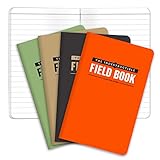
- BUILT TO LAST – WATERPROOF, TEAR-RESISTANT, WEATHERPROOF – Completely Indestructible! Suitable for any condition.
- GET MORE VALUE 4-PACK consists of 192 PAGES IN TOTAL - Each book contains 48 PAGES (24 sheets). GET MORE, SPEND LESS!
- STONE PAPER – WATERPROOF so you can write in the rain or even under water.
- POCKET SIZED - This mini memo pad is 3.5x5.5 inches and contains LINED pattern. NO SPECIAL PENS REQUIRED use regular ball point pens or pencils
Define action triggers before defects appear
Triggers must be written for the project rather than borrowed from a generic internet checklist. They should state what is measured, the comparison point, the tolerance or condition, who reviews it, and what action follows. Examples from California guidance include rock displaced beyond a revetment’s original footprint or settlement below a defined elevation. The exact elevation and displacement limit must come from the approved design or a qualified professional, not from those examples.
| Observation | Why it matters | Typical next step |
|---|---|---|
| Armor, blocks, or other material outside the approved footprint | May indicate wave loading, loss of interlock, or an altered profile | Photograph and measure; obtain design or engineering review before placing material back |
| Settlement, tilting, bulging, or a changed slope | Can reduce freeboard, stability, or drainage performance | Establish survey control and request a qualified engineer or surveyor assessment |
| New or enlarging toe scour, exposed underlayer, or voids | May remove support from a wall, revetment, footing, or pile | Restrict unsafe access where needed, measure bed levels, and escalate promptly |
| Retreat concentrated at a project end | May show an end effect or an unprotected transition | Compare neighboring profiles and seek design and permit advice before extending work |
| Cracked, loose, corroded, or deformed pier members or connections | Can reduce load capacity or create a falling or collapse hazard | Control access and obtain structural or marine engineering evaluation |
Routine maintenance should not become an unreviewed rebuild. Replacing a loose board may differ from changing a wall’s footprint, adding rock, extending a pier, or altering piles. Check the authorization path before work begins.
Include environmental and neighboring effects
Inspection is not limited to the owner’s structure. Record beach width and profile in front of and down-coast of shoreline protection, changes near project ends, redirected runoff, and erosion or deposition on adjacent property. Note whether access, drainage, or navigation has changed.
For coastal piers, review the concerns identified by Maine’s Department of Marine Resources where applicable: coastal wetland habitat, water quality, marine organisms, fishing and other existing uses, navigation, and boat traffic. The relevance and legal weight of each concern depend on the site and permit. A visual observation does not replace required biological, water-quality, or navigation review, but it can identify changes that should be reported.
Rank #4

- WEATHERPROOF PAPER: 160 pages / 80 sheets per book. All-weather paper won’t turn to mush when wet and will repel water, sweat, grease, mud, and even survive the accidental laundry mishap. Make sure your book stays RIGHT in the Rain.
- COVER / BINDING: Everything in this bound book is designed to survive Mother Nature's wrath. The Fabrikoid cover, the Rite in the Rain paper, the sewn-in pages, even the glue is weatherproof.
- WRITE IN THE RAIN: When wet, use a standard #2 pencil or an all-weather pen. Standard ballpoints and permanent markers will work when paper is dry. Water-based inks will bead or wash off Rite in the Rain Paper.
- ADMISSIBLE: For legal defensibility, a notebook is required to have sequentially numbered, sewn-bound pages.
- RECYCLABILITY: Unlike synthetic waterproof paper, wood-based Rite in the Rain is completely recyclable. Please recycle Rite in the Rain as you would other office printer paper.
Maintenance, repairs, and permits
Read the permit conditions before repairing, replacing, or modifying anything. Confirm whether the proposed work is maintenance within the approved design, a repair requiring notice, or a reconstruction or expansion requiring a new authorization. Keep records of the defect, the proposed remedy, materials, quantities, footprint, dates, and approvals.
New Jersey provides one jurisdiction-specific example: dock and pier work in regulated areas follows an authorization path, and coastal construction, repair, or reconstruction generally requires a permit subject to applicable exemptions and authorizations. That example cannot be applied nationwide. Local coastal, wetlands, building, navigation, floodplain, and environmental agencies may each have separate requirements.
When movement, scour, settlement, or structural damage is suspected, ask a qualified coastal or marine engineer, structural engineer, or surveyor to define the needed measurements and action. California guidance specifically recommends a licensed engineer or surveyor when a revetment has moved so elevation loss can be measured and necessary action determined.
Free tools Windows power users keep installed
One-click scans. No signup required.
Choose an inspection schedule that fits the project
There is no defensible universal interval for every shoreline or pier. Set the schedule in the monitoring plan and permit by considering exposure, design life, consequence of failure, recent storms, observed rate of change, public access, and the sensitivity of nearby habitat or navigation. Use additional observations after an exceptional storm, vessel impact, flood, landslide, unusual scour event, or emergency repair. A schedule should also specify who observes, who has authority to close access, how quickly triggers are reported, and where records are stored.
Best Value
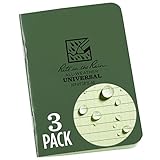
- Weatherproof Paper: 24 Pages / 12 Sheets Per Pocket Notepad. All-Weather Paper Won’T Turn To Mush When Wet And Will Repel Water, Sweat, Grease, Mud, And Even Survive The Accidental Laundry Mishap. Make Sure Your Stapled Notebook Stays Right In The Rain.
- Cover Material: Field-Flex Is Rite In The Rain'S Most Flexible Cover Material. Mud And Water Run Right Off, Protecting Your Field Notes In Adverse Weather Conditions.
- Binding: Tough Nickel-Plated Rust-Resistant Staples Hold The Notebook Together.
- Write In The Rain: When Wet, Use A Standard #2 Pencil Or An All-Weather Pen. Standard Ballpoints And Permanent Markers Will Work When Paper Is Dry. Water-Based Inks Will Bead Or Wash Off Rite In The Rain Paper.
For a new project, a practical plan often includes a close-out baseline, a planned follow-up under comparable conditions, and event-driven inspections. The exact dates and intervals belong in the approved project documents; do not substitute a generic annual or seasonal promise for that decision.
Compare inspection plans by capability, not by checklist length
If two proposed plans are being evaluated, compare what each can actually detect and what happens after a finding.
| Comparison question | What to look for |
|---|---|
| Failure modes covered | Structure condition, settlement, scour, drainage, beach or bank change, end effects, pier connections, piles, anchors, and environmental or neighboring effects relevant to the design |
| Repeatability and precision | Fixed points, consistent photographs, defined measurements, comparable conditions, and survey methods where elevation or movement requires them |
| Response speed | Clear thresholds, responsible reviewers, emergency contacts, access controls, and reporting deadlines |
| Qualifications | A defined point at which a licensed engineer, surveyor, underwater inspector, or other specialist must be engaged |
| Authorization control | A check that maintenance, repair, replacement, and footprint changes follow current permit and local-authority requirements |
Field equipment and recordkeeping
A waterproof notebook, durable camera or phone, spare batteries, a tape measure, marker, compass or direction app, measuring staff, and copies of the approved plan can support straightforward observations. A tape and photographs cannot determine structural safety, underwater capacity, or legal compliance. Use survey equipment or specialist inspection where the feature or trigger requires it.
Store the inspection form, photographs, measurements, weather and water conditions, sketches, correspondence, repair invoices, permits, and professional reports together. Preserve original photographs and retain a version showing any later annotations. A clear record lets a future inspector distinguish a repaired condition from a new change.
When an observation requires immediate escalation
Stop ordinary access and contact the responsible professional or authority promptly if there is sudden structural movement, a collapsing or undermined edge, a deepening scour hole at a critical support, exposed electrical or utility equipment, a detached pier component, a blocked public route, or a condition that could injure visitors or damage navigation. Do not enter unstable areas to obtain a closer photograph. Record what can be observed safely from a secure location, restrict access if authorized, and follow the project’s emergency and permit procedures.
Quick Recap
Product prices and availability are accurate as of the date/time indicated and are subject to change. Any price and availability information displayed on Amazon at the time of purchase will apply.

