Crashes, No Sound, or Screen Glitches?
Random freezes, missing sound and display glitches usually trace back to one bad driver. Find and replace yours safely.Free scan · under a minutePC Slower Than It Used to Be?
A free scan shows the junk files, broken settings and background clutter dragging Windows down - then fixes them in one click.Free scan · Windows 10 & 11A school building saves energy without making classrooms uncomfortable when its envelope, HVAC, lighting, controls and operating routines are designed as one system. Insulation and air sealing reduce unwanted heat flow; efficient equipment and lighting cut the energy needed to condition and illuminate rooms; schedules and calibrated controls prevent waste; and ventilation, filtration, temperature and humidity are protected throughout. The right package depends on the local climate, building condition, room use and existing systems. This guide follows the U.S. Department of Energy (DOE) approach, so codes, utility rates, rebates and ventilation requirements must be checked for the project’s jurisdiction.
Start with a whole-building plan
Energy projects fail when one upgrade is judged in isolation. DOE’s school guidance groups insulation, air sealing, efficient windows, HVAC and water-heating improvements, efficient lighting, occupancy and daylight controls, advanced controls, and occupied-hours operating protocols as complementary measures. A school should first establish how each area is used, when it is occupied, what temperatures and outdoor-air rates are required, and where complaints or high utility use occur.
As an Amazon Associate I earn from qualifying purchases.
Use an energy assessment and an indoor-environment assessment together. Review utility bills, equipment age and condition, control sequences, temperature and humidity trends, ventilation performance, filtration, classroom complaints and maintenance records. A package that lowers electric demand but creates hot rooms, drafts, excessive humidity or inadequate outdoor air is not a successful retrofit.
Set performance requirements before selecting equipment
- Define occupied and unoccupied temperature and humidity limits for the rooms served.
- Document required outdoor-air delivery, filtration and air-distribution objectives.
- Identify schedules for classrooms, offices, gyms, kitchens, auditoriums and after-school activities rather than applying one schedule to the whole building.
- Include maintenance access, controls compatibility, installation disruption and expected service life in the decision.
- Compare first cost, lifecycle cost, energy use, indoor-air quality (IAQ), comfort and climate suitability.
Improve the envelope without trapping stale air
Insulation and air sealing
Insulation slows conductive heat transfer through roofs, walls and floors. Air sealing reduces uncontrolled leakage around doors, windows, penetrations and joints, limiting winter heat loss, summer heat gain and drafts. These measures can reduce the load on heating and cooling equipment and make room temperatures more even.
#1 Best Overall
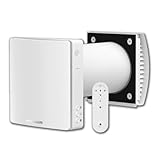
- Ultra High Efficiency ECOasis ERV-rm Series Ductless Energy Recovery Ventilation System with 97% Heat Recovery| Minimal Energy Consumption with an Average Power draw of only 8W | Wall-Mounted with Variable Length Air Channel Duct to Suit Different Wall Thicknesses| Large Volume Air Output with Up to 35 CFM of Treated Airflow| Washable Re-usable Integrated Prefilters along with F7 (MERV13) Filter| Wi-Fi Controlled via Free Smartphone App (along with Standard Controller)| Rainproof Design with Hooded and Angled Outdoor Cover| Super-Silent Operation with a Maximum Sound Output of 32.7 dB(A)| Remove Room Air Pollutants: Filtration of air impurities such as MVOCs (Microbial Volatile Organic Compounds) along with removal of dust and other contaminants that commonly cause coughing fatigue and allergy aggravation| Freshen and Renew Breathing Air: Extraction of stale and stuffy room air while simultaneously introducing fresh outdoor air into the room to improve oxygen levels and overall quality of life| Minimize Strain on the Home Heating or Cooling System: By cooling the incoming hot outside air in summertime and heating the incoming cold outside air in wintertime the system intelligently prevents a change in indoor air temperature by using that outgoing stale indoor air to preheat or precool the incoming outdoor air depending on the season (Recommended to install two 50 Series ERVs to take advantage of this benefit)| Continuously Monitor Air Quality: A built-in CO2 sensor allows automated management of oxygen CO2 levels inside the room to maximize breathability| Power Supply: 110 ~ 240 VAC (50~60 Hz) with Plug-In Power Cord| Dimensions (WDH): 9-3/8" x 19-5/8" x 10-1/8"| Airflow w/ F7 Filter (Lo/Med/Hi/Max): 11.8 / 23.5 / 29.4 / 35.3 CFM | In-Wall Channel Span: 11" ~ 18-1/2"| Method of Control: Onboard Interface Handheld Remote Smartphone App| Product Weight: 11 lbs| Input Power (Lo/Med/Hi): 6 / 7 / 8 W| Water-Resistance Rating: IPX4| Diameter of Air Duct: 6-1/4"|User's Manual
Air sealing is not a ventilation strategy. Once leakage is reduced, the school still needs a deliberate method for supplying and distributing outdoor air. DOE’s HVAC guidance treats thermal comfort, ventilation and filtration as linked functions. Seal the envelope while verifying that mechanical ventilation, exhaust systems and pressure relationships continue to work as intended.
Windows, shading and solar gain
Efficient windows can reduce conductive losses and unwanted solar gain. Select glazing and frames for the climate and orientation, and check how the choice affects daylight, glare, acoustics, condensation risk and views. Exterior shading, properly designed overhangs or operable shades can limit summer heat while preserving useful daylight. In a classroom, a lower cooling load is not a benefit if glare forces teachers to close blinds and switch on all the lights.
Moisture and construction quality
Envelope work must manage bulk water, vapor movement and thermal bridges. Inspect transitions at roofs, walls, foundations and window openings, and verify installation rather than relying only on product ratings. Moisture problems can damage finishes and create IAQ concerns even when modeled energy use looks favorable.
Recommended Free Tools
Keep HVAC savings compatible with comfort and IAQ
DOE states that school HVAC is integral to learning and health because it provides comfortable thermal conditions together with ventilation and filtration for good IAQ. Energy savings should therefore come from reducing unnecessary loads and improving system performance, not from simply cutting required outdoor air or allowing unsuitable classroom temperatures.
Efficient equipment and right-sizing
When boilers, chillers, rooftop units or other major systems approach replacement, evaluate high-efficiency alternatives as part of a complete retrofit package. DOE’s school efficiency guides address controls, boilers, chillers and rooftop units and encourage facilities teams to consider performance, savings and implementation cost together. Equipment that is oversized for the post-retrofit load can cycle excessively, control humidity poorly and wear faster; sizing should reflect the improved envelope and actual room loads.
Rank #2

- SmartFlow ECM Motors: Dual brushless motors automatically adjust speed for optimal airflow and quiet operation under varying pressure conditions
- Customizable Airflow (30–110 CFM): Multi-speed selector supports balanced, positive, or negative pressure setups
- Energy Recovery & Protection: Hygroscopic transfer core balances heat and moisture for improved comfort and efficiency
- Dual MERV 13 Filters Included: High-efficiency filters clean incoming and outgoing air; optional washable MERV 6 filters available
- Flexible Installation & Controls: Ceiling, wall, or floor mountable with plug-in or hardwired options; compatible with Wi-Fi module, touch screen wall control, and low-voltage timer switch
Ventilation options
Where appropriate to the climate and system design, schools can consider heat or energy recovery ventilation, economizers and demand-control ventilation. Recovery systems transfer heat or moisture between exhaust and incoming air, reducing conditioning energy while maintaining outdoor-air flow. Economizers can use favorable outdoor conditions for cooling, but controls must prevent excess humidity or the introduction of polluted outdoor air. Demand-control ventilation can respond to occupancy, but its sensors, minimum-air settings and sequences must be commissioned so that rooms receive required ventilation during occupied periods.
Air distribution, filtration and humidity
Efficient equipment cannot compensate for blocked filters, poor diffuser placement, unbalanced airflow or failed dampers. Verify that outdoor air reaches the occupied breathing zone, that return and exhaust paths are open, and that filtration is appropriate for the equipment and IAQ objectives. Check temperature and humidity in representative rooms, not only at the central plant. A system that meets a plant-room setpoint can still leave a perimeter classroom cold or a top-floor room overheated.
What’s actually slowing this PC down?
Pick the symptom - the matching free tool is one click away.
Heat pumps and fuel changes
A heat pump or other efficient heating option may reduce site energy or emissions, but suitability depends on climate, electrical capacity, distribution temperatures, backup strategy and domestic-hot-water requirements. Analyze the complete system rather than comparing nameplate efficiency alone. Preserve ventilation and filtration functions when changing the heating or cooling plant.
Make controls and commissioning do the work
Controls convert efficient equipment into actual building performance. DOE commissioning guidance identifies faults and mistakes that can waste energy and harm IAQ or comfort. Commissioning should occur during design, construction, handover and operation, with records that the facilities team can use after contractors leave.
Schedules and setpoints
Align start-up, shutdown and temperature setbacks with real occupancy. Classrooms, administrative areas, gyms and evening-use spaces often have different patterns. Avoid blanket overrides that run every air-handling unit all night. At the same time, allow enough preconditioning time for the building to reach acceptable conditions before students arrive, and use freeze protection and humidity safeguards where required.
Rank #3

- Heat Recovery Ventilator (HRV) for Single Room Ventilation: Equipped with a high-efficiency ceramic heat exchanger that recovers up to 90% of heat energy from exhaust air, improving indoor air quality and reducing heating energy consumption
- Smart WiFi & Remote Control: Control your ventilation system anytime via the Tuya App or included remote. Adjust fan speed, humidity and mode for smarter air management
- 3 Airflow Modes: Choose between Fresh Air, Exhaust, and Recirculation modes to create a comfortable and healthy indoor environment
- Energy-Efficient EC Motor: Features an 8.5W EC motor with PWM control, providing powerful airflow, ultra-quiet operation under 30dB, and low energy consumption for continuous, efficient ventilation
- Versatile Wall-Mounted Ventilation System: Weiworld 150 mm (6 Inch) heat recovery ventilation system suitable for apartments, offices, barns, sheds, tiny homes, and garages—bringing clean, fresh air wherever you need it
Sensors and sequences
Calibrate temperature, humidity, pressure, occupancy and outdoor-air sensors. Confirm that a displayed value matches a calibrated reference and that the control sequence responds correctly. Review minimum outdoor-air positions, economizer logic, heating and cooling lockouts, supply-air-temperature resets, variable-speed drives and alarm thresholds. A failed sensor can drive simultaneous heating and cooling or keep a fan at full speed.
Do these 3 things before closing this tab:
1Clear out junk files and repair common Windows errors2Fix the driver behind crashes, sound loss and screen glitches3Repair Windows errors before they cause bigger problemsFault detection and ongoing commissioning
Use trend logs and fault detection to find stuck dampers, simultaneous heating and cooling, abnormal run times, sensor drift, short cycling and unexpected nighttime operation. Recommission after major occupancy changes, equipment replacements or control-system modifications. Give staff a clear escalation path: observe the symptom, check the trend and physical condition, correct the control or component, and verify the result under occupied conditions.
Reduce lighting energy while preserving visual comfort
Efficient fixtures reduce lighting demand and internal heat, which can also lower cooling loads. Occupancy sensors can switch or dim lights in intermittently used rooms; daylight sensors can reduce electric lighting near windows. Design the control zones around actual daylight patterns and room use rather than placing an entire floor on one sensor.
Check illuminance, glare and flicker after installation. A daylight strategy that creates glare on screens or whiteboards may cause teachers to defeat the controls. Coordinate fixture layout, shading, finishes and control settings so that useful daylight is retained without overheating the room.
Include water heating and plug loads
DOE lists water-heating upgrades among common school efficiency measures. Inspect domestic-hot-water recirculation, storage temperatures, distribution losses, leaks and schedules, while maintaining code-required sanitation and user safety. Kitchens, locker rooms and custodial areas may have very different demand profiles, so controls should match actual use.
Free tools Windows power users keep installed
One-click scans. No signup required.
Rank #4

- 4-Inch Plug-in EC Wall Fan with Reversible Remote: Control dual airflow instantly via remote-exhaust stale air or intake fresh air. No wiring needed: Plug directly into any standard outlet
- Simple Wall-Mount Drilling Installation: Secure to walls with included screws (drill required). Cannot be hung-designed for stable wall-mounting in bedrooms
- Stainless Steel Slanted Rain Hood: Corrosion-resistant angled design deflects rain and humidity. Zero-maintenance outdoor durability
- Washable Ceramic Core with No Replacements: Rinse reusable filter every 3 months-traps fine particles for cleaner indoor air
- Plug-in Operation in Minutes: Includes power cord and plug. Drill wall, mount fan, and plug in. No electrician required
Inventory computers, printers, kitchen equipment, vending machines and other plug loads. Automatic shutdowns, power-management settings and replacement of inefficient equipment can reduce baseloads, but do not disconnect devices needed for life safety, security, refrigeration or accessibility.
Use renewable generation after reducing avoidable demand
DOE notes that photovoltaic systems can be installed with new construction or as a retrofit to offset base energy use. Solar generation complements efficiency; it does not repair a leaking envelope, a poorly controlled HVAC system or inadequate ventilation. First reduce loads and correct operating faults, then assess roof condition, shading, structural capacity, electrical interconnection, fire access, maintenance and the school’s load profile.
Choose measures for climate and room type
A coastal, humid school has different priorities from a cold-climate school, and a science laboratory has different ventilation needs from a general classroom. DOE’s zero-energy-schools guidance emphasizes climate-zone-aware design. Evaluate each package against the conditions below:
| Decision factor | What to examine | Comfort or IAQ safeguard |
|---|---|---|
| Climate | Heating and cooling seasons, humidity, solar exposure and outdoor-air conditions | Verify humidity control, economizer limits and envelope details for the local climate |
| Room use | Occupancy density, schedules, equipment and special exhaust requirements | Set ventilation, temperature and controls by room type |
| Existing systems | Equipment age, distribution, controls compatibility and remaining service life | Commission the complete air path, not only the new component |
| Installation | Phasing, noise, access, asbestos or other hazardous-material procedures and school calendar | Plan temporary ventilation and safe occupied-area boundaries |
| Lifecycle | First cost, energy use, maintenance, replacement parts and expected life | Favor systems staff can monitor, service and keep balanced |
A practical implementation sequence
- Document existing conditions. Gather bills, interval data where available, drawings, equipment schedules, control graphics, maintenance logs and comfort or IAQ complaints. Walk the building and note hot and cold spots, drafts, noise, condensation and blocked grilles.
- Measure before changing setpoints. Trend temperature and humidity in representative rooms and inspect outdoor-air, filtration and airflow performance. A short-term indoor-air-quality monitor can provide CO₂, temperature and humidity observations, but it is an aid for facilities staff—not proof of adequate ventilation and not a substitute for professional commissioning.
- Fix low-cost operating faults. Correct schedules, failed sensors, stuck dampers, simultaneous heating and cooling, leaking valves, dirty filters and uncontrolled overrides. Verify savings and comfort under occupied conditions.
- Develop packages. Combine envelope work with HVAC, lighting, controls and water-heating measures that reinforce one another. Model peak loads after envelope improvements before sizing replacement equipment.
- Protect ventilation in design documents. State outdoor-air, filtration, distribution, temperature and humidity requirements, along with testing and balancing obligations.
- Phase construction around school operations. Coordinate shutdowns, temporary classrooms, dust control, noise, security and weather protection. Sequence envelope and controls work so that temporary imbalances do not persist.
- Commission and train. Test sensors, sequences, airflow, alarms, schedules and occupied-room conditions. Give operators current drawings, setpoints, trend views, filter information and a written seasonal checklist.
- Verify and tune. Compare utility use with weather and occupancy, review comfort and IAQ complaints, and adjust schedules or sequences as the building’s use changes. Recommission after major modifications.
Published figures that need context
DOE program pages provide useful scale, but these numbers are not promises for an individual project:
| DOE-published figure | How to interpret it |
|---|---|
| Almost 100,000 public K–12 schools represent 9% of commercial-building energy consumption. | A broad U.S. program context figure; it does not predict the energy use or savings of a particular school. |
| Zero-energy schools use 65%–80% less energy than traditionally constructed schools, on average. | An average reported on DOE project-profile material; results depend on design, climate, operation and verification, so it is not a guaranteed retrofit reduction. |
Common mistakes and how to correct them
Cutting outdoor air to meet a savings target
Symptom: CO₂ or IAQ complaints rise, rooms smell stale or occupants report headaches. Correction: Restore required outdoor-air settings, inspect dampers and fans, verify airflow and filtration, and recommission the sequence.
Best Value

- A leading provider of ventilation and air-quality solutions for homes
Sealing without a ventilation plan
Symptom: Drafts may decrease, but humidity, odors or pollutant levels increase. Correction: Pair envelope work with intentional outdoor-air and exhaust design, then test pressure and distribution.
Installing controls without commissioning
Symptom: Fans run during unoccupied hours, rooms heat and cool simultaneously, or sensors disagree. Correction: Calibrate sensors, test each sequence, trend operation and give staff authority to correct overrides.
Using one schedule for every space
Symptom: Empty wings consume energy while evening-use areas are uncomfortable at arrival. Correction: Create schedules by occupancy pattern and include preconditioning and after-hours requests.
Relying on a monitor as a compliance certificate
Symptom: A single CO₂ reading is treated as proof that ventilation, filtration and comfort are adequate. Correction: Use monitoring to identify patterns, then verify the mechanical system and room conditions professionally.
U.S. assistance and compliance considerations
The DOE Efficient and Healthy Schools Program describes technical assistance and recognition for districts pursuing energy-efficiency and IAQ improvements. Availability, eligibility and partner terms can change, so districts should verify current details directly with DOE.
This guidance is U.S.-focused. Local building codes, adopted ventilation standards, utility tariffs, rebates, procurement rules and climate design conditions govern an actual project. An older DOE high-performance-schools manual discusses comfort, controls, temperature and humidity monitoring and shading, but its historical references to editions of ASHRAE Standard 55 should not be treated as current compliance advice. Use the standards and code editions adopted by the project’s authority having jurisdiction.
Quick Recap
Product prices and availability are accurate as of the date/time indicated and are subject to change. Any price and availability information displayed on Amazon at the time of purchase will apply.

