Recommended Free Tools
A sustainable construction project in a hot, arid climate starts with the local climate and site, then layers shade, a well-designed envelope, suitable ventilation and cooling, water stewardship, and durable low-impact materials. The right combination reduces heat exposure, cooling demand, water use and whole-life impacts without assuming that one wall system or “green” product works everywhere.
Start with the actual climate and site
“Hot and arid” is not a complete design specification. A project in a high-desert location may have cool nights and large daily temperature swings, while another site may remain hot overnight, experience dust storms or have limited water and unreliable power. Occupancy schedules, solar exposure, wind, local codes and the intended level of comfort change the best design response.
As an Amazon Associate I earn from qualifying purchases.
Begin by recording the project’s climate classification and seasonal data, including daytime and nighttime temperatures, humidity, solar exposure, prevailing winds, dust, and extreme heat events. Map where people will spend time, when rooms are occupied, and which outdoor spaces need shade. Confirm applicable building, fire, water-reuse and public-health rules before selecting systems. The U.S. Department of Energy’s hot-dry and mixed-dry guidance is a useful climate-specific starting point, while the UN Environment Programme’s 2021 practical guide to climate-resilient buildings and communities frames reducing indoor heat as part of resilience in hot and arid climates. Neither substitutes for current local weather data or project-specific engineering.
Free tools Windows power users keep installed
One-click scans. No signup required.
Limit solar heat before sizing mechanical cooling
The cheapest unit of cooling is the heat that never enters the building. Shape, orient and shade the project before choosing air-conditioning capacity. The UK government’s National design guide identifies internal layout and aspect, insulation, thermal mass, solar-gain management and ventilation as passive measures that can reduce overheating.
#1 Best Overall

- Perfect Size for Rooms: This 52-inch ceiling fan is ideal for cooling and illuminating spacious areas like living rooms, bedrooms, and kitchen, featuring an 20W 2000LM bright light and powerful average 3057 Cubic Feet Per Minute airflow.
- High Configuration: The flush mount fan is equipped with APP & Remote Control, 10~100% Dimmable, Stepless Color Temperature (warm → neutral → cool white, 3000K→6500K), Memory Function (the memory function retains your settings), Energy-efficient LED Light, Pure Copper High-performance DC Motor, High-Quality Tough Plywood.
- Quiet and Efficient Operation: Experience peaceful relaxation with the energy-efficient, quiet, high-RPM motor that provides strong airflow without the noise.
- Stylish and Functional: Enhance your home decor with this modern ceiling fan featuring a sleek design and a built-in light kit. Choose from a variety of finishes to match your style.
- Year-Round Comfort: Enjoy a cool breeze in the summer and improved air circulation in the winter with the reversible blade feature.
Use orientation and layout as cooling tools
Place frequently occupied rooms where they can be protected from the harshest solar exposure. Limit or carefully shade large openings on the most exposed façades, and use service spaces, circulation zones or shaded outdoor rooms as buffers where the plan allows. Locate courtyards, verandas and work areas so that they provide usable shade rather than merely decorative space. Check the design at different times of day and across seasons; a façade that is protected in the afternoon may still admit low-angle morning or winter sun.
Make external shade do the work
External overhangs, fins, screens, arcades, trees and covered walkways intercept radiation before it reaches glazing or walls. Size and position shading for the building’s latitude, orientation and window geometry, and account for wind, dust and maintenance. Internal blinds remain useful for glare and occupant control, but they intercept heat after it has entered the space and therefore cannot replace external solar control.
Control the envelope, not just the equipment
Insulation, airtightness appropriate to the climate, reflective or otherwise suitable roof assemblies, high-performance windows and careful detailing reduce unwanted heat transfer. The correct assembly depends on local code, moisture conditions, construction quality and maintenance access. Select it through climate analysis rather than by copying a detail from a different desert or a humid region.
Do these 3 things before closing this tab:
1Scan for outdated or missing drivers - takes under a minute2Clear out junk files and repair common Windows errors3Fix the driver behind crashes, sound loss and screen glitchesCoordinate thermal mass with insulation and heat removal
Thermal mass can moderate indoor temperatures by absorbing heat and releasing it later. DOE’s Passive and Low-Energy Cooling guidance includes high-mass construction among possible hot-dry strategies, and Australian government guidance gives brick walls and concrete slabs as examples of thermal mass for hot-arid design.
Rank #2

- Ceiling Fan with Light: Decorate your home with Amico ceiling fan! While bringing you coolness and comfort, it also becomes a beautiful decorative piece for your home. Our 42 inch small ceiling fan with light remote control has A energy efficiency rating, which can avoid 80% of electricity loss compared with traditional fans.
- Ceiling Fans with Remote: All operations can be controlled by the remote controller, adjust the fan speed with 6 levels, select light color temperature, and supports timing (1/2/4 hour) sleep shutdown, on/off. The fan and light can be turned on separately. (Tips: After fixed, the remote control can be used as a wall switch)
- Low Profile Flush Mount: We provide very detailed instructions and installation videos to help you complete the flush mount installation. Suitable for farmhouse, living room, bedroom, office, study, kitchen or other small indoor spaces. Besides, this is also a outdoor ceiling fan for patio, breezeways, gazebos, pergolas and other outdoor spaces. (Not to be exposed directly to rain)
- Noise-free Experience: This modern ceiling fan with light is designed for light sleepers, brings you comfortable sleeping with a quiet living environment. The volume is low to 35dB when the fan is running, like the sound of falling leaves, or like a butterfly flaps its wings(30dB). It is more suitable for families with babies or elders. Super quiet, only wind.
- Reversible DC Motor: The high-quality & high-speed motor brings a perfect wind experience. The wind speed can be adjusted in 6 gears, you can choose between comfortable wind, natural wind and strong wind. Reversible dual-direction fan improves air circulation to keep you warm in winter and cool in summer. Our fan blades are double sided in different colors, one side is black and the other side is walnut. Choose the fan blade color that best fits your home decor!
Mass is useful only when the building can discharge the stored heat at an appropriate time. A common arrangement is to keep mass shaded and insulated from daytime gains, then expose it to cooler night air through controlled ventilation. If nights remain hot, outdoor air is dusty or security rules prevent opening windows, the mass may simply store heat until the next day. Pair it with insulation, solar control and a practical heat-rejection strategy; do not treat a thick wall or concrete floor as a stand-alone cooling system.
Check the night-time temperature window
Use measured or modelled hourly conditions to determine whether the night is cool enough, and long enough, to flush heat from the building. Include the hottest periods, not only typical days. Design openings, controls and filtration for dust, insects, rain events and security. Where natural opening is impractical, mechanical night ventilation may be considered, but its fan energy, noise, maintenance and filtration requirements belong in the life-cycle assessment.
Build a realistic passive and active cooling plan
DOE identifies effective shading, evaporative cooling and night flushing as hot-dry or warm-dry strategies. The same guidance cautions that evaporative cooling may not bring indoor conditions to comfort during the hottest summer periods. That limitation should shape system selection, backup capacity and resilience planning.
Use evaporative cooling where its limits fit the project
Evaporative systems can be effective when the air is dry, because evaporation lowers supply-air temperature. They consume water, require treatment and maintenance, and their performance declines as outdoor humidity rises or extreme heat overwhelms the available temperature drop. Confirm local water availability, allowable discharge, legionella and other public-health requirements, and the comfort target for the occupied spaces. Plan supplemental or backup cooling if the building must remain within a defined comfort range during heat events.
Rank #3

- Smart Ceiling Fans with APP & Remote Control: This modern ceiling fan with lights has all functions controllable via both the included remote and smartphone app. Adjust fan speed, light brightness/color, and set timers hands-free
- Ultra-Quiet Reversible DC Motor: Our low profile ceiling fan with light features a ultra-quiet DC motor with noise levels as low as 20 dB. With 6-speed settings delivering 4,580 CFM airflow, the reversible motor provides summer cooling breezes or winter warm air circulation – ideal for year-round climate control
- Dimmable LED & Stepless Color Temperature: Equipped with an energy-efficient 18W LED light, this flush mount ceiling fan offers stepless color temperature adjustment from 3000K warm light to 6000K cool white, along with 5%–100% brightness dimming. Enjoy eye-friendly, flicker-free illumination tailored to your needs, whether relaxing, reading, or working
- Modern Minimalist Style: The black ceiling fan with light features a double-sided 5-blade design with different colors, one side is black and the other side is wood-grey. This design allows the 52 inch ceiling fan to blend seamlessly with various home decor styles, suitable for indoor use in spaces like living room, bedroom, farmhouse, kitchen, office and outdoor use for coverd patio
- Easy 30-min Installation: Effortlessly install the fan on flat ceilings, this bedroom ceiling fan comes with all necessary mounting hardware and detailed installation instructions, following the instructional video ensures a hassle-free setup
Combine ventilation with controls
Natural or mechanical ventilation can remove heat when outdoor conditions are favourable. Controls should prevent ventilation from admitting hot air during the day or during dust events. Use sensors and schedules that reflect occupancy, outdoor temperature, humidity and air quality rather than leaving windows or fans permanently active.
Use ceiling fans for comfort, not as heat removal
Ceiling fans can improve perceived comfort by moving air across occupants, and DOE lists them as useful comfort ventilation alongside hot-dry cooling strategies. A fan does not remove heat from a room or replace cooling when indoor air is already too hot. Specify controls that allow fans to run only in occupied zones and coordinate them with the cooling system so fan energy is not wasted.
Plan for outages and extreme heat
Document the indoor conditions the project must maintain during peak heat, power interruptions and water restrictions. Evaluate passive survivability, shaded refuge areas, backup power, maintainable filters and access to replacement parts. A system that performs well on ordinary days but fails during the hottest event is not a complete resilience strategy.
What’s actually slowing this PC down?
Pick the symptom - the matching free tool is one click away.
Treat water as a design constraint from the beginning
Water demand includes cooling, fixtures, landscape irrigation, cleaning and construction. The UK government’s National Model Design Code: part 2 and National design guide identify water-saving measures, rainwater harvesting and greywater reuse as possible approaches.
Rank #4

- All-in-One Cooling & Lighting: This 46-inch black ceiling fan light combines a powerful fan with dimmable, three-color LED lighting. Control everything by one remote—choose from 6 fan speeds and 3 light colors to match any mood or weather.
- Advanced Remote Control with Timer: Enjoy convenient control from anywhere in the room with the included remote. Adjust fan speed, set lighting color and brightness, or activate the 2-hour automatic shut-off timer for energy savings and peace of mind—all without leaving your bed or sofa.
- Sleek Design & Easy Flat-Mount Installation: Designed for flush ceiling installation (sloped ceilings not supported), this fan light combines a modern matte black finish with hassle-free setup. Just secure it directly to flat ceilings for a clean, integrated look that complements any decor.
- Energy-Efficient & Quiet Performance: Engineered for powerful yet silent operation, the fan delivers optimal airflow without distracting noise. The energy-saving LED lights provide bright, long-lasting illumination while reducing electricity costs, making it ideal for daily use in homes or offices.
- Reliable Quality & Assurance: Rest easy with our commitment to durability and customer satisfaction. This product comes with an ensuring long-term performance and support. Should any issues arise, our responsive service team is ready to assist.
Reduce demand before adding supply systems
- Specify efficient fixtures and controls suited to the local pressure and maintenance capability.
- Choose landscape species and irrigation methods appropriate to the site’s water budget; avoid treating a high-water lawn as the default.
- Submeter major uses so leaks and abnormal cooling-water consumption can be found quickly.
- Include commissioning, monitoring and operator training in the water strategy.
Test harvesting and reuse for actual feasibility
Rainwater capture may provide only intermittent supply in an arid climate, so size tanks from local rainfall records and demand rather than assuming year-round yield. Greywater reuse requires suitable plumbing separation, treatment, maintenance and compliance with local public-health rules. Confirm whether the authority permits the intended end use, such as irrigation or toilet flushing, and identify who will operate and service the system. These measures are options, not automatic recommendations for every site.
Select materials for whole-life performance
A sustainable project considers what is already on the site, how much new material is needed, how long assemblies will last and what happens at the end of service life. The UK government guidance recommends retaining or adapting existing buildings where possible, using materials efficiently, considering lower-energy materials, reducing construction energy, and designing for adaptability and disassembly.
Compare reuse with rebuilding
Survey the existing structure, envelope, services and contamination risks before deciding to demolish. Reuse or remodelling can avoid new material production and demolition waste, but only if the retained building can meet safety, comfort, moisture and accessibility requirements. Compare both options over the building life, including strengthening, replacement cycles and future adaptability.
Demand evidence from product decisions
Do not label a material sustainable solely because it is natural, local or marketed as green. Compare documented environmental information, expected durability in heat and dust, maintenance needs, transport, availability, repairability and end-of-life options. A lower-embodied-impact product that fails early or cannot be repaired may create greater whole-life impact than a more robust alternative. Use verified environmental product information where available and record assumptions used in the comparison.
Best Value
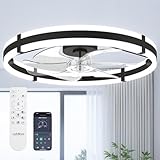
- Wider Airflow for Larger Rooms:Upgraded from our 20″ model, this 24″ low profile ceiling fan with light delivers up to 80% wider airflow coverage for stronger circulation. Perfect as a bedroom ceiling fan, kitchen ceiling fan, or living room flush mount ceiling fan in medium-sized spaces.
- Dimmable LED Light with 3 Color Temperatures:This ceiling fan with lights features an integrated LED panel that adjusts from 10%–100% brightness and supports 3000K warm white, 4500K natural white, and 6000K cool white. Easily create the right atmosphere for relaxing, working, or entertaining.
- Remote & APP Control with Memory Function: Control your ceiling fan with lights and remote or through the mobile app. Choose from 6 fan speeds, set 1- or 2-hour timers, and turn the fan or light on/off instantly. The built-in memory function restores your last-used light setting. When using the wall switch, please turn the power off for more than 5 seconds to activate the memory function. (No waiting time is required when using the remote.)
- Reversible DC Motor for Year-Round Comfort: Powered by an energy-efficient DC motor, this black ceiling fan with light runs quietly and smoothly. Switch between downdraft mode in summer and updraft mode in winter to improve air circulation throughout the year.
- Modern Flush Mount Fandelier Design: Designed as a flush mount ceiling fan, this small fandelier ceiling fan with light is ideal for low ceilings. The blade design enhances safety while maintaining strong airflow, making it suitable for bedrooms, kitchens, and living rooms.
Design for change and disassembly
Provide accessible service zones, reversible connections and layouts that can accommodate changing occupancy. Separate layers with different replacement lives where practical, so a failed finish or service does not require demolition of the primary structure. Plan how components can be removed, reused or recycled rather than sent directly to waste.
Independent reader supportYour contribution helps us test, update, and keep practical guides available for everyone.Account for lifecycle energy, carbon and resilience
Operational cooling demand is only one part of sustainability. Include construction energy, embodied impacts, replacement, maintenance, water, waste and end-of-life effects. The American Society of Civil Engineers’ summary of ASCE/COS 73-23 describes lifecycle sustainability themes including embodied carbon, energy demand, resilience, waste, health and safety, community participation and reuse of existing infrastructure. The page is a summary; consult the standard itself before claiming compliance.
For larger buildings and infrastructure, add resilience and community outcomes to the brief. Consider whether the project protects occupants during heat events, supports access to essential services, reduces waste, and can continue operating when energy or water supplies are disrupted. Document who is responsible for monitoring performance after handover; design intent is easily lost without operating procedures and training.
Outdated Drivers Are Slowing You Down
One free scan finds every outdated or missing driver and matches the right update for your exact hardware.Free scan · exact hardware matchWindows Errors? Fix Them Before They Spread
Repair common Windows errors and clear accumulated junk for a smoother, more stable PC - no reinstall needed.Free scan · no reinstallA practical design sequence
- Establish conditions. Record climate classification, hourly seasonal temperatures, humidity, solar and wind exposure, dust, water constraints, occupancy and applicable codes.
- Set performance targets. Define acceptable indoor conditions during ordinary operation and extreme heat, plus energy, water, resilience and maintenance requirements.
- Shape and shade the project. Test orientation, massing, openings, outdoor rooms and external shading before sizing mechanical systems.
- Develop the envelope. Select insulation, glazing, roof and wall assemblies through climate and code analysis; detail junctions for durability and maintenance.
- Test thermal mass and night cooling. Confirm that nights can remove stored heat and that ventilation openings, controls, filtration and security are workable.
- Choose active cooling and backup. Compare evaporative, mechanical and mixed systems against peak comfort, humidity, water, energy, outage and maintenance conditions.
- Set the water plan. Reduce demand first, then test rainwater, greywater and cooling-water options against local supply, treatment, rules and operating capacity.
- Complete a lifecycle material review. Compare reuse, new construction, embodied impacts, durability, transport, adaptability, disassembly and replacement.
- Commission and measure. Verify shading, controls, airflow, water systems and indoor conditions, then monitor performance and correct faults after occupation.
How to compare competing options
When more than one envelope or cooling approach is viable, use the same evidence and boundaries for each option. The sources above do not provide a quantified, project-specific comparison, so the following are decision criteria rather than reported results.
| Criterion | Questions to answer | Evidence to record |
|---|---|---|
| Peak and annual comfort | Does the option meet the target during the hottest hours and recover overnight? | Hourly modelling, commissioning data and heat-event scenarios |
| Energy and emissions | What is the demand reduction, system efficiency and energy-source impact over the life? | Consistent operational and embodied-carbon assumptions |
| Water | How much water does cooling, irrigation and treatment require? | Annual and peak demand, source reliability and discharge requirements |
| Climate fit and resilience | How does it handle dust, outages, extreme heat, maintenance and changing conditions? | Failure scenarios, filtration and service plans |
| Cost over time | What are installation, maintenance, replacement and disposal costs? | Whole-life cost with stated life and escalation assumptions |
| Material impact | Can components be reused, repaired or disassembled, and is product data documented? | Environmental product information, durability and end-of-life evidence |
| Operational feasibility | Can occupants and facilities staff operate the controls and maintain the systems? | Training, access, skills, spare parts and code requirements |
Common mistakes to avoid
- Copying a generic desert style. A form that works in one hot-dry region may fail where nights stay hot, dust is severe or water rules differ.
- Sizing air-conditioning first. Oversized equipment can hide envelope problems and operate inefficiently; reduce heat gains before selecting capacity.
- Assuming thermal mass always cools. Mass without a reliable heat-release period can store unwanted heat.
- Relying on evaporative cooling alone. Peak summer conditions may exceed its ability to deliver comfort, and water demand must be acceptable.
- Counting a fan as cooling. Air movement improves comfort but does not remove room heat.
- Installing reuse systems without an operator. Treatment, monitoring and maintenance are part of the design, not optional extras.
- Choosing materials by slogan. Check durability, documented impacts, local availability and end-of-life performance.
- Ignoring the occupied building. Controls, schedules, cleaning and maintenance determine whether the designed performance survives handover.
What a sustainable outcome looks like
The strongest project is not defined by one technology. It uses site-responsive orientation and shade to reduce heat gain; an envelope and thermal mass strategy matched to local day-night conditions; cooling that remains credible during extreme heat; water systems sized to real supply and operating capacity; and materials selected for durability, reuse and whole-life impact. It also measures performance after occupation and adapts operation when conditions change.
Use the DOE hot-dry and mixed-dry climate guidance, UNEP’s resilience guide, the UK design guidance, Australian passive-cooling resources and the relevant local codes as starting references. Final decisions belong to the project’s climate data, engineering analysis, authority requirements and the people who will operate the building.
Quick Recap
Product prices and availability are accurate as of the date/time indicated and are subject to change. Any price and availability information displayed on Amazon at the time of purchase will apply.
Quick wins for a faster PC:
Repair Windows errors before they cause bigger problemsFix Now →Fix the driver behind crashes, sound loss and screen glitchesFind Drivers →Clear out junk files and repair common Windows errorsFree Scan →
