Recommended Free Tools
Imported lumber prices and availability depend on the product a buyer needs, how much supply is available from domestic and foreign sources, demand, and the trade rules that apply to that specific shipment. For U.S. buyers, duties can materially change landed cost, but a headline tariff rate is not a universal rate for every lumber product or wood item. The key question is not simply whether lumber is imported, but what product is being imported, from where, under which terms, and when.
What affects the price and availability of imported lumber?
There is no single price-setting factor or universal landed-cost formula. Buyers need to consider both market conditions and shipment-specific details: the species, dimensions, grade, moisture condition, origin, delivery terms, and any duties or other charges applicable to the product and entry. Freight, currency movements, supplier inventories, and local delivery availability may also affect a current quote, but the official trade sources discussed here do not provide general current figures for those variables.
As an Amazon Associate I earn from qualifying purchases.
Supply and demand both matter. A March 1, 2025 White House order directed the Commerce Department to examine current and projected demand, domestic production capacity, foreign supply chains, subsidies and trade practices, the feasibility of expanding domestic capacity, and trade policies. Those are factors in a policy investigation, not a complete model that quantifies how much any one factor changes a buyer’s price. In practical terms, they help explain why buyers should assess both the material they need and the market conditions around its supply; they do not predict a specific price change for a particular order.
The same order stated that the U.S. had been a net lumber importer since 2016. It also said: “The current United States softwood lumber industry has the practical production capacity to supply 95 percent of the United States’ 2024 softwood consumption.” That is the White House’s statement about practical capacity and 2024 consumption; it does not mean domestic mills supplied 95% of the market or that imported lumber is unnecessary. Capacity, actual production, and available stock are different concepts, so the statement alone cannot tell a buyer whether a particular grade or dimension is available from domestic suppliers. Read the March 1, 2025 order.
#1 Best Overall
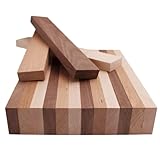
- 💯 Included are 5 Black Walnut 5 Cherry and 5 Select White Hard Maple 3/4" x 2" x 18"
- ✔️Beautiful Grain
- 🔥 Perfectly Kiln Dried
- ✔️ Two sides sanded to 3/4" thickness
- ❤️ Makes beatiful cutting boards
Why the exact product and origin matter
“Lumber” does not cover every wood-based product for tariff purposes. The March 2025 order defined lumber as wood processed by milling and cutting into boards or planks. A shipment of boards, plywood, flooring, cabinets, or upholstered furniture may fall under different product descriptions and trade measures. A tariff that applies to covered softwood timber and lumber should not be assumed to apply in the same way to cabinetry, furniture, plywood, or flooring.
For a buyer, product descriptions need to be specific enough to establish whether quotes are actually comparable and which trade rules to check. Species, dimensions, grade, and moisture condition all affect whether the offered material matches the project specification; origin and product classification matter when assessing import treatment. A seller’s location should not be treated as proof of the goods’ country of origin. Confirm the origin information and exact product description needed to identify the relevant classification and any applicable orders.
Availability is product-specific too. In a July 20, 2026 Federal Register proceeding, comments argued that certain Brazilian softwood plywood and engineered hardwood flooring had limited-to-no domestic availability and that tariffs could harm consumers, importers, distributors, and builders. These were arguments made in that proceeding about specified products—not a general official finding that all imported lumber is unavailable domestically. The example illustrates why broad statements about “wood products” can obscure important differences: a claim about particular plywood or flooring cannot establish the domestic availability of a particular lumber species, grade, or dimension. See the Federal Register notice.
Quick wins for a faster PC:
Repair Windows errors before they cause bigger problemsFix Now →Fix the driver behind crashes, sound loss and screen glitchesFind Drivers →Clear out junk files and repair common Windows errorsFree Scan →How U.S. duties can affect landed cost
For imports into the United States, trade actions can add to the cost of a covered shipment, but the applicable rate depends on the product’s classification, origin, exclusions, effective date, and current legal status. Confirm the current tariff classification and relevant orders for the actual shipment before relying on any percentage. A rate described for one product or one review period is not a generic rate for all lumber.
Rank #2

- Perfectly Kiln Dried
- Two sides sanded to 3/4" thickness
- Beautiful Grain
Several types of trade measures can be relevant at once, and official actions may explain how measures interact or provide exceptions. That is why a headline percentage is only a starting point: it cannot establish which goods are covered, whether an exclusion applies, or whether another order affects the entry. The figures below are dated U.S. examples from particular actions and proceedings, not a substitute for checking current requirements for a shipment.
September 29, 2025: covered softwood timber and lumber
A September 29, 2025 White House proclamation specified a 10% ad valorem duty on covered softwood timber and lumber. It also set different treatment for certain downstream products and described exceptions and interactions with other tariff actions. The 10% figure is therefore not a universal duty on all imported wood or all lumber; consult the proclamation’s scope and effective-date provisions for a particular product. Read the September 29, 2025 proclamation.
Canadian softwood lumber: separate trade-remedy reviews
Canadian softwood lumber has also faced separate antidumping and countervailing-duty proceedings. On August 8, 2025, the U.S. Department of Commerce announced final results in the sixth countervailing-duty administrative review for covered Canadian entries from January 1 through December 31, 2023. It reported countervailing-duty rates from 12.12% to 16.82%, including 14.63% for non-selected companies, and separately reported antidumping rates from 9.65% to 35.53%. These are dated review results, not a statement of what every Canadian shipment owes today. They concern a defined review and entry period, so buyers should not assume that a rate reported there applies unchanged to every exporter, company, or later shipment. See Commerce’s August 8, 2025 announcement.
What’s actually slowing this PC down?
Pick the symptom - the matching free tool is one click away.
Administrative proceedings can have different stages and effective consequences. Global Affairs Canada explains in the context of an administrative review that “Post-Preliminary results do not take effect, only final results do.” Check whether a result is preliminary or final, which review period and companies it covers, and whether a later decision has changed the applicable treatment. Its softwood lumber page also reports an October 5, 2026 development: a NAFTA Chapter 19 panel affirmed Commerce’s second remand determination in Canada’s challenge to a countervailing-duty determination. This procedural update is another reason not to treat a past rate announcement as a timeless answer to what an importer owes. Consult Global Affairs Canada’s softwood lumber page.
Rank #3
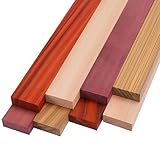
- A Variety of Rare Wood Species: this set of wood boards contains four rare woods -purpleheart, zebrawood, padauk, okoume, 2 of each of the 4 types of wood, a total of 8, enough to meet the needs of artistic creation
- Optimal Size: the single strip measures about 24 x 2 x 0.75 inches/ 60.96 x 5.08 x 1.91 cm; The uniform size is convenient for layout and splicing; This size is the good size for making small cutting boards
- Natural Textures: purpleheart, zebrawood, padauk and okoume each have natural grain and color, making them suitable for making small cutting boards, decorative panels, or handicrafts; The wood itself is easy to oil and polish, and the finished product has a superior texture
- Materials: the wood panel is made of solid wood with a unique and layered surface texture; After preliminary drying, it is suitable for turning, planing, cutting and gluing
- Wide Range of Applications: can be applied in woodworking, handicraft production, cutting board processing or as a carving and inlay material
Downstream products are not interchangeable with lumber
On December 31, 2025, the White House reported delaying for another year scheduled increases for certain upholstered furniture, kitchen cabinets, and vanities, leaving cited 25% rates in effect at that time for those covered products. This was a policy update for specified downstream goods, not a general change to the cited softwood lumber rate. A headline about cabinets or furniture does not establish the duty on a shipment of boards. It also demonstrates why buyers should read both the product scope and the date: a scheduled change for selected downstream categories is not the same as a change covering lumber generally. Read the December 31, 2025 fact sheet.
How to compare imported-lumber quotes
Compare equivalent material first; then determine which import charges apply. A lower unit price can be misleading if the offer is for a different grade, moisture condition, delivery point, or tariff treatment. A useful comparison is not just the price per unit: it is the price for the specified material, delivered on equivalent terms, with shipment-specific duties and charges checked.
- Match the material. Compare species, dimensions, grade, and moisture condition. Confirm that descriptions refer to the same product and not, for example, lumber in one quote and plywood or a downstream wood product in another. If a quote leaves a specification unclear, ask the supplier to confirm it rather than assuming the material is equivalent.
- Confirm origin. Identify the country of origin and any other origin details needed to assess the relevant trade measures. Do not infer origin from the seller’s location. Origin can be relevant to the applicable duty or trade-remedy order, so it should be established before comparing the import treatment of two offers.
- Align delivery terms. Compare the same delivery point and terms, and ask what transportation and delivery charges are included. Freight costs can vary; no general current freight figure is established here. A quote that covers delivery to one point is not directly comparable with a quote that stops elsewhere unless the additional costs are accounted for.
- Check the shipment’s classification and trade treatment. Verify the current tariff classification, applicable duties, exclusions, and any antidumping or countervailing orders for that exact product and entry. Use current official information rather than applying a past review rate or a headline percentage broadly. No general current official source establishes a single classification or duty that applies to all lumber shipments.
- Compare the resulting costs on the same basis. Include the charges each quote actually covers, and account for any currency terms. Exchange-rate effects are a variable to check in the current quote; no general current lumber-specific figure is established here. Do not treat an unverified duty estimate as a confirmed final cost.
- Verify stock and timing. Confirm supplier inventory, lead time, and local delivery availability for the required specification. A trade-policy announcement does not establish whether a supplier has the material on hand. Ask whether the quoted product is available in the needed quantity and on the needed schedule rather than assuming general market supply translates into immediate availability.
This process helps separate a market question from a compliance question. Supply and demand, foreign supply chains, and domestic capacity are broad conditions; classification, origin, review status, and exclusions are shipment-specific checks. Neither side alone gives a complete answer. A buyer can find that a product is available but faces a different landed cost than expected, or that a headline duty rate is relevant in principle but does not apply to the specific product being quoted.
Outdated Drivers Are Slowing You Down
One free scan finds every outdated or missing driver and matches the right update for your exact hardware.Free scan · exact hardware matchWindows Errors? Fix Them Before They Spread
Repair common Windows errors and clear accumulated junk for a smoother, more stable PC - no reinstall needed.Free scan · no reinstallThe reviewed official sources do not provide a standard landed-cost worksheet or comparable price series. They also do not quantify the effect of each factor on retail prices. The useful comparison is therefore shipment-specific: aligned product and delivery terms, plus verified duties and charges for the actual entry. Treat freight, currency, inventories, and local delivery as items to confirm with a current quote rather than as fixed figures that can be generalized across buyers.
Rank #4

- 💯 Included are 5 Black Walnut 5 Cherry and 5 Hard Maple 3/4" x 2" x 12"
- ✔️Beautiful Grain
- 🔥 Perfectly Kiln Dried
- ✔️ Two sides sanded to 3/4" thickness
- ❤️ Makes beautiful cutting boards
Which rules apply outside the United States?
The duty examples above concern U.S. imports. Buyers importing into another country need that jurisdiction’s tariff schedule and trade-remedy measures; U.S. rates do not establish the cost of a shipment entering elsewhere. Even for U.S. imports, exact obligations depend on current classification, origin, exclusions, and legal status. Verify those details before budgeting or quoting a project. In either case, distinguish lumber from downstream wood products and confirm that the rule being consulted covers the actual goods.
Frequently Asked Questions
What are the main factors that affect imported lumber prices?
The main considerations are supply and demand, the specific product and its origin, delivery terms, and duties or other charges that apply to the shipment. Species, dimensions, grade, and moisture condition matter when comparing like with like. Freight, currency movements, supplier inventory, and local delivery availability can also affect a current quote, but the reviewed sources do not provide general current figures for those factors.
Does the 10% U.S. duty apply to every imported lumber product?
No. The September 29, 2025 proclamation specified a 10% ad valorem duty on covered softwood timber and lumber, while setting different treatment for certain downstream products and describing exceptions and interactions with other tariff actions. Check the current scope, effective-date provisions, classification, and origin for the actual shipment rather than applying the headline rate to every wood product.
What duties have applied to Canadian softwood lumber?
Commerce’s August 8, 2025 final results for the sixth countervailing-duty administrative review reported rates of 12.12% to 16.82%, including 14.63% for non-selected companies, for covered Canadian entries from January 1 through December 31, 2023. The announcement separately reported antidumping rates of 9.65% to 35.53%. These dated review results do not describe what every Canadian shipment owes today; verify the current treatment for the specific product, company, and entry.
Best Value
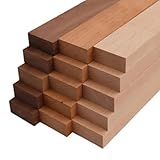
- 【Artisanal Craftsmanship】Our cutting board blanks are handcrafted from the finest hardwoods, showcasing exceptional attention to detail and a commitment to excellence.
- 【Precision Cutting】The smooth, even finish of our chopping board blanks allows for precise cuts and effortless food preparation, making cooking a joyous experience.
- 【Elegant Design】Sleek, modern, and sophisticated, our cutting boards for kitchen elevate the aesthetic of any kitchen, making them a stylish addition to your culinary space
- 【Unparalleled Durability】Engineered to withstand the rigors of frequent use, our treated lumber boasts exceptional strength, stability, and resistance to wear and tear
- 【Perfect for DIY Projects】Ideal for woodworking projects, craft fairs, and small business ventures, our wood boards and turning lumber offer endless possibilities for creativity and customization.
How can I tell whether two imported-lumber quotes are comparable?
First align species, dimensions, grade, moisture condition, origin, delivery point, and delivery terms. Then confirm what transportation and other charges each quote includes, and verify classification, applicable duties, exclusions, and any trade-remedy orders for the actual product and entry. Also confirm current inventory and lead time for the required specification.
Do U.S. lumber duty rates apply when importing into another country?
No. The examples here concern U.S. imports. A shipment entering another country is subject to that jurisdiction’s tariff schedule and trade-remedy measures. Check the rules for the importing country and the specific product.
The Bottom Line
Imported lumber price and availability are shipment-specific. Match the product and delivery terms, check current stock and timing, and verify the country of origin, classification, exclusions, and applicable duties before comparing quotes. U.S. rates cited here are dated examples with limited product scope—not universal rates for lumber or other wood products.
Quick Recap
Product prices and availability are accurate as of the date/time indicated and are subject to change. Any price and availability information displayed on Amazon at the time of purchase will apply.