A digital twin in vessel construction connects a ship’s digital design with information about how the vessel is being built. In broader implementations, it also represents the shipyard’s production process. That connection can help teams coordinate work, track progress, plan resources, simulate alternatives, and compare the physical build with design intent. A 3D model alone is not necessarily a working twin: its value depends on connected, maintained data and on people using it in their workflows.
What a vessel-construction digital twin represents
There is no single, fixed scope for a shipbuilding digital twin. At its narrowest, it may be an integrated digital model of the vessel: its structure and the systems fitted within it. At a broader scope, it connects that product model to information about production—such as schedules, work status, resources, logistics, and quality. A still broader shipyard twin can represent workflows and facilities involved in multiple builds. A lifecycle approach may connect design and construction records with information from the delivered vessel’s operation.
As an Amazon Associate I earn from qualifying purchases.
These scopes answer different questions. A product model can help teams understand where components belong and whether systems fit together. A process twin adds context about how and when people will build and outfit those parts. A shipyard view can help coordinate work across areas and resources. A lifecycle connection can make selected design information and operating feedback available across company boundaries.
Do these 3 things before closing this tab:
1Clear out junk files and repair common Windows errors2Scan for outdated or missing drivers - takes under a minute3Repair Windows errors before they cause bigger problemsFincantieri’s 2025 conference paper describes the vessel and its production process as interconnected twins, with data, visualization, and simulation as central elements. Its “twin of twins” framing breaks a complex product and process into smaller connected representations. That is one company’s approach, not a universal specification for every shipyard twin.
#1 Best Overall
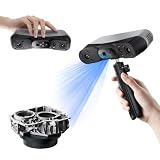
- 【Industrial-Grade Accuracy】Achieve single-frame accuracy up to 0.03 mm and volumetric accuracy of 0.03 mm + 0.05 mm x L(m), faithfully reproducing the finest surface details and complex geometries with exceptional consistency. Full-Field Structured Light accuracy reaches 0.08 mm; VCSEL mode delivers 0.10 mm @ 300-500 mm and 0.20 mm @ 500-800 mm. Engineered to meet the demanding requirements of 3D printing, reverse engineering, and precision modeling applications.
- 【Ultra-Fast Scanning & Robust Frame Rate】Multi-line Laser mode delivers up to 105 fps with NVIDIA GPU acceleration. Full-Field Structured Light mode achieves up to 5,000,000 points/s. The high frame rate ensures a smooth, uninterrupted scanning experience, especially suited for rapidly capturing large objects and complex scenes, significantly boosting overall workflow efficiency.
- 【AI-Powered & Photo-Grade Retopology】 AI object segmentation (Windows only) identifies your target in one click, tracks it throughout the scan, and auto-filters background noise — delivering clean data and streamlining post-processing. The patented 3D Gaussian Splatting converts point cloud and RGB data into true-to-life 1:1 photorealistic models; import photos from your phone or camera to apply real textures, then export in splat format for gaming, animation, and VR.
- 【All-Weather Outdoor Scanning】Multi-line Laser mode operates reliably up to 50,000 lux; with an outdoor filter attached, scanning remains stable in lighting conditions of up to 100,000 lux; VCSEL mode operates reliably in up to 100,000 lux ambient light. Designed to overcome lighting challenges, it provides consistent all-weather performance for construction sites, archaeological digs, and industrial fieldwork.
- 【5 Scanning Modes】NIR band supports Full-Field HD Scanning (markerless, fine structured light), Hybrid HD Scanning (dual projectors, fast high-quality modeling), and VCSEL Rapid Scanning (high-density pattern, fast markerless capture). Blue light band supports 30-Cross Laser Lines Scanning (handles high-reflectivity metals & dark objects) and Single-Line Deep Hole Scanning (captures from deep holes & narrow grooves). Five modes for comprehensive indoor and outdoor coverage.
How it connects design to the shipyard
A useful twin depends on bringing together information that may otherwise be spread across engineering, production, and business systems. Depending on the yard, relevant sources can include computer-aided design (CAD), product lifecycle management (PLM), manufacturing operations management, enterprise resource planning (ERP), logistics, and shop-floor systems. The model supplies a structured view of the vessel; connected systems add information about parts, work, resources, and status.
Siemens’ ship-construction overview describes connecting PLM, manufacturing operations management, and ERP to link engineering and manufacturing. It presents digital twins of the vessel, shipyard, and equipment as ways to connect engineering, manufacturing, and logistics. The exact arrangement varies: organizations need to decide which system is authoritative for each type of information and how changes move between systems.
A Chantiers de l’Atlantique example illustrates a more specific workflow. The integrated CAD model for Wonder of the Seas included the ship’s structure, piping, ducting, and cable trays, and was linked to SAP ERP. The customer story says model information was updated nightly and nearly 100,000 bill-of-material parts for one ship were sent from the 3D model to ERP each night. Those details describe that project’s workflow; they do not establish a standard update cadence or a typical parts count for other vessels.
The same customer story reports that hundreds of specialists contributed to the model workflow. Technical director Yves Pelpel described an integrated CAD system containing “the whole structure – all the piping, ducting, and cable trays.” The point is practical: a detailed model can serve as a coordination environment for many disciplines, but only if the information and its ownership are managed across those disciplines.
Rank #2
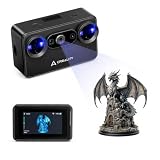
- Pocket-Sized & Wireless Freedom: At only 260g and 1006035mm, Pika fits in your palm. Features Wi-Fi 6 wireless PC mode, 3-inch HD touchscreen (500 nit), dual swappable 3350mAh batteries for extended sessions, and supports outdoor scanning up to 110,000 lux - scan anywhere, anytime without cables
- Dual-Mode Scanning with Blue Laser & NIR Structured Light: Switch between 7-line blue laser mode for fine detail capture and NIR structured light mode for full-body scanning with 24-bit true color. Scan objects from 101010mm to 200020002000mm - from tiny miniatures to life-size body scans - all with one device
- Ultra-High Precision 0.03mm Accuracy: Equipped with 7 parallel blue laser lines, Creality Pika delivers up to 0.03mm scanning accuracy and 0.1mm 3D resolution, capturing intricate details on small parts, figurines, mechanical components, and collectibles with professional-grade precision for 3D printing and reverse engineering
- AI-Powered Smart Features: Built-in AI Body Completion generates full-body 3D models from just a face scan and photos in as little as 10 seconds (10 faster). AI Retexturing maps real photo textures onto scanned models for lifelike results. AI Hole Filling automatically repairs incomplete scans for cleaner, print-ready output
- Scan Black & Metal Without Spray and Multi-Platform Export: Directly scans dark and metallic surfaces without scanning spray. Exports STL/OBJ/PLY/ASC formats compatible with all major 3D printing and CAD software. Works with Windows, macOS, iOS, and Android via CrealityScan app. Includes tripod, turntable, calibration board, and full accessories
What teams can do with the twin during construction
Review work before it happens on site
Teams can use a digital representation to examine planned work virtually before carrying it out physically. This may help reveal coordination issues, understand the intended sequence, or review a proposed change against surrounding systems. It does not mean that a model automatically detects every clash or that every yard can review every task in a fully synchronized environment; those capabilities depend on the model’s detail, connected information, and implementation.
In a February 16, 2026 announcement, Siemens said HD KSOE had selected Siemens as preferred partner for an integrated shipbuilding platform. The planned platform is intended to connect CAD, PLM, digital manufacturing, automation, and simulation, allowing planning, construction, expansion, and modification activities to be reviewed virtually before on-site implementation. HD Hyundai aimed to complete its “Future of Shipyard” project by 2030, with the scope expected to include commercial and specialized vessels. These are plans and stated aims, not proof that the described platform is already deployed or has delivered those outcomes.
Coordinate assembly and outfitting
Ship construction involves work on many systems and areas that can affect one another. A connected model can give teams a shared view of where structure, piping, ducting, cable trays, and other elements sit in relation to one another. When production information is connected, the view can also help teams coordinate block assembly and outfitting: what is planned, which work areas are involved, and what dependencies could affect the sequence.
The twin supports coordination only to the extent that the underlying information is current and usable. If a design change, work completion, or site condition has not been recorded or reconciled, the digital view can diverge from the physical job. It should be treated as a governed work tool, not as an infallible picture of the shipyard.
Rank #3

- Wireless Scanning & Interactive Streaming: Built-in WiFi 6.0 enables on-the-go, structured light mobile scanning or real-time PC-to-mobile interactive scan streaming for seamless remote operations and more flexibility.
- Scan Challenging Surfaces Without Scanning Spray: Easily capture details on reflective or dark surfaces with 11 infrared laser lines, no scanning spray needed.
- Dual Scanning Modules: Boost scanning efficiency with INSPIRE 2's infrared structured light and multi-line laser scanning modes, making it easy to handle different materials, sizes, and environments.
- Accurate Models & Advanced Calibration: Create highly detailed models with an accuracy of up to 0.05 mm and precision of up to 0.03 mm. A high-precision calibration board boosts point cloud accuracy by 75%, ensuring consistent, precise data for 3D printing, reverse engineering, and detailed modeling.
- Outdoor Scans & Lightweight Design: Scan in outdoor environments with up to 20,000 lux lighting, ensuring reliable performance in shaded or semi-bright conditions. At only 190g, the INSPIRE 2 is lightweight, and its aerospace-grade aluminum alloy front panel offers increased durability and portability.
Monitor progress and plan resources
Adding production status to the vessel model makes it possible to view construction progress in context. A process twin may include schedules, logistics, quality, safety, supply-chain information, and interactions between work areas. That can help a team identify where work is progressing, where it is blocked, and how a change in one area may affect another. The benefit is better visibility and decision support—not a guaranteed improvement in schedule or cost.
Fincantieri’s 2025 paper describes using simulation to consider whether supervisors should continue outfitting one part of a ship or redirect effort elsewhere. The decision can involve technical and economic effects, rather than simply choosing the area that appears busiest. This kind of scenario analysis is different from a static visualization: it uses a representation of the process to explore the consequences of alternative choices.
Capture as-built conditions and check design intent
The digital design records what is intended; the as-built record captures what is physically present. A shipyard can use 3D laser scanning to measure physical objects, update digital information, and support dimensional control by checking scanned dimensions against intended design dimensions. This feedback can help teams assess whether a physical structure matches the model and identify differences that need review.
Recommended Free Tools
A 2021 report by Flinders University, the Australian Institute for Industry, and IMCRC describes laser scanners capturing changes in physical objects and updating digital information for this purpose. Scanning does not, by itself, resolve a discrepancy: teams still need to validate measurements, determine what changed, and decide whether the design record or the physical work needs correction. Equipment range, accuracy, site conditions, and software compatibility depend on the task; the cited report concerns professional shipyard use, not a universal hardware recommendation.
Rank #4

- Industrial-Grade Accuracy: Flawlessly capture intricate geometric details with up to a 0.01 mm single-frame precision and 0.015 + 0.04 mm x L (m) volumetric accuracy. Powered by advanced blue laser technology, the MetroY Ultra produces 3D is ideal for tight tolerance measurement, reverse engineering, and industrial inspection.
- 5 Versatile Scanning Modes: Handle every scenario, from small parts to medium-sized objects, with Metro Ultra's 5 scanning modes: 34 laser cross-lines for rapid scans, 15 parallel lines for fine details, a single-line mode for deep holes, full-field blue structured light for marker-free scans, and one-click automatic turntable scanning.
- Ultra-Fast 90 FPS Scanning Speed: Get scans done fast at up to 90 fps (NVIDIA GPU) or 60 fps (CPU). MetroY Ultra's 34-laser cross-line mode enables quick, large-area scans, reducing data acquisition time and boosting productivity without compromising data quality.
- No-Spray Scanning for Dark or Shiny Surfaces: Scan black, high-gloss, and metallic industrial components directly without scanning spray. Protect delicate parts from spray, save prep time, and keep a clean, professional inspection environment for sensitive equipment.
- Scan Outdoors: Capture industrial parts even in harsh sunlight up to 100,000 lux with MetroY Ultra's powerful laser-scanning modes.
How the main implementation scopes differ
| Scope | What it represents | Typical use | Key dependency |
|---|---|---|---|
| Vessel or product model | Ship structure, components, and integrated systems | Design coordination and understanding how systems fit together | Detailed, managed engineering information |
| Production or process twin | Workflows and production information associated with building the vessel | Progress visibility, resource planning, and simulation of work choices | Connections to schedules, status, logistics, and related systems |
| Shipyard twin | Broader production processes, resources, and potentially multiple builds | Coordination across work areas and shipyard operations | Consistent process data and governance across systems |
| Lifecycle connection | Selected design and construction information connected with vessel operation | Sharing information between builders, owners, and other parties | Agreed access, security, and commercial rules for data sharing |
The distinctions are about scope, not a ladder every yard must climb. One shipyard may prioritize detailed product coordination; another may focus on production planning or controlled data sharing after delivery. A more expansive twin is not automatically more useful if its data is stale, poorly governed, or disconnected from decisions people actually make.
Independent reader supportYour contribution helps us test, update, and keep practical guides available for everyone.What recent shipyard initiatives do—and do not—show
Announcements about digital shipyards often describe intended platforms or future applications. In July 2026, Kawasaki Heavy Industries announced a collaboration with NVIDIA on a next-generation digital shipyard at Sakaide Works in Japan. The stated work includes simulation and robotics for welding, painting, inspection, and material handling, as well as examining how construction data might connect to post-delivery operation, maintenance, and refit. The announcement describes a phased initiative; its intended applications should not be read as demonstrated results.
Cross-company lifecycle projects bring a different challenge: information that is useful to an owner or designer may also be commercially sensitive. A May 22, 2024 ClassNK announcement described a project involving shipowners, shipbuilders, NAPA, and ClassNK to enable controlled sharing of ship design and operating data. The project reported identifying more than 30 potential use cases in its first two phases. That is the project’s count, not an industry-wide total. The announcement said a later platform phase aimed to start operation in 2025; whether that milestone was met is not established here.
The Tool Desk
Outbyte Driver Updater FREEScan for outdated or missing drivers - takes under a minuteDriver Scan →Outbyte PC Repair FREEClear out junk files and repair common Windows errorsFree Scan →ClassNK’s project made secure, access-controlled data sharing and commercial arrangements part of the approach. In practice, cross-company access needs clear rules about who can see which information, for what purpose, and under what terms. A connected lifecycle model is not simply a matter of opening a shipyard’s complete design or operating record to every participant.
Best Value

- Wireless Scanning & Interactive Streaming: Built-in WiFi 6.0 enables on-the-go, structured light mobile scanning or real-time PC-to-mobile interactive scan streaming for seamless remote operations and more flexibility.
- Scan Challenging Surfaces Without Scanning Spray: Easily capture details on reflective or dark surfaces with 11 infrared laser lines, no scanning spray needed.
- 【AI-Powered & Photo-Grade Retopology】 AI object segmentation (Windows only) identifies your target in one click, tracks it throughout the scan, and auto-filters background noise — delivering clean data and streamlining post-processing. The patented 3D Gaussian Splatting converts point cloud and RGB data into true-to-life 1:1 photorealistic models; import photos from your phone or camera to apply real textures, then export in splat format for gaming, animation, and VR.
- Dual Scanning Modules: Boost scanning efficiency with INSPIRE 2's infrared structured light and multi-line laser scanning modes, making it easy to handle different materials, sizes, and environments.
- Accurate Models & Advanced Calibration: Create highly detailed models with an accuracy of up to 0.05 mm and precision of up to 0.03 mm. A high-precision calibration board boosts point cloud accuracy by 75%, ensuring consistent, precise data for 3D printing, reverse engineering, and detailed modeling.
What makes a digital twin useful in practice
The software and model are only part of the implementation. Fincantieri’s 2025 case emphasizes establishing a single source of truth, examining existing bottlenecks, and supporting adoption through change management, communication, and training. It notes that market solutions could be difficult to match to the complexity of its tasks and describes internal development. That example is a reminder that an off-the-shelf product should not be assumed to constitute a complete shipyard twin.
- Defined scope: Decide whether the immediate goal is design coordination, production monitoring, resource planning, as-built verification, broader shipyard planning, or lifecycle sharing.
- Reliable connections: Identify the relevant engineering, production, ERP, logistics, and shop-floor data, and define how information passes between them.
- Clear authority: Establish which system owns each record and who is responsible for approving changes. Integration without ownership can spread conflicting versions rather than create a trustworthy view.
- Usable update process: Set out how planned changes, production status, and physical measurements enter the model. Update frequency is an implementation choice, not a universal property of digital twins.
- Governance and access: Protect sensitive design and operational data, especially when information is shared with owners, suppliers, or other organizations.
- Adoption by the workforce: Train users and adapt work practices so the twin supports real decisions instead of becoming a parallel record that staff must maintain without clear value.
Fincantieri’s paper puts the implementation principle plainly: “it is not the technology that drives the final goal, but the support to achieve the goal itself.” That is why a twin should be judged by whether its connected information helps people perform defined tasks—not simply by whether a detailed 3D model exists.
What a digital twin cannot promise on its own
A twin cannot make unrecorded changes visible automatically, guarantee that every model dimension matches the vessel, or remove the need for engineering and production judgment. Its apparent precision can be misleading if information is out of date or if teams do not know which record is authoritative. Some examples describe real-time connections or monitoring; others describe periodic updates, such as the nightly model-to-ERP workflow at Chantiers de l’Atlantique. There is no basis for assuming that every shipyard twin synchronizes continuously.
There is also no universal percentage for cost savings, construction-time reduction, fewer defects, or productivity improvement established by these examples. Vendor announcements and individual customer cases can show how a system is intended to work or how one project used it, but they do not establish a general performance result for shipbuilding as a whole.
Quick Recap
Product prices and availability are accurate as of the date/time indicated and are subject to change. Any price and availability information displayed on Amazon at the time of purchase will apply.