What’s actually slowing this PC down?
Pick the symptom - the matching free tool is one click away.
Yes, weed-eliminating robots are real—but most are agricultural machines, not Roomba-like household devices. Today’s commercial systems include tractor-mounted laser weeders, AI-guided precision sprayers, mechanical cultivators, and autonomous tool carriers. Residential options exist, but they are limited, less capable, and may be unavailable.
The right choice depends on the crop, row layout, weed species, acceptable use of herbicides, available labor, tractor capacity, and total operating cost.
As an Amazon Associate I earn from qualifying purchases.
What counts as a weed-eliminating robot?
“Weed robot” is a broad marketing term. Some machines navigate fields independently; others automate weed detection and treatment while remaining attached to a tractor. A useful classification is based on how the weed is removed:
The Tool Desk
Outbyte PC Repair FREERepair Windows errors before they cause bigger problemsFix Now →Outbyte Driver Updater FREEFix the driver behind crashes, sound loss and screen glitchesFind Drivers →| Technology | How it works | Best fit | Main limitation |
|---|---|---|---|
| Laser weeding | Cameras identify weeds and lasers destroy their growing points. | Specialty crops, herbicide reduction, some organic-oriented operations | High capital cost, safety requirements, and crop-specific performance |
| Precision spraying | Computer vision identifies weeds and activates targeted spray nozzles. | Growers seeking lower chemical use | It still uses herbicide or other crop-protection products |
| Mechanical weeding | Blades, cultivators, finger weeders, or knives remove weeds. | Clear row crops and suitable soil conditions | Potential crop damage and soil disturbance |
| Autonomous tool carriers | Robotic platforms carry interchangeable implements for weeding and other tasks. | Market gardens and specialty-crop operations | Mapping, supervision, and implement setup remain necessary |
| Residential spot-spray robots | Small robots map lawns and spray detected weeds. | Homeowners who accept localized herbicide use | Limited availability, coverage, and plant-recognition capability |
How the technology works
Most agricultural systems combine several technologies:
#1 Best Overall

- Dual AI Vision & NRTK Precision Technology:Fitted with Adaptive Cruise Control and advanced RTK positioning, the M5 robotic lawn mower adopts a built‑in dual‑camera vision system to achieve centimeter‑level accurate operation. It flexibly adapts to various lawn layouts and keeps stable, reliable working performance even in harsh and complex outdoor environments.
- Package Contents: This set includes 1 ANTHBOT M5 robotic lawn mower, 1 garage, 1 charging base station, 1 blade set (5 blades in total), and 1 RTK reference station.Your items will be shipped in multiple separate packages.If you have any questions, feel free to contact our customer service for assistance anytime
- Efficient Mowing Performance: Handles slopes up to 45% gradient, M5 is suitable for over 99% of residential yards. Features adjustable cutting height (1.2-2.7in) and 5 Free-Rotating Blades design to create a carpet-like lawn. Intelligent path planning allows selection of multiple mowing paths via the app
- Multi-Zone Management & App Control: Easily manage up to 20 work zones via the app. Create seamless paths between different areas and set customizable no-go zones for a tailored lawn care experience. Its self-charging feature ensures it returns to recharge and resumes work automatically, while the ANTHBOT app allows you to monitor your yard anytime, anywhere.
- Beginner-Friendly Design: The ANTHBOT M5 robot lawn mowers is ideal for small to medium-sized yards, max mowing size 0.15 Acre. Powered by advanced AI vision technology, M5 creates a virtual map all by itself in the ANTHBOT app in only 10 minutes-no need to manually drive it around the property anymore, making setup a breeze
- RGB or high-resolution cameras capture images of crop rows.
- LED lighting or controlled illumination improves contrast.
- Computer-vision models classify plants as crops, weeds, soil, residue, or obstacles.
- GPS, sensors, or row-following software estimates the machine’s position.
- The system activates a laser, spray nozzle, or mechanical tool.
- Software records coverage, targets, misses, and machine status.
Carbon Robotics says its listed LaserWeeder uses 42 high-resolution cameras, 30 150-watt diode lasers, LED light bars, and more than 100 crop models. The company also says its Large Plant Model was trained on 150 million labeled plants and supports remote monitoring through Carbon AI. These are manufacturer-published specifications and claims, not independent performance measurements.
Detection is not the same as elimination
A robot may detect a weed but fail to hit it, hit it without killing its growing point, or mistake a crop plant for a weed. Shadows, dust, glare, mud, residue, rain, overlapping plants, and weeds hidden beneath crop leaves can all reduce results. A credible evaluation should measure weed mortality, crop damage, weed rebound, number of passes, and cost—not simply the number of targets identified.
Are weed robots truly autonomous?
Autonomy is task- and condition-specific. A practical scale is:
- Operator-driven implement: A tractor and driver provide movement while the weeding equipment automates detection or treatment.
- Supervised autonomy: The robot navigates and performs the task but requires a person nearby or ready to intervene.
- Task autonomy: The system can follow rows, map work, monitor performance, and return for charging or service, while the grower remains responsible for setup and recovery.
- Highly autonomous operation: Most routine work is handled with remote monitoring and limited intervention.
Carbon Robotics describes autonomous operation and remote monitoring. Naïo says users create a crop map for the OZ robot. In both cases, “autonomous” does not mean unattended operation anywhere. Someone must prepare the field, select the correct crop model or implement, check results, maintain the machine, and respond to obstacles or faults.
Do these 3 things before closing this tab:
1Repair Windows errors before they cause bigger problems2Fix the driver behind crashes, sound loss and screen glitches3Clear out junk files and repair common Windows errorsLeading systems and what they do
Carbon Robotics LaserWeeder
The LaserWeeder is a tractor-mounted laser implement for specialty crops. Carbon describes it as chemical-free and no-till: cameras identify weeds and high-powered lasers target the meristem.
The general product page lists a 20-foot (6.01-meter) width, a weight of 9,500 pounds (4,309 kilograms), adjustable row spacing of 60–88 inches, a minimum tractor requirement of 175 horsepower, and minimum rated PTO power of 90 horsepower. It lists capacity of 0.5–1.5 acres per hour, more than 5,000 weeds targeted per minute, and up to 99% weed killing as company claims. The page also lists an iPad operator app, Carbon Ops Center, a one-year warranty, and remote software support. See Carbon’s LaserWeeder specifications and safety information.
Carbon’s separate G2 1200 page lists 3–6 acres per hour. Those figures should not be treated as interchangeable with the general LaserWeeder specification.
Rank #2

- [Cut-to-Zero] Cuts cleanly right up to the lawn edge, no manual trimming required
- [Adjustment height]Three cutting height settings: 50 / 60 / 70 mm
- [Easy Clean] IP66-rated for easy hose-down cleaning after edge trimming
- [Compatibility] Suitable for WR310/WR310.1/WR320/WR320.1/WR340
The machine is labeled a Class 4 laser product. Direct or scattered laser radiation can cause serious eye and skin injury. Exclusion zones, training, protective procedures, lockout during maintenance, and applicable workplace rules are essential.
No current public purchase price was listed on the official product pages reviewed. Buyers should request a quotation that includes transport, tractor compatibility, training, service, software, and maintenance.
Ecorobotix ARA
ARA is an AI-enabled precision sprayer, not a chemical-free weeder. Ecorobotix says its Plant-by-Plant AI identifies crops and weeds and applies herbicides, fungicides, insecticides, or other crop-protection products only where needed. The company advertises up to 95% less plant-protection product and lists crop algorithms for vegetables, sugar beets, and specific weed programs. Its site reported 1,000 ARA units sold worldwide and listed 2026 algorithm updates.
The claimed reduction is an input-use claim, not proof that weeds are eliminated or that every farm will achieve the same savings. Chemical labels, application rates, worker-protection rules, drift controls, and organic-certification requirements still apply. See Ecorobotix and its crop-algorithm list.
No public purchase price was found on the reviewed official pages.
Verdant Robotics SharpShooter
Verdant positions SharpShooter as a multi-action system that can detect, track, and treat individual plants for weeding, thinning, and targeted input application. The company claims speeds of up to 7 acres per hour, up to 99% herbicide savings, up to 85% manual-labor reduction, and a 6–18 month return on investment for some specialty-crop growers. It also says the system can target weeds from 2 millimeters to 24 inches.
Rank #3

- Say Goodbye to Flat Terrain Limitations! Featuring a Tracked Body and a Climbing Angle of up to 65°, It Can Easily Complete Weeding Tasks, Whether on Hillsides, In Depressions, Or Muddy Roads
- With a 90cm Extra-Wide Cutting Width and a Top Speed of 6km/H, This Lawnmower Is Several Times More Efficient Than a Walk-Behind Mower, Making the Maintenance of Hundreds of Acres of Lawn a Breeze
- This Lawnmower Boasts a Powerful 22-Horsepower Engine, Delivering Continuous Power. Even Overgrown Weeds and Bushes That Haven't Been Trimmed in a Long Time Can Be Shredded Instantly, Leaving No Residue
- This Lawnmower Model Is Equipped with an Industrial-Grade Intelligent Remote Control System, Supporting Remote Start and Cutter Head Height Adjustment (0-20 Cm). Operators Are Kept Away from the Danger Posed by the Blades, Ensuring Safety and Saving Effort
- This Lawnmower Features a Built-In Intelligent Self-Charging Function That Automates Battery Life Management, Reduces Manual Intervention, And Enables Long-Term Continuous Operation, Completely Eliminating Battery Anxiety
These are vendor claims. A buyer should request independent trial results for the intended crop, weed pressure, field conditions, number of passes, crop-hit rate, and labor baseline before relying on them financially. Details are available from Verdant Robotics.
FarmWise Vulcan
FarmWise describes Vulcan as a precision mechanical weeding and cultivation implement. It may suit growers who want herbicide-free mechanical control and have consistent rows, appropriate soil, and a compatible tractor. It is not a universal autonomous field robot, and the product page does not provide a public purchase price. See FarmWise products.
Naïo Technologies OZ
OZ is a compact autonomous tool carrier for market gardens and specialty crops. Naïo lists more than 35 implements and says OZ can support planting, seeding, and weeding over or between crop rows. Users must create a crop map, so field preparation and supervision remain part of the workflow. The official page does not list a public price. See Naïo OZ.
Windows Errors? Fix Them Before They Spread
Repair common Windows errors and clear accumulated junk for a smoother, more stable PC - no reinstall needed.Free scan · no reinstallCrashes, No Sound, or Screen Glitches?
Random freezes, missing sound and display glitches usually trace back to one bad driver. Find and replace yours safely.Free scan · under a minuteWhat crops and weeds can they handle?
Performance is crop-specific. Before buying, confirm:
- Crop species and growth stage
- Weed species and size
- Row spacing and bed width
- Intra-row versus inter-row weed position
- Crop height and canopy density
- Soil, residue, slope, and moisture conditions
- Supported lighting and weather conditions
- Available crop models and required software
- Expected speed and number of passes
Ecorobotix’s published applications include carrots, chicory, lettuce, onions, spinach, string beans, sugar beets, thistle, dock, volunteer potatoes, and monocot or dicot weed programs. A supported crop list is not a guarantee of performance in every field. Mature weeds, dense canopies, wet soil, rocks, crusting, and uneven beds can all change the result.
How fast are they?
Published capacity figures vary considerably: Carbon lists 0.5–1.5 acres per hour for its general LaserWeeder page and 3–6 acres per hour for the G2 1200; Verdant claims up to 7 acres per hour. These should be treated as manufacturer figures, often representing suitable conditions or maximum capability.
Rank #4
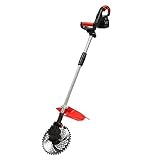
- Powerful Battery: The two 30000mAh lithium-ion batteries with over-charge and overload protections can provide longer battery life without frequent charging and worrying about insufficient electricity that affect your work. The equipped charger can help recharge the two batteries to save money and energy
- High-quality Material: This product is mainly made of copper core brushless motor, alloy saw blade, steel pipe, and plastic, with high hardness, high wear resistance. And the brushless design gives it a long load capacity and saves time and money on carbon brush replacement
- High Comfort: The cordless design allows you to effectively reduce the restrictions. The auxiliary handle with an adjustable position allows you to freely and conveniently control it, making it easier to mow the lawn. Its noise-canceling design also provides you with a more comfortable and quiet operating environment
- High Efficiency: The high-quality copper core brushless motor with power up to 1800W provides the product with super high unloaded speed (18000rpm), and the blade diameter of 7.87 inches can provide you with a wider cutting range, thus improving your work efficiency
- Easy to Carry: The lightweight (7.94 lbs), carrying strap, and detachable design make it easy to carry, making it suitable for a variety of mowing jobs both outdoors and indoors
Real operating capacity is lower after accounting for turning, repositioning, refilling, charging, cleaning, calibration, obstacles, software changes, and slowdowns intended to protect crops. Compare successfully controlled acres per operating hour, not headline travel speed.
Do they replace farm labor?
Robots can reduce hand hoeing, hand pulling, spot spraying, tractor passes, scouting, and repetitive cultivation. They do not eliminate labor. Workers still need to map fields, calibrate equipment, select crop models, transport the machine, charge or refuel it, clean optical and mechanical components, monitor operation, inspect results, and intervene around obstacles or uncertain plants.
Verdant claims SharpShooter can reduce manual labor costs by up to 85% and deliver a 6–18 month ROI for some specialty growers. Those figures depend on crop, utilization, labor rate, baseline weed-control method, financing, and number of passes; they are not guaranteed payback periods.
Are robotic weeders suitable for organic farming?
Some can support organic production, but “robotic” does not automatically mean “organic-compliant.” Laser and mechanical systems can avoid herbicides. Precision sprayers such as ARA and residential systems such as Dandy still apply chemicals, even when they use less.
Verify the complete operation: the input’s status under the relevant organic standard, soil disturbance, contamination controls, crop-model reliability, and local certification requirements. A certified product does not make every use of the machine compliant.
Residential lawn and garden robots
Dandy DT-01 and DT-01XL
Dandy markets lawn robots that map properties through a smartphone app, use camera and bumper-based navigation, detect weeds, and apply localized herbicide. The DT-01 is intended for a quarter-acre lawn and was listed at $699.99; the DT-01XL is intended for one acre and was listed at $799.99. Dandy’s FAQ says there is no monthly subscription fee, and the company claims up to 90% lower herbicide use and detection of more than 95% of weeds.
Best Value

- This electric-powered weeder is safe for the environment, emitting no toxic fumes or gases. It's perfect for family-friendly gardening.
- Key Benefits: Experience ease of use with this weeder's ergonomic handle design, reducing strain on your back and body.
- Construction: Featuring a comfortable handle, foldable rear wheels, and sturdy materials, this weeder is built to last for long-term use.
- User-Friendly Design: Effortlessly remove weeds with the long handle design, eliminating the need to bend or kneel.
- SERVICE:We attach great importance to our customers' shopping experience. If you have any questions, please feel free to contact us, we will reply you as soon as possible within 24 hours
Both product pages showed the units as sold out when checked. A listed price does not prove current stock or shipping availability. Dandy is also a chemical-application system, not an herbicide-free robot. Lawns containing ornamental plants, clover, mixed grass species, complex borders, gravel, mulch, or bare soil may be difficult for any vision system. See the Dandy homepage, DT-01 page, and DT-01XL page.
Tertill
Tertill is a different concept: a solar-powered garden robot intended for organic weed suppression through mechanical action. It is designed for bounded garden beds, not whole-lawn weed treatment. The reviewed official page did not provide a reliable current price or clear availability signal. See Tertill’s product description.
For most home gardeners, mulch, hand tools, raised-bed cultivators, ground covers, drip irrigation, and targeted manual work remain simpler and more available than robotic weeding.
Quick wins for a faster PC:
Repair Windows errors before they cause bigger problemsFix Now →Scan for outdated or missing drivers - takes under a minuteDriver Scan →Clear out junk files and repair common Windows errorsFree Scan →How to evaluate a purchase
- Define the weed-control problem. Record crop, acreage, row geometry, weed species, weed size, and current labor and chemical costs.
- Choose the treatment method. Decide whether the priority is herbicide elimination, input reduction, mechanical cultivation, or multi-purpose automation.
- Check compatibility. Confirm tractor horsepower, PTO, hitch, bed width, row spacing, terrain, connectivity, and transport requirements.
- Demand crop-specific evidence. Ask for weed mortality, crop-damage rate, false positives, missed weeds, number of passes, and results in wet, dusty, shadowed, or dense conditions.
- Calculate total cost of ownership. Include purchase or lease payments, software, crop models, service, parts, labor, charging or fuel, training, insurance, downtime, and financing.
- Run a controlled trial. Compare treated acres with the existing method across a representative part of the season, measuring yield, quality, weed rebound, labor hours, inputs, and cost.
- Confirm support and availability. Ask where replacement parts and technicians are located, whether software requires a subscription or cloud connection, and what happens if the vendor’s crop model is unavailable.
Alternatives worth comparing
Depending on the field, conventional inter-row cultivation, finger or torsion weeders, shielded sprayers, stale seedbeds, mulch, cover crops, crop rotation, flame weeding, GPS-guided cultivation, drone-based weed mapping, or manual tools may deliver a better return than a robotic system.
For commercial growers, the critical comparison is not robot versus no robot. It is the cost per successfully controlled acre—including crop damage and repeat passes—against the best conventional or hybrid approach.
The Bottom Line
Bottom line: Weed-eliminating robots are commercially real, but they are not one mature, universal product category. Large specialty-crop operations may benefit from laser, precision-spray, mechanical, or multi-action systems when crop geometry and utilization justify them. Market gardens may find autonomous tool carriers useful. Broad-acre farms and homeowners should be more cautious: many systems are specialized, quote-only, tractor-dependent, condition-sensitive, or unavailable. Treat vendor performance and payback figures as claims to verify through crop-specific trials, and distinguish chemical reduction from genuinely herbicide-free weed control.
Quick Recap
Product prices and availability are accurate as of the date/time indicated and are subject to change. Any price and availability information displayed on Amazon at the time of purchase will apply.
Free tools Windows power users keep installed
One-click scans. No signup required.

