The Tool Desk
Outbyte Driver Updater FREEScan for outdated or missing drivers - takes under a minuteDriver Scan →Outbyte PC Repair FREEClear out junk files and repair common Windows errorsFree Scan →The best way to get rid of wasps depends on the insect, nest location, nest size, and risk to people and pets. Identify the insect first, look for an active nest, remove food and garbage attractants, and leave an out-of-the-way nest alone when it creates no meaningful hazard. A limited DIY treatment may be reasonable for a small, exposed paper-wasp nest that can be reached safely from the ground. Large aerial nests, underground nests, nests in walls or attics, and nests near doors or play areas are usually jobs for a licensed pest professional.
Never use gasoline, fire, boiling water, or improvised burning methods, and never seal an active nest entrance. Those shortcuts can cause fire, chemical, structural, and sting hazards—or drive wasps into the building.
As an Amazon Associate I earn from qualifying purchases.
Wasp control at a glance
| What you are seeing | Best first choice | Why |
|---|---|---|
| A few wasps around food, drinks, garbage, or ripe fruit | Remove attractants and cover food | Foragers may be coming from a nest somewhere else. Sprays and traps do not reliably repel every wasp or eliminate the colony. |
| Small, exposed, open-comb nest under an eave or porch | Leave it if it is safely out of the way, or consider carefully limited, labeled treatment | Open paper-wasp comb is more accessible than a concealed nest, but the colony can still defend it. |
| Large gray aerial nest in a tree, under an eave, or near a walkway | Call a pest professional | The nest may contain a substantial defensive colony, and its paper envelope can prevent ordinary aerosol from reaching the brood. |
| Wasps entering a hole in soil, mulch, pavement, a root, or landscape timber | Usually call a pest professional | Ground nests can be hidden, large, and difficult to treat without approaching the entrance. |
| Wasps entering a wall, attic, soffit, chimney, vent, or other void | Call a pest professional for targeted treatment | Spraying an opening or sealing it prematurely can redirect wasps into living areas. |
| Fuzzy insects or wax comb | Pause and arrange identification or bee removal | Honey bees and bumble bees should not automatically be treated as wasps. |
This risk-based approach is consistent with guidance from Penn State Extension, University of Minnesota Extension, the U.S. Environmental Protection Agency, and CDC/NIOSH.
First identify the insect and locate the nest
“Wasp” is a broad label for insects with very different behavior. Treating every flying insect with the same spray can kill beneficial insects, fail to reach the colony, or create a greater hazard than the original problem.
#1 Best Overall
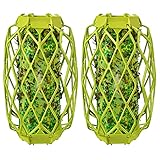
- Eliminate Wasps – VisiLure Traps lure wasps, red wasps, mud daubers, and carpenter bees with appealing colors and a multi-dimensional pattern. Once attracted, they become stuck to the sticky surface and expire.
- Choose VisiLure – The VisiLure TrapStik for Wasps lures insects without odors, chemicals, or wasp sprays. It catches queens and workers, from spring through fall.
- Thoughtful Design – Unique Glue Guards create a barrier around the sticky trap surface to reduce the chances of non-insect catches.
- Prevent Damage – Mud daubers (mud wasps, dirt daubers) and carpenter bees can cause serious property damage. The VisiLure TrapStik can stop this before it starts, without the use of potentially harmful sprays or chemicals.
- Made in the USA – At RESCUE!, our goal is to design, manufacture, and market the safest and most effective pest control solutions available for homeowners. We are proud to manufacture our products in the USA!
| Insect | Common clues | Typical nesting situation | Practical response |
|---|---|---|---|
| Paper wasp | Slender body; long legs often hang below the body in flight; many have brown, reddish, or yellow markings. | An exposed, umbrella-shaped paper comb with visible cells, often under eaves, porch ceilings, railings, sheds, and other sheltered surfaces. | Often manageable only when the nest is small, exposed, and safely reachable. It can still produce defensive stings when disturbed. |
| Yellowjacket | Smooth, shiny body with yellow-and-black markings. | Enclosed paper nest underground, in a rodent burrow, wall void, attic, hollow structure, landscape timber, or another cavity. Workers commonly scavenge around food and garbage. | Use sanitation for foragers. Treat an established or concealed nest cautiously—usually with professional help. |
| Bald-faced hornet | Black-and-white aerial yellowjacket, despite the common name; it is not a true hornet in the strict taxonomic sense. | Large, enclosed gray paper nest in a tree, shrub, under an eave, or on another elevated structure. | Large nests are best referred to a professional. The outer envelope may stop ordinary aerosol from reaching the internal comb. |
| Solitary wasp | Includes mud daubers, cicada killers, and many digger wasps. | Mud tubes, individual burrows, or several separate holes in soil. A group of holes does not necessarily represent one cooperative colony. | Usually leave alone unless the location creates a specific hazard. Solitary species are generally less defensive toward people and can help control other insects. |
| Honey bee | Fuzzy, usually golden-brown body; wax comb rather than paper comb. | Tree cavities, walls, chimneys, and other protected spaces. | Consider a beekeeper or bee-removal specialist before using pesticides. Removing bees without removing comb and honey can leave an ongoing structural pest problem. |
| Bumble bee | Fuzzy, round-bodied bee, often nesting in an existing cavity or sheltered ground location. | Ground cavities, abandoned nests, wall voids, and other protected places, depending on species. | Identify before treating. Avoid assuming that a fuzzy black-and-yellow insect is a yellowjacket. |
Appearance alone is not always conclusive. European paper wasps, for example, may nest in cavities, so a concealed nest is not automatically a yellowjacket nest. If bees could be involved, obtain a clear photograph from a safe distance or ask an extension office, bee-removal specialist, or pest professional for identification. See University of Minnesota’s wasp and bee identification guidance, its information on solitary wasps, and Penn State’s European paper-wasp resource.
How to tell whether there is an active nest
- One or two visitors around flowers, a drink, or a trash can may simply be foraging.
- Repeated traffic to one opening—especially wasps entering and leaving in a steady pattern—suggests an active nest.
- An open paper comb attached under a surface is characteristic of many paper wasps.
- A large enclosed paper structure in a tree, shrub, or roofline may be a bald-faced hornet or aerial yellowjacket nest.
- Wasps emerging from soil or a structure indicate a concealed nest. With an underground colony, the visible hole may be several feet from the actual nest.
- Indoor sightings near one wall, ceiling, vent, or light fixture can indicate a nest or entry route in a void.
Observe only from a safe distance. Penn State Extension recommends viewing an active nest from approximately 10 to 15 feet away during daylight so you can understand the flight path without approaching the colony.
When it is safer to leave a wasp nest alone
Removal is not automatically the right answer. Consider leaving a nest in place when it is:
- Far from doors, windows, walkways, patios, play areas, pet runs, and routine work areas;
- Not inside the home or attached to a frequently used structure;
- Not creating a risk for a person with a severe sting allergy;
- Possibly a solitary-wasp nest or bee colony that has not been properly identified; and
- In an area that can be isolated from children, pets, guests, and workers.
Wasps can pollinate plants and prey on caterpillars, flies, and other insects. Social paper-wasp and yellowjacket colonies are generally annual: a queen establishes a colony in spring, and the old colony eventually becomes inactive. Freezing weather commonly kills workers and the old queen in parts of the Upper Midwest, but the timing and reliability of seasonal die-off vary by species, climate, and whether a colony is protected inside a building. Do not assume that winter will solve every problem across the United States. University of Minnesota Extension explains the regional and seasonal limits in its resources on wasps and bees and wasps as beneficial insects.
Reassess if the nest becomes active near a doorway, if workers begin entering the house, or if people can no longer avoid the area.
How to get rid of wasps when there is no visible nest
If wasps are gathering around a deck, outdoor kitchen, picnic table, garbage area, or construction-site break area but no nest is visible, start with sanitation rather than a pesticide.
- Keep meat, sweets, beverages, pet food, and food waste covered.
- Use tight-fitting lids on outdoor trash and recycling containers.
- Clean spilled drinks, grease, syrup, and food residue promptly.
- Pick up fallen or overripe fruit and keep it away from sitting and eating areas.
- Inspect cans, cups, bottles, and drink containers before putting them to your mouth.
- Serve food shortly before it is eaten and put it away promptly afterward.
- Remove standing water and unnecessary water sources near gathering areas where practical.
- Do not swat at a single foraging wasp. Stay calm and move away slowly.
There is no reliably effective general-purpose pesticide repellent for scavenging yellowjackets. Spraying individual workers does not address the colony, and traps generally remove only a small fraction of the population. A trap may be a supplemental tool when the target species, lure, and placement are appropriate—not a substitute for finding and treating an established nest.
Windows Errors? Fix Them Before They Spread
Repair common Windows errors and clear accumulated junk for a smoother, more stable PC - no reinstall needed.Free scan · no reinstallOutdated Drivers Are Slowing You Down
One free scan finds every outdated or missing driver and matches the right update for your exact hardware.Free scan · exact hardware matchWhen traps can help
Use traps only when you know what you are trying to catch, the lure is designed or labeled for that species, and traps can be placed away from people and eating areas. Monitor and replace or empty them safely.
For example, Utah State University Extension notes that heptyl-butyrate lures commonly target western yellowjackets and generally do not attract paper wasps or bald-faced hornets. Its recommendation of multiple traps roughly 15 to 25 feet apart from July through October is regional guidance for western yellowjackets, not a universal schedule for every U.S. species or climate. See the Utah State Extension trap guidance before applying any regional recommendation.
Best control method by nest location
Small, exposed paper-wasp nest
A small open-comb paper-wasp nest is the only common situation in which a carefully limited DIY treatment may be reasonable. That does not mean it is risk-free. Do not attempt it if anyone at the property has a history of severe sting reactions, if children or pets cannot be kept away, if a ladder is needed, or if you cannot identify a product legally labeled for that pest and location.
If those limits cannot be met, leave the area isolated and call a professional.
Do these 3 things before closing this tab:
1Clear out junk files and repair common Windows errors2Fix the driver behind crashes, sound loss and screen glitches3Repair Windows errors before they cause bigger problemsLarge aerial nest in a tree, eave, soffit, or roofline
Large bald-faced hornet and aerial yellowjacket nests should generally be handled by a professional, especially when they are high, near a doorway or path, attached to a wall or soffit, or accessible only with a ladder or roof work.
Rank #2

- QUICK-DROWN FORMULA: Designed to keep insects submerged for quick drowning.
- QUICK & EASY SETUP: No tools are needed to complete the setup.
- FAST ACTING: Starts working immediately with no activation time. Most effective time to use trap is June – October.
- LOW ODOR: Lure is made with simple food ingredients.
- REUSABLE TRAP: Empty trap after 3-4 weeks or when 2/3 full of insects. Refills available for purchase separately.
An ordinary aerosol may kill exposed workers while failing to penetrate the thick paper envelope. The colony and brood can survive, and repeated approaches can provoke more defensive behavior. Professional options may include a labeled aerosol, foam, liquid residual treatment, or insecticidal dust, depending on the nest, access, product label, and local requirements. The treatment must target the nest and its entrances, not merely visible wasps.
Do not make bagging, shaking, cutting down, or physically removing a large aerial nest a routine homeowner project. Disturbing or incompletely containing the nest can release many defensive wasps. Penn State Extension discusses these hazards in its guidance on paper wasps, yellowjackets, and other stinging insects.
Underground yellowjacket nest
Ground nests are among the highest-risk DIY situations. The colony may contain hundreds or thousands of workers, and the visible entrance may not reveal the nest’s size or exact location. A professional is particularly appropriate when the hole is near a walkway, playground, pet area, septic system, utility line, or frequently used part of the yard.
What’s actually slowing this PC down?
Pick the symptom - the matching free tool is one click away.
Extension guidance identifies insecticidal dust, foam, or a properly labeled soil treatment as possible professional control methods. Dust may be carried into the colony by workers, foam may fill an entrance, and a liquid treatment may be used only when the product label permits it and the nest can be treated correctly. Pouring an arbitrary liquid into the hole is not an adequate substitute for locating and treating the colony.
Never plug or seal the entrance while the nest is active. Trapped yellowjackets may seek another exit, potentially into a house or other occupied structure. Seal the opening only after the colony is confirmed dead and the product label or professional instructions permit it. See the guidance from University of Minnesota Extension and Utah State University Extension.
Wasp nest in a wall, attic, soffit, vent, chimney, or other void
A hidden nest is not a normal aerosol-spray problem. Spraying randomly into an opening can drive insects toward another exit, including an interior wall, ceiling, light fixture, or room.
- Observe from a safe distance to identify where wasps enter and leave.
- Do not spray unknown openings from inside the home.
- Do not seal the exterior entrance while the colony is active.
- Call a pest professional who can locate access points and choose a treatment that reduces the chance of indoor emergence.
- Ask how the company will protect occupants, pets, aquariums, and ventilation systems during treatment.
- After the colony is dead, repair the structural opening and address remaining nest material when appropriate.
For construction and property-maintenance work, this is the point where pest control and building repair must be coordinated. A contractor can repair a soffit, siding gap, vent screen, or other opening, but closing it before the colony is dead can worsen the problem. Penn State Extension and University of Minnesota Extension both warn about redirecting hidden colonies into buildings.
Solitary-wasp burrows and mud nests
Solitary wasps do not form the large cooperative colony associated with yellowjackets. Cicada killers and digger wasps may create ground holes, while mud daubers build mud tubes in sheltered places. Several holes can represent several individual nests rather than one aggressive nest.
These wasps are usually less defensive toward people and can provide useful insect control. Leave them alone unless a burrow is in a play area, a frequently used path, or another location where it creates a specific hazard. Avoid blanket spraying simply because several holes are visible. More information is available from University of Minnesota Extension.
Honey bee or bumble bee colony
Stop before applying wasp pesticide if the insects are fuzzy or the nest contains wax comb. Honey bee colonies in walls or trees may persist for years, unlike many annual social-wasp colonies. Contact a beekeeper or bee-removal specialist where available.
Removing only the visible bees can leave wax and honey inside a wall. Remaining comb and honey may attract other bees, insects, mice, and other pests. Any building opening should be repaired after the colony and residual material have been properly addressed.
Quick wins for a faster PC:
Repair Windows errors before they cause bigger problemsFix Now →Fix the driver behind crashes, sound loss and screen glitchesFind Drivers →Safe DIY treatment steps for a small exposed nest
These steps apply only to a small, exposed nest that is safely reachable without a ladder, with no severe sting-allergy risk and no way for children, pets, workers, or bystanders to enter the treatment area. If the nest is large, concealed, high, underground, or difficult to escape from, skip DIY treatment and call a professional.
Rank #3

- Eliminate Wasps – VisiLure Traps lure wasps, red wasps, mud daubers, and carpenter bees with appealing colors and a multi-dimensional pattern. Once attracted, they become stuck to the sticky surface and expire.
- Choose VisiLure – The VisiLure TrapStik for Wasps lures insects without odors, chemicals, or wasp sprays. It catches queens and workers, from spring through fall.
- Thoughtful Design – Unique Glue Guards create a barrier around the sticky trap surface to reduce the chances of non-insect catches.
- Prevent Damage – Mud daubers (mud wasps, dirt daubers) and carpenter bees can cause serious property damage. The VisiLure TrapStik can stop this before it starts, without the use of potentially harmful sprays or chemicals.
- Made in the USA – At RESCUE!, our goal is to design, manufacture, and market the safest and most effective pest control solutions available for homeowners. We are proud to manufacture our products in the USA!
- Inspect in daylight from about 10 to 15 feet away. Identify the nest, entrance, flight path, nearby doors and windows, people and pet routes, and a clear escape route.
- Choose a low-activity time. Late evening or early morning is commonly recommended because fewer wasps are flying and more may be in or near the nest. This is a risk-reduction measure, not permission to ignore the product label.
- Wear protective clothing. Use long sleeves, long pants, closed shoes, gloves, and eye protection. Avoid perfume and strongly scented toiletries. If the situation calls for a veil, full suit, ladder, roof access, or professional protective equipment, treat that as a reason to hire a professional rather than improvising.
- Read the entire pesticide label before opening the container. The product must specifically permit use against wasps or hornets at that application site and by that method. Follow its directions for distance, wind, personal protective equipment, people and pet exclusion, ventilation, storage, disposal, and reentry.
- Position yourself with the wind and escape route in mind. Never stand where spray or dislodged insects can be carried toward you, a doorway, a window, a neighbor, or a pet area.
- Treat the wasps and exposed paper comb as the label directs. Spraying only flying workers may leave the nest and brood active. Do not improvise dilution, spray distance, product combinations, or application volume.
- Retreat immediately if the colony becomes defensive. Do not swat, wave your arms, or keep approaching to see whether the product worked. CDC/NIOSH recommends moving indoors or to shade if attacked by several insects and specifically advises against jumping into water.
- Wait according to the label. Do not touch or remove the nest until the required waiting or reentry instructions have been met and activity has stopped.
- Confirm inactivity before removal. If wasps remain active, do not repeatedly approach the nest. Isolate the area and reassess with a professional.
- Remove and destroy the exposed nest when permitted. Protected larvae or pupae may remain in the comb. Follow the product label or professional instructions for handling and disposal.
The pesticide label controls the job. EPA states that labels are legally enforceable and specify where, how, how much, and how often a pesticide may be used. Using a product inconsistently with its labeling violates federal law. Read EPA’s introduction to pesticide labels and the National Pesticide Information Center’s label guidance.
When to call a licensed pest professional
Do not attempt DIY treatment when any of these conditions apply:
- Someone at the property has had a severe allergic reaction to a sting.
- The nest is inside a wall, ceiling, attic, chimney, soffit, vent, concrete block, or another inaccessible void.
- The nest is underground, concealed, large, or near a high-traffic area.
- The nest is near a doorway, play area, pet run, livestock area, or work zone.
- A ladder, roof, tree climbing, lift, or other fall hazard is required.
- Children, pets, livestock, tenants, workers, or bystanders cannot be kept away.
- The insect may be a honey bee, bumble bee, or another insect requiring specialized identification or removal.
- You cannot identify a legally labeled product and application method.
- You are unsure how to treat the nest without pushing wasps into the building.
Ask the company:
- Are you licensed or certified for structural pest control in this state?
- Who will perform the treatment, and what species and nest location do they believe this is?
- Will you remove the nest after treatment, or is removal a separate service?
- How will you prevent wasps from entering the home during and after treatment?
- What pesticide or nonchemical method will you use?
- Can you provide the product label and explain the application site, PPE, ventilation, pet and aquarium precautions, and reentry requirements?
- What happens if activity continues?
- Is the estimate for this nest only, or are you proposing a recurring whole-property treatment contract?
EPA recommends obtaining multiple estimates, checking licenses with the state agriculture or pesticide agency, requesting references, asking for product labels and rates, and avoiding companies that use pressure tactics, claim secret formulas, or demand immediate whole-property treatment without an inspection. A recurring pesticide contract should not be the automatic response to a one-time nest; EPA says routine applications are generally inappropriate unless pests are continuously present and nonchemical measures have failed. See EPA’s pest-control service selection guidance and its information on pesticide-applicator certification.
Recommended Free Tools
What not to do
Do not spray and immediately seal the opening
This can force yellowjackets through another exit, potentially into the house. Treat first, confirm the colony is inactive, and seal afterward.
Do not assume a fast knockdown means the nest is dead
An aerosol may kill a visible worker while failing to reach a large enclosed nest, hidden brood, or wall colony. Exposed small nests and concealed or enclosed nests require different control strategies.
Never pour gasoline or kerosene into a nest
Gasoline and similar methods create fire, explosion, injury, soil-contamination, and toxicity hazards. Do not use fire, burning materials, boiling water, or other improvised methods. They are not responsible pest control.
Do not use a ladder to treat a defensive colony
A sting, sudden flight response, slippery spray residue, or retreat can turn a pest issue into a fall injury. High nests belong to a professional equipped for the access and protective requirements.
Do not spray an unknown wall void
It can contaminate an unsuitable area, fail to reach the colony, or send wasps into the occupied side of the structure.
Do not rely on paper-bag decoy nests
There is no clear evidence that paper-bag “decoy nests” reliably prevent wasps from nesting. Wasps may build nearby. Also treat essential-oil and other “natural” products cautiously: natural does not mean harmless, universally effective, safe around pollinators, or safe around pets, children, plants, or water. Use any product only for the purpose and site on its label. Penn State Extension addresses the decoy-nest claim in its stinging-insect control guidance.
What to do after treatment
- Remove an exposed nest only when the pesticide label or professional instructions allow it.
- Destroy the nest if protected larvae or pupae could remain.
- Clean the attachment area where practical. Colorado State University Extension recommends removing a treated European paper-wasp nest and washing its attachment area to reduce colony odors and discourage surviving wasps from attempting to reestablish there. See Colorado State’s European paper-wasp guidance.
- After a hidden colony is confirmed dead, repair cracks, siding gaps, loose soffits, vent screens, roofline openings, and other entry points.
- Continue covering food, securing garbage and recycling, cleaning spills, and removing fallen fruit.
- Monitor the repaired area during the next active season.
Do not seal a hidden nest until it is dead. If honey bees were involved, removal of remaining comb and honey may be necessary before closing the opening so the cavity does not attract insects and rodents.
How to prevent wasp problems around a home or construction project
- Inspect eaves, soffits, porch ceilings, siding transitions, vents, utility penetrations, and sheds in spring and early summer.
- Repair gaps and damaged screens after any colony is dead and removed.
- Keep outdoor garbage and recycling containers closed and clean.
- Remove fallen fruit and food waste from decks, patios, and work areas.
- Keep sugary drinks and food covered when people are outside.
- Designate eating and break areas away from active nests and garbage storage.
- Train workers and household members not to disturb a nest or swat at individual wasps.
- Before closing a wall, soffit, roof, or other cavity during renovation, inspect for active insect traffic and coordinate with a pest professional if wasps or bees are entering the space.
- Do not apply routine perimeter pesticides solely as a preventive habit unless there is a documented, continuing pest problem and the application is appropriate and labeled.
What to do after a sting
Move away from the nest or area first. For a routine sting, wash the site with soap and water, apply ice to reduce swelling, and avoid scratching. Have someone observe the person for signs of an allergic reaction.
Call emergency services immediately for trouble breathing, swelling of the throat or tongue, dizziness, faintness, widespread hives, or rapidly worsening symptoms. Anyone prescribed epinephrine should use it according to their medical plan and seek emergency medical care. Suspected anaphylaxis is a potentially fatal emergency. See CDC/NIOSH sting-safety guidance.
Rank #4

- Lure & Eliminate Yellowjackets – This disposable yellowjacket trap targets and traps all major species of yellowjackets found in Mountain & Pacific States. Please consult the map to ensure you are purchasing the correct trap.
- Most Effective During Summer – This trap is most effective during summer months when the weather is warm and dry. (Please note: this trap only targets yellowjackets; it will not catch wasps or hornets).
- Easy to Use – Just add water to activate the powdered attractant and hang the trap outside! The attractant lasts for weeks, and no rebaiting is necessary. Once it’s full, dispose in the trash.
- Mountain & Pacific Formula – Make sure you choose the right trap! The attractant in this model is specially formulated to lure yellowjacket species found in states that fall in the Pacific and Mountain Time Zones.
- Made in the USA – At RESCUE!, our goal is to design and manufacture the safest and most effective pest control solutions available. We proudly manufacture our products in the USA!
Frequently Asked Questions
Can I remove a wasp nest myself?
Only consider DIY treatment for a small, exposed paper-wasp nest that can be reached safely without a ladder, when no one nearby has a severe sting allergy and people and pets can be kept away. Use only a pesticide labeled for wasps or hornets at that location, follow every label direction, and stop if the colony becomes defensive. Large, underground, concealed, high, or indoor nests should be handled by a licensed professional.
Can I spray a wasp nest at night?
Late evening or early morning is commonly a lower-activity time, but “spray at night” is not a universal instruction. The pesticide label controls timing, distance, PPE, wind precautions, waiting period, and removal instructions. Night treatment is not appropriate if the nest is large, concealed, high, underground, or otherwise unsafe to approach.
Should I plug a yellowjacket hole?
No—not while the colony is active. Plugging the visible entrance can force yellowjackets to find another exit, potentially into a building. Treat the colony first, confirm that activity has stopped, and seal the opening only when the product label or professional instructions allow it.
Free tools Windows power users keep installed
One-click scans. No signup required.
Do wasp traps work?
They can catch some foraging yellowjackets when the lure is designed for the target species and the traps are placed away from people. They generally catch only a small fraction of a population and do not eliminate an established nest. Heptyl-butyrate lures, for example, commonly target western yellowjackets and generally do not attract paper wasps or bald-faced hornets; placement and season recommendations are regional.
Will peppermint oil or a paper-bag nest repel wasps?
There is no clear evidence that paper-bag decoy nests reliably prevent nesting. Essential-oil products may have specific labeled uses, but “natural” does not guarantee effectiveness or safety around people, pets, pollinators, plants, or water. Do not treat a repellent claim as a substitute for identifying and managing an active nest.
Should I remove a wasp nest in winter?
If a nest is safely out of the way, waiting may be reasonable because many social-wasp colonies are annual. However, seasonal die-off varies by species, climate, and whether the colony is protected in a building. A nest inside a wall or attic should not simply be ignored, and a low-risk nest should still be removed or the structure repaired when safe and appropriate.
Are bald-faced hornets dangerous?
Bald-faced hornets are black-and-white aerial yellowjackets that can defend a nest. Risk is greatest when the large enclosed nest is disturbed or located near people, doors, paths, children, or pets. Treat a large or elevated nest as a professional job rather than relying on an ordinary aerosol.
Quick wins for a faster PC:
Clear out junk files and repair common Windows errorsFree Scan →Scan for outdated or missing drivers - takes under a minuteDriver Scan →How do I know whether it is a bee or a wasp?
Honey bees and bumble bees are generally fuzzy, while many wasps are smooth and less hairy. Honey bees build wax comb; wasps build paper nests. Identification can be difficult from a distance, so do not spray a fuzzy insect or a wax-comb colony before consulting a beekeeper, bee-removal specialist, extension office, or qualified pest professional.
How long should I stay away after treating a nest?
There is no universal waiting time. Follow the exact product label or the professional’s written reentry instructions, including directions for children, pets, ventilation, and outdoor use. Do not remove the nest merely because some flying workers have stopped; confirm that activity has ended.
Will wasps return to an old nest?
Many social-wasp colonies are annual, so an old nest is not normally a permanent colony. However, surviving insects, protected cavities, species differences, and attractive nest sites can complicate the situation. Once a nest is confirmed dead, remove it when permitted, clean the attachment area where practical, and repair the structural opening.
The Bottom Line
Choose control based on location and risk, not on the strongest spray. Cover food and secure garbage when there is no nest. Leave a low-risk nest alone when people can avoid it. Consider DIY treatment only for a small, exposed paper-wasp nest that is safely reachable and covered by a compliant product label. Call a licensed pest professional for large aerial nests, ground nests, wall and attic colonies, ladder work, bee identification, or any property with a person who has a serious sting allergy. After the colony is dead, remove the nest when permitted and repair the entry point—never seal an active nest.
Free tools Windows power users keep installed
One-click scans. No signup required.
Quick Recap
Product prices and availability are accurate as of the date/time indicated and are subject to change. Any price and availability information displayed on Amazon at the time of purchase will apply.




