Yes, baking soda can injure or kill some small, young weeds—but it is a limited spot treatment, not a dependable all-purpose weed killer. It is most appropriate for a few shallow-rooted weeds growing in concrete or asphalt cracks, paver joints, gravel, or another unplanted hardscape area.
Baking soda is nonselective: it can damage grass, flowers, vegetables, shrubs, and trees just as readily as weeds. It may also leave established perennial weeds—including dandelions, plantain, bindweed, nutsedge, and creeping grasses—with enough root, rhizome, crown, or tuber to regrow. For that reason, remove large weeds first, apply only a thin amount to exposed foliage, and finish by cleaning and repairing the crack rather than repeatedly adding more baking soda.
As an Amazon Associate I earn from qualifying purchases.
Where baking soda is—and is not—a reasonable choice
Best locations:
- Concrete or asphalt cracks
- Joints between pavers
- Gravel paths and driveways
- Bare, unplanted hardscape
- Small isolated weeds that can be treated without contacting desirable plants
Avoid using it on:
- Lawns
- Vegetable gardens and flower beds
- Soil around trees and shrubs
- Areas where plants will later be installed
- Slopes or drains that carry runoff toward planting beds, ponds, streams, or stormwater systems
- Large infestations where a small spot treatment is impractical
University and extension guidance commonly places household remedies such as baking soda in the category of nonselective, contact-type treatments. They may injure exposed leaves, but they do not have the tested weed spectrum, application rate, or residual-control claims of a labeled herbicide. Utah State University Extension describes the limitations of home remedies, while current gardening guidance recommends reserving baking soda for small weeds in hardscape.
How to use baking soda to kill weeds: 5 steps
1. Choose a location where plant injury and sodium exposure are acceptable
Before applying anything, look beyond the weed itself. Check where powder or dissolved baking soda could travel after watering or rain. A crack beside a driveway may appear isolated, but runoff can carry sodium into the adjacent lawn, planting bed, or tree-root zone.
#1 Best Overall

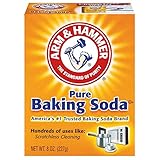
- A HOUSEHOLD CLASSIC: This 2.7 lb resealable bag of ARM & HAMMER Baking Soda unlocks 100+ uses across your home—from kitchens and laundry rooms to crafting tables and beyond
- PURE & NATURAL: America’s Most Trusted Baking Soda Brand is safe to use around kids and pets; no additives or chemicals, no cornstarch, and no fragrance
- FOOD-GRADE FOR BETTER RESULTS: USP-grade 1 crystals create fluffier cakes, muffins, cookies, and breads; use it in gluten free, kosher, vegan, paleo-friendly, and organic baking recipes
- DIY HOME HACKS: A multi-purpose essential to help freshen carpets, brighten laundry, freshen drains, scrub sinks, clean jewelry, craft kids’ sensory play & science experiments with one ingredient
- SUSTAINABLY MADE IN THE USA: Proudly made and packaged in Green River, Wyoming, using 100% certified renewable energy for a more sustainable, quality baking soda you can trust
Do not use baking soda where desirable plants are growing nearby or where the treatment area drains directly into soil or surface water. Repeated sodium applications can contribute to salinity, impair plant water uptake, interfere with nutrient availability, and damage soil structure. UC Integrated Pest Management explains the effects of salinity and salt toxicity on plants and soil.
This restriction matters more than the recipe. Baking soda has no built-in way to distinguish a weed from turfgrass or a newly planted shrub. If the target is in a lawn, garden bed, or soil that you want to keep productive, hand removal or an appropriate labeled product is a better choice.
2. Pull large weeds and clear the crack
Baking soda is most plausible for small, young annual weeds and shallow-rooted seedlings. Mature weeds should be pulled or dug out first, especially if they have a taproot, crown, rhizomes, or tubers.
What’s actually slowing this PC down?
Pick the symptom - the matching free tool is one click away.
For a crack, joint, or gravel surface:
- Put on gloves.
- Pull or dig out the largest weeds while the surrounding soil is moist.
- Use a hand weeder, putty knife, crack scraper, or stiff brush to remove loose soil and accumulated debris.
- Remove dead vegetation and seed-bearing material rather than leaving it in place.
- Dispose of perennial weeds so pieces of crown or root cannot reroot elsewhere.
Dandelions, plantain, bindweed, nutsedge, creeping grasses, and similar perennial weeds often survive because the underground portion remains alive after the leaves are damaged. UC Agriculture and Natural Resources notes that homemade treatments generally act on contacted tissue and that young annual weeds are easier to control than established perennials.
Removing soil and organic debris also addresses the reason weeds keep appearing in a hardscape joint: the crack has become a small planting bed. Baking soda cannot permanently stop windblown seeds, bird-dropped seeds, runoff, or new soil from entering the opening.
3. Apply a thin, targeted amount
Lightly wet the weed’s leaves so the powder adheres, then sprinkle a thin coating over the leaves and crown. Apply only enough to cover the exposed plant. Keep the powder off adjacent plants and avoid blanketing the surrounding soil.
Use a calm day with no rain expected soon afterward. Wind can move the powder onto desirable foliage, and rain can dissolve and carry sodium into soil before the weed has been exposed for long enough to show injury.
A frequently repeated household guideline is approximately 1 teaspoon per small weed. That number is an informal published recipe, not a standardized extension recommendation or an EPA herbicide-label rate. Hunker publishes this powder guideline and an alternative spray recipe, but the figures should not be treated as a guaranteed dose for every species or situation.
Optional spray recipe
An alternative informal recipe is 10 tablespoons of baking soda in 1 gallon of water, sprayed directly onto the weeds. If you choose to try it, use it only as a highly targeted spot treatment on unplanted hardscape, not as a broadcast spray. Avoid creating mist, overspray, or runoff.
Rank #2
The thin powder method is the more conservative starting point because it uses less material and limits the amount of sodium dissolved into surrounding soil. Neither recipe is a tested, EPA-approved household herbicide formulation, and neither guarantees root kill or permanent control.
Do not add table salt, vinegar, or dish detergent. These additions do not turn a household mixture into a more reliable or selective treatment. Their limitations and risks are explained below.
Recommended Free Tools
4. Wait several days, then inspect for regrowth
Check the treated area after several days for wilting, browning, crispy leaves, or a dead-looking crown. There is no dependable timetable that applies to every weed, concentration, temperature, and weather condition, so avoid claims that baking soda works overnight or within a guaranteed 48-hour period.
If the leaves die but fresh growth appears later, the treatment caused contact injury rather than controlling the underground plant. Do not keep increasing the amount in an attempt to force a perennial weed to die. More baking soda increases the risk of damage to nearby plants, sodium accumulation, and runoff without solving the underlying root problem.
For a regrowing perennial, dig out the crown and as much of the root system as possible. If that is impractical, consider physical exclusion, crack repair, or a properly labeled herbicide selected for the site and target weed.
5. Remove the remains and prevent the next crop of weeds
Once the foliage has died:
- Pull or scrape out the dead plant.
- Remove soil, moss, leaf litter, and seed-bearing debris from the crack or joint.
- Sweep up loose baking soda and plant material. If rinsing is necessary, direct water away from beds, tree roots, drains, and waterways.
- Repair the opening with a compatible joint filler, mortar, paver-joint product, driveway seam sealer, or other material appropriate for the surface and movement conditions.
- Inspect the area periodically and remove new seedlings while they are small.
Follow the repair-product manufacturer’s preparation and curing directions. A clean, properly repaired joint is usually a more durable construction solution than repeatedly applying a weed-killing substance to an opening that continues to collect soil.
Do these 3 things before closing this tab:
1Repair Windows errors before they cause bigger problems2Scan for outdated or missing drivers - takes under a minute3Clear out junk files and repair common Windows errorsCrack sealing will not prevent every future seed from landing, but it can remove the growing medium that allows weeds to establish. Extension guidance on driveway cracks likewise emphasizes cleaning and sealing rather than promising a permanent chemical treatment.
Why baking soda may work—and why it often fails
Baking soda is sodium bicarbonate. The most defensible explanation is that a concentrated deposit on exposed foliage creates salt-related water stress and alkaline stress. This can interfere with the plant’s water balance and injure leaf tissue, causing wilting, browning, or desiccation.
That explanation should not be overstated. The observed result is leaf injury on some exposed weeds; it is not proof that a particular household concentration will reliably kill a particular species or its roots. The phrase “it pulls all the moisture out of the weed” is a simplified gardening explanation, not a validated mode of action for a standardized baking-soda herbicide.
Rank #3

- One 4-pound resealable bag of Baking Soda
- Great for baking, cleaning & freshening
- Amazon Grocery has all the favorites you love for less. You’ll find everything you need for great-tasting meals in one shopping trip
- Feed your every day with Amazon Grocery
The contact nature of the treatment explains both its usefulness and its weakness:
The Tool Desk
Outbyte Driver Updater FREEFix the driver behind crashes, sound loss and screen glitchesFind Drivers →Outbyte PC Repair FREEClear out junk files and repair common Windows errorsFree Scan →- Small annual weeds: They have little established root reserve and may die after their exposed tissue is injured.
- Large annual weeds: They may suffer substantial leaf damage but can be harder to finish.
- Perennial weeds: Their roots, rhizomes, crowns, or tubers may remain alive and send up new foliage.
- Nearby plants: They can be injured too if powder, spray, or salty runoff contacts them.
It is also possible to damage the soil while trying to damage the weed. Excess sodium can contribute to salinity, reduce effective water uptake, create nutrient-availability problems, and degrade soil structure. Iowa State University Extension discusses how salt injury depends on application, movement, runoff, and exposure conditions.
Common mistakes to avoid
- Applying it to a lawn: Baking soda is nonselective and may injure turfgrass as well as broadleaf weeds. It is not a lawn-safe selective herbicide.
- Broadcasting it over garden soil: A heavy or repeated application can create a soil problem that lasts longer than the weed.
- Treating beside trees and shrubs: Nearby roots and runoff pathways make accidental exposure more likely.
- Using it before rain: Rain can wash the material away, spread it to desirable plants, or carry sodium into soil and drainage systems.
- Applying it to a mature perennial and expecting root kill: Brown leaves do not prove that the underground plant is dead.
- Using a heavy layer: More product does not solve the biological limitation of a contact treatment.
- Mixing it with vinegar: The acid and alkaline ingredients react with each other. Fizzing is not evidence of greater weed-killing power, and equal-parts mixtures can largely neutralize the intended properties of both ingredients.
- Adding dish detergent: Household detergents are not the same as formulated insecticidal soaps. They can injure plants, alter soil properties, harm beneficial organisms, and persist in the environment. Penn State Extension cautions against casually using household detergent, salt, vinegar, and homemade weed-killer mixtures.
- Calling it permanent: New seeds can enter a crack through wind, birds, runoff, soil movement, and foot traffic.
What to use instead, depending on the site
| Situation | Better first choice | Important limitation |
|---|---|---|
| A few weeds in a garden bed | Hand-pull or dig them while soil is moist | Remove as much root as possible without disturbing desirable plants |
| Recurring seedlings in a planting bed | Organic mulch, gravel, cardboard, or another physical barrier | Mulch suppresses many new seedlings but may not stop established perennials |
| A few weeds in a paver joint or concrete crack | Scrape, brush, pull, and then repair or seal the joint | Seeds may still arrive later, so inspect periodically |
| Very small hardscape area with no nearby plants | Boiling water or a careful spot treatment | Boiling water burns people and plants, can affect roots beneath the surface, and may require repeat treatments |
| Persistent perennial in an inaccessible crack | Physical removal, crack repair, or a properly labeled herbicide | Choose a product whose label covers the site and target weed |
| Broadleaf weeds in a lawn | A labeled selective lawn product, used according to its label | Timing, turf species, target weed, weather, and application restrictions matter |
Colorado State University Extension compares hand removal, mulch, physical barriers, contact treatments, and perennial-weed control. For lawns, University of Minnesota Extension explains the difference between selective lawn products and nonselective herbicides.
Boiling water
Boiling water can be effective for a very small number of young weeds in an appropriate hardscape location. It will also injure any plant or root system it contacts, and it presents a serious burn hazard. Do not use it casually near children, pets, foot traffic, dry vegetation, or materials that could be damaged by heat.
Vinegar
Household vinegar is generally about 5% acetic acid and may burn very young weeds. It is not a dependable solution for established perennial weeds. Horticultural vinegar at roughly 20–30% acetic acid is substantially more hazardous to skin and eyes and remains nonselective. It should not be treated as an interchangeable kitchen ingredient.
PC Slower Than It Used to Be?
A free scan shows the junk files, broken settings and background clutter dragging Windows down - then fixes them in one click.Free scan · Windows 10 & 11Crashes, No Sound, or Screen Glitches?
Random freezes, missing sound and display glitches usually trace back to one bad driver. Find and replace yours safely.Free scan · under a minuteSalt
Salt can kill plants, but it is usually a worse choice near soil that may later support vegetation. Sodium can persist, move with runoff, injure nearby plants, and damage soil structure. Do not add salt to a baking-soda mixture.
Flame weeding
Flame weeding can work on young weeds in suitable hardscape, but it creates fire and explosion risks and may be restricted by local rules. Do not use a torch near dry grass, mulch, buildings, vehicles, stored materials, gas lines, or other combustible surfaces.
Safety, children, pets, and cleanup
Baking soda is a common household ingredient, but “natural,” “food-grade,” and “chemical-free” do not mean harmless, selective, or environmentally impact-free. Concentrated or repeated exposure can injure plants and soil, and large ingestions can cause sodium- and alkalinity-related illness.
- Apply gently to avoid creating airborne dust.
- Wear gloves and eye protection when handling substantial quantities or spraying a solution.
- Keep children and pets away while applying the powder or spray and until any wet treatment has dried.
- Do not leave piles where children or animals can lick or ingest them.
- Keep the container closed and stored out of reach.
- Remove toys, food, water bowls, and pet items from the treatment area.
- Clean up excess powder rather than washing it toward a planting bed, drain, pond, or stream.
In the United States, if a child swallows a large amount, contact Poison Control at 1-800-222-1222. If a pet ingests a substantial quantity or develops symptoms, contact a veterinarian or an animal poison-control service. Poison Control provides information about baking-soda ingestion, and the National Pesticide Information Center explains general precautions for pets and outdoor pesticide treatments.
Rank #4

- A HOUSEHOLD CLASSIC: Pack of 12 x 1 lb boxes of ARM & HAMMER Baking Soda unlocks 100+ uses across your home—from kitchens and laundry rooms to crafting tables and beyond
- STAY STOCKED: This grab-and-go bulk case keeps your home or workplace stocked, so the dependable ingredient you reach for stays on hand
- DIY HOME HACKS: A multi-purpose essential to help freshen carpets, brighten laundry, freshen drains, scrub sinks, clean jewelry, or craft kids’ sensory play & science experiments with one ingredient
- SUSTAINABLY MADE IN THE USA: Proudly made and packaged in Green River, Wyoming, using 100% certified renewable energy for a more sustainable, quality baking soda you can trust
- TRUSTED BRAND: ARM & HAMMER has been part of daily routines for over 170 years, providing safe, dependable, and effective products trusted by families for generations
Is homemade baking-soda weed killer EPA-approved?
No. In U.S. coverage, do not describe a homemade baking-soda mixture as an EPA-approved weed killer.
Federal rules list sodium bicarbonate as a permitted inert ingredient in certain minimum-risk pesticide products, subject to the conditions of that exemption. That status does not mean the EPA tested or endorsed a homeowner’s baking-soda recipe. The EPA also has a registration history for sodium bicarbonate as a pesticide active ingredient for certain fungicide uses, with fungal diseases—not weeds—as the targets.
For the federal distinction, see 40 CFR § 152.25, the EPA’s conditions for minimum-risk pesticides, and the EPA fact sheet describing sodium bicarbonate’s fungicide registration. State requirements can differ. Anyone selling, marketing, or labeling a homemade product as a pesticide should check applicable federal and state pesticide laws rather than relying on a kitchen recipe.
A practical decision guide
Try a small baking-soda spot treatment when there are only a few young weeds in an unplanted crack or gravel area, no desirable plants or water are downstream, and temporary contact injury is an acceptable outcome.
Free tools Windows power users keep installed
One-click scans. No signup required.
Choose hand removal when the infestation is small, the soil is moist, or the weed is in a garden bed. This is usually the least disruptive option when the root can be removed without harming nearby plants.
Choose mulch or a physical barrier when the problem is recurring in a planting bed and the goal is to prevent new seedlings rather than burn down existing foliage.
Choose repair and sealing when weeds repeatedly grow in the same driveway, patio, or paver joint. Removing the soil and debris, then using a compatible joint or crack-repair material, addresses the condition that allows the weed to establish.
Choose a commercial herbicide when the weed is a persistent perennial, hand removal is impractical, or selectivity is needed in a lawn. Use only a product whose label covers the intended site and target weed, and follow its directions for rate, timing, protective equipment, reentry, pets, and disposal. A selective lawn product may control certain broadleaf weeds without harming turfgrass; a nonselective product can injure most green plants.
Frequently Asked Questions
Does baking soda kill weeds permanently?
Usually not. Baking soda can cause contact injury to some exposed weeds, but it does not reliably kill the roots, rhizomes, crowns, or tubers of established perennials. New seeds can also enter a crack after treatment. Pull the remains, remove soil and debris, and repair or seal the crack to reduce recurrence.
Best Value

- America's #1 trusted Baking Soda brand
- Easy to use with free-flowing Baking Soda granules
- Safe on stainless steel, ceramic and microwave surfaces
- Water-resistant container with resealable lid
- Ideal for high-moisture areas like kitchen and bath
Can I use baking soda on grass?
It is not recommended. Baking soda is nonselective and can injure turfgrass as well as the weed. For lawn weeds, identify the weed and use hand removal or a properly labeled selective lawn product according to its label.
Will baking soda kill dandelions?
It may brown or injure exposed dandelion leaves, particularly when the plant is small, but a mature dandelion’s taproot may survive. Dig out the crown and as much of the root as possible, or use a site-appropriate labeled treatment.
Can baking soda damage soil?
Yes, particularly when applied heavily or repeatedly. Sodium can contribute to salinity, impair plant water uptake, affect nutrient availability, and damage soil structure. Keep it on isolated hardscape and away from soil, runoff, planting beds, and tree-root zones.
Quick wins for a faster PC:
Scan for outdated or missing drivers - takes under a minuteDriver Scan →Repair Windows errors before they cause bigger problemsFix Now →Fix the driver behind crashes, sound loss and screen glitchesFind Drivers →Should I mix baking soda with vinegar?
No. Baking soda and vinegar react and consume one another; fizzing does not indicate stronger herbicidal action. The resulting mixture is not a standardized or reliably synergistic weed treatment.
How long does baking soda take to work?
There is no dependable standardized timetable. Look for wilting or browning after several days, but do not promise overnight or guaranteed 48-hour results. Inspect again later for regrowth, especially with perennial weeds.
Is baking soda safe around pets?
Do not treat it as categorically pet-safe. Keep pets away during application and until any wet treatment has dried, prevent them from licking piles of powder, and store the container securely. Contact a veterinarian or animal poison-control service after substantial ingestion or if symptoms occur.
What works better for weeds between pavers?
For a few weeds, scrape or pull them, brush out soil and debris, and then repair the joint with a compatible paver-joint product. Baking soda or boiling water may provide temporary spot control where no plants are nearby, but neither is a permanent substitute for cleaning and maintenance.
What works better on perennial weeds?
Remove the root, crown, rhizome, or tuber when possible. If hand removal is impractical, use a properly labeled herbicide for the specific site and weed, following all label requirements. Repeatedly increasing a baking-soda dose is more likely to increase soil and collateral-plant damage than to solve a perennial-root problem.
How do I stop weeds from returning in cracks?
Remove the plant and accumulated soil, leaf litter, and seed-bearing debris; clean the crack; then fill or seal it with a compatible material suited to the driveway, concrete, asphalt, or paver installation. Inspect periodically and remove new seedlings while they are small.
The Bottom Line
Baking soda is worth trying only as a modest, targeted treatment for a few small weeds in unplanted hardscape. Use a thin coating on lightly damp foliage, keep it away from soil and runoff, and remove large weeds by hand first. If the weed regrows, remove the root or choose a more appropriate method. For lasting improvement in driveways, patios, and paver joints, cleaning out the growing medium and repairing the crack is more dependable than repeatedly applying baking soda.
Quick Recap
Product prices and availability are accurate as of the date/time indicated and are subject to change. Any price and availability information displayed on Amazon at the time of purchase will apply.




