Lucky bamboo is Dracaena sanderiana, not true bamboo. For reliable indoor growth, place it in bright, indirect light; keep it warm and away from drafts; use low-mineral water in a clean vase or a well-drained soil mix; and feed sparingly. Water-grown plants need their water changed about every 7–10 days, while soil-grown plants should be watered only after the surface has dried somewhat.
One important safety note for homes with pets: the ASPCA lists dracaena as toxic to cats and dogs. Keep the plant and fallen leaves out of reach.

As an Amazon Associate I earn from qualifying purchases.
How to Grow and Care for an Indoor Lucky Bamboo Plant
Lucky bamboo is a forgiving houseplant when its care matches what it actually is: a tropical dracaena that can be grown in water as a managed decorative arrangement, but is not an aquatic plant. It does not need direct sun, a complicated feeding schedule, or an expensive setup. It does need clean water, oxygen around its roots, occasional nutrients, and protection from harsh light and temperature swings.
What’s actually slowing this PC down?
Pick the symptom - the matching free tool is one click away.
Use this routine as a starting point:
- Provide bright, indirect light.
- Keep the plant approximately 65–86°F (18–30°C), away from drafts, radiators, heating vents, and air-conditioning outlets.
- For water culture, submerge the roots but keep most of the cane above the waterline.
- Change water and clean the container about weekly to every 10 days.
- For soil culture, use a pot with a drainage hole and keep the mix moist but never soggy.
- Use distilled, safely collected rainwater, reverse-osmosis water, or filtered water known to reduce fluoride and excess minerals when tap water causes brown tips.
- Fertilize very weakly and infrequently.
What is lucky bamboo?
The accepted botanical name is Dracaena sanderiana Mast. Older references may also use names such as Dracaena braunii. Common names include lucky bamboo, friendship bamboo, ribbon plant, Chinese water bamboo, and water bamboo. Despite its cane-like stems and bamboo-like appearance, it is not a grass and is not true bamboo. It belongs to the asparagus family. Kew’s Plants of the World Online entry lists the accepted species and its native range, from west-central tropical Africa through northeastern Angola.
Its natural environment helps explain its indoor preferences. This is a warm, wet tropical plant associated with filtered forest light rather than intense midday sun. Indoors, it grows slowly to moderately. The spirals, braids, hearts, and loops sold in stores are usually canes cut and trained into decorative forms, not shapes the plant naturally develops in a household. Flowering indoors is rare, so do not use flowers as a measure of whether your plant is healthy. North Carolina Extension’s plant profile provides additional identification and care information.
Choose between water and soil
Both methods can work. The better choice depends on whether you prefer a visible, decorative arrangement that needs frequent cleaning or a more conventional potted plant that generally provides better long-term nutrient buffering.
Quick wins for a faster PC:
Clear out junk files and repair common Windows errorsFree Scan →Scan for outdated or missing drivers - takes under a minuteDriver Scan →| Growing method | Advantages | Risks and trade-offs | Routine |
|---|---|---|---|
| Water and pebbles | Decorative, clean, easy to monitor, and lets you see the roots and water level. | Water quality, algae, bacteria, stagnant conditions, salt buildup, and nutrient deficiency are easier to mishandle. | Keep roots submerged, change the water regularly, clean the vase and pebbles, and fertilize very weakly. |
| Soil | A more natural long-term medium with better physical support and nutrient buffering. | Incorrect watering or poor drainage can cause root rot. A pot without a drainage hole is unsuitable. | Use a loose, well-drained mix. Water thoroughly after the surface has dried somewhat, then empty excess water. |
Choose water culture if you want a vase display, can obtain low-mineral water, and are willing to clean and refill it regularly. Choose soil culture if you want stronger long-term growth or are repeatedly dealing with algae, odor, mineral deposits, or nutrient deficiency in a vase. Extension guidance notes that lucky bamboo can grow in water but is not aquatic and may be easier to maintain in soil over time. Read the Extension response on water versus soil culture.
A water-only vase does not need a drainage hole because it is not a soil pot. A soil container does need a drainage hole.
How to grow lucky bamboo in water
Set up the vase
- Choose a clean, stable vase that will not easily tip as the canes grow.
- Rinse the roots gently. Remove loose debris and any obviously decaying material.
- Add clean pebbles, stones, or another inert support to hold the canes upright.
- Add water until the roots are covered. A practical starting depth is approximately 1–3 inches, depending on the size of the root mass and container.
- Keep the cane and leaves above the waterline. Do not submerge the entire stalk.
- Place the arrangement in bright, indirect light.
The plant can remain in water for a long time, but plain water supplies little or no usable plant nutrition. Water culture is therefore a managed display method, not proof that the plant is an aquatic species. Clean water and oxygen around the roots are essential; stagnant, contaminated water can lead to declining roots and soft rot.
Change the water every 7–10 days
Replace the water approximately once a week to every 10 days. North Carolina Extension specifically recommends weekly changes, while a University of Houston care card gives a 7–10-day interval. Change it sooner if the water becomes cloudy, green, slimy, foul-smelling, or visibly contaminated.
Recommended Free Tools
- Lift the canes and support stones from the vase.
- Pour out the old water.
- Rinse the roots gently and remove dead or slimy material with clean scissors if necessary.
- Wash the vase and rinse the pebbles.
- Refill with suitable water to cover the roots.
- Check the level between changes so the roots never dry out.
If water evaporates quickly, top it up between full changes, but do not treat topping up as a substitute for cleaning the vase and replacing the water. North Carolina Extension’s care guidance and the University of Houston care card provide the practical water-culture intervals.
Use the right water
Water quality is one of the most overlooked causes of brown leaf tips and gradual decline in dracaenas. Prefer these options, in roughly this order:
Rank #2
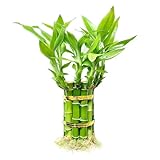
- Perfect Desk Mate: A set of ten 4-inch stalks is the ideal size for any desk, shelf, or small space. Their compact nature brings a serene, green touch without taking up precious room.
- Gift-Ready Presentation: This charming size is our most popular gift option! Ready to be gifted for birthdays, graduations, or as a thoughtful token of appreciation. Sparks joy instantly.
- Low Maintenance Ease: Thrives in a small vase or cup with just water. An effortless way to start your plant journey or add more life to your workspace.
- Feng Shui Flexibility: Arrange these ten small stalks in a circle for unity or in a creative pattern to channel specific Feng Shui intentions for wealth and relationships.
- Great for Offices: Low-light tolerant and hassle-free, it's the perfect live plant to brighten up cubicles, reception areas, and home offices.
- Distilled water.
- Reverse-osmosis water.
- Safely collected and cleanly stored rainwater.
- Filtered water from a system specifically rated to reduce fluoride and excess minerals.
- Tap water, but only as a trial when the plant shows no recurring tip burn and the local water is not unusually hard or mineral-rich.
Do not assume that every product labeled filtered removes fluoride. Check the filter manufacturer’s contaminant-reduction claims. Letting tap water stand may allow some free chlorine to dissipate after several days, but it does not reliably remove chloramine or fluoride. Boiling is not a dependable solution for fluoride, and ordinary charcoal filtration does not reliably remove it. The CDC explains the difference between chlorine and chloramine, while EPA material describes the limitations of boiling and ordinary filtration for fluoride.
In a hard-water home, distilled or reverse-osmosis water is the most useful first change. Wipe mineral deposits from the vase and stones, and avoid adding routine fertilizer until the water issue is corrected. Moving the plant into soil does not automatically eliminate fluoride sensitivity.
Windows Errors? Fix Them Before They Spread
Repair common Windows errors and clear accumulated junk for a smoother, more stable PC - no reinstall needed.Free scan · no reinstallCrashes, No Sound, or Screen Glitches?
Random freezes, missing sound and display glitches usually trace back to one bad driver. Find and replace yours safely.Free scan · under a minuteHow to care for lucky bamboo in soil
- Use a loose, well-drained indoor potting mix formulated for tropical houseplants.
- Choose a container with a drainage hole and a saucer that can be emptied.
- Water thoroughly when the surface has dried somewhat, allowing excess water to drain away.
- Empty the saucer rather than leaving the pot standing in water.
The RHS uses the top 2 inches (5 cm) of compost feeling dry as a practical watering threshold for dracaenas. This is a useful guide, not a universal calendar: a small pot in a warm, bright room may dry faster than a large pot in a dim, cool room. Check the mix with a finger or moisture meter and adjust to the plant’s actual drying rate. Other Extension guidance describes the goal as keeping the mix moist but not soggy. See the Royal Horticultural Society’s dracaena growing guide.
A cactus or succulent mix may work if it does not dry excessively fast, but a loose tropical houseplant mix is usually a better starting point. If brown tips continue and fluoride is a concern, do not automatically add more perlite: North Carolina Extension warns that perlite can contain fluoride. A bark-based or coarse-grit amendment may be a better alternative for improving aeration, provided the finished mix still holds moderate moisture. Read the Extension container-mix guidance.
Light, temperature, and humidity
Light
Place lucky bamboo in bright, indirect light. An east- or west-facing window is often convenient. Near a bright south-facing window, use a sheer curtain or place the plant farther back from the glass to soften the sun.
Direct midday or afternoon sun can scorch the leaves. Low light is tolerated, but it usually means slower growth, pale or sparse foliage, and stretched stems. If the plant leans, rotate the container periodically for more even growth. A suitable full-spectrum LED can supplement winter light or a very dim room; keep a hot lamp from touching or overheating the leaves.
A bathroom or office with very little natural light may keep the plant alive for a while, but do not expect vigorous growth indefinitely without moving it periodically to brighter indirect light or adding supplemental lighting. Penn State Extension explains the trade-off between low-light tolerance and growth.
Temperature and humidity
Aim for approximately 65–86°F (18–30°C) for best growth. Avoid sudden temperature changes and cold drafts from exterior doors or windows. Keep the plant away from radiators, heating vents, and air-conditioning outlets. The RHS dracaena guide recommends warm conditions and protection from these sources of stress.
Moderate humidity is helpful, especially in rooms dried by heating or air-conditioning, but a humidifier is not mandatory for survival. Grouping plants can modestly increase local humidity. A tray of moist gravel can also help, provided the pot sits above the water and never directly in it. Misting is optional and is not a substitute for suitable water, correct light, or proper soil moisture; it is not a guaranteed cure for brown tips.
Rank #3
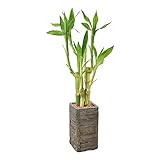
- LOW MAINTENANCE: The roots are growing in water, not soil, so simple care requirements are about light and water
- INVITE GOOD FORTUNE: Whether enjoying at a desk, coffee table, home spa or meditation space, the invite is open for positive energy and good fortune
- GREAT GIFT: Say Thank You to employees, customers, or co-workers by gifting this easy-care indoor plant.
- CAREFULLY WRAPPED: With extra attention paid to careful wrapping, this Lucky Bamboo is packaged for a safe journey
- GROWN BY EXPERTS: Experienced greenhouse growers oversee every step of production for this Lucky Bamboo
Fertilize cautiously
Water-grown lucky bamboo may survive for months or longer without fertilizer, but plain water eventually provides too little nutrition for sustained growth. At the same time, fertilizer salts are easy to overapply because there is no soil to buffer them.
For a conservative water-culture routine, use a balanced liquid houseplant fertilizer at approximately one-tenth of the label strength every 2–3 months during active growth. This is deliberately light. Do not add a full-strength dose, fertilize at every water change, or assume that a monthly schedule suits every product and plant.
For a soil-grown plant, use a weak liquid houseplant fertilizer during active growth according to the product label, erring on the side of less rather than more. Do not fertilize a newly transplanted, severely root-damaged, visibly rotting, or otherwise stressed plant. Stop or reduce feeding if leaf tips burn, white salt deposits appear on the mix or container, or the plant worsens after feeding. Commercial dracaena production often pays attention to low boron and fluoride in fertilizer and irrigation water, but home growers should not copy greenhouse feeding rates.
The diluted, infrequent approach is consistent with Arkansas Extension’s lucky bamboo guidance, North Carolina Extension, and the University of Houston care card.
Pruning and shaping
Routine pruning
- Remove yellow, brown, or dead leaves with clean scissors.
- Cut a leggy cane just above a node if you want new shoots to develop below the cut.
- Remove damaged material promptly so it does not remain in the water or soil.
- Disinfect or wash the scissors before moving from a diseased cane to a healthy one.
Dracaenas commonly produce new shoots from buds below a pruning cut. The cut end itself will not continue getting taller in the same way; new growth generally develops below the cut. Avoid repeatedly cutting into soft, black, or foul-smelling tissue without first addressing the cause.
Free tools Windows power users keep installed
One-click scans. No signup required.
Rescuing a rotting cane
A soft, black, collapsing, or foul-smelling stalk is a rot warning, not merely a cosmetic defect. Isolate it from healthy stems immediately. Remove the plant from its water or soil, rinse and inspect the roots, clean the container, and replace contaminated water or soggy mix. If the rot has traveled through the cane, discard that stalk. You may root a healthy top section only if it remains firm and green and includes a viable node. Penn State’s dracaena disease guidance describes the soft, foul-smelling tissue associated with serious rot problems.
Propagate lucky bamboo from cuttings
Lucky bamboo is usually propagated from a stem or shoot cutting. Rooting hormone is generally unnecessary.
- Choose a healthy, firm, green shoot or cane. Do not use yellow, soft, rotting, or pest-damaged material.
- With clean scissors, make a cut that includes at least one node or leaf joint.
- Remove leaves that would sit below the waterline or below the surface of the rooting mix.
- Place the lower node in clean, low-mineral water, or insert it into a moist, airy rooting medium.
- Keep the cutting warm and in bright, indirect light. Avoid direct sun while it roots.
- Keep water or rooting mix consistently available but not stagnant or waterlogged.
- Once roots are established, leave the cutting in water or transplant it carefully into soil.
For a water cutting, change the water regularly just as you would for a mature arrangement. For a soil cutting, use a small container with drainage and avoid excessive fertilizer while roots are developing. Extension propagation guidance supports using a node or leaf-joint cutting and generally dispensing with rooting hormone; the Iowa State Extension guide provides broader context on cane and stem cuttings.
Independent reader supportYour contribution helps us test, update, and keep practical guides available for everyone.Repotting and refreshing the arrangement
Soil-grown plants
Repot when roots circle densely around the container, emerge from the drainage hole, water runs straight through unusually quickly, or growth declines despite correct light and watering. The RHS gives 2–3 years as a general dracaena repotting interval, but the plant’s condition is more useful than a fixed date.
The Tool Desk
Outbyte PC Repair FREEClear out junk files and repair common Windows errorsFree Scan →Outbyte Driver Updater FREEScan for outdated or missing drivers - takes under a minuteDriver Scan →Rank #4

- Ideal Display Height: At 6 inches, these ten stalks make a visually striking statement. The perfect proportion for a windowsill, kitchen counter, bathroom vanity, or office credenza.
- Strong Visual Impact: This classic size offers a fuller and more prominent presence compared to smaller plants, creating a captivating focal point in any room.
- The Ultimate Gift: Makes an impressive and generous gift for housewarmings, promotions, and major holidays. Conveys a message of strong growth and abundant luck.
- Lush & Vibrant: Enjoy a denser cluster of lush green leaves and stronger stalks, showcasing vibrant health and adding a significant touch of nature to your decor.
- Feng Shui Centerpiece: A commanding yet balanced size, excellent for placing in the wealth (Southeast) or family (East) area of your space to enhance positive energy flow.
Move the plant only one pot size larger. An oversized container holds excess moisture around a small root system and increases the risk of rot. Use fresh, well-drained mix and a stable, heavy container for tall or top-heavy canes.
Water-grown plants
A water-grown plant does not need repotting unless you are transferring it into soil. Instead, clean the vase, refresh the pebbles, replace the water, and remove dead or rotting roots. If a retail arrangement has glued, sealed, or tightly packed decorative stones that prevent inspection, do not preserve the display at the expense of the plant. If the water smells, the roots are hidden in stagnant water, or the stalk is soft, remove the decoration carefully enough to inspect the plant.
Lucky bamboo troubleshooting
Do not diagnose every yellow leaf as overwatering. Look at the pattern, the condition of the stalk and roots, the water source, the light, and what changed recently.
| Symptom | Likely categories | First response |
|---|---|---|
| Brown leaf tips | Fluoride or salt accumulation, dry air, direct sun, heat, cold drafts, inconsistent moisture, or overfertilization. | Switch to distilled, reverse-osmosis, or appropriately treated water; move away from sun and vents; review fertilizer. Existing brown tissue will not turn green again. |
| One older lower leaf turns yellow | Natural aging or localized stress. | Remove the leaf and monitor the rest of the plant rather than changing everything at once. |
| Many leaves turn yellow | Overwatering, waterlogged soil, poor water quality, direct sun, low nutrients in long-term plain water, pests, or root problems. | Inspect roots and stalks, check the light, review the water source and fertilizer, and look for pests. |
| Entire cane turns yellow | Severe stress, advanced decline, or rot. | Isolate it. If the cane is soft, black, or foul-smelling, cut only into firm healthy tissue and discard the stalk if rot has spread through it. |
| Soft, black, collapsing, or foul-smelling stalk | Stem or root rot, often associated with stagnant water or waterlogged soil. | Remove affected material immediately, clean the container, replace contaminated water or mix, and keep healthy stems separate. |
| Pale, stretched, or sparse growth | Insufficient light, excessive distance from a window, or nutrient shortage in long-term water culture. | Move it gradually to brighter indirect light or add a suitable grow light. Do not compensate with harsh direct sun. |
| Cloudy, green, slimy, or smelly water | Algae, bacterial buildup, decaying roots or tissue, dirty pebbles, or water left unchanged too long. | Replace the water, clean the vase and stones, remove decaying roots, and keep the arrangement out of harsh light that encourages algae growth. |
| Webbing or fine stippling | Spider mites, which are more common in hot, dry conditions. | Isolate the plant, inspect leaf undersides, rinse foliage, and use a labeled treatment if necessary. |
| Cottony clusters or shell-like bumps | Mealybugs or scale; sticky honeydew may also be present. | Isolate the plant, remove visible insects, rinse foliage, and use insecticidal soap or horticultural oil exactly as the label directs. |
Brown tips: the most useful diagnostic order
When the leaves are brown at the tips but the canes remain firm and green, start with water chemistry and placement rather than assuming the plant is dying:
- Switch to distilled or reverse-osmosis water, or verify that your filter reduces fluoride and excess minerals.
- Move the plant away from direct sun, radiators, heating vents, and air-conditioning outlets.
- Check whether soil is becoming bone-dry or remaining wet for a long time.
- Reduce or pause fertilizer if you recently fed it or see salt deposits.
- Improve room humidity modestly if the air is very dry, while continuing to correct the underlying care issue.
Brown tissue is permanent. Trim the damaged portion for appearance, but judge the success of the change by whether new growth remains healthy.
Yellow leaves: distinguish leaf trouble from stalk trouble
A single aging lower leaf is different from a whole cane turning yellow. One older leaf may be natural aging or localized stress. Many yellow leaves call for an inspection of water, light, roots, fertilizer, and pests. A yellow cane that becomes soft, black, or foul-smelling is a much more serious sign than a yellow leaf and should be isolated promptly.
Pests
Inspect lucky bamboo regularly, especially the undersides of leaves and the joints between leaves and stems. Possible pests include mealybugs, scale, spider mites, and occasionally aphids or whiteflies. Soil-grown plants may also attract fungus gnats. Symptoms can include stippling, webbing, sticky honeydew, cottony clusters, shell-like bumps, distorted growth, and premature leaf drop.
Isolate an infested plant from other houseplants. Rinse the foliage, remove visible pests, and use insecticidal soap or horticultural oil only according to its label. Do not substitute ordinary dish soap for insecticidal soap; household detergents can damage foliage. Penn State Extension and University of Minnesota Extension provide identification and treatment cautions for indoor plant pests.
Do these 3 things before closing this tab:
1Repair Windows errors before they cause bigger problems2Scan for outdated or missing drivers - takes under a minute3Clear out junk files and repair common Windows errorsWhat does the word lucky mean?
Lucky bamboo is commonly associated with good fortune, prosperity, gifting, and feng shui. Meanings assigned to particular numbers of stalks vary among traditions, so no single number should be presented as universally authoritative. The symbolism is cultural rather than horticultural: it has no effect on the plant’s light, water, fertilizer, or health. The Old Farmer’s Almanac discusses commonly circulated stalk-number symbolism.
Quick-care checklist
- Light: Bright, indirect light; avoid strong midday and afternoon sun.
- Temperature: Approximately 65–86°F (18–30°C); avoid cold drafts and hot or cold vents.
- Humidity: Moderate humidity helps, but a humidifier is optional.
- Water culture: Cover the roots with roughly 1–3 inches of water, keep the cane above the waterline, and change the water every 7–10 days.
- Water quality: Prefer distilled, reverse-osmosis, safely collected rainwater, or a filter proven to reduce fluoride and excess minerals.
- Soil culture: Use a loose mix and a pot with a drainage hole; water after the surface has dried somewhat and empty the saucer.
- Fertilizer: Feed weakly and infrequently. About one-tenth label strength every 2–3 months is a conservative water-culture approach.
- Pruning: Remove damaged leaves and cut healthy canes above a node when needed.
- Rot: Isolate soft, black, or foul-smelling canes and remove affected material.
- Pets: Keep it away from cats and dogs.
The Bottom Line
Bottom line: Treat lucky bamboo as a tropical dracaena, not as a self-sustaining aquatic plant. Bright indirect light, warm stable temperatures, low-mineral water, clean roots, and very restrained feeding will prevent most problems. Water culture is attractive but maintenance-dependent; for many plants, a well-drained soil pot is the more forgiving long-term option.
Quick Recap
Product prices and availability are accurate as of the date/time indicated and are subject to change. Any price and availability information displayed on Amazon at the time of purchase will apply.




