240V AC is a higher nominal supply voltage that lets a tool deliver a given amount of power with less current than a comparable 120V setup. In a typical U.S. building, 240V is supplied between two hot conductors in a 120/240V single-phase system. A 120V tool usually connects between one hot conductor and neutral; a basic 240V tool connects between the two hot conductors.
That lower current can help supply large motors and reduce voltage drop on a properly designed circuit. It does not automatically give a motor twice the horsepower, make an undersized circuit safe, or permit any 240V tool to be connected to any outlet labeled 220V. The tool’s nameplate, manufacturer’s manual, plug configuration, circuit rating, conductor installation, grounding, protective devices, and locally adopted electrical code all have to agree.
As an Amazon Associate I earn from qualifying purchases.
What 240V AC means in a U.S. workshop
AC means alternating current: the direction of current changes repeatedly. In ordinary U.S. residential service, the electrical system is commonly described as 120/240V split-phase, single-phase service.
The Tool Desk
Outbyte PC Repair FREEClear out junk files and repair common Windows errorsFree Scan →Outbyte Driver Updater FREEScan for outdated or missing drivers - takes under a minuteDriver Scan →The service has two ungrounded conductors, often called hot legs, and a grounded neutral conductor:
#1 Best Overall
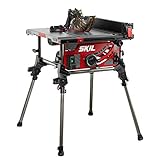
- RACK AND PINION FENCE RAILS - Ensures fence stays parallel to blade for fast smooth, and accurate cuts
- INTEGRATED FOLDING STAND - Legs quickly fold in to provide portability and convenient storage
- PARALLEL BLADE ALIGNMENT - Available micro-adjustment of blade so that it is parallel to rip fence and miter slot
- 4x4 CUTTING CAPACITY - Cuts material up to 4x4 at 90 degrees
- 2-47° BEVEL CAPACITY - Cuts between 2 positive stops at 0 and 45 degrees with quick release lever
- Approximately 120V is available between either hot leg and neutral.
- Approximately 240V is available between the two hot legs.
- An equipment grounding conductor provides a fault path for exposed conductive parts. It is not the same thing as the neutral.
These values are nominal. A meter will not necessarily read exactly 120V or 240V under every operating condition. Voltage varies within the range allowed for satisfactory equipment operation and can be affected by supply conditions, conductor length, connections, and load.
Not every building has the same system. Commercial properties may have 120/208V three-phase service, and some machinery requires three-phase power rather than residential single-phase power. A tool marked 240V should not be assumed to work on 208V or three-phase power unless its nameplate or manufacturer’s documentation specifically permits that voltage and phase.
Does a 240V tool need a neutral?
A basic 240V-only load commonly uses two ungrounded conductors and an equipment grounding conductor. The neutral may not be needed because the tool is using the voltage between the two hot legs.
Recommended Free Tools
However, some equipment includes 120V controls, lights, receptacles, heaters, or other components. That equipment may require a neutral in addition to the two hot conductors and grounding conductor. The required conductor count must come from the tool documentation and the applicable code. It should never be inferred from the shape of an existing plug.
Why large power tools often use 240V
The basic relationship is:
Power = Voltage × Current
Ignoring motor efficiency, power factor, and starting current, a 2,400-watt load would draw approximately:
- 20 amps at 120V because 2,400 ÷ 120 = 20.
- 10 amps at 240V because 2,400 ÷ 240 = 10.
For the same power demand, doubling the voltage roughly halves the current. Lower current can make it easier to supply a large motor within its rated voltage range and can reduce voltage drop in a properly designed installation. It can also allow a high-power stationary tool to operate without placing as much current demand on the conductors as an equivalent 120V arrangement.
That does not mean 240V creates horsepower. A dual-voltage motor may produce the same rated output at 120V and 240V when correctly configured; the 240V configuration generally draws less line current. Actual motor performance also depends on the motor design, efficiency, load, power factor, supply voltage, and starting conditions.
Windows Errors? Fix Them Before They Spread
Repair common Windows errors and clear accumulated junk for a smoother, more stable PC - no reinstall needed.Free scan · no reinstallOutdated Drivers Are Slowing You Down
One free scan finds every outdated or missing driver and matches the right update for your exact hardware.Free scan · exact hardware matchTools that commonly have 240V models or configurations include:
- Cabinet and hybrid table saws.
- Large dust collectors.
- Stationary air compressors.
- Welders and plasma cutters.
- Thickness planers, jointers, and other stationary woodworking machinery.
- Large tile saws and commercial cutting equipment.
- Certain HVAC, pump, and shop machinery.
The label 3 HP, by itself, is not enough information to choose a breaker, receptacle, cord, or conductor size. Two machines with the same advertised horsepower can have different voltage, current, phase, starting, and circuit requirements.
Read the nameplate before planning the circuit
Before buying or wiring a heavy-duty tool, record the information below from the machine’s nameplate and installation manual.
Rank #2
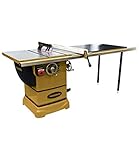
- Ergonomic 7" handwheels provide momentum, making blade height and bevel adjustments easy
- Arbor lock allows for one-handed blade changes with minimal tools
- Exclusive Accu-Fence provides rigidity and precision
- Precision-ground cast iron work surface features a beveled edge for smoother operation
- Poly-V belt drive system reduces vibration and maximizes efficiency
| Specification | Why it matters |
|---|---|
| Nominal voltage | Shows whether the machine requires 120V, 208V, 230V, 240V, or a permitted voltage range. |
| Phase | Identifies single-phase or three-phase operation. The wrong phase is not corrected by changing a plug. |
| Frequency | U.S. equipment normally uses 60 Hz unless the manufacturer specifies otherwise. |
| Input current | Shows the machine’s electrical demand under stated conditions, but is not automatically the correct breaker size. |
| Minimum circuit rating | Some manufacturers specify a branch-circuit rating larger than the listed full-load current. |
| Maximum overcurrent protection | Some equipment specifies a maximum breaker or fuse rating that must not be exceeded. |
| Plug and receptacle configuration | Identifies the approved connection, such as a NEMA 6-15 or 6-20 configuration when specified by the manufacturer. |
| Grounding arrangement | Shows whether the equipment requires an equipment grounding conductor, is listed as double-insulated, or uses another approved method. |
| Starting or inrush behavior | Motors, compressors, welders, and similar equipment can draw a high starting current and may trip an unsuitable protective device. |
| Conversion instructions | Dual-voltage equipment may require changes to motor wiring, the cord, switch, or protective equipment. |
| Disconnect and clearance requirements | Stationary or permanently connected equipment may require a specific disconnecting means and installation clearances. |
| Approved environment | Confirms whether the machine is suitable for a dry, damp, outdoor, dusty, or other location. |
Electrical equipment used in construction should have appropriate markings for voltage, current, wattage, or other necessary ratings. OSHA also requires equipment to be approved and free from recognized hazards. If the nameplate is missing, damaged, or unreadable, stop and obtain the manufacturer’s documentation before connecting the tool.
Full-load current is not the same as circuit size
One of the most common mistakes is treating the nameplate amperage as an instruction to install a breaker with exactly the same number. That can be wrong for motors and other equipment.
A manufacturer may specify a minimum branch-circuit rating, maximum overcurrent protection, time-delay protection, conductor requirements, or special motor-circuit treatment. For example, a representative Grizzly 2-hp table-saw specification lists full-load current of 15 amps at 120V and 7.5 amps at 240V, while specifying a 15-amp minimum 240V circuit. The example shows why full-load current and minimum circuit rating are not interchangeable.
The correct installation can depend on the tool’s exact model, conductor length, wiring method, ambient temperature, motor characteristics, local code, and manufacturer instructions. A breaker protects the circuit conductors and equipment against specified overcurrent conditions. It is not a device that makes undersized wire safe.
Never install a larger breaker simply to stop nuisance tripping. Repeated tripping can indicate an overloaded machine, excessive starting current, voltage drop, damaged wiring, a poor connection, a failing motor, or another fault. Increasing the breaker rating without verifying every part of the circuit can create an overheating and fire hazard.
What’s actually slowing this PC down?
Pick the symptom - the matching free tool is one click away.
Plugs, receptacles, and adapters
A plug shape is only one part of compatibility. NEMA configurations encode relationships among voltage, current, blade arrangement, and grounding, but a matching-looking receptacle does not prove that the branch circuit is suitable for the tool.
Confirm all of the following before connecting a machine:
- The tool’s nominal voltage and phase match the supply.
- The circuit’s overcurrent protection is permitted for the tool and conductors.
- The receptacle and plug have compatible voltage and current ratings.
- The equipment grounding connection is present, continuous, and correctly wired.
- Any required neutral is present.
- The installation and location satisfy the adopted electrical code and the manufacturer’s instructions.
Do not use an improvised adapter to place a 120V tool on a 240V circuit. A plug adapter cannot change the motor’s windings, insulation, controls, or voltage rating. Do not defeat or remove the grounding connection.
A particularly dangerous product is a male-to-male cord, sometimes called a suicide cord. In March 2026, the U.S. Consumer Product Safety Commission warned consumers to stop using such cords because their exposed energized prongs can cause electrocution or fire. They can also be used to backfeed a building through a receptacle, energizing wiring in ways that workers and utility personnel may not expect.
Never use a male-to-male cord, never backfeed a building through a receptacle, and never treat a cheap marketplace adapter as a substitute for a correctly installed receptacle.
Rank #3
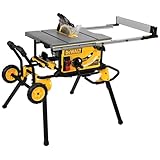
- Rack & Pinion Telescoping Fence System Make fence adjustments fast, smooth and accurate
- Patented material support, can be used for narrow rip cuts.
- 32-1/2" rip capacity easily cuts a variety of larger shelving and trim materials
- Onboard storage system provides easy access to the Blade Guard Assembly, fence, riving knife, miter gauge, wrenches, push stick, and cord wrap when not in use.
- Rolling stand designed for easy set up and breakdown with excellent stability of the portable table saw. Telescoping fence rails retract to create a small, portable package. Flip over ripping fence allows for narrow rip cuts
Why a dryer or range outlet is not a general-purpose 240V tool outlet
Dryer and range circuits may have different conductor arrangements, receptacle configurations, ratings, grounding or neutral requirements, and overcurrent protection than a tool requires. Older installations may also have wiring methods that are not appropriate for a new machine or a new use.
An adapter is acceptable only when the tool, circuit, conductors, plug, receptacle, grounding arrangement, protective device, and installation are specifically compatible. That is a model- and site-specific determination, not a general rule. In most cases, the safer solution is a correctly installed receptacle matched to the tool.
Extension cords, length, and voltage drop
The preferred arrangement for a stationary heavy-duty tool is a correctly installed receptacle close to the machine. A long extension cord adds resistance, connection points, trip hazards, and opportunities for damage.
Free tools Windows power users keep installed
One-click scans. No signup required.
If the tool’s manual permits an extension cord, select one based on all of these factors:
- Voltage rating.
- Current rating.
- Conductor gauge.
- Total cord length.
- Plug and connector configuration.
- Indoor, outdoor, damp, dusty, or jobsite environment.
- Jacket durability and protection from abrasion.
A smaller AWG number means a larger conductor. The longer the cord and the greater the current, the more important conductor size becomes. Do not choose solely by a marketing label such as heavy duty.
When the manufacturer permits a cord, compare a 240V heavy-duty extension cord with the manual’s voltage, current, length, connector, and environment requirements. Keep it fully suitable for the actual machine; a cord that is adequate for one tool may be unsuitable for another.
Manufacturer manuals, including DEWALT table-saw documentation, warn that an undersized extension cord can cause line-voltage drop, loss of power, and overheating. Such manuals may provide separate gauge tables for 120V and 240V operation. Use the table for the exact tool rather than copying a recommendation from a different model.
Do these 3 things before closing this tab:
1Repair Windows errors before they cause bigger problems2Fix the driver behind crashes, sound loss and screen glitches3Clear out junk files and repair common Windows errors240V reduces current for a given power demand, but it does not eliminate voltage drop. A long run, undersized conductor, loose terminal, damaged plug, poor receptacle contact, or motor starting current can still produce a substantial drop. Symptoms can include weak starting, loss of power, excessive heat, nuisance tripping, and motor damage.
Inspect cords before use. CPSC safety guidance identifies minimum wire size, strain relief, polarization and continuity, and suitable jacket or outlet protection as important observable characteristics. OSHA construction rules prohibit worn or frayed cords and prohibit fastening extension cords with staples, hanging them from nails, or suspending them by wire. Keep cords away from heat, oil, sharp edges, moving parts, and standing water.
Grounding and GFCI protection do different jobs
Grounding and ground-fault circuit-interrupter protection are complementary, not interchangeable.
Equipment grounding conductor
The equipment grounding conductor provides a low-resistance path for fault current. If a hot conductor contacts the metal frame, the grounding path is intended to help the protective device clear the fault and reduce the time that exposed metal remains energized.
Quick wins for a faster PC:
Scan for outdated or missing drivers - takes under a minuteDriver Scan →Clear out junk files and repair common Windows errorsFree Scan →Fix the driver behind crashes, sound loss and screen glitchesFind Drivers →Rank #4

- POWERFUL 15A MOTOR & MULTI-MATERIAL CUTTING – High-torque 15A motor with soft start delivers maximum power for cutting wood, mild steel, aluminum, and composites. Includes a premium 10” TCT blade for precise, clean cuts.
- INCLUDES ZERO-CLEARANCE THROAT PLATE, RACK & PINION FENCE SYSTEM, AND CROSS-CUT SLED – Delivers precise, repeatable cuts with reduced tear-out and cleaner edges. Features a 26" rip capacity, 3-3/8" maximum cut depth, and a 0–45° bevel range with geared adjustment for accuracy and enhanced cutting control.
- INCLUDES DADO PLATE FOR EXPANDED CUTTING CAPABILITY – Enables cutting of dadoes and grooves for advanced woodworking applications, increasing overall versatility for professional woodworking and construction tasks.
- JOBSITE VERSATILITY & MATERIAL HANDLING - BACKED BY A 3-YEAR WARRANTY – Lightweight steel frame with carry handles, onboard storage, and outfeed support bar for stability when working with larger materials. Built for repeatable, professional jobsite performance.
- PORTABLE DESIGN, SAFETY & IMPROVED PACKAGING – Collapsible heavy-duty wheeled stand with all-terrain wheels and quick-fold system for easy transport and storage. Includes advanced safety features such as electronic blade brake, anti-kickback pawls, and riving knife. NOW SHIPPED WITH NEW & IMPROVED PACKAGING FOR BETTER PROTECTION AND UNBOXING EXPERIENCE.
GFCI protection
A GFCI compares the current leaving on the energized conductors with the current returning. If it detects an imbalance of approximately 5 milliamperes, it is designed to interrupt power rapidly. The imbalance may indicate that current is traveling through an unintended path, including a person.
A GFCI does not repair a damaged tool, replace a missing equipment grounding conductor, make wet work acceptable, or correct a miswired circuit. It also does not answer every code question by itself. Whether a particular 240V receptacle requires GFCI protection depends on the adopted code edition, location, occupancy, circuit characteristics, and local requirements.
Recent 2025 NEC proposal material includes requirements affecting certain receptacles in the 125V-through-250V range. That illustrates why the question cannot be answered from voltage alone—and why proposal material or a general internet checklist is not a substitute for the enforceable code in your jurisdiction.
For cord-and-plug electric power tools used in construction, OSHA requires the equipment to be either double-insulated or grounded in accordance with applicable electrical requirements. Use any required GFCI protection in addition to, not instead of, the grounding and equipment safeguards required for the tool.
Dual-voltage tools and the loose term 220V
Many U.S. tools are informally called 220V tools even though the nameplate may specify 230V or 240V. The nameplate and manual control. The words 220V, 230V, and 240V should not be treated as interchangeable unless the equipment documentation lists the actual supply range.
A dual-voltage motor may require a specific reconnection procedure. Depending on the machine, conversion can involve:
- Reconfiguring motor leads.
- Changing the power cord and plug.
- Changing the switch or starter.
- Changing the breaker or other protective device as permitted.
- Confirming conductor, grounding, and disconnect requirements.
For one published Grizzly machine conversion, the manufacturer’s instructions require disconnecting power and changing the power cord, switch, circuit breaker, and motor wiring. The manufacturer states that the conversion should be performed by an electrician or qualified service personnel. That is a useful warning: changing only the plug is not a voltage conversion.
Model example: what a 240V table saw specification can—and cannot—tell you
A 240V table saw is a practical example because stationary saws often have dual-voltage motor options. In the representative Grizzly 2-hp example described above, the motor’s listed full-load current is lower at 240V than at 120V, but the stated minimum circuit requirement still has to be followed.
From that specification, a buyer can reasonably conclude that:
- The 240V configuration is intended to reduce line current for the same motor design.
- The machine still needs the manufacturer-specified circuit and protective equipment.
- The machine’s exact plug, cord, voltage, phase, and minimum circuit requirements must be confirmed for the exact model.
- A different 2-hp saw may have different requirements.
The specification does not authorize a universal 15-amp or 20-amp installation for every 240V table saw. It also does not establish that every existing 240V receptacle is correctly wired or suitable.
Best Value

- Site-Pro Modular Guarding System allows for tool-free adjustments of the guarding
- 24.5 in. of rip capacity for ripping 4x8 plywood or OSB sheets
- Rack & pinion telescoping fence rails make fence adjustments fast, smooth, and accurate
- Compact size for easy transportation and storage
- Metal roll cage base for jobsite durability
Safe setup and operating checklist
Before buying or connecting the tool
- Photograph or record the complete nameplate.
- Confirm nominal voltage, phase, frequency, input current, minimum circuit rating, maximum protection, plug, and grounding requirements.
- Check whether the machine needs a neutral or any separate 120V supply.
- Confirm that the building supply is the stated voltage and phase. Do not assume that a receptacle described as 220V is adequate.
- Have a qualified electrician review new branch circuits, panel changes, receptacle installations, and unusual existing wiring.
- Check permit and inspection requirements with the local authority having jurisdiction.
Before each use
- Inspect the plug, cord, receptacle, strain relief, enclosure, and grounding connection.
- Remove damaged equipment from service rather than temporarily taping or bypassing the damage.
- Keep the work area dry, well lit, and clear of conductive clutter and trip hazards.
- Keep cords away from heat, oil, sharp edges, blades, belts, and moving parts.
- Use only a permitted extension cord that matches the tool’s voltage, current, length, gauge, connector, and environment requirements.
- Use GFCI protection where required or specified, while maintaining the equipment grounding and other safeguards.
- Do not carry the tool by its cord.
Before servicing, changing accessories, or opening equipment
- Turn off the tool and disconnect it from its supply.
- Open the appropriate breaker or disconnect and prevent accidental re-energization where applicable.
- Verify the absence of voltage with an appropriate, properly functioning test instrument. A voltage tester for electrical work must be correctly rated for the system and used according to its instructions.
- Follow the tool’s service manual.
- Do not open an energized panel or work on exposed energized parts unless you are qualified and authorized to do so.
On a jobsite, a properly selected electrical lockout/tagout kit can support the employer’s de-energization procedure, but owning a kit does not by itself make someone qualified to perform electrical work.
When to stop troubleshooting and call an electrician
Stop using the equipment and arrange qualified help if:
What’s actually slowing this PC down?
Pick the symptom - the matching free tool is one click away.
- The breaker trips repeatedly.
- The tool runs weakly, starts slowly, overheats, or produces an unusual smell or sound.
- A plug, receptacle, cord, switch, or enclosure becomes hot or shows discoloration.
- Anyone feels a shock, tingling, or unexpected vibration through the tool frame.
- The grounding pin is missing or the receptacle’s grounding is uncertain.
- The voltage or phase does not match the nameplate.
- The machine needs dual-voltage conversion.
- A new 240V branch circuit, panel modification, receptacle, disconnect, or permanent connection is required.
- Any task involves exposed energized parts, arc-flash risk, or wiring that is not clearly identified.
OSHA construction rules require employers to determine whether workers could contact energized circuits before work begins and to protect against shock by de-energizing and grounding, guarding, insulation, or other effective means. Electrical installation and troubleshooting can cause shock, arc-flash injury, fire, or death.
Common 240V myths corrected
- Myth: 240V is automatically twice as dangerous as 120V.
- Both voltages can cause serious or fatal shock. A 240V circuit provides a greater voltage difference across a person in some contact conditions and must be treated as hazardous, but electrical danger depends on the path, contact, current, duration, environment, and protective measures—not a simple slogan.
- Myth: 240V automatically gives a tool more horsepower.
- It can reduce current for a given power demand. The motor’s rated output comes from its design and correct configuration.
- Myth: A larger breaker fixes a tripping circuit.
- Repeated tripping requires diagnosis. A larger breaker can allow undersized conductors or equipment to overheat.
- Myth: A three-prong plug guarantees safety.
- The entire circuit must be correctly wired, grounded, protected, and maintained. A plug alone cannot prove any of those conditions.
- Myth: GFCI protection replaces grounding.
- A GFCI detects current imbalance; an equipment grounding conductor provides a fault path. They address different hazards.
- Myth: Any cord marked heavy duty works for a 240V tool.
- Voltage, current, conductor gauge, length, connector configuration, jacket, and environment all matter.
- Myth: A 240V tool can be run from a dryer or range outlet with an adapter.
- Only a specifically verified combination of equipment, circuit, connector, overcurrent protection, grounding, and installation is acceptable. An improvised adapter is not a safe general solution.
Local code matters
The National Electrical Code is a model code. The enforceable requirements come from the edition adopted by the state, city, county, or other authority having jurisdiction. Building officials administer and enforce the adopted requirements, and code application often requires professional judgment.
A current NFPA 70 National Electrical Code handbook can be useful for research, but it is not a replacement for the locally adopted edition, amendments, permits, inspection, or professional advice. Verify the local requirements before planning the circuit.
Do these 3 things before closing this tab:
1Repair Windows errors before they cause bigger problems2Fix the driver behind crashes, sound loss and screen glitches3Clear out junk files and repair common Windows errorsThis article is educational. It does not replace the tool’s manual, an inspection, the adopted electrical code, or advice from a qualified electrician. De-energize equipment and obtain professional assistance for new circuits, panel work, rewiring, or any task involving exposed energized parts.
Frequently Asked Questions
Is 240V the same as 220V?
Not necessarily. In the U.S., people often use 220V informally to describe residential 240V service, but a tool’s actual nameplate may specify 230V, 240V, or a voltage range. Use the manufacturer’s stated voltage and confirm that the supply is within the permitted range.
Can a 240V tool run on 208V?
Only if the tool’s nameplate or manufacturer specifically lists 208V compatibility or an operating range that includes 208V. A 120/208V commercial system is not automatically interchangeable with 120/240V residential service.
Does a 240V tool always need a neutral wire?
No. A basic 240V-only load commonly uses two hot conductors and an equipment grounding conductor. A neutral may be required when the tool contains 120V controls, lights, receptacles, or other components. Follow the exact wiring instructions.
Crashes, No Sound, or Screen Glitches?
Random freezes, missing sound and display glitches usually trace back to one bad driver. Find and replace yours safely.Free scan · under a minuteWindows Errors? Fix Them Before They Spread
Repair common Windows errors and clear accumulated junk for a smoother, more stable PC - no reinstall needed.Free scan · no reinstallCan I stop a 240V breaker from tripping by installing a larger breaker?
No. Repeated tripping requires diagnosis. A larger breaker can exceed the rating of the conductors or equipment and create an overheating or fire hazard. Have the tool and circuit evaluated by a qualified electrician.
Does a GFCI replace the ground wire?
No. A GFCI detects current imbalance and interrupts power; the equipment grounding conductor provides a fault path intended to help clear a fault. They provide different protections, and local code may require both.
The Bottom Line
240V AC is mainly an efficient way to supply the power demand of large tools with less current—not a shortcut to more horsepower or a license to improvise. Match the exact tool nameplate to the voltage, phase, circuit, plug, conductors, grounding, protective devices, and local code. Use the manufacturer’s instructions for extensions and dual-voltage conversion, never use male-to-male cords or unsafe adapters, and hand new circuits, panel work, rewiring, and exposed electrical parts to a qualified electrician.
Quick Recap
Product prices and availability are accurate as of the date/time indicated and are subject to change. Any price and availability information displayed on Amazon at the time of purchase will apply.

