Cleaning agents do different jobs: soaps and detergents remove everyday soil, specialty cleaners target particular materials or deposits, and sanitizers or disinfectants are used when a specific antimicrobial result is needed. For homes, job sites, and building facilities, choose a product for the soil, surface, and intended result—and follow its label. A cleaner is not automatically a disinfectant.
Common types of cleaning agents
Soaps and detergents
Soaps and detergents are the usual starting point for routine cleaning. Detergents help suspend grease and oil so water and mechanical action—such as wiping or scrubbing—can remove them. Detergents are classified as anionic, cationic, amphoteric, or non-ionic according to their chemical properties; that classification alone does not tell you whether a product is suitable for a particular surface or job.
As an Amazon Associate I earn from qualifying purchases.
For most situations at home, cleaning with soap and water can remove germs, according to the CDC’s “When and How to Clean and Disinfect Your Home” guidance, dated January 31, 2025. In healthcare environmental cleaning, the CDC recommends neutral detergents in the pH 6–8 range that dissolve readily in warm and cold water; that guidance is specific to its stated setting. A detergent without an antimicrobial label claim should be treated as a cleaner, not a disinfectant.
Enzymatic cleaners
Enzymatic cleaners are specialized cleaners for suitable soils and uses. Check the product’s intended use and directions; the word “enzymatic” does not, by itself, establish that a product sanitizes or disinfects.
#1 Best Overall

- ALL PURPOSE CLEANER KILLS 99.9% OF VIRUSES and BACTERIA: Lysol All Purpose disinfectant spray kills 99.9% of viruses and bacteria including the COVID-19 virus to help keep your family protected
- KILLS 99.9% OF GERMS FOR A DEEP CLEAN: This disinfectant spray kills 99.9% of germs, removes soap scum and cuts through tough grease and grime — a versatile, multipurpose cleaner you can count on
- MULTI SURFACE CLEANER and DEGREASER: This cleaning spray can be used on hard, non-porous surfaces throughout your household including counters, sinks, stovetops, cabinets, appliance exteriors, high chairs, bathtubs and showers
- 0% BLEACH: Lysol multipurpose cleaner spray provides powerful cleaning and disinfecting without the harshness of bleach
- CONVENIENT LYSOL SPRAY: This all purpose cleaner has fast-acting sanitization, so you can kill 99.9% of bacteria in a flash
Surface-specific cleaners
Bathroom and toilet cleaners, glass cleaners, and floor cleaners are formulated for particular tasks or surfaces. A specialized product may be useful when its formulation suits the job, but it is not automatically necessary. CDC guidance for healthcare environmental cleaning recommends considering such products case by case, including their task-specific advantage, added cost, and whether users can store, prepare, and apply them correctly.
Abrasive cleaners and pads
Abrasive powders, cleaners, or pads use friction to help remove selected stubborn deposits. They can scratch delicate finishes, so check material compatibility and try only products and tools suitable for the surface. CDC notes that abrasive pads may serve as supplemental equipment for certain surfaces or areas.
Acid cleaners
Acid cleaners can help remove mineral scale, such as lime deposits, when the product is suitable for the surface. Do not use them with bleach: mixing an acid with a hypochlorite product can release toxic chlorine gas.
Free tools Windows power users keep installed
One-click scans. No signup required.
Rank #2

- ALL PURPOSE CLEANER KILLS 99.9% OF VIRUSES and BACTERIA: Lysol All Purpose disinfectant spray kills 99.9% of viruses and bacteria including the COVID-19 virus to help keep your family protected
- KILLS 99.9% OF GERMS FOR A DEEP CLEAN: This disinfectant spray kills 99.9% of germs, removes soap scum and cuts through tough grease and grime — a versatile, multipurpose cleaner you can count on
- MULTI SURFACE CLEANER and DEGREASER: This cleaning spray can be used on hard, non-porous surfaces throughout your household including counters, sinks, stovetops, cabinets, appliance exteriors, high chairs, bathtubs and showers
- 0% BLEACH: Lysol multipurpose cleaner spray provides powerful cleaning and disinfecting without the harshness of bleach
- CONVENIENT LYSOL SPRAY: This all purpose cleaner has fast-acting sanitization, so you can kill 99.9% of bacteria in a flash
Alkaline and solvent degreasers
Some alkaline or solvent-based products are used to tackle greasy soils. Formulations differ, so check the label for compatible materials and permitted uses. Do not assume a degreaser is safe for every finish or for a food-contact surface.
Sanitizers
For surfaces, a sanitizer makes a bacteria-reduction claim defined by applicable public-health codes or regulations. The EPA explains that surface sanitizers are not intended to kill viruses. Some products carry both sanitizer and disinfectant claims, so check the label to see which claims and uses apply.
Disinfectants
Disinfectants are antimicrobial products intended to kill the germs specified by their claims. In the United States, choose an EPA-registered product when disinfection is needed and use it only as its label directs. Cleaning first matters: soil and organic material can interfere with disinfectant action.
Rank #3
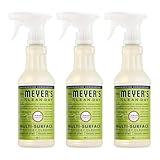
- REMOVES DIRT, FRESHENS SURFACES: A Multi-Surface Spray that cleans nonporous surfaces quickly, and leaves a fresh garden-inspired scent throughout your home.
- TESTED & TRUSTED: Mrs. Meyer's products are made with essential oils and other thoughtfully chosen ingredients that are cruelty-free and Leaping Bunny Certified.
- GARDEN-INSPIRED SCENTS: Lemon Verbena has a light, refreshingly mild citrus scent. This tender herb blossoms in early summer, and smells bright and new through and through. With scent notes of: bergamot, lemon, geranium, and cedarwood.
- CLEAN WITHOUT COMPROMISE: Made without parabens, phthalates, glycol solvents, phosphates, or artificial colors.
- PLANT SOME GOOD EVERYDAY: For homes that feel cared for, cultivated with intention, and cleaned with some garden goodness.
Bleach and other hypochlorites
Hypochlorites are chlorine disinfectants used for certain purposes when the product label and surface allow them. CDC guidance notes that high concentrations can corrode metals and that organic matter can inactivate hypochlorites. Never mix bleach or another hypochlorite product with ammonia or acids; the reaction can release toxic chlorine gas.
Windows Errors? Fix Them Before They Spread
Repair common Windows errors and clear accumulated junk for a smoother, more stable PC - no reinstall needed.Free scan · no reinstallOutdated Drivers Are Slowing You Down
One free scan finds every outdated or missing driver and matches the right update for your exact hardware.Free scan · exact hardware matchHigh-level disinfectants for medical devices
Some glutaraldehyde, peracetic acid, and hydrogen peroxide formulations have specialized uses in medical-device reprocessing. CDC guidance identifies these powerful sporicidal chemicals as inappropriate for housekeeping surfaces. They are not general-purpose home or building cleaners.
Independent reader supportYour contribution helps us test, update, and keep practical guides available for everyone.What’s the difference between products that disinfect, sanitize, and clean surfaces?
These terms describe different jobs and claims. Cleaning removes soil; sanitizing makes a bacteria-reduction claim for surfaces under applicable requirements; disinfecting targets the germs named on the product’s label. A product may carry more than one antimicrobial claim, but the label defines the approved use. The EPA’s explanation of cleaning, sanitizing, and disinfecting was last updated October 8, 2025.
Do not treat cleaning as an interchangeable substitute for a needed antimicrobial claim—or assume disinfection is necessary for every cleaning task. The CDC says home disinfection is generally unnecessary unless someone is sick or at higher risk. Clean high-touch surfaces regularly and other surfaces when visibly dirty or as needed.
Quick Recap
How to choose a cleaning agent for a building or work area
- Identify the soil or result. For ordinary dirt or grease, start with a suitable cleaner. For mineral scale, consider a compatible acid cleaner. Use a sanitizer or disinfectant only when the required antimicrobial outcome calls for it.
- Check the surface. Confirm compatibility with the material, finish, equipment instructions, and any food-contact restrictions. A product that works on one surface may damage another.
- Verify the claim and permitted use. If an antimicrobial result is needed, check the label for the target organisms and the places or surfaces where the product may be used.
- Check application requirements. Follow label directions for dilution, ventilation, protective equipment, and contact time. For a disinfectant, the surface must stay wet for the entire labeled contact time.
- Consider whether the product can be used correctly in practice. Account for cost, storage, preparation, and whether the people applying it can follow the directions consistently. CDC’s “Cleaning Supplies and Equipment” guidance, published August 7, 2023, discusses evaluating specialized products in healthcare environmental cleaning.
Safe use, storage, and workplace handling
- Read and follow the label, including directions on dilution, contact time, surface limits, protective equipment, ventilation, and disposal.
- Clean first, then sanitize or disinfect if needed. Dirt and organic material can reduce the effectiveness of some disinfectants.
- Never mix cleaning products. In particular, bleach or other hypochlorites mixed with ammonia or acids can release toxic chlorine gas.
- Store chemicals out of reach of children and pets. Surface disinfectants are not for use on skin or pets.
- In workplaces, consult the applicable safety data sheets and provide workers with training on chemical hazards and protective equipment. CDC’s facility cleaning and disinfection guidance addresses these workplace considerations.
- Use specialized products only for their intended tasks; a medical-device disinfectant is not a housekeeping cleaner.
References
- CDC, “Cleaning Supplies and Equipment”, August 7, 2023.
- CDC, “When and How to Clean and Disinfect Your Home”, January 31, 2025.
- US EPA, “What’s the difference between products that disinfect, sanitize, and clean surfaces?”, last updated October 8, 2025.
- CDC, “Glossary | Infection Control.”
- CDC, “Disinfection,” November 28, 2023.
- CDC, “Chemical Disinfectants.”
- CDC, “When and How to Clean and Disinfect a Facility.”
- CDC, “Environmental Services.”
- Association of Nutrition & Foodservice Professionals, “Use the right cleaning chemical for the job,” 2018.
Product prices and availability are accurate as of the date/time indicated and are subject to change. Any price and availability information displayed on Amazon at the time of purchase will apply.
Quick wins for a faster PC:
Scan for outdated or missing drivers - takes under a minuteDriver Scan →Clear out junk files and repair common Windows errorsFree Scan →



