Do these 3 things before closing this tab:
1Repair Windows errors before they cause bigger problems2Fix the driver behind crashes, sound loss and screen glitches3Clear out junk files and repair common Windows errorsFor most private garden walkways, choose pressure-treated timber when the lowest initial cost, natural appearance and board-by-board repairs matter and you can maintain it. Choose composite decking boards when reducing painting, staining and decay concerns is worth a higher material cost. Choose textured concrete for heavily trafficked, wheelchair- or stroller-oriented, or urban routes where a rigid, low-maintenance surface justifies more demanding foundations and construction access.
No material is automatically slip-proof. Rain, algae, dirt, slope, drainage, surface texture and maintenance determine wet performance. Specify drainage and a tested textured finish, then keep the surface clean and inspect it in the conditions in which people will use the walkway.
As an Amazon Associate I earn from qualifying purchases.
Timber, composite or concrete: the quick decision
| Material | Most suitable when | Useful strengths | Principal trade-offs |
|---|---|---|---|
| Timber | A private garden path needs a natural look, a modest initial budget and easy local repairs. | Usually the least expensive of these choices initially; familiar installation; individual boards can be replaced. | Needs inspection, cleaning and periodic treatment. Weathered or poorly maintained boards can become slippery, and service life varies with species, preservative class, ventilation and drainage. |
| Composite | You want a board walkway with less painting, staining and decay risk than timber. | Wood-fibre-and-polymer boards offer consistent colours, no routine painting and fewer splinter-related concerns. | Higher material cost; boards can still collect mould or algae, scratch, fade, become slippery or move with temperature. Installation must follow the manufacturer’s spans, fasteners and drainage details. |
| Concrete | The route carries frequent traffic, must feel firm for mobility aids, or sits in an urban/public setting. | Rigid, hardened surface; low routine maintenance; strong whole-of-life economics when correctly designed; textured and precast slip-resistant finishes are available. | Heavier foundations, site access, formwork, curing and joints are required. Cracks and drainage must be managed, and the finished route is difficult to alter. |
These are material tendencies, not guarantees. A well-drained, correctly detailed timber path can outperform a neglected composite surface for grip, while a smooth or algae-covered concrete path can be hazardous.
What to compare before selecting a surface
Assess the entire route rather than the board or paving unit alone. The important variables are:
#1 Best Overall

- 【Superior Durability & Longevity】Unlike traditional wood that rots, warps, or splinters over time, our WPC decking is engineered to withstand the elements. It is 100% rot-proof, decay-resistant. The composite structure ensures it maintains its structural integrity for years, even under heavy foot traffic or extreme weather conditions, saving you money on long-term replacements.
- 【Zero Maintenance】Say goodbye to the annual chore of sanding, staining, or sealing your deck. Our boards feature a hard outer shell that resists stains and fading. To clean, all you need is soap and water. This "fit-and-forget" nature gives you more time to enjoy your outdoor space rather than working on it.
- 【Eco-Friendly & Safe Design】Made from a blend of recycled wood fibers and high-density polyethylene (HDPE), our decking is an environmentally responsible choice. Furthermore, the surface is engineered with a wood grain texture that provides a high slip-resistance, making it safer for children and pets compared to lumber wood.
- 【Beautiful Aesthetic Without the Flaws】Enjoy the luxurious look of natural hardwood without the imperfections. Using advanced cap stock technology, our decking offers rich, consistent color tones that resist UV rays and moisture. It won't crack or split like traditional lumber, ensuring your patio looks picture-perfect all season long.
- 【Advanced Safety: Flame-Retardant Protection】Safety meets peace of mind. Our decking is manufactured with added flame retardants, achieving an excellent non-combustible rating. This critical feature minimizes fire risks, making it a responsible choice for your home, especially in outdoor entertainment areas where grills or fire pits are present.
- Initial and whole-life cost: include substructure, excavation, edging, drainage, fasteners, treatment, cleaning and likely repairs.
- Wet slip resistance: texture and cleanliness matter as much as the base material. Ask for product-specific test data and maintenance instructions.
- Firmness and stability: wheelchairs, walking frames and strollers need a route that does not rock, deflect excessively or create abrupt joints.
- Drainage: standing water accelerates deterioration and encourages biological growth on every surface.
- Structural layout: board systems depend on joist spacing, supports and allowable spans; concrete depends on subgrade, thickness, reinforcement, joints and curing.
- Repairability: timber is easiest to repair one board at a time; composite repairs are possible but colour matching can be difficult; concrete repairs are more invasive and visible.
- Comfort and appearance: timber feels familiar and natural, composite offers controlled colours, and concrete can feel harder and less garden-like while integrating well with urban paving.
- Local requirements: confirm building, drainage, fire, environmental and accessibility rules before work begins, particularly on a public or shared route.
Timber decking for outdoor walkways
Why timber is often the value choice
Pressure-treated timber is generally the lowest-cost starting point for a small private walkway. Boards, joists and fixings are widely understood by installers, and damage can usually be isolated to a board or a short section instead of removing the whole route. The grain and colour also suit gardens where a hard paved strip would look out of place.
Species, preservative class, ventilation and drainage determine how long the installation remains sound. A low-cost board on damp, poorly ventilated supports can deteriorate sooner than a better-specified board with air movement and rapid run-off. Treat the specification, not the sticker price, as the durability decision.
Wet-weather risks
The Timber Decking and Cladding Association states in The Timber Decking Handbook (2022): Any outdoor surface has the potential to become slippery when exposed to the weather if not maintained and timber decking is no exception.
Leaves, dirt, algae, surface checking and retained moisture reduce traction. Boards that are shaded or close to planting need especially careful inspection because they dry slowly.
What’s actually slowing this PC down?
Pick the symptom - the matching free tool is one click away.
Use a board profile and finish intended for pedestrian use, provide fall and drainage, and avoid details that trap water against end grain or under the frame. A textured surface is not a substitute for cleaning: contamination can fill the texture and reduce its benefit.
Maintenance and repair
- Inspect boards, fixings, edges and the supporting frame for decay, movement, protruding fasteners and damaged grain.
- Remove leaves and soil, then clean using a method approved for the timber and its treatment. Avoid practices that drive water into joints or damage the surface.
- Replace boards that are structurally unsound rather than covering the problem with a coating.
- Reapply protective treatment when the product and timber specification call for it. Coating over damp or contaminated wood can trap moisture and worsen the defect.
- Recheck grip after cleaning and after any treatment; a glossy film or residue can change wet traction.
Composite decking boards for walkways
What composite changes
Composite decking blends wood fibres and polymers. Consumer Reports (2026) describes composites as requiring minimal maintenance while simulating natural wood and offering numerous colour options. That means no routine painting or staining schedule like timber, and fewer splinter-related concerns, but it does not mean maintenance-free.
Rank #2

- 【Superior Durability & Longevity】Unlike traditional wood that rots, warps, or splinters over time, our WPC decking is engineered to withstand the elements. It is 100% rot-proof, decay-resistant. The composite structure ensures it maintains its structural integrity for years, even under heavy foot traffic or extreme weather conditions, saving you money on long-term replacements.
- 【Zero Maintenance】Say goodbye to the annual chore of sanding, staining, or sealing your deck. Our boards feature a hard outer shell that resists stains and fading. To clean, all you need is soap and water. This "fit-and-forget" nature gives you more time to enjoy your outdoor space rather than working on it.
- 【Eco-Friendly & Safe Design】Made from a blend of recycled wood fibers and high-density polyethylene (HDPE), our decking is an environmentally responsible choice. Furthermore, the surface is engineered with a wood grain texture that provides a high slip-resistance, making it safer for children and pets compared to lumber wood.
- 【Beautiful Aesthetic Without the Flaws】Enjoy the luxurious look of natural hardwood without the imperfections. Using advanced cap stock technology, our decking offers rich, consistent color tones that resist UV rays and moisture. It won't crack or split like traditional lumber, ensuring your patio looks picture-perfect all season long.
- 【Advanced Safety: Flame-Retardant Protection】Safety meets peace of mind. Our decking is manufactured with added flame retardants, achieving an excellent non-combustible rating. This critical feature minimizes fire risks, making it a responsible choice for your home, especially in outdoor entertainment areas where grills or fire pits are present.
Composite is a practical middle ground when the owner accepts a higher purchase price to reduce recurring surface work. It is particularly useful where consistent colour and a timber-like appearance are wanted but routine refinishing is unlikely to happen.
Limitations to plan for
- Mould and algae can grow on shaded or dirty boards and make them slippery.
- Boards can scratch, fade and move as temperatures change. Dark colours may show marks more readily.
- Span limits, joist spacing, edge support, fastening and expansion gaps are product-specific. Installing a board at timber spacing without checking its instructions can produce a bouncy or distorted route.
- Surface texture varies among formulations. Do not infer the wet grip of one product from another brand or colour.
Installation and care
- Read the selected manufacturer’s span, substructure, fastener, edge and drainage requirements before building the frame.
- Construct a rigid, ventilated support system with positive drainage below the boards; prevent soil or mulch from closing the air gap.
- Install the specified clips or face fasteners and expansion allowances. Do not lock boards against walls or edging unless the system expressly permits it.
- Keep the surface clear of leaves, food residue and soil. Clean mould or algae with the manufacturer-approved method rather than an untested solvent or abrasive.
- Check for raised edges, movement, scratches and fading after seasonal temperature changes. Replace damaged boards with the closest available batch colour, recognizing that weathered and new boards may not match.
Concrete walkways
Where concrete earns its higher construction demand
Concrete creates a rigid route suited to high traffic, urban paths and designs centred on stable movement. The U.S. Access Board identifies concrete, asphalt, tile and wood as materials that can be sufficiently firm and stable for accessibility when the installed route meets the applicable requirements. Concrete is therefore a strong candidate for wheelchairs and strollers, but the finished joints, transitions, crossfall and texture still determine whether the route works in practice.
Sunshine Coast guidance describes concrete as low maintenance with excellent whole-of-life costs and identifies precast systems with slip-resistant pedestrian surfaces. Those advantages depend on competent preparation: concrete is unforgiving of weak subgrade, trapped water, poor joints or inadequate curing.
Choose the surface finish deliberately
A broomed, exposed-aggregate, textured or approved precast pedestrian finish can provide a more useful walking surface than a smooth trowelled finish. Ask the installer to identify the finish, its intended pedestrian use and its cleaning requirements. Texture must be continuous through ramps and turning areas, and transitions to other materials should not create a lip.
Foundations, joints and cracking
Concrete generally requires more excavation, base preparation, formwork and access for delivery than a board walkway. Plan joint locations and drainage before the pour, provide the specified reinforcement or edge details, and allow the slab or units to cure before opening the route to traffic. Joints and cracks need monitoring; water entering defects can undermine the base or create trip edges. Because concrete is hard to alter after installation, place lighting, drainage outlets and service routes before the pour.
Rank #3
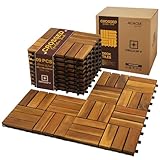
- Premium Acacia Wood 0.9 Thick: Solid acacia hardwood treated with a protective linseed oil finish that penetrates and guards the wood grain against moisture and wear; each tile measures a full 12 x 12 x 0.9 inches for a premium, substantial feel
- Safe Grip on Any Wet Surface with Grooved Slats and PPC Base: Deep-groove pattern keeps feet secure around pools, balconies, patios, and wet areas; supports up to 490 lbs
- Superior Drainage with Elevated Raised Base: Lifts tiles off the ground to channel water away underneath; promotes airflow and keeps surfaces dry — ideal for poolside, bathrooms, RV floors, and balconies
- Snaps Together in Minutes with No Tools Required: Precision interlocking clips lock all four sides by hand; tiles cut easily with a hand saw to fit edges and corners
- Built Tough for All-Weather Outdoor Use: Handles heat, UV exposure, and heavy use in all seasons; sweep or rinse with a hose to keep tiles looking their best
Which surface is safest when wet?
There is no universal material winner. Consumer Reports’ 2026 testing found that wood resisted slips best among the deck boards it tested, while most composite, plastic and aluminium products retained their original colour better than unfinished wood. These are findings for specific tested products and conditions, not a rule that all timber is grippier than all composite or concrete.
ASTM F3132-20 is a practice for selecting slip-resistant walkway surfaces during design and maintenance. The U.S. Access Board says accessibility standards require slip-resistant surfaces but do not prescribe one minimum coefficient of friction. Treatments that increase slip resistance may require continuing maintenance or reapplication.
Specify and manage the factors that actually change risk:
- Use a tested pedestrian texture rather than a smooth decorative finish.
- Give rain and wash water a clear route away from the walking line.
- Prevent leaves, mud, algae and cleaning residue from remaining on the surface.
- Inspect in wet weather, especially on shaded slopes and near downpipes.
- Retest or reassess grip after a coating, anti-slip treatment, resurfacing or major cleaning change.
Wheelchairs, walking aids and strollers
Firmness and continuity matter more than the marketing label on a material. Concrete naturally provides a rigid base when the subgrade and joints are correct. Timber and composite can also form a usable accessible route, but the frame must limit deflection, boards must remain flush, and transitions must be carefully detailed.
Design the route as a system: stable foundations, drainage that does not wash out the edges, consistent crossfall, secure borders and no abrupt change in level between the walkway and the surrounding ground. Confirm the governing local accessibility rules for the route’s location and use. The U.S. Access Board’s material guidance does not waive requirements for the installed path; a material listed as potentially firm and stable still has to meet the applicable route criteria.
Rank #4

- Authentic Wood Aesthetic - Expertly crafted texture that flawlessly mimics the richness and elegance of real wood, offering a breathtakingly natural and timeless look that transforms your outdoor space into a luxurious retreat.
- Effortless Installation - Enjoy hassle-free setup with our flexible installation options, complete with a FREE tool kit including stainless steel spiked clips, screws, and edge clips.
- Unmatched Durability - Engineered to withstand the toughest conditions, our boards offer supreme resistance to stains, fading, water, scratches, and wear, ensuring they remain as stunning as the day they were installed, no matter the weather.
- Low-Maintenance Luxury - Revolutionize your outdoor living with composite boards that demand almost no upkeep. Forget the endless sanding, staining, and sealing of traditional wood—our boards stay pristine and beautiful year after year with minimal effort.
- Eco-Friendly & Pest-Resistant - Designed with sustainability in mind, our boards are not only durable but also resistant to rodents and insects, offering a planet-friendly and worry-free solution for your outdoor oasis.
What the published cost figures do—and do not—tell you
Consumer Reports (2026) gives category figures of about $300–$700 per 100 square feet for some wood decking categories, about $525–$1,200 per 100 square feet for plastic decking categories, and more than $500 per 100 square feet for aluminium decking categories. These are category figures, not universal installed prices for a timber, composite or concrete walkway. They may exclude excavation, foundations, drainage, labour, edging, steps, access constraints and regional taxes.
The figures are still useful directionally: composite-type products commonly cost more at purchase than basic timber, while a concrete route’s price is driven heavily by groundworks, access, reinforcement, formwork, joints and finish. Obtain an installed quotation that separates the substructure and surface so a cheap board price does not hide an expensive or inadequate base.
Installation checklists
Timber
- Survey levels, shade, runoff and soil moisture; resolve standing-water paths first.
- Select a species and preservative class suitable for the exposure and local requirements.
- Design supports, ventilation, board gaps and edge restraint so water and air can move.
- Use corrosion-compatible fixings and the specified pedestrian board profile.
- Check every board for movement, raised fasteners and damaged edges before handover.
Composite
- Choose the exact board formulation and obtain its span, joist, fastener, expansion and cleaning instructions.
- Build a rigid, well-drained and ventilated frame; do not assume timber spacing applies.
- Install clips, screws and perimeter details exactly as specified.
- Protect cut ends and maintain the required clearances from walls, soil and planting.
- Record the product and colour batch for future replacement boards.
Concrete
- Confirm delivery access, excavation limits, subgrade condition and drainage outlets.
- Set levels, edges, transitions and joint locations before placing the base.
- Use the engineered thickness, reinforcement and base preparation for the expected traffic.
- Select a broomed, exposed-aggregate, textured or approved precast pedestrian finish.
- Protect the work during curing and inspect joints, edges, texture and transitions before opening the route.
Choosing by project scenario
Small private garden path
Timber is usually the sensible starting point when the owner values a natural appearance, wants to replace individual boards and accepts cleaning and periodic treatment. Improve its reliability with ventilation, drainage and a finish intended for walking.
Low-upkeep garden route
Composite suits owners who want board construction and controlled colours while reducing painting, staining and decay concerns. Budget for cleaning, traction checks and possible movement or colour-matching issues rather than treating it as maintenance-free.
The Tool Desk
Outbyte Driver Updater FREEFix the driver behind crashes, sound loss and screen glitchesFind Drivers →Outbyte PC Repair FREERepair Windows errors before they cause bigger problemsFix Now →Busy shared or urban route
Concrete is generally the stronger fit where repeated traffic, carts or mobility aids demand a rigid surface and the site can accommodate heavy construction. Select a pedestrian texture and plan joints, drainage and future access before pouring.
Route exposed to persistent shade or runoff
Fix the moisture problem first. Any material can become slippery or deteriorate when water and organic debris remain on it. If the route cannot be drained and cleaned reliably, changing material alone will not remove the hazard.
Why a fixed lifespan cannot be promised
No single published source establishes one service-life number that applies to every timber species, composite formulation, concrete system, climate, traffic level and maintenance regime. Exposure, detailing and upkeep can change the result substantially. Specify the conditions, follow the manufacturer’s installation limits where relevant, and judge the route by its inspected condition rather than an assumed expiry date.
Quick Recap
Product prices and availability are accurate as of the date/time indicated and are subject to change. Any price and availability information displayed on Amazon at the time of purchase will apply.

