Short answer: The flooring direction that defined 2025 was warmer, more natural, more tactile, and more performance-focused. Cool gray gave way to oak, honey, auburn, caramel, and warm greige; matte finishes and realistic textures became more convincing; wide planks and large-format tile reduced visual interruptions; decorative patterns became more prominent; and resilient flooring continued to lead the U.S. market.
Those are eight important signals—not eight equally measured national sales leaders. The evidence combines trade-show introductions, design forecasts, retailer-network data, association guidance, and retrospective industry reporting. A showroom display can reveal where manufacturers are heading, but it does not prove that every homeowner is buying that look.
As an Amazon Associate I earn from qualifying purchases.
The practical lesson is more useful than a simple trend list: choose the appearance you like, then verify that the material, installation method, moisture performance, maintenance requirements, and long-term repair options fit the room.
What counts as a flooring trend?
Flooring trends fall into three different categories, and confusing them leads to poor buying decisions:
#1 Best Overall
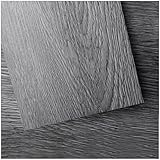
- Stylish - Authentic wood looking and grain texture, adding timeless feature for your home
- Easy DIY - Just peel and stick down on a flat floor for installation, no power tools, no experience, no glue, no accessoies
- Superior Property - Rigid surface and hard core, 100% waterproof, fire proof, wear resistant, scratch and abrasion resistant, high strength, no expansion, stable
- Wide Application - Besides as flooring, it can be applied to wall, ceiling, cabinet by adding extra glue (liquid nail)
- Exceptional Customer Service - We offer full service 24/7 for our customers for any product related issues, 2-year warranty
| Trend type | Example | What supports the claim |
|---|---|---|
| Aesthetic | Warm oak, travertine, matte finishes | Trade-show collections, designer commentary, retailer observations, and sales data |
| Format or installation | Wide plank, large-format tile, herringbone | Product introductions and installer guidance |
| Market or product | Rigid core, WPC, flex LVT, water-resistant laminate | Sales reporting, retailer surveys, and manufacturer activity |
The eight trends below include all three types. The visual trends tell you what is becoming more visible. The product trends tell you what manufacturers and buyers are emphasizing. Neither replaces a room-by-room evaluation of the subfloor, moisture conditions, traffic, pets, acoustics, and budget.
1. Warm natural wood tones replace cool gray as the default look
The clearest color shift was away from blue-gray, driftwood-gray, and heavily whitewashed floors toward natural oak, honey, sand, auburn, caramel, warm greige, and midtone brown. Natural red oak, maple, and hickory visuals also gained attention.
This is not the same as saying every light floor disappeared. The more accurate description is palette expansion: the once-dominant pale gray and cool white-oak look was joined—and in some settings replaced—by warmer, more varied, nature-based colors. Houzz’s 2025 flooring review reported continued interest in light and midtone wood visuals while identifying warmer hues, oak and walnut textures, richer colors, and a retreat from driftwood gray.
Do these 3 things before closing this tab:
1Scan for outdated or missing drivers - takes under a minute2Repair Windows errors before they cause bigger problems3Fix the driver behind crashes, sound loss and screen glitchesOne January 2025 presentation from CCA Global reported that gray represented less than 7% of wood and wood-look sales in its Retail 2.0 data, while shades with an auburn cast approached 30%. Those figures came from approximately 900 Retail 2.0 stores, so they describe that retailer network—not all U.S. flooring purchases. FloorDaily’s coverage of the CCA presentation provides that important context.
Why homeowners are responding to warmer floors
- They make rooms feel less sterile than cool gray or stark white.
- They work with cream, tan, terracotta, olive, navy, and natural textiles.
- Midtones can be more forgiving of everyday dust than extremely dark or very pale floors.
- They coordinate with the broader interest in organic-modern, transitional, Japandi, and nature-inspired interiors.
Materials that can deliver the look
Warm color is an appearance, not a material. The same oak or walnut visual may be available as solid hardwood, engineered wood, laminate, porcelain tile, LVT, or LVP. Those products differ substantially in moisture tolerance, acoustics, repairability, installation, and cost.
Real wood has a real wood wear surface. The National Wood Flooring Association distinguishes solid and engineered wood from laminate, vinyl, and tile products that reproduce wood’s appearance.
Before you buy
- Place a large sample beside cabinets, trim, paint, counters, and furniture that will remain.
- View it in morning, afternoon, and evening light. A honey or auburn floor can look distinctly orange under warm artificial bulbs.
- Check the undertone. A warm floor may clash with orange-toned cabinets even if both are individually attractive.
- Do not assume a sample showing natural variation represents every plank. Species, grade, cut, stain, and finish all affect the final appearance.
2. Matte and tactile surfaces replace high shine and exaggerated rustic effects
The 2025 surface direction favored matte and low-sheen finishes, subtle wire-brushing, believable grain, soft-touch textures, and restrained imperfections. The look is best described as quiet realism: the floor should suggest real wood or stone without excessive knots, glossy coatings, deep scraping, or an obviously repeated printed pattern.
PC Slower Than It Used to Be?
A free scan shows the junk files, broken settings and background clutter dragging Windows down - then fixes them in one click.Free scan · Windows 10 & 11Crashes, No Sound, or Screen Glitches?
Random freezes, missing sound and display glitches usually trace back to one bad driver. Find and replace yours safely.Free scan · under a minuteThe European Producers of Laminate Flooring’s 2025 forecast highlighted realistic wood designs, natural and matte surfaces, raw wood tones, soft textures, and wide planks. Houzz likewise reported resilient products designed to reproduce both the beauty and the imperfections of hardwood while moving away from heavily rustic and cool-toned visuals.
Terms worth understanding
- Matte or low-sheen: A finish that reflects less light than a satin or glossy surface.
- Wire-brushed: A texture that emphasizes the softer grain of wood without necessarily creating deep grooves.
- Embossed-in-register: A manufactured surface texture intended to align with the printed grain or stone image.
- Distressed or hand-scraped: A deliberately aged appearance. It can hide wear, but an exaggerated version may become as trend-specific as gray floors once were.
The NWFA explains that matte finishes reflect less light and tend to make small scratches less noticeable than glossier finishes. That does not make matte flooring scratch-proof, and it does not eliminate the need for felt pads, entry mats, and appropriate cleaning.
Where this trend works best
Matte, restrained textures suit busy family rooms, open-plan spaces, pet-friendly homes, and contemporary, transitional, organic-modern, and Japandi-inspired interiors. They allow the floor to support the room instead of becoming its most reflective or visually aggressive element.
Rank #2

- double-faced mallet with non-slip rubber grip help absorb vibration. Constructed of cast iron with bright chrome plating, the hammer is equipped with the hardness of 90±5 HAS. Double-faced solid rubber head delivers a softened, positive strike. The mallet head is 1-3/8 inch in diameter. The length of whole mallet is 10.3inch
- pull bar is designed with enhanced strength.Made from premium A3 steel with matt coating.The soft pads on the back can well protect the floor from scratch.The length of the pull bar is 10.5inch, thickness is 3mm
- the tapping block made from polypropylene with a handle that will knock your hand at work. We improved the structure and made a new design, making this product more sturdy and practical. The approximate size of the block body is 9.4 inch x 2.4inch x 1inch
- tapping block with easy to grip handle. You can rap the splicing floor planks directly without mallet.And you can also use it with mallet, it is more powerful and faster to finish installation work
- comes with 40 pieces plastic spacers which are designed with non-slip slots. The approximate size of the spacer is 2.3inch x 1.2inch
Failure modes
- Deep texture can trap dirt and make mopping more difficult.
- Embossed LVT can feel artificial when the physical grain does not align with the printed image.
- Very rough surfaces can be uncomfortable under bare feet and harder to repair invisibly.
- Matte finishes can still show dents, gouges, and pet damage; they only reduce the visual emphasis of some fine scratches.
3. Wide, long planks and larger formats create fewer visual interruptions
Wide and long boards remained a major 2025 format direction. Fewer seams create a calmer, more continuous floor and can make an open plan feel more unified.
What’s actually slowing this PC down?
Pick the symptom - the matching free tool is one click away.
There is no single industry-wide meaning for wide plank. The NWFA technically classifies wood flooring 3 inches or wider as plank flooring, while the retail market often uses “wide plank” for substantially wider products. A Houzz 2025 product review included hardwood examples with 7½-inch-wide planks and random lengths up to 75 inches. That is a product example, not a universal standard.
The same visual objective appears in large-format tile. Industry guidance commonly uses 15 inches or more on at least one side as a large-format threshold, although exact product and installation requirements vary. TileLetter’s large-format tile guidance summarizes the relevant TCNA and ANSI considerations.
Why the format is appealing
- It reduces the number of visible joints and grout lines.
- It gives contemporary rooms a quieter, more spacious appearance.
- It works well with simple furniture, minimal trim, and open sightlines.
- Large tile can create a continuous stone or concrete-inspired surface across a substantial area.
The construction implications
Wide wood boards and large tile are less forgiving of an uneven substrate. Wider boards can telegraph subfloor irregularities, while large tile is more vulnerable to visible lippage when the substrate is not flat enough. Long boards also require careful planning around doorways, vents, stair noses, transitions, and room geometry.
For tile, the installer should verify substrate flatness before setting material, plan grout joints, account for tile warpage, and discuss mortar coverage. A tile-leveling system can assist with alignment, but it cannot correct a poorly prepared floor. TileLetter’s lippage guidance specifically warns against treating leveling systems as a substitute for substrate preparation.
Before you order
- Ask the installer how flat the existing or planned substrate must be.
- Confirm where transitions will occur and how the floor will meet adjacent rooms.
- Request a layout drawing for large tile or irregularly shaped spaces.
- Inspect multiple cartons of a wood-look product for repeat patterns, not just one display board.
4. Decorative geometry returns: herringbone, chevron, parquet, checkerboard, and mosaics
In 2025, flooring increasingly acted as a design feature rather than a neutral background. Herringbone, chevron, parquet, checkerboard, plaid, mosaics, mixed-color layouts, and geometric carpet all became more visible.
EPLF identified geometric laminate patterns, including herringbone, as a major direction. The NWFA’s trend coverage discusses herringbone, chevron, and parquet as increasingly visible wood-floor patterns. For tile, Coverings’ 2025 forecast highlighted mosaic artistry, geometric layouts, and large porcelain panels cut into more personalized patterns.
Herringbone, chevron, and parquet are not the same
- Herringbone: Rectangular pieces meet at alternating right angles, producing a broken zigzag.
- Chevron: Board ends are cut so they meet in a continuous V.
- Parquet: A broader category of geometric wood arrangements, including repeated blocks or angular compositions.
- Checkerboard: Alternating colors or materials, usually in square or rectangular units.
- Mosaic: Small or cut pieces assembled into a pattern, often in tile or stone.
Where patterns make sense
Use a strong pattern in an entryway, powder room, dining room, office, kitchen zone, or another room that can serve as a visual focal point. A single patterned room is often easier to live with than applying a high-contrast design throughout an entire house.
What makes patterned flooring harder
- It requires more layout planning, cutting, and alignment than a straight installation.
- Pattern errors are more visible, particularly in rooms that are not square.
- Walls, cabinets, and thresholds may require a centered or intentionally adjusted layout.
- Repairs can be more complicated because replacement pieces must match the pattern.
- A bold floor can compete with patterned wallpaper, dramatic cabinetry, rugs, or heavily veined counters.
Before ordering, have the installer create a scaled layout. Do not rely on a small sample to judge how a repeating pattern will behave across the whole room. There is no universal waste percentage for herringbone or chevron; the amount depends on room geometry, board dimensions, borders, and the installer’s layout plan.
Recommended Free Tools
5. Stone-forward flooring expands through travertine, sandstone, marble, and mineral surfaces
Stone looks became warmer and more nuanced in 2025. Instead of relying only on dramatic marble or high-contrast slate, designers and manufacturers emphasized travertine, sandstone, limestone, soft marble, mineral textures, ceppo-like aggregate, and sand-inspired beige.
Rank #3

- Realistic Wood Look: Get the authentic look of real wood with grain texture. These floor planks blend seamlessly into any decor style, adding a touch of timeless elegance to your home.
- Easy to Install--Peel & Stick: The vinyl flooring is designed to be applied directly to a clean, flat floor surface using its self-adhesive backing. No tools and no underlayment required. Just clean, peel, and stick for instant transformation.
- Secure Adhesion: No curling, no shifting. The advanced adhesive keeps these floor tiles firmly in place, ensures a secure, lasting hold and a flawless finish.
- Superior Performance: Rigid surface and hard core. 100% waterproof, fireproof, scratch-resistant, and abrasion resistant. Durable and stable, these vinyl floor tiles won't expand or warp, even in tough conditions.
- Versatile and Stylish: These peel and stick flooring can be applied for floors, walls, ceilings, or cabinets (extra glue needed for vertical surfaces). Perfect DIY flooring for bathrooms, living room, kitchens, basements, RV camper upgrades.
Houzz reported growing interest in earthy sandstone and travertine looks while noting that classic white marble remained prominent. Coverings’ 2025 tile forecast identified “Colors of Sand” and “Mineral Drenching,” including gauged porcelain panels that extend stone-inspired surfaces across floors and walls.
Porcelain stone looks versus natural stone
Porcelain can reproduce travertine, marble, sandstone, and other minerals with consistent thickness, predictable sizing, and generally straightforward cleaning. Natural stone offers genuine geological variation and a different tactile experience, but it may require more specific sealing, cleaning, and maintenance. The right choice depends on the product, finish, room, and homeowner’s tolerance for variation.
Large-format porcelain and gauged panels can reduce grout lines and create a dramatic floor-to-wall effect. They also increase the importance of substrate preparation, handling, layout, cutting, and installer experience.
Good applications
Warm stone visuals are well suited to bathrooms, kitchens, mudrooms, entries, sunrooms, and indoor-outdoor transitions—especially where wood would be exposed to moisture, grit, or heavy wear. Consumer Reports recommends porcelain tile for busy, wet, and messy areas such as entries, mudrooms, playrooms, and baths.
Before you buy large-format tile
- Require a substrate-flatness inspection before installation.
- Review the planned grout-joint size and tile layout.
- Ask whether the installer has completed projects with the selected dimensions and finish.
- Approve a mockup when veining, pattern direction, or floor-to-wall continuity matters.
- Evaluate the room under grazing or strong directional light, which can exaggerate lippage and surface variation.
6. Performance-driven resilient flooring becomes more realistic—and more selective
The most commercially important 2025 flooring trend was not a color. It was the continued strength of resilient flooring: SPC rigid core, WPC rigid core, glue-down LVT, loose-lay LVT, sheet vinyl, and water-resistant laminate competing through moisture tolerance, cleanability, installation speed, and increasingly realistic visuals.
Retrospective U.S. industry reporting published in 2026 put vinyl at 36.5% of total flooring dollars and resilient flooring at 59.5% of hard-surface sales in 2025. The same Floor Covering News report placed rigid-core sales at approximately $4.972 billion. These figures support calling performance-driven resilient flooring the market heavyweight, but they do not prove that one particular oak color or pattern dominated purchases.
SPC, WPC, flex LVT, and glue-down LVT
- SPC rigid core: A dense, dimensionally rigid core commonly used in floating click installations. It can feel firm underfoot and remains sensitive to subfloor flatness, heat, sunlight, and product-specific expansion requirements.
- WPC rigid core: A generally more cushioned core construction that can offer a different comfort and acoustic profile from SPC.
- Flex LVT: A more flexible vinyl product that may be useful in applications where a rigid core is not the best fit, but it can demand careful subfloor preparation.
- Glue-down LVT: Adhered directly to a prepared substrate. It can work well for commercial-style layouts, transitions, and selective repairs, but the adhesive and subfloor preparation become critical.
- Loose-lay LVT: Designed to stay in place through product weight, friction, and installation details. It still requires a suitable substrate and correct perimeter treatment.
- Water-resistant laminate: A laminate product with improved resistance to surface moisture, but not automatically equivalent to a fully waterproof resilient floor.
Floor Covering News’ TISE 2025 coverage reported growing attention to WPC and flex products in response to reported problems in some low-cost SPC products, including curling, locking, coupling, and core-formulation issues. Floor Focus’ Surfaces 2025 review likewise described more WPC, flex LVT, hybrid products, water-resistant laminate, digital printing, and increased attention to product quality.
Quick wins for a faster PC:
Fix the driver behind crashes, sound loss and screen glitchesFind Drivers →Repair Windows errors before they cause bigger problemsFix Now →Scan for outdated or missing drivers - takes under a minuteDriver Scan →What waterproof does—and does not—mean
“Waterproof” is a product-specific claim, not a guarantee that the entire room or subfloor is protected. Confirm whether the claim applies to the face, core, seams, locking system, or warranty—not just the marketing headline.
Water can still reach the subfloor through joints, perimeter gaps, transitions, plumbing leaks, flooding, vapor transmission from below, or poor installation. The EPA’s remodeling guidance emphasizes preventing water from reaching the layer below the visible floor, where it can be difficult to dry and may contribute to damage or mold.
How to evaluate resilient flooring
- Read the installation instructions and warranty exclusions before buying.
- Ask about required subfloor flatness, moisture testing, acclimation, expansion gaps, and sunlight or temperature limitations.
- Do not choose solely by wear-layer thickness, total product thickness, “commercial grade” language, or the lowest installed price.
- Confirm whether damaged planks can be removed and replaced without dismantling a large area.
- Request samples large enough to reveal pattern repetition, bevels, texture, and color variation.
7. Carpet becomes more decorative, textured, and strategically placed
Carpet did not make a universal wall-to-wall comeback. Instead, it was repositioned as a design and comfort material. The strongest 2025 signals included small-scale patterns, pin-dot and geometric designs, chunky loops, Berber-like textures, multi-texture products, premium decorative carpet, custom area rugs, and carpet used selectively over hard surfaces.
Rank #4

- PEEL-AND-STICK: No tools, no glue. Just peel&stick, and transform your space in minutes. You can achieve professional wood-looking results even as a first-timer. Reposition during installation for perfect alignment — it's forgiving and foolproof. Many customers complete an entire room floor in just 1-2 hours.
- REALISTIC WOOD GRAIN: The embossed wood texture floor tiles have that natural warmth and grain pattern you'd expect from real hardwood. The grey finish has subtle color shifts that add depth and character — so it actually looks like wood, not plastic. It instantly upgrades any room and makes old, tired floors disappear.
- WATERPROOF & NON-SLIP: This vinyl flooring is 100% waterproof, so it handles moisture without warping or damage. The surface has grip too — so it's safer underfoot, especially if you have kids or older folks at home. Cleanup is simple: just mop or wipe, and it looks brand new again.
- RENTER-FRIENDLY: This flooring goes down in no time and peels right off when you move — no sticky mess, no floor damage. Perfect for bedrooms, bathrooms, laundry rooms, apartments, dorms, and rental properties. Basically anywhere you want a fresh look without making permanent changes. With some extra liquid nails, use it on walls, ceilings, cabinets, and shelves. Perfect for renters, dorms, RVs, or a quick refresh.
- SIZE & COVERAGE AREA: Roll package. Each floor tile measures 36 x 6 inches, with a thickness of 0.02" / 0.6mm. 36 pieces per roll covers 54 sq. ft., while 12 pieces per roll covers 18 sq. ft. If you're unsure about the product, you can start by purchasing just 4 pieces to assess the results without disrupting your daily life.
CCA Global reported that patterned carpet represented nearly 40% of purchases in its Retail 2.0 data, multi-texture products represented approximately 30%, and loop products were the fastest-growing carpet category in that presentation. Those figures describe the CCA retailer network rather than the entire U.S. market. FloorDaily’s report includes the source context.
Floor Focus’ Surfaces 2025 coverage also found stronger interest in textured broadloom, decorative imported carpets, organic tonals, modern Berber-like looks, and custom area rugs layered over wood, laminate, tile, or resilient flooring.
Carpet remains too large to dismiss: retrospective 2025 reporting placed carpet and rugs at 43.4% of total flooring volume. That indicates a category losing share relative to hard surfaces, not a category that has disappeared. Floor Covering News reported the 2025 soft-surface figure.
Where carpet makes the most sense
Patterned or textured carpet can be a strong choice for bedrooms, stairs, nurseries, playrooms, home theaters, offices, apartments, and any area where warmth and acoustic comfort matter. A custom rug can add color and softness without committing the entire room to wall-to-wall carpet.
Important cautions
- Do not place carpet in areas with chronic moisture or beside tubs, showers, sinks, or toilets without a very specific moisture-management plan.
- Specify the carpet, cushion, and adhesive as a system rather than selecting the face fiber alone.
- Ask about pile height, loop construction, snag resistance, cleaning requirements, stain treatment, and warranty exclusions.
- For indoor-air-quality concerns, request emissions information for the carpet, cushion, and adhesive together.
The Carpet and Rug Institute’s Green Label Plus program tests carpet, cushion, and adhesives for low chemical emissions through independent laboratory testing. That is useful information, but a low-emissions certification does not make every carpet suitable for every allergy, moisture, or cleaning situation.
The Tool Desk
Outbyte Driver Updater FREEFix the driver behind crashes, sound loss and screen glitchesFind Drivers →Outbyte PC Repair FREERepair Windows errors before they cause bigger problemsFix Now →8. Sustainability shifts from vague claims to measurable transparency
Sustainability was a visible 2025 flooring direction, but the most responsible version of the trend is not simply buying a product labeled eco-friendly. It is asking how long the floor will last, what went into making it, what emissions were tested, whether it can be repaired, and what will happen at the end of its useful life.
Industry forecasts promoted cork, rubber, bio-based materials, recycled content, and lower-resource manufacturing. Those are useful product-development signals, but manufacturer- or association-led claims are not independent proof that one material is environmentally superior in every installation.
Evidence worth requesting
- Environmental Product Declaration: A product-specific or product-family disclosure of environmental effects across defined life-cycle stages. The U.S. Green Building Council describes an EPD as communicating information such as raw-material extraction, energy use, chemical makeup, waste, and emissions. An EPD is a transparency document—not a simple green score.
- Low-emissions testing: Ask what was tested, under which standard, and whether the result covers the flooring alone or also the adhesive and cushion. LEED guidance on low-emitting products includes carpet, ceramic, vinyl, rubber, engineered wood, solid wood, laminate, wall base, and underlayments.
- Recycled-content details: Request the percentage and type of recycled content, including whether it is pre-consumer or post-consumer.
- Responsible sourcing: For wood, ask about sourcing documentation and the product’s ability to be maintained or refinished.
- End-of-life planning: Verify whether a local take-back or recycling program actually accepts the product. Recyclable in theory does not necessarily mean recyclable where you live.
- Service life and repair: Consider whether the floor can be refinished, repaired in sections, or replaced with matching material later.
The Federal Trade Commission’s Green Guides caution against broad, unqualified claims such as “green” or “eco-friendly.” The FTC also says recycled-content claims should identify the percentage and recyclable claims should be qualified when appropriate recycling facilities are not broadly available.
A durable floor that can be maintained and repaired may be a better practical choice than a product marketed as greener but likely to fail and be replaced prematurely. That is a decision principle, not a universal life-cycle conclusion: the actual answer depends on the material, installation, maintenance, service life, and disposal pathway.
Free tools Windows power users keep installed
One-click scans. No signup required.
Which trend fits which room?
| Room or condition | Priorities | Strong candidates | Watch-outs |
|---|---|---|---|
| Entryway or mudroom | Moisture tolerance, cleanability, impact and grit resistance | Porcelain tile, resilient flooring, carefully selected laminate | Slippery finishes, unprotected wood, poorly sealed transitions |
| Kitchen | Spills, comfort, scratch and stain resistance, protected seams | Porcelain, LVT/LVP, selected laminate, engineered wood | Standing water, unprotected wood, inadequate perimeter detailing |
| Bathroom | Water management, slip resistance, waterproofing below the finish | Porcelain tile, appropriate resilient flooring, some mosaics | The surface product alone does not waterproof the entire bathroom |
| Living or dining room | Visual continuity, comfort, repairability, furniture compatibility | Hardwood, engineered wood, laminate, LVT, large-format tile | Acoustics, transitions, furniture scratches, overly dominant patterns |
| Bedroom | Warmth, acoustics, comfort, cleaning preferences | Carpet, engineered wood, LVT, laminate, rugs | Allergy and cleaning needs, loop snagging, moisture |
| Basement | Subfloor moisture, vapor transmission, flooding, dimensional stability | Resilient flooring, tile, engineered wood, selected laminate | Moisture from below; solid wood may be unsuitable in some conditions |
| Pet- and child-heavy home | Cleanability, scratch and stain resistance, noise control | Resilient flooring, durable laminate, tile, selected carpet | Hard surfaces can be noisy and unforgiving; carpet requires moisture discipline |
Consumer Reports similarly recommends matching the flooring to room conditions, noting that porcelain works well in busy or wet rooms while solid and engineered wood bring warmth to living and lounging spaces.
Best Value

- Double the Width: Our premium wood grain tiles are 11.8 inches wide, offering double the coverage of standard tiles, making installation and renovation a breeze. Ideal for peel and stick flooring solutions
- Roll-Up Convenience: Unlike typical tile sheets, our unique roll-up design ensures easy handling and storage. Perfect for any space size, with the flexibility to save the rest for future use. A revolution in vinyl flooring
- Effortless Installation: Just peel and stick – no special tools required. Transform your space with ease and no mess. Our peel and stick floor tiles redefine simplicity
- Durable Thickness: Crafted with the industry-standard 0.02" thickness for maximum durability and longevity. Trust in the resilience of our peel and stick floor tiles
- Waterproof & Reliable: Our tiles come with a self-adhesive, waterproof layer that stands up to spills and splashes, ensuring your floors look pristine year after year. Depend on the waterproof quality of our vinyl flooring
Real hardwood is still relevant
Hardwood remains a meaningful 2025 choice because it offers genuine material authenticity, tactile variation, design value, and—in many cases—repairability. Solid wood can often be refinished more times than engineered wood, while engineered wood may provide greater dimensional stability and can be appropriate for more locations, including many basement applications when the product and site conditions are suitable.
Neither is maintenance-free. The NWFA explains that changes in humidity can cause wood to swell, cup, gap, or split. Moisture control, acclimation, installation method, finish, species, and ongoing indoor conditions all affect performance. Use engineered wood where its construction suits the site—not simply because it is labeled more stable—and do not treat any wood floor as waterproof.
Before you order: a construction-focused checklist
- Order substantial samples. Small chips hide grain repetition, texture, bevels, grout scale, and color variation.
- View samples in real light. Check morning, afternoon, and evening conditions and compare them with permanent finishes.
- Identify the material. Confirm whether the product is solid hardwood, engineered wood, laminate, LVT/LVP, SPC, WPC, tile, natural stone, or carpet.
- Inspect the substrate. Ask for a written assessment of flatness, moisture, cracks, deflection, and required preparation.
- Read the water claim. Determine what is covered, what is excluded, and whether the warranty addresses standing water, flooding, moisture from below, seams, and installation.
- Plan transitions before installation. Coordinate heights, door clearances, stairs, vents, thresholds, and adjoining rooms.
- Approve layouts for patterns and large formats. Herringbone, chevron, mosaics, and large tile need more than a color selection.
- Check replacement availability. Ask how long matching material is expected to remain available and whether damaged pieces can be replaced individually.
- Request sustainability documentation. Look for an EPD, emissions testing, recycled-content details, responsible-sourcing information, and a realistic take-back pathway.
- Get a complete installation scope. It should identify preparation, moisture testing, underlayment or adhesive, expansion gaps, transitions, trim, cleanup, and warranty responsibilities.
How to choose a trend without creating a future problem
Use the trend as a starting point, not as the specification. A warm oak look may be the right visual direction, but the best product could be engineered wood in a dry living area, porcelain in a wet entry, or a realistic resilient floor in a busy kitchen. Likewise, a herringbone layout may be appropriate in a foyer but unnecessarily complex across an entire open-plan floor.
Recommended Free Tools
For long-term livability, prioritize a coordinated color, a material appropriate to the room, proven installation details, realistic maintenance, and documented product claims. Warm neutrals and restrained textures are generally easier to live with across changing furniture and paint than extreme colors or heavily distressed effects. Bold patterns can still be excellent choices when they are scaled to the room and installed intentionally.
Frequently Asked Questions
Are gray floors out in 2025?
Gray is no longer the uncontested default, particularly in some wood-look retail data, but it is not obsolete. A deliberate gray with the right undertone can still work with cool daylight, modern furnishings, or a warm surrounding palette. The safer conclusion is that flooring palettes are moving beyond gray, not that every gray floor is now wrong.
Is LVP the same as SPC, WPC, and LVT?
No. LVT is a broad luxury vinyl tile category, while LVP generally refers to plank-shaped vinyl. SPC and WPC describe different rigid-core constructions, and glue-down or loose-lay products have different installation and movement characteristics. Compare the specific product’s core, installation method, flatness requirements, warranty, comfort, and repairability.
Does waterproof flooring make a bathroom or basement completely waterproof?
No. A waterproof product does not eliminate plumbing leaks, flooding, vapor transmission, perimeter gaps, failed transitions, or moisture below the floor. Review the product warranty, test the substrate, and treat the flooring as one part of a complete moisture-management system.
Is herringbone flooring difficult to install?
It is generally more demanding than a straight installation because it requires careful centering, layout, cutting, and alignment. The pattern can expose out-of-square walls and installation errors. Have the installer create a scaled layout before ordering and consider using the pattern in a defined room rather than throughout the home.
Is real hardwood still a good choice?
Yes, when its moisture, humidity, traffic, and maintenance requirements fit the location. Hardwood offers authentic material variation and potential refinishing or repair. Engineered wood can be more dimensionally stable in some applications, but no wood floor should be treated as waterproof.
What sustainability documents should I request for flooring?
Ask for a product-specific Environmental Product Declaration when available, low-emissions testing, recycled-content percentages and sources, responsible-sourcing information for wood, warranty and expected-service-life details, and evidence of a real local take-back or recycling pathway. An EPD reports environmental information; it is not automatically a ranking of which product is greenest.
The Bottom Line
The most future-resistant flooring choice is not necessarily the least fashionable one. It is the floor whose color, material, installation, moisture performance, maintenance, repairability, and documented claims suit the home. In 2025, that often meant a warm, matte, realistic surface—but the right version could be hardwood, engineered wood, tile, resilient flooring, laminate, carpet, or a combination of materials chosen room by room.
Quick Recap
Product prices and availability are accurate as of the date/time indicated and are subject to change. Any price and availability information displayed on Amazon at the time of purchase will apply.




