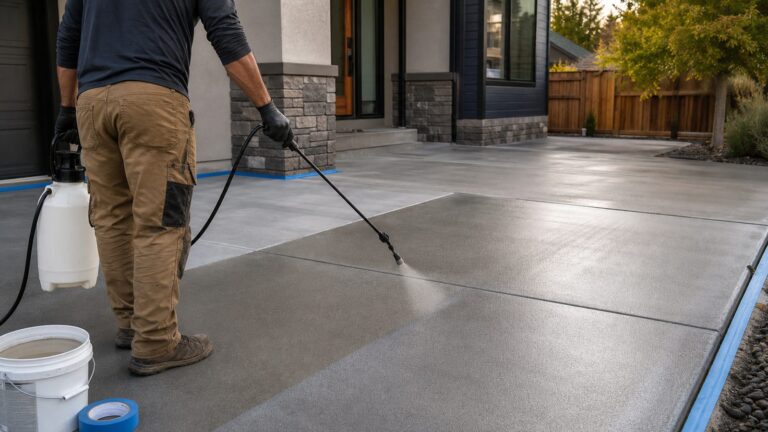
Yes, hot water can melt driveway ice—but it is usually a poor driveway-wide deicing method. The water may quickly clear a small patch, then spread across the cold pavement and refreeze as a smooth, harder-to-see layer of ice. That can turn a visible problem into black ice.
If you use water at all, reserve it for a small, controlled area where the resulting runoff can be removed immediately and refreezing is unlikely. For most driveways, the safer sequence is mechanical removal first, traction where needed, and only a small amount of properly selected deicer when melting is necessary.
As an Amazon Associate I earn from qualifying purchases.
Why hot water melts ice—and why that is not the whole story
Ice melts when it absorbs enough energy to warm up and change from a solid into liquid water. Hot water transfers heat rapidly to a thin layer of ice, so a small patch may disappear almost immediately.
Quick wins for a faster PC:
Repair Windows errors before they cause bigger problemsFix Now →Scan for outdated or missing drivers - takes under a minuteDriver Scan →But melting requires more energy than simply warming the ice. Once ice reaches its melting point, additional energy is needed to break the molecular structure that holds the solid lattice together. The latent heat of fusion is substantial: melting ice at 0°C requires approximately the same energy as heating an equal amount of water from 0°C to about 80°C. That is why a cup or bucket of hot water may clear a small area but becomes inefficient when spread over an entire driveway.
#1 Best Overall
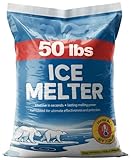
- Professional Grade Performance - This powerful ice melting formula starts working instantly on contact with ice and snow. The melt ensures complete coverage and lasting results, making winter maintenance effortless and effective. In money-saving 50lb bag
- SAFETY-MAX FORMULA Prevents Refreezing: Once your sidewalk, steps, driveway, or parking lot are clear, they will not refreeze; This adds safety for cars and pedestrians in extreme cold weather
- Versatile Usage - Perfect for all outdoor surfaces including driveways, sidewalks, steps, balconies, patios, and walkways. The effective formula works in temperatures below zero down to -15, providing reliable performance throughout winter
Plain water also has a critical disadvantage: it does not lower the freezing point. Unlike a dissolved deicer, it remains capable of freezing at approximately 32°F (0°C). If the driveway, air, or surrounding pavement remains below freezing, the meltwater can become a new sheet of ice.
The real risk is refreezing
When hot water melts driveway ice, the result is not “ice gone.” The result is temporarily liquid water. That water may:
- run downhill and freeze at the bottom of the driveway;
- collect in depressions, cracks, or uneven areas;
- spread onto a sidewalk or public path;
- flow into a shaded section that remains below freezing;
- freeze overnight as a thin, difficult-to-see glaze; or
- bond again to the pavement and become more difficult to remove.
Winter-maintenance guidance warns that meltwater and liquid deicer solutions can refreeze when conditions remain cold. The National Weather Service similarly cautions that snowmelt can refreeze into black ice when temperatures drop below freezing. A driveway with poor drainage, a north-facing or shaded section, steep grades, cracks, or temperatures well below 32°F is especially unsuitable for a hot-water treatment.
Should you ever use hot water on a driveway?
Sometimes, but only as a limited spot treatment. A small amount of warm—not boiling—water may be reasonable when all of the following are true:
- the icy area is small and localized;
- you can remove the resulting water or slush immediately;
- the water will not drain toward a walkway, stair, garage threshold, plant bed, storm drain, or roadway;
- temperatures are near or above freezing, or refreezing is unlikely before the surface dries;
- the pavement is in sound condition; and
- you can maintain safe footing while working.
Even in those circumstances, scrape and shovel first. Water should be an occasional aid for a stubborn thin patch, not the primary plan for a whole driveway.
Why boiling water is a bad routine choice
Boiling water adds hazards without solving the central problem. It can cause severe burns, splash onto the person carrying it, damage nearby vegetation, and leave a dangerously wet surface. It also does nothing to prevent the resulting water from freezing.
Do not treat boiling water as a guaranteed way to crack concrete. The available guidance does not establish that ordinary hot water will always crack a sound driveway. However, extreme temperature differences are a reason to avoid casual use around cold materials. The CDC, for example, warns that hot water can shatter a cold automobile windshield through thermal shock. That is not a direct test of driveway concrete, but it is a useful warning against pouring boiling water indiscriminately over cold surfaces.
Never carry or pour boiling water across an icy driveway where a slip or splash could cause an injury. If water is used, choose a controlled quantity of warm water and plan where every drop will go.
Does hot water damage concrete?
The bigger documented concrete concern is usually not the temperature of one bucket of water by itself. It is repeated wetting, saturation, freezing, thawing, and exposure to deicing chemicals.
Rank #2

- Environmental Consideration - This advanced formula is notably less corrosive to concrete than traditional ice melt. The environmentally conscious choice for responsible winter safety management. Apply 2-4 ounces per sq yrd
- Versatile Usage - Perfect for all outdoor surfaces including driveways, sidewalks, steps, balconies, patios, and walkways. The effective formula works in temperatures below zero down to -15, providing reliable performance throughout winter
- Use It Ahead Of Time - This is easy to apply with a shaker or straight from the bag; It is an affordable way to prevent ice formation and should be spread prior to snowfall to make shoveling easier; Follow instructions on the bag for best results
- SAFETY-MAX FORMULA Prevents Refreezing: Once your sidewalk, steps, driveway, or parking lot are clear, they will not refreeze; This adds safety for cars and pedestrians in extreme cold weather
Concrete that becomes saturated can deteriorate during repeated freeze-thaw cycles. Deicing salts can add chemical distress as well. The American Concrete Institute identifies freeze-thaw deterioration in saturated concrete and calcium-oxychloride formation associated with some deicers as mechanisms of joint and surface damage. Federal Highway Administration research also documents physical and chemical distress associated with calcium-chloride and magnesium-chloride brines.
Risk depends on the driveway’s quality, age, drainage, permeability, air entrainment, existing cracks, and exposure history. Effective drainage and properly designed, air-entrained concrete improve resistance, but no driveway should be described as immune to winter damage.
The Tool Desk
Outbyte PC Repair FREEClear out junk files and repair common Windows errorsFree Scan →Outbyte Driver Updater FREEScan for outdated or missing drivers - takes under a minuteDriver Scan →New concrete needs extra caution
Fresh concrete is more vulnerable while it is developing strength and durability. Berryville, Virginia, advises avoiding salt and other deicers on new concrete for approximately one year. That is a conservative local homeowner guideline, not a universal engineering rule for every driveway. Follow the concrete installer’s specifications and ask which products, if any, are approved for the surface.
Do not assume that switching from salt to another chemical automatically makes a new driveway safe. Calcium chloride, magnesium chloride, and other products can have different effects, but none should be called universally “concrete-safe.”
The better driveway deicing procedure
1. Remove loose snow first
Shovel or push away loose snow before treating bonded ice. Mechanical removal reduces the amount of ice that must be melted, minimizes chemical use, and reduces the volume of runoff.
A snow shovel or ice scraper is the most broadly useful first purchase for a residential driveway. Choose a tool appropriate for the surface and avoid dragging a metal edge aggressively across decorative finishes or fragile concrete.
Do these 3 things before closing this tab:
1Scan for outdated or missing drivers - takes under a minute2Clear out junk files and repair common Windows errors3Fix the driver behind crashes, sound loss and screen glitches2. Break bonded ice carefully
Use a purpose-made ice scraper or chopper to loosen stubborn patches. Work carefully rather than repeatedly striking the pavement with excessive force. Aggressive impact can damage already deteriorated concrete, especially around cracks, spalled areas, edges, and joints.
3. Add traction immediately
Sand, grit, or clean kitty litter can improve footing without melting ice. They are useful when the immediate goal is safe walking or driving rather than complete ice removal. Sawdust and birdseed are also listed as traction alternatives in some municipal guidance for newer concrete.
Traction materials generally do not melt ice and do not lower its freezing point. They can become buried, scattered, or washed away, so reapply as necessary and sweep up excess material when conditions improve.
For a homeowner who needs a non-melting safety measure, traction sand for an icy driveway can be more appropriate than adding chemicals to a new or vulnerable concrete surface. Keep the material clean and avoid allowing large quantities to enter storm drains.
Free tools Windows power users keep installed
One-click scans. No signup required.
4. Use deicer sparingly when melting is necessary
Deicers work by lowering the freezing point of water. Their performance depends on the product, concentration, pavement temperature, moisture, and weather—not merely the air-temperature number printed in a general chart.
A product’s laboratory eutectic temperature is not the same as the temperature at which it will perform normally on a driveway. Read the label for the product’s intended surface, application rate, working conditions, and warnings. Apply only enough to achieve the safety objective; more product does not automatically mean faster or better melting.
After mechanical removal, a properly labeled concrete-safe ice melt for driveways may be useful for residual thin ice, but treat “concrete-safe” as a relative marketing description rather than a guarantee. Confirm the driveway material and age, check the label, keep the product away from plants and metal, and use the stated application rate.
5. Clear slush and meltwater
Do not leave a pool of meltwater on the driveway. Push or sweep away the resulting slush and water, and check where it drains. Water that crosses a walkway, collects at the garage entrance, or freezes at the base of a slope can create a second hazard.
What’s actually slowing this PC down?
Pick the symptom - the matching free tool is one click away.
Rank #3
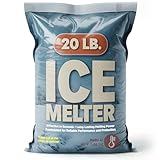
- Environmental Consideration - This advanced formula is notably less corrosive to concrete than traditional ice melt. The environmentally conscious choice for responsible winter safety management. Apply 2-4 ounces per sq yrd
- Versatile Usage - Perfect for all outdoor surfaces including driveways, sidewalks, steps, balconies, patios, and walkways. The effective formula works in temperatures below zero down to -15, providing reliable performance throughout winter
- SAFETY-MAX FORMULA Prevents Refreezing: Once your sidewalk, steps, driveway, or parking lot are clear, they will not refreeze; This adds safety for cars and pedestrians in extreme cold weather
- Use It Ahead Of Time - This is easy to apply with a shaker or straight from the bag; It is an affordable way to prevent ice formation and should be spread prior to snowfall to make shoveling easier; Follow instructions on the bag for best results
Do not direct concentrated salty runoff toward garden beds, trees, storm drains, ponds, or streams. Where practical, move snow and contaminated slush to a location where it will not drain directly into sensitive areas.
6. Inspect the surface afterward
Once the driveway is clear, look for spalling, loose aggregate, widening cracks, damaged joints, and areas where water ponds. Winter treatment cannot correct a drainage or concrete-defect problem. Repeated ponding and freeze-thaw exposure may require repair or a drainage improvement rather than more deicer.
How common deicers compare
Retail ice-melt products commonly contain sodium chloride, calcium chloride, magnesium chloride, calcium-magnesium acetate, or blended ingredients. They differ in low-temperature performance, corrosion potential, environmental effects, cost, and compatibility with concrete and other surfaces.
| Ingredient or material | What to know | Important limitation |
|---|---|---|
| Sodium chloride | Common and generally inexpensive. | Can damage concrete and metal with excessive or repeated use and contributes chloride to runoff. |
| Calcium chloride | Can work at lower temperatures than ordinary rock salt, and some products release heat as they dissolve. | Heat and lower-temperature performance do not make it harmless to concrete, plants, metal, pets, or waterways. |
| Magnesium chloride | Used in many blended and retail products. | It is not automatically concrete-safe; documented chemical and freeze-thaw damage remain concerns. |
| Calcium-magnesium acetate and other acetates | Can reduce reliance on chloride salts in some applications. | Usually cost more and still have their own material, environmental, and performance trade-offs. |
| Sand, grit, or kitty litter | Provides traction without chemically melting the ice. | Does not lower the freezing point and must be replenished or cleaned up. |
The right choice depends on the driveway, weather, drainage, nearby landscaping, and the manufacturer’s instructions. Neither calcium chloride nor magnesium chloride should be presented as universally safe. Excessive deicer can degrade concrete, asphalt, and natural stone and can corrode metal.
Outdated Drivers Are Slowing You Down
One free scan finds every outdated or missing driver and matches the right update for your exact hardware.Free scan · exact hardware matchWindows Errors? Fix Them Before They Spread
Repair common Windows errors and clear accumulated junk for a smoother, more stable PC - no reinstall needed.Free scan · no reinstallEnvironmental effects of hot water and deicer runoff
Hot water itself is not a solution to runoff. It can carry loosened dirt, vehicle fluids, salts, and other pollutants off the driveway. Deicer runoff is a separate and substantial concern: dissolved chlorides can move into soil, groundwater, streams, and storm drains.
At sufficiently high concentrations, chloride salts can harm vegetation, soil organisms, aquatic life, and freshwater systems. They can also damage hard surfaces and corrode vehicles, railings, and other metal components. Use the least amount that accomplishes the safety goal, keep piles of treated snow away from sensitive plants, and avoid sending concentrated meltwater directly into waterways.
Common questions and wrong assumptions
Will hot water melt all the ice on my driveway?
No. It can melt a thin layer or small patch, but the required energy and water volume increase substantially with driveway size and ice thickness. The resulting water may also refreeze before the surface is safe.
Is warm water safer than boiling water?
Warm water is less hazardous than boiling water, but it can still create a wet, slippery surface and refreeze. The issue is not just burn risk; it is also runoff, drainage, pavement temperature, and timing.
Will salt mixed with warm water work better?
A dissolved deicer can lower the freezing point, but homemade mixtures are easy to overapply and may run into landscaping or drains. If melting is necessary, use a labeled product according to its instructions rather than assuming that a stronger solution is better.
Rank #4

- Concrete Safe, Corrosion-free!: ECO-ST ice melt keeps your driveways and sidewalks safe from concrete spalling & breakage.
- Pet Safe and Gentle: Utilizing a special bead-type coating, ECO-ST is a pet safe ice melt and won’t irritate paws, giving you peace of mind all winter long.
- Fast-Acting in Extreme Cold: ECO-ST works quickly to melt snow and ice, even in temperatures as low as -30°F. Perfect for tough winter conditions.
- Eco-Friendly Solution: Designed to protect your home and the environment, ECO-ST’s formula is tough on ice but causes less damage to nearby vegetation.
- Long-Lasting and Easy to Use: The unique bead design makes it easy to spread, lasts longer, and resists clumping, so you can spend less time reapplying.
Can I use any ice melt on concrete?
No. Check the label and the concrete’s age and condition. Avoid deicers on new concrete unless the installer approves them, and do not interpret “safe for concrete” as a promise of zero damage under repeated use.
What should I do with leftover traction material?
Sweep up excess sand or grit when the ice is gone so it does not wash into drains or create dust. Dispose of contaminated material appropriately for local requirements.
When professional removal makes sense
Consider a local snow and ice management or driveway snow-removal service when the driveway is large, steep, commercial, persistently shaded, inaccessible, or unsafe for you to work on. Professional removal is not automatically necessary for ordinary residential ice, but it can be the sensible escalation when scraping and carefully limited treatment cannot produce a safe surface.
Recommended Free Tools
Ask what equipment and deicers will be used, whether the contractor will clear meltwater and slush, and how the service handles new concrete, landscaping, drainage, and damaged pavement. Availability and service practices vary by location.
Frequently Asked Questions
Is it ever okay to pour hot water on driveway ice?
Only as a controlled spot treatment when runoff can be removed immediately and refreezing is unlikely. Do not use boiling water as a routine driveway-wide deicer.
What is the safest first step for icy concrete?
Remove loose snow, scrape or carefully break bonded ice, and add traction such as sand or grit. Use a small amount of labeled deicer only when melting is necessary.
Can hot water crack a concrete driveway?
There is not enough evidence to say that ordinary hot water always cracks sound concrete. The better-documented concerns are repeated saturation, freeze-thaw cycles, poor drainage, and deicer-related deterioration. Extreme-temperature water should still be used cautiously.
Are calcium chloride and magnesium chloride safe for concrete?
Neither is universally safe. Both can contribute to concrete distress under some conditions. Follow the product label, avoid excessive application, and use extra caution with new or damaged concrete.
The Bottom Line
Hot water really does melt ice—but it may replace the old ice with a thin layer of refrozen black ice. For most driveways, shovel and scrape first, use sand or grit for immediate traction, apply deicer sparingly when appropriate, and remove the resulting slush and water before it can freeze again. Avoid boiling water, protect new concrete, and treat every “concrete-safe” claim as conditional rather than absolute.
Quick Recap
Product prices and availability are accurate as of the date/time indicated and are subject to change. Any price and availability information displayed on Amazon at the time of purchase will apply.