Do these 3 things before closing this tab:
1Scan for outdated or missing drivers - takes under a minute2Clear out junk files and repair common Windows errors3Fix the driver behind crashes, sound loss and screen glitchesThe best composter depends on what you want to do with food scraps. For temporary kitchen storage, the Joseph Joseph Stainless Steel Compost Caddy is the strongest tested choice, while the Epica Stainless-Steel Bin is the better bagless alternative. For actual outdoor composting, the FCMP IM4000 is a practical dual-chamber tumbler. For indoor biological processing, Reencle Prime is the most ambitious option—but its speed and finished-compost claims come from the manufacturer, not an independent head-to-head test.
This is a category-by-category guide rather than a single 1-to-11 laboratory ranking. Bon Appétit tested countertop food-scrap caddies in 2026, Reviewed tested indoor and outdoor bins for two months, and BBC Gardeners’ World used garden compost bins for a year. Those tests measured different things, so the source and scope of the evidence are identified for every recommendation. Two picks—the caddy models—collect scraps but do not compost them, and Bokashi ferments food waste that normally needs a separate finishing step.
How to read this list
EPA defines composting as managed, aerobic biological decomposition that produces a biologically stable soil amendment. That definition matters because several countertop appliances marketed as composters only grind and dehydrate scraps. Their output may be useful as a soil amendment or feedstock, but it is not automatically finished compost.
As an Amazon Associate I earn from qualifying purchases.
Outdated Drivers Are Slowing You Down
One free scan finds every outdated or missing driver and matches the right update for your exact hardware.Free scan · exact hardware matchWindows Errors? Fix Them Before They Spread
Repair common Windows errors and clear accumulated junk for a smoother, more stable PC - no reinstall needed.Free scan · no reinstallThe recommendations below therefore include several legitimate ways to manage organic waste: temporary countertop collection, aerobic outdoor composting, vermicomposting, fermentation, and indoor biological processing. They are not interchangeable.
| Pick | Best for | What supports it | Important limitation |
|---|---|---|---|
| Joseph Joseph Stainless Steel Compost Caddy | Odor-sensitive kitchens using liners | Bon Appétit’s 2026 countertop test | Custom liners add recurring cost and can be fussy to fit |
| Epica Stainless-Steel Bin | A bagless kitchen scrap collector | Bon Appétit’s 2026 countertop test | It stores scraps; it does not compost them |
| Reencle Prime | Indoor biological processing | Current manufacturer specifications and process claims | Requires electricity and curing; independent comparative evidence is limited |
| FCMP Outdoor IM4000 | An accessible backyard tumbler | Dual-chamber design and current product-category evidence | Requires level outdoor space and has finite batch capacity |
| Maze 180 Litre Compost Tumbler | A geared tumbler where available | BBC Gardeners’ World, 4.5/5 after garden testing | The cited retail availability is primarily U.K.-based |
| Green Johanna 330 Litre Hot Composter | Mixed food and garden waste | BBC Gardeners’ World, 4.5/5 after garden testing | U.S. distribution and current pricing need checking |
| Suttons Modular Wooden Compost Bin | Large gardens and high yard-waste volume | BBC Gardeners’ World, 4.5/5 after garden testing | Large stationary footprint and slower maturation |
| Blackwall 220 Litre Green Compost Converter | Budget stationary composting | BBC Gardeners’ World, 4.3/5 after garden testing | Slower processing and limited access |
| Worm Factory 360 | Worm castings in a compact system | EPA guidance on vermicomposting; category fit | Needs active management of worms, bedding, moisture, and temperature |
| Bokashi One Bucket | Apartment-friendly fermentation | Bokashi One’s official instructions | Fermented material needs a soil or compost finishing stage |
| Squeeze Master Large Compost Tumbler Bin | A tested two-chamber value alternative | Reviewed’s two-month outdoor-bin test | Assembly is difficult and the doors are small |
Prices and availability: prices, stock, retailer, warranty, filter, liner, and capacity details can change. The U.K. review prices should not be converted into assumed U.S. prices. Check the current manufacturer or U.S. retailer listing immediately before buying.
#1 Best Overall

- FEATURED IN BON APPETIT & FORBES: Recognized by renowned magazines, EPICA’s compost bin is a perfectly sized marvel for your kitchen, compact yet spacious enough to hold days' worth of compostable organic waste. Measures 7.16" in diameter x 11" high.
- CONTROL KITCHEN ODORS NATURALLY: This indoor compost bin with a charcoal filter features an airtight lid and a replaceable activated-charcoal filter to help reduce odors. Enjoy a fresher kitchen with an odor-free compost bucket designed for daily use.
- EASY TO CLEAN & RESISTANT TO LEAKS: This countertop bin features a one-piece molded design that resists rust and leaks. The container's construction is easy to hand-wash with warm water and is built for everyday convenience. Empty & clean weekly for best results. Rinse the filters and air dry them to extend their life, or replace them (they last 3-6 mo. with regular use). Don't saturate the charcoal filters- gentle rinsing is enough.
- BUILT TO LAST A LIFETIME: Crafted from premium stainless steel, this stainless steel compost container resists scratches and rust for lasting durability. An ideal compost bin for kitchen counter use that combines style with everyday performance.
- REPLACEABLE CHARCOAL FILTER FOR ODORLESS COMPOSTING: Activated-charcoal filters help keep this countertop compost bin fresh by reducing odors. With proper care, each filter lasts 3–6 months, making this compost bucket easy to maintain.
The 11 best composters and food-waste systems
1. Joseph Joseph Stainless Steel Compost Caddy: best countertop caddy with bags
If you already use municipal food-scrap collection, a community drop-off, or an outdoor compost bin, this is the strongest choice for holding scraps between trips outside. Bon Appétit selected it as its best bagged countertop caddy in its 2026 test.
The 4-liter caddy has a stainless-steel body and a removable inner bin. Its useful design detail is that the inner container can be carried outdoors before the liner is removed, reducing the amount of time you spend near decomposing scraps. Bon Appétit found that it contained passive odors better than average and reduced odor exposure during disposal.
What’s actually slowing this PC down?
Pick the symptom - the matching free tool is one click away.
The trade-off is ongoing consumable cost. Fitting a new bag can be awkward, and the custom liners are an additional expense. If your priority is a cleaner, less unpleasant transfer from kitchen counter to collection point, it is a sensible premium over an open bowl or improvised container. It is not a composter itself.
Best match: a kitchen that wants a polished, odor-conscious collector and is willing to buy liners.
2. Epica Stainless-Steel Bin: best bagless countertop caddy
The Epica Stainless-Steel Bin is Bon Appétit’s bagless countertop-caddy pick. It suits households that would rather wash and reuse a container than keep buying custom liners.
Its strongest advantage is the simple operating model: scrape food into the bin, empty it into your municipal or home-composting system, and clean the container. Before publication or purchase, confirm the current model’s capacity, lid and filter configuration, and price because those details can vary between sellers and listings.
Recommended Free Tools
Like the Joseph Joseph, the Epica is a temporary storage vessel, not a machine that transforms scraps into compost. A bagless design may lower recurring costs, but it does mean more direct contact with the container during emptying and cleaning.
Best match: a household that wants a reusable bagless countertop compost caddy rather than a processing appliance.
3. Reencle Prime: best indoor electric composter for biological processing
Reencle Prime is the closest product on this list to an indoor composter rather than a collector or dehydrator. Reencle says the system uses living microorganisms, continuous paddle rotation, forced air, and heat to process food scraps.
Its current manufacturer information lists a 14-liter chamber, 120 V/60 Hz power, an optimum processing rate of 1.5 pounds per day, and a maximum rate of 2.2 pounds per day. Reencle’s process information describes breakdown in about 24 hours followed by curing, while its product messaging says the output is ready in about 30 days. Those are manufacturer claims, not results from an independent comparative test in the reviewed evidence.
Quick wins for a faster PC:
Repair Windows errors before they cause bigger problemsFix Now →Fix the driver behind crashes, sound loss and screen glitchesFind Drivers →Clear out junk files and repair common Windows errorsFree Scan →That distinction should shape expectations. The machine still requires electricity, routine maintenance, suitable feedstock, and a curing period. It is also a more expensive and mechanically complex answer than keeping a caddy by the sink or using an outdoor bin. EPA’s definition means the final output should be treated as compost only after it has completed the necessary biological and curing process—not simply because scraps have become smaller, warmer, or drier.
Best match: an indoor household that values year-round convenience and accepts purchase cost, power use, maintenance, and curing requirements.
Rank #2
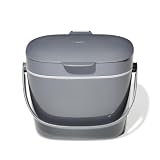
- Unique design keeps bags tucked inside for a neat look
- 1.75-gallon/6.62-liter capacity perfect for busy kitchens
- Smooth interior makes Bin easy to clean
- Odor-containing and pest-reducing since oxygen can flow through the soft-close lid
- Stay-open lid makes it easy to toss scraps in while you’re working
4. FCMP Outdoor IM4000: best accessible dual-chamber outdoor tumbler
The FCMP Outdoor IM4000 is a practical U.S.-market recommendation for people who want an enclosed backyard tumbler and easier turning than a stationary pile. Its dual-chamber layout lets one side finish while the other receives fresh material, so you do not have to empty the entire unit every time you add new scraps.
Reencle’s composting category guide identifies the IM4000 as an example of this format. The broader testing evidence supports the main tumbler trade-off: enclosed drums can improve pest separation and make aeration as simple as rotating the barrel, but they have limited batch capacity and can be awkward to load or empty.
Place the tumbler on firm, reasonably level ground with enough clearance to turn it and remove finished material. Confirm the current U.S. dimensions, capacity, price, and stock before purchase. A tumbler is not maintenance-free: the contents still need an appropriate balance of wet nitrogen-rich material and dry carbon-rich material.
Best match: a homeowner with outdoor space who wants easier turning and separation between batches.
5. Maze 180 Litre Compost Tumbler: best geared tumbler where available
BBC Gardeners’ World gave the Maze 180-liter tumbler a 4.5/5 score after garden testing. Its two chambers are paired with a geared crank and a locking mechanism, making the barrel easier to rotate than a large drum that must be pushed by hand.
The review reports approximately 35 centimeters of ground clearance, a 180-liter capacity, a recycled-plastic barrel, a zinc frame, and a three-year warranty. Assembly took about an hour in the test. The elevated design should make emptying easier than placing a drum directly on the ground, although the tall, bright-green appearance is visually conspicuous.
The Tool Desk
Outbyte Driver Updater FREEScan for outdated or missing drivers - takes under a minuteDriver Scan →Outbyte PC Repair FREERepair Windows errors before they cause bigger problemsFix Now →This is a strong design-led choice, but the cited availability is primarily through U.K. retail. Do not assume that a U.S. buyer can obtain the same model, warranty, delivery terms, or replacement parts. Check the current local listing and use the retailer’s stated capacity rather than relying on an older review.
Best match: a gardener in a market where it is sold who wants a geared, two-chamber tumbler.
6. Green Johanna 330 Litre Hot Composter: best versatile food-and-garden bin
BBC Gardeners’ World rated the Green Johanna 330-liter bin 4.5/5 after garden testing. It is designed for households that want one enclosed system for food waste and garden waste instead of maintaining separate containers.
The review says it accepts food and garden waste without pre-mixing, provides two lower access hatches, is made from 100% recycled plastic, and includes a three-year warranty. The lower hatches are useful when harvesting older material without dismantling the whole bin.
Free tools Windows power users keep installed
One-click scans. No signup required.
The word hot describes the intended composting approach, not a guarantee that every load will reach or maintain a high temperature. Moisture, aeration, particle size, carbon-to-nitrogen balance, and sufficient volume still matter. Current U.S. distribution and pricing also require verification; the cited review is U.K.-centric.
Best match: a household with enough outdoor space for a larger enclosed bin and a regular supply of both kitchen and garden material.
Rank #3

- Countertop Fit - The countertop compost bin measures 7.2 inches wide and 11.2 inches high, offering a slightly larger capacity while maintaining a compact cylindrical design that fits neatly on your countertop without taking up excessive prep space.
- Durable Build - Made with stainless steel, the composter resists scratching, cracking, and chipping, so it can handle onion skins, coffee grounds, and daily scraps without showing the wear.
- Stylish Design - With a sturdy, sleek design that complements most kitchen decor, the compost bucket with lid looks like it belongs on your counter, not tucked away out of sight. Its clean lines fit right in, whether your style is modern or classic.
- Odor Control - This kitchen compost bin with lid comes with charcoal filters that trap odors naturally, so food scraps can build up for a full week without any bad smell taking over your kitchen, no matter how close you get to trash day.
- Easy Care - Line the bottom of this small compost bin with newspaper or cardboard to absorb liquid, and drain excess moisture from food scraps before adding them. A quick weekly rinse with water, mild soap, or vinegar keeps things smelling fresh.
7. Suttons Modular Wooden Compost Bin: best large-capacity stationary bin
For a large garden producing substantial amounts of leaves, weeds, prunings, and other yard material, the Suttons Modular Wooden Compost Bin is the most capacity-focused choice here. BBC Gardeners’ World rated it 4.5/5 after garden testing and reported a 573-liter capacity.
The modular construction allows expansion, while removable planks provide access from multiple sides. It assembles without tools, and its cover is intended to increase internal heat. The test noted that the cover still lets in some rain, which can help prevent excessive drying but also means moisture remains dependent on weather and management.
A stationary wooden bin gives you volume and simplicity rather than rapid, hands-off processing. It needs a suitable patch of ground, takes longer to mature than a countertop appliance, and may need a second bay if you want to add fresh material while another batch finishes. The cited retail footprint is U.K.-centric, so verify local availability and the current specification.
Best match: a large garden that values capacity, modularity, and low purchase complexity over quick harvesting.
8. Blackwall 220 Litre Green Compost Converter: best budget stationary bin
BBC Gardeners’ World rated the Blackwall Green Compost Converter 4.3/5, making it a value pick rather than one of that review program’s 2026 Best Buys. The bin is made from 100% recycled materials, has an optional base plate, and carries a long warranty according to the review.
The low price comes with compromises. The test found it slower than the other garden bins because of its thin, non-ventilated construction. It also has only one access hatch, which makes harvesting and checking the lower layers less convenient.
That does not make it a poor choice. If your priority is to contain yard waste at a low upfront cost and you can wait for the material to mature, the Blackwall is credible. Do not buy it expecting rapid processing or especially convenient access.
Best match: a budget-conscious gardener with modest expectations about speed and access.
9. Worm Factory 360: best stackable vermicomposting system
The Worm Factory 360 is a recognizable option for vermicomposting, in which worms process suitable organic material and produce worm castings rather than a conventional hot compost pile. EPA recognizes vermicomposting as a home-composting method requiring a suitable bin, bedding, worms, and food scraps.
The stackable-tray format is useful when floor space is limited and you want to separate older material from newly added feedstock over time. It is also a living system: worms need appropriate moisture, bedding, airflow, and protection from temperature extremes. Feeding too much at once can create odors and conditions the worms cannot handle.
Evidence in the reviewed research is stronger for the vermicomposting category than for a new independent 2026 head-to-head test of this exact model. Treat the Worm Factory 360 as a recommended product example, not as a product personally tested by this publisher or as a universal substitute for an outdoor aerobic bin.
Best match: a gardener who specifically wants worm castings and is willing to manage an active biological system.
Rank #4

- Reuse your kitchen scraps and coffee grinds into our kitchen compost bin with the plastic inner pail and handle: Just put this small trash can on your kitchen countertop, throw away the food scraps (such as fruits, vegetables, coffee grounds, tea bags, egg shells, etc.) in it during cooking; 1.3 gallons offers enough space for temporarily collecting your organic kitchen and food waste for several days, without taking up too much space.
- The plastic inner pail comes out easily, and the little handle on the inner pail is thoughtful to make it a breeze to throw kitchen scraps into your compost tumbler outdoors!
- The countertop compost bucket with lid comes with 2 active carbon filters to prevent odor leaking: The charcoal filter blocks odor naturally and effectively, leaving your kitchen smelling fresh. Put the lid on, and it becomes the perfect farmhouse kitchen decor without any unpleasant smells. Tips: The period of use of the carbon filter is about 4 months to 6 months. Please remember to replace it in time.
- Long-lasting kitchen decor will never rust: The plastic inner pail isolates the scraps from contact with the outer metal bucket, so it will be more durable and will not crack, rust, or corrode. The cream beige color and classic farmhouse pattern make it a unique fit for any kitchen, whether rustic, minimal, boho, or country.
- Our kitchen compost bin considers aesthetics and practicality, and this trash can is a high-quality product that will accompany you in your actions of everyday life. This would also make a wonderful conscious gift.
10. Bokashi One Bucket: best apartment-friendly fermentation system
Bokashi One is a useful solution when an apartment, small kitchen, or food stream makes conventional backyard composting difficult. Its official instructions describe placing kitchen waste in a sealed bucket and sprinkling Bokashi One Mix between layers.
The terminology matters: Bokashi is fermentation or pre-composting, not finished aerobic compost produced inside the bucket. After the fermentation stage, the material normally needs burial in soil, incorporation into another composting system, or another finishing step before it becomes a stable soil amendment.
Its appeal is the sealed indoor collection stage and the ability to handle some kitchen materials that many conventional backyard piles do not readily accept. That does not mean every food, liquid, packaging item, or waste stream is appropriate. Follow the current product instructions and check the rules of the destination composting program before adding anything unusual.
Best match: an apartment dweller or household that needs indoor fermentation and has a plan for finishing the material afterward.
11. Squeeze Master Large Compost Tumbler Bin: best tested two-chamber value alternative
Reviewed tested the Squeeze Master as an outdoor, two-chamber tumbler with a total capacity of 43 gallons. During its two-month test, the unit rotated smoothly, stood above the ground, and maintained warmer internal conditions than the surrounding outdoor air.
The same test found meaningful drawbacks: assembly was difficult, the doors were small, and the unit needs reasonably level ground. Small openings can make adding scraps and removing finished compost more tedious than the capacity figure suggests.
Free tools Windows power users keep installed
One-click scans. No signup required.
It is a defensible alternative for buyers who want a larger two-chamber tumbler without moving to a premium insulated system. The evidence is a two-month test, not a full seasonal or year-long assessment, and climate can affect composting results. Reviewed specifically cautioned that outdoor conditions influence performance.
Best match: a homeowner who wants a tested, elevated tumbler and can tolerate a difficult setup and narrow access doors.
What the testing actually tells you
These products should not be assigned one combined score. A countertop-caddy test measures odor containment, bag fit, opening-related odor bursts, materials, and disposal ergonomics. It cannot establish how quickly a backyard pile produces finished compost.
Bon Appétit’s 2026 caddy testing used generic 1.3-gallon compost bags, a controlled tea-tree-oil scent test, and simulated disposal while recording ease and timing. That is useful evidence for kitchen storage, but it is not evidence that either caddy composts food.
Reviewed tested indoor and outdoor bins for two months. Outdoor bins were placed in comparable sunlight; indoor models were placed on a countertop or beside the garbage bin, with indoor locations rotated weekly. Testers used varied food and yard materials and measured interior temperature daily. The publication cautioned that climate affects results.
BBC Gardeners’ World says its team used garden bins for a year and scored design, ease of use, compost quality, and value. Its 2026 Best Buy threshold was 4.5/5 or higher. That explains why the Maze, Green Johanna, and Suttons models earned the distinction while the Blackwall remained a budget recommendation at 4.3/5.
Which type of composter should you buy?
| If you need… | Choose… | Why |
|---|---|---|
| A clean place to hold scraps indoors | A countertop caddy | It controls storage and disposal odors without adding a processing appliance |
| Indoor, year-round biological processing | Reencle Prime | It uses a microorganism-based process, but still needs electricity, maintenance, and curing |
| Easy turning outdoors | A dual-chamber tumbler | One chamber can finish while the other receives fresh material |
| High volume at low purchase cost | A stationary bin | Large bins accommodate more yard waste, though they mature more slowly |
| Worm castings | A stackable worm bin | Vermicomposting produces a different output and requires active worm care |
| A sealed apartment pre-processing step | Bokashi | Fermentation works indoors, but the material still needs finishing |
| No yard or no interest in managing a system | Municipal or community collection | Someone else handles the processing; availability depends on location |
How to make any outdoor bin work better
- Balance browns and greens. Browns are carbon-rich materials such as dry leaves and many forms of shredded paper or cardboard. Greens are nitrogen-rich materials such as fresh grass clippings and food scraps. A pile made mostly of wet food scraps commonly becomes compacted and smelly.
- Cover food scraps with browns. Burying or covering fresh scraps helps limit odors and reduces the attraction of rodents and other pests.
- Maintain moisture without saturation. EPA’s practical comparison is a damp, wrung-out sponge. A dry pile slows down; a waterlogged pile loses air and can become anaerobic.
- Keep oxygen moving. Turn a tumbler, mix a stationary pile with a garden fork, or follow the aeration instructions for the particular system. A secure lid and, where appropriate, a base or floor can help reduce pest access.
- Give the finished material time to cure. EPA says a well-maintained backyard pile may be ready in roughly three to five months, while an untended pile may take about a year. Those are broad conditions-dependent estimates, not guarantees for every bin or climate.
- Use the output only when it is finished. Finished compost should be biologically stable and appropriately cured before it is mixed into soil. Warm, wet, recognizable, or actively decomposing material is not ready simply because it came from a bin.
For a backyard setup, a compost thermometer, garden fork, and compost sifter can make monitoring, aeration, and harvesting easier. They are optional for a basic pile but useful when you want more predictable results.
Best Value

- Effortless Recycling: Revolutionize your kitchen with KIBAGAs’ countertop compost bin, designed for recycling food & other organic waste. Seamlessly support eco-consciousness and contribute to nutrient-rich soil for plants, while fostering a clean kitchen space
- Odorless Composting: The compost bin for the kitchen comes with a built-in charcoal filter compartment ensuring odor-free composting and lid air holes providing necessary aeration. With two filter included, you are well equipped. Embrace the fresh vibes!
- Practical Premium Design: Built to last with rust-free, powder-coated carbon steel, the kitchen compost bin for your countertop elevates your recycling game. Easy to carry with its wooden handle and a breeze to clean, it's a durable, handy ally in daily life
- Spacious Efficiency: Compact yet roomy, the 10.2x7” composting bin boasts a 1.1-gallon volume, providing ample space without hogging your kitchen countertop. Simply add your food scraps throughout the week, keeping your kitchen tidy, eco-friendly & odorless
- Upgrade Your Kitchen Aesthetic: Spruce up your kitchen with the compost bin's timeless sage design, jazzed up by a dash of modern flair in its wooden handle and knob. Uniting style and functionality, it's a must-have for your eco-chic kitchen
Common mistakes and troubleshooting
| Symptom | Likely cause | Correction |
|---|---|---|
| Strong rotten or sour odor | Too much wet nitrogen-rich material, poor airflow, or excess moisture | Add dry browns, mix or turn the material, and protect it from continued soaking |
| Almost no breakdown | Material is too dry, too cold, too coarse, or rarely mixed | Add modest moisture, chop large pieces, add suitable greens, and improve aeration |
| Flies or rodents | Exposed food scraps, an unsecured container, or unsuitable food waste | Cover scraps with browns, use a secure lid or floor where appropriate, and follow the bin’s accepted-material guidance |
| Tumbler is difficult to turn | Overfilling, wet compacted contents, or an uneven base | Reduce the load, add dry material, and confirm that the unit is on level ground |
| Indoor appliance output is still recognizable | Insufficient processing time, unsuitable feed rate, or a required curing stage not completed | Follow the manufacturer’s cycle and curing instructions; do not treat dried or ground scraps as finished compost automatically |
| Bokashi material is not soil-ready | Fermentation has been mistaken for finished compost | Move it to soil or another appropriate finishing system and allow the required finishing period |
What should not go into a composter?
There is no universal accepted-material list. Do not assume that a product accepts meat, dairy, pet waste, compostable packaging, diseased plants, liquids, or large bones. Check the current instructions for the exact model and the rules of your municipal or community program.
What’s actually slowing this PC down?
Pick the symptom - the matching free tool is one click away.
Even when a system technically handles a material, the destination matters. A backyard pile, worm bin, Bokashi bucket, electric processor, and municipal facility may use different temperatures, microbes, containment, and screening processes. If the instructions are unclear, leave the material out or ask the operator before adding it.
Our verdict
For most households, the right answer is not the most elaborate machine. Buy the Joseph Joseph if you need a well-designed indoor holding container and do not mind liners; choose the Epica if you want a reusable bagless caddy. Choose the FCMP IM4000 when you have outdoor space and want a straightforward two-batch tumbler. Choose a large stationary bin when volume and low ongoing complexity matter more than speed.
Reencle Prime is the most compelling indoor option for readers who specifically want biological processing, but its manufacturer claims should not be confused with independent testing or instant finished compost. Worm Factory 360 and Bokashi One are excellent for their respective methods, provided you understand that worm castings and fermented material are not the same output as conventional finished compost.
If you have no yard, no finishing space, or no desire to manage moisture and aeration, find a local compost pickup service or community drop-off instead. The best system is the one that matches your available space, accepted materials, climate, time, and realistic destination for the finished material.
Frequently Asked Questions
Which products on this list actually make compost?
The outdoor tumblers and stationary bins are conventional aerobic composting systems when they are correctly managed and allowed to finish. Reencle Prime is marketed as an indoor biological processor, but its processing speed and readiness claims are from the manufacturer and its output still requires the stated curing process. The Joseph Joseph and Epica products only collect scraps, while Bokashi ferments material that needs a separate finishing stage.
Is Reencle Prime the same as a food dehydrator?
Not according to Reencle’s product description, which says Prime uses microorganisms, paddle rotation, forced air, and heat. However, EPA distinguishes compost from output that is merely ground and dehydrated. Treat Reencle’s biological and timing claims as manufacturer claims, and wait for the required curing process before calling the output finished compost.
Can Bokashi go directly on garden plants?
Bokashi One’s method produces fermented food waste, not immediately finished aerobic compost. The material normally needs to be buried in soil, incorporated into another composting system, or otherwise finished. Follow the current Bokashi instructions and keep it away from plants until the finishing stage is complete.
What is the best composter for an apartment?
A countertop caddy is best if you have municipal pickup or a nearby drop-off. Bokashi One is better if you want to process food waste indoors and have access to soil or another system for finishing the fermented material. A worm bin can also work indoors, but it requires ongoing care and stable conditions for the worms.
The Tool Desk
Outbyte Driver Updater FREEFix the driver behind crashes, sound loss and screen glitchesFind Drivers →Outbyte PC Repair FREEClear out junk files and repair common Windows errorsFree Scan →Why are there no fixed prices in this guide?
Retail prices, sellers, stock, warranties, replacement parts, and regional availability change frequently. Several reviewed products are primarily sold in the U.K., so a published U.K. price would be misleading for U.S. readers. Check the current listing for your country immediately before buying.
The Bottom Line
Bottom line: choose a caddy for collection, a tumbler for easier backyard turning, a stationary bin for volume, Reencle Prime for indoor biological processing with realistic curing expectations, a worm bin for castings, or Bokashi for apartment-friendly fermentation. Do not buy based on the word composter alone: confirm what the machine or bin produces, what it accepts, how long the process takes, and where the material must finish.
Quick Recap
Product prices and availability are accurate as of the date/time indicated and are subject to change. Any price and availability information displayed on Amazon at the time of purchase will apply.

