Trumpet vine (Campsis radicans) is easy to grow but difficult to restrain. It can produce vivid summer flowers that attract hummingbirds, yet a mature vine may reach roughly 30 to 40 feet, spread beyond its support, send up shoots from underground runners, and reseed itself. Plant it only where you have full sun, a permanent heavy-duty support, room for expansion, and a willingness to prune and remove suckers every year.
This guide covers how to choose a safe site, plant and establish the vine, train it on a strong structure, encourage flowering, and control unwanted growth.
As an Amazon Associate I earn from qualifying purchases.
Is trumpet vine right for your garden?
Trumpet vine, trumpet creeper, and trumpetvine usually refer to Campsis radicans, a woody, deciduous perennial vine native to the central and eastern United States. It climbs with aerial rootlets and can cover a large arbor, pergola, or substantial trellis. The tubular flowers may be orange, red, yellow, or apricot, depending on the species or cultivar.
Its benefits are substantial: summer flowers provide nectar for hummingbirds and other pollinators, and the plant can serve as a host for the plebeian sphinx moth. Its drawbacks are equally important. Underground runners can produce shoots away from the original plant, and mature vines can become heavy enough to overwhelm light supports. The rootlets may cling to wood, masonry, fences, and other surfaces.
#1 Best Overall

- Versatile garden arch, perfect for event, wedding, and garden decoration. A must-have for your special occasions
- Approximately 55 inches Width x 94 inches Height, this real size arbor creates a stunning entrance to your garden, patio or walkway
- Easy assembly and disassembly, praised by customers. Suitable for both indoor and outdoor use
- Decorate with vibrant flowers, tulle, balloons, foliage, lights or anything else to create a beautiful arch backdrop stand
- Not just a garden trellis for climbing plants, but also a balloon arch stand for birthdays and a decorative arch for weddings
For those reasons, trumpet vine is generally a poor choice for a small garden, a light decorative trellis, or a property where regular maintenance is not possible. North Carolina State Extension also rates it as highly flammable, so do not plant it within a home’s defensible space where vegetation flammability is a concern. Check local and state rules before planting because invasive-plant designations and restrictions vary by location. See the NC State Extension plant profile for additional identification and suitability information.
Use this site checklist
- Sun: Choose full sun whenever possible. The foliage tolerates partial shade, but flowering is usually better with at least six hours of direct sunlight.
- Support: Provide a permanent arbor, pergola, or heavy-duty trellis. Avoid attaching it to siding, gutters, rooflines, utility lines, or small trees.
- Soil: Select well-drained ground. Trumpet vine tolerates clay, sand, acidic soil, neutral soil, and alkaline soil, and it becomes fairly drought tolerant after establishment, but it should not sit in continuously flooded soil.
- Containment: A mowable boundary, pavement edge, or other inspectable area makes it easier to spot and remove runners. Leave room around the plant for pruning access.
- Maintenance: Expect seasonal pruning, sucker removal, and occasional redirection of stems. Do not treat this as a plant-and-forget screen.
Before buying, compare the mature size and spread with the space available. If you do purchase online, verify the plant’s hardiness, cultivar name, mature dimensions, seller identity, and shipping condition rather than assuming every listing is correctly labeled.
trumpet vine plant or Campsis radicans plant listings can be a starting point, but availability and cultivar authenticity need to be checked at the time of purchase.
When to plant trumpet vine
In most U.S. gardens, plant container-grown trumpet vine in spring or fall. Avoid frozen soil, extreme heat, and periods of drought. Spring gives a new plant a long growing season to establish before winter. Fall planting can also succeed where the soil remains workable and roots have time to develop before severe freezing.
In warm U.S. climates corresponding broadly to USDA Zones 7 through 10, some guidance lists year-round planting. Even there, avoid planting when heat or water stress would make establishment difficult. Local climate, irrigation, and the plant’s condition matter more than a calendar date.
How to plant trumpet vine: step by step
1. Install the support first
Build or install the arbor, pergola, or trellis before putting the plant in the ground. This prevents later disturbance of the root system and allows you to guide young stems immediately.
Choose a structure designed to carry a mature woody vine, not merely a thin decorative framework. A support that seems adequate for a small nursery plant may fail as stems thicken and the vine accumulates foliage and wet-weather weight.
The Tool Desk
Outbyte PC Repair FREERepair Windows errors before they cause bigger problemsFix Now →Outbyte Driver Updater FREEScan for outdated or missing drivers - takes under a minuteDriver Scan →Useful preparation includes a heavy-duty garden trellis or a properly sized arbor for climbing vines. Check dimensions, anchoring, materials, and load suitability before purchase; no generic product should be assumed safe for a mature trumpet vine.
2. Select a healthy plant
Choose a container plant with vigorous stems, healthy foliage, and a root ball that is moist but not foul-smelling or waterlogged. Avoid plants with severe pest damage, extensive dieback, or a completely dried-out root ball.
3. Dig a broad, shallow hole
Make the hole about twice as wide as the container root ball and no deeper than the root ball. The extra width gives roots access to loosened surrounding soil without encouraging the plant to settle too deeply.
Rank #2

- Versatile garden arch, perfect for event, wedding, and garden decoration. A must-have for your special occasions.
- Approximately 55 inches Width x 94 inches Height, this real size arbor creates a stunning entrance to your garden, patio or walkway.
- Easy assembly and disassembly, praised by customers. Suitable for both indoor and outdoor use.
- Decorate with vibrant flowers, tulle, balloons, foliage, lights or anything else to create a beautiful arch backdrop stand.
- Not just a garden trellis for climbing plants, but also a balloon arch stand for birthdays and a decorative arch for weddings.
4. Set the plant at the correct depth
Slide the plant from its container and place it so the top of the root ball is level with the surrounding soil. In poorly drained locations, it may be set slightly above the surrounding grade. Do not bury the stem or crown deeper than it was growing in the pot.
Recommended Free Tools
If roots are circling tightly around the outside of the root ball, loosen a few gently with your fingers. Do not tear the root system apart unnecessarily.
5. Backfill with native soil
Return the excavated soil around the root ball and firm it lightly. Trumpet vine is adaptable and normally does not need highly enriched soil. Excess fertility—especially high nitrogen—can produce more leaves, stems, and runners without improving flowering.
6. Water thoroughly
Soak the planting hole after backfilling so soil settles around the roots. During the first growing season, keep the soil consistently moist but not waterlogged. Water deeply when the upper soil begins to dry rather than applying frequent shallow sprinkles.
7. Add mulch correctly
Apply a shallow layer of organic mulch over the root zone to moderate soil moisture and temperature. Keep mulch away from the woody stem to reduce the risk of persistent dampness and decay. Mulch conserves moisture; it does not stop underground runners.
Quick wins for a faster PC:
Scan for outdated or missing drivers - takes under a minuteDriver Scan →Repair Windows errors before they cause bigger problemsFix Now →Fix the driver behind crashes, sound loss and screen glitchesFind Drivers →8. Guide the young stems
Use soft ties to direct young stems toward the support. Leave room for stems to expand, and inspect ties as the plant grows. Do not let stems press against siding, roof materials, gutters, or utility equipment.
For routine training and maintenance, soft plant ties are preferable to wire or rigid bindings that can girdle expanding stems.
First-year care: water, fertilizer, and inspection
Watering
Trumpet vine becomes relatively drought tolerant once established, but supplemental water during prolonged dry weather can support growth and flowering. Newly planted vines need closer attention because their roots have not yet explored the surrounding soil.
Check the soil below the mulch before watering. Water deeply when the upper layer begins to dry, then allow excess water to drain. Continually saturated soil can damage roots and is a poor site condition for this vine.
Rank #3

- 🪴【Plant Trellis for Climbing Plants Indoor and Outdoor】:2 Pack of uniquely designed plant trellis 30 inches for taller climbers, and can be easily disassembled to 15 inches for smaller plants, also possible to use two stands for one plant to meet your multiple potted needs and provide the structure your indoor climbing plants need to develop. Let your potted vine plants become the decorations of your home.
- 🪴【Sturdy Garden Trellis for Climbing Plants】:The climbing plant supports are made of high-quality metal material and crafted from native iron with distinct patterns.Each support is hand-welded on both sides, powder-coated and treated with a rust-proof coating to ensure long-term use without rusting or damage.Enhanced thickness ensures the stability of the trellises, providing you with a high-quality metal plant trellis for climbing plants, indoor and outdoor.
- 🪴【Easy to Install and Maintain Trellis】:10 second quick installation, no tools required.Each trellis features two pieces that design allows for free combination and use, catering to different plant-growing needs. Easily expand or resize the plant trellis as your plants mature, ensuring the perfect fit for every stage of their development.Even novice gardening enthusiasts can easily get started
- 🪴【Perfect Support】: Our plant trellis is ideal for small to medium climbing and trailing plants, it can fostering the healthy growth of climbing plants, supports various climbing plants, promoting upward growth and maximizing sunlight exposure, ideal for training jasmine, honeysuckle, wisteria, and a functional grow guide for peas, beans, and other edibles.
- 🪴【Long Lasting Sales Service from JJSHUANL】:The thickness of our potted plant trellis are thickened and upgraded versions to ensure the firmness of the trellis and give your potted plants the support they need to help them flourish in the potted,so there is no need to worry about the quality of this flower pot support.We are committed to providing you with higher quality gardening products and a better way of life.
Fertilizing
Routine fertilizer is usually unnecessary in average soil. If flowering is poor, do not automatically apply a high-nitrogen product: nitrogen may intensify foliage and runner production while doing little to encourage flowers. If a soil test identifies a deficiency, correct that specific deficiency instead of applying strong general fertilizer.
Pests and diseases
Trumpet vine generally has few serious pest or disease problems, although leaf spot, powdery mildew, planthoppers, scale, whiteflies, and other minor issues can occur. Improve air circulation, avoid unnecessary overhead irrigation, and remove badly affected leaves. Identify the pest or disease before treating, and intervene only when the damage justifies it.
Training trumpet vine on an arbor or trellis
Start directing stems while they are young. Select a few strong stems to become permanent framework branches and tie them loosely to the support. Remove or redirect stems that head toward roofs, gutters, siding, paths, electrical equipment, or nearby trees.
The aerial rootlets may help the vine cling, but they do not make an unsuitable support safe. They can attach to masonry and wood and may make later removal difficult. Keep the plant on a structure that you can inspect and repair.
Do these 3 things before closing this tab:
1Repair Windows errors before they cause bigger problems2Fix the driver behind crashes, sound loss and screen glitches3Clear out junk files and repair common Windows errorsDo not allow the vine to climb into a small tree. A mature trumpet vine can add considerable weight and may shade, girdle, or physically overwhelm the tree as it spreads.
How and when to prune trumpet vine
Trumpet vine flowers on new growth. Late-winter or early-spring pruning is therefore compatible with flowering because the plant will produce flowering shoots during the coming growing season. The goal is not to preserve every old stem; it is to maintain a manageable framework and stimulate controlled new growth.
A practical pruning method
- Choose several permanent framework stems that run along the support.
- Remove dead, damaged, crossing, weak, or badly positioned stems.
- Cut side shoots back to a short spur or a small number of buds on the framework, rather than allowing long side branches to form an uncontrolled tangle.
- Remove shoots heading toward structures, paths, trees, or utility lines.
- Cut suckers at ground level as soon as they appear. Dig out the crown or runner section when practical.
- Remove seed capsules if you want to reduce self-seeding.
Pruning is also a containment tool. A mature colony may require repeated work throughout the growing season, not just one annual cut. Wear bypass pruning shears for clean cuts on manageable stems, and use long sleeves and gardening gloves when handling foliage or sap.
Why trumpet vine is not flowering
A newly planted vine may take several years to flower while it establishes. If an older plant produces abundant leaves but few flowers, check these likely causes:
| Possible cause | What to check | Practical response |
|---|---|---|
| Too little sun | Does the vine receive at least six hours of direct sun? | Prune nearby growth if appropriate, or relocate a young container plant. Avoid moving an established mature vine unless necessary. |
| Too much nitrogen | Have you applied lawn fertilizer, manure, or a high-nitrogen plant food? | Stop unnecessary nitrogen applications and use a soil test before adding nutrients. |
| Insufficient water | Has the plant experienced prolonged drought, particularly while young? | Water deeply when the upper soil dries, while ensuring the site drains. |
| Immaturity | Is the plant still establishing? | Maintain the support and basic care; flowering may take several years. |
| Wrong pruning timing or severity | Were flowering shoots repeatedly removed during the growing season? | Use dormant-season pruning and preserve the framework needed for new flowering growth. |
Late-winter or early-spring pruning itself should not prevent flowering, because blooms develop on new growth. The bigger risk is uncontrolled or poorly timed cutting that removes the new shoots before they mature.
Rank #4
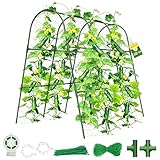
- 【U-Shape Stability Structure 】 U-frame trellis is more stable than A-frame trellis. Allowing you to plant a row on both sides. The arch design maximizes the garden space.
- 【Rustproof Garden Trellis】 Different from conventional metal frames, The stainless steel core has a plastic coating on the exterior. This effectively isolates it from the air, reducing the possibility of oxidation. It also protects the plants from being burned
- 【Easy to Use 】 Upgrade cross-shaped connector is easier to install than the metal clasp connector. Hassle-free to assemble and disassemble,You can adjust it to the height and length you like.
- 【Package Detail】Super High Cucumber Trellis X1(47.2x47.2"X21.6"),Garden clips X20,Leaf Ties X100,Twist Tie X1,Trellis NettingX1,Manual X1.
- 【Widely Application】Cucumber trellis for the garden provides support for vegetables such as cucumbers, peas, beans, tomatoes, flowers, pumpkin, melon, beans, and other liana crops.
How to control suckers, runners, and seedlings
Trumpet vine can spread in two main ways: underground runners may produce shoots away from the parent plant, and seed capsules may release wind-dispersed seeds. Inspect the area around the vine regularly, especially along lawn edges, pavement, beds, and fence lines.
For a small or newly appearing infestation
- Cut every unwanted shoot close to ground level.
- When soil is workable, dig out as much of the crown and runner system as practical.
- Remove new shoots promptly instead of allowing them to develop leaves and restore energy to the root system.
- Remove seed capsules before they mature if self-seeding is a concern.
- Do not compost seed-bearing pods or root fragments unless your composting system reliably destroys them.
Repeated cutting can reduce the plant’s energy over time, but it is not an instant solution. Do not indiscriminately cultivate or rototill an unwanted patch: chopping runners can spread viable pieces and create more shoots.
For a large or persistent infestation
Extension weed-management guidance describes cut-stem applications of systemic herbicides such as glyphosate or triclopyr as possible options for difficult infestations. These treatments are highly dependent on the product formulation, location, legal label, desirable plants nearby, and the presence of water.
What’s actually slowing this PC down?
Pick the symptom - the matching free tool is one click away.
Use only a product legally labeled for the specific site and follow the current label exactly. Protect desirable vegetation and water, avoid drift, and do not assume that a recommendation for one state, formulation, or landscape applies everywhere. For location-specific guidance, consult the Texas A&M AgriLife trumpet-vine control guidance and your local extension service.
Independent reader supportYour contribution helps us test, update, and keep practical guides available for everyone.Propagating trumpet vine
Trumpet vine can be propagated from seed and root cuttings, and natural spread commonly occurs through runners and self-seeding. Propagate only if you have a site where the resulting vine can be contained.
Seed-grown plants may not reproduce the exact flower color, growth habit, or other traits of a named cultivar. If predictable ornamental characteristics matter, a nursery plant or a properly identified root cutting is generally a better choice. If you choose Campsis radicans seeds or trumpet creeper seeds, treat the resulting plants as variable rather than guaranteed copies of the parent.
Do not distribute unwanted root fragments or seedlings to another gardener without explaining the plant’s spreading behavior. A free cutting can become a long-term maintenance problem in an unsuitable yard.
Windows Errors? Fix Them Before They Spread
Repair common Windows errors and clear accumulated junk for a smoother, more stable PC - no reinstall needed.Free scan · no reinstallOutdated Drivers Are Slowing You Down
One free scan finds every outdated or missing driver and matches the right update for your exact hardware.Free scan · exact hardware matchCultivars to consider
Commonly listed trumpet-vine cultivars include:
- ‘Flava’: yellow flowers.
- ‘Atropurpurea’: dark red flowers.
- ‘Apricot’: apricot-toned flowers.
- ‘Crimson Trumpet’: red flowers.
- ‘Indian Summer’ and ‘Judy’: named selections with their own reported flower characteristics.
- Campsis × tagliabuana ‘Madame Galen’: a widely grown hybrid often described as having large apricot-colored flowers.
Availability, mature size, hardiness, flower color, and spread can vary by nursery and region. Verify the specific plant’s label and performance information before buying. A regional native-plant nursery may be useful when you need local hardiness and shipping guidance; buy trumpet vine locally only after confirming the nursery’s plant identity and site suitability.
Safety and wildlife considerations
The flowers are valuable to hummingbirds and pollinators, but wildlife benefits do not remove the plant’s management burden. North Carolina Extension describes trumpet vine as low-severity poisonous to humans and reports that sap may cause minor redness or swelling; some people also experience itching or dermatitis after contact with the leaves.
Best Value

- 🌑[Plant Growth Support]:Garden plant trellis are committed to helping your indoor for potted plants and adds to the natural beauty. As plants grow, the houseplant trellis takes the form of a ladder to help your plant climbing and growing.
- 🌑[Natural Bamboo]: Made of natural bamboo,flexible and durable.Natural Bamboo Trellis is the perfect addition to any garden seeking a touch of natural charm. Its ladder-like design provides ample space for your climbing plants to grow, while the bamboo construction ensures it will withstand the elements for years to come.
- 🌑[Sturdy and Lightweight]: Say goodbye to flimsy and unattractive trellises and hello to our Natural Bamboo Trellis! It's not only robust and long-lasting, but also blends effortlessly with the natural surroundings of your garden.
- 🌑[Easy to Use]: Just place the garden ladder trellis in the potted plants. This sturdy and eco-friendly ladder trellis is the perfect support system for your climbing plants to grow and flourish.
- 🌑[Wide Applications]:Suitable for climbing plants, flowers, vines, and vegetables, such as ivy, wisteria, morning glory, peas, jasmine, cucumber, tomato, clematis, etc., for a variety of climbing plants provide support.
Wear gloves and long sleeves when pruning or propagating, wash exposed skin afterward, and keep plant material away from children and pets that may chew it. Seek appropriate medical or veterinary advice if exposure causes a concerning reaction; this article is not a substitute for professional care.
Before planting, balance the habitat value against vigorous growth, suckering, self-seeding, potential surface attachment, and the high-flammability rating noted above. If the site is small, adjacent to structures, or difficult to monitor, a less aggressive flowering vine may be a better choice.
Free tools Windows power users keep installed
One-click scans. No signup required.
Trumpet vine maintenance calendar
| Season | Tasks |
|---|---|
| Spring | Finish dormant pruning before vigorous growth; tie young stems to the support; check for suckers; water new plants as the soil dries. |
| Summer | Watch for flowering, redirect stems away from structures, remove suckers and seed capsules, and provide supplemental water during prolonged drought. |
| Fall | Continue inspecting for runners and seedlings. In suitable climates, plant container specimens while soil remains workable and moisture can be maintained. |
| Winter | Use the dormant period to select framework stems, remove unwanted growth, inspect the support, and plan any needed repairs before the next growing season. |
Frequently Asked Questions
How fast does trumpet vine grow?
It is an exceptionally vigorous vine and can eventually reach roughly 30 to 40 feet when supported. The rate varies with climate, sun, water, soil, and plant age, but its vigor is why a strong support and regular containment are essential.
Will trumpet vine damage a house?
It should not be trained onto siding, gutters, rooflines, or other building components. Its aerial rootlets can cling to wood and masonry, and stems may reach protected or difficult-to-access areas. Keep it on a separate, permanent structure that can carry a mature woody vine.
Can trumpet vine grow in shade?
The foliage can tolerate partial shade, but flowering is usually best with at least six hours of direct sunlight. A shaded plant may produce vigorous leaves with relatively few flowers.
Is trumpet vine invasive?
Its legal status varies by location, but it is a vigorous spreader that can escape through underground runners and self-seeding. Check local rules and plan for routine sucker and seedling removal regardless of its formal designation in your area.
Should trumpet vine be cut back in the fall?
The main structural pruning is generally best done in late winter or early spring because flowers form on new growth. Remove hazardous or unwanted stems whenever necessary, but avoid unnecessary heavy cuts during the growing season if you want to preserve developing flowering growth.
The Bottom Line
Plant trumpet vine only when you can provide full sun, a strong standalone support, adequate establishment water, and ongoing pruning. It rewards that care with dramatic summer flowers and hummingbird activity, but its runners, seedlings, weight, and surface-clinging roots make containment part of the planting plan—not an optional extra.
Quick Recap
Product prices and availability are accurate as of the date/time indicated and are subject to change. Any price and availability information displayed on Amazon at the time of purchase will apply.

