Some links on this page are affiliate links: if you buy through them we may earn a commission, at no extra cost to you.
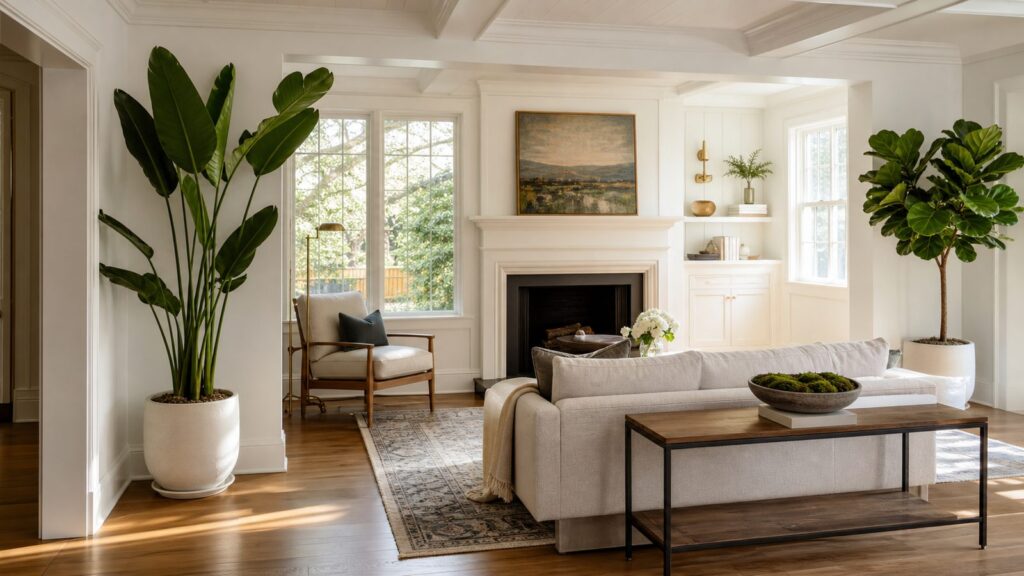
Tall houseplants add drama because they solve a real design problem: most rooms have furniture at knee, waist, and eye level, but very little that carries the eye upward. A 5- to 8-foot indoor tree can soften new drywall, make a tall foyer feel intentional, balance a large sectional, or bring life to a sunroom after a remodel.
The best tall houseplant is not simply the prettiest one. It is the plant that fits the room’s light, ceiling height, walking clearance, HVAC layout, floor finish, and maintenance habits. On our job sites, we think about large plants the same way we think about built-ins, lighting, and furniture: measure first, protect the surfaces, and make sure the finished space still works.
As an Amazon Associate I earn from qualifying purchases.
Free tools Windows power users keep installed
One-click scans. No signup required.
For 2026 budgets in the United States, expect a wide range. A smaller big-box houseplant may cost about $30 to $100, with many common houseplants listed from roughly $5 to $102 depending on size and store availability. A delivered 2- to 4-foot plant commonly lands around $70 to $150. A larger designer plant in a decorative planter can run about $350 to $800. Premium 7- to 8-foot statement specimens can exceed $1,200 in limited delivery markets before you account for delivery difficulty, planter upgrades, or plant care services.
Start With the Room, Not the Plant
A tall plant should look like it belongs to the architecture. Before buying anything, measure five things: ceiling height, available floor footprint, planter diameter, expected leaf spread, and walking clearance. A plant that looks perfect in a nursery can become a daily nuisance if it brushes a hallway, blocks a window latch, or crowds a stair landing.
Popular on Amazon

- Magic of 12 Inch Pots for Plants: With a 12-inch diameter and 9.4-inch height, this spacious 12 inch plant pot is tailor-made for your indoor oasis. Its universal size accommodates larger green wonders or a delightful mix of smaller plants. Elevate your botanical haven with our elegant 12 inch planter
- Real Ceramic: Expertly crafted from top-notch materials, our plant pots indoor surpass faux-ceramic options, like fiber stone, ensuring unmatched durability. Resilient against fading, deformation, or rusting, our ceramic pots for plants withstand prolonged exposure to wind and sunlight. Rest assured, your plants will flourish in style for years to come (Plant not included)
- Thoughtful Accessories: Our planters for indoor plants include drainage hole net and saucers, giving you full control; Let roots enjoy moisture while avoiding excess water; Seal with a saucers to prevent leaks or use a mesh pad to retain soil and provide optimal ventilation (Plant not included)
- A Planter for Every Plant: Our planters perfect for succulents, herbs, flowers, snake plants, and more! Embrace the beauty of nature indoors or outdoors, transforming your patio or garden into a lush oasis; Elevate your botanical experience with our versatile and stylish flower pots today
- Cleaning is a Breeze: The smooth ceramic surface of our indoor plant pots not only adds a touch of sophistication to any space but also offers unparalleled convenience; With just a soft damp cloth, you can effortlessly wipe away any dirt or stains, ensuring your indoor plant pots always look fresh and new
A practical sizing rule: for a dramatic corner, the installed plant height should usually be about one-half to two-thirds of the wall height. In an 8-foot room, a 4- to 5.5-foot plant is often enough. In a 10-foot room, a 6- to 7-foot plant can look balanced. In a two-story foyer or vaulted great room, one 7- to 9-foot specimen may work better than several smaller plants scattered around the room.
The planter matters almost as much as the foliage. A top-heavy plant in a small decorative pot looks temporary and can tip more easily. For a 5- to 6-foot plant, we typically like a finished planter in the 14- to 20-inch diameter range, depending on the nursery pot and leaf spread. For a 7- to 8-foot plant, a 20- to 24-inch planter often looks more proportionate, but weight and floor protection become more serious.
Outdated Drivers Are Slowing You Down
One free scan finds every outdated or missing driver and matches the right update for your exact hardware.Free scan · exact hardware matchWindows Errors? Fix Them Before They Spread
Repair common Windows errors and clear accumulated junk for a smoother, more stable PC - no reinstall needed.Free scan · no reinstallLight is the make-or-break variable. In most U.S. homes, south-facing windows provide the strongest light, east and west exposures are moderate, and north-facing windows are low light. Tall plants placed 8 to 12 feet away from a window may look good for a few weeks and then decline unless the room is very bright or you add supplemental lighting. Grow lights commonly run 10 to 16 hours per day; 12 to 14 hours is a practical default for many indoor plants.
The 9 Best Tall Houseplants for Drama
These nine plants earn their place because they have real design presence and can work in normal homes when matched to the right conditions. Some are forgiving. Some are not. The difference usually comes down to light, watering consistency, drafts, and whether the homeowner bought the right size for the room.
1. Fiddle Leaf Fig
The fiddle leaf fig is popular for a reason: its large, upright leaves read almost like sculpture. It works best against a blank wall, beside a fireplace, near a large window, or behind a low sofa where the foliage can rise above the furniture.
Typical purchase sizes range from 3 to 6 feet, with mature indoor plants often reaching 6 to 10 feet if conditions are steady. For an immediate statement, a 5- to 6-foot tree is the sweet spot. A 3- to 4-foot plant is easier to transport and less expensive, but it may need several years to deliver the same impact.
Budget about $70 to $150 for smaller delivered plants, $150 to $350 for larger nursery specimens, and $350 to $700 or more when paired with a decorative planter from a premium seller. Give it bright indirect light, avoid cold drafts, and do not move it around constantly. Fiddle leaf figs respond poorly to unstable conditions.
2. White Bird of Paradise
White bird of paradise is one of the strongest choices for modern interiors because it has height, broad leaves, and a clean architectural shape. It is especially effective in sunrooms, open-plan living rooms, tall bedrooms, and foyers with large windows.
Expect a 2- to 3-foot starter plant from a big-box retailer to cost much less than a 6- to 8-foot specimen. A large premium bird of paradise can run roughly $360 to $680 with a planter, while extra-large 7- to 8-foot plants can exceed $1,200 in limited delivery markets. That jump is mostly about maturity, shipping difficulty, and local availability.
This plant needs bright light and room to spread. A mature bird of paradise can easily occupy a 3- to 5-foot-wide visual footprint once the leaves fan out. Do not squeeze it into a narrow hallway or tight stair corner. It belongs where the room can give it space.
3. Monstera Deliciosa on a Pole
Monstera brings a more relaxed, tropical look than a fiddle leaf fig or ficus. On its own, it can sprawl. On a moss pole, coir pole, or sturdy stake, it becomes a vertical feature that works well in living rooms, offices, and bright bedroom corners.
A supported monstera can reach 5 to 8 feet indoors. The support should be installed early, before stems get heavy and awkward. Plan on $10 to $40 for a moss pole or stake, plus $70 to $200 for a healthy medium-to-large plant. Larger staged plants with decorative planters can cost several hundred dollars.
Monstera prefers bright indirect light but can tolerate moderate light better than some dramatic indoor trees. It is not a plant to press tight against a wall; the leaves need air and spread. Allow at least 30 to 48 inches of width for a mature plant in a main room.
4. Rubber Tree
Rubber tree is a solid choice when you want height without the high-maintenance reputation of a fiddle leaf fig. Its glossy leaves work with traditional, transitional, and modern interiors. Dark green and burgundy varieties can create strong contrast against white walls, pale oak floors, or light millwork.
Typical indoor height is 4 to 8 feet, though it can grow taller over time. It handles bright indirect light well and can tolerate medium light, making it useful in rooms that are bright but not sunroom-level bright. It still should not be shoved into a dark corner and expected to thrive.
Budget roughly $50 to $150 for smaller plants and $150 to $400 for larger specimens, depending on height, pot size, and whether a finished planter is included. Rubber trees may be a concern for pets if chewed, so place them thoughtfully in homes with animals or small children.
Also popular on Amazon

- Modern Style: This 12 inch ceramic plant pot is fired at high temperature and features a modern glazed vertical stripe design, perfect for decorating your home, patio, garden, lawn, balcony, and office
- Heavy & Sturdy: Made of refractory ceramic, The pot is very thick and sturdy, which means indoor or outdoors, it will not be easy to knock out of place. There is nothing worse than returning home to overturned plants
- Tall Plant Pot: Each ceramic planter is 12” in outer diameter and 12.6” in height. Tall enough you can start a plant in this pot and let it grow to fit it, or you can use it to repot a plant that has outgrown its old pot.
- Good Drainage & Breathability: This ceramic plant pot with drainage holes allow for easy plant drainage, beneficial for plant respirationthe, ceramic tray to collect excess water, and the leak-proof mesh reduce soil erosion, Our ceramic planter features a waterproof-coated tray that effectively prevents water from seeping through, allowing you to place the pot anywhere with confidence
- Gift for Plant Lovers:Our tall pots for plants are suitable for bonsai, cactus, monstera, money tree, ficus lyrata, olive tree, succulent, a nice holiday gift for plant lovers, family and friend
5. Dracaena Marginata or Corn Plant
Dracaena is the practical pick for homeowners who want height but do not want a plant that reacts dramatically to every missed watering. Dracaena marginata has narrow, spiky foliage and a slim profile. Corn plant has broader, softer leaves and a more upright tropical feel.
These plants are useful for corners, offices, bedrooms, and hallways where a broad plant would block movement. A 4- to 6-foot dracaena can fit where a bird of paradise would be too wide. Many tolerate lower to medium light better than the most dramatic tropical trees, though growth will slow in darker rooms.
Quick wins for a faster PC:
Repair Windows errors before they cause bigger problemsFix Now →Fix the driver behind crashes, sound loss and screen glitchesFind Drivers →Clear out junk files and repair common Windows errorsFree Scan →Costs often stay reasonable: roughly $30 to $100 for smaller big-box options and $100 to $300 for taller, better-shaped plants. Dracaena can be problematic if chewed by pets, so treat placement as a safety decision, not just a styling choice.
6. Areca, Parlor, or Kentia Palm
Palms add layered texture and movement. They are good for softening hard remodel finishes, especially rooms with new tile, large glass doors, stone fireplaces, or minimal millwork. Areca palms are full and feathery, parlor palms are more modest and shade tolerant, and kentia palms are elegant but usually more expensive.
Palms often work best in clusters of visual texture rather than as a single rigid focal point. A 5- to 7-foot palm can fill a bright living room corner, soften a dining room, or add height near a bathtub if there is a real window and enough floor space.
Budget ranges vary widely. Smaller palms may fall in the $30 to $100 range. Larger indoor palms commonly cost $150 to $500, and premium kentia palms can go higher. Most palms prefer consistent watering and better humidity than a dry forced-air winter home naturally provides.
Recommended Free Tools
7. Ficus Audrey or Ficus Benjamina
Ficus trees bring a true tree form indoors. Ficus Audrey has a cleaner, more modern look with broad matte leaves. Ficus benjamina, also called weeping fig, has finer foliage and a more traditional feel. Both can look excellent in rooms with ceiling height, but they dislike drafts and frequent relocation.
A 5- to 7-foot ficus can anchor a reading corner, sit beside built-in shelving, or balance a large window wall. Give it bright indirect light and keep it away from exterior doors, supply registers, and cold glass in winter. Leaf drop is common when conditions change abruptly.
Costs often run about $100 to $400 for good-sized plants and higher for premium staged specimens. Ficus can be irritating or toxic if chewed, so use care in homes with pets or toddlers.
8. Olive Tree
An indoor olive tree has a different character from the tropical plants on this list. It feels lighter, more architectural, and more restrained. It works beautifully in bright kitchens, breakfast rooms, sunrooms, and minimalist living spaces where the homeowner wants height without huge leaves.
The Tool Desk
Outbyte Driver Updater FREEScan for outdated or missing drivers - takes under a minuteDriver Scan →Outbyte PC Repair FREERepair Windows errors before they cause bigger problemsFix Now →The catch is light. Olive trees need very bright conditions. A casual corner across the room from a window is usually not enough. A south-facing window, sunroom, or high-output grow light setup is often necessary.
Expect to spend about $100 to $300 for smaller indoor olive trees and $300 to $800 or more for larger shaped specimens in good planters. If the room cannot provide strong light, choose another plant. An olive tree is not a low-light decorating shortcut.
9. Norfolk Island Pine
Norfolk Island pine gives vertical structure without broad leaves. It is useful in rooms where you want height but not a tropical look. The layered branches work well in traditional homes, coastal interiors, family rooms, and bright bedrooms.
Indoor specimens commonly range from 3 to 7 feet. They prefer bright light and even moisture, and they do not like being allowed to dry out completely. They also need room around the branches, so avoid pushing them into a tight corner where one side gets flattened.
Do these 3 things before closing this tab:
1Scan for outdated or missing drivers - takes under a minute2Clear out junk files and repair common Windows errors3Fix the driver behind crashes, sound loss and screen glitchesBudget roughly $40 to $150 for smaller plants and $150 to $400 or more for larger, well-shaped specimens. Around the holidays, smaller Norfolk Island pines are common, but a true tall specimen takes more planning.
Comparison Table: Size, Light, Cost, and Best Room Fit
The right plant depends on the room more than the trend. Use this table as a first pass before you buy.
| Plant | Typical Indoor Statement Size | Best Light | Typical 2026 Cost Range | Best Placement |
|---|---|---|---|---|
| Fiddle leaf fig | 5-8 ft | Bright indirect | $70-$700+ | Blank walls, living rooms, fireplaces |
| White bird of paradise | 5-8 ft | Bright | $150-$1,350+ | Sunrooms, great rooms, tall foyers |
| Monstera on pole | 5-8 ft | Bright indirect to moderate | $80-$400+ | Living rooms, offices, bedroom corners |
| Rubber tree | 4-8 ft | Bright indirect to medium | $50-$400 | Corners, offices, family rooms |
| Dracaena | 4-7 ft | Medium to low-moderate | $30-$300 | Hallways, bedrooms, narrow corners |
| Indoor palm | 5-7 ft | Bright indirect to moderate | $50-$500+ | Living rooms, dining rooms, baths with windows |
| Ficus Audrey or benjamina | 5-8 ft | Bright indirect | $100-$500+ | Built-ins, window walls, reading corners |
| Olive tree | 4-7 ft | Very bright | $100-$800+ | Sunrooms, kitchens, south windows |
| Norfolk Island pine | 4-7 ft | Bright | $40-$400+ | Family rooms, bedrooms, traditional spaces |
Where Tall Plants Work Best in a Home
A tall houseplant should improve the room’s proportions. In a bright sunroom, use plants with broad leaves and strong silhouettes: bird of paradise, fiddle leaf fig, olive tree, or palm. These rooms usually have the light and ceiling height to support bigger specimens.
Also popular on Amazon

- 10 inch Planter With Drainage Holes and Mesh Pad: Large drain holes are good for draining, and with leak-proof mesh pads, it keeps soil from running away, suitable for orchids, succulents, cacti, other flowers and green plants, perfect for home decoration.
- Removable Trays: There are two methods to place saucer, which can be changed at will, not only suitable for planting plants, but also more ornamental value.
- Size & Package: 10 Inch Pot . Package: contains 1 ceramic flower pots, 1pcs mesh pads and 1pcs saucers(NOT INCLUDE PLANTS)
- Makes Great Gift: It's the perfect suitable present for your relatives and friends, they make great birthday gifts, anniversary gifts, Housewarming gifts, Thanksgiving or Christmas gifts and more!
- You are covered with excellent product quality and great customer service. If there is any issue or question, please contact us, and we will get back to you very quickly with a full satisfying resolution.
In a low-light living room, be more conservative. Dracaena, parlor palm, or a rubber tree placed near the brightest available window is usually a better choice than an olive tree or fiddle leaf fig. If the plant is more than 6 to 8 feet from a window, plan for a grow light.
For a tall foyer, choose one substantial plant instead of several small ones. A 6- to 8-foot ficus, bird of paradise, or fiddle leaf fig can make the entry feel finished without cluttering the floor. Keep the plant out of the door swing and away from wet shoes, salt, and cold drafts.
For a stair landing, use a narrow upright plant such as dracaena or rubber tree, and measure the required walking clearance before you buy. Do not place a wide palm or sprawling monstera where people turn, carry laundry baskets, or move furniture.
For a bathroom, choose carefully. A palm can do well in a bathroom with a real window and good ventilation. A dark bathroom with only a fan and no natural light is not a plant-friendly room unless you add proper lighting. Also avoid placing planters where water can sit against baseboards, wood trim, or tile transitions.
For an open-plan great room, think in sightlines. One major plant per sightline is usually enough. Put foliage against contrasting wall colors, stone, plaster, or millwork so the shape reads clearly. Repeat planter materials with cabinet hardware, wood tones, or metal finishes so the plant feels integrated instead of added at the end.
What’s actually slowing this PC down?
Pick the symptom - the matching free tool is one click away.
Planters, Drainage, and Floor Protection
Most plant problems inside finished homes are not caused by the plant itself. They are caused by water. Hardwood, engineered wood, MDF baseboards, and some natural stone floors can all be damaged by trapped moisture under a planter.
Our preferred setup is a nursery pot inside a decorative cachepot. The nursery pot handles drainage and makes the plant easier to remove for watering, pest checks, root inspection, and replacement. The decorative planter handles the design. This approach also lets you upgrade the planter later without shocking the plant.
For hardwood floors, use a waterproof saucer or liner plus airflow under the pot. Felt pads help with scratches, but felt alone does not protect against moisture. Rubber risers, low-profile plant stands, or a plant caddy can keep the planter from sitting directly on the floor. Inspect underneath large pots every few weeks, especially during the first 60 days after installation.
A large watered planter can be surprisingly heavy. A 16- to 24-inch planter with wet potting mix, a ceramic or fiberstone shell, a water reservoir, and a mature plant can weigh roughly 50 to 200 pounds or more. That is usually fine on a normal framed floor when the load is not extreme, but oversized built-in planters or very large containers may deserve a framing or load review, especially in older homes, lofts, balconies, or rooms over long unsupported spans.
Quick wins for a faster PC:
Fix the driver behind crashes, sound loss and screen glitchesFind Drivers →Clear out junk files and repair common Windows errorsFree Scan →For materials, basic plastic nursery pots or cachepots may cost $15 to $60. Better-looking large ceramic, fiberglass, fiberstone, metal, or self-watering planters often run $80 to $300 or more. Premium architectural extra-large indoor planters commonly fall around $120 to $260 and can go higher depending on size and finish.
Delivery and Installation Details People Forget
A 7-foot plant is not just taller than a 4-foot plant. It is harder to ship, harder to turn through a stairwell, easier to damage, and more likely to need two people to place. Before buying a large specimen, measure doorway width, ceiling height, stair turns, landing depth, elevator cab size, hallway width, and the final planter footprint.
Also measure leaf spread, not just nursery pot diameter. A bird of paradise in a 10-inch pot may ship at 2 to 3 feet tall, but a mature plant can spread several feet wide. A palm may compress during delivery and then open up once placed. A monstera may need a wider footprint after it is secured to a pole.
Plan the last 20 feet of the delivery path. That is where damage usually happens: scraping a painted stair wall, catching a leaf on a door hinge, dragging a heavy pot across hardwood, or discovering the plant cannot turn into the room. Use a plant caddy for large containers so you can rotate for even growth, clean beneath the planter, and move it without dragging.
For remodels and additions, plant locations should be part of the finish conversation. If a client wants a large indoor tree in a great room, we look at window orientation, outlet locations for grow lights, durable flooring, HVAC register placement, and how the planter will affect furniture layout. It is easier to place an outlet during construction than to run a cord across a finished room later.
Independent reader supportYour contribution helps us test, update, and keep practical guides available for everyone.Safety, Codes, Pets, and Permits
Tall houseplants usually do not require a building permit in a private residence. They are furniture and decor, not structural work. But placement can still create safety and code problems.
Do not block emergency escape and rescue openings, exterior doors, stairs, electrical panels, HVAC returns, sprinklers, or fire-protection access. Bedroom windows used for emergency escape need to remain accessible. A large planter in front of an egress window may look harmless until someone needs that opening in an emergency.
Also popular on Amazon

- Ideal Size: 10" D x 7" H, 10 inch plant pot come with a ceramic tray, drainage hole and mesh pad, plants not included
- Durable Ceramic: The ceramic planter pot are kiln-fired at high temperatures, making them resistant to cracking, weathering, and general wear, ensuring long-lasting durability
- Plant Pot with Drainage Hole and Saucer: Drainage hole of plant pots indoor efficiently removes excess water, helping your plants thrive; The matching ceramic tray catches any overflow, allowing you to place the pot anywhere with confidence
- Modern Design: Our 10 inch blue planter features a beautiful and smooth peacock blue glaze design, suitable for decorating your home, garden, patio, balcony, office and more
- Widely Used: The 10 inch planter are ideal for bonsai, money tree, olive tree, monstera, herb, cactus, orchid, aloe vera, snake plant, succulent, and is a nice gift for plant lovers, family and friend
Keep plants away from stair edges and narrow landings where they can become a trip hazard. In homes with small children, use stable planters, avoid top-heavy arrangements, and consider anchoring or selecting wider, heavier containers that resist tipping. A lightweight tall pot with a narrow base is a poor choice in a busy family room.
Check toxicity before buying. Several dramatic houseplants, including ficus, monstera, and dracaena, may be problematic if chewed by pets. If you have cats, dogs, or toddlers, place plants out of reach or choose safer alternatives. Also avoid decorative stones or loose soil toppings where children may dig or pets may swallow material.
Grow lights need the same common-sense planning as any other electrical device. Use listed fixtures, avoid overloaded power strips, keep cords out of walking paths, and do not place electrical connections where they can get wet during watering. If you want a clean built-in grow-light setup, have an electrician add properly located outlets or switched lighting during the remodel.
What It Really Costs to Create the Look
The plant is only one line item. A complete tall-plant setup usually includes the plant, decorative planter, liner or saucer, potting mix, amendments, fertilizer, moisture meter, pruning shears, support pole if needed, grow light if needed, and a caddy for heavier installations.
| Setup Level | Typical Cost | What It Usually Includes |
|---|---|---|
| Budget big-box setup | $75-$225 | 3-5 ft plant, basic cachepot, saucer, potting mix |
| Midrange statement setup | $250-$650 | 5-6 ft plant, better planter, liner, caddy, care tools |
| Designer plant-and-planter setup | $650-$1,200 | Larger plant, decorative architectural planter, delivery, accessories |
| Extra-large specimen setup | $1,200-$2,000+ | 7-8 ft premium plant, large planter, difficult delivery, lighting or maintenance add-ons |
Consumables add up. Indoor potting mix is often $8 to $25 per bag. Perlite or bark amendments may cost $8 to $20. A moisture meter is commonly $10 to $25. Saucers and liners can run $8 to $40. A moss pole or stake is usually $10 to $40. Fertilizer often costs $10 to $25. Pruning shears may be $10 to $35. Grow lights range from about $30 for basic lamps to $200 or more for stronger, better-looking fixtures.
Professional plant styling or maintenance varies by market. Some providers bill a consultation, some sell a package, and some charge hourly or by the number of plants. For larger homes, the maintenance cost usually depends on plant count, travel, access, replacement policy, and watering frequency rather than a single national rate.
When to DIY vs. When to Hire a Pro
DIY is sensible when the plant is under about 5 feet tall, the planter is manageable, the room has obvious natural light, and you are using a standard nursery pot inside a cachepot. Most homeowners can handle a rubber tree, dracaena, smaller monstera, or medium palm with basic tools and a little patience.
Hire help or at least plan more carefully when the plant is 6 feet or taller, the finished container may weigh more than 100 pounds, delivery involves stairs or elevators, or the plant will sit on hardwood, natural stone, or a recently remodeled floor. A two-person delivery is cheap compared with repairing a gouged floor or cracked planter.
Bring in a plant specialist when you want several large plants across the home, have inconsistent light, travel often, or want ongoing maintenance. Bring in an electrician if grow lights need permanent outlets, clean switching, concealed wiring, or integration with smart controls. Bring in a contractor or structural professional if you are considering oversized built-in planters, heavy stone containers, or large planted areas over framed floors.
Free tools Windows power users keep installed
One-click scans. No signup required.
The best result usually comes from coordination. During design or remodeling, decide where the major plants will go before furniture and outlets are finalized. That allows the room to support the plants instead of forcing the homeowner to solve everything with extension cords, awkward saucers, and compromised circulation.
Final Buying Checklist
Before purchasing a tall houseplant, confirm the room’s light exposure, the distance from the nearest window, ceiling clearance, finished planter diameter, leaf spread, walking clearance, and delivery path. If any of those numbers are tight, choose a narrower plant or buy a smaller specimen.
Match the plant to the room’s maintenance reality. If you want low fuss, start with dracaena, rubber tree, or a suitable palm. If you have bright light and can keep conditions stable, consider fiddle leaf fig, ficus, bird of paradise, olive tree, or Norfolk Island pine. If you want a bold but flexible shape, use monstera on a pole.
Finally, protect the house. Use a liner or saucer, keep damp containers off hardwood, leave egress windows and panels accessible, watch HVAC drafts, and use stable planters in homes with pets or small children. A tall plant should make the room feel finished, not create a maintenance or safety problem.
The Tool Desk
Outbyte PC Repair FREEClear out junk files and repair common Windows errorsFree Scan →Outbyte Driver Updater FREEFix the driver behind crashes, sound loss and screen glitchesFind Drivers →Frequently Asked Questions
What is the best tall houseplant for beginners?
Dracaena or rubber tree is usually the best starting point. Both can give you 4 to 7 feet of height, tolerate normal indoor conditions better than fiddle leaf figs, and cost less to replace if the room is not ideal.
How tall should an indoor plant be for an 8-foot ceiling?
For most 8-foot rooms, a 4- to 5.5-foot installed plant looks balanced. A 6-foot plant can work if the foliage is narrow and there is enough ceiling and walking clearance.
Can a large indoor planter damage hardwood floors?
Yes. Moisture trapped under a planter can stain or cup hardwood. Use a waterproof saucer or liner, keep airflow under the pot, and inspect beneath large containers regularly. Felt pads prevent scratches but do not stop water damage.
Do tall houseplants need grow lights?
Many do if they are placed far from windows. Bright plants such as olive trees, bird of paradise, and fiddle leaf figs often need supplemental light when they sit more than several feet from strong natural light.
Windows Errors? Fix Them Before They Spread
Repair common Windows errors and clear accumulated junk for a smoother, more stable PC - no reinstall needed.Free scan · no reinstallCrashes, No Sound, or Screen Glitches?
Random freezes, missing sound and display glitches usually trace back to one bad driver. Find and replace yours safely.Free scan · under a minuteDo I need a permit for large indoor plants?
Usually no. Houseplants are not structural work in a private home. The safety issue is placement: do not block egress windows, stairs, exits, electrical panels, HVAC returns, sprinklers, or fire-protection access.
Quick Recap
Product prices and availability are accurate as of the date/time indicated and are subject to change. Any price and availability information displayed on Amazon at the time of purchase will apply.

