PC Slower Than It Used to Be?
A free scan shows the junk files, broken settings and background clutter dragging Windows down - then fixes them in one click.Free scan · Windows 10 & 11Crashes, No Sound, or Screen Glitches?
Random freezes, missing sound and display glitches usually trace back to one bad driver. Find and replace yours safely.Free scan · under a minuteSome links on this page are affiliate links: if you buy through them we may earn a commission, at no extra cost to you.
Fiberglass batts are usually the lower-cost choice for accessible, regular cavities; spray foam costs more but can combine insulation with air sealing at the surfaces where it is applied. Closed-cell foam delivers more R-value per inch than open-cell foam, while installation quality, moisture control, climate, and the building assembly often matter more than the material label. There is no universal winner: choose the system that meets the assembly’s required R-value and air-, vapor-, and moisture-control needs at a price you can verify locally.
The short answer: which insulation should you choose?
Start with the location and assembly, not the product name. An attic floor, roof deck, exterior wall, crawl-space floor, and foundation wall have different air-barrier, vapor-control, access, and drying requirements. Once those are defined, compare each option at the same target R-value and the same scope of work.
As an Amazon Associate I earn from qualifying purchases.
| Decision factor | Fiberglass batts | Spray foam |
|---|---|---|
| Typical form | Pre-cut batts or rolls placed in cavities | Foam applied in place; open-cell or closed-cell formulations |
| Air sealing | Batts alone do not provide the same air sealing as foam. Gaps and penetrations need separate sealing. | Can air-seal the surfaces it contacts, but still does not replace sealing around windows, doors, wiring, plumbing, and other details. |
| Thermal rating | Product and thickness dependent. ENERGY STAR gives roughly R-3 to R-3.5 per inch as a broad estimate for common fiberglass, cellulose, and mineral-wool products. | Open-cell foam is about R-3.6 per inch in the cited retrofit guidance. Closed-cell foam has a higher R-value per inch than open-cell foam. |
| Installation difficulty | Basic homeowner skill is possible in accessible, regular cavities, provided batts are fitted without gaps, folds, pinches, or compression. | Advanced work. ENERGY STAR guidance calls for a certified or otherwise qualified installer, manufacturer-compliant preparation, inspection, and testing. |
| Relative cost | Generally the lower-cost option in the historical comparisons cited by the U.S. Department of Energy and ENERGY STAR. | Typically the most expensive option for insulating existing walls in the cited ENERGY STAR guideline. |
| Best fit | Open, regular cavities where the batt can fill the space completely and budget is a primary constraint. | Assemblies where air sealing at the insulation plane or more R-value in limited depth justifies the additional cost and the moisture design is appropriate. |
The table is a screening tool, not a substitute for an assembly review. A perfectly installed batt in a well-sealed wall can outperform a poorly applied foam job, and foam in the wrong location can create moisture or code problems.
What the two materials actually do
Fiberglass batts
Fiberglass batts are factory-made blankets sized for common stud, joist, and rafter spacing. They are available in multiple thicknesses and labeled R-values, including products intended for shallow and deep cavities. Rolls can reduce seams in long, unobstructed runs; pre-cut batts are easier to handle around framing.
Popular on Amazon

- Coverage: One bag covers 77.5 square feet, containing 8 batts (9.69 sq ft per batt).
- Thickness: 6.5 inches thick, fits deeper 2x6 walls or retrofit applications.
- Unfaced Design: No vapor barrier, intended for areas with separate moisture control.
- Thermal Resistance: R-19 value, suitable for 2x6 framing insulation.
Fiberglass slows conductive heat flow, but a batt is not an air barrier simply because it occupies a cavity. Air can move around its edges, through electrical and plumbing penetrations, and through gaps caused by irregular framing. The performance shown on the package assumes the material is installed as designed. A batt that is folded, tucked behind wiring, pinched by a box, or compressed into a cavity does not deliver the same effective coverage.
Spray foam
Spray polyurethane foam is mixed and applied on site, where it expands and adheres to the substrate. Open-cell foam expands more and has a lower density; the cited retrofit guidance places it at approximately R-3.6 per inch and describes it as moisture permeable. Closed-cell foam is denser, resists vapor movement more strongly, and provides a higher R-value per inch than open-cell foam.
Foam can perform two jobs at once: it insulates and air-seals the surfaces where it is applied. That can be valuable at a difficult roof deck or an irregular rim-joist area. It does not make every leakage path disappear. Window and door perimeters, top and bottom plates, service penetrations, duct chases, and transitions between assemblies still need deliberate detailing.
R-value: compare the assembly, not just the material
R-value measures resistance to heat flow; a higher value generally reduces heat flow through that layer. The value you need depends on climate, location in the building, heating and cooling system, and the design of the complete assembly. Regional recommendations should come from the applicable energy code, local authority, or a qualified designer rather than from a generic product comparison.
ENERGY STAR’s estimate of roughly R-3 to R-3.5 per inch for common fiberglass, cellulose, and mineral-wool products is a rule of thumb, not a rating for every batt. Use the package label and the manufacturer’s installation instructions for the specified product. The same discipline applies to foam: use the tested, labeled R-value at the installed thickness and temperature conditions stated by the manufacturer.
Also popular on Amazon

- Fire Proof Insulation: Ceramic fiber blanket insulation, rated to 2400 F
- Product Specifications: 1" Thick x 16" x 48", density 8 lb/ft3, made in the USA
- Uses: Wood stove baffle, fireplace, pellet stove, chimney, furnace, boiler, pizza ovens and forge
- Uses: Brazing, soldering, welding, foundry, kiln, refractory, glass blowing, and jewelry making
- Similar to: Kaowool, Inswool, Durablanket, Cerablanket, TaoFiber, Fiberfrax, Ceramic Wool
Why thickness changes the comparison
Open-cell foam at about R-3.6 per inch needs substantially more depth than closed-cell foam for the same nominal R-value. Closed-cell foam can reach a target in a shallow cavity, but that space-saving benefit comes with a higher material and installation cost and a different moisture profile. Fiberglass can also reach high total R-values when the framing depth permits multiple layers or when the assembly is furred out.
The Tool Desk
Outbyte Driver Updater FREEFix the driver behind crashes, sound loss and screen glitchesFind Drivers →Outbyte PC Repair FREERepair Windows errors before they cause bigger problemsFix Now →Do not compare “three inches of foam” with “one batt” without checking the actual R-value, the coverage area, thermal bridging through framing, and whether the air-barrier layer is continuous. A wall’s effective performance is influenced by studs, sheathing, fasteners, and junctions as well as cavity insulation.
Air sealing and moisture behavior
Air leakage
Air leakage carries heat and can transport interior moisture into cold parts of an assembly. Spray foam can reduce leakage where it bonds continuously to the substrate, which is why it is often considered for rim joists, roof decks, and irregular penetrations. The installer still has to maintain continuity at corners, joints, and transitions.
With fiberglass, plan a separate air-sealing operation. Seal cracks and penetrations with materials approved for the substrate and temperature, then install batts so they touch the framing on all sides without voids. In an attic, seal ceiling penetrations before adding insulation; otherwise the batt can hide, rather than solve, the leakage.
Vapor and moisture control
Open-cell foam is moisture permeable in the cited ENERGY STAR guidance. Closed-cell foam is more resistant to vapor movement, but “more resistant” does not mean every closed-cell application is automatically safe. Bulk water, roof leaks, foundation drainage, inward and outward drying, and the location of the vapor-control layer all need to be considered together.
Free tools Windows power users keep installed
One-click scans. No signup required.
Also popular on Amazon

- Attic This product is recommended for an attic application. Place this in between your trusses. For unfaced insulation make sure there is 2 inches of properly vented air space to prevent moisture in the insulation.
- In the Bags There are 8 Batts per Bag for a Total of 64 SQFT per Bag. Bulk listing of 8 Bags or Two Bundles of 4 Making the Total Square Footage for this Product 512 sqft.
- Contains no Paper Backing, Kraft Facing, on Material. This Product Cannot be Used for Exterior Walls, but Works well for Interior Walls, Floors, Ceiling. Even Attic spaces with 2 or More Inches of Air Space with Proper Ventaltion.Can be used for Soundproofing
- This Product has a R-38 R-value. The Dimensions are R-38 x 24 x 48 by 12 in Thick or Deep Making it Ideal for R-38 x 24 x 48 Construction.
- Requires Coordination on Delivery. A Non-Encypted Phone Number will be Needed. Please be Ready to Provide this with 24 Hours of Purchasing via a Phone Call or Amazon Messaging.
Foam does not repair a wet wall, a leaking roof, or a foundation with uncontrolled drainage. Correct the water source first. If the assembly is in a cold climate, humid climate, or below-grade location, have the proposed vapor and drying strategy reviewed before closing the work behind drywall or another finish.
What the published cost figures mean
The U.S. Department of Energy’s Guide to Home Insulation provides broad historical averages, not 2026 retail or installed prices. The publication date is not stated in the available PDF, and the DOE warns that actual costs vary greatly. Use the figures to understand the relationship between materials, then obtain local bids for identical scope.
| Material and stated configuration | Published cost range | Important qualification |
|---|---|---|
| R-13 fiberglass batt, 3.5–12 inches thick | $0.20–$0.40 per square foot; approximately $0.02 per square foot per R-value | General DOE average; not a current installed quote. |
| R-30 fiberglass batt, 3.5–12 inches thick | $0.60–$1.00 per square foot; approximately $0.03 per square foot per R-value | General DOE average; labor, access, removal, and finishing are not represented as a complete project price. |
| Open-cell polyurethane spray foam, 3.5 inches, R-12.6 | $1.70–$2.50 per square foot | General DOE average for the stated thickness; do not treat it as the cost of reaching a higher target R-value. |
| Closed-cell polyurethane spray foam, 1 inch, R-6.5 | $1.30–$2.00 per square foot | General DOE average for one inch; more thickness may be needed, and the price is not directly comparable with a full R-30 assembly. |
For scale only, applying those historical ranges to 1,000 square feet gives $200–$400 for the stated R-13 batt, $600–$1,000 for the stated R-30 batt, $1,700–$2,500 for 3.5 inches of open-cell foam, and $1,300–$2,000 for one inch of closed-cell foam. These are arithmetic extensions of the DOE figures, not bids for a current project. They exclude any project-specific demolition, surface preparation, access equipment, electrical or plumbing changes, inspection, drywall, paint, disposal, or contractor overhead unless a local proposal includes those items.
A DOE Building America retrofit report likewise describes closed-cell spray foam as a premium material and reports that cavity-fill fibrous insulation such as fiberglass or cellulose was substantially less expensive in the comparison it discusses. Its market inputs are historical, so use that conclusion to understand the cost relationship rather than to set a present-day budget.
How to compare bids fairly
- Give every bidder the same area, assembly, access conditions, and target R-value.
- Ask whether old insulation, debris, mold-contaminated material, or damaged sheathing must be removed.
- Require the proposal to identify air sealing, vapor-control work, fire or thermal barriers, protective coverings, and finish restoration.
- Separate material, labor, testing, permits, and disposal so a low total cannot hide omitted scope.
- Confirm whether the price is a one-time project total or includes any recurring inspection or maintenance service.
Installation quality is the deciding variable
Installing fiberglass correctly
- Measure the cavity depth and spacing at multiple points; framing is rarely perfectly uniform.
- Choose a batt with the specified R-value that fits the cavity width without being forced or left loose.
- Cut around wiring, pipes, blocking, and boxes so the insulation remains full thickness. Do not compress it behind a service or leave a hollow pocket in front of one.
- Keep the batt in contact with the air-barrier surface and framing edges. Eliminate visible gaps, folds, tucks, and pinches.
- Air-seal penetrations and perimeter joints before the cavity is concealed. A batt cannot compensate for an unsealed top plate or wiring hole.
- Photograph covered work and record the product, R-value, and locations for future alterations.
ENERGY STAR lists blanket insulation as a basic homeowner skill, but that assumes safe access and a cavity simple enough to fit correctly. Attic electrical hazards, confined spaces, asbestos, vermiculite, moisture damage, and work near combustion appliances warrant professional assessment.
Also popular on Amazon
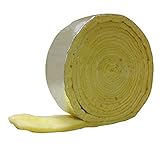
- The product is manufactured in china
- The product is highly durable and easy to use
- Easy installation and easy handling
- Size: 3" x 1" x 25 ft.The product is manufactured in china
- The product is highly durable and easy to use
Installing spray foam correctly
- Have the installer inspect the substrate for water intrusion, contamination, loose material, and temperatures outside the product’s application range.
- Confirm the foam type, intended thickness, certified or qualified installer, ventilation plan, and manufacturer instructions in writing.
- Protect windows, equipment, wiring, fixtures, and adjacent finished surfaces. Overspray and expansion can damage items that are not masked.
- Apply the foam in the manufacturer’s permitted lifts and thicknesses. Excessive lift thickness can cause overheating, poor curing, shrinkage, or incomplete reaction.
- Inspect the exposed work before drywall or another finish hides it. Look for voids, pull-away at framing, thin areas, charred or discolored foam, and missed penetrations.
- After construction, consider a blower-door test. The result shows how much leakage remains and helps determine whether additional sealing or mechanical ventilation is warranted.
ENERGY STAR guidance treats spray-foam installation as advanced work and advises qualified personnel, visual inspection, and testing. Do not assume a disposable kit is an equivalent substitute for a designed, inspected installation in a whole-house retrofit.
Independent reader supportYour contribution helps us test, update, and keep practical guides available for everyone.Choose by building location
Attic floor
If the attic is vented and the thermal boundary is the ceiling, fiberglass batts can be economical after penetrations are sealed and the required depth is available. Maintain ventilation paths at eaves and avoid burying heat-producing equipment or unsafe wiring. Spray foam at the attic floor may improve air sealing around irregular penetrations, but it still needs a complete air-barrier detail and can make later inspection or rewiring more difficult.
Roof deck or unvented roof assembly
Foam is often considered when the roof deck itself becomes the thermal and air-control plane, especially where rafter depth is limited. The choice between open and closed cell affects vapor movement, thickness, and drying. A roof assembly must be designed as a system, including exterior climate, roofing underlayment, ventilation strategy, and interior finish requirements. Do not spray a deck with known leaks and expect the foam to substitute for roof repair.
What’s actually slowing this PC down?
Pick the symptom - the matching free tool is one click away.
Exterior walls
For open stud bays during renovation, a correctly sized batt plus dedicated air sealing may meet the design at much lower cost. Spray foam can be useful where cavities are irregular or where an air-sealing layer at the sheathing is part of the design. In existing finished walls, injection or removal work, access holes, and repair of interior finishes can dominate the estimate; compare the complete scope rather than a material-only price.
Floors and rim joists
Rim joists have many joints and penetrations, so foam’s ability to adhere and seal can be valuable. Fiberglass can work where the cavity is regular and a separate air barrier is continuous, but a loose batt at the perimeter leaves leakage paths. Check for plumbing leaks and condensation before insulating.
Also popular on Amazon

- Coverage: One pack covers 77.5 square feet, containing 8 batts
- Thickness: 5.5 inches thick, suitable for 2x6 walls.
- Thermal Resistance: R-21 value, fits 2x6 framing.
- Unfaced Design: No vapor barrier, for areas with separate moisture control.
Foundations and crawl spaces
Below-grade assemblies need drainage, bulk-water control, and a moisture plan before insulation. Closed-cell foam may be specified where limited depth and vapor resistance are important, while fibrous insulation may be appropriate in a dry, accessible framed system. Historical code references, including the 2009 International Residential Code discussed in a DOE foundation guide, do not establish current requirements. Verify the rules adopted by your jurisdiction.
Safety, fire protection, and code questions
Spray foam is a combustible polymer product and is commonly required to have an approved thermal or ignition barrier, depending on its location and the applicable code. The exact assembly, covering, thickness, and access condition matter. The 2009 International Residential Code discussion in a DOE hybrid-foundation guide is historical; it is not proof of what your local code requires today. Ask the building department or design professional to confirm the currently adopted code and the product’s listed assembly before specifying interior foam.
Do these 3 things before closing this tab:
1Clear out junk files and repair common Windows errors2Scan for outdated or missing drivers - takes under a minute3Repair Windows errors before they cause bigger problemsDuring application, occupants and other trades may need to leave the area while the product cures and ventilation clears vapors. The installer should provide the product’s safety data, re-entry guidance, and protection plan. Fiberglass also requires protection from airborne fibers: use appropriate clothing, eye protection, gloves, and respiratory protection when the manufacturer recommends it.
Incentives change. An ENERGY STAR attic page states that the federal residential energy-efficiency credit it describes applied through December 31, 2025. That source does not establish availability in 2026. Check current federal, state, utility, and local programs before reducing your project budget for an incentive.
A practical decision process
- Identify the assembly. Write down whether the work is at an attic floor, roof deck, wall, floor, rim joist, crawl space, or foundation, and whether it is new construction or a retrofit.
- Find the required R-value. Use the climate-specific code or project specification. Do not select a product from a generic “best insulation” list.
- Map control layers. Decide where the continuous air barrier, vapor-control layer, water control, and thermal insulation will be. Ask what happens at every transition.
- Check the available depth. Compare the thickness needed for the selected batt or foam with framing depth, clearances, ventilation channels, and finish dimensions.
- Price identical scope. Request at least two local proposals that state coverage area, installed thickness, R-value, air sealing, prep, barriers, testing, disposal, and finish work.
- Verify the installer. For foam, check qualifications, product-specific training, references for similar assemblies, insurance, and a written warranty. For batt work, verify that the crew understands dense wiring and plumbing layouts and will document concealed installation.
- Plan inspection and testing. Photograph work before concealment. For major air-sealing projects, schedule a blower-door test after construction and address remaining leakage.
Common mistakes and how to avoid them
- Choosing by R-value alone: A high nominal R-value does not fix a discontinuous air barrier, thermal bridges, or water intrusion. Evaluate the complete assembly.
- Comparing material-only prices: Foam bids may include preparation and air sealing while batt bids omit them, or the reverse. Normalize the scope before comparing totals.
- Assuming foam seals everything: It seals where applied. Windows, doors, plates, penetrations, and transitions still need detail work.
- Compressing a batt to make it fit: Compression changes the product’s installed geometry and can reduce its effectiveness. Use the correctly sized product or redesign the cavity.
- Spraying over a moisture problem: Find and repair leaks, condensation, and drainage defects first. Concealing wet materials can make diagnosis and drying harder.
- Skipping inspection: Once drywall or sheathing covers insulation, voids and pull-away are difficult and expensive to correct. Inspect and photograph first.
- Using obsolete code or incentive assumptions: Historical guidance explains principles but cannot confirm current local requirements or 2026 credits.
Bottom line for a contractor or homeowner
Choose fiberglass when the cavities are accessible and regular, the required R-value fits the available depth, and you can budget for careful air sealing and installation. Choose spray foam when a continuous air seal at the insulation plane or high R-value in limited depth solves a specific assembly problem that justifies its premium cost. Then have the proposed system reviewed for moisture, code, and fire protection, and compare local bids that describe the same work. The best insulation is the one that completes the building’s control layers reliably—not simply the one with the highest advertised R-value.
Quick Recap
Product prices and availability are accurate as of the date/time indicated and are subject to change. Any price and availability information displayed on Amazon at the time of purchase will apply.

