The Tool Desk
Outbyte PC Repair FREERepair Windows errors before they cause bigger problemsFix Now →Outbyte Driver Updater FREEFix the driver behind crashes, sound loss and screen glitchesFind Drivers →The best home sustainability swap is often the one you do not buy. Start by reducing unnecessary consumption and food waste, then reuse, repair, share, or donate what you already have. Change laundry, water, lighting, and heating habits next. Only replace a functioning product when it is failing, inefficient, or due for a project—and then look for a durable or independently certified model that fits your home.
Start with habits, not shopping
The most useful sustainable home swaps usually follow this order: buy and consume less, reuse or repair what you already own, then replace a necessary product with a durable or independently certified alternative. That sequence reflects the EPA waste hierarchy, which places source reduction and reuse ahead of recycling.
As an Amazon Associate I earn from qualifying purchases.
In other words, a new product is not automatically a better choice just because its packaging says green or eco-friendly. The FTC Green Guides warn that broad environmental claims are difficult to substantiate. Look instead for a specific, verifiable benefit—such as a WaterSense label, an ENERGY STAR certification, longer service life, repairability, or a local end-of-life route.
Free tools Windows power users keep installed
One-click scans. No signup required.
For homeowners, renters, and people planning a renovation, the practical approach is to make no-cost changes first, add inexpensive tools only when they enable a behavior you will actually keep, and reserve major replacements for equipment that is failing, inefficient, or already due for renovation.
#1 Best Overall

- MAGNETIX DOCKING SYSTEM: Magnetic dock allows the handshower to release easily and securely snap back into place
- 6 SPRAY SETTINGS: Customize your shower experience with multiple spray options for everyday comfort and flexibility
- ADJUSTABLE SPRAY SETTINGS: Hand held shower head with hose includes 6 functions including pause, rinse, downpour, and relaxing massage, allowing you to adjust the showerhead spray to your preference
- HANDHELD SHOWERHEAD: Detachable design provides added reach for rinsing, cleaning, bathing children, and pet care
- WATERSENSE CERTIFIED: Moen Engage Magnetix water-saving handheld shower head with hose Meets EPA WaterSense criteria to conserve water with lower GPM without sacrificing performance
A simple priority order for a lower-impact home
| Priority | Start here | Buy or replace only when it solves a real problem |
|---|---|---|
| No cost | Buy only what you will use, wash clothes cold, run full loads, air-dry, shorten showers, check for leaks, reuse containers, repair, share, and follow local recycling rules. | Nothing yet. |
| Low cost | Use existing bags, jars, and cloths more often. | Drying rack, cold-water detergent, storage containers, LED bulbs, leak-detection tablets, countertop scrap container, or WaterSense fixture. |
| Medium cost | Measure the household problem before buying. | Smart thermostat, higher-efficiency washer or dryer, larger composting system, or a home water-efficiency upgrade. |
| Major replacement | Maintain and repair existing equipment where practical. | Water heater, HVAC equipment, windows, or appliances when replacement is already needed and compatibility, installation, incentives, and disposal are confirmed. |
1. Buy less and reuse what is already in the house
The easiest swap is often refusing an unnecessary item. Decline disposable cutlery, extra bags, printed copies, promotional products, and packaging you do not need. Bring a bag or container when it is genuinely convenient, and use it repeatedly rather than replacing it every time a newer version appears.
Look around the house before buying a dedicated solution. A jar may already work as food storage. An old towel may work as a cleaning cloth. A container you own may be suitable for leftovers. The environmental advantage of a reusable product depends on whether it is used enough to displace disposables, whether it lasts, and what happens to it at the end of its life—not simply on whether it is made from bamboo, metal, glass, plastic, or another material.
- Borrow or share infrequently used tools, ladders, garden equipment, and event supplies with neighbors, friends, or a tool library.
- Repair clothing, electronics, furniture, fixtures, and small household items before replacing them.
- Donate or pass along usable items so someone else can use them instead of buying new ones.
- Keep a basic repair kit with the supplies you repeatedly need, rather than accumulating specialized products for one-off jobs.
For a home improvement project, this principle also applies to materials. Measure carefully, use leftover materials where appropriate, and plan for offcuts before purchasing more. Reuse is only sensible when the item is safe, suitable for the job, and likely to be used—not when it creates a new pile of things that will sit unused.
2. Prevent food waste before you compost it
Composting is useful, but it should not be the first response to edible food becoming waste. The EPA reports that about one-third of food in the United States goes uneaten. It also estimated that about 96% of household wasted food in 2019 went to landfills, combustion facilities, or sewer systems. Preventing the waste avoids the resources used to grow, transport, store, and prepare food in the first place.
Use this order:
- Plan meals and shop from a list. Buy amounts your household can realistically use, especially for fresh produce and foods with short dates.
- Store food correctly. Keep foods in the part of the refrigerator, freezer, or pantry that best preserves them, and label leftovers with a date.
- Use leftovers deliberately. Schedule a leftover meal, freeze portions, or repurpose ingredients before they are forgotten.
- Donate safe, untouched food where appropriate. Follow the receiving organization’s rules and do not donate food that has been served, spoiled, or stored unsafely.
- Compost unavoidable scraps. This includes food that cannot reasonably be eaten, along with acceptable yard trimmings where the local system permits them.
Reusable food-storage containers can make the first three steps easier, but they are not a reason to buy an entire new kitchen inventory. Choose a small number that fit your refrigerator, freezer, and normal portions, and use them repeatedly. Airtight storage can help maintain freshness, but food-safety practices and correct storage still matter.
Composting is managed aerobic decomposition that turns food scraps and yard trimmings into a soil amendment. A countertop compost container can temporarily hold scraps, while a backyard compost bin or worm bin may process them at home. However, accepted materials, collection methods, and contamination rules vary. Check your municipality or hauler before buying compostable liners or assuming a service accepts meat, dairy, bioplastics, or other difficult materials. If your community offers local compost pickup, confirm the accepted inputs and what happens to the finished compost.
3. Change laundry habits before replacing the washer
Laundry offers several low-cost changes that do not require a new appliance:
- Wash in cold water when the fabric and soil level allow it.
- Run full loads rather than repeatedly washing small loads.
- Use the appropriate water level or automatic load-sensing setting.
- Avoid over-drying clothes.
- Use a moisture-sensor setting if your dryer has one.
- Air-dry suitable clothing on a line or rack.
The U.S. Department of Energy says changing a load from hot to warm can cut that load’s energy use in half, while cold washing can reduce it further. ENERGY STAR also recommends cold-water washing, full loads, and air-drying when practical. A cold-water laundry detergent may help make the change convenient, but buying special detergent is not required for every cold-water wash. A folding drying rack is useful only if you have a safe, ventilated place to use it.
If the washer is due for replacement, an ENERGY STAR-certified clothes washer uses about 20% less energy and 30% less water than a regular model, according to ENERGY STAR. Treat those as program-level comparisons, not a guarantee for every household. Check the model’s current energy and water information, capacity, cycle options, repair support, purchase price, and expected service life.
Replacing a functioning washer solely to obtain a newer label may not be the best environmental decision. Consider whether the existing machine can be repaired, how long it is likely to last, the impact of manufacturing and transporting the replacement, and how the old appliance will be handled. When a replacement is already necessary, efficiency becomes a much stronger reason to compare models.
Rank #2

- 10 Versatile Spray Modes – Enjoy a customized shower experience with 10 distinct patterns: rain, pulse, mist, spray, mixed, and a water-saving mode for pausing water during shampooing, soaping, or grooming.
- High-Pressure Performance with Air-Induction-Induction Tech – Infuses water with air to deliver a strong and consistent water flow even under low water pressure, enhancing your shower. Features 90 anti-clog nozzles and 100 pieces Steel plate water outlets that prevent limescale and hard water buildup, ensuring a consistent, refreshing flow.
- 360° Adjustable Bracket & 59-Inch Flexible Hose – The durable bracket with a brass swivel ball joint allows effortless angle adjustments for both overhead and handheld use. The extra-long 59-inch stainless steel hose is lightweight and flexible, making it easy to reach every spot.
- Premium Materials & Anti-Clog Design – Crafted from high-quality ABS for lightweight, rust-proof, and fade-proof durability.
4. Cut hot-water use and choose certified fixtures
Before replacing a fixture, check for leaks. A dripping faucet, running toilet, or leaking connection wastes water continuously and may also damage cabinets, flooring, framing, or finishes. Repair the cause rather than treating a high water bill as a reason to buy a more efficient fixture.
When a showerhead, faucet, or toilet needs replacement, look for the EPA’s WaterSense label. WaterSense-labeled products are independently certified to be at least 20% more water-efficient than average products in their category while performing as well as or better than less-efficient alternatives, according to EPA. The certification addresses water efficiency and performance; it is not a claim that the product has the lowest total environmental impact in every circumstance.
A WaterSense-labeled showerhead is a particularly straightforward swap when an existing showerhead needs replacing or performs poorly. EPA says replacing showerheads with WaterSense-labeled models can save four gallons every time a person showers. Actual household savings depend on shower length, household size, existing flow rate, and how often the shower is used. Compare the label and performance information, and use the WaterSense product search rather than relying on vague package language.
faucet aerators can be another inexpensive replacement where the existing fitting is compatible. Do not choose a flow rate that makes the fixture frustrating to use; a product that gets removed or bypassed is not a durable solution. If you are renovating a bathroom or kitchen, address shutoff valves, supply connections, leaks, and access for future maintenance at the same time.
5. Replace used-up bulbs with efficient lighting
When a bulb fails—or when a frequently used fixture is due for an upgrade—choose an ENERGY STAR-certified LED that has the correct base, brightness, color temperature, dimmer compatibility, and enclosed-fixture rating where applicable.
Quick wins for a faster PC:
Fix the driver behind crashes, sound loss and screen glitchesFind Drivers →Clear out junk files and repair common Windows errorsFree Scan →ENERGY STAR says certified LED products are tested to maintain light output through their rated life, and the label identifies products that meet the program’s requirements. That makes certification more useful than a generic claim such as efficient or long-lasting. You do not need to remove every working bulb immediately. Replacing bulbs as they fail, or focusing first on lights used for many hours, avoids turning a functioning product into waste before its useful life is over.
Occupancy sensors, timers, and daylight controls can help in rooms where lights are routinely left on or where daylight changes substantially. They are not automatically worthwhile everywhere. Match the control to a clear household problem, and consider installation, switch compatibility, occupant habits, and whether the control will actually be used.
6. Manage heating and cooling before making a major HVAC decision
Simple scheduling and sensible temperature settings should come before a smart-home purchase. If your household schedule changes regularly, a compatible smart thermostat can make those changes easier by offering scheduling, remote control, and other automated adjustments. ENERGY STAR describes certified smart thermostats as Wi-Fi-enabled devices that use field-data-based certification to demonstrate energy savings.
Rank #3

- Multi-Stage Filtration: This filtered shower head uses KDF, maifanstone, vitamin C media and multiple filtration layers to help reduce chlorine and certain impurities, supporting a more comfortable everyday shower experience
- 9 Spray: 8 Spray Settings + Power Wash,Choose from Rain, Massage, Mist, Pause and other spray settings; flip the showerhead to activate Power Wash for rinsing tubs, tiles, pets and other targeted cleaning tasks
- Replaceable Filter Cartridge: Replace every 3–6 months depending on water quality and usage; replace more often with heavier use or higher chlorine levels, Replace filter ASIN: B0D1TYCDPB
- 3-Minute Tool-Free Install: Universal G1/2" thread fits any standard shower arm. Includes handheld shower head (filter built in), bracket, hose, Teflon tape, and washers. Everything you need in the box.The water flow rate of our product is 2.5 GPM.
- Five Year Limited Warranty: Manufacturer's limited warranty covers eligible product or part defects for 5 years from the purchase date, we'll get back to you within 24 hours. For replacement filter cartridges
The program reports that nearly half of the average American household’s annual energy bill goes to heating and cooling, but that is a broad program estimate, not a promise of a particular dollar saving in your home. Results depend on climate, insulation, air leakage, equipment, thermostat settings, occupancy, and how the controls are used.
What’s actually slowing this PC down?
Pick the symptom - the matching free tool is one click away.
Before buying an ENERGY STAR-certified smart thermostat, confirm:
- Whether the HVAC system is compatible, including heat pumps, multi-stage equipment, dual-fuel systems, and zoned systems.
- Whether the existing wiring includes the required common wire or another supported power arrangement.
- Whether the thermostat can control the equipment without disabling an important heat-pump or auxiliary-heat function.
- Whether installation requires a qualified professional or permission from a landlord.
- Whether the household will use scheduling and remote control often enough to justify the cost.
Renters may be able to adjust settings or use portable controls, but they should not alter wiring or permanently replace a thermostat without permission. For homeowners, a thermostat is only one part of HVAC performance. Major replacements should be considered when equipment is failing, inefficient, unsafe, or already part of a planned renovation—not simply because a new model is available.
7. Recycle correctly instead of recycling aspirationally
Recycling is lower in the waste hierarchy than reduction and reuse, but it remains useful when those options are no longer practical. The mistake is assuming that every item with a recycling symbol belongs in the curbside bin.
Check your local recycling program each time the rules are unclear. Requirements vary by city, county, hauler, material, and facility. In general, follow these EPA-backed habits:
- Put only locally accepted materials in the bin.
- Keep accepted recyclables empty, clean, and dry.
- Keep food and liquids out of the container.
- Keep plastic bags and film out of curbside recycling unless your local program specifically accepts them through a designated route.
- Do not place batteries, electronics, chemicals, or construction materials in the curbside bin unless the local program gives specific instructions.
Use the EPA recycling basics guidance as a starting point, then follow your local authority’s instructions. A package’s recycling symbol describes material or packaging information; it does not prove that your local facility accepts, sorts, and markets it.
Independent reader supportYour contribution helps us test, update, and keep practical guides available for everyone.Tools for the swaps that survive real household use
Buy a tool only after identifying the habit or maintenance problem it will support. The following categories are useful when they fit your home, budget, and local infrastructure:
Rank #4
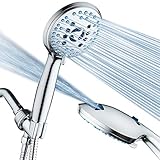
- MORE WATER PRESSURE, LESS CLEANING - Revolutionary AquaCare hand shower features advanced 8-setting 5-zone Powerhead with Self-clean Anti-clog Nozzles that prevent accumulation of grime inside. So while other showerheads clog and lose water pressure over time, AquaCare nozzles remain clean and clog-free for years of flawless performance. Designed in USA by top American shower experts. Removable Flow Regulator.
- PURE-CLEAN PROTECTION - Studies show that ordinary shower heads are often infested with grime that rapidly grows overnight, then gets flushed out in your face with the morning shower. That's why keeping your showerhead clean is essential for good shower hygiene. AquaCare nozzles are made with special revolutionary material that works 24/7 on molecular level to protect from degradation. This protection is 100% safe and effective for the life of the product and can never wear off.
- BUILT-IN 2-MODE TUB & TILE POWER WASH - Tired of that disgusting soap scum and dried hair left behind after each shower? Clean it all in seconds from up to 6 feet away, without setting a foot in your shower. Simply flip the AquaCare handle and turn it into a High-pressure Power Wash! Use Wide Fan to quickly rinse off large areas, or switch to Point Jet and instantly blast away that stubborn grime! Patented.
- IDEAL PET SHOWER - AquaCare was designed to be relentless on the toughest grime, yet gentle on your pet. Simply set your faucet to the best water pressure for your dog's fur length and density, then use our unique Dual-width Fan Spray to thoroughly rinse out shampoo in seconds. It provides the perfect flow pattern for a fast and effortless pet shower, regardless of their size and breed.
- PREMIUM CONVENIENCE PACKAGE - Enjoy added mobility and reach with Extra-long 72-inch Heavy-duty Stainless Steel Hose, Angle-adjustable Overhead Bracket, and an additional Low-reach Wall Bracket that mounts instantly and securely on any surface with power adhesive back. Ideal for Child Care, Senior Care, Pet Care, Bathing and Cleaning applications, AquaCare is your TOTAL SHOWER CARE system that creates a better shower hygiene and cleaner shower environment for your entire family.
- Kitchen: reusable food-storage containers for planned leftovers and food that needs better storage.
- Food scraps: a countertop compost container for temporary storage, followed by a compatible backyard system or collection service.
- Laundry: cold-water laundry detergent and a folding drying rack if they make cold washing and air-drying convenient.
- Water: a WaterSense-labeled showerhead or faucet aerator when the existing fixture needs replacement or is wasting water.
- Lighting: ENERGY STAR LED bulbs for failed bulbs or frequently used fixtures.
- Climate control: an ENERGY STAR-certified smart thermostat only after HVAC compatibility and installation requirements are confirmed.
Disclosure: product links on this page may be affiliate links, which can support the site without changing the price you pay. A retailer or brand is not endorsed by EPA, ENERGY STAR, or WaterSense merely because a product is mentioned. Verify the current certification, model details, price, availability, and return terms before buying.
If you are replacing a water fixture, check the WaterSense rebate finder and your local water provider. Rebates are set by individual utilities and locations, so availability, eligible models, deadlines, and application rules differ.
Recommended Free Tools
What to do over the next 30 days
- Week one: observe. Track what your household throws away, which lights stay on, how often the washer runs, where food spoils, and whether any fixture leaks.
- Week two: remove waste at the source. Plan meals, change one laundry habit, reuse bags and containers, decline unnecessary packaging, and repair or donate one usable item.
- Week three: fix maintenance issues. Repair leaks, clean and maintain equipment according to the manufacturer’s instructions, and check whether existing fixtures or controls can be adjusted rather than replaced.
- Week four: make one targeted purchase. Choose the product that supports a habit you have already demonstrated—perhaps a drying rack, storage containers, certified LED bulbs, or a WaterSense fixture.
For a large project, slow the decision down. Compare the existing item’s remaining service life, repairability, energy or water use, installation requirements, purchase cost, available incentives, packaging, and disposal route. A water heater, HVAC system, window package, or appliance is a better replacement candidate when it is already failing or inefficient and the new installation is properly sized and compatible.
Frequently Asked Questions
Are reusable products always more sustainable than disposable ones?
Not necessarily. A reusable item helps when it is used repeatedly enough to displace disposable alternatives, lasts a long time, and has a realistic maintenance or end-of-life route. Reusing an item you already own is usually a better first step than buying a new reusable version.
Should I compost all of my food waste?
No. Preventing edible food waste comes first, followed by proper storage, using leftovers, and donating safe untouched food where appropriate. Compost unavoidable scraps only through a system that accepts them. Local programs may differ on food types, liners, and bioplastics.
Should I replace my working washing machine with an efficient model?
Not automatically. Keep a functioning washer if it can meet your needs and be repaired reasonably. When replacement is already necessary, compare ENERGY STAR certification, model-level water and energy information, capacity, repair support, expected life, purchase cost, and disposal options.
Do these 3 things before closing this tab:
1Fix the driver behind crashes, sound loss and screen glitches2Repair Windows errors before they cause bigger problems3Scan for outdated or missing drivers - takes under a minuteHow do I choose a water-saving showerhead or faucet?
Check the WaterSense label and confirm that the fixture fits your plumbing and delivers acceptable performance. EPA says WaterSense-labeled products are at least 20% more water-efficient than average products in their category, but household savings depend on use. Also check for leaks before buying a replacement.
The Bottom Line
The best sustainable home is not the one with the most replacement products. Start by preventing waste, then reuse, repair, share, donate, and maintain what you own. After that, choose a certified, durable product only where it supports a real need—and verify the local rules for recycling, composting, rebates, and disposal.
Quick Recap
Product prices and availability are accurate as of the date/time indicated and are subject to change. Any price and availability information displayed on Amazon at the time of purchase will apply.




