Quick wins for a faster PC:
Scan for outdated or missing drivers - takes under a minuteDriver Scan →Clear out junk files and repair common Windows errorsFree Scan →Rooftop solar can serve apartment residents without giving every unit its own panels. A building-level distribution system can send photovoltaic (PV) electricity through the property’s inverter and electrical infrastructure, then allocate the available power among individual apartment meters. Allume Energy’s SolShare is a concrete example described in a Building Design + Construction report published April 20, 2023. The report presents a behind-the-meter approach for multifamily properties, but its deployment numbers, savings figure, pricing comments and market claims are historical, vendor-attributed information—not a current independent performance study.
Why sharing rooftop solar is difficult in an apartment building
One roof serves many electrical accounts
A detached house usually has one principal electric meter. A multifamily property may have dozens of apartment meters, plus meters for corridors, elevators, pumps, parking areas and commercial suites. Rooftop PV therefore produces one stream of electricity while the building has many account holders with different load profiles and contractual relationships.
As an Amazon Associate I earn from qualifying purchases.
The operational question is not simply whether the roof can generate enough energy. The owner and design team must decide how output is assigned when one apartment is using little power, another is drawing heavily, a unit is vacant, or a tenant has reached a configured allocation limit. The electrical design must also satisfy the utility’s interconnection rules and the property’s existing switchgear and meter arrangement.
Windows Errors? Fix Them Before They Spread
Repair common Windows errors and clear accumulated junk for a smoother, more stable PC - no reinstall needed.Free scan · no reinstallOutdated Drivers Are Slowing You Down
One free scan finds every outdated or missing driver and matches the right update for your exact hardware.Free scan · exact hardware matchOccupancy and demand change constantly
Apartment demand changes from second to second. A resident may be away during the afternoon solar peak, while another resident is running air conditioning. A fixed percentage assigned to each unit could leave generation unused at one meter even though another apartment is consuming electricity. A dynamic allocation system is intended to follow those changing conditions rather than treating every meter as permanently identical.
#1 Best Overall

- Comprehensive Measurement Capabilities: This multi-functional watt meter power analyzer accurately measures voltage, current (amp meter), power, discharge capacity, and time. It serves as both a solar panel tester and solar power meter, compatible with solar, wind, EV, and battery systems (voltage range: 4.8-60V)
- Superior Measurement Precision: With an optional auxiliary battery, this battery monitor operates at 12V-100V. Key specs: 0-200A current (0.01A accuracy); 0-100V voltage (0.01V resolution); 0-6554W power (0.01W resolution); 0-65Ah capacity (0.001Ah resolution). Note: Designed for systems below 100V and 200A-do not exceed these rated limits. Compatible with 12 AWG wiring
- Versatile Applications: This high-precision power analyzer caters to diverse operational needs. It effectively evaluates RC battery charging efficiency, power consumption of battery-powered devices, and operating voltage-ensuring batteries, motors, wiring, and connectors function reliably
- Enhanced Backlight Display: Ultra-bright illumination ensures clear visibility for solar power meter use in low-light environments or outdoor solar panel testing, day and night
- Sizing Compatibility Reminder: Please verify connector specifications via your measurement chart before purchase to ensure seamless integration with your solar or wind power setup
How the SolShare-described system routes power
The 2023 report describes SolShare as a building-level, behind-the-meter unit placed between the rooftop PV system and the apartment meters. The article’s sequence is:
- Rooftop PV generates electricity. Modules produce direct-current electricity on the building’s roof.
- The building inverter converts the output to alternating current. The inverter conditions the solar power for use by the property’s electrical system.
- The AC output enters the SolShare unit. The unit sits within the building’s distribution arrangement rather than relying on each tenant to install a separate solar system.
- SolShare allocates the available energy among grid meters. The report says one unit can feed up to 10 grid meters, with allocation shifting among meters several times per second.
- Excess may be exported. If the connected meters cannot use all available solar output, the overflow can be sold back to the local grid, subject to the utility’s applicable rules and agreement.
In this arrangement, solar is delivered at the point where the building and its residents consume electricity. Tenants can monitor energy usage, while the landlord or system operator establishes allocation rules. These technical details are attributed to the Building Design + Construction report; the report is not an independent engineering certification or laboratory test.
Dynamic allocation instead of a fixed split
The article says allocation changes several times per second. If a meter reaches its configured limit, incoming solar is redirected to other connected meters. This provides a practical answer to the vacancy question: a vacant apartment does not necessarily have to receive a permanent share that cannot be used. The unused capacity can be assigned elsewhere according to the building’s rules.
The Tool Desk
Outbyte Driver Updater FREEFix the driver behind crashes, sound loss and screen glitchesFind Drivers →Outbyte PC Repair FREERepair Windows errors before they cause bigger problemsFix Now →Rank #2
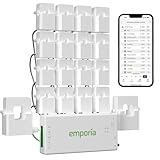
- SAFETY YOU CAN TRUST WITH UL CERTIFICATION: With Emporia Energy, your home energy monitoring is safe, reliable, and certified. The Emporia Vue is UL Listed, meaning it has met rigorous safety standards for electrical products in the U.S. and Canada. This certification ensures that every component has been thoroughly tested to prevent hazards, such as overheating, short-circuiting, or fire, offering you peace of mind as you manage your home’s energy consumption.
- INSTALLS IN CIRCUIT PANEL of most homes with clamp-on sensors. Supports Single phase, Single-split phase, and 2-wire systems. 3-wire systems; 3-phase, 4-wire Wye systems with earthed (TN or TT) neutral (no-Delta) are supported with an additional 200A sensor (sold separately).
- 24/7 ENERGY MANAGEMENT AND MONITORING: Automate, manage and control your home's real power anywhere, anytime to prevent costly repairs, conserve energy, and save costs. Monitor solar / net metering. PROTECTED BY A 1-YEAR WARRANTY.
- LOWER YOUR ELECTRIC BILL: Configure settings in the Emporia Energy App to automate energy management for time of use, peak demand, excess solar, and rewards programs. You can even see live reporting and invaluable savings opportunities instantly. Gauge real-time spending and get actionable notifications and automated energy management to help you reduce costs.
- REAL-TIME ENERGY DATA: REQUIRES 2.4 GHz WIFI WITH AN INTERNET CONNECTION to monitor energy use with iPhone / Android / Web app. Vue sensors collect energy data and are accurate from ±2%. The Vue is UL and CE Listed for your safety. 1 second data is only available in the app (when actively open) and retained 3 hours. Minute and hour data are retained in the cloud. 1 minute data is retained 7 days, 1 hour data is retained indefinitely. Export cloud data whenever you want in the app.
“Limit” can mean different things in an actual project, so the owner must document the policy before installation. It might be a maximum instantaneous allocation, a monthly energy entitlement, a percentage of production, or another utility-approved arrangement. The report explains the redistribution concept but does not specify a universal tariff, software setting or tenant contract.
What the 2023 examples show—and what they do not
| Project | Connections reported | What can reasonably be concluded |
|---|---|---|
| Apartment complex in Orlando, Florida | 65 apartment connections | The report identified this as Allume Energy’s first successful U.S. deployment at the time. |
| Apartment project in Jackson, Mississippi | 9 apartment connections | The report described a smaller U.S. project; the local utility lowered the application cost because the property served lower-income tenants. |
These are dated figures from a report published in April 2023, not a current deployment total or a guarantee that the same utility treatment is available elsewhere. The Jackson application-cost reduction is specific to that project and should not be generalized to other properties.
The reported bill-saving figure needs careful qualification
The article says Allume found tenant energy bills fell by an average of 30–35%. It does not provide the sample size, measurement period, baseline utility rates, allocation rules or independent verification. Treat the number as a vendor-reported historical result, not as a promised saving for every building. A feasibility study should model the property’s actual loads, tariff, solar production, common-area consumption and tenant agreements.
Rank #3
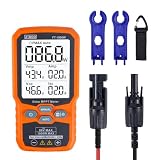
- ⚡ Professional-Grade PV Testing Measures maximum power (Pmax) up to 1000W, open-circuit voltage (Voc: 12-80V), and short-circuit current (Isc: 35A) with ±0.8% accuracy, ideal for validating solar panel performance in R&D, manufacturing, and field maintenance.
- ⚡ MPPT Efficiency Optimization Tracks Vmp (80V) & Amp (35A) in real-time to identify panel degradation or shading issues, helping installers maximize energy harvest and ROI for residential/commercial systems.
- ⚡ Industrial Safety & Durability Rated CAT III 1000V/CAT IV 600V with double-insulated probes, meeting IEC/EN 61010 standards for safe use on high-voltage PV arrays and combiner boxes.
- ⚡ Smart Data Management Features data hold + backlit LCD for reading values in dark environments (e.g., rooftops)
- ✅ Engineered for Solar Professionals Auto-ranging simplifies operation for technicians, while IP54 dust/water resistance and low-power auto-off ensure reliability in outdoor installations.
Which multifamily properties are a practical fit?
The report identifies low-rise attached rental houses as Allume’s primary target and says most demand at that time came from retrofits. It also describes installations in mixed-use buildings with commercial tenants. Those characteristics point to the questions an owner should answer before commissioning a design:
Recommended Free Tools
- Meter topology: Are apartment meters grouped in a location where the distribution equipment can be integrated without rebuilding the service?
- Roof and structural capacity: Can the roof support the PV array, equipment and required access paths, and is there sufficient unshaded area?
- Load coincidence: Does daytime building and tenant demand align with the expected solar output, or will substantial production be exported?
- Tenant mix: Are there commercial spaces, affordable units, common areas or master-metered loads that require different allocation rules?
- Retrofit disruption: Can installation proceed while residents remain in place, and what shutdowns or inspections will be required?
- Utility approval: Will the utility accept the proposed meter configuration, protection scheme and export arrangement?
Site electrical drawings and a utility pre-application review are more informative than a generic roof-size estimate. The report says Allume worked with solar installation partners, provided installer training and had a team member on site for each installation. Those services may affect scheduling and responsibilities, but the article does not establish current availability or terms.
A project path from concept to occupied building
- Map every meter and load. Create a one-line diagram showing apartment meters, house loads, commercial meters, main service equipment, existing PV (if any), transformers and disconnects.
- Collect interval consumption data. Use the longest reliable history available to distinguish daytime load, evening peaks, seasonal air-conditioning demand and vacant-unit conditions.
- Check roof, structure and fire-access constraints. Confirm usable PV area, structural loading, setbacks, pathways, equipment clearances and fire-code requirements with qualified professionals.
- Define the allocation policy before sizing equipment. Decide which meters participate, how limits are calculated, whether common areas receive priority, and how vacancies or delinquent accounts are handled.
- Model export and non-solar periods. Estimate production, on-site consumption, likely exports and the electricity residents will still buy from the grid at night or during low-generation weather.
- Engage the utility early. Ask about interconnection, meter changes, export compensation, protection requirements, application fees and any affordable-housing provisions. A local incentive cannot be assumed from the Jackson example.
- Design and permit the electrical work. The PV contractor and electrical engineer should coordinate inverter settings, protection, labeling, shutdown procedures and access for maintenance.
- Commission and document the system. Test each connected meter, verify allocation behavior at limits, record tenant-monitoring access and provide an operating procedure for vacancies, outages and equipment replacement.
How owners can handle vacancies and uneven participation
A written policy prevents disputes when the building’s occupancy changes. A common operational sequence is to serve participating occupied meters first, redirect unused allocation when a unit is vacant, and send any remaining production to eligible common or commercial loads before export. Whether that sequence is legal or financially optimal depends on the tariff and tenant agreement.
Rank #4
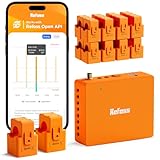
- AUDIT EVERY CENT & SLASH ELECTRIC BILLS: Stop the guesswork and start saving. By monitoring 18 individual circuits with professional ±1% precision, Refoss Home Energy Monitor shows exactly where your money goes. Identifying “energy vampires”—from HVACs to aging appliances—in real-time helps households effectively reduce monthly utility bills by 10%-20%. This smart power meter is the ultimate tool for electricity consumption audits.
- LOCAL PRIVACY & MULTI-PLATFORM CONTROL: Your home energy data belongs to you, not a cloud server. Featuring a built-in Local Web UI, Open API, and MQTT, and WebSocket, Refoss ensures 100% data privacy. Seamlessly integrate with Home Assistant (via Refoss_RPC) to manage every kWh without cloud reliance or subscription fees. Ideal for a secure electricity monitor with professional local control.
- SMART AUTOMATION & SOLAR ROI OPTIMIZATION: Turn your solar panels into a high-yield investment. Surplus solar and net metering energy can be directed to medium-power appliances like heat pumps, dishwashers, and microwaves, while time-of-use and peak demand energy management ensures maximum solar self-consumption, prevents low-value grid feed-in, and reduces utility bills.
- 5-YEAR DATA ANALYTICS & SMART FAULT ALERTS: Catch appliance failures early before they become expensive repairs. Refoss records minute/hourly/daily/weekly/monthly/yearly usage, with daily data securely stored for 5 years and fully exportable via CSV without any subscription. Receive smart alerts if a fridge or washer consumes unusually high energy, helping you optimize home power usage habits and prevent bill spikes.
- STABLE SIGNAL & EASY SETUP: This system supports Single-phase, Split-phase, and 3-phase 4-wire Wye systems, featuring 2 main sensors (up to 200A) and 16 branch sensors (up to 60A). ETL certified with a 2-year warranty, it includes an external high-gain antenna for enhanced Wi-Fi stability. Most importantly: if a sensor is installed backward, simply flip the reading in the App with one tap—no need to rewire or reopen the live breaker box.
Owners should state how a resident sees the benefit: as a reduction on the utility bill, a credit from the landlord, a separate monthly statement, or another structure. They should also explain what happens when solar production is low, when the tenant moves out, or when the building’s allocation software or communications link is unavailable. The report confirms that tenants can monitor energy usage, but it does not prescribe a consumer-billing format.
Independent reader supportYour contribution helps us test, update, and keep practical guides available for everyone.Cost, ownership and “Solar as a Service” arrangements
The report does not disclose SolShare’s price. It quotes Melissa Bergsneider, an Allume Energy executive account manager, saying the unit had represented 6–8% of total system installation cost on past projects. That is a historical, attributed share of project cost—not a current quotation, installed-price benchmark or promise that the percentage applies to a particular building.
Free tools Windows power users keep installed
One-click scans. No signup required.
Some landlords described in the article offered “Solar as a Service,” charging tenants a monthly fee for access. The report gives no contract terms, rates, escalation clauses, savings guarantees, maintenance obligations or tenant protections. Before signing such an arrangement, residents and owners should have counsel review:
Best Value
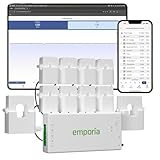
- SAFETY YOU CAN TRUST WITH UL CERTIFICATION: With Emporia Energy, your home energy monitoring is safe, reliable, and certified. The Emporia Vue is UL Listed, meaning it has met rigorous safety standards for electrical products in the U.S. and Canada. This certification ensures that every component has been thoroughly tested to prevent hazards, such as overheating, short-circuiting, or fire, offering you peace of mind as you manage your home’s energy consumption.
- INSTALLS IN CIRCUIT PANEL of most homes with clamp-on sensors. Supports Single phase, Single-split phase, and 2-wire systems. 3-wire systems; 3-phase, 4-wire Wye systems with earthed (TN or TT) neutral (no-Delta) are supported with an additional 200A sensor (sold separately).
- 24/7 ENERGY MANAGEMENT AND MONITORING: Automate, manage and control your home's real power anywhere, anytime to prevent costly repairs, conserve energy, and save costs. Monitor solar / net metering. PROTECTED BY A 1-YEAR WARRANTY.
- LOWER YOUR ELECTRIC BILL: Configure settings in the Emporia Energy App to automate energy management for time of use, peak demand, excess solar, and rewards programs. You can even see live reporting and invaluable savings opportunities instantly. Gauge real-time spending and get actionable notifications and automated energy management to help you reduce costs.
- REAL-TIME ENERGY DATA: REQUIRES 2.4 GHz WIFI WITH AN INTERNET CONNECTION to monitor energy use with iPhone / Android / Web app. Vue sensors collect energy data and are accurate from ±2%. The Vue is UL and CE Listed for your safety. 1 second data is only available in the app (when actively open) and retained 3 hours. Minute and hour data are retained in the cloud. 1 minute data is retained 7 days, 1 hour data is retained indefinitely. Export cloud data whenever you want in the app.
- the exact service or credit the monthly fee buys;
- whether the charge continues during outages, vacancies or low-production months;
- how utility-rate changes affect the value of the solar benefit;
- who owns renewable-energy credits and export revenue;
- what happens when a tenant moves or the property is sold; and
- which party pays for inverter, meter, communications and roof repairs.
Incentives and market availability require current, local checks
The article reported that Allume was concentrating on the U.S. Southeast in 2023, with interest from building owners in the Northeast and West Coast, and was targeting Australia, New Zealand and the United Kingdom internationally. Those statements describe the company’s expansion plans at that time; they are not a verified current service map.
The same article linked demand partly to the federal residential solar Investment Tax Credit and mentioned a low-income “adder.” Eligibility, credit structure, prevailing-wage or apprenticeship conditions, multifamily classification, state programs and utility rules can change. A 2023 trade article should not be used as current tax advice. Have the project’s tax adviser, utility and local permitting authorities confirm rules for the building’s location and ownership structure.
Choosing among project approaches
The article does not compare named competing products. Owners can nevertheless compare implementation approaches using the questions below rather than assuming that every shared-solar model works the same way.
| Decision axis | Questions to answer |
|---|---|
| Point of delivery | Is solar allocated behind individual building meters, exported for a utility-managed community program, or used only for common areas? |
| Allocation behavior | Can the system enforce limits, redirect unused production and accommodate vacancies in real time? |
| Meter coverage | How many meters can one unit serve, and what equipment is required when the property exceeds that number? |
| Tenant visibility | Can residents see generation, usage and credits, and who supports them when data is missing? |
| Retrofit complexity | Can the approach connect to existing switchgear, or does it require a major service redesign? |
| Utility process | What applications, studies, fees, export limits and inspections apply in this territory? |
| Ownership model | Who owns the equipment, pays for maintenance, receives export revenue and sets tenant charges? |
Risks to resolve before construction
- Overstating savings: A reported average is not a guarantee. Use a building-specific production and tariff model.
- Ignoring non-solar hours: Residents still need grid electricity at night, during storms and in winter; explain that portion of the bill.
- Assuming every meter can participate: Service equipment, tariff rules and physical layout may exclude some apartments or commercial loads.
- Leaving allocation rules informal: Vacancies, move-outs, common-area priorities and limit changes should be written into operating and tenant documents.
- Underestimating communications: Meter data, monitoring portals and control equipment need cybersecurity, backup procedures and a responsible operator.
- Using stale incentive assumptions: Confirm current federal, state and utility requirements before financial close.
- Planning only for installation: Budget inspections, roof work, inverter replacement, meter access, resident notices and eventual equipment removal.
What a responsible decision looks like
Shared rooftop solar can make a multifamily roof useful to residents who cannot install panels individually. The SolShare example shows one way to place allocation at the building level, adjust distribution rapidly among apartment meters and redirect unused output. The 2023 report’s Orlando and Jackson projects demonstrate that the concept had been deployed in U.S. apartment settings, while its savings and cost figures remain limited, dated and attributed to the vendor.
For a real property, proceed only after the electrical engineer, solar installer, utility, tax adviser, landlord and tenant representatives agree on meter eligibility, allocation limits, billing, export treatment, maintenance and verification. The strongest proposal will show hourly load and production assumptions, a utility-approved interconnection path, a transparent resident agreement and a plan for what happens when occupancy or equipment conditions change.
Quick Recap
Product prices and availability are accurate as of the date/time indicated and are subject to change. Any price and availability information displayed on Amazon at the time of purchase will apply.

