Free tools Windows power users keep installed
One-click scans. No signup required.
Some links on this page are affiliate links: if you buy through them we may earn a commission, at no extra cost to you.
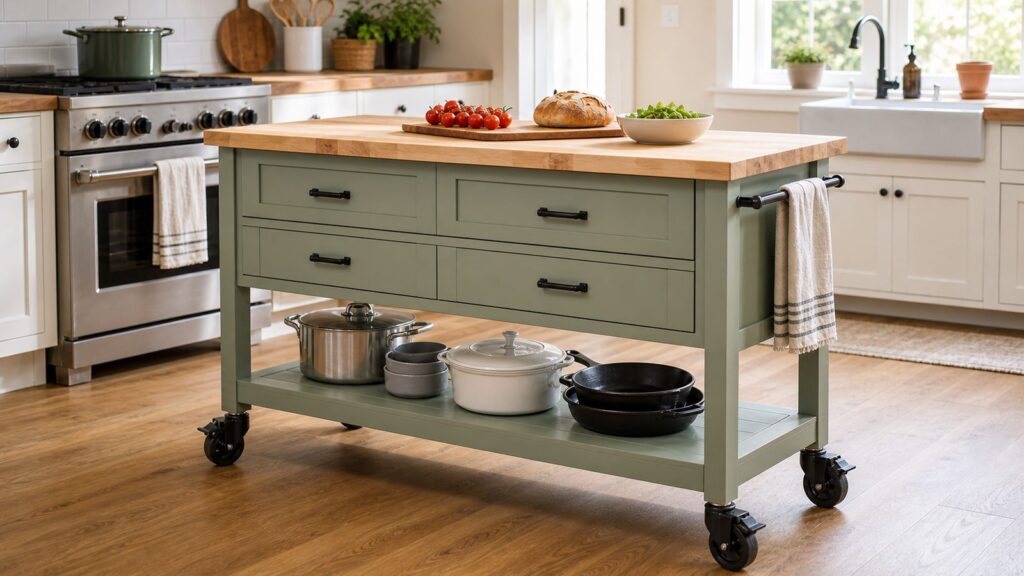
A good rolling kitchen island is not just a cabinet on wheels. It has to move easily, lock solidly, protect the floor, stay stable when someone leans on it, and fit the kitchen with appliance doors open. The best woodworking plan starts with the room, not the lumber pile.
For most homes, a practical rolling island lands around 30 to 52 inches long, 24 to 25 inches deep, and 34 to 36 inches high after the casters and countertop are installed. A 52-inch-long by 24.5-inch-wide by 36-inch-high island is a useful upper size for many medium kitchens because it can hold drawers, shelves, and trash storage without becoming hard to steer. Smaller kitchens often work better with a 36-inch or 42-inch length.
As an Amazon Associate I earn from qualifying purchases.
What’s actually slowing this PC down?
Pick the symptom - the matching free tool is one click away.
In 2026, a capable DIY rolling kitchen island typically costs about $250 to $900 in materials for a simple plywood and hardwood build with a wood or butcher-block top. A higher-end custom woodworking build can run $900 to $2,500 or more when you add hardwood face frames, premium drawer slides, trash pull-outs, inset doors, matching end panels, and professional-grade double-locking casters. That is still usually less than a fixed installed island, which commonly falls around $3,000 to $6,000 nationally, with large custom or utility-heavy islands reaching $10,000 to $25,000 or more.
Start With the Kitchen Footprint
Before we build a movable island for a client, we tape the footprint on the kitchen floor and live with it for a few days. That simple test catches more problems than a drawing does. You will find out whether the island blocks the dishwasher, crowds the refrigerator, interrupts the oven door, or makes two people turn sideways every morning.
Popular on Amazon
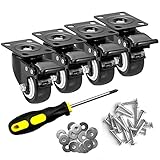
- Complete Set — Includes 4 x 2 inch PU swivel plate casters with mounting screws and washers for instant installation.
- Versatile Use — Smooth-rolling casters for trolleys, workbenches, furniture, and shelving in workshops, garages, kitchens, and offices.
- Heavy-Duty Load — 450 lbs total capacity (4 casters) with double ball bearings for smooth, reliable rolling under heavy loads.
- Dual Locking Brake — Locks both wheel rotation and swivel direction simultaneously; easy to engage with a single step.
- Quiet & Smooth — PU material reduces rolling noise; glides easily on hard floors without scuffing or marking.
Use painter’s tape to mark the finished island size, including any countertop overhang. Then open every appliance door. Pull out the dishwasher rack. Stand where you chop vegetables. Walk from the refrigerator to the sink to the range. If the taped island feels annoying empty, it will feel worse once it is loaded with drawers, cookware, and a heavy top.
For clearances, use these working numbers:
- Minimum walkway: 36 inches where people pass through.
- One-cook work aisle: 42 inches is a better target between counters, appliances, and the island.
- Two-cook work aisle: 48 inches is the more comfortable target.
- Finished island height: usually 36 inches to match standard counters.
- Common mobile island depth: 24 to 25 inches, which matches base-cabinet depth without becoming too bulky.
The mistake we see most often is planning the island with cabinets closed. Kitchens are used with doors open, people moving, towels hanging, dogs underfoot, and someone trying to pass behind the cook. Plan for that reality.
PC Slower Than It Used to Be?
A free scan shows the junk files, broken settings and background clutter dragging Windows down - then fixes them in one click.Free scan · Windows 10 & 11Outdated Drivers Are Slowing You Down
One free scan finds every outdated or missing driver and matches the right update for your exact hardware.Free scan · exact hardware matchChoose the Right Island Size
A rolling island needs different proportions than a fixed island. Fixed cabinetry can be anchored to the floor and tied into electrical or plumbing. A mobile island relies on its own weight, base width, caster layout, and joinery. Make it too tall, too narrow, or too top-heavy and it can feel unstable.
For most homeowner builds, we like one of three sizes:
- Compact cart: 30 to 36 inches long, 20 to 24 inches deep, 34 to 36 inches high. Best for apartments, galley kitchens, coffee stations, or light prep.
- Everyday prep island: 42 to 48 inches long, 24 to 25 inches deep, 36 inches high. Best balance of storage, work surface, and mobility.
- Large rolling island: 50 to 60 inches long, 24 to 30 inches deep, 36 inches high. Useful in open kitchens, but it needs stronger bracing and better casters.
If the island is longer than about 48 inches, do not build it like a light bookcase. Rolling furniture racks and twists more than fixed cabinetry because every push loads the joints sideways. Use a torsion-box style base, a full plywood back, a strong bottom deck, or well-braced end panels to keep the cabinet square. On our job sites, we treat the caster mounts as structural points, not hardware afterthoughts.
Recommended Woodworking Plan
This plan is for a durable rolling island about 48 inches long, 24 inches deep, and 36 inches high. You can shorten it to 42 inches for tighter kitchens or stretch it to 52 inches if your clearances allow it. The design uses plywood carcass construction with hardwood edging and a butcher-block top, which gives good strength without the cost and movement issues of a full solid-hardwood cabinet.
Recommended Free Tools
Finished Dimensions
- Overall length: 48 inches
- Overall depth: 24 inches
- Finished height: 36 inches
- Countertop thickness: 1.5 inches
- Caster height: commonly 3.5 to 5 inches, depending on wheel diameter
- Cabinet box height: adjust to hit 36 inches after top and casters
The height calculation matters. If you buy 4-inch casters and a 1.5-inch butcher-block top, the wood cabinet body should be about 30.5 inches tall to finish at 36 inches. Many DIY islands end up too tall because the builder designs a standard cabinet box first and then adds casters underneath.
Materials
- 3/4-inch cabinet-grade plywood for sides, dividers, bottom, shelves, and drawer boxes.
- 1/2-inch plywood for drawer bottoms or back panels where appropriate.
- Hardwood face frame and edging, typically maple, oak, birch, or poplar if it will be painted.
- 1.5-inch butcher block or laminated wood top.
- Four heavy-duty double-locking casters with non-marking polyurethane or rubber wheels.
- Full-extension drawer slides rated for at least 75 to 100 pounds for deep drawers.
- Figure-eight fasteners, tabletop clips, or slotted brackets for fastening the wood top while allowing movement.
- Water-resistant finish for cabinet parts and a food-safe finish system for the top.
For a work island, avoid thin hobby plywood, undersized slides, and bargain casters. Those parts may look fine on day one, but they are exactly where failure shows up after months of loaded drawers, mopping, spills, and daily movement.
Layout
A reliable layout is two drawer bays over one open or doored storage bay, with the heaviest storage low. Put pots, mixers, cast iron, and small appliances in the bottom zone. Keep spices, towels, utensils, and cutting boards higher. If you want trash and recycling storage, use a pull-out sized for the bins you can actually buy locally, not a theoretical opening from a sketch.
We prefer removable or adjustable shelves because kitchens change. An island that starts as a baking station may become a coffee bar, serving station, or small-appliance garage later. Shelf-pin holes and modular dividers are a small effort during the build and a big advantage later.
Also popular on Amazon

- DESIGN CONCEPT: Using traditional plate caster wheels is a hassle when the furniture legs are slim & narrow. Holkie side mount caster wheels are tailored for approximately rectangular furniture legs, saving installation space and bringing convenience to your lives
- SAFER & STURDIER: The L-shaped Plate of HOLKIE 1.25 inch small rubber caster is thickened to reduce the bending after being used for a while. Supporting 33 LBS per wheel and 100 LBS for a set of 4. Chrome-plated treatment on the surface is corrosion-resistant and extends the service life
- FLOOR-FRIENDLY: HOLKIE 1.25 inch casters wheels tread is made of TPR, a recyclable material with great resilience, Keeping quiet and preventing it from scratching floors. Appropriate for ceramic tiles, carpets, laminate, and even hardwood floors.
- MULTI-USAGE: HOLKIE 1.25 inch L-shaped table casters designed with double ball bearings help to make the item seamless 360-degree rotation, Optimal for mini carts, a shop, bassinets, planters, crates, under bed drawers, under desk printer stands, nightstands, spice racks, file cabinets, small tables, small projects, etc.
- EASY TO FUNCTION: HOLKIE small swivel caster wheels set 4 include 20 screws, 1 Installation guide, 2 locking casters & 2 rubber caster wheels without brakes. Effortlessly Press the brake to stop it from rolling, and lift the brake to make the wheels glide again.
Caster Selection Is Structural
Casters are not just wheels. They are the foundation. A rolling island can weigh 150 to 300 pounds before it is loaded, and the real working load includes cookware, dishes, small appliances, food, the countertop, and people leaning on the top while kneading dough or cutting vegetables.
Use this sizing method:
Total loaded island weight divided by number of casters, then add a safety factor.
For example, assume a 48-inch island weighs 180 pounds empty, has a 70-pound butcher-block top, stores 120 pounds of cookware and appliances, and may see 75 pounds of leaning force during use. That is 445 pounds of practical load. Divided by four casters, the math minimum is about 112 pounds per caster. We would not buy 125-pound casters for that island. We would step up to at least 175 to 250 pounds per caster for better durability and margin.
For prep work, use four swivel double-locking casters when the island must maneuver in tight spaces. Double-locking means the wheel rotation and the swivel both lock. A simple wheel brake can still let the island pivot under chopping or kneading loads. If the island mostly rolls in a straight line, two rigid casters and two swivel locking casters can track better, but it will not turn as easily in a tight kitchen.
Quick wins for a faster PC:
Clear out junk files and repair common Windows errorsFree Scan →Scan for outdated or missing drivers - takes under a minuteDriver Scan →Wheel material matters. Non-marking polyurethane or rubber wheels are usually safer for finished kitchen floors than hard nylon or steel. Larger wheels, often 3 to 5 inches in diameter, roll more easily over grout lines, thresholds, and small floor irregularities. Small hard wheels can chatter, dig into softer flooring, or make a heavy island feel cheap.
Build the Base to Resist Racking
The base should be rigid before the top goes on. If it wobbles on the bench, casters will make the problem worse. Use square plywood panels, good glue coverage, mechanical fasteners, and blocking at high-stress points.
A strong base usually includes 3/4-inch plywood sides, a full bottom panel, a fixed center divider if the island is wide, and either a full back or strong back rails. Face frames add stiffness, but they should not be the only thing keeping the box square. If the back will be exposed, use a finished plywood panel or frame-and-panel construction rather than leaving thin hardboard as the main brace.
At the caster locations, add solid blocking above the bottom panel. Do not fasten caster plates only into plywood edges or a thin cabinet bottom. Through-bolts with washers and lock nuts are stronger than screws alone, especially on an island that will be pushed, locked, unlocked, and turned for years. If screws are used, they should bite into solid blocking, not just a veneer layer.
Round over exposed corners and edges. Mobile islands bump legs, door casing, cabinet corners, and appliance handles more often than fixed islands do. A small roundover on the top and base makes the piece feel better and reduces damage.
Countertop Choices for a Rolling Island
Butcher block and wood tops are popular for rolling islands because they are lighter than stone, easier to fasten, and friendlier to woodworking tools. They also look natural in both traditional and modern kitchens. The tradeoff is maintenance. Wood must be sealed on all faces, including the underside and edges, before installation. If only the top face is finished, moisture can move unevenly and cause cupping.
Also popular on Amazon

- 【SILENT & LONG SERVICE LIFE】 L-Bracket side mount casters are made of non-marking TPR rubber, which is strong abrasion resistance, silent shock absorber, wearproof, no drag marks and enhance the impact resistance of the whole caster. These mute caster wheels are very quiet while rolling, and absorb shock and vibrations
- 【SMALL but STRONG】Package includes 4x Casters with brake, 20x Screws (D4mm x L10mm). Diameter: 1 inch caster; Plate Size: 1.3 x 1 inch. Please refer to Figure 5 for the specific size. Heavy-duty ball bearings, each wheel bearing 25lbs, 100LBS total capacity for furniture casters set of 4
- 【FLEXIBILITY & SAFETY】 These swivel caster wheels equipped with 360 degrees swivel bracket, ball bearing and locking with brake. The table wheels can rotate to any directions. Smooth, Silent and Sturdy
- 【FLOOR FRIENDLY】 Extend the life of your floors with these soft rubber wheels for furniture. Protecting your floors from scratches and chewing up your carpet. It is easy to move across any surface. Our small casters safely glide on your expensive hardwood flooring, tile, vinyl, marble, carpet & any type of floor without making a scratch or noise
- 【WIDE APPLICATION】 These swivel plate casters and wheels come together with screws for convenient installation, easy to assembled and have easy maneuverability as well. Work perfectly for small DIY projects, furniture, under bed drawers, dresser, musical instrument box, tool box, cart, light machinery, speaker, cabinet, bracket, workbench, trolley, mobile workstations, and wooden box, desk, frame etc
In 2026, installed wood countertop pricing commonly runs about $50 to $150 per square foot, with some cost guides showing basic installed wood-countertop ranges starting around $51.76 to $79.18 per square foot before project-specific upgrades. For a rolling island, many homeowners buy a material-only butcher-block slab and finish it themselves, which can cost far less than a full installed countertop project.
Stone can work only when the base is engineered for it. A heavy stone top on a narrow rolling cabinet raises the center of gravity, increases floor loads at the casters, and can make the island harder to stop. If a client wants quartz, granite, or marble on a mobile base, we usually step back and ask whether it should really be a fixed island instead.
Attach solid wood tops with movement in mind. Wood expands and contracts across the grain. Use slotted holes, tabletop fasteners, figure-eight clips, or brackets that allow seasonal movement. Rigidly screwing a solid top across its width can lead to splits, cupping, or fastener failure.
Cost Breakdown for 2026
The final cost depends on size, hardwood species, plywood grade, top material, hardware, finish, and labor. The table below gives realistic planning ranges for a 36- to 52-inch rolling island in the United States.
| Option | Typical 2026 Cost | Best For | Tradeoff |
|---|---|---|---|
| Basic prefab rolling cart | Under $500 | Light storage, rentals, temporary use | Limited sizes, lighter construction, weaker hardware |
| Better prefab hardwood or commercial-style cart | $500-$2,000+ | Fast upgrade without custom carpentry | May not match cabinets or fit the kitchen exactly |
| Simple DIY plywood and hardwood island | $250-$900 | Capable homeowners with tools | Requires accurate layout, finishing, and caster installation |
| High-end DIY or custom woodworking build | $900-$2,500+ | Matched details, drawers, pull-outs, premium top | More time, more hardware cost, higher skill level |
| Installed fixed kitchen island | $3,000-$6,000 typical; $10,000+ for large custom work | Permanent storage, seating, utilities, appliances | Higher cost, permits may apply, less flexibility |
Hardware is where budgets creep. Full-extension soft-close slides, heavy-duty trash pull-outs, quality hinges, finished panels, and real double-locking casters can add several hundred dollars. Caster sets alone may range from $20 to $60 for light-duty budget hardware to $60 to $200 or more for heavy-duty, floor-safe, double-locking sets.
Labor changes the math. Cabinet and carpentry installation pricing in 2026 varies widely by market and complexity, with cabinet installation sources showing ranges from about $274 to $422 per cabinet, $100 to $300 per linear foot, or $50 to $250 per hour. A simple rolling island build may be a shop project. A fixed island with electrical, plumbing, finish matching, flooring patching, and inspection coordination is a remodeling project.
Permits, Electrical, and Code-Safe Power
A freestanding rolling island that is truly furniture usually does not require a building permit. That means no hardwired electrical, no plumbing, no gas, no fixed anchoring, no structural changes, and no built-in appliance that changes the room’s systems. Local rules vary, so check with your building department before assuming.
The line changes when the island becomes fixed or connected to utilities. Hardwired outlets, a prep sink, dishwasher, cooktop, gas line, floor anchoring, or structural modifications can trigger permits and inspections. Some jurisdictions publish permit exemptions for ordinary movable furniture, but kitchen and bathroom remodel work with utilities is commonly treated differently.
Be careful with power on a rolling island. Loose extension cords and power strips can create trip hazards, pinch points, splash exposure, and code problems. A battery-powered task light or charging drawer may be reasonable if designed safely, but a permanent outlet strategy belongs in a permitted electrical plan. Electrical code rules for island and peninsula receptacles have changed in recent years, and the safe answer depends on whether the island is fixed, how the countertop is arranged, and what your local authority has adopted.
If you know you eventually want outlets, seating, a sink, or an appliance, plan two versions: a no-utility rolling furniture version now and a permitted fixed-island upgrade path later. That avoids building a beautiful cart that has to be torn apart when the real remodel starts.
Do these 3 things before closing this tab:
1Clear out junk files and repair common Windows errors2Scan for outdated or missing drivers - takes under a minute3Repair Windows errors before they cause bigger problemsStep-by-Step Build Sequence
1. Confirm the Finished Size
Tape the footprint, confirm clearances, choose the caster height, and calculate the cabinet box height. Do this before cutting. For a 36-inch finished island with a 1.5-inch top and 4-inch casters, the cabinet body should be roughly 30.5 inches high.
2. Cut and Assemble the Carcass
Cut the sides, bottom, fixed dividers, and back from 3/4-inch cabinet-grade plywood. Dry-fit the parts and check diagonals for square. Glue and fasten the cabinet box, keeping the bottom panel and dividers flush and square. If the island is over 48 inches long, add a center divider or torsion-style bottom assembly to reduce flex.
Also popular on Amazon

- HIGH QUALITY HEAVY DUTY CASTERS - These caster wheels are made of high strength industrial grade steel and high quality thermoplastic rubber material, the L-shaped top plate design shares the pressure borne by the rubber wheels and stabilizes the connection between the casters and the item, the casters set of 4 can support up to 600 pounds and each chair wheels can hold up to 150 pounds, reducing fatigue from moving heavy items and avoiding the risk of injury.
- LOCKING BRAKE SYSTEM - The wheels for furniture have dual brakes that lock the bottom plate's rotational direction and the caster's forward direction at the same time, braking through foot action to hold heavy items in place and avoid potential hazards.
- 360° SWIVEL - The structure of double ball bearings drives the desk wheels to swivel 360°, the built-in precision ball and steel balls ensure smooth rotation and stable movement, easily realizing the movement of heavy items with minimal effort, saving your back and energy.
- QUIET AND NON-MARKING - The castor wheels are made of thermoplastic rubber, which has the elasticity of rubber and the plasticity of plastic, which can effectively cushion vibration and reduce friction, and will not produce excessive noise when used in indoor environments, and achieve non-marking gliding on all types of floors to protect them.
- WIDE APPLICATIONS - A set of heavy duty caster wheels includes 4 x 2 inch caster wheels, 20 screws and 1 screwdriver to facilitate easy mounting of the locking casters to carts, workbenches, furniture, shelves and other items, the castor's L shaped top plate design saves mounting space, and it can also be suitable for small DIY projects.
3. Add Caster Blocking
Install solid wood or doubled plywood blocking above each caster location. Make the blocks large enough for the caster plate and fasteners. Drill clean bolt holes and use washers so the fasteners do not crush the wood fibers. Photograph the blocking before the bottom is enclosed or the top goes on. That record helps with future caster replacement.
4. Build Drawers and Shelves
Use full-extension slides for drawers because deep island storage is frustrating when only half the drawer opens. For heavy drawers, use slides rated for at least 75 to 100 pounds. Keep heavy items low and centered. Avoid tall, narrow pull-outs on a rolling island unless the base is wide and stable enough to resist tipping.
The Tool Desk
Outbyte Driver Updater FREEScan for outdated or missing drivers - takes under a minuteDriver Scan →Outbyte PC Repair FREEClear out junk files and repair common Windows errorsFree Scan →5. Install Face Frames, Doors, and Panels
Hardwood face frames protect plywood edges and make the island look like cabinetry. Painted islands can use poplar or maple. Stained islands need a species that matches the top or surrounding cabinets. Sand exposed edges smooth and ease corners before finishing.
6. Finish Before Final Assembly
Finish the inside shelves, lower rails, end panels, and toe areas. These areas get kicked, splashed, and mopped around. A durable water-resistant finish is worth the extra time. For the top, use a food-safe finish system appropriate to how you will use it. Cutting directly on a wood top requires more maintenance than using cutting boards.
7. Mount the Casters and Top
Install the casters with the island upside down or safely supported. Check that all four wheels contact the floor. Then attach the top with fasteners that allow seasonal movement. Lock the casters and test the island under real use: chopping pressure, drawer opening, side pushing, and turning.
Independent reader supportYour contribution helps us test, update, and keep practical guides available for everyone.When to DIY vs. When to Hire a Pro
DIY makes sense when the island is furniture only, the size is modest, the kitchen clearances are straightforward, and you have the tools to cut square panels, install drawer slides accurately, and apply a durable finish. A basic open-shelf island or drawer-and-shelf cabinet is a reasonable project for an experienced homeowner.
Hire a pro when the island needs to match existing cabinetry, carry a heavy countertop, include complex pull-outs, fit into a tight kitchen, or become fixed in place. Also hire licensed trades when electrical, plumbing, gas, or appliances are involved. Those are not woodworking details. They are code, safety, and inspection issues.
On our projects, the decision often comes down to tolerance. A rolling cart can be off by 1/8 inch and still function. Inset doors, flush finished panels, matched stain, stone tops, and built-in utility plans are less forgiving. If the island is part of a larger kitchen remodel, bringing it into the cabinet and electrical plan early usually saves money compared with retrofitting later.
Common Mistakes to Avoid
The first mistake is sizing casters for the empty island. Always estimate the loaded island, then buy more capacity than the bare minimum. The second is using two locking casters and two free casters on a prep island. That may stop rolling, but it can still allow pivoting. For a work surface, double-locking casters are the better choice.
Another common error is ignoring the added caster height. Standard base cabinets are designed around finished floor installation, not wheels. If you put a normal 34.5-inch cabinet body on 4-inch casters and add a 1.5-inch top, you end up with a 40-inch island. That may be fine for a tall baker, but it is not standard counter height.
Do these 3 things before closing this tab:
1Scan for outdated or missing drivers - takes under a minute2Repair Windows errors before they cause bigger problems3Fix the driver behind crashes, sound loss and screen glitchesAlso popular on Amazon

- FLEXIBILITY & SAFETY - Nefish side mount casters designed with double ball sealed bearing make the casters low frictional resistance and high-speed limit, easier to move. They are great all-around and solid casters, and also can effectively stop and prevent the device from moving and hurting others.
- SMOOTHER MOVE & LOWER NOISE - Nefish 2-inch L-shape table casters are made of premium thermoplastic rubber (TPR) material, antiskid, lower noise, anti-corrosion, and more sturdy. With Nefish caster wheels, no worry move around in different scenarios (even carpet), and no more scratches on the wooden floor. Ideal for small furniture and cribs
- HEAVY DUTY CASTERS SET OF 4 - Hard to move types of equipment or furniture? Nefish 2 inches small rubber caster set includes 2 swivel workbench casters wheels with brake and 2 without brake, besides, for better usage, the package will also bonus 16 pieces screws and 1 screwdriver, you no need to prepare the installation tools
- BIG LOAD CAPACITY WIDE APPLICATIONS - Nefish designed the upgraded plate swivel casters in real life, the total set of 4 casters can support load capacity up to 600 LBS, so the wheels have a universal use. Such as a BBQ desk, kitchen island, flight cases, instrument cases, various dollies, different equipment stands, light machinery, etc.
- MULTI-USE - L-shaped side design, save mounting space, suitable for small DIY projects, baby bed, furniture, under bed drawers, dresser, musical instrument box, toolbox, cart, light machinery, speaker, cabinet, bracket, workbench, trolley, mobile workstations, and wooden box, desk, frame, etc.
Do not use a narrow base with a heavy stone top. Do not store the stand mixer on an upper shelf. Do not rigidly screw a solid wood top across the grain. Do not assume a rolling island solves a tight kitchen if the refrigerator, oven, or dishwasher cannot open comfortably. These are small planning failures that become daily irritations.
Maintenance and Long-Term Use
A rolling island needs periodic inspection. Every few months, check caster bolts, wheel locks, drawer slides, top fasteners, and finish wear around the lower edges. Clean grit out of the wheels so they do not scratch the floor. If the island starts to rack, creep, or rock, fix the cause early instead of living with it.
Wood tops need regular care. Wipe up standing water quickly, use trivets under hot pans, and refresh oil or finish as required by the product you used. If the top is used for food prep, keep the finish food-safe and sanitary. If you want a lower-maintenance surface, use cutting boards and treat the butcher block as a work surface, not a cutting board.
A well-built rolling island should feel boring in the best way: easy to move, solid when locked, quiet on the floor, and sized so nobody has to think about it. That comes from planning the clearances, choosing the right casters, building a rigid base, and respecting the difference between furniture and permitted remodeling work.
Frequently Asked Questions
How much does it cost to build a rolling kitchen island in 2026?
A simple DIY rolling island usually costs about $250 to $900 in materials. A higher-end custom woodworking build with premium butcher block, hardwood details, soft-close slides, pull-outs, and heavy-duty casters can run $900 to $2,500 or more.
Do I need a permit for a rolling kitchen island?
Usually not if it is freestanding furniture with no utilities and no fixed anchoring. Permits may apply when you add hardwired electrical, plumbing, gas, built-in appliances, structural changes, or convert it into a fixed island.
What size should a rolling kitchen island be?
Most rolling islands work well at 30 to 52 inches long, 24 to 25 inches deep, and 34 to 36 inches high. Always include caster and countertop height in the final measurement.
What kind of casters are best for a kitchen island?
Use heavy-duty non-marking polyurethane or rubber casters. For prep work, choose double-locking casters that lock both the wheel and swivel. Size them for the fully loaded island weight plus a safety margin.
Is butcher block good for a rolling island?
Yes. Butcher block is lighter and easier to fasten than stone, making it a strong choice for mobile islands. Seal all faces, including the underside and edges, and protect it from standing water and hot pans.
How much clearance do I need around a rolling kitchen island?
Plan at least 36 inches for walkways, 42 inches for a one-cook work aisle, and 48 inches for two cooks. Test the layout with appliance doors open before building.
Quick Recap
Product prices and availability are accurate as of the date/time indicated and are subject to change. Any price and availability information displayed on Amazon at the time of purchase will apply.

