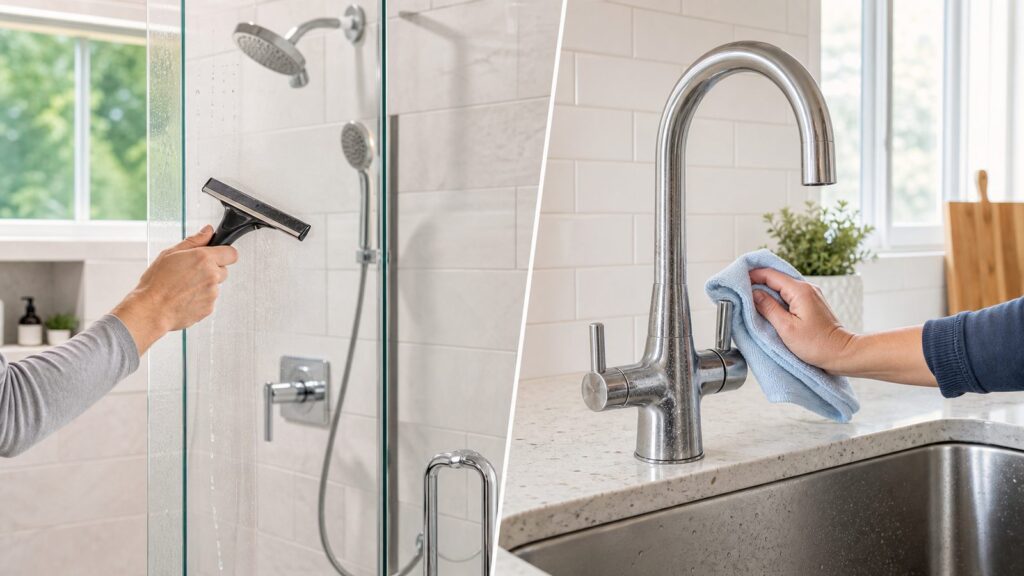
Hard water stains are mineral deposits left behind after water evaporates. In bathrooms and kitchens, they show up as white crust on faucets, cloudy shower glass, rings in toilets, spotting around sinks, and film on dishwasher interiors. The reliable fix is not scrubbing harder. It is identifying what the stain is, using a cleaner that is safe for the surface, removing the residue fully, and then reducing how often that surface stays wet.
On our job sites, we see hard water complaints most often after bathroom remodels, kitchen upgrades, and new fixture installations. The workmanship may be solid, but if the home has mineral-heavy water and the glass, stone, grout, and metal finishes are not maintained correctly, stains can return in a week. The best approach is part cleaning method and part building maintenance.
As an Amazon Associate I earn from qualifying purchases.
For most homeowners, a basic hard-water cleaning kit costs about $10 to $40: white vinegar, microfiber cloths, non-scratch pads, gloves, spray bottles, and maybe citric acid powder. Specialty hard-water removers usually run about $10 to $30 per bottle or tub. Professional cleaning or restoration can make sense when buildup is heavy, glass is etched, the surface is stone, or the stain covers a large area. In 2026, baseline hard-water stain removal is commonly estimated around $2.61 to $3.16 per square foot, while bathroom cleaning commonly lands around $119 to $259 depending on scope and market.
What Hard Water Stains Actually Are
Hard water contains dissolved minerals, mainly calcium and magnesium. The U.S. Geological Survey explains that water picks up these minerals as it moves through soil and rock, which is why groundwater-supplied homes are especially prone to hardness. Hardness varies widely across the United States. Many parts of the Southwest, Mountain West, Midwest, Texas, and Florida deal with harder water, while many coastal and Appalachian areas tend to be softer.
#1 Best Overall

- Hangs Easily Anywhere, No Drill No Mount: Eliminates additional accessories, all-one-piece silicone design with the large built-in hook makes it fit over most shower doors/walls, showerheads, caddies, door handles, towel bars, rods, sink edges, and other bathroom setups
- One Swipe Clean, Streak-Free Guarantee: Professional silicone blade material ensures glides smoothly to instantly remove steam, water drops, limescale, soap scum, and other liquid residues, leaving NO streaks behind
- Seamless Construction: A rigid internal core encased in silicone leaves no hidden crevices or exposed hardware. Designed for everyday use, its minimalist design combines practical functionality with a stylish look
- Ergonomic Non-Slip Grip: A unique 145° angled design, stiff wide shape, balanced weight, grippy texture, and soft-touch silicone coating, all make the handle comfortable to hold even in the wettest conditions
- Multi-Purpose Squeegee: From shower glass to mirrors, tiles, countertops, and car windows, it is your all-in-one cleaning tool (10" x 9" x 2.3")
When hard water dries on a surface, the water evaporates but the minerals stay behind. That residue bonds more tightly over time, especially where heat, soap, humidity, or repeated wetting are involved. A shower door that is squeegeed daily may stay clear for months. The same door left wet after every shower can haze over in two weeks.
Not every stain is the same:
- White or chalky buildup: Usually calcium and magnesium scale. Mild acids such as vinegar, citric acid, or lactic-acid bathroom cleaners often work.
- Orange or brown staining: Often iron. The EPA has a secondary, non-enforceable aesthetic guideline for iron at 0.3 mg/L because iron can affect taste, appearance, and staining.
- Gray, greasy film: Often soap scum mixed with minerals. It may need a soap-scum cleaner plus light acidic cleaning.
- Cloudy shower glass that feels smooth: May be etching, not removable surface scale. Cleaning can improve it, but permanent damage may require polishing or glass replacement.
- White marks on stone: Could be mineral scale, but acids can damage stone. Treat these differently from glass or ceramic tile.
The Safe Removal Method That Works on Most Surfaces
The basic process is simple: loosen the mineral deposit chemically, agitate gently, rinse fully, and dry. The mistake is jumping straight to abrasive pads, razor blades, or aggressive chemicals. Those may remove the stain and damage the finish at the same time.
Use this five-step process
- Identify the surface. Glass, porcelain, glazed ceramic tile, stainless steel, chrome, quartz, granite, marble, and coated fixtures all have different limits.
- Pre-wet the area. A damp surface helps the cleaner spread evenly and reduces harsh contact in one concentrated spot.
- Apply the least aggressive cleaner that should work. For white mineral scale, start with white vinegar or citric acid on acid-safe surfaces. For iron staining, use a rust remover labeled for the material.
- Give it dwell time. Most mild acid cleaning needs 5 to 15 minutes. Do not let it dry on the surface.
- Agitate, rinse, and dry. Use microfiber, a soft brush, or a non-scratch pad. Rinse with clean water, then dry completely.
Never mix bleach with vinegar, citric acid, toilet cleaners, rust removers, or descaling products. Bleach is also a poor choice for mineral scale because it does not dissolve calcium or magnesium deposits. It may lighten organic discoloration while leaving the crust in place.
Room-by-Room Hard Water Stain Guide
The right cleaner depends more on the material than the room. A vinegar soak that works beautifully on a chrome showerhead can etch marble, dull brass, or void a fixture finish warranty. When in doubt, check the manufacturer’s care sheet and test in a small hidden area.
| Surface | Safe Starting Cleaner | Dwell Time | Avoid |
|---|---|---|---|
| Glass shower doors | White vinegar, citric acid solution, or glass-safe hard-water remover | 5-15 minutes | Steel wool, dry scraping, harsh abrasives, applying coatings over existing scale |
| Glazed ceramic tile | Mild acidic bathroom cleaner or diluted vinegar | 5-10 minutes | Leaving acid on grout, abrasive powders on glossy tile |
| Grout | pH-neutral cleaner first; limited acid contact if grout is sound | 2-5 minutes | Repeated acid cleaning on unsealed, cracked, or sandy grout |
| Toilets | Toilet-safe lime remover or vinegar soak for light rings | 10-30 minutes | Mixing chemicals, pumice on non-porcelain surfaces |
| Chrome faucets | Vinegar-soaked cloth, then soft brush | 5-10 minutes | Long acid soaks, abrasive pads, ammonia on some finishes |
| Brushed nickel, brass, bronze, matte black | Manufacturer-approved mild soap first; finish-safe cleaner only | As labeled | Vinegar soaks, CLR-type products unless specifically approved |
| Stainless steel sinks | Vinegar or citric acid, wiped with the grain | 3-10 minutes | Chlorine bleach, steel wool, leaving acid around seams or trim |
| Quartz countertops | Stone/quartz-safe cleaner; short contact with approved products | As labeled | Abrasives, oven cleaner, strong acids, prolonged vinegar exposure |
| Granite and marble | Stone-safe cleaner and soft cloth | As labeled | Vinegar, lemon juice, descalers, abrasive pads |
| Dishwashers | Dishwasher descaler or citric acid cycle if manufacturer allows | One cleaning cycle | Hand descalers not approved for appliances |
| Coffee makers | Manufacturer-approved descaler or diluted vinegar if allowed | One descaling cycle | Skipping rinse cycles, using strong bathroom products |
| Refrigerator dispensers | Mild cleaner on exterior; replace filter as scheduled | Short wipe-down | Forcing descaler into dispenser lines unless manual allows it |
How to Clean Bathroom Hard Water Stains
Glass shower doors
Start with a clean, cool surface. Spray white vinegar or a citric-acid solution on the glass, or apply it with a saturated microfiber cloth so it stays wet. Let it sit for 5 to 15 minutes, then scrub with a non-scratch white pad or microfiber towel. Rinse thoroughly and dry with a clean towel.
If the glass still looks cloudy but feels smooth, the problem may be etching. Etching happens when minerals, cleaners, and moisture attack the glass surface over time. More acid will not rebuild damaged glass. Light etching may respond to professional polishing compounds, but heavy etching often means living with the haze or replacing the panel.
Do not apply water-repellent coatings over dirty glass. These products work best after mineral film is removed. On new shower glass, we like to hand homeowners a simple maintenance card: squeegee after each use, clean weekly with a glass-safe product, avoid abrasive pads, and keep ventilation running after showers.
The Tool Desk
Outbyte PC Repair FREEClear out junk files and repair common Windows errorsFree Scan →Outbyte Driver Updater FREEFix the driver behind crashes, sound loss and screen glitchesFind Drivers →Rank #2

- 【Streak Free & Squeak Free】: Docrok squeegee for shower glass door will effortless remove the water drops, soap scum and other sources of buildup of your shower glass door cleaner and other surfaces with just a few wipes. Getting your cleaning activities done fast and easy with no streak and squeak.
- 【Sturdy & Durable】: Made of 100% rust-resistant stainless steel and premium silicon blade, our shower squeegeee, shower door squiggy with exquisite craft ensure the durability and long lasting use for your daily household cleaning activities. A must have window squeegee for window cleaning, bathroom squeegee for shower glass doors.
- 【Ergonomic Design】: Features an ergonomic structure and precise cut silicone blade, this shower glass squeegee car squeegee provides you a comfortable anti-slip grip to efficiently clean your tile show walls with minimum time and effort.
- 【All-Purpose Squeegee】: This all-purpose squeegee is great for shower glass doors, tile shower walls, car windows, mirrors and any other smooth and flat surfaces. A must have cleaning tool for indoor and outdoor use.
- 【Easy Storage & Use】: Comes with 2 kinds of waterproof adhesive hooks which can be attached to any smooth surface, you can hang the squeegee on the shower walls, kitchen and any other places for easy reach and use.
Showerheads and faucets
For chrome showerheads and faucet tips, fill a small plastic bag with vinegar, wrap it around the fixture, and secure it so the mineral deposits are submerged. Limit contact to about 10 to 30 minutes for chrome unless the manufacturer says otherwise. Remove the bag, brush spray nozzles gently with a soft toothbrush, run water through the fixture, and dry it.
For brushed nickel, brass, oil-rubbed bronze, matte black, and other coated finishes, be more cautious. Many premium finishes are not designed for acidic soaking. Start with warm water, mild dish soap, and microfiber. If that does not work, use only a cleaner approved by the fixture manufacturer.
Tile and grout
Glazed ceramic and porcelain tile usually tolerate mild acidic cleaners. Grout is the weak point. Acid can slowly degrade cement-based grout, especially if it is unsealed, cracked, or already sandy. Keep dwell time short, rinse generously, and dry the wall after cleaning.
If scale returns quickly in the same corner or along the bottom row of tile, look for a construction or maintenance cause: poor slope, a leaking shower valve, a door sweep trapping water, failed caulk, or a showerhead spraying directly at the enclosure joint.
Toilets
Hard water toilet rings respond best to time and the right chemistry. Turn off the supply, flush to lower the water level, and apply a toilet-safe lime remover or vinegar to the ring. Let it sit for 10 to 30 minutes, scrub with a toilet brush, then flush. A pumice stick can work on white porcelain, but it must stay wet and should not be used on plastic, colored, or delicate surfaces.
How to Clean Kitchen Hard Water Stains
Stainless steel sinks
Stainless steel looks tough, but it scratches easily when cleaned across the grain or with the wrong pad. Use vinegar or citric acid for light mineral spotting, let it dwell for 3 to 10 minutes, then wipe with the grain using microfiber or a non-scratch pad. Rinse well and dry. Do not leave acidic cleaner sitting around seams, drain trim, faucet bases, or decorative inserts.
Rank #3

- EFFICIENT CLEANING - Squeegee with premium 304 stainless steel frame, rust-free and durable. The soft and smooth silicone blade allows for streak-free and persistent cleaning performance and minimal squeaking noises.
- WIDE TO USE - Our shower squeegee has perfect size and effectively apply for removing water, limescale, and soap scum on smooth surfaces such as your shower glass door, window, ceramic tile, mirror, sink and car glass.
- COMFORTABLE HANDLE - The handle of the squeegee uses plastic material instead of stainless steel, non-slip, lighter and more comfortable to grip. Better help you with minimum effort to provide maximum cleaning power.
- STRONG ADHESIVE HOOKS - Window squeegee comes with a strong adhesive hook for convenient hang and storage. It is no drilling and no worry to harm to your wall or glass, meet your bathroom hanging needs.
- PERFECT GUARANTEE - If you experience an issue with our bathroom squeegee, please get in touch with us to repair or replace it. And if you have any questions during use, contact us at any time, we will solve them for you.
Faucets and sprayers
Kitchen faucets often collect scale around the aerator, sprayer face, and base plate. Remove the aerator if it is designed to come off, soak the screen briefly, brush away grit, and reinstall it. If water flow remains uneven, the aerator may be clogged with mineral debris and worth replacing. Many aerators cost less than $10 to $20, while specialty pull-down sprayer parts can cost more.
Dishwashers
White film inside a dishwasher may come from hard water, detergent residue, or both. Use a dishwasher descaler or citric acid cleaning cycle if the appliance manual allows it. Also check rinse aid, water temperature, detergent dose, and filter cleanliness. A dishwasher that never reaches proper temperature or drains poorly will keep redepositing residue.
Windows Errors? Fix Them Before They Spread
Repair common Windows errors and clear accumulated junk for a smoother, more stable PC - no reinstall needed.Free scan · no reinstallCrashes, No Sound, or Screen Glitches?
Random freezes, missing sound and display glitches usually trace back to one bad driver. Find and replace yours safely.Free scan · under a minuteCoffee makers and kettles
Use the appliance manufacturer’s descaling instructions. Many coffee makers can be descaled with a branded solution or diluted vinegar, followed by multiple rinse cycles. Do not use bathroom descalers in food-contact appliances.
Countertops
Quartz, granite, marble, limestone, and other countertop materials require care. Vinegar and common descalers can etch marble and some natural stone. Quartz is more resistant, but prolonged chemical exposure can still dull resin or affect surface appearance. Use a stone-safe cleaner, keep sink areas dry, and address recurring splash zones with habits and water treatment rather than repeated acid cleaning.
What Not to Use on Hard Water Stains
The wrong cleaner can create a more expensive problem than the stain. Avoid these common mistakes:
- Bleach for mineral scale: It does not dissolve calcium or magnesium deposits.
- Bleach mixed with acids: This can create dangerous fumes.
- Steel wool or aggressive scouring pads: These can scratch glass, stainless, tile glaze, and plated finishes.
- Vinegar on marble, limestone, travertine, or many natural stones: Acid can etch the surface.
- Long acid soaks on coated fixtures: Nickel, bronze, brass, matte black, and manufacturer-applied coatings may discolor or dull.
- Razor blades used casually: They can scratch glass or damage protective coatings if handled incorrectly.
How Much Hard Water Stain Removal Costs in 2026
Most light staining is a low-cost DIY maintenance job. The price rises when the work becomes restoration, when surfaces are delicate, or when the cause requires plumbing changes.
Quick wins for a faster PC:
Fix the driver behind crashes, sound loss and screen glitchesFind Drivers →Repair Windows errors before they cause bigger problemsFix Now →| Project | Typical 2026 Cost | What Drives the Price |
|---|---|---|
| Basic DIY cleaning kit | $10-$40 | Vinegar, citric acid, microfiber, gloves, spray bottle, non-scratch pads |
| Specialty hard-water remover | $10-$30 per bottle or tub | Brand, size, surface rating, rust versus mineral formula |
| Professional bathroom cleaning | About $119-$259 per bathroom | Local labor, condition, size, shower glass, tile, toilet buildup |
| Whole-home deep cleaning | About $180-$375, with labor often $50-$90 per hour | Home size, soil level, number of cleaners, market |
| Specialized hard-water stain removal | About $2.61-$3.16 per square foot baseline | Severity, access, glass polishing, stone-safe chemistry |
| water softener installation | Often around $1,500; broad range $200-$6,000 or more | System type, grain capacity, plumbing loop, drain, electrical, local labor |
| High-end or complex water treatment | Can reach $11,000 | Large homes, difficult plumbing, multiple treatment stages, severe water chemistry |
A water softener treats the cause of calcium and magnesium scale, but it does not remove old stains. Existing deposits still need cleaning. Also, soft water does not eliminate every spot. Silica, dissolved solids, soap residue, and poor drying habits can still leave marks.
Rank #4

- Hangs Easily Anywhere, No Fixed Mount Needed: Eliminates additional accessories, all-one-piece silicone design with the large built-in hook makes it fit over most shower doors/walls, showerheads, caddies, door handles, towel bars, rods, sink edges, and other bathroom setups
- One Swipe Clean, Streak-Free Guarantee: Professional silicone blade material ensures glides smoothly to instantly remove steam, water drops, limescale, soap scum, and other liquid residues, leaving NO streaks behind
- Seamless Construction: A rigid internal core with silicone over-molding leaves no hidden crevices or exposed hardware. Designed for everyday use, its minimalist design combines practical functionality with a stylish look
- Ergonomic Non-Slip Grip: A unique 145° angled design, stiff wide shape, balanced weight, grippy texture, and soft-touch silicone coating, all make the handle comfortable to hold even in the wettest conditions
- Multi-Purpose Squeegee: From shower glass to mirrors, tiles, countertops, and car windows, it is your all-in-one cleaning tool
When to DIY and When to Hire a Pro
DIY makes sense when
- The stains are light to moderate and mostly white or chalky.
- The surface is glass, glazed tile, porcelain, chrome, or stainless steel in good condition.
- You can test a small area first.
- You have time to use dwell time and gentle agitation instead of force.
- The area is reachable without unsafe ladder work.
Hire a pro when
- Shower glass remains cloudy after cleaning and may be etched.
- The stain is on marble, limestone, travertine, or another acid-sensitive stone.
- The buildup is heavy enough to affect valves, showerheads, or appliance performance.
- The staining covers a large rental turnover, commercial restroom, or neglected property.
- You see recurring stains from leaks, poor drainage, failed caulk, or bad ventilation.
- You are considering a whole-house softener and need plumbing, drain, or electrical changes.
In construction and remodeling work, we separate cleaning from correction. Cleaning removes residue. Correction fixes the condition that keeps producing it: a dripping faucet, a shower door that holds water at the bottom rail, a misdirected showerhead, inadequate bath fan runtime, or untreated hard water.
Independent reader supportYour contribution helps us test, update, and keep practical guides available for everyone.Preventing Hard Water Stains for Good
The most practical prevention stack is simple: remove standing water, reduce mineral concentration where justified, and use materials correctly.
- Squeegee shower glass after every use. This takes about 30 seconds and prevents the most visible buildup.
- Dry faucets, sink decks, and counters. A microfiber towel near the sink does more than most specialty products.
- Repair drips quickly. A slow leak can create a heavy mineral track in one exact location.
- Clean weekly. Light mineral film is easy to remove. Six months of scale is a different job.
- Run the bath fan. Use it during the shower and for about 20 minutes afterward, or install a timer switch.
- Use the right caulk and slope details. Flat ledges, poorly pitched niches, and water-holding trim collect deposits.
- Test your water before buying equipment. Hardness, iron, manganese, and household water use all affect treatment choices.
Water Softeners, Permits, and Plumbing Details
A water softener can be the right long-term answer for homes with hard water, especially when scale affects fixtures, glass, appliances, and water heaters. But it needs to be specified and installed correctly.
Size a softener by tested hardness, iron or manganese load, household water use, and desired regeneration frequency. Do not buy only by the number of bathrooms. A four-person household with very hard water may need a different grain capacity than a two-person household with moderate hardness.
Installation details matter. A softener typically needs a proper drain route, an air gap, a nearby electrical outlet, access for salt loading and service, and a bypass valve. Many plumbing codes are concerned with protecting the potable water supply from contamination. The International Plumbing Code includes backflow protection requirements, and softener discharge must be routed correctly rather than hard-piped in a way that can siphon waste back into the system.
Some municipalities require permits for water softeners, plumbing modifications, drain changes, or new electrical outlets. Permit fees vary locally and can range from nominal to several hundred dollars. California also has local restrictions in some areas related to self-regenerating water softeners because of brine discharge concerns. Before installation day, verify the local rule, drain location, electrical access, and whether the home already has a softener loop.
Best Value

- 1. 【All-Purpose Squeegee】This squeegee is versatile cleaning tool for indoor and outdoor use. Easily clean shower doors, windows, tile,mirrors, Bath Sets, kitchen, car windows, decks, patios and other smooth and flat surfaces, Suitable for indoor and outdoor. Our product is 10 inches in size. Suitable for daily cleaning. Please purchase as needed. Buyers are advised to choose our product according to their own usage habits
- 2. 【Soft Squeegee】This squeegee with a soft rubber blade. Easily removes water droplets, soap residue and other buildup from bathroom glass door cleaners and other surfaces with your favorite household cleaner to reveal surfaces that shine
- 3. 【Ergonomic Handle】An ergonomic design and a lightweight handle.Giving a comfort, effortless grip and superior control during cleaning. When using, please attach it to a smooth contact surface and apply gentle force. Excessive force may cause uneven stress on the wall, resulting in marks
- 4. 【Sturdy and Long-lasting 】Suring a long-lasting,rust and corrosion free performance in various environments. Sturdy and Long-lasting as an often-used home essential for daily cleaning
- 5. 【Easy To Store &Use】Comes with waterproof adhesive hooks which can be attached to any smooth surface, you can hang the squeegee on the shower walls, kitchen and any other places for easy storage and quick accessibility. Please purchase our product based on the area of your bathroom; otherwise, it may not fit properly during use
The Bottom Line
To remove hard water stains for the long haul, match the method to the material. Use mild acids for white mineral scale on acid-safe surfaces, rust removers for iron staining, stone-safe products for natural stone, and manufacturer-approved care for specialty finishes. Give cleaners enough dwell time, avoid abrasives, rinse thoroughly, and dry completely.
Do these 3 things before closing this tab:
1Clear out junk files and repair common Windows errors2Fix the driver behind crashes, sound loss and screen glitches3Repair Windows errors before they cause bigger problemsThen fix the reason the surface keeps getting wet. Squeegee glass, dry fixtures, repair drips, improve ventilation, and test the water before spending money on treatment equipment. That is the difference between cleaning the same stain every Saturday and actually getting ahead of the problem.
Frequently Asked Questions
What causes hard water stains in bathrooms and kitchens?
Hard water stains are mineral deposits left after water evaporates. They are usually calcium and magnesium scale, sometimes mixed with iron, soap scum, silica, or dirt.
Does vinegar really remove hard water stains?
Yes, vinegar can dissolve light calcium and magnesium scale on acid-safe surfaces such as glass, chrome, porcelain, and some tile. Do not use vinegar on marble, limestone, travertine, or many specialty fixture finishes.
Can hard water stains become permanent?
Yes. Mineral film can sometimes etch glass or damage finishes if left too long. If shower glass stays cloudy after the surface feels clean, the glass may be etched and may need polishing or replacement.
What’s actually slowing this PC down?
Pick the symptom - the matching free tool is one click away.
How do you remove hard water stains from glass shower doors without scratching them?
Use white vinegar, citric acid, or a glass-safe hard-water remover. Let it dwell for 5 to 15 minutes, scrub with microfiber or a non-scratch pad, rinse completely, and dry. Avoid steel wool, abrasive powders, and dry scraping.
What should you never use on hard water stains?
Do not mix bleach with acids, and do not rely on bleach to remove mineral scale. Avoid steel wool, harsh abrasives, vinegar on natural stone, and long acid soaks on coated finishes.
Will a water softener stop hard water stains completely?
A water softener reduces calcium and magnesium scale, which helps a lot, but it does not remove existing stains and may not prevent every spot. Silica, dissolved solids, soap residue, and poor drying habits can still leave marks.
Quick Recap
Product prices and availability are accurate as of the date/time indicated and are subject to change. Any price and availability information displayed on Amazon at the time of purchase will apply.
Recommended Free Tools

