Quick wins for a faster PC:
Clear out junk files and repair common Windows errorsFree Scan →Scan for outdated or missing drivers - takes under a minuteDriver Scan →The best-supported homemade deer repellent is a simple egg-and-water spray: blend three whole chicken eggs with water to make 1 U.S. gallon (3.78 liters), strain it thoroughly, and spray vulnerable ornamental foliage until it is wet and lightly shiny. Use it before browsing becomes established, then reapply about every two weeks, after heavy rain, and when new growth appears.
Do not treat this as a deer-proof solution. The raw-egg spray is best reserved for ornamental plants or a perimeter treatment around a vegetable garden—not for the edible parts of vegetables, herbs, fruit, or berries. For severe or nightly browsing, cages, netting, or fencing are more reliable than adding more ingredients to a homemade recipe.

As an Amazon Associate I earn from qualifying purchases.
The best homemade deer-repellent recipe
University of Minnesota research found that a solution made with three whole eggs per gallon of water deterred captive white-tailed deer more effectively than the other homemade alternatives tested in that study. That does not guarantee the same result in every garden, but it gives this basic formula a stronger evidence base than the complicated recipes commonly shared online.
The deterrent is the egg odor. Adding milk, soap, garlic, vinegar, oil, hot sauce, or other ingredients is not automatically an improvement; Minnesota Extension cautions that secondary ingredients may mask the odor that makes the formula useful. See the University of Minnesota deer-protection guidance for the original recipe and application recommendations.
#1 Best Overall

- REPELS DEER AND RABBITS: Deer and rabbits don’t have to eat vegetation for the repellent to be effective—they have a natural aversion to the scent.
- TREAT LOW-GROWING VEGETATION: Use to protect low-growing flower beds, landscaped ornamental gardens, ground cover and lawns up to 24 inches in height.
- SAFE: Harmless to plants and animals when used and stored as directed.
- APPLY YEAR-ROUND: No need to rotate with other repellent brands – animals’ natural aversion to Liquid Fence Deer & Rabbit Repellent Granular2 will never diminish.
- WORKS ON SCENT: Deer and rabbits don’t even have to take a bite to be repelled.
Ingredients and equipment
- 3 whole chicken eggs
- Water to make 1 U.S. gallon (3.78 liters) total
- A blender used only for garden work
- A fine strainer, cheesecloth, or several layers of fine filter material
- A dedicated hand sprayer or tank sprayer
- Gloves and, if handling hot peppers, eye protection
How to make it
- Blend the eggs. Put the three whole eggs in a blender with enough water to process them thoroughly. Colorado State University recommends removing the white, cord-like chalaza attached to the yolks because it can contribute to sprayer clogging.
- Dilute to one gallon. Pour the blended mixture into a clean container and add water until the total volume—not just the added water—is 1 gallon.
- Strain it carefully. Filter out membranes and solids through cheesecloth or a fine strainer. Do not skip this step if you are using a hand or tank sprayer.
- Fill a dedicated garden sprayer. Do not use a sprayer that is also used for food preparation. Make only as much as you expect to use promptly.
Rinse the sprayer immediately after application. Egg solids can dry inside the nozzle, and an old mixture becomes increasingly foul-smelling. Do not store decomposing egg spray indoors.
How to apply egg spray without damaging plants
Apply the mixture to plants deer are likely to browse, especially tender terminal shoots, fresh leaves, flowers, and fruiting growth on ornamentals. Spray until the foliage is wet and has a light sheen, but stop before the liquid runs off.
- Start early. Apply as soon as vulnerable plants begin growing, before deer establish a regular feeding pattern. If browsing has already started, treat as soon as possible.
- Choose suitable weather. Spray dry foliage on a dry day when temperatures are above freezing and rain is not expected soon. Avoid intense heat and direct, strong sunlight.
- Test first. Spray one plant or a small section and observe it before treating the entire bed. Plant sensitivity varies, particularly when leaves are young, stressed, hot, or wet. The University of California Integrated Pest Management guidance recommends testing a repellent where plant injury is possible.
- Cover new growth. A repellent on older leaves does not protect shoots that emerge later. Recheck the plants after a week or two and treat untreated growth.
- Reapply based on conditions. Minnesota Extension recommends approximately every two weeks or after rain. Reapply sooner after heavy rain, sprinkler irrigation that washes the foliage, or substantial new growth.
- Clean up. Rinse the equipment promptly with clean water and wash your hands after handling the mixture.
Make a small batch rather than keeping leftover spray. Minnesota Extension warns that the odor becomes much stronger after the mixture sits for more than a day, which can make it unpleasant around patios, doors, walkways, and outdoor seating.
Free tools Windows power users keep installed
One-click scans. No signup required.
Does homemade egg spray really work?
It can reduce browsing, particularly during the growing season when deer pressure is light to moderate. It is not a guarantee that deer will leave a garden untouched.
The Minnesota result came from a particular study involving captive white-tailed deer, a particular formula, and controlled conditions. It should not be converted into a universal success percentage for every landscape. Deer density, weather, plant species, available forage, application coverage, and the length of the trial all affect results.
Broader deer-repellent research is difficult to compare because studies use different deer species, plants, concentrations, climates, and measures of success. A review of deer-repellent research found that even the best repellents in most field tests generally reduced damage by less than 60%. Minnesota Extension has also estimated that the egg spray may cover “75% or more” of the average home gardener’s repellent needs. That figure is an Extension estimate for practical garden use, not a universal controlled-trial success rate.
Think of the spray as a way to reduce damage while you monitor the garden—not as permission to leave a high-value garden unprotected.
Do not spray homemade raw-egg repellent on vegetables
Avoid applying the homemade raw-egg mixture to the harvestable parts of vegetables, herbs, fruits, or berries. This is the most important limitation of the recipe.
A homemade spray has no approved crop label specifying the application rate, residue limits, washing instructions, or preharvest interval. Raw eggs can also carry Salmonella. That does not mean every plant treated with the spray will become contaminated, but there is no validated food-crop safety protocol for this homemade mixture.
Rank #2

- Deer & Rabbits Repellent-This deer and rabbit repellent is designed to help keep deer, rabbits, and bunnies away from gardens and yards, helping protect the plants you've spent time growing so you can enjoy your outdoor space again.
- Lasting Protection-Each deer and rabbit repellent helps provide protection for about 60–90 days and covers up to 120 sq ft. With longer-lasting coverage, you don't have to keep replacing products every few weeks, making garden care simpler and more predictable throughout the season.
- Safe for Humans & Pets-Made with natural ingredients, this deer repellent is designed for everyday outdoor spaces around homes with kids, pets, and plants, offering a more considerate way to protect gardens while still respecting the wildlife that shares the outdoor environment.
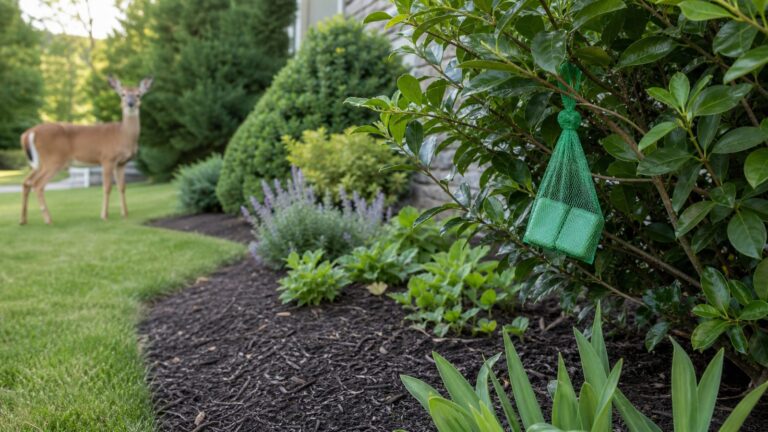
- Simple to Use-Simply hang or place the outdoor deer repellent around fences, garden edges, flower beds, or tree bases where deer activity appears. No complicated setup, no constant checking—just an easy step that helps you spend more time enjoying your yard instead of worrying about it.
- Versatile Outdoor Use – Ideal for gardens, yards, orchards, flower beds, and vegetable patches. Helps support the plants you've carefully grown so your outdoor space stays enjoyable and well maintained.
For a vegetable garden, use one of these approaches instead:
- Apply the egg spray only to ornamental plants or to a separate perimeter, stakes, ribbons, or barrier—not to edible plant surfaces.
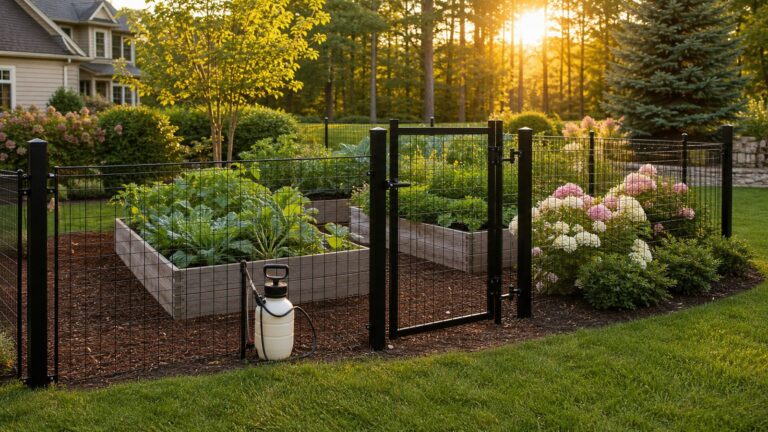
- Protect crops with netting, cages, or fencing.
- Use a purchased deer repellent only when its current label specifically permits application to the crop and site in question.
Commercial products are not interchangeable. Some may be labeled for edible crops, while putrescent-egg products may be restricted to ornamentals or perimeter use. The University of Maryland’s current deer-management guidance explains why active ingredients and labels matter.
Never prepare raw-egg spray on food-preparation surfaces or with kitchen equipment used for food. Wear gloves, wash your hands, and clean the sprayer after use. Do not assume that “natural,” “organic,” or “homemade” means safe for food crops.
Should you let the mixture rot or “ripen”?
Some Colorado State University recipes advise allowing egg-based mixtures to sit in the sun or “ripen” so the egg solids develop a stronger putrescent odor. Other Extension guidance warns that the smell becomes increasingly unpleasant after the mixture sits for more than a day and advises avoiding it on food before harvest.
Those recommendations are not a standardized safety protocol. There is no established home procedure controlling storage temperature, pathogen growth, application residues, or food-crop intervals for deliberately rotted raw eggs. Do not deliberately ferment or rot raw eggs for use in a vegetable garden. Make a small batch, use it promptly, and discard leftovers rather than storing decomposing spray.
What about garlic, cayenne, hot sauce, milk, or dish soap?
Many online recipes treat every kitchen ingredient as interchangeable. The evidence does not support that approach. Here is the practical distinction:
Recommended Free Tools
| Ingredient | How to treat it |
|---|---|
| Egg | The primary homemade ingredient in the Minnesota recipe: three whole eggs per gallon of water. This is the DIY formula with the clearest cited research basis. |
| Hot pepper or capsaicin | A plausible separate deterrent that may discourage feeding through taste or irritation, but results vary. It is not necessary in the egg formula. |
| Garlic | Used as an active ingredient in some commercial deer repellents and in popular homemade recipes. It is not proven here to improve the Minnesota egg spray. |
| Milk or yogurt | Popular additions, sometimes promoted as sticking agents because of casein. They are not equally tested against deer and are not needed for the evidence-based recipe. |
| Dish detergent | Omit it. Household dish detergents contain additives that have not been evaluated for routine plant application and may injure foliage, especially in sunny conditions. Dish detergent is not the same as formulated insecticidal soap. |
| Cooking oil | Avoid as an untested additive. Oils in homemade sprays may block leaf stomata and interfere with photosynthesis and respiration. |
| Vinegar, ammonia, or bleach | Do not add them. Rates are not standardized for plant safety, and mixing household chemicals can create dangerous fumes. |
| Mothballs | Never use them outdoors as deer repellent. They are intended for airtight containers, have little or no reliable effect as animal repellents, and can expose people, pets, and wildlife to pesticide vapors. |
For more on the risks of household remedies and dish detergents, see Penn State Extension’s guidance on home remedies. For mothballs, consult the National Pesticide Information Center.
A hot-pepper spray is a separate, less-standardized option
Colorado State University publishes a homemade ornamental-plant recipe using:
- 1–2 beaten raw eggs
- One or more chopped hot peppers
- 4–5 garlic cloves, optional
- 1 quart or less of water
The ingredients are blended, strained, sprayed on plants, and reapplied after rain. Treat this as an experimental alternative for ornamentals, not as a universally validated formula or a recommendation for edible crops.
Rank #3

- STRONG REPELLER - This unique blend of ingredients causes mild irritation to animal's nasal passages. When an animal touches, tastes, or smells Repels-All Animal Repellent, it triggers the natural instinct to escape/avoid and the pest leaves.
- ANIMALS AFFECTED - Our granules repel species of squirrel, deer, rabbit, chipmunk, mouse, skunk, rat, beaver, raccoon, porcupine, bird, groundhog and more rodent species.
- DEFEND YOUR GARDEN AND HOME - Apply around homes, gardens, garbage cans, barns, swimming pools, sheds, woodpiles, decks, patios, and campsites to prevent grazing, chewing, gnawing, nibbling and browsing damage to plants and property.
- BIODEGRADABLE - Repels-All granules are biodegradable and will not harm animals, lawns, gardens, flowerbeds, or other desirable plants when used as directed.
Capsaicin has been studied as a deer deterrent, but the evidence should not be overgeneralized. A 1994 study of captive mule deer tested particular concentrations of commercial hot-pepper products, habanero peppers, and Tabasco sauce. It does not establish that any arbitrary amount of cayenne, hot sauce, or fresh pepper will protect a home garden. The study also observed that the effect declined over time, which is consistent with deer becoming accustomed to a repeated stimulus.
What’s actually slowing this PC down?
Pick the symptom - the matching free tool is one click away.
Hot peppers can irritate skin, eyes, and mucous membranes. Wear gloves and eye protection, strain the mixture carefully, avoid touching your face, and wash your hands and equipment after preparation. Do not spray it near people, pets, or food being harvested.
When and how often should you apply deer repellent?
For the three-egg Minnesota formula, use this conservative schedule:
- First application: When vulnerable plants begin growing or before expected browsing starts.
- During active growth: About every two weeks.
- After weather: Reapply after heavy rain or irrigation that removes the coating.
- After plant growth: Treat new shoots and leaves that were not covered by the original application.
- Under heavy pressure: Shorten the interval if deer continue browsing, but do not keep increasing the concentration with random additives.
Colorado State University describes a different formulation—approximately 20% whole egg and 80% water—as potentially weather-resistant for about 30 days. That is not the same recipe, plant, deer population, climate, or test condition as the Minnesota guidance. Use the two-week-and-after-rain schedule for the simple three-eggs-per-gallon formula rather than assuming every egg spray lasts 30 days.
Repellents work best before deer become accustomed to feeding in a particular location. The University of Minnesota’s deer-damage guidance and University of Vermont’s garden guidance both emphasize that established feeding patterns, weather, and food availability affect results.
Will egg spray work in winter?
Do not rely on the Minnesota egg recipe for winter protection. Minnesota Extension presents it primarily as a summer or growing-season treatment and notes that its odor-based action is not effective over winter. Winter browsing may also intensify when natural forage is scarce, making deer more willing to tolerate a repellent.
For winter protection of shrubs and young trees, prioritize:
- Wire cages around individual plants
- Tree guards or netting
- Temporary or permanent fencing
- A labeled commercial product approved for the specific dormant plant and site
- Post-browse inspection and species-appropriate pruning or recovery care
First confirm that deer are causing the damage
Deer are not the only animals that browse gardens. Look for several clues together:
- Ragged or torn-looking browse rather than cleanly cut stems
- Damage to terminal shoots, young leaves, flowers, or fruit
- Deer tracks or droppings near the bed
- Browsing at a height above the reach of rabbits or many groundhogs
- Rubs or stripped bark on young trees, especially from late summer into fall when bucks begin rubbing antlers
If the damage appears overnight but there are no tracks, droppings, or browse patterns, inspect for rabbits, groundhogs, insects, or other causes before treating the plants.
The Tool Desk
Outbyte Driver Updater FREEScan for outdated or missing drivers - takes under a minuteDriver Scan →Outbyte PC Repair FREERepair Windows errors before they cause bigger problemsFix Now →Rank #4

- REPELS & TRAINS BY SMELL - This specially formulated repellent contains a proprietary blend of natural biodegradable ingredients designed to emit an odor that deer associate with their dead kin. It repels the animals before they nibble on plants & before they begin browsing shrubs and eating flowers.
- DURABLE LONG LASTING APPLICATION - Our granule repellent is long lasting and won’t wash out in the rain. After exceptionally heavy downpour the product may need to be reapplied lightly. Product covers 12,400 sq. ft.
- EASY TO APPLY - This repellent can be applied by spreader or by hand sprinkle. When applying the granule, apply 18” from the edge of the plants & be heavy enough so as to visibly cover the ground around the plants and shrubs to be protected. It is important to treat Deer Scram as a perimeter barrier around the desired area you want protected.
- CHILD, PET AND ANIMAL SAFE - EPIC Repellents use all natural ingredients that do not harm animals or humans when used as instructed. The product is safe to use around pets and children. The products’ granules also completely disintegrate in the environment and are environmentally safe, making the product an eco-friendly option compared to other repellents or device that use plastics or non-natural ingredients.
- THE EPIC GRANUAL DIFFERENCE - There are alot of repellent products and devices out there. EPIC granual repellents offer unmatched application area precision compared to devices, pouches and liquids. Our founders role as a zoo keeper taught us that no two animals are the same. We have engineered our formulas to be laser targeted toward a specific pest by study of specific animal habit and preference.
Why homemade deer repellent fails—and what to do next
The deer eat the plants anyway
Failure can result from high deer density, scarce natural forage, rain, uneven coverage, new growth, unusually palatable plants, or deer that already feed in the area every day. It can also result from habituation: a deer may initially avoid an odor but learn to tolerate it when the available food is valuable enough.
- Check that the sprayer was not clogged and that foliage was actually covered.
- Reapply after rain or new growth.
- Do not respond by adding more random kitchen ingredients.
- Use a physical barrier, particularly around edible crops.
- Switch to cages or fencing if the damage remains unacceptable.
The sprayer clogs
Strain the mixture through cheesecloth or a fine filter, remove the chalaza and larger solids, and rinse the equipment immediately. Do not leave egg mixture sitting in the sprayer.
The leaves show damage
Stop spraying. Rinse the foliage with clean water if practical, then test any revised treatment on one plant or a small area. Do not add dish detergent, concentrated oil, vinegar, or extra pepper to stressed plants. Homemade formulas are not plant-safety tested across all species and conditions.
The odor is unacceptable
Make smaller batches, use the spray only on ornamentals or a perimeter barrier, and keep it away from doors, patios, seating areas, and frequently used paths. Never store old mixture indoors. If odor remains a problem, use netting, cages, fencing, or a properly labeled commercial product.
Rain is forecast
Wait until foliage is dry and there is enough time for the spray to dry. If rain arrives soon after treatment, assume protection has been reduced and reapply when conditions allow.
Deer are getting through the fence
Inspect the weakest points:
- Gate gaps and unsecured gates
- Low spots or eroded ground beneath the fence
- Fence corners
- Branches or other objects that have fallen across the fence
- Nearby raised banks or slopes that give deer a higher launch point
- Loose, damaged, or poorly secured netting
A fence works only as well as its openings, corners, and maintenance. For large areas, Extension guidance generally recommends a fence approximately 8 feet high, although highly motivated deer can sometimes clear barriers and no fence should be described as absolutely deer-proof.
Independent reader supportYour contribution helps us test, update, and keep practical guides available for everyone.When a barrier is better than a spray
Repellents are most useful for small areas, occasional browsing, and relatively light deer pressure. They are less attractive when the garden contains food crops, sits close to a home, or must remain protected through winter.
| Situation | Best first choice | Main trade-off |
|---|---|---|
| A few ornamental shrubs | Egg spray or individual cages | Low material cost, but odor and reapplication are ongoing limitations. |
| Small flower bed with light browsing | Egg spray plus a low visual or line barrier | Combines deterrents, but may fail when deer are hungry. |
| Vegetable garden | Netting, cages, or fencing | Requires installation and access planning, but avoids raw egg on edible plants. |
| High deer pressure | Permanent or temporary fencing | Higher initial cost and maintenance, but more reliable exclusion. |
| Winter browse on shrubs | Wire cages, tree guards, or fencing | May affect appearance and requires setup. |
| Occasional browsing after rain | Repellent may be cost-effective | It must be reapplied when weather removes it. |
| Deer feeding daily | Barrier first; repellent as a supplement | Established feeding patterns are difficult to break with odor alone. |
| Garden near a house or walkway | A barrier or an odor-tolerable treatment area | Egg odor can be objectionable, especially as the mixture ages. |
| Children, pets, or food crops nearby | Physical exclusion | More upfront work, with less residue and odor risk. |
Approximately 8-foot fencing
An approximately 8-foot-high fence is the standard recommendation for excluding deer from larger areas. Use a secure gate, close ground-level gaps, and maintain the fence throughout the season. Height, terrain, gate design, and deer motivation all affect performance. The University of Maryland’s four-pillar guidance provides additional context on exclusion and repellents.
Outdated Drivers Are Slowing You Down
One free scan finds every outdated or missing driver and matches the right update for your exact hardware.Free scan · exact hardware matchWindows Errors? Fix Them Before They Spread
Repair common Windows errors and clear accumulated junk for a smoother, more stable PC - no reinstall needed.Free scan · no reinstallSmall exclosures
For a small bed, a full-height perimeter fence may not be necessary. Minnesota Extension describes 8-by-16-foot micro-exclosures only about 50 inches high that have successfully excluded deer in some settings because deer may avoid entering a confined space. This is a site-specific behavioral deterrent, not a guarantee for every garden or deer population.
Best Value
Fishing-line barriers
Minnesota Extension describes a short-term barrier made with high-test monofilament fishing line of approximately 30 pounds or more. The line is tightly strung around the bed about 30–36 inches above ground and approximately 2 feet outside the garden edge. It may work where deer density is low and browsing occurs mainly at night, but it can fail where deer pressure is high or deer browse during the day.
Motion-activated sprinklers and lights
Motion-activated sprinklers and lights can supplement other measures, especially at the beginning of a problem. Deer may habituate to them quickly, so they are not substitutes for fencing around a high-value garden.
Plant selection
Plants described as deer-resistant are not deer-proof. Preferences change with region, season, plant growth stage, deer population, and the amount of natural forage available. Less-palatable plants are most useful as one part of a layered plan.
Do these 3 things before closing this tab:
1Clear out junk files and repair common Windows errors2Scan for outdated or missing drivers - takes under a minute3Repair Windows errors before they cause bigger problemsLegal and label considerations in the United States
In the United States, a substance intended to repel a pest generally falls within the federal definition of a pesticide. Pesticides typically must be registered before sale or distribution unless a specific exemption applies, such as the federal minimum-risk exemption. States may impose additional requirements. See the EPA’s pesticide definition, its registration guidance, and the conditions for minimum-risk pesticides.
Making a small batch for personal use is different from bottling, selling, distributing, or marketing a homemade pesticide. EPA guidance treats personal use differently from sale or distribution, but state law can vary. Do not sell or give away homemade spray as a labeled deer-control product without checking the applicable federal and state requirements.
For purchased products, the current label controls. A product labeled for ornamentals or perimeter use must not be sprayed directly on vegetables. Confirm the crop, application site, rate, reapplication interval, and any preharvest interval before using it.
A practical decision rule
- Light or occasional browsing on ornamentals: Try the three-egg-per-gallon spray and monitor results.
- A small flower bed: Combine the spray with a low barrier or individual cages rather than relying on odor alone.
- An edible garden: Use a physical barrier or a product with a current label specifically covering the crop. Keep homemade raw-egg spray off harvestable plant parts.
- Nightly, severe, or winter browsing: Move quickly to wire cages, netting, or fencing.
- Need predictable food-crop protection: Choose a labeled product with crop-specific directions, or use exclusion.
Frequently Asked Questions
How long does homemade egg deer repellent last?
For the simple three-egg-per-gallon formula, use a conservative interval of about two weeks and reapply after heavy rain, irrigation that washes the leaves, or substantial new growth. A Colorado State recommendation of about 30 days applies to a different egg concentration and context, not automatically to this recipe.
Can I use raw-egg deer repellent on tomatoes, lettuce, herbs, or berries?
Avoid spraying the edible parts. Homemade raw-egg spray has no crop label, preharvest interval, residue protocol, or validated food-safety procedure, and raw eggs can carry Salmonella. Use fencing, netting, cages, a perimeter treatment, or a commercial product whose current label specifically permits use on that crop.
What should I do if deer ignore the spray?
Recheck coverage, weather, and new growth, then stop adding random ingredients. If deer are feeding daily, natural forage is scarce, or damage remains unacceptable, add a physical barrier and move to cages or fencing. Repellents are generally supplements, not substitutes for exclusion under high deer pressure.
Are mothballs or hanging bars of soap good deer repellents?
No. Mothballs are intended for airtight containers and can expose people, pets, and wildlife to pesticide vapors outdoors. Hanging soap has inconsistent results; Minnesota Extension specifically describes Irish Spring soap as unreliable for deer and rabbits.
The Bottom Line
Start with three whole eggs blended into enough water to make 1 gallon, strain the mixture, and spray ornamental foliage before browsing becomes established. Reapply about every two weeks, after rain, and when new growth appears. Keep this raw-egg spray off edible plant parts, avoid detergent and improvised chemical additives, and discard old batches instead of deliberately rotting them.
Recommended Free Tools
If deer are feeding every night, browsing in winter, or threatening a vegetable garden, stop trying to make the kitchen recipe stronger. Use cages, netting, or an approximately 8-foot fence; those physical barriers are more reliable and easier to control than a homemade odor treatment.
Quick Recap
Product prices and availability are accurate as of the date/time indicated and are subject to change. Any price and availability information displayed on Amazon at the time of purchase will apply.