Deer can strip a bed overnight, but the right DIY deer repellent plan can reduce damage without turning your yard into a hardware store aisle. The key is knowing what homemade repellents can do, what they cannot do, and when it is time to move from sprays to physical exclusion.
For light to moderate deer pressure, start with an egg-based spray, add a second scent or motion deterrent on the deer approach route, and reapply before damage becomes a pattern. For nightly feeding, winter starvation pressure, repeated damage to young trees, or a vegetable garden full of deer favorites, plan on fencing. Repellents are a maintenance layer. Fencing is the reliable barrier.
As an Amazon Associate I earn from qualifying purchases.
On our residential job sites, we treat deer control the same way we treat drainage, grading, and exterior maintenance: diagnose the pressure first, then choose the least complicated system that will actually hold up. A homeowner with two nibbled hostas does not need the same solution as a property where deer walk the same path every evening and browse a garden down to stems.
Outdated Drivers Are Slowing You Down
One free scan finds every outdated or missing driver and matches the right update for your exact hardware.Free scan · exact hardware matchPC Slower Than It Used to Be?
A free scan shows the junk files, broken settings and background clutter dragging Windows down - then fixes them in one click.Free scan · Windows 10 & 11Start With a Deer Pressure Check
Before mixing a gallon of anything, walk the property for 10 minutes and decide what level of pressure you have. This keeps you from wasting a weekend on a spray program that was never likely to work.
#1 Best Overall

- REPELS DEER AND RABBITS: Deer and rabbits don’t have to eat vegetation for the repellent to be effective—they have a natural aversion to the scent.
- TREAT LOW-GROWING VEGETATION: Use to protect low-growing flower beds, landscaped ornamental gardens, ground cover and lawns up to 24 inches in height.
- SAFE: Harmless to plants and animals when used and stored as directed.
- APPLY YEAR-ROUND: No need to rotate with other repellent brands – animals’ natural aversion to Liquid Fence Deer & Rabbit Repellent Granular2 will never diminish.
- WORKS ON SCENT: Deer and rabbits don’t even have to take a bite to be repelled.
| Deer Pressure | What You See | Best Starting Point | When to Escalate |
|---|---|---|---|
| Light | Occasional nipped flowers, scattered tracks, no daily pattern | Egg spray every 2 to 4 weeks, plus soap or hair stations | If damage repeats on the same plants for 2 weeks |
| Moderate | Weekly browsing, deer using the same side yard or bed edge | Egg spray, garlic-pepper rotation, and motion deterrent at entry points | If vegetables, roses, hostas, or young trees keep getting hit |
| Heavy | Nightly deer, beds eaten to stems, winter or drought pressure | Temporary protection while planning a fence | Immediately for food gardens, orchards, and expensive landscaping |
Repellents work best before deer decide your garden is part of their normal route. Once they learn that your yard reliably provides hostas, daylilies, tulips, roses, beans, peas, lettuce, or young fruit trees, sprays and scare devices become less dependable. Suburban deer can also become comfortable with human scent and repeated noise faster than homeowners expect.
1. Egg-Based Deer Repellent Spray
If you only try one homemade deer repellent, make it an egg-based spray. Among DIY options, egg sprays have the strongest practical track record because they create a sulfur-like odor as they weather on the plant. Deer rely heavily on smell, and this type of odor can discourage browsing when applied early and maintained.
Recipe
- 3 whole eggs
- 1 gallon of water
- Optional: 1 tablespoon mild dish soap as a sticker
A second useful ratio is 20 percent whole egg to 80 percent water. For most homeowners, the 3-eggs-per-gallon recipe is easier to measure and makes enough spray for a small to medium ornamental bed.
How to Mix It Without Clogging the Sprayer
Crack the eggs into a blender with 2 to 3 cups of water. Blend thoroughly, then pour the mix through a fine kitchen strainer or paint filter into a clean one-gallon sprayer. Remove stringy egg material, including the chalaza and membrane pieces, because they clog pump sprayers. Add the remaining water after straining. Shake before and during use.
Spray leaves, stems, and the outer edge of the bed. Do not just spray the damaged plant. Deer usually approach from a path, driveway edge, fence gap, tree line, or side yard. Put the odor where they make the decision to step into the bed.
Cost and Timing
Using 2026 U.S. egg pricing, a gallon of DIY egg spray usually costs about $1 to $4. The U.S. city average for Grade A large eggs was about $2.14 per dozen in June 2026, while weekly grocery features have shown conventional large white eggs around $0.99 to $1.49 per dozen in some markets. Cage-free, free-range, and organic eggs can run roughly $2.50 to $6.99 per dozen, which is why the cost range changes by region and shopping habit.
Apply at bud break, when transplants go in, or as soon as you see deer tracks. Reapply after heavy rain, overhead irrigation, or rapid new growth. A well-weathered egg mix may last 2 to 4 weeks in light pressure, but we shorten that to weekly checks when deer are active.
The Tool Desk
Outbyte Driver Updater FREEFix the driver behind crashes, sound loss and screen glitchesFind Drivers →Outbyte PC Repair FREERepair Windows errors before they cause bigger problemsFix Now →Safety Notes
Test the spray on a few leaves for 24 to 48 hours before treating a full bed, especially on tender annuals, vegetables, and new transplants. Avoid spraying edible portions of crops unless you are comfortable with the ingredients and washing protocol. Most homeowners use egg spray on ornamentals, shrubs, and perimeter foliage rather than on lettuce leaves or herbs they plan to harvest soon.
2. Garlic and Hot Pepper Spray
Garlic-hot pepper spray is less durable than egg spray, but it is useful as a rotation tool. Deer can become accustomed to repeated smells. Changing the repellent signal every few weeks helps, especially in moderate-pressure yards.
Recipe
- 1 gallon of water
- 2 tablespoons garlic powder or 4 to 6 crushed garlic cloves
- 1 to 2 tablespoons cayenne pepper or hot sauce
- 1 tablespoon mild dish soap
Mix the ingredients, let them steep overnight, then strain carefully before filling a pump sprayer. Powdered spices still leave sediment, so do not skip the straining step. If you use fresh garlic, strain twice.
Rank #2

- Deer & Rabbits Repellent-This deer and rabbit repellent is designed to help keep deer, rabbits, and bunnies away from gardens and yards, helping protect the plants you've spent time growing so you can enjoy your outdoor space again.
- Lasting Protection-Each deer and rabbit repellent helps provide protection for about 60–90 days and covers up to 120 sq ft. With longer-lasting coverage, you don't have to keep replacing products every few weeks, making garden care simpler and more predictable throughout the season.
- Safe for Humans & Pets-Made with natural ingredients, this deer repellent is designed for everyday outdoor spaces around homes with kids, pets, and plants, offering a more considerate way to protect gardens while still respecting the wildlife that shares the outdoor environment.
- Simple to Use-Simply hang or place the outdoor deer repellent around fences, garden edges, flower beds, or tree bases where deer activity appears. No complicated setup, no constant checking—just an easy step that helps you spend more time enjoying your yard instead of worrying about it.
- Versatile Outdoor Use – Ideal for gardens, yards, orchards, flower beds, and vegetable patches. Helps support the plants you've carefully grown so your outdoor space stays enjoyable and well maintained.
Where It Works Best
Use garlic-pepper spray on ornamental foliage, shrubs, and bed edges. It can help protect new growth on plants deer browse lightly, but it is not a dependable shield for preferred foods under pressure. Beans, peas, lettuce, tulips, daylilies, roses, hostas, and young fruit trees may still get eaten if deer are hungry enough.
Quick wins for a faster PC:
Repair Windows errors before they cause bigger problemsFix Now →Scan for outdated or missing drivers - takes under a minuteDriver Scan →Clear out junk files and repair common Windows errorsFree Scan →Cost and Timing
Expect about $2 to $8 per gallon if you are buying garlic powder, cayenne, hot sauce, and dish soap specifically for this job. The cost is lower if those ingredients are already in the pantry.
This mix usually needs more frequent reapplication than an egg spray. Reapply after rain or irrigation and every few days to weekly when deer are actively testing the bed. UV exposure, leaf growth, and weather all reduce performance.
Leaf Burn Warning
Hot pepper can stress tender plants. Spray a small test area first and wait 24 to 48 hours. Do not apply in the heat of the day or when plants are drought-stressed. We prefer morning application after leaves are dry, with at least several hours before rain.
3. Bar Soap and Hair Scent Stations
Scent stations are simple, cheap, and best used around small beds, young shrubs, and known deer entry points. They are not a full garden protection system, but they add another layer of unfamiliar odor before deer reach the plants.
Free tools Windows power users keep installed
One-click scans. No signup required.
How to Set Them Up
Use strongly scented bar soap, mesh bags, old nylon stockings, or small breathable pouches. Hang or stake the soap 24 to 36 inches above the ground around the bed perimeter. For low plantings, place stations every 6 to 10 feet. For a small shrub row, place them near the browse height and at the corners where deer approach.
Human hair can be placed in breathable bags the same way, though results vary. In suburban neighborhoods, deer may tolerate human scent quickly because they encounter people, dogs, trash carts, and yard equipment every day.
Cost and Maintenance
Plan on about $1 to $4 per bar of soap, plus a few dollars for mesh bags, string, or stakes if you do not already have them. One bar can cover several plants or a short bed section. Replace or refresh stations after heavy rain, when scent fades, or when deer damage returns.
Keep soap from sitting directly on foliage. Some soaps can spot leaves or affect soil immediately below them as they dissolve. We hang them from stakes or branches instead of laying them in the bed.
Do these 3 things before closing this tab:
1Clear out junk files and repair common Windows errors2Scan for outdated or missing drivers - takes under a minute3Repair Windows errors before they cause bigger problems4. Aromatic Border Planting
Deer-resistant planting is not the same as deer-proof planting. No plant is deer-proof when food is scarce, snow cover is deep, drought has reduced natural forage, or local deer density is high. Still, aromatic border plants can make a garden less inviting and can help protect more vulnerable plants behind them.
Rank #3

- STRONG REPELLER - This unique blend of ingredients causes mild irritation to animal's nasal passages. When an animal touches, tastes, or smells Repels-All Animal Repellent, it triggers the natural instinct to escape/avoid and the pest leaves.
- ANIMALS AFFECTED - Our granules repel species of squirrel, deer, rabbit, chipmunk, mouse, skunk, rat, beaver, raccoon, porcupine, bird, groundhog and more rodent species.
- DEFEND YOUR GARDEN AND HOME - Apply around homes, gardens, garbage cans, barns, swimming pools, sheds, woodpiles, decks, patios, and campsites to prevent grazing, chewing, gnawing, nibbling and browsing damage to plants and property.
- BIODEGRADABLE - Repels-All granules are biodegradable and will not harm animals, lawns, gardens, flowerbeds, or other desirable plants when used as directed.
Good Border Candidates
- Lavender
- Rosemary
- Sage
- Thyme
- Allium
- Mint, preferably contained so it does not spread aggressively
- Marigold as a seasonal annual edge
Use these plants as a defensive perimeter, not a magic ring. Put aromatic plants along the outside edge of the bed, then place vulnerable plants farther inside. For a 4-foot-deep ornamental bed, we like a front band of low aromatic plants, a middle layer of less-preferred perennials, and the most vulnerable plants closest to the house or patio where human activity is higher.
Cost and Spacing
Starter herbs commonly cost a few dollars per small plant at garden centers. A 12-foot border planted on 12-inch spacing needs about 12 plants. On 18-inch spacing, it needs about 8 plants. Container size, USDA zone, annual versus perennial selection, and irrigation needs all change the final cost.
This is the slowest DIY repellent strategy because plants need time to establish. It also works best when combined with sprays during the first season. New transplants are tender, watered, and easy to browse, so do not assume deer will ignore them just because the label says deer resistant.
What’s actually slowing this PC down?
Pick the symptom - the matching free tool is one click away.
5. Motion, Water, and Visual Deterrents
Motion deterrents work by interrupting the deer before feeding starts. They are most useful for small beds, side-yard corridors, vegetable garden gates, and repeated entry points. Like scent repellents, they lose power if deer experience the same harmless scare every night.
Low-Cost Visual Options
Reflective tape, old CDs, aluminum pie pans, and similar moving reflectors can cost under $10 to $25. Hang them where wind moves them and where deer approach the bed, not deep inside the garden. Move them every week or two so they do not become background scenery.
Visual deterrents alone are weak under pressure. We use them as a supporting layer with egg spray or garlic-pepper rotation.
Motion-Activated Sprinklers
Motion sprinklers are more useful because they combine movement, sound, and water. Current retail examples show single solar sprinkler units around $70 and 2-pack systems around $185 to $210. Some models claim coverage around 1,200 square feet, but real performance depends on water pressure, sensor angle, hose layout, plant height, and where deer enter.
For a small vegetable garden, one sprinkler aimed at the main approach may be enough. For a corner lot, unfenced backyard, or multiple deer trails, expect to need more than one. Set the sensor to cover the approach route rather than spraying across the entire garden. Check overspray so you are not soaking walkways, siding, exterior outlets, or a neighbor’s driveway.
Maintenance
Check batteries or solar charging, clean the sensor lens, and reposition the unit as plants grow. In freezing weather, disconnect and drain hoses. A motion sprinkler left connected during freeze-thaw cycles can split fittings and create an avoidable exterior plumbing problem.
DIY Deer Repellent Cost Comparison
DIY repellents are inexpensive per application, but they require attention. Commercial repellents provide a useful benchmark: current 2026 retail examples show ready-to-use 32-ounce bottles around $15 to $19, 1-gallon ready-to-use containers around $23, and 32-ounce concentrates around $37 to $44 or more. Labels vary by edible crop use, coverage, and reapplication schedule.
Rank #4

- REPELS & TRAINS BY SMELL - This specially formulated repellent contains a proprietary blend of natural biodegradable ingredients designed to emit an odor that deer associate with their dead kin. It repels the animals before they nibble on plants & before they begin browsing shrubs and eating flowers.
- DURABLE LONG LASTING APPLICATION - Our granule repellent is long lasting and won’t wash out in the rain. After exceptionally heavy downpour the product may need to be reapplied lightly. Product covers 12,400 sq. ft.
- EASY TO APPLY - This repellent can be applied by spreader or by hand sprinkle. When applying the granule, apply 18” from the edge of the plants & be heavy enough so as to visibly cover the ground around the plants and shrubs to be protected. It is important to treat Deer Scram as a perimeter barrier around the desired area you want protected.
- CHILD, PET AND ANIMAL SAFE - EPIC Repellents use all natural ingredients that do not harm animals or humans when used as instructed. The product is safe to use around pets and children. The products’ granules also completely disintegrate in the environment and are environmentally safe, making the product an eco-friendly option compared to other repellents or device that use plastics or non-natural ingredients.
- THE EPIC GRANUAL DIFFERENCE - There are alot of repellent products and devices out there. EPIC granual repellents offer unmatched application area precision compared to devices, pouches and liquids. Our founders role as a zoo keeper taught us that no two animals are the same. We have engineered our formulas to be laser targeted toward a specific pest by study of specific animal habit and preference.
| Method | Typical 2026 Cost | Best Use | Main Weakness |
|---|---|---|---|
| Egg spray | About $1-$4 per gallon | Ornamentals, shrubs, early-season prevention | Odor, sprayer clogs if not strained, rain reapplication |
| Garlic-hot pepper spray | About $2-$8 per gallon | Rotation spray and perimeter treatment | Shorter life, possible leaf burn |
| Soap or hair stations | About $1-$4 per soap bar plus bags or stakes | Small beds, shrubs, entry points | Deer may habituate quickly |
| Aromatic border plants | A few dollars per starter plant | Long-term bed design and perimeter planting | Not deer-proof and slow to establish |
| Visual deterrents | Under $10-$25 | Short-term support around beds | Weak if used alone |
| Motion sprinklers | About $70 each or $185-$210 for 2-packs | Small gardens and known approach routes | Needs hose access, sensor adjustment, winter removal |
A Practical Weekly Deer Control Routine
A repellent program works better when it is scheduled, not improvised after damage. Keep a simple maintenance log with four columns: date sprayed, rainfall or irrigation, plant damage observed, and deer sightings. After 3 to 4 weeks, the log will tell you whether DIY is working or whether you are paying in time and plant loss.
Recommended Free Tools
For light pressure, spray egg repellent at bud break or transplanting, check weekly, and reapply every 2 to 4 weeks or after rain. Add soap stations around the most vulnerable bed edge.
For moderate pressure, use egg spray first, rotate in garlic-hot pepper spray after 2 to 3 weeks, and place a motion sprinkler or visual deterrent on the approach path. Check damage twice a week during spring growth and late summer drought.
For heavy pressure, use repellents only as temporary protection while you price and plan exclusion. This is especially true for vegetable gardens, young fruit trees, and expensive ornamental installations. Deer pressure changes with acorn crops, snow cover, drought, development patterns, and local population density. A method that worked last year may fail this year.
Neighbor coordination matters. If one property funnels deer around a fence gap, through a side yard, and into your untreated bed, your spray program has to work harder. A block-level conversation about fencing gaps, feeding, and landscape choices can reduce pressure on every yard.
When DIY Is Not Enough: Fencing and Construction Details
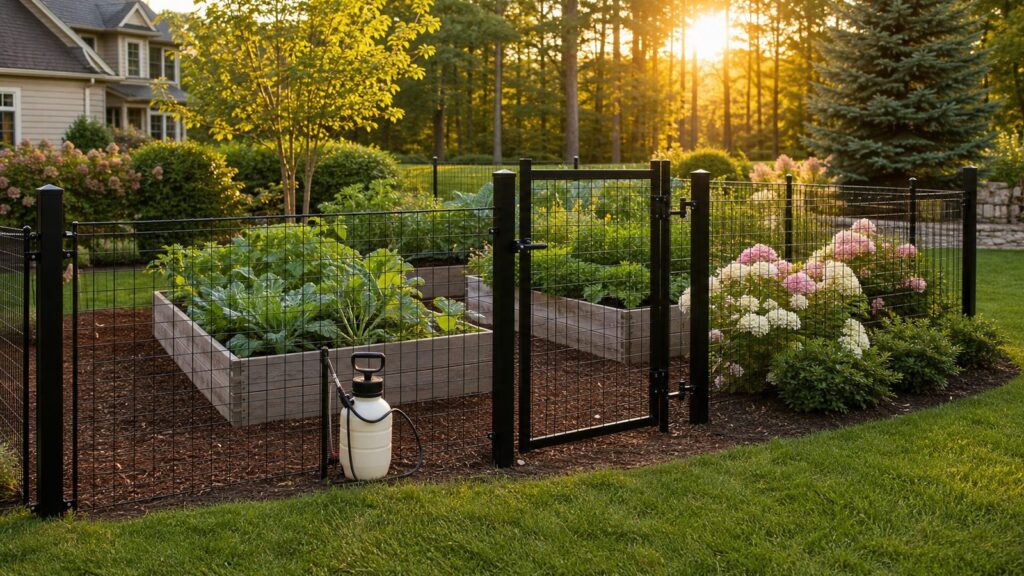
For severe deer pressure, physical exclusion is the only consistently reliable method. A conventional deer-proof woven-wire fence is 8 feet high. Shorter 5-, 6-, and 7-foot fences can deter deer in some settings, but they should not be treated as complete barriers when deer are motivated.
Small Garden Fence Mini-Spec
For a serious vegetable garden or young orchard, a practical small-garden fence spec looks like this:
- 8-foot black polypropylene or woven deer mesh
- Braced corners so the fence stays tight
- Posts sized and spaced for the mesh system and local wind exposure
- Bottom edge pinned tight to the ground so deer cannot nose under it
- A self-closing gate with no side gaps
- Clear access for wheelbarrows, mowers, and maintenance equipment
Current deer fence material pricing varies widely. Polypropylene deer netting material can run about $90 to $180 per 100 feet. A basic 100-foot setup may land around $180 to $280 for materials, depending on posts, corners, ground stakes, and gate choices. Heavier systems, difficult soil, slopes, wooded edges, and professional labor increase the number quickly.
Permit, HOA, and Layout Checks
Fence height is where homeowners get into trouble. Many cities and counties regulate front-yard, side-yard, and backyard fence height differently. Some allow taller fences in rear yards but restrict height near streets, alleys, corners, sight triangles, easements, or drainage areas. HOAs may also limit fence material and color.
Before installing an 8-foot deer fence, check local zoning rules, HOA documents, property lines, setbacks, easements, and utility locations. Call 811 before digging posts. If the fence is near a retaining wall, slope, driveway, sidewalk, or public right-of-way, get the layout reviewed before buying materials. Moving a fence after installation is far more expensive than planning it correctly.
Best Value

- Item: Deer Scram/25 lb. Bucket
When to DIY vs. When to Hire a Pro
DIY makes sense when deer pressure is light to moderate, the protected area is small, and the work is mostly spraying, staking, planting, or setting up one motion sprinkler. Most homeowners can handle a 1-gallon sprayer, a few scent stations, and a simple maintenance log in less than an hour a week during peak season.
Hire a pro or at least get a fence consultation when the protected area is large, the grade is uneven, posts need to be set near utilities, the fence may exceed local height limits, or the gate has to work with equipment access. Professional help also makes sense when the landscape investment is high. Losing a row of young fruit trees or a newly installed planting bed can cost more than a properly designed exclusion system.
From a contractor’s standpoint, the expensive mistakes are predictable: fences placed inside unknown easements, gates too narrow for maintenance, mesh loose at the ground, corners that lean after one season, and deer pressure underestimated because the yard looked quiet during the estimate. The right plan accounts for use, code, drainage, mowing, snow, and the way deer actually move through the property.
Bottom Line
The best DIY deer repellent plan is layered and honest. Use egg spray as the primary homemade option, rotate garlic-hot pepper spray when needed, add soap or hair scent stations, design with aromatic border plants, and interrupt approach routes with motion or visual deterrents. Apply early, reapply after weather, and track results.
If deer are only sampling your plants, DIY can be cost-effective. If they are feeding every night, protecting a vegetable garden, or damaging young trees, start planning an 8-foot exclusion fence. Repellents can buy time, but a properly designed fence is what stops the pattern.
Frequently Asked Questions
What is the best homemade deer repellent?
An egg-based spray is the best starting point for most homeowners. Use 3 eggs per gallon of water or a 20 percent egg and 80 percent water mix, strain it well, and apply before deer feeding becomes routine.
How often should I reapply DIY deer repellent?
Reapply after rain, overhead irrigation, or heavy new growth. Egg sprays may last 2 to 4 weeks in light pressure, while garlic-pepper and weaker scent mixes may need reapplication every few days to weekly.
Do these 3 things before closing this tab:
1Scan for outdated or missing drivers - takes under a minute2Clear out junk files and repair common Windows errors3Fix the driver behind crashes, sound loss and screen glitchesAre homemade deer repellents safe for vegetables?
Use caution. Test any spray on a few leaves for 24 to 48 hours first, and avoid spraying edible portions close to harvest unless you are comfortable with the ingredients and washing. Many homeowners use repellents on perimeter plants rather than directly on leafy crops.
Will soap or human hair keep deer away?
Soap and hair can help as scent stations around small beds or entry points, but they are not reliable by themselves. Deer often get used to repeated smells, especially in suburban areas.
What height fence keeps deer out?
For dependable exclusion, plan around an 8-foot deer fence. Shorter 5-, 6-, and 7-foot fences may deter deer in some yards, but they are not complete barriers under heavy pressure.
When should I stop using DIY repellents and install a fence?
Escalate to fencing when deer visit nightly, damage repeats on the same plants, young trees are being browsed, or you are protecting a high-value vegetable garden, orchard, or landscape installation.
Quick Recap
Product prices and availability are accurate as of the date/time indicated and are subject to change. Any price and availability information displayed on Amazon at the time of purchase will apply.

