What’s actually slowing this PC down?
Pick the symptom - the matching free tool is one click away.
For most houses, neither cement is automatically “better.” Use the cement type and concrete mixture that satisfy the project engineer’s specification and your local building code for the required strength, exposure and construction schedule. ASTM Type I Portland cement is a familiar general-purpose choice; Type II is used where moderate sulfate resistance is required; Type III is selected when high early strength matters. Approved blended cements—including Portland-limestone, slag and pozzolan blends—can reduce embodied carbon and may improve durability, but they can change setting time, heat development, permeability, curing sensitivity and the rate at which strength develops.
For a foundation, slab, footing or mortar, compare the actual approved product—not just the label “Portland” or “blended.” Review its cement standard, strength at the specified age, setting data, exposure performance, curing instructions, environmental product declaration (EPD), delivered cost and local availability with your engineer and concrete supplier.
| # | Preview | Product | Price | |
|---|---|---|---|---|
| 1 |
|
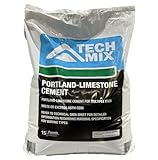
Tech Mix Portland-Limestone Cement, 15 Pounds | Small Pouch of Portland-Limestone Cement, Gray in... | $31.99 | Buy on Amazon |
| 2 |

|
PORTLAND CEMENT 47LB | $51.26 | Buy on Amazon |
| 3 |

|
Tech Mix Portland-Limestone Cement, 30 Pounds | $57.99 | Buy on Amazon |
As an Amazon Associate I earn from qualifying purchases.
The practical answer for a house
The best cement is the one that meets the design and code requirements reliably at your site. A house does not use cement by itself: cement is the binder in concrete or mortar, and the complete mixture, placement, curing and exposure determine performance. Two products carrying different cement labels can produce suitable concrete when proportioned correctly; two products with the same broad label can behave differently if their composition, fineness or supplier data differ.
Quick wins for a faster PC:
Repair Windows errors before they cause bigger problemsFix Now →Scan for outdated or missing drivers - takes under a minuteDriver Scan →Choose an ASTM C150 Portland cement when the specification calls for it, a familiar general-purpose material is needed, high early strength is important, or local approvals and supply favor it. Choose an ASTM C595 blended hydraulic cement when the approved product meets the required strength and setting limits and the project values lower embodied carbon, reduced heat or potential durability benefits. The decision belongs in the project specification, not at the job-site truck or hardware-store shelf.
#1 Best Overall
- MULTIPURPOSE: Basic building material for crafts, pavement, sidewalks, reinforced concrete buildings, masonry units, and more
- MIX AND USE: Use to create concrete, mortar, and stucco mixes
- GREAT FOR DIY PROJECTS: Ideal for small crafts with forms and silicone molds
- HIGH STRENGTH: Solid once dry, dry in 48 hours
- LESS IS MORE: One bag yields approximately .16 cu. ft.
What “Portland” and “blended” mean
Portland cement under ASTM C150/C150M-24
ASTM C150/C150M-24 covers Portland cement composition and tests for strength, setting, heat of hydration, sulfate resistance, fineness and expansion. Its common types for building work are:
| ASTM type | Primary use described by the standard | What it means for a house |
|---|---|---|
| Type I | General use | A conventional choice when the design does not call for a special exposure or accelerated strength gain. |
| Type II | Moderate sulfate resistance | Considered where soil, groundwater or another exposure creates a moderate sulfate concern and the specification requires it. |
| Type III | High early strength | Used when early stripping, loading or another schedule requirement demands faster strength development. |
The type designation does not, by itself, tell you the final concrete strength or durability. Aggregate, water-to-cementitious-materials ratio, admixtures, placement and curing remain decisive.
Blended hydraulic cement under ASTM C595/C595M
ASTM C595/C595M covers blended hydraulic cements. The American Concrete Institute identifies these common classes:
The Tool Desk
Outbyte PC Repair FREERepair Windows errors before they cause bigger problemsFix Now →Outbyte Driver Updater FREEScan for outdated or missing drivers - takes under a minuteDriver Scan →| Class | Blend named by ACI | Typical reason it is considered |
|---|---|---|
| Type IS | Portland blast-furnace slag cement | Uses slag as part of the cementitious binder, with potential durability and carbon advantages. |
| Type IP | Portland-pozzolan cement | Uses a pozzolanic material that can continue reacting after placement. |
| Type IL | Portland-limestone cement | Replaces part of Portland cement with limestone to reduce clinker content while remaining a hydraulic cement. |
| Type IT | Ternary blended cement | Combines three compliant cementitious components in one blend. |
ASTM C1697-21 addresses blended supplementary cementitious materials (SCMs), including slag cement, natural pozzolans, coal fly ash and silica fume, as blends or interground combinations of two or three compliant SCMs. Its scope warns that incorporating SCMs separately or as a manufactured blend “may significantly alter the properties of fresh and hardened concrete.” That warning is why a generic promise that every blended cement sets slowly—or that every blend is more durable—is unreliable.
Performance differences that affect construction
Early strength and the building schedule
Type III Portland cement is specified when high early strength is required. That can matter when forms must be removed quickly, a slab must carry construction traffic, or cold weather leaves little time for strength gain. A blended system containing slag or pozzolan may gain strength more slowly at early ages. The practical consequences can include longer formwork retention, delayed loading and a revised cold-weather plan.
Do not infer a schedule from the cement name. Ask the supplier for strength data at the age written in the specification—such as the project’s required early milestone and its design age—and confirm the proposed mixture with the engineer. A blend can meet the specified design strength even if its early-age curve differs from a Portland-only mixture.
Later-age strength
Some blended systems continue gaining strength beyond 28 days as SCM reactions progress. That makes the specified strength age important: compare products at the age used by the design, not a universal assumption that one cement is always stronger. The concrete producer should provide mixture-specific test results, because cement type alone cannot predict the strength of the finished concrete.
Permeability and durability
Properly proportioned and cured blended mixes may reduce permeability and improve durability. Lower permeability can help limit the movement of water and dissolved salts, but the benefit depends on the blend, dosage, water content, curing and exposure. Check the requirements for sulfate, chloride, freeze-thaw and alkali-silica reaction (ASR) exposure in the project specification.
Type II Portland cement addresses moderate sulfate resistance when that type is specified. A blended cement may also be appropriate for a sulfate or chloride exposure, but only when the particular product and mixture have the required qualification. “Blended” is not an exposure class and is not a substitute for an engineer’s durability designation.
Setting time and workability
SCM type and proportion can change setting, workability, air entrainment and heat development. A crew may need to adjust finishing timing, admixture dosage or placement sequence. A product that is workable for a large, continuously placed slab may not behave identically in a small footing pour or a mortar batch. Obtain the supplier’s setting information under conditions close to the expected temperature and mixture proportions.
Heat of hydration
Blended cements can reduce heat development in some mixtures, an advantage where temperature rise and thermal cracking are concerns. The result is mixture-specific; cement type, cement content, element size, ambient temperature and curing all matter. For a typical house footing or slab, the engineer may focus more on exposure and schedule than on heat, while a large or heavily restrained element may require explicit temperature control.
Rank #2
Curing and weather sensitivity
Blended mixes can be more sensitive to curing temperature and moisture, especially when early strength is important. Protect fresh concrete from premature drying and follow the producer’s curing instructions. In cold weather, plan for the slower reaction rate that many SCM-containing systems can exhibit; in hot weather, confirm that the selected mixture will remain workable long enough to place and finish. The curing plan should state protection, duration and the conditions that trigger additional measures.
Where each option fits in a home
Foundations, footings and foundation walls
Foundation concrete must satisfy the design strength and the soil or groundwater exposure. Start with the code-required exposure class and any sulfate requirement identified by the geotechnical or structural design. Type I may be suitable for general conditions; Type II may be required for moderate sulfate exposure; a blended cement may be selected when its verified permeability, sulfate performance, heat profile and strength schedule fit the design.
Before ordering, confirm the specified cement designation, design strength age, slump or workability limits, air requirement where applicable, and curing and protection measures. Do not substitute a bag labeled “blended” for a specified Type II or other exposure-qualified cement without written approval.
Slabs-on-grade and garage slabs
Slabs often impose tight finishing and opening-to-traffic schedules. A slower early-strength blend may be entirely suitable, but the crew must know when finishing can begin and when the slab may receive construction loads. Verify setting time, early strength, shrinkage-control details in the mixture design and the curing method. For exterior or deicing-salt exposure, check the required freeze-thaw and chloride-related performance rather than relying on the cement label.
Free tools Windows power users keep installed
One-click scans. No signup required.
Driveways, walks and exterior flatwork
Exterior flatwork faces wetting, drying, freezing and sometimes deicing salts. The complete concrete specification should address air entrainment, water content, curing and exposure. A blended cement can support durability when the mixture is properly designed, but the supplier must confirm compatibility with the required air system and finishing schedule.
Mortar for masonry
Masonry mortar is not the same material as concrete. Use the mortar cement or Portland-cement-based mortar specified for the masonry system, with the required proportions and performance. A Portland or blended cement may be an ingredient, but changing cement type can alter workability, water retention and setting. Follow the masonry specification and do not use a concrete mix design as a mortar recipe.
Repairs and small batches
Small repairs are especially vulnerable to mismatched products and poor curing. Check whether the bag is cement, mortar, grout or premixed concrete before buying. For structural repairs, use the specified repair material and obtain professional direction; a general-purpose cement bag is not automatically an equivalent replacement.
Carbon footprint, sustainability and price
Why blended cement can have lower embodied carbon
The American Cement Association states that blended cements have a lower carbon footprint than Portland cements and can enhance durability. Replacing part of Portland cement with limestone or another SCM can reduce the clinker-related emissions of the binder. Portland cement production is responsible for approximately 8% of global CO2 emissions, according to ASTM International (2023); that is an industry-level estimate, not the footprint of a particular bag or ready-mix load.
For a purchasing decision, request a current EPD for the actual cement or concrete product available at the project site. Compare the declared product, functional unit, plant and reporting period. A lower-clinker blend may reduce embodied carbon while still requiring more curing time or a different construction sequence.
Why the lower-carbon option may not cost less
Material price is local and product-specific. A blend may not be cheaper at the bag or ready-mix level, and transportation or limited supply can outweigh a lower manufacturing cost. Compare supplier quotations for delivered material, package size, minimum order, lead time and any required admixture or curing changes. The cheapest cement is not the cheapest project if it delays stripping, finishing or occupancy.
Independent reader supportYour contribution helps us test, update, and keep practical guides available for everyone.A decision framework for homeowners and builders
Use this sequence before approving a cement substitution:
Rank #3
- MULTIPURPOSE: Basic building material for crafts, pavement, sidewalks, reinforced concrete buildings, masonry units, and more
- MIX AND USE: Use to create concrete, mortar, and stucco mixes
- GREAT FOR DIY PROJECTS: Ideal for small crafts with forms and silicone molds
- HIGH STRENGTH: Solid once dry, dry in 48 hours
- LESS IS MORE: One bag yields approximately .5 cu. ft.
- Identify the governing requirements. Confirm the adopted building code, project specification, engineer’s drawings and any geotechnical exposure information.
- Write down the required cement standard. Record whether the design calls for ASTM C150 Portland cement, ASTM C595 blended hydraulic cement or another locally adopted designation.
- Define the strength schedule. Note the required early milestone and later design age. Ask for mixture-specific compressive-strength data at both ages.
- Check exposure performance. Review sulfate, chloride, freeze-thaw and ASR requirements, along with air-entrainment and permeability limits where specified.
- Check fresh-concrete behavior. Compare setting time, workability, air stability and heat development under the expected temperature and placement method.
- Approve the curing and weather plan. Confirm protection from drying, temperature limits, curing duration and any revised form-stripping or loading date.
- Compare sustainability information. Request an EPD for each actual product and record the declared carbon value and reporting scope.
- Compare delivered cost and availability. Include transport, lead time, minimum quantities and the cost of schedule changes.
- Get written approval. Have the engineer or responsible designer approve the exact product and mixture before ordering.
Information to request from a supplier
- Full product name and cement designation, including the applicable ASTM standard.
- Current mill certificate or compliance documentation.
- Strength data at the project’s specified ages.
- Setting-time, heat-of-hydration and fineness information when schedule or temperature makes them important.
- Durability data relevant to sulfate, chloride, freeze-thaw or ASR exposure.
- Recommended curing and cold- or hot-weather procedures.
- Current EPD and its declared scope.
- Delivered price, bag or load size, lead time and local inventory.
Common mistakes and how to avoid them
Choosing by label alone
“Portland” describes a broad family, and “blended” covers several compositions. Require the exact ASTM type and supplier documentation.
Assuming 28-day strength tells the whole story
Early strength controls many residential schedule decisions. Compare the specified early age as well as the later design age.
Ignoring curing because the mix is durable
Potentially lower permeability does not excuse inadequate curing. Moisture and temperature control remain part of the mixture’s performance.
Substituting without checking exposure
A product that works in an interior slab may not satisfy a sulfate, chloride or freeze-thaw requirement. Match the cement and concrete to the exposure class.
Buying a similar-looking premixed product
Retail shelves may contain cement, mortar, grout and premixed concrete in similar bags. Confirm the product category, cement designation and intended use before purchase.
Recommended Free Tools
Ordering too late
Limited local supply can force an unplanned substitution. Check availability and obtain approval during estimating, not on pour day.
Bottom line
Portland cement is not automatically superior, and blended cement is not automatically the greener or slower choice for every house. Type I, II or III Portland cement may be the right answer when the specification, exposure or schedule calls for it. A compliant Type IS, IP, IL or IT blended cement may be the better fit when verified performance, lower embodied carbon, reduced heat or durability benefits matter. Select the exact approved product by standard, strength-age data, setting and curing requirements, exposure performance, EPD, delivered cost and availability—and document the engineer’s approval before construction.
Frequently Asked Questions
Does blended cement always take longer to reach strength?
No. Many SCM-containing systems develop early strength more slowly, but the rate depends on the blend, proportion, temperature, water content and admixtures. Use the supplier’s mixture-specific strength data at the ages in your specification.
Can blended cement be used in a foundation or slab?
It can be used when the exact product and concrete mixture satisfy the foundation or slab specification, exposure requirements, strength schedule and local approvals. The word “blended” alone is not an approval.
Which has the lower carbon footprint?
Blended cement generally has a lower carbon footprint than Portland cement because it can replace part of the clinker. Compare current EPDs for the actual products delivered to your site; the industry-level estimate of Portland cement’s emissions is not a product-specific result.
Is Portland cement the same as concrete?
No. Cement is the binder. Concrete combines cementitious materials with water, aggregate and often admixtures; its final performance depends on the complete mixture and curing.
Quick Recap
Product prices and availability are accurate as of the date/time indicated and are subject to change. Any price and availability information displayed on Amazon at the time of purchase will apply.

