PC Slower Than It Used to Be?
A free scan shows the junk files, broken settings and background clutter dragging Windows down - then fixes them in one click.Free scan · Windows 10 & 11Crashes, No Sound, or Screen Glitches?
Random freezes, missing sound and display glitches usually trace back to one bad driver. Find and replace yours safely.Free scan · under a minutePortable storage is usually the better fit when you need to load at home, control the packing schedule, or keep contents on-site during a renovation or uncertain move. Traditional self-storage usually wins for long-term retention, frequent visits, climate-controlled rooms, drive-up access, vehicle storage, or the lowest ongoing space rate. The right choice comes from a local, all-in quote—not a headline monthly price.
Compare delivery, pickup, transport, labor, storage, insurance, access, taxes and climate-control charges for the same inventory and dates. A container can remove several trips to a facility, while a storage unit can provide features a container cannot.
As an Amazon Associate I earn from qualifying purchases.
What is the practical difference?
A portable storage container is delivered to your property, where you load it at your own pace. The provider can then leave it on-site, move it to a storage center, or transport it to another destination. U-Haul describes its U-Box service as delivery, customer-paced packing, warehouse storage and shipment; PODS describes a container delivered to the home. The exact sequence depends on the provider, service area and dates.
What’s actually slowing this PC down?
Pick the symptom - the matching free tool is one click away.
A traditional self-storage unit remains at a storage facility. You transport your belongings there, unload them into the assigned room or locker, and return whenever the facility’s access rules allow. The facility may offer indoor or climate-controlled rooms, drive-up units, gates, cameras, alarms and several size options.
#1 Best Overall

- Premium & Durable Quality: This clear plastic craft box is made of premium pp material, which is non-toxic and odorless. It is lightweight and has long service life. Can be used as a universal medicine box at home, office, school etc.
- Large Storage Capacity: Measures by 12.1x6.7x5.7inches/30.8x17x14.5cm with 10.6x5.5x1 inches/27x14.x2.5cm trays. Enough large space for storing many different items such as pencils, markers, brushes, erasers, first aid supplies, cosmetics and other small items. Completely solve the problem of cluttered items.
- 3 Layers Muti-grid Design: The 2 trays of the dividing storage box have 8 compartments for pencils, clips or adhesive tape, etc. Lower drawer can store sewing threads, craft supplies, skin care product, tool accessories and more. Unique design with 3 folding layers, which really saves your space. Removable grids can be adjusted flexibly as your need and makes your desk organized.
- Portable & Convenient: The sturdy handle and snapping latch make it secure and easy to transport. Transparent vision, the contents of the storage organizer can be seen at a glance and you can find what you want in a second, convenient for you to take the items quickly . It’s a great helper in your work and life.
- Multifunctional Plastic Storage Box: The handled storage container is very suitable for school, home, office, travel and more scenarios. It can be used as medicine box, office storage case, home utility box, sewing organizer and craft supplies storage box, etc., perfect for your items storage to provide convenience and save space.
Neither format is universally cheaper or safer. Portable storage exchanges some facility amenities and spontaneous access for fewer handling steps and more control over where loading occurs. A self-storage unit exchanges the trip to the facility for predictable on-site access and infrastructure.
Portable storage and self-storage at a glance
| Decision factor | Portable container | Traditional self-storage |
|---|---|---|
| Where loading happens | At your home, job site or another approved placement address | At the storage facility |
| Who handles loading | You or hired labor; you can pack on your own schedule | You or hired labor, with a trip to the facility |
| What happens after loading | Container may stay on-site, move to a storage center or be shipped | Contents stay in the assigned unit until you move them |
| Typical strength | Renovations, staging, uncertain closing dates and moves requiring flexible pickup | Long-term storage, frequent visits, climate control, drive-up access and vehicle or oversized storage |
| Access pattern | Access depends on whether the container is at your property or at a storage center, plus provider scheduling | Access follows facility hours, gate procedures and unit rules |
| Climate options | Confirm whether the container is outdoors or indoors; outdoor placement is not equivalent to a climate-controlled room | Some facilities offer climate-controlled rooms; availability and premiums vary |
| Security model | Steel construction and a customer-controlled lock are features PODS describes; verify the actual provider’s equipment and procedures | Facility gates, cameras, alarms and on-site controls may be available, but features differ by location |
| Site requirement | A suitable, level placement area and delivery access are required | No driveway or placement area is needed, but you must travel to the facility |
| Moving to a new destination | The container can be transported as part of the service, subject to the quote and route | You arrange a truck, trailer or movers to remove contents and deliver them elsewhere |
How the total price is built
Storage rent is only one line in the comparison. Request both options for the same inventory, origin, destination and dates, then place every fee in one worksheet. A low monthly rate can be overtaken by delivery, pickup or long-distance transport; a higher facility rate can be economical if you visit often and need no transport.
Portable-container charges to request
- Initial delivery to the property.
- Monthly container rent while it is on-site or in storage.
- Pickup from the property.
- Line-haul transport to a storage center or final destination.
- Storage-center handling or warehouse fees.
- Loading or unloading labor, if you are not doing it yourself.
- Lock and any required equipment.
- Transit coverage and storage coverage, including deductibles and exclusions.
- Taxes, access charges and appointment or re-delivery fees.
- Climate-controlled storage, if the provider offers an indoor alternative.
Self-storage charges to request
- Monthly unit rent and any promotional period or rate-change terms.
- Administration, reservation or one-time setup fees.
- Lock purchase or required lock type.
- Insurance or tenant-protection charges.
- Climate-control premium.
- Truck, trailer, fuel or hired labor needed to move items to and from the facility.
- Travel costs for repeated visits.
- Taxes and any access, late-payment or transfer charges.
Published figures are directional, not promises
PODS published indicative 2025 averages of $139–$239 per month for a storage container and $60–$180 per month for a standard storage unit. Those are broad provider-published ranges, not a national, independently audited average or a quote for your address.
Recommended Free Tools
A U-Haul sample quote generated in March 2026 for Los Angeles to Dallas totaled $3,529.80 for U-Box versus $5,402.50 for PODS. That example demonstrates how route, dates, inventory, handling and transport can dominate the total. It does not establish that one service is always cheaper, and it should not be presented as a national comparison.
Calculate a fair local comparison
- Describe one inventory. List furniture, boxes, appliances, tools, vehicles and any restricted items. Note which pieces need special handling.
- Use identical dates. Include the delivery date, loading period, pickup date, storage duration and desired delivery date at the destination.
- Give the same route. For a move, provide the exact origin and destination ZIP codes. For storage only, specify whether the container stays at home or goes to a storage center.
- Ask for an itemized quote. Request monthly rent, delivery, pickup, transport, storage-center fees, labor, lock, insurance, taxes, access and climate-control charges separately.
- Price your own labor and time. Include truck rental, fuel, tolls, mileage, loading equipment and paid help for the self-storage option. Include loading labor or appointment fees for the container option.
- Test more than one duration. Compare the total at one month, three months and the likely maximum period. A container’s transport cost can make a short move attractive but a long storage period less so, or the reverse.
- Confirm what can change. Ask when rent can increase, whether pickup windows are guaranteed, how rescheduling is priced and whether a minimum rental period applies.
- Compare the final totals. Choose the option that meets access, protection and site requirements—not the one with the smallest isolated monthly number.
When a portable container is the better tool
Renovation or construction staging
If rooms must be emptied before demolition, flooring, painting or a kitchen installation, loading at the property avoids repeatedly carrying materials through the house. A container can remain available while trades work, then be removed when the project is complete. Confirm that the placement area will not block workers, emergency access, utility work or required permits, and that the delivery vehicle can reach it.
Home staging or a sale with an uncertain closing date
Staging often requires furniture and personal items to leave the house quickly, while the closing date may move. A portable option lets you load once and defer the final destination. Ask how much notice the provider needs for pickup or redelivery and what happens if the property is sold before the planned date.
Rank #2

- Lift-Out Tray Craft Storage Box: This 13 x 6 x 5.625 in storage container puts a tray of markers, stamps and scissors over a large open base for paint bottles and vinyl rolls.
- Two-Level Art Supply Box: The quick-access tray lifts straight out, and the large open area beneath takes the bulky supplies, such as glues, large stamp pads and bottles, that no compartment tray would hold.
- Plastic Storage Box With Handle: Hard plastic is durable and resistant to wear and tear, lockable latches keep contents secure, and the plastic handle makes the box easy to carry. Made in the U.S.A.
- Small Craft Organizer And Storage: It is small enough to carry in one hand and still holds a real working kit, so it goes around the house, to a class or into the car instead of staying on a shelf.
- Product Specifications: Measures 13 x 6 x 5.625 in outside and 12.6 x 4.7 x 4.25 in inside with the tray removed. Includes 1 lift-out tray. Color: clear and aqua.
Moving without a firm timeline
Portable storage separates packing from the final move. You can load over several days instead of scheduling one truck day, then request transport when the destination is ready. This is useful when a lease, construction schedule or closing date is uncertain. It is less useful when the move is direct and fast; U-Haul’s April 17, 2026 guide says a moving-truck rental works well for a fast, direct move with a clear timeline.
When minimizing handling matters
Every transfer creates labor, time and damage opportunities. Loading at home, then having the same container transported, can reduce unloading into a facility and reloading for the final move. Confirm whether the provider actually keeps your container intact or transfers items at a warehouse; service models differ.
When traditional self-storage is the better tool
Long-term retention
For belongings you expect to keep for many months or years, a facility can provide stable access and a broad choice of unit sizes. U-Haul characterizes traditional units as better suited to longer-term use with facility amenities. Compare the cumulative rent, expected rate changes, insurance and your travel costs over the full period.
Frequent visits
A unit is usually more practical when you need to retrieve tools, seasonal goods, business inventory or household items repeatedly. You can visit during posted access hours rather than arranging container access or waiting for a delivery appointment. Verify gate hours, holiday schedules, identification requirements, elevator use, carts and rules about working inside the unit.
Temperature-sensitive belongings
Photographs, paper records, electronics, musical instruments, certain wood furniture, artwork and some household materials can be harmed by heat, humidity or rapid temperature changes. A standard outdoor container is not automatically climate controlled. Ask whether the container remains outdoors, whether it is moved indoors, what environmental controls exist and whether the policy excludes mold, condensation or temperature-related damage. A climate-controlled self-storage room may be the clearer choice when environmental conditions are critical.
Quick wins for a faster PC:
Clear out junk files and repair common Windows errorsFree Scan →Scan for outdated or missing drivers - takes under a minuteDriver Scan →Repair Windows errors before they cause bigger problemsFix Now →Vehicles, oversized items and specialized access
Some facilities offer vehicle storage, drive-up units, wider doors or loading areas that a residential placement cannot accommodate. Confirm dimensions, vehicle rules, operating hours and whether the facility accepts your specific item. Do not assume a container can accept a vehicle, hazardous material, heavy machinery or unusually tall object; provider restrictions and site loading limits apply.
Rank #3
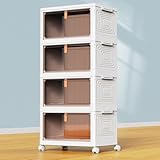
- 【92Qt Storage Boxes】With total volume of 92QT, the storage box measures 15.35in*11in*8.27in each tier.The Storage bins are good for sorting out crafts, photos, makeup product etc. Also handy as extra storage in the garage, classroom, bedroom, bathroom, office, or pantry. Combining good looks and practicality
- 【Collapsible & Install-Free】Stackable bins for storage with lid is a collapsible and install-free storage bin. It allows to fold flat when not use and you don’t need to keep instructions to remember how to assemble and reassemble or use tools to operate it when you want to use it
- 【High Quality Material】Made of high-quality PP,the product can be firmly used after assembly, and can also be detached for use alone. High-quality materials make the product have a longer life, which is undoubtedly the first choice for the same price
- 【Two Opening Ways】Storage bins with lid can be opened in two ways. You can open the top lid or open it from the front door.The front door switch comes with a magnet to ensure that the door does not open automatically. The front door makes it easy to access everything inside without having to pull everything down or remove things from the top cover. Prevent objects from being exposed to dust
- 【Movable Storage Containers】There are 4 wheels at the bottom of the storage box, which can be easily moved when needed. In addition, the storage organizer's 2 wheels have buckles that keep the wheel in place to prevent it from moving
Small quantities
If you need only a small locker or a few shelves of space, a container may leave you paying for capacity you do not use. Ask for the smallest suitable unit and compare it with the minimum container size, delivery fee and pickup cost.
Loading, access and handling: the hidden workload
Portable workflow
- Clear and measure the proposed placement area.
- Confirm delivery access, overhead clearance, surface strength and any local permission requirements.
- Receive the container and inspect its condition before loading.
- Pack and secure contents gradually, distributing weight and protecting items from movement.
- Lock the container with an approved weather-resistant lock.
- Keep a photo inventory and note which items are near the doors.
- Request pickup, relocation or final delivery within the provider’s stated notice window.
If the container is moved to a storage center, access may require advance scheduling, a delivery appointment or a redelivery charge. Ask exactly how you retrieve one box while the rest remains stored.
Self-storage workflow
- Choose a unit size and confirm whether it is indoor, climate controlled or drive-up.
- Reserve the unit and obtain the facility’s lock, access credentials and insurance requirements.
- Transport belongings to the facility, observing truck routes, loading bays and appointment rules.
- Load a labeled inventory with an aisle or access path, rather than filling the unit wall to wall.
- Record access hours, gate procedures and emergency contact instructions.
- Return with your own vehicle or hired help whenever you need items.
Self-storage reduces scheduling dependence after move-in, but it adds every trip between the property and facility. Estimate those trips before deciding that the monthly rent is lower.
Site feasibility can decide the answer
A container is practical only if the delivery truck can place and later retrieve it safely. Measure the available length and width, check the surface, identify low branches and wires, and consider gates, narrow streets, parked cars, slopes and construction equipment. Ask the provider to confirm the placement plan rather than relying on a photograph.
- Confirm whether the surface must be paved, level or capable of supporting the loaded container.
- Keep doors, fire lanes, utility access and required setbacks clear.
- Check local rules, homeowners-association requirements and landlord permission before delivery.
- Plan for weather: mud, snow, standing water and ice can affect access and unloading.
- Decide how workers and household members will move safely around the container.
A traditional unit avoids residential placement constraints, but the facility itself may have narrow drive aisles, stairs, elevators, restricted truck sizes or limited loading hours. Visit the location before signing if access is important.
Security, locks and coverage
PODS says its containers use steel construction and that the customer keeps the only key. Treat that as a provider-specific description, not a universal standard. Ask who can open the container, whether staff can move it without you, how seals are recorded and what surveillance or lighting applies at a storage center.
Rank #4
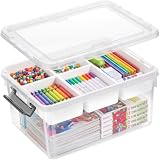
- 【Multi-layer separation design】The storage box has a 5-compartment tray that can be placed or taken out according to your purpose and type. The removable tray keeps some of your smaller items neat and organized, and the extra depth allows for larger, bulkier supplies,diamond art storage;
- 【17-Quart Capacity】Capacity: 17-quart. Overall Dimensions: 15.94"L * 11.61"W * 7.28"H. Perfect for arts and crafts supplies, stationery, lego, kids building blocks, sewing kit, and other small tools;It also functions perfectly as a dedicated medicine storage box for neatly organizing medications and first-aid supplies;
- 【Perfect Solution for Craft Storage】If you need to organize art or craft supplies, this plastic storage bin is an ideal solution. Colorful beads, stationery, sewing art, fishing equipment, figurines, sewing kits, cardstock, and other items are also great for this storage box;
- 【Transparent and Portable Design】The high transparent base and cover allow you to easily identify the contents inside, so that you can store them quickly. The clasp on the lid makes it easy to carry and effectively prevents the contents of the box from being poured out; Easy to open and close, it provides practical storage for home, office, school and classroom use.
- 【Stylish Superior Quality】Made in USA. Made of high-quality and durable PP5 plastic, it has a long service life and resists wear and tear. Odorless and BPA free.
For a self-storage unit, ask about gate controls, cameras, alarms, fencing, lighting and staff presence. These features can deter unauthorized entry but do not eliminate risk. Your own lock remains important. A weather-resistant storage-unit disc lock is a relevant option; verify that its shackle and body fit the provider’s hasp before buying.
Coverage needs separate attention. U-Haul says U-Box coverage can be separated into transit and storage, while PODS uses bundled coverage. Obtain the policy or certificate and check limits, deductibles, exclusions, claim deadlines and whether items are covered while being loaded, stored, transported or delivered. Your homeowners or renters policy may exclude off-premises property or impose sublimits, so confirm in writing with your insurer.
Climate control: when the premium is justified
Climate control is not a marketing synonym for “indoors.” Ask what temperature and humidity controls are provided, whether air circulates continuously, where the unit is located and how the provider handles power failures or water intrusion. If a provider cannot explain the environment, do not treat the space as climate controlled.
Consider paying for controlled conditions when the contents are difficult or expensive to replace, sensitive to humidity, or required for legal, business or archival purposes. For ordinary outdoor-rated furniture, tools and sealed household goods, the premium may not be necessary, but packing and insurance still matter. Never store food, flammables, explosives, toxic chemicals or other prohibited materials; follow the provider’s current prohibited-items list.
Security and packing practices that work in either format
- Use sturdy cartons, closed bins and padding appropriate to the item.
- Keep boxes off the floor where possible and protect them from condensation or minor leaks.
- Label two sides and the top; maintain a written or photographed inventory.
- Place frequently needed items near the accessible end, with a safe walkway.
- Do not overload cartons or stack unstable furniture.
- Disassemble large furniture, protect corners and retain hardware in labeled bags.
- Photograph high-value items and serial numbers before storage.
- Use a provider-approved lock and keep keys or combinations in a secure place.
- Inspect for moisture, pests or damage during permitted visits and report problems promptly.
Moving contents to a new destination
Portable container
The container format can combine storage and transport. Confirm the origin and destination service areas, line-haul price, delivery appointment, unloading time, weight or volume limits, and whether the container is transferred between facilities. A quote for Los Angeles to Dallas illustrates why route distance and transport can outweigh monthly storage: the March 2026 U-Box sample was $3,529.80, while the sample PODS total was $5,402.50.
Traditional unit
You retain control over the move method, choosing a rental truck, trailer or movers. That can be economical for a short, direct move with a clear schedule, but you pay for loading, driving, unloading and any interim storage separately. Include fuel, tolls, labor, insurance and the possibility of a second trip in the comparison.
Best Value

- 【3-Layer Transparent Tray Design】The art box organizer has 3 layers of transparent detachable trays, with a total of 9 areas, which can be used to place various items, such as markers, crayons, beads, jewelry, sewing, stationery, etc. Make your small items more tidy.
- 【High-Quality Material Medicine Storage Box】The thickened and reinforced design makes this first aid storage box more sturdy and durable. Sealed design with 2 layers of clear, grey and white bottom layer to protect against sunlight and moisture.
- 【Adjustable Medicine Container】3-layer design to meet your different needs, the first layer of emergency medicine, the second layer of daily medicine, and the third layer of spare medicine, which can be effectively stored and organized.
- 【Portable Medicine Box】The medicine box has a gray handle, comfortable to hold and easy to carry. The lid is secured with a reinforced buckle to prevent the drug from falling.
- 【Customer Satisfaction Guaranteed】We are committed to providing excellent service and high-quality products. If you have any questions or concerns about organizers, please feel free to contact us
Hybrid strategies
A hybrid plan can solve conflicting requirements. For example, use a portable container to clear a house during renovation, then move only photographs, documents and sensitive furniture into a climate-controlled facility. Another approach is to keep seldom-used bulky items in a facility while using a small container for the active move. Price both legs, including the transfer labor, and verify that the destination facility accepts deliveries from the container provider.
Common mistakes and how to avoid them
Choosing from the monthly rate alone
Correct this by comparing the complete cost for the actual duration and route. Include every delivery, pickup, transport, labor and protection charge.
Assuming access is immediate
Ask whether you can open a container on-site, whether a storage-center visit needs notice and how redelivery is billed. For a facility, confirm gate and office hours rather than relying on a listing’s headline.
The Tool Desk
Outbyte PC Repair FREERepair Windows errors before they cause bigger problemsFix Now →Outbyte Driver Updater FREEScan for outdated or missing drivers - takes under a minuteDriver Scan →Skipping the placement inspection
Measure the driveway or work area and obtain provider approval before scheduling. A failed delivery can create rescheduling fees and project delays.
Buying the wrong lock
Check the hasp dimensions and required lock type first. A lock that cannot close fully leaves the unit unsecured.
Overlooking insurance exclusions
Read transit and storage coverage separately when applicable. Verify high-value-item limits, weather exclusions, mold provisions and the claims process.
Using outdoor storage for sensitive goods
Choose a genuinely climate-controlled option when environmental stability is necessary, and use sealed, elevated packing in any format.
Do these 3 things before closing this tab:
1Repair Windows errors before they cause bigger problems2Scan for outdated or missing drivers - takes under a minute3Clear out junk files and repair common Windows errorsA decision guide by situation
| Your situation | Starting choice | Why | Check before signing |
|---|---|---|---|
| Renovating one or more rooms | Portable container | Loading at the property keeps furnishings out of the work area with fewer handling steps | Placement, permits, worker access, pickup timing and weather exposure |
| Home staging with an uncertain closing | Portable container | Contents can leave the home before the final destination is known | Notice period, redelivery price and maximum rental duration |
| Long-term household storage | Traditional self-storage | Facility amenities and unit-size choices can suit extended retention | Rate changes, climate control, insurance and cumulative travel |
| Weekly access to tools or inventory | Traditional self-storage | Regular facility visits are simpler than arranging container access | Gate hours, drive-up access, carts, lighting and security |
| Temperature-sensitive records or furniture | Climate-controlled self-storage, or a verified indoor container service | Environmental control is the primary requirement | Actual temperature and humidity controls, exclusions and outage procedures |
| Direct move with fixed dates | Moving truck or container after a full quote | Either can work; transport and labor determine the total | Route price, loading plan, delivery window and liability coverage |
| Small quantity needing a locker | Traditional self-storage | A small unit may avoid paying for unused container capacity | Minimum unit size, setup fees and access rules |
| Move plus selected climate-sensitive items | Hybrid | Different belongings receive different handling and environments | Transfer labor, receiving rules and the combined insurance cost |
Questions to ask before booking
- What is the all-in price for my inventory, ZIP codes and exact dates?
- Which charges are one-time, monthly, distance-based or subject to change?
- Where will the container remain: my property, an outdoor yard or an indoor storage center?
- How much notice is required for pickup, relocation, access or final delivery?
- Can I retrieve one item without moving the entire container?
- What placement dimensions, surface, clearance and permissions are required?
- What are the facility’s gate and office hours, and are there holiday restrictions?
- Is climate control available, and what environmental conditions does it maintain?
- Who supplies the lock, and what type fits the hasp?
- Are transit and storage coverage separate? What are the exclusions and deductibles?
- Which items are prohibited or subject to special handling?
- What happens if the delivery vehicle cannot reach the site or the closing date changes?
Bottom line for a construction or moving project
Choose a portable container when the project benefits from loading at the property, gradual packing, flexible pickup or a move whose final timing is uncertain. Choose traditional self-storage when the contents will stay for a long time, you need frequent visits, you require climate-controlled space, you are storing a vehicle or oversized item, or a small unit meets the need. Use a hybrid plan when convenience matters for the bulk of the move but selected belongings need a controlled facility.
Before committing, obtain matching local quotes and compare the complete total: rent, delivery, pickup, transport, labor, access, lock, insurance, taxes and climate-control charges. Verify site feasibility and coverage in writing. That process—not a generic national price—reveals which option is better for your property, schedule and belongings.
Quick Recap
Product prices and availability are accurate as of the date/time indicated and are subject to change. Any price and availability information displayed on Amazon at the time of purchase will apply.

