Some links on this page are affiliate links: if you buy through them we may earn a commission, at no extra cost to you.
A poinsettia is easy to enjoy indoors if you treat it like a living plant instead of disposable holiday decor. Give it bright indirect light, keep the room around 65-75 degrees F, water only when the soil surface feels dry or the pot feels light, and never let the plant sit in trapped water inside foil or a saucer. Most poinsettia failures we see in homes and commercial spaces come from three things: cold shock on the trip home, bad drainage, and poor placement near doors, windows, vents, or fireplaces.
Botanically, poinsettia is Euphorbia pulcherrima. The red, white, pink, marbled, or speckled parts most people call flowers are actually bracts. The true flowers are the small yellow structures in the center, called cyathia. If those yellow centers are still tight and intact when you buy the plant, you usually get a longer display life.
For homeowners, churches, offices, model homes, and retail spaces, poinsettias are one of the most cost-effective seasonal plants available. In 2026 U.S. retail pricing, small tabletop plants can be about $5, standard 6-inch plants commonly run about $8-$11 locally, and decorative shipped 6-inch plants may reach roughly $28-$48 depending on pot cover, grower, and delivery. The plant is inexpensive, but the placement details matter if you want it to look good through the holidays without damaging wood floors, stone counters, millwork, or electrical setups.
Do these 3 things before closing this tab:
1Scan for outdated or missing drivers - takes under a minute2Clear out junk files and repair common Windows errors3Fix the driver behind crashes, sound loss and screen glitchesAs an Amazon Associate I earn from qualifying purchases.
What a Poinsettia Needs Indoors
A poinsettia wants the same basic conditions most people want in a finished room: steady warmth, decent light, no drafts, and no wet feet. The ideal indoor temperature range is commonly 65-75 degrees F during display. A short period a little cooler at night is usually fine, but repeated cold drafts or sudden temperature swings can make leaves and bracts drop fast.
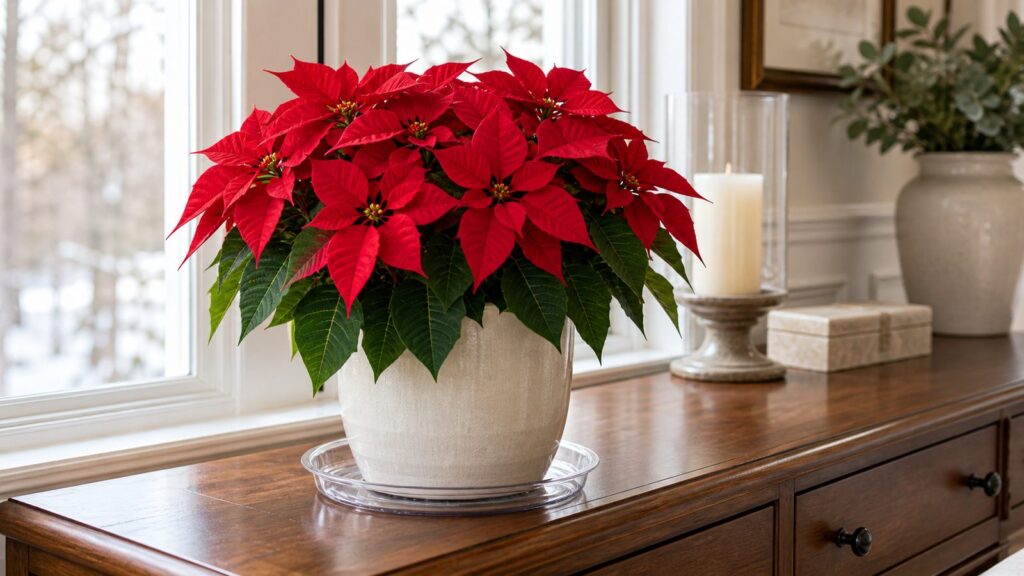
Place the plant where it receives bright indirect light or filtered sun. A sunny winter window can work well, but do not press the leaves or bracts against cold glass. In many homes, the best location is 2-3 feet back from a bright window, set on a waterproof tray. Rotate the pot every few days so the plant does not lean toward the light.
Popular on Amazon

- GROWING REQUIREMENTS: These Poinsettia seeds thrive in well-draining soil with temperatures between 60-70°F, requiring bright indirect sunlight for optimal growth
- PACKAGE CONTENTS: Set of 20 premium quality Poinsettia seeds capable of growing into vibrant red holiday plants with deep green foliage
- MATURE SIZE: When fully grown, plants can reach heights of 2-3 feet tall and spread 1-2 feet wide in proper indoor growing conditions
- BLOOMING SEASON: Plants typically flower during winter months, producing striking red bracts that create the classic holiday appearance
- PLANTING INSTRUCTIONS: Sow seeds 1/4 inch deep in moistened potting mix, maintain consistent soil moisture, and expect germination within 14-21 days
Watering is simple, but it has to be done correctly. Check the soil surface with a finger. If the top feels dry, or if the pot feels noticeably light when lifted, water thoroughly. Let the excess drain completely. Empty the saucer. If the pot is wrapped in decorative foil, either remove the foil during watering or punch drainage holes in the bottom and set the plant over a sink until it stops dripping.
The Tool Desk
Outbyte Driver Updater FREEFix the driver behind crashes, sound loss and screen glitchesFind Drivers →Outbyte PC Repair FREEClear out junk files and repair common Windows errorsFree Scan →The poinsettia’s weak point is drainage. Sealed foil sleeves are useful for looks and transport, but they can turn into a shallow bathtub. Roots sitting in water can develop rot, stem disease, yellow leaves, wilt, and leaf drop. On our job sites, when holiday plants are used in offices, sales centers, or owner walk-through spaces, we treat every decorative pot as a water-management detail, not just a decoration.
How to Buy a Better Poinsettia
Start with the plant in the store. A poinsettia that has already been chilled, overwatered, or beaten up near an automatic door may look acceptable for a day or two and then collapse after you bring it home.
Choose a plant with dense foliage down to the soil line, firm stems, good color, and no yellowing leaves. The bracts should be clean and undamaged. The small yellow centers should be present and not fully spent. Avoid plants with wilted leaves, broken stems, soggy soil, gray mold, or leaves scattered inside the sleeve.
Be careful with where the retailer displayed the plant. Plants set outside, in unheated vestibules, beside loading doors, or directly in the path of automatic entry doors are higher risk. Cold exposure during retail display is one of the most common reasons poinsettias drop leaves after purchase.
Transport matters. In cold weather, have the store sleeve or cover the plant before you leave. Move it quickly from the store to a warm vehicle, then from the vehicle into the house. Do not leave it in a cold car while you run other errands. Even a short cold exposure can show up later as leaf and bract drop.
Poinsettia Costs in 2026
Poinsettias are affordable, but prices vary by pot size, stem count, cultivar, sleeve or cachepot, local greenhouse labor, shipping, and order timing. The least expensive plants are usually local, in-season, and simple. The most expensive are shipped, decorative, novelty-colored, or sold with upgraded containers.
| Plant or Supply | Typical 2026 U.S. Cost | Best Use |
|---|---|---|
| 1-pint to 4-inch poinsettia | About $4.98 retail; some local sales around $3.50 plus foil | Small tables, windowsills with trays, office desks |
| Standard 6-inch poinsettia | About $7.98 at big-box retail; local nursery examples around $8.50-$10.99 | Entry tables, mantels away from heat, kitchen islands, reception counters |
| Decorative or shipped 6-inch poinsettia | Roughly $27.99-$48.13 depending on grower, pot cover, and delivery | Gifts, remote orders, finished decorative displays |
| 1-quart multi-pack | About $44.98 for a 5-pack, or about $9 each | Churches, offices, grouped displays, fundraisers |
| Large 8-inch to 10-inch plant | About $16.50 for 8-inch local greenhouse plants; around $30 for 10-inch plants | Lobbies, stair landings, large rooms, commercial entries |
| Saucer, liner, or cachepot | About $2-$15 | Water control and finished appearance |
| Moisture meter | About $8-$20 | Useful for offices or anyone who tends to overwater |
| Bypass pruners | About $10-$35 | Spring pruning and summer pinching |
| Houseplant fertilizer | About $6-$15 | After the holiday display period, when active growth resumes |
| Simple LED grow light | About $20-$60 | Rooms with poor winter light |
For a single home, a standard 6-inch plant is usually the best value. For a church, clubhouse, model home, or lobby, standardize the pot size and container style. Odd-number groupings of 3, 5, or 7 plants look more intentional than scattered singles. In high-traffic entries, budget for a few replacement plants because cold blasts, bumps, and inconsistent watering are hard on display plants.
Where to Place a Poinsettia in a House
The best poinsettia location is bright, warm, and stable. In practical terms, that means near a good window but not touching cold glass, away from supply vents, return grilles, fireplaces, space heaters, and exterior doors.
Free tools Windows power users keep installed
One-click scans. No signup required.
Also popular on Amazon

- LIFELIKE AND REALISTIC! No one will know these gorgeous flowers aren't real. 2 Plants.
- STUNNING DISPLAY: Use with any Creative Displays Inc Plant Rack to make a stunning Poinsettia Tree.
- PERFECT FOR THE HOLIDAYS: These Poinsettia plants are a beautiful and classic holiday red.
- LARGE SIZE: Each plant has 7 flowers from 7" to 9" in size so there are no bare branches or bashful blossoms.
- GET CREATIVE: Use to create a centerpiece for a special event, as holiday decorations, and much more!
Keep the plant 2-3 feet from a bright window if the glass is cold. If the window is modern, well-insulated, and not drafty, the plant can sit closer as long as leaves do not touch the glass. If the window leaks air or the sill gets cold overnight, move the plant back.
Avoid placing poinsettias directly above forced-air heat registers. Warm moving air dries the bracts and soil quickly, and the plant can go from fine to wilted in a day. Return air grilles can create enough air movement to dry plants too. Fireplaces are worse because they combine heat, low humidity, and sudden temperature swings.
Entryways are tricky. They look good in photos, but every door opening can hit the plant with cold air. For a front hall, keep poinsettias at least 4-6 feet from the active door swing if possible. In commercial vestibules, use more durable greenery near the door and keep poinsettias inside the conditioned space.
Placement During Construction or Renovation
If your house is under renovation, poinsettias need more protection than usual. Keep them away from drywall dust, sanding work, paint fumes, curing coatings, construction adhesive, unconditioned rooms, and temporary heat streams. Forced-air dust can coat leaves and bracts, reducing the plant’s ability to function and making it look tired.
Do not use a poinsettia as a finishing touch in a room that is still curing, drying, or being aggressively heated. Fresh finishes, new millwork, and holiday plants all prefer stable conditions. If we are staging a nearly finished space, we place plants after heavy dust work is complete, HVAC is balanced, floors are protected, and the room is being held at normal occupied temperature.
Watering and Drainage Without Damaging Your Home
Water when the soil surface feels dry or the pot feels light. That may be every 3-7 days in many homes, but the calendar is only a rough guide. A plant in a warm room near forced air may need water sooner. A plant in a cooler room with low light may need it less often.
When watering, take the plant to a sink if possible. Water until it runs through the drain holes. Let it drain fully for several minutes. Then return it to its display location. If you water in place, use a waterproof saucer and check it 15-30 minutes later so the plant is not sitting in standing water.
Decorative foil needs special attention. Punch drainage holes in the bottom of the foil sleeve and place the pot on a waterproof tray, or remove the foil every time you water. Do not rely on a foil sleeve alone to protect furniture. Foil can leak, trap condensation, scratch finishes, and hide standing water.
Quick wins for a faster PC:
Fix the driver behind crashes, sound loss and screen glitchesFind Drivers →Clear out junk files and repair common Windows errorsFree Scan →For hardwood floors, stone tops, painted millwork, and built-in shelves, use a two-layer protection detail: a waterproof tray or liner under the pot, plus a felt, cork, or rubber isolation layer below the tray. The tray controls water. The isolation layer protects the finish from scratches, vibration, and moisture rings. For wood, avoid cheap unsealed clay saucers directly on the surface because they can transmit moisture.
Common Problems and What They Mean
Leaf drop usually points to cold shock, drafts, underwatering, overwatering, or a sudden move from greenhouse conditions to a dry heated room. If the plant drops a few lower leaves after purchase but the stems are firm and the bracts still look good, stabilize the location and correct the watering. If the soil smells sour, the stem base is soft, or the pot is constantly wet, root or stem disease may already be underway.
Also popular on Amazon

- Realistic Holiday Flowers – These artificial poinsettia bouquets feature 7 vibrant red flower heads per stem, each with 12 satin petals and a shimmering gold-plated center—adding festive charm to your Christmas decorations.
- Premium Quality Materials – Crafted from thick satin cloth, flexible plastic stems, and durable wire, these faux poinsettia bushes offer a long-lasting, maintenance-free alternative to real flowers.
- Perfect Size & Quantity – Includes 3 bunches of poinsettia bouquets; each stem is 11.5 inches (29cm) long with 7 flower heads (4.7" / 12cm diameter), ideal for filling vases, baskets, and centerpieces.
- Multi-Purpose Holiday Décor – Great for Christmas tree trimming, home and porch decoration, DIY wreaths, garlands, floral arrangements, event backdrops, weddings, and seasonal table centerpieces.
- Indoor & Outdoor Use – Weather-resistant design makes these artificial Christmas flowers perfect for both indoor and outdoor use—decorate your living room, kitchen, front door, patio, or office space effortlessly.
Wilt can mean the plant is dry, but it can also mean the roots are damaged from staying too wet. Before watering a wilted poinsettia, check the soil. If it is dry and the pot feels light, water thoroughly and drain. If it is wet and heavy, do not add more water. Move the plant to a bright, stable location and let it dry slightly.
Yellow leaves often come from overwatering, poor drainage, low light, or stress from temperature swings. Brown bract edges can come from dry air, heat, physical damage, or age. A plant beside a fireplace or heat register may dry at the edges even if the soil is damp.
Recommended Free Tools
If the plant looks weak right after purchase, think back to transport and display conditions. A poinsettia bought from an outdoor rack, left in a cold car, or carried uncovered through freezing air may not recover fully. Buying a better plant is often cheaper than trying to rescue a badly shocked one.
Are Poinsettias Poisonous to Pets or Children?
Poinsettias are irritating, but they are not the deadly holiday plant many people were taught to fear. The milky sap can irritate the mouth, skin, or stomach. Pets or children that chew leaves may experience drooling, mouth irritation, stomach upset, or occasional vomiting. Skin contact with sap can cause a rash in some people.
The practical guidance is still to keep poinsettias out of reach of pets and small children. Put the plant on a stable surface where it cannot be pulled down. Do not place it where a dog can brush against it daily, where a cat will dig in the soil, or where a toddler can grab leaves. If a child or pet eats a significant amount or has symptoms that concern you, contact Poison Control, your pediatrician, or your veterinarian.
Also remember that the plant is only one part of a holiday display. Foil, ribbons, floral picks, glitter, fake snow, broken stems, potting mix, and electrical cords may create more practical problems than the plant itself.
Holiday Lighting, Cords, and Display Safety
No permit is normally needed to keep poinsettias indoors. You also do not need special wiring for a normal tabletop plant. The safety concerns start when plants are combined with lights, extension cords, candles, temporary displays, and high-traffic areas.
Keep poinsettias away from open flames, fireplaces, and hot light fixtures. Use LED lights if lights are part of the display because they run cooler and use less power than older incandescent holiday strings. Inspect cords before use. Do not use cracked, pinched, frayed, or warm-to-the-touch cords.
Route extension cords out of walk paths. In a home, that may mean running the cord behind furniture instead of across an entry. In a commercial space, cords should not cross public walking surfaces unless they are protected with an appropriate cord cover. Do not hide cords under rugs where heat can build and damage can go unnoticed.
Water and electricity need separation. Do not water a plant over a power strip. Do not set a wet saucer on a cabinet with plug-in lights below. If a display includes both plants and lights, keep the electrical connection elevated and off the floor, use dry hands when plugging and unplugging, and unplug before rearranging the display.
What’s actually slowing this PC down?
Pick the symptom - the matching free tool is one click away.
Also popular on Amazon

- ARTIFICIAL POINSETTIA FOR CHRISTMAS DECORATIONS: The 19" Nearly Natural Poinsettia features bold red blossoms and velvety petals in a wrapped planter to create a holiday mood in any indoor space; The lifelike plant looks great on tabletops or mantels
- VERSATILE CHRISTMAS DECOR: This poinsettia arrangement arrives in a container that is wrapped in bright, shiny red paper to add to the holiday feel; The 6.5" W x 5" H planter is easy to display on counters, tabletops, mantels, or pedestals; Indoor only
- PERFECT FOR ANY SPACE: At 19" H x 17" W x 17" D, this artificial poinsettia arrangement makes a statement without overwhelming your space; Ideal for foyers, entryways, tables, nightstands, and desks; Makes a thoughtful, maintenance-free holiday gift
- EASY TO MAINTAIN: No assembly required; bendable branches and stems allow for easy reshaping to your desired fullness each season, keeping the arrangement looking fresh and lifelike year after year; Dust monthly with a feather duster to maintain vibrance
- CRAFTED FROM QUALITY MATERIALS: Inspired by nature and backed by 75+ years of expertise, Nearly Natural crafts each artificial poinsettia from premium iron wire, plastic, and polyester for a realistic look that lasts; Safe for pets and kids
Can You Keep a Poinsettia Alive All Year?
Yes, you can keep a poinsettia alive all year, but reblooming takes discipline. If you only want a good holiday display, enjoy the plant through the season and compost it when it declines. If you like the challenge, the plant can be grown as a houseplant after the holidays.
After the bracts fade, keep the plant in bright light and water when the soil surface dries. In spring, prune it back. Many growers cut stems back to about 4-6 inches, leaving several nodes. As new growth appears, begin light fertilization with a balanced houseplant fertilizer according to label directions.
Move the plant outdoors only after frost danger has passed and nighttime temperatures are consistently above about 55-60 degrees F. Place it first in bright shade or filtered light, not harsh direct sun. After it adjusts, you can give it more light. Pinch new growth in summer to encourage branching, stopping by late summer so the plant has time to set up for fall color.
Outdoor survival is climate-limited. In warm regions, poinsettias can grow outdoors as landscape shrubs, but in most of the United States they are treated as seasonal indoor plants. A plant that spent winter in a living room should not be moved outside during a cold spring week just because the calendar says it is April.
How to Make a Poinsettia Turn Red Again
Reblooming depends on short days and long, uninterrupted nights. Starting in early October, give the plant about 12-14 hours of complete darkness every night for 6-8 weeks. A common schedule is darkness from about 5 p.m. to 8 a.m., then bright light during the day.
Complete darkness means complete darkness. A closet that gets opened, a hallway light, a television, a desk lamp, or light from a nearby room can interrupt the process. During the day, the plant still needs bright light. This is why reblooming fails in many homes: the plant gets darkness, but not enough daytime light, or it gets good light, but not uninterrupted darkness.
Once the bracts begin to color, usually by late November or early December if the schedule is followed, you can return the plant to normal display conditions. Keep the same watering and temperature rules: bright light, 65-75 degrees F, no drafts, and excellent drainage.
When to DIY vs When to Hire a Pro
For one to ten poinsettias in a normal home, this is a DIY job. You can buy the plants, inspect them, transport them carefully, place them properly, and manage watering with a $2-$15 saucer or cachepot. A single plant rarely justifies a contractor, florist, or interiorscape service.
Crashes, No Sound, or Screen Glitches?
Random freezes, missing sound and display glitches usually trace back to one bad driver. Find and replace yours safely.Free scan · under a minuteWindows Errors? Fix Them Before They Spread
Repair common Windows errors and clear accumulated junk for a smoother, more stable PC - no reinstall needed.Free scan · no reinstallConsider professional help when the display is large, public, elevated, wired, or tied to an event. Churches, hotels, offices, clubhouses, model homes, and retail spaces may need coordinated delivery, uniform sizing, waterproof liners, floor protection, weekly maintenance, replacements, and removal after the season. Pricing in that context is usually based on plant count, pot size, delivery, access, maintenance frequency, and teardown.
Bring in an electrician or qualified maintenance professional if holiday lighting requires new receptacles, overloaded circuits are a concern, cords are crossing public areas, or displays are near water features. Bring in a flooring or construction professional if heavy planters will sit on finished wood, stone, or specialty flooring for weeks and you need a protection plan that will not stain, trap moisture, or void a finish warranty.
Also popular on Amazon

- Package &Size:Package include 1 pack faux poinsettias plants in pot that has red berry and 5 large flower heads(About 8" in Size).The total length of this fake plants is 14",perfect for your home both indoor and outdoor Christmas Decorations.
- Premium Material:This large artificial poinsettia flowers plant is made of velvet silk and environmentally friendly plastic.Inside the stem is durable iron wire,which enables you to bend and adjust the stem into normal shape.
- Realistic Appearance:This artificial Christmas flowers in pot has vibrant red color and vivid features.It provides a strong festive atmosphere for your home and will bring your home the feeling of Christmas and New Year holiday.
- Easy Care:It will stay fresh full all year round without any water.This material is very durable and can be used during several holiday periods.They are easy to clean and only need to be wiped clean with a dry cloth.
- Versatility:Suitable for Christmas decoration、Christmas window landscape decoration、weddings、holiday decorations、vases、stairs、fireplaces、tables、homes、offices,great choice for your home Christmas décor and will add a touch of elegance to your home.
For renovation settings, coordinate poinsettia placement with the project schedule. Plants should come in after dusty work, major painting, coating, and HVAC startup issues are resolved. A finished space with stable heat and clean surfaces will keep plants looking better and will protect the work you just paid to complete.
Practical Poinsettia Care Checklist
Buy a plant with firm stems, dense lower leaves, clean bracts, and tight yellow centers. Avoid plants displayed in cold entries or near automatic doors. Cover the plant during cold transport and move it quickly into a warm home.
The Tool Desk
Outbyte Driver Updater FREEScan for outdated or missing drivers - takes under a minuteDriver Scan →Outbyte PC Repair FREERepair Windows errors before they cause bigger problemsFix Now →Set the plant in bright indirect light, ideally near a window but not against cold glass. Keep it away from heat registers, return grilles, fireplaces, exterior doors, and unconditioned rooms. Maintain a steady room temperature around 65-75 degrees F.
Water by soil feel and pot weight, not by the calendar. Water thoroughly, drain completely, and empty saucers. Open drainage holes in foil sleeves or remove the sleeve while watering. Protect wood, stone, and painted surfaces with a waterproof tray plus felt, cork, or rubber isolation underneath.
Keep the plant out of reach of pets and small children. Treat sap as an irritant. Manage cords, lights, and water carefully if the plant is part of a larger holiday display. For reblooming, plan on strict darkness every night for 6-8 weeks in fall, plus bright daytime light.
A poinsettia is not a complicated plant, but it is unforgiving of sloppy placement. Handle the cold, drainage, light, and display details correctly, and a modest $8 plant can look good for weeks. Ignore those details, and even a premium florist-grade plant can fail before the holiday is over.
Frequently Asked Questions
How often should you water a poinsettia indoors?
Water when the soil surface feels dry or the pot feels light, often every 3-7 days indoors depending on heat, light, pot size, and airflow. Water thoroughly, let it drain, and empty any saucer or foil sleeve.
Where is the best place to put a poinsettia in a house?
Place it in bright indirect light, often 2-3 feet from a sunny window if the glass is cold. Keep it away from heat registers, fireplaces, exterior doors, return grilles, and drafty windows.
Why are my poinsettia leaves dropping?
Common causes include cold shock, drafts, underwatering, overwatering, sealed foil trapping water, low light, or sudden temperature changes. Check the soil and move the plant to a bright, stable, draft-free location.
Are poinsettias poisonous to cats, dogs, or children?
Poinsettias are usually irritating rather than deadly. The sap and leaves can cause mouth or stomach irritation, drooling, vomiting, or skin rash, so keep plants out of reach and call a professional if symptoms concern you.
Can you keep a poinsettia alive all year?
Yes. After the holidays, keep it in bright light, water when dry, prune in spring, fertilize during active growth, move it outdoors only after warm nights are consistent, and pinch new growth in summer.
How do you get a poinsettia to turn red again?
Starting in early October, give it 12-14 hours of complete darkness nightly for 6-8 weeks, such as 5 p.m. to 8 a.m., with bright light during the day. Even small amounts of night light can interrupt coloring.
Quick Recap
Product prices and availability are accurate as of the date/time indicated and are subject to change. Any price and availability information displayed on Amazon at the time of purchase will apply.

