Short answer: Oral-B has a small evidence-led advantage for plaque and gingivitis reduction because oscillating-rotating brushes have performed slightly better than high-frequency sonic brushes in direct comparisons. That difference is modest, not a guarantee for every user, and it does not make every Oral-B model better than every Sonicare model.
Choose Oral-B if you want a small round head that cleans one tooth at a time and you prioritize the movement type with the strongest comparative evidence. Choose Philips Sonicare if you prefer a slimmer handle, an elongated head, and a broad sweeping sonic sensation. In practice, the brush you can use gently and consistently for two minutes twice a day is likely to serve you better than a theoretically superior brush that you dislike.
As an Amazon Associate I earn from qualifying purchases.
The quick verdict
| If your priority is… | Better starting point | Why |
|---|---|---|
| Maximum evidence-led plaque and gingivitis reduction | Oral-B oscillating-rotating model | Direct comparisons show a small average advantage for oscillating-rotating brushes. |
| A sonic feel and a longer, more familiar-looking brush head | Philips Sonicare | Its elongated head moves rapidly side to side and is guided along the gumline. |
| Low-cost, useful features | Oral-B Pro 1000 or Philips Sonicare 4100 | Both provide a timer and pressure-related feedback without requiring premium app features. |
| Advanced tracking, displays, or premium charging accessories | Oral-B iO or Philips DiamondClean 9000 | These add features and design refinements, but they are not automatically better value or clinically superior. |
| Comfort and long-term adherence | The model whose sensation you prefer | Consistency and gentle technique outweigh a small population-level difference between brush mechanisms. |
These are movement-family recommendations, not claims that one brand wins every model-to-model test. Exact features, replacement-head compatibility, battery claims, and included accessories can vary by model number and market.
What is the difference between Sonicare and Oral-B?
The central difference is mechanical:
- Oral-B uses an oscillating-rotating round head. The small head rotates back and forth around individual teeth. Many models also add pulsations or micro-vibrations.
- Philips Sonicare uses high-frequency side-to-side bristle movement. Its longer, oval-shaped head produces the broad vibrating sensation commonly described as sonic brushing.
Neither brush cleans simply because its motor moves quickly. You still need to position the bristles at the gumline, use light pressure, cover every surface, and spend enough time in each area.
#1 Best Overall

- 40,000 VPM Smart Toothbrush – Beauty, brains and power. The Black Series is a world class modern electric toothbrush packed with the most up to date technology. It features an ultra-powerful and industry leading motor producing 40,000 vibrations per minute, a lithium-ion battery, ultra-fast wireless charging, 4 mode operation, smart vibration timers, 8 DuPont engineered brush heads, and a custom travel case; all with a sleek ultra-slim, lightweight and IPX7 rated waterproof design.
- Accepted by the American Dental Association (ADA) Council on Scientific Affairs – We put our money where your mouth is. Investing in premium oral care technologies has earned the Black Series the prestigious ADA seal of approval. It has shown efficacy in removing plaque and helping to prevent and reduce gingivitis. Black Series goes beyond just cleaning teeth – it provides complete oral care with unique modes that include one for whitening and polishing teeth, and one for improving gum health.
- Modern Tech for a Healthy Smile – Black Series brings toothbrushes into modern times with its built-in enhanced features. A lithium-ion battery, ultra-fast wireless charging (forget outdated USB charging), 4 distinct brushing modes and a smart vibrating notification timer are some of the enhanced features built into the sleek and ergonomic waterproof black satin handle.
- 8 DuPont Brush Heads & Travel Case Included – Included are 8 brush heads engineered by world famous DuPont; a world leader in quality & materials science. Each brush head lasts 3-4 months so 8 will last for about 2.5 years. Also included is a convenient custom hard shell travel case made of BPA-free plastic with space for two brush heads. Black Series can last 4 full weeks (2 min/2x a day) on a full charge so it’s perfect for on the go travel with the included travel case.
- What's in the Box - 1 AquaSonic Black Series Smart Toothbrush, 1 wireless charging base, 8 DuPont brush heads, 1 travel case, warranty card, and user manual.
| Feature | Oral-B | Philips Sonicare |
|---|---|---|
| Typical head shape | Small and round | Longer and oval |
| Primary movement | Oscillating and rotating around individual teeth | Rapid side-to-side bristle movement |
| Typical brushing pattern | Move tooth by tooth or in small sections | Guide slowly along several teeth and the gumline |
| Physical sensation | More localized and mechanical | Broader, vibrating, and sweeping |
| Pressure feedback | Available on basic models and more advanced visual feedback on iO models | Available on models such as the Sonicare 4100, which can warn about pressure and reduce vibration |
| Head compatibility | Standard Oral-B and iO heads are separate systems | Head families vary by Sonicare handle; check the exact model |
Which cleans better?
Powered toothbrushes as a category generally remove more plaque and reduce gingivitis more effectively than manual toothbrushes in both short- and longer-term studies. That does not mean every powered brush produces the same result, nor does it mean an electric brush compensates for poor coverage or excessive pressure.
When powered-brush movement types are compared, the research is more nuanced:
- A Cochrane review found that rotation-oscillation had the largest body of evidence among powered-brush movement types and produced statistically significant reductions in plaque and gingivitis at short- and long-term follow-up.
- A separate Cochrane review found some evidence that rotation-oscillation performed better than side-to-side brushing over shorter periods, but described the difference as small and the evidence base as limited.
- A later systematic review and meta-analysis directly comparing oscillating-rotating and high-frequency sonic brushes found a small but statistically significant longer-term advantage for oscillating-rotating brushes in plaque control and gingival health.
That makes the oscillating-rotating mechanism the evidence-led winner on average. It does not establish a dramatic or necessarily noticeable advantage for every person. Studies compare particular brush mechanisms and products, while the names “Oral-B” and “Sonicare” cover many models with different heads, motors, modes, and pressure systems.
The Tool Desk
Outbyte Driver Updater FREEScan for outdated or missing drivers - takes under a minuteDriver Scan →Outbyte PC Repair FREEClear out junk files and repair common Windows errorsFree Scan →The most accurate conclusion is therefore: Oral-B’s movement type has a modest comparative edge, but proper use, comfort, and consistency are more important than the logo on the handle.
The American Dental Association recognizes that both manual and powered toothbrushes can be effective and recognizes multiple powered-brush movement types. Its Seal of Acceptance applies to the safety and efficacy evidence submitted for a specific product and claim; it is not a blanket finding that one brand is superior to the other.
Oral-B’s round head versus Sonicare’s longer head
How Oral-B feels to use
With a standard Oral-B brush, the round head is placed against one tooth or a small group of teeth and moved gradually around the mouth. This makes the sequence highly defined: outer surfaces, inner surfaces, chewing surfaces, then the next tooth or section.
That approach can be useful for people who tend to rush or miss particular areas because the small head encourages deliberate coverage. The trade-off is that a full two-minute routine may feel more involved. You have to move the head often enough to cover the entire mouth rather than sweeping quickly across several teeth.
Free tools Windows power users keep installed
One-click scans. No signup required.
How Sonicare feels to use
Sonicare’s longer head is more similar in shape to a traditional toothbrush. Most users guide it slowly along the gumline and across several teeth at a time while allowing the bristles to do the movement.
Some people find this motion more natural and less fussy. Others prefer the more localized feedback of a round Oral-B head. Neither sensation proves that the brush is cleaning better for that particular user, and controlled measurements should not be inferred from subjective claims that one brand is always quieter, gentler, or more comfortable.
Which is better for sensitive gums or heavy brushers?
Neither brand is automatically safe for sensitive gums. Pressure, bristle firmness, brushing duration, gum condition, and technique matter more than the brand name. The most useful features are a functioning pressure warning or reduction system and a compatible soft or sensitive head.
Rank #2

- The C2 Optimal Plaque brush head with soft, flexible, stain-removal bristles helps whiten and polish your teeth; it also removes up to 700% better plaque than a manual toothbrush
- Electric toothbrush for adults providing gentle yet effective cleaning: the Advanced Sonic Technology pulses fluid between teeth and along the gumline for even more effective oral care
- Safe and gentle electric toothbrush with pressure sensor: if you apply too much pressure, the handle will pulse slightly, reminding you to ease off the pressure, protecting your teeth and gums
- Optimize your routine: EasyStart for a gradual, gentle increase in brushing power, SmarTimer informing when you've reached 2 minutes, and QuadPacer to brush each section of a mouth for 30 seconds
- Brush head replacement reminder tracks how often and how hard you brush, then notifies you when it's time to replace the brush head once it's time; dental professionals recommend changing your brush head regularly
Philips Sonicare pressure control
Philips says the Sonicare 4100 detects excessive pressure, warns the user, and automatically reduces vibration. The model also offers two intensity settings, allowing a user to choose a gentler setting if the standard intensity feels uncomfortable.
Oral-B pressure control
The Oral-B Pro 1000 product information says its pressure sensor stops pulsations when the user brushes too hard. Oral-B iO models add visual smart-pressure feedback on applicable models, making it easier to see whether the pressure is in the recommended range.
Pressure feedback is useful, but it is not permission to press until the warning activates. Use a soft or sensitive head, hold the handle lightly, and let the motor perform the brushing motion. Frayed bristles are another reason to replace a head, even if the calendar says it is not yet due.
- active or diagnosed gum disease;
- persistent bleeding or significant sensitivity;
- gum recession or exposed roots;
- orthodontic appliances;
- implants, crowns, veneers, bridges, or other restorations; or
- pain, loose teeth, ulcers, or another concerning symptom.
Switching brands is not treatment for dental disease. Persistent bleeding, pain, recession, or loose teeth should be assessed by a dentist or hygienist rather than managed solely by changing toothbrushes.
Which is easier to use?
Ease of use is personal, but the following patterns are reasonable starting points:
- Sonicare may suit you if you want a slimmer, more conventional-looking handle; prefer sweeping the head along the mouth; dislike the feeling of a small rotating head; or want a relatively simple brush with fewer premium interface features.
- Oral-B may suit you if you like a small head that focuses on one tooth at a time; want a very explicit quadrant-by-quadrant routine; or prefer a visible pressure signal on an iO model.
- Powered brushing generally may help people with limited dexterity, children, and people wearing dental appliances because the motor performs much of the brushing movement. The user still has to position the head and cover all surfaces.
Do not choose based only on a headline movement count. Philips lists 31,000 brush strokes per minute for the Sonicare 4100 and 62,000 bristle movements per minute for the DiamondClean 9000, but those are manufacturer specifications. They are not interchangeable measurements and are not independent head-to-head plaque-removal results.
Best value models to consider
Best evidence-led value: Oral-B Pro 1000
The Oral-B Pro 1000 electric toothbrush is the most straightforward choice for someone who wants the oscillating-rotating mechanism, a round CrossAction-style head, pressure feedback, a two-minute timer, and 30-second pacing to divide the mouth into quadrants. The cited official product page also lists three modes and compatibility with several standard, non-iO Oral-B replacement-head families; exact configurations can vary by package or market, so check the model number before buying.
This is a sensible starting point when you want useful fundamentals rather than an app, display, or premium charger. It is not “medically superior” for every user; its value comes from combining the evidence-supported movement type with practical controls at the basic end of the range.
Best sonic value: Philips Sonicare 4100
The Philips Sonicare 4100 is the better fit for someone who prefers Sonicare’s sweeping vibration and elongated head. Philips lists 31,000 brush strokes per minute, a two-minute Smartimer, 30-second QuadPacer timing, two intensity settings, pressure feedback, and battery life of up to 14 days for the cited 4100 Series information.
Quick wins for a faster PC:
Fix the driver behind crashes, sound loss and screen glitchesFind Drivers →Clear out junk files and repair common Windows errorsFree Scan →“Up to 14 days” is a manufacturer battery claim, not a guaranteed result for every user. Battery duration depends on usage and the exact version. The 4100 is attractive because it supplies the features most likely to affect everyday brushing—timing, pressure control, and a choice of intensity—without requiring a premium smart system.
Premium option: Oral-B iO
Oral-B iO models keep the round, dentist-inspired head but use a magnetic drive and add micro-vibrations, smart pressure feedback, and, on certain models, an interactive display and app-based tracking. Oral-B says iO replacement heads last up to three months and that a full charge takes approximately three hours for the cited product collection.
Rank #3

- REMOVE UP TO 100% MORE PLAQUE* along the gumline whilst PROTECTING GUMS with our dentist-inspired round brush head technology *vs. a manual toothbrush
- PROTECT YOUR GUMS with sensi cleaning mode and GUM PRESSURE CONTROL that automatically stops brush pulsations when brushing too hard
- MAXIMIZE CLEANING performance with 3 EASY-TO-USE CLEANING MODES + handle-integrated quadrant timer that alerts you every 30sec to change brushing zone
- PERSONALIZE & LEVEL-UP YOUR CLEAN with Oral-B BRUSH HEADS AVAILABLE* for YOUR individual needs: e.g., deep clean, gentle clean, whitening *for purchase
- Oral-B ROUND brush heads REACH WHERE RECTANGULAR manual brushes DON'T. Experience a better clean from the #1 brand most used by dentists worldwide
An iO can make sense if the display, visual pressure guidance, multiple modes, app feedback, or magnetic charging will genuinely improve your routine. It is not automatically a better value than a basic Oral-B, and the dedicated replacement heads create a separate recurring cost.
Premium sonic option: Philips DiamondClean 9000
Philips lists 62,000 bristle movements per minute, four modes, three intensities, an optical pressure sensor, and app connectivity for the DiamondClean 9000 page cited in the research. Those features may appeal to people who want more customization, travel accessories, design, or tracking.
They should be treated as convenience and habit-support features, not proof of a cleaning breakthrough. There is no basis for saying that an app-connected premium brush necessarily removes more plaque than a simpler pressure-sensor model using the same general movement family.
Battery life, charging, and smart features
| Consideration | Sonicare | Oral-B |
|---|---|---|
| Basic example | Sonicare 4100: two intensities, timer, QuadPacer, pressure feedback, and up to 14 days of claimed battery life on the cited product page. | Pro 1000: timer, 30-second pacing, pressure sensor, and standard rechargeable operation. |
| Premium example | DiamondClean 9000: four modes, three intensities, optical pressure sensor, and app connectivity. | iO: magnetic drive, micro-vibrations, smart pressure feedback, multiple modes, and app/display features on selected models. |
| What matters most | Whether the battery lasts through travel and whether the pressure and timer features change your habits. | Whether you will use the pressure guidance, timer, modes, app, or display enough to justify the higher ownership cost. |
A two-minute timer and pressure control are the features most likely to provide broad practical value. Bluetooth tracking, a screen, numerous modes, and elaborate charging accessories are optional. Buy them for adherence, feedback, or convenience—not because a premium handle is guaranteed to clean better.
Replacement heads: compatibility matters more than brand loyalty
Replacement heads are a recurring expense and one of the easiest places to make an expensive purchasing mistake.
Oral-B compatibility
Standard Oral-B handles such as the Pro 1000 accept several non-iO head families, including standard CrossAction and sensitive-style options listed for compatible handles. Standard Oral-B heads do not fit Oral-B iO handles. iO owners need heads made specifically for the iO system.
Outdated Drivers Are Slowing You Down
One free scan finds every outdated or missing driver and matches the right update for your exact hardware.Free scan · exact hardware matchPC Slower Than It Used to Be?
A free scan shows the junk files, broken settings and background clutter dragging Windows down - then fixes them in one click.Free scan · Windows 10 & 11If you own a Pro-series or another standard Oral-B handle, look for Oral-B CrossAction replacement heads or another standard compatible family, then confirm the exact handle compatibility before ordering a multipack. If you own an iO, search specifically for Oral-B iO replacement heads.
Sonicare compatibility
Philips uses multiple Sonicare head families. Product information for selected handles lists categories such as DiamondClean Standard, S Sensitive, and ProResults heads, but compatibility depends on the handle and the head’s features. Some smart-head functions may require a compatible smart handle.
For a Sonicare owner, compare the exact handle model with the manufacturer’s compatibility list before buying Philips Sonicare replacement heads. Do not assume that a head that fits one Sonicare handle provides every feature on another.
How often should you replace the head?
General consumer guidance is to replace a brush head every three to four months, or sooner when the bristles become frayed. Oral-B states that iO heads last up to three months. “Up to” is not a reason to keep a visibly worn head in service; condition and brushing performance matter.
Recommended Free Tools
When comparing the long-term cost of two handles, include several years of replacement heads, not just the initial purchase price. A discounted premium handle can become the more expensive option if its proprietary heads cost more or are less readily available.
Independent reader supportYour contribution helps us test, update, and keep practical guides available for everyone.How to choose between them in five steps
- Choose the sensation you will tolerate twice every day. Pick Oral-B if you prefer tooth-by-tooth rotation; pick Sonicare if you prefer broad sonic sweeping. Discomfort or dislike undermines adherence.
- Prioritize a pressure warning or pressure reduction system. This is especially important if you tend to scrub forcefully, but it does not replace gentle technique.
- Require a two-minute timer with interval pacing. A 30-second cue helps you divide the mouth instead of spending the whole routine on the easiest surfaces.
- Check replacement-head availability and price before buying. Confirm whether the handle uses standard Oral-B heads, Oral-B iO heads, or a specific Sonicare family.
- Pay extra for smart features only when they solve a real problem. If you frequently skip areas, ignore pressure, travel often, or benefit from feedback, premium features may be worthwhile. Otherwise, a basic pressure-sensor model is usually the more rational purchase.
A brushing routine that matters more than the logo
For most adults, the practical baseline is:
- brush for two minutes twice a day;
- use fluoride toothpaste;
- choose soft bristles or a soft compatible head;
- guide the brush slowly along every tooth surface and the gumline;
- use light pressure rather than scrubbing;
- replace the head every three to four months or when bristles fray; and
- clean between teeth with floss, interdental brushes, or another method recommended for your mouth.
An electric toothbrush does not replace interdental cleaning, professional dental care, fluoride, or treatment for diagnosed disease. It is a tool that can make effective brushing easier and more repeatable.
Rank #4
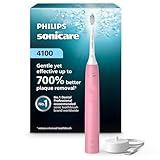
- The C2 Optimal Plaque brush head with soft, flexible, stain-removal bristles helps whiten and polish your teeth; it also removes up to 700% better plaque than a manual toothbrush
- Electric toothbrush for adults providing gentle yet effective cleaning: the Advanced Sonic Technology pulses fluid between teeth and along the gumline for even more effective oral care
- Safe and gentle electric toothbrush with pressure sensor: if you apply too much pressure, the handle will pulse slightly, reminding you to ease off the pressure, protecting your teeth and gums
- Optimize your routine: EasyStart for a gradual, gentle increase in brushing power, SmarTimer informing when you've reached 2 minutes, and QuadPacer to brush each section of a mouth for 30 seconds
- Brush head replacement reminder tracks how often and how hard you brush, then notifies you when it's time to replace the brush head; dental professionals recommend changing your brush head regularly
Who should buy which?
Choose Oral-B if:
- you want the movement type with the small average advantage in direct comparisons;
- you like a round head and tooth-by-tooth routine;
- you want a basic model with a pressure sensor and timer; or
- you prefer visual pressure guidance and are willing to pay for an iO model.
Choose Sonicare if:
- you prefer a longer head and broad sonic sensation;
- you want a simple, slimmer-feeling brush;
- you value adjustable intensity on a basic model; or
- the Sonicare motion is the one you are more likely to use consistently.
Choose neither solely on marketing claims if:
- you are comparing plaque-removal percentages without knowing whether they come from independent clinical research or a manufacturer test;
- you have active dental symptoms and are hoping a new brush will treat them; or
- you have not checked the ongoing cost and compatibility of replacement heads.
Final recommendation
For the strongest evidence-led default, choose a basic Oral-B oscillating-rotating brush such as the Pro 1000. The research gives that movement type a small average advantage for plaque and gingivitis outcomes, and the Pro 1000 combines it with a timer and pressure control.
Choose the Philips Sonicare 4100 instead if its sonic sensation, elongated head, slimmer design, two intensity settings, or claimed battery life better matches your preferences. A Sonicare used reliably and gently is a better choice for you than an Oral-B that feels unpleasant or ends up unused.
Do these 3 things before closing this tab:
1Clear out junk files and repair common Windows errors2Scan for outdated or missing drivers - takes under a minute3Repair Windows errors before they cause bigger problemsFor either brand, start with the basic features that influence behavior: a two-minute timer, interval pacing, pressure feedback, a soft head, and affordable replacements. Treat premium apps, screens, extra modes, and charging accessories as optional tools for adherence—not as proof that the brush will deliver a dramatic clinical improvement.
Some product references in this article may be monetized through affiliate relationships. Availability, package contents, prices, and exact model compatibility should be checked at the time of purchase.
Frequently Asked Questions
Is Oral-B scientifically better than Sonicare?
Oscillating-rotating brushes, the movement used by many Oral-B models, have a small average advantage over high-frequency sonic brushes in direct comparisons of plaque and gingivitis. The evidence does not prove that every Oral-B model is better than every Sonicare model, and the difference may not be noticeable for every user.
Is Sonicare better for sensitive teeth or gums?
Not automatically. Sensitivity depends on pressure, bristle firmness, technique, and the underlying dental problem. Models such as the Sonicare 4100 provide pressure feedback and intensity adjustment, while Oral-B also offers pressure-control systems. Choose a soft compatible head, use light pressure, and ask a dental professional about persistent sensitivity, bleeding, recession, or pain.
What’s actually slowing this PC down?
Pick the symptom - the matching free tool is one click away.
Can standard Oral-B heads fit an Oral-B iO handle?
No. Standard Oral-B replacement heads and iO replacement heads are separate systems. A Pro 1000 uses standard non-iO Oral-B heads, while an iO handle requires iO-compatible heads. Always check the exact handle family before buying replacements.
How often should electric toothbrush heads be replaced?
Replace the head every three to four months, or sooner if the bristles become frayed. Oral-B states that iO heads last up to three months. The visible condition of the bristles matters more than stretching a replacement interval.
Do I need an expensive electric toothbrush for good results?
No. A basic powered brush with a two-minute timer, pressure feedback, and an appropriate soft head can provide the features most relevant to daily technique. Premium app tracking, displays, extra modes, and specialized chargers are worthwhile only if they improve your consistency, pressure control, comfort, or routine.
},{
The Bottom Line
Bottom line: Oral-B is the better evidence-led choice if your priority is maximum average plaque and gingivitis reduction, because oscillating-rotating brushes have a small advantage in direct comparisons. Philips Sonicare is the better fit if you prefer a slimmer, sweeping sonic feel. For most people, buy the basic model with a pressure sensor and timer, use a soft head, brush for two minutes twice a day, replace the head regularly, and choose the brand you will use consistently.
Windows Errors? Fix Them Before They Spread
Repair common Windows errors and clear accumulated junk for a smoother, more stable PC - no reinstall needed.Free scan · no reinstallCrashes, No Sound, or Screen Glitches?
Random freezes, missing sound and display glitches usually trace back to one bad driver. Find and replace yours safely.Free scan · under a minuteQuick Recap
Product prices and availability are accurate as of the date/time indicated and are subject to change. Any price and availability information displayed on Amazon at the time of purchase will apply.

